

Note: This article contains affiliate links. If you click on these links and make a purchase, I may earn a small commission at no extra cost to you. This helps support my research and content. Read my full affiliate disclosure here.
If you want comfortable, elevated sleeping on your 2019-2023 Ford Ranger, a roof tent turns the truck into a mobile campsite with minimal footprint. Picking the right roof tent affects payload, ride quality, and how easy it is to set up after a long drive. This guide highlights five top roof tent options shortlisted for fit, durability, and usability specifically for the Ranger years 2019 through 2023.We focused on tents that balance weight and protection, mounting compatibility with common Ranger roof racks and crossbars, and practical features like mattress comfort and weather sealing. Below you will find clear evaluation criteria and practical advice to help you select a roof tent that matches how you actually camp and the way you use your Ranger.
Looking for other parts? See all Ford Ranger parts & accessories.
Top Picks at a Glance
| Best Overall Rooftop Tent Top pick balancing build quality, weatherproofing, and everyday usability | HEYFUN Adventurer Pro Aluminum Hard-Shell Roof Top Tent |  |
| Best Budget Rooftop Tent An affordable option that covers basics without high-end extras | VEVOR Hard‑Shell Rooftop Tent with Tri‑Color LED and Thick Mattress |  |
| Best Hard‑Shell Rooftop Tent Rigid aluminum or hardshell clamshell with fast pop‑up setup and seals | HEYFUN Explorer Pro Hardshell Rooftop Tent with USB Outlet and Side Awning |  |
| Best Soft‑Fold Rooftop Tent Canvas or fold‑out soft shell design with annex or extension options | Overland Vehicle Systems TMBK 3-Person Soft-Shell Roof Top Tent with Annex |  |
| Best Inflatable Rooftop Tent Air‑inflated or drop‑stitch designs for fast setup and lightweight packing | CDEN Inflatable Rooftop Tent with Air Mattress and Ladder |  |
1. HEYFUN Adventurer Pro Aluminum Hard-Shell Roof Top Tent
Best Overall Rooftop Tent
| Occupancy | 3 Person |
|---|---|
| Water Resistance Technology | 0-5,000 mm |
| Assembly Time | 10 Minutes |
| Included Components | Side awning, 2 rain flies, luggage racks, ladder, mattress, USB outlet, LED light strip |
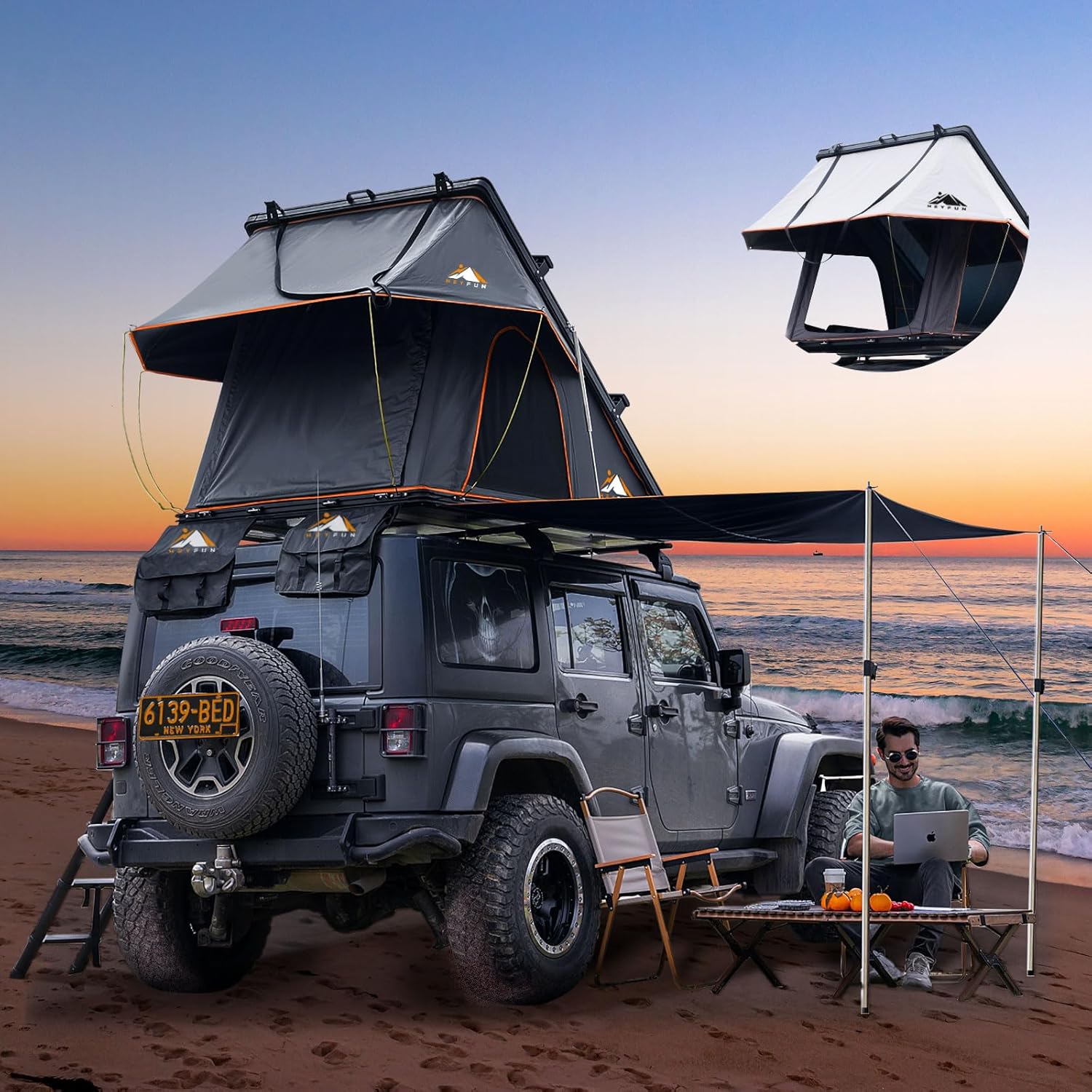
The HEYFUN Adventurer Pro is a hard-shell rooftop tent built for frequent overland use where quick setup and weather resistance matter. It mounts to crossbars and uses stainless steel gas struts for a hydraulic pop-up that opens and closes in seconds, so you can be camp-ready without wrestling with poles. The shell and honeycomb aluminum floor give a rigid sleeping platform and a factory-quality feel, while the 3-layer mattress, flocked lining, and multiple storage pockets make sleeping comfortable for two adults and a child. Included extras such as a side awning, replaceable rain fly, LED light strip, and a built-in USB outlet add real convenience at camp. The tent is rated for four-season use and lists waterproof and windproof features suitable for wet and cold conditions, though its heavy build means you must fit adequate roof crossbars rated for at least 165 lb and expect added roof weight and wind drag. Assembly and mounting take planning, but day-to-day use is fast and user-friendly for regular overlanding on a Ford Ranger when roof capacity and clearance are addressed.
Best for: Drivers who prioritize a durable, easy-to-use rooftop tent that holds up to year-round overlanding and values quick setup and campsite comfort on a Ford Ranger.
Less Ideal for: Those who need a lightweight, minimalist shelter for backcountry packing or who cannot accommodate the tent's roof weight or added vehicle height should consider lighter or ground-based options instead.
- Hydraulic stainless-steel gas struts enable near-instant pop-up and takedown for fast setup.
- Honeycomb aluminum hard shell and floor provide a rigid, durable sleeping platform.
- Included side awning, replaceable rain fly, and LED/USB accessories increase campsite comfort and utility.
- Designed for four-season conditions with waterproof, windproof, and UV-resistant materials.
- Generous interior storage with 13 pockets and a 3-layer detachable mattress for comfort.
- Heavy unit requires sturdy roof crossbars and reduces vehicle roof capacity and fuel economy.
Verdict: Choose this slot for the tent that best balances durable construction, easy setup, and reliable all‑season weather protection for regular overlanding use.
2. VEVOR Hard‑Shell Rooftop Tent with Tri‑Color LED and Thick Mattress
Best Budget Rooftop Tent

| Occupancy | 3 Person |
|---|---|
| Seasons | 4 Season |
| Rainfly Material | 420D Oxford (PU coated) |
| Maximum Height | 7.55 Feet |
| Ladder Max Load | 330 lbs |
This VEVOR hard‑shell rooftop tent converts a Ford Ranger roof into a weatherproof sleeping platform for two adults and a child. It mounts to factory or aftermarket roof racks and uses internal aluminum support poles plus an aluminum base plate and ladder to create a three‑point support system that resists wind. The shell opens quickly and the interior includes breathable mesh vents, a thick foam mattress and a tri‑color LED for low‑light tasks. Materials listed—420D Oxford rainfly with PU coating and polyester‑cotton main fabric—offer good water and UV protection for typical camping conditions, while the telescoping ladder extends to about 7.5 ft to reach higher truck roofs. Expect heavier handling and additional roof load on the Ranger that may reduce fuel economy and require a rack rated for the tent’s weight. The tent is suitable for weekend trips and mild four‑season use but avoid extreme storms or prolonged heavy snowfall where a lighter, dedicated expedition tent or framed rooftop option might perform better.
Best for: Ford Ranger owners who want an affordable, ready‑to‑use rooftop sleeping solution for weekend camping and family outings and prioritize weather protection and comfort over lightweight packability.
Less Ideal for: Overlanders planning extended trips in extreme alpine or heavy‑snow environments should consider purpose‑built expedition tents or lighter, higher‑performance rooftop systems instead.
- Hard‑shell design for faster setup and better aerodynamics when closed
- Waterproof rainfly and PU‑coated fabrics for reliable wet‑weather protection
- Thick foam mattress and ventilation for comfortable overnight stays
- Aluminum base plate and support poles increase wind resistance and stability
- Telescoping ladder with substantial reach for taller truck roofs
- Heavy overall weight increases roof load and may require a heavy‑duty rack
Verdict: Pick this slot when you want a no‑frills rooftop tent that provides safe, weatherproof sleeping space at a significantly lower price point.
3. HEYFUN Explorer Pro Hardshell Rooftop Tent with USB Outlet and Side Awning
Best Hard‑Shell Rooftop Tent

| Occupancy | 3 Person |
|---|---|
| Material | Honeycomb Aluminum, Aluminum Alloy, Polyester |
| Water Resistance Technology | 0-5,000 mm |
| Included Components | Side awning, ladder, mattress, mounting kit, USB outlet |
| Assembly Time | 10 Minutes |
The HEYFUN Explorer Pro is a rigid hardshell rooftop tent designed for fast setup and durable, year-round use on a roof rack. It opens and closes with stainless steel gas struts for near-instant pop-up performance and a secure, tight closure when stowed. Built from aircraft-grade aluminum and 320g polyester, the shell and waterproof seals block wind and rain while the flocked floor and three-layer mattress add comfort for two adults and a child. The kit adds practical extras: a ladder, attachable side awning, replaceable netting rain curtain, interior storage pockets, LED strip, and a USB outlet for charging devices. Its aluminum luggage racks make it easier to carry extra gear without sacrificing sleeping space. Expect a solid, insulated sleeping platform that resists abrasion and sheds weather better than soft tents, but plan for a heavyweight unit that requires sturdy crossbars supporting at least 165 lb and a larger roof footprint on the vehicle. Installation and removal are straightforward with the included mounting hardware, but the tent size and mass can affect vehicle handling and fuel economy compared with a soft-shell option.
Best for: Buyers who prioritize fast setup, durable weather protection, and a rigid sleeping platform for multi-season overlanding on a roof rack-equipped Ranger.
Less Ideal for: Campers who need a lightweight, low-profile setup that minimizes added roof weight or who lack high-capacity crossbars should consider lighter soft-shell or smaller hardshell options.
- Hydraulic gas-strut pop-up for very fast deployment and pack-up
- Rigid aluminum hardshell that offers stronger weather and abrasion resistance than soft tents
- Built-in USB outlet and LED strip for charging and interior lighting
- Includes ladder, side awning, replaceable rain curtains, and luggage racks for added functionality
- Three-layer mattress and flocked floor improve sleeping comfort for multi-season use
- High unit weight and large footprint require heavy-duty crossbars and will influence vehicle handling
Verdict: Use this label for a pop‑up hardshell tent that opens quickly, offers rigid protection from the elements, and resists wear better than soft‑sided models.
4. Overland Vehicle Systems TMBK 3-Person Soft-Shell Roof Top Tent with Annex
Best Soft‑Fold Rooftop Tent

| Occupancy | 3 Person |
|---|---|
| Seasons | 4 Season |
| Material Type | 420D Polyester Oxford, 600D Poly Cotton Rip Stop |
| Tent Floor Material | PVC-based |
| Included Components | Annex, Roof Top Tent |
This soft-shell roof top tent packs down to a low profile and unfolds into a roomy three-person sleeping area with an attached annex for extra covered space. It is built from heavy fabrics—600D ripstop poly-cotton for the body and 420D polyester Oxford for the rainfly—with a PVC-based removable floor and a 2.5-inch high-density foam mattress for basic comfort. Aluminum poles, a smooth aluminum insulated base, and stainless steel hinges keep the structure sturdy while the included 81-inch sliding ladder and external shoe pouch make camp life easier. The tent is rated for four seasons and has breathable mesh windows, quick-setup design, and a transport cover for weather protection. Expect the unit to add substantial weight to a rack and require a compatible roof or bed-rack system and proper load capacity checks before installation; the compact closed height helps reduce wind profile compared with larger setups but it is still a heavy rooftop system. For use on a midsize truck like the Ranger, plan mounting hardware and vehicle load limits accordingly.
Best for: Buyers who want a foldable soft-shell rooftop tent that maximizes interior space and adds an annex while keeping a lower closed profile than most hard-shell options; ideal for adventurers prioritizing campsite comfort and modular living space.
Less Ideal for: People seeking the lightest possible rooftop setup or a minimalist, ground-level tent solution should consider lighter backpacking tents or single-person rooftop models instead.
- Soft-shell design packs relatively compact for storage and travel compared with many hard shells
- Durable materials: 600D poly-cotton body and 420D polyester Oxford rainfly for strong weather resistance
- Includes annex to expand covered living or gear space
- Sturdy base and hardware: aluminum insulated base and stainless steel hinges increase durability
- Comes with a 2.5" high-density foam mattress and an 81" sliding ladder for convenience
- Heavy overall weight that requires a robust roof or bed rack and careful vehicle load checks
Verdict: Assign this slot to foldable soft‑shell tents that pack compactly, expand to give living space, and are lighter on roof racks than some hard shells.
5. CDEN Inflatable Rooftop Tent with Air Mattress and Ladder
Best Inflatable Rooftop Tent

| Occupancy | 2 Person |
|---|---|
| Seasons | 4 Season |
| Additional Features | inflatable |
| Material Type | Polyester |
This inflatable rooftop tent is designed to mount on a Ford Ranger's roof or roof rack and uses a powered air pump to inflate the tent body and included air mattress in minutes. It provides a spacious sleeping area for two to three adults and features a sealed waterproof floor, rainfly, and multiple mesh windows for ventilation and bug protection. The kit arrives with an anti-slip ladder, tie-down lines, support brackets, a repair kit, and a carry bag so you can stow and transport it between trips. The inflatable construction keeps overall hardware lighter than many framed roof tents and speeds setup, but it relies on air pressure for shape so it will feel less rigid than a hard-shell or framed tent and requires occasional pressure checks. For Ranger owners who prefer fast setup, lighter rooftop gear, and an included mattress, this tent is a practical choice; expect to trade some structural stiffness and long-term puncture resistance compared with framed alternatives.
Best for: Ford Ranger owners who want a lightweight, quick-to-deploy rooftop tent that includes a mattress and accessories for weekend overlanding and road trips.
Less Ideal for: Campers who prioritize maximum structural stiffness, long-term puncture resistance, or the fastest possible drive-away capability should consider framed or hard-shell rooftop tents instead.
- Fast setup using the included electric air pump gets the tent and mattress inflated in minutes
- Includes air mattress, ladder, tie-downs, repair kit, and carry bag for an all-in-one rooftop camping solution
- Weatherproof floor and rainfly plus mesh windows provide ventilation while keeping out bugs
- Inflatable design reduces rigid hardware weight compared with framed roof tents
- Inflatable structure is less rigid than framed or hard-shell tents and needs occasional pressure monitoring
- Heavier total pack weight compared with some soft-shell rooftop tents when carried on the roof
Verdict: Use this category for inflatable rooftop tents that inflate quickly, reduce hardware weight, and offer a different tradeoff between comfort and structural rigidity.
Choosing the Right 2019-2023 Ford Ranger Roof Tent: Key Factors to Consider
Vehicle Payload and Roof Load Capacity
Confirming your Ranger's payload and dynamic roof load capacity is the first practical step. A roof tent adds static weight on the roof and dynamic forces while driving, so you must account for the tent weight plus mattresses and any gear stored on top. Exceeding the rated limits will affect handling and could cause premature wear to suspension components.
Factor in occupants and bedding when calculating usable payload. Some tents are lightweight but require heavier mounting plates, while others integrate lightweight bases. Also consider how frequently you will carry additional roof cargo; occasional use with minimal extra load differs from full-time roof storage needs.
Mounting System and Compatibility
A compatible mounting system reduces installation time and improves safety. Check whether the tent uses universal clamp-style mounts, bolt-on plates that sit on crossbars, or requires a dedicated roof rack. For the Ranger, crossbar spacing and section height can vary by accessory, so a tent that offers adjustable mounting brackets is more likely to fit without custom fabrication.
Evaluate whether the tent needs through-bolting into rails or if it clamps to aftermarket crossbars. If you plan to switch tents between vehicles or remove it seasonally, choose hardware that supports repeat installation with minimal alignment work.
Weight and Materials
Tent base and shell materials determine weight, durability, and thermal behavior. Hard-shell designs often use composite or aluminum lids for easy pop-up action and faster setup, while soft-shell tents use heavy-duty fabrics and aluminum frames to save weight but may require more effort to fold and tension. Heavier tents can offer thicker mattresses and more insulation, but they increase roof load and may reduce fuel economy slightly.
Consider fabric denier, waterproof coatings, and corrosion-resistant hardware. Lighter materials help stay within payload limits, but prioritize build quality; a too-light tent may be less durable under repeated highway exposure.
Weather Protection and Ventilation
Look for tents with fully taped seams, waterproof base plates, and rainfly designs that keep entryways protected during storms. High wind performance matters for highway travel and exposed campsites; features like internal frame bracing and low-profile shells help reduce wind lift. Ventilation is equally important—mesh panels and adjustable vents reduce condensation inside the tent and improve comfort in warm weather.
Evaluate how the tent handles both heavy rainfall and hot, humid conditions. Some tents include removable storm covers or secondary flys that extend protection, which adds versatility for changing climates common across the Ranger's likely travel areas.
Setup Time and User Experience
Quick, repeatable setup saves time and frustration at the end of a long drive. Hard-shell tents often pop open with gas struts or hinge systems for single-person deployment, while soft-shell models rely on poles and fabric tensioning. Ladder quality, locking points, and storage organization inside the tent influence nightly convenience.
Consider whether you often camp alone or with a partner and whether setup in rain or darkness is a frequent scenario. Simple, tool-free mounting adjustments and clear alignment guides reduce the likelihood of improper installation that can damage the tent or roof.
Sleeping Comfort and Interior Layout
A comfortable mattress and thoughtful interior layout make longer trips enjoyable. Mattress thickness, material (foam or inflatable), and overall sleeping platform dimensions determine who can sleep comfortably. Windows, awnings, and internal storage pockets affect livability for changing weather and multiple occupants.
Also consider headroom and the tent footprint relative to your roof and cab clearance. If you plan to add an annex or use the tent for extended stays, look for systems that accommodate extensions or modular accessories.
Understanding The Ranger's Roof And Rack Limits
The 2019-2023 Ford Ranger has specific roof and rack loading characteristics that shape which roof tents are practical. Roof load values are expressed as static and dynamic limits; static capacity is the weight the roof can hold when stationary, while dynamic capacity governs how much load you can safely carry while driving. Always cross-reference the tent weight and any mount hardware with the combined dynamic rating for the truck and the capacity of your chosen crossbars.
If you use an aftermarket roof rack or a bed-mounted system, verify the rack's published capacity and how it transfers loads to the vehicle structure. A properly engineered rack will spread weight and reduce stress on single attachment points.
- Static vs dynamic load explained
- How crossbar selection affects compatibility
- Importance of professional installation for high-capacity racks
Hard-Shell Versus Soft-Shell: Pros and Cons
Hard-shell tents typically open quickly and offer better aerodynamic profiles when closed, which can reduce wind noise and resist water pooling. They often have integrated mattress platforms and faster deployment mechanisms. Soft-shell tents are lighter and can pack to a smaller profile, but they may need more effort to tension and protect against wind.
Your decision should reflect how you use the Ranger. If rapid setup and occasional highway travel at higher speeds are common, a hard-shell option may be preferable. If you prioritize lower roof load and easier seasonal storage, a soft-shell design could be more suitable.
- Hard-shell: faster setup, better aerodynamics, heavier
- Soft-shell: lighter, lower profile when packed, more manual setup
Mount Types: Crossbar Clamps, Plate Kits, And Bed Rack Mounts
Mounting approaches vary. Clamp-style mounts attach to crossbars without drilling, plate kits bolt through crossbars or dedicated mounting points, and bed-rack mounts use a separate structure anchored to the truck bed. Each method has tradeoffs in terms of ease of removal, repeatability, and load distribution.
For the Ranger, clamp-style mounts work well with heavy-duty crossbars that have sufficient width and strength. Plate kits can provide a lower profile and improved alignment but may require more careful installation and torque specifications.
- Clamp mounts: easiest to remove seasonally
- Plate kits: more secure for high loads
- Bed rack mounts: avoid using unless rack rated for tent weight
Practical Comfort Upgrades To Consider
A few targeted upgrades improve livability. A high-density mattress or inflatable topper enhances overnight comfort without adding excessive structural weight. Internal storage pockets, sewn-in gear loops, and detachable awnings expand functionality at camp. Consider a lightweight annex if you need standing room or gear storage on longer trips.
Ventilation accessories, such as roof vents or condensation wicks, reduce nighttime dampness. Small investments in ladder stabilizers or anti-slip pads make ingress and egress safer on uneven ground.
- Mattress toppers for comfort
- Annexes for extra space
- Ladder stabilizers for safety
Maintaining Your Roof Tent And Mounting Hardware
Regular maintenance extends tent life and keeps the mounting interface safe. Clean fabrics after wet trips and allow them to dry fully before storage to avoid mildew. Inspect seals and taped seams periodically and reapply seam sealer if you notice wets spots or seam leakage. Lubricate moving parts in hinges and ladder locking mechanisms to prevent corrosion and binding.
Check mounting bolts and clamps after initial installation and re-torque them after the first few hundred miles of use. Periodic inspections for fatigue or rust on plates and fasteners help prevent sudden failures on the road.
- Dry fabric before storage to prevent mildew
- Re-torque mounts after initial use
- Inspect hardware for corrosion or fatigue
Still looking for the perfect fit?
Select your Ford Ranger configuration to see the most relevant Roof Tents recommendations
How We Chose the Best 2019-2023 Ford Ranger Roof Tent
Our selections prioritize fit, safety, and everyday usability for the 2019-2023 Ford Ranger. We looked at mounting requirements and verified which tent styles work within the Ranger's typical roof and rack load limits. Structural durability was assessed by examining materials and construction approaches that resist wind and repeated use on a truck roof. Weather protection criteria focused on rainproofing, seam sealing, and hooded entrances to keep sleeping areas dry in mixed conditions. Comfort factors included mattress thickness, internal headroom, and ventilation options for warm- and cool-weather camping. Ease of use was another key filter, with preference given to tents that open and close quickly, have intuitive ladder systems, and straightforward attachment hardware. We excluded tents that require major roof modifications, permanent bed rack alterations, or that exceed common payload ratings for the Ranger when combined with typical gear. The final list reflects a balance of weight, durability, and real-world convenience for overland and weekend use.
Our full evaluation process is outlined in our review methodology.
FAQ
Will any roof tent fit my 2019-2023 Ford Ranger?
Not all roof tents fit without checking load limits and rack compatibility. You need to match the tent's mounting system to your crossbars or rack and ensure combined weight stays within the Ranger's dynamic roof load rating.
How much weight can I put on the Ranger roof with a tent?
Allowed weight depends on the truck configuration and installed rack system. Consider both the tent weight and occupants; consult your vehicle and rack documentation and allow margin for dynamic loads while driving.
Is a hard-shell or soft-shell roof tent better for highway travel?
Hard-shell tents usually offer better aerodynamics and lower wind noise at highway speeds, while soft-shell tents are lighter and pack smaller. The best choice depends on how often you drive long distances and your priorities for weight versus convenience.
Can I install a roof tent by myself?
Many tents can be mounted by one person with two people recommended for safer alignment and lifting. Installation can require precise torque settings and careful plate alignment, so having an assistant or a professional installer makes the process easier and less risky.
How do roof tents perform in heavy rain?
Performance varies by design. Tents with fully taped seams, durable rainflies, and elevated base plates offer the best protection. Properly tensioned flys and overhanging entrances help keep water out during storms.
Do roof tents affect fuel economy significantly?
A roof tent does increase aerodynamic drag and weight, which can reduce fuel economy, especially at highway speeds. Hard-shell tents with smoother profiles tend to have less impact than bulky soft-shell setups.
Final Verdict
For the 2019-2023 Ford Ranger, prioritize a roof tent that respects the truck's roof load limits while offering the weather protection and ease of use that match your typical trips. Balance tent weight against mattress comfort and mounting security, and favor mounting solutions that spread loads across a robust rack system. If you often travel at higher speeds or in windy conditions, consider a low-profile hard-shell option; if you need lower weight and simpler seasonal storage, a quality soft-shell will serve well. With careful attention to payload, mounting compatibility, and setup ease, you can select a roof tent that reliably turns your Ranger into a comfortable basecamp.
Explore More:
- Check out all Ford Ranger parts & accessories
- Explore Exterior Accessories
- Browse all Accessories
