

Note: This article contains affiliate links. If you click on these links and make a purchase, I may earn a small commission at no extra cost to you. This helps support my research and content. Read my full affiliate disclosure here.
If you own a 1997-2006 Jeep Wrangler and want to turn it into a reliable camper, choosing the right roof tent matters. These Wranglers span the TJ, LJ, and TJU chassis eras, and the tent you mount should match your roof or roof rack load limits, vehicle clearance, and how you plan to camp. This guide lists seven shortlisted roof tents selected for common Wrangler setups. We focus on fitment for the 1997-2006 Wrangler range, durability in varied weather, and ease of installation and use. Below you will find concise pros and cons, what to look for, and practical tips for mounting and maintaining a rooftop tent on your Jeep.
Looking for other parts? See all Jeep Wrangler parts & accessories.
Top Picks at a Glance
| Best Overall Roof Tent The strongest all-around rooftop tent balancing comfort, durability, and features | WildFinder Hard-Shell Rooftop Tent for 2-3 People |  |
| Best Budget Roof Tent An affordable rooftop tent that covers basics without a big price tag | MC TOMOUNT Inflatable Rooftop Tent with Detachable Mattress and Telescoping Ladder |  |
| Best Hardshell Roof Tent Rigid-shell pop-up tents with fast setup, strong weather sealing and durability | JOYINRUTE Aluminum Hard-Shell Pop-Up Rooftop Tent — 2-Person |  |
| Best Quick-Setup Roof Tent Tents with fast pop-up or air-assisted opening for one-person setup | HEYFUN Adventurer Pro Aluminum Hard-Shell Rooftop Tent (3-Person) |  |
| Best Four‑Season / Insulated Tent Roof tents built or rated for cold weather with added insulation features | JOYINRUTE Hard‑Shell Insulated 2‑Person Roof Top Tent |  |
| Best Low‑Profile / Compact Tent Slim, aerodynamic tents that close low to the roof for clearance and MPG | ILANDER 1.2M Hardshell Rooftop Tent for 2-3 People |  |
| Best Solar / Power‑Ready Roof Tent Tents equipped for onboard power: solar panels, USB, or integrated lighting | ARCTWONDER Hard‑Shell Rooftop Tent with Solar Panel |  |
1. WildFinder Hard-Shell Rooftop Tent for 2-3 People
Best Overall Roof Tent

| Occupancy | 3 Person |
|---|---|
| Seasons | 4 Season |
| Material | Polyester |
| Form Factor | Hard Shell |
| Included Components | Ladder, LED strip, mattresses, organizer bags |
This WildFinder hard-shell rooftop tent is a compact, well-built RTT aimed at campers who need a rugged, weather-resistant sleeping platform mounted to their vehicle. The aluminum shell and stainless steel components give it a durable feel for long-term roof mounting, while the polyester tent body, integrated rainfly, and high rainproof rating keep occupants dry in heavy weather. Setup is simple: unlatch and lift the shell, deploy the ladder, and install a few support rods for the awning and vents, which makes it practical for short stops or multi-day trips. Included accessories such as an internal mattress, LED strip, ladder, and multiple organizers help with comfort and gear storage, though some users add a thin topper for longer trips. Limitations to consider are the product weight and the need for a sturdy roof rack or crossbars on a 1997–2006 Jeep Wrangler to mount and lift it safely, and the tent footprint suits one to two adults more comfortably than three large adults. For owners prioritizing rugged weather protection and straightforward use, it delivers a balanced mix of durability and convenience.
Best for: Jeep Wrangler owners seeking a durable, weatherproof rooftop camping solution that balances build quality, ease of use, and everyday comfort for weekend trips and seasonal overlanding.
Less Ideal for: Drivers who cannot fit heavy roof loads or lack heavy-duty crossbars and a safe method to lift and mount the tent should consider lighter soft-shell options or roof-bed setups instead.
- All-aluminum hard shell and stainless steel components for long-term durability on a roof
- Waterproof polyester tent and full rainfly for strong protection in rain and snow
- Quick pop-up deployment with included telescoping ladder for fast setup
- Comes with mattress, LED strip, and multiple organizers to improve overnight comfort and storage
- Very heavy, requiring strong roof bars or bed racks and at least two people to install safely
- Stock mattress may be thin for extended trips and some users prefer adding a topper
Verdict: This pick is for buyers who want a well-rounded rooftop tent that balances build quality, weather protection, sleeping comfort, and straightforward mounting.
2. MC TOMOUNT Inflatable Rooftop Tent with Detachable Mattress and Telescoping Ladder
Best Budget Roof Tent

| Occupancy | 2 Person |
|---|---|
| Seasons | 4 Season |
| Water Resistance Technology | 2000mm+ |
| Material Type | TC Cotton |
| Included Components | Aluminum Telescoping Ladder, Detachable Mattress, Tent |
This inflatable rooftop tent is designed as a budget-friendly way to add rooftop sleeping to a 1997–2006 Jeep Wrangler. The tent inflates separately from the included detachable mattress so you can use the mattress on its own or leave it attached for faster setup. Constructed from heavy-duty 340g TC cotton, the shell is built for stronger UV and water resistance than typical oxford fabrics, and the large panoramic mesh skylight improves airflow and lets you stargaze. Setup is straightforward and claimed to take about 10 minutes, making it practical for weekend trips. The aluminum telescoping ladder supports heavy loads for stable entry and exit, and the tent can be used either mounted to the Wrangler roof or placed on the ground. On the downside, the TC cotton fabric and inflatable structure are heavier and bulkier than ultralight options, and full weatherproofing may depend on careful sealing and roof mounting hardware not included. For Jeep owners who want a low-cost, comfy rooftop sleeping solution with a usable mattress and simple setup, this tent delivers value with sensible compromises.
Best for: Wrangler owners looking for the most affordable rooftop sleeping option that still gives solid weather resistance, a comfortable mattress, and quick, easy setup for weekend or short off‑road trips.
Less Ideal for: Campers who prioritize ultralight packing, minimal roof load, or the highest level of factory-style weatherproofing should consider purpose-built lightweight or hard-shell roof tents instead.
- Fast inflatable setup in about 10 minutes for less time at camp
- Detachable air mattress can be used separately or kept in the tent for convenience
- Heavy-duty 340g TC cotton fabric offers better UV and water resistance than standard Oxford fabric
- Large panoramic mesh skylight improves ventilation and provides a view for stargazing
- Includes a telescoping aluminum ladder rated to 441 lbs for stable access
- Heavier and bulkier than lightweight rooftop tents, which may affect vehicle loading and storage
Verdict: Choose this tent if you need a reliable, low-cost rooftop sleeping solution that keeps your budget front of mind while still offering basic weather resistance and a usable mattress.
3. JOYINRUTE Aluminum Hard-Shell Pop-Up Rooftop Tent — 2-Person
Best Hardshell Roof Tent
| Occupancy | 2 Person |
|---|---|
| Seasons | 4 Season |
| Water Resistance Technology | 0-5000mm |
| Material Type | Aluminum, Polyester |
| Installation Type | Roof Top |
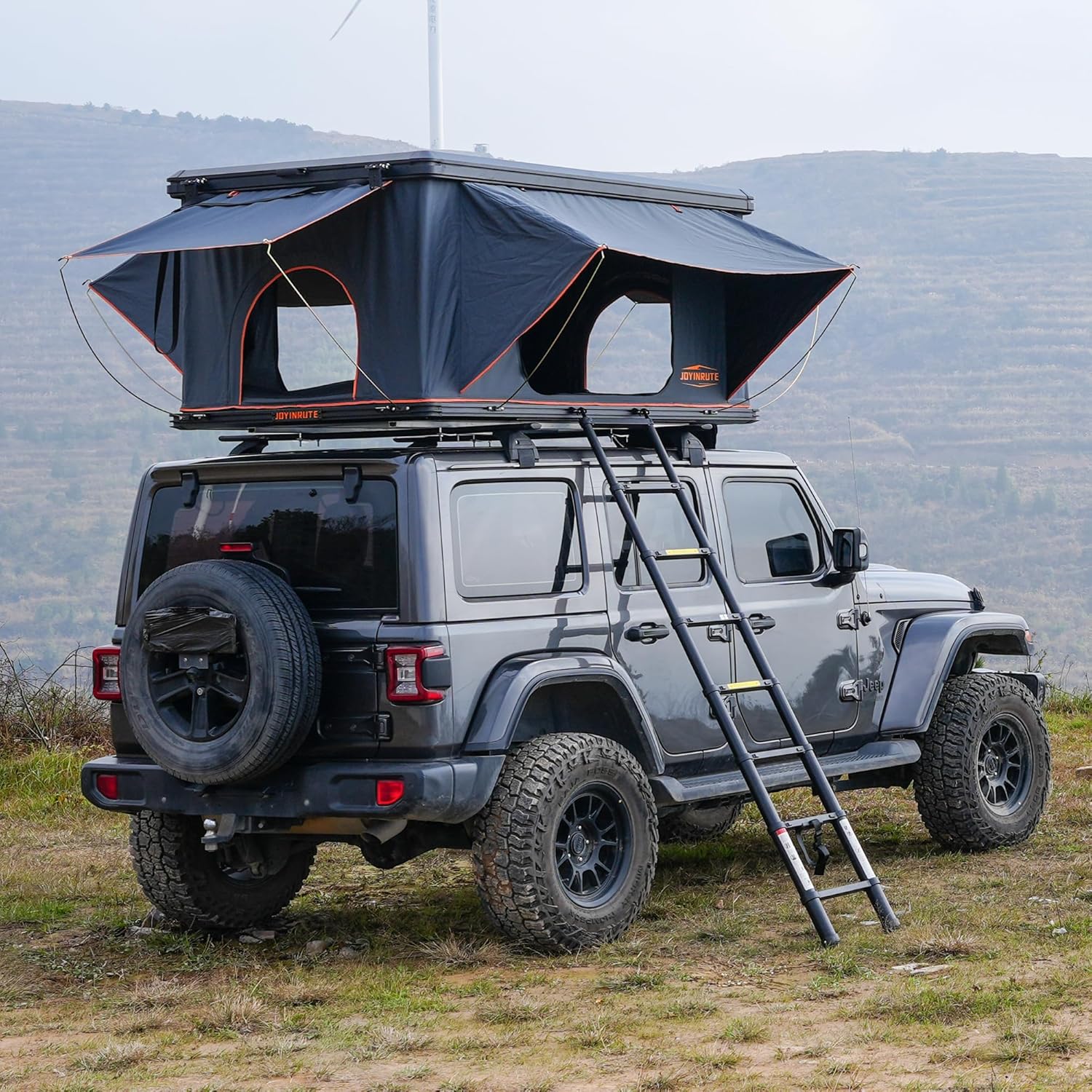
This JOYINRUTE hard-shell rooftop tent is built around an aluminum base and frame with a polyester rainfly to give a weather-resistant, low-profile package that opens quickly with four hydraulic struts. It mounts to a roof rack or crossbars and is aimed at two-person car camping; the included mattress, telescoping ladder, internal storage bags, and LED strip mean you can sleep comfortably and keep gear organized without buying add-ons. The 320G polyester fabric with a blackout coating and 5000 mm water resistance plus wind resistance to grade 6 make it suited for wet and windy conditions, while multiple mesh windows balance ventilation and insect protection. Expect a heavier-than-soft-shell unit because of the aircraft-grade aluminum structure, and plan for two people to handle installation and mounting hardware; some buyers report metal shavings after unboxing and mattress firmness that side sleepers may want to supplement. Setup at camp is fast, but the weight and bulk when closed affect roof load and fuel economy while driving.
Best for: Buyers who want a durable, weatherproof hardshell rooftop tent that closes to a low profile for driving and prioritizes long-term durability and strong protection in wet or windy conditions.
Less Ideal for: Minimalist campers who need an ultra-light setup or owners without a strong roof rack system and the ability to handle a heavy rooftop load should consider lighter soft-shell options or bed-mounted tents instead.
- Hardshell aluminum base and frame for durability and long service life
- High weather protection with 5000 mm water resistance and wind resistance up to grade 6
- Quick pop-up operation using four hydraulic support rods for easy setup
- Includes mattress, ladder, storage bags, LED strip and installation tools out of the box
- Multiple mesh windows provide ventilation while keeping insects out
- Heavy unit that increases roof load and can complicate installation and vehicle handling
Verdict: This slot is for buyers who prioritize a tough, hardshell pop-up tent that closes to a low profile for driving and offers superior weather protection and longevity.
4. HEYFUN Adventurer Pro Aluminum Hard-Shell Rooftop Tent (3-Person)
Best Quick-Setup Roof Tent
| Occupancy | 3 Person |
|---|---|
| Material | Honeycomb Aluminum, Aluminum Alloy, Stainless Steel |
| Water Resistance Technology | 0-5,000 mm |
| Assembly Time | 10 Minutes |
| Included Components | Side awning, 2 rain flies, ladder, mattress, LED light, USB outlet |
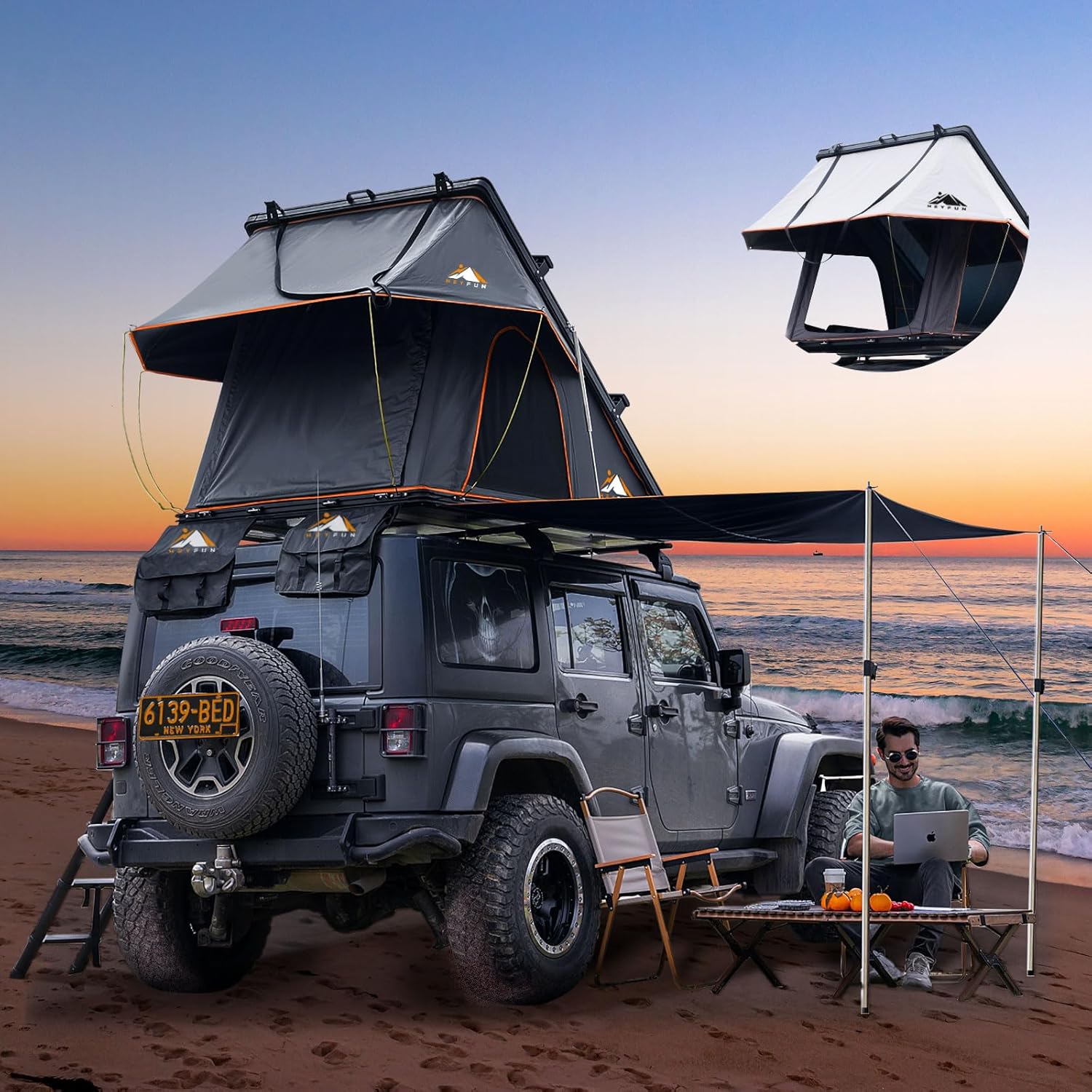
The HEYFUN Adventurer Pro is a hydraulic hard-shell rooftop tent designed for fast, repeated use. Its stainless steel gas struts let the shell pop open and close in seconds, so a single person can deploy the tent quickly at short stops or roadside camps. Built-in features like a three-layer mattress, LED light strip, and interior USB outlet make overnight stays comfortable without added kit, while the included side awning and adjustable luggage racks expand covered space and storage for gear. The tent uses aircraft-grade aluminum components and heavy-duty zippers for weather resistance and stability in wind or rain, and the package includes two rain flies and an aluminum ladder. Trade-offs are its weight and size: it requires sturdy cross bars that support at least 165 lbs and two people to mount safely, and the included mounting hardware has mixed reports from users. For repetitive one-person setup and teardown this tent saves time and adds creature comforts, but plan for a proper roof rack and occasional hardware upgrades.
Best for: Drivers who prioritize rapid, one-person setup and teardown for short stops or frequent overnight runs and who can fit a robust roof rack on their vehicle.
Less Ideal for: People who cannot install strong cross bars or who want a lightweight, ground-portable tent alternative are better served by smaller or soft-shell options.
- Hydraulic gas struts allow near-instant pop-up and stow for fast single-person use.
- Built-in LED light strip and USB outlet provide onboard power and illumination.
- Three-layer detachable mattress and flocked floor improve sleeping comfort out of the box.
- Includes side awning and adjustable roof racks for extra covered space and gear mounting.
- All-season materials and dual rain flies give reliable weather protection.
- Heavy unit that needs cross bars rated for at least 165 lbs and careful mounting.
- Some reviewers reported weak or soft mounting fasteners included with the kit.
Verdict: Pick this tent if you value rapid, one-person deployment and stowing—ideal for short stops, weekend runs, or frequent on/off use.
5. JOYINRUTE Hard‑Shell Insulated 2‑Person Roof Top Tent
Best Four‑Season / Insulated Tent

| Occupancy | 2 Person |
|---|---|
| Seasons | 4 Season |
| Water Resistance Technology | 0-5000mm |
| Material | Aluminum, Polyester |
| Number of Windows | 4 |
The JOYINRUTE hard‑shell rooftop tent is built for cold and wet conditions, combining an aluminum shell with a removable thermal liner and a 320G polyester shell rated to 5000 mm water resistance. It mounts to roof crossbars and uses four hydraulic support rods for fast, single‑person deployment and secure closure. Inside the tent the flocked lining floor and included mattress plus condensation pad improve sleeping comfort and reduce moisture buildup during multi‑night trips. Ventilation is handled by four mesh windows with secondary windproof layers, letting you control airflow without sacrificing weather protection. The package ships with a telescoping ladder, internal storage pockets, LED strip, and organizers so you can start camping with minimal extra gear. Expect a heavy, bulky unit that requires strong crossbars and longer mounting bolts on some racks, and plan for two people or an anchored lift when installing; instructions for certain closing steps are sparse. Overall it is engineered to keep occupants warmer and drier in shoulder and winter conditions but needs careful mounting and handling due to weight.
Best for: Overlanders who prioritize a warm, weather‑sealed sleeping platform for cold or wet trips and are willing to fit a heavier, hard‑shell tent to a sturdy rack setup.
Less Ideal for: Day campers, solo installers, or those with weak roof racks who cannot accommodate the tent’s weight or do not want to modify mounting hardware.
- Removable thermal liner and flocked floor reduce condensation and add warmth for cold‑weather camping.
- Hard‑shell aluminum base and hydraulic struts enable quick, stable pop‑up setup and teardown.
- 320G polyester with 5000 mm rating and reinforced windows provides strong waterproofing and wind resistance.
- Includes mattress, condensation pad, ladder, LED strip, and multiple storage pockets for turnkey use.
- Heavy and bulky which makes rooftop installation difficult for one person and requires robust crossbars or racks.
- Stock mounting bolts may be too short for some crossbar systems, requiring longer hardware and additional fitting.
- Instructions lack detail on some closing and mounting steps which can make first installs fiddly.
Verdict: This tent is aimed at overlanders who need a rooftop tent engineered for cold, wet, or snowy conditions with better insulation, sealed seams, and wind resistance.
6. ILANDER 1.2M Hardshell Rooftop Tent for 2-3 People
Best Low‑Profile / Compact Tent

| Occupancy | 3 Person |
|---|---|
| Seasons | 4 Season |
| Water Resistance Technology | ILANDER coating |
| Material Type | Aluminum |
| Is Waterproof | true |
The ILANDER 1.2M hardshell rooftop tent is a low-profile, vehicle-mounted sleeping solution aimed at weekend overlanders who need a compact, easy-to-use roof tent. Its aerospace-grade aluminum shell and telescoping ladder compress the unit to a slim closed height that reduces wind drag and keeps clearance low for tighter trails and garage parking. Setup is fast and straightforward with ergonomic straps and locking hardware that the brand says opens in about 30 seconds and secures for four-season use. The tent uses PU-coated Oxford inner fabric and silnylon floor and rainfly to deliver 2000 mm water resistance and strong UV protection, while a 6 cm high-density mattress and internal pockets add comfort and organization. Practical limitations include the advertised 3-person capacity which will be snug for three adults, and the unit is relatively heavy compared with soft-shell alternatives so roof load and rack strength need checking before purchase. Assembly to a roof rack is required and some buyers may prefer a lighter or smaller single-person option for extreme off-road use.
Best for: Drivers who need a compact, low-profile rooftop tent that keeps closed height and wind resistance down for regular driving and narrow off-road trails while still offering quick setup and comfortable sleeping space.
Less Ideal for: Campers who prioritize the absolute lightest gear or maximum interior space for three full-size adults should consider lighter soft-shell models or larger rooftop tents instead.
- Low closed profile reduces wind drag and improves vehicle clearance on trails
- Aerospace-grade aluminum hard shell for durable, road-ready protection
- Quick setup with secure locks and ergonomic straps for fast camp transitions
- Waterproof PU coating and 2000 mm water resistance with 99% UV protection for all-weather use
- Advertised 3-person capacity will be tight for three adults
- Heavier than typical soft-shell tents so requires a robust roof rack and higher roof load capacity
Verdict: Choose this compact roof tent when vehicle clearance, reduced wind drag, and a lower closed height are important for daily driving or tight trails.
7. ARCTWONDER Hard‑Shell Rooftop Tent with Solar Panel
Best Solar / Power‑Ready Roof Tent

| Material | Aluminum, Polyester |
|---|---|
| Solar panel | 12V 216W included |
| Water resistance level | Waterproof |
| Floor area | 29.37 Square Feet |
| Fits | Large size tent |
This hard‑shell rooftop tent combines an aluminum frame and clamshell top with an included 12V 216W solar panel to keep small power stations and devices topped up while you camp. It mounts to roof racks and cargo bars and opens with pneumatic struts for a one‑person pop up in seconds; when closed it sits low to reduce wind drag. Inside the tent the waterproof 320g polyester fabric, blackout panels, multiple vents and storage pockets make overnighting comfortable for two adults plus a child or pet, and the built‑in rainfly and taped seams handled heavy rain in several user reports. Practical extras include internal lighting and cargo bars and a mattress pad, though most buyers add a thicker sleeping pad for comfort. Expect some installation fiddling to match unconventional racks and plan for occasional condensation in cold weather. The solar output meets typical charging needs but may not reach the advertised peak in real‑world conditions.
Best for: Buyers who prioritize off‑grid power and convenience will appreciate the built‑in solar and integrated lighting for charging devices and running small electronics while camping near trails or dispersed sites.
Less Ideal for: Campers seeking the lightest possible roof setup or those who need a factory‑matched rack mounting kit without modification should consider alternatives or plan to fabricate adapters.
- Aluminum shell and corners for stronger, more durable construction than plastic alternatives
- Included 12V/216W solar panel with controller for charging power stations and devices
- Pneumatic struts allow quick one‑person pop up and low 7‑inch closed profile to reduce wind resistance
- Waterproof 320g polyester fabric with taped seams and integrated rainfly for reliable wet‑weather protection
- Multiple vents, blackout panels and interior storage pockets improve comfort and organization overnight
- Included mattress is thin so most users add a separate pad for long‑term comfort
Verdict: This pick suits buyers who want a rooftop tent with built-in or compatible power features—solar charging, USB outlets, or integrated lighting—for off-grid comfort and electronics.
Choosing the Right 1997-2006 Jeep Wrangler Roof Tent: Key Factors to Consider
Vehicle Load Capacity and Roof Rack Compatibility
Confirm your Wrangler's specified static and dynamic roof load limits before selecting a roof tent. Older Wranglers from 1997 to 2006 often have lower factory roof load ratings than modern SUVs. A rooftop tent's published static load (when parked) is typically much higher than the dynamic load rating for driving, so match both numbers to your vehicle and to the rack system. Roof rack compatibility matters because the tent needs firm, evenly distributed anchor points. Some rooftop tents require crossbars with specific spacing or a load-bearing roof rail. When using an aftermarket rack, check its rated capacity and mounting interface. Overloading either the rack or the vehicle roof can damage the structure and create handling hazards while driving.
Tent Weight and Its Effect on Handling
Rooftop tents add significant mass above the Wrangler's center of gravity. Heavier tents can increase body roll, affect steering feel, and influence braking distances. Consider a tent's packed weight and how it will interact with your Wrangler's suspension and intended use, such as highway travel, off-road trails, or extended overlanding. If you regularly drive on rough roads, lighter designs reduce strain on mounting hardware and suspension components. Conversely, heavier hard-shell or insulated tents may offer faster setup and better weather protection, but expect to accommodate that weight in your vehicle setup.
Packed Size, Vehicle Clearance, and Roof Access
Check the folded dimensions of the tent to ensure your Wrangler maintains acceptable garage and trail clearance. Taller packed heights can make low-clearance garages or trail obstacles problematic. Folding profile also affects wind noise and fuel economy during travel. Consider how you will access the tent. Ladder length, vehicle ride height, and roof edge height determine where the tent sits relative to the ground. For lifted Wranglers, you may need a longer ladder or a lower mounting position. Think through daily use: will you frequently get in and out at night or pack gear on the roof above the tent?
Weather Resistance and Ventilation
Look for durable shell materials, welded seams, and quality zippers to keep rain and drafts out. For a Jeep Wrangler that sees mixed conditions, a tent with a high hydrostatic head rating on the fabric and sealed seams will perform better in heavy rain. Ventilation options such as mesh windows and adjustable vents reduce condensation during cool nights and improve comfort. Insulation options, removable storm covers, and annex compatibility can expand seasonal usability. Consider how the tent handles wind; reinforced mounting points and aerodynamic shapes reduce flapping and stress during high winds, which is particularly important on exposed campsites or when traveling at highway speeds.
Setup Speed, User-Friendly Design, and Maintenance
A tent that is quick and intuitive to set up reduces hassle and exposure to the elements. Look for designs with gas struts, one-motion opening systems, or straightforward pole assemblies that you can operate solo. Easy-access storage pockets, mattress thickness, and interior layout influence sleep comfort and nightly turnaround time. Maintenance considerations include replaceable covers, washable fabrics, and serviceable hardware. Corrosion-resistant fittings are preferable for coastal or wet-area use. Simple repairability reduces downtime and extends the useful life of your rooftop tent on a Wrangler that may see frequent outdoor use.
Interior Comfort and Practical Features
Mattress thickness and foam quality directly affect sleep quality when camping on the roof. Measure interior dimensions to ensure two people can sleep comfortably and that there is adequate headroom for sitting up. Storage solutions like internal pockets, gear loops, and exterior awnings add convenience for longer trips. Lighting compatibility, vestibule or annex options, and insect-proof mesh windows all improve the camping experience. Think about accessories you might want, such as annex rooms for extra storage or privacy, and confirm anchor points and attachment compatibility with the tent you choose.
Why Roof Tents Work Well on 1997-2006 Wrangler (TJ, LJ, and TJU)
The 1997-2006 Jeep Wrangler platform offers a compact, rugged base for rooftop camping thanks to short wheelbase stability and a simple roof structure that accepts aftermarket racks. For TJ, LJ, and TJU Wranglers in this range, owners often prefer rooftop tents because they avoid campsite ground conditions and provide a comfortable, elevated sleep platform.
Rooftop tents also keep interior cargo space free and make overnight setup quicker at remote sites. That said, you need to pair the tent with a properly rated rack and be mindful of vehicle handling changes introduced by the added roof load.
- Elevated sleeping reduces exposure to wet or uneven ground
- Short setup time compared with ground tents
- Fits typical Jeep roof rack geometries when mounted correctly
Mounting Options and Rack Considerations for Wranglers
Mounting a rooftop tent to a 1997-2006 Wrangler usually involves crossbars or a full-width roof rack that anchors to the factory points or to a bolt-on tower system. Choose a rack with a published load rating that meets or exceeds both the tent's static weight and the manufacturer's safety margin.
Some racks designed for off-road use include integrated mounting channels that simplify attachment and distribute load. Verify bolt patterns, hardware length, and clearance for any roof-mounted accessories like a light bar or a spare tire carrier when planning the installation.
- Verify rack and mounting hardware load ratings
- Use torque-specified fasteners and locking hardware
- Consider full-width racks for better load distribution
Practical Installation Tips and Ladder Placement
Before installing, clean and inspect the roof and rack attachment points for corrosion or damage. When you position the tent, think through ladder access at night and during bad weather. The ladder should reach the ground at a comfortable angle without creating trip hazards around the vehicle.
Secure ladder feet and use non-slip pads where appropriate. If you plan to camp on uneven ground, carry small leveling pads or shims to stabilize the ladder. Check that the ladder does not interfere with doors, gas caps, or mounted accessories when stowed.
- Test ladder angle and reach before finalizing mount
- Keep a small set of shims or pads for on-site leveling
- Confirm ladder stows securely for travel
Seasonal Use: Venting, Insulation, and Rain Management
For spring and summer trips, maximize mesh ventilation to reduce condensation and improve airflow. In colder months, consider insulated mattress covers or a tent with a more enclosed design to retain heat. Removable storm flaps and taped seams are important for sustained wet-weather camping.
Plan for water shedding by ensuring rainfly overlap and proper seam orientation when mounting. If you frequently camp in heavy rain, test the tent in a controlled setting to identify any weak points where water may enter and address them before a multi-day trip.
- Use mesh panels for warm-weather airflow
- Insulated accessories improve cold-weather comfort
- Check seam sealing and rainfly coverage for heavy rain
Driving with a Roof Tent: Aerodynamics and Noise
A packed roof tent alters the Wrangler's aerodynamics, increasing wind noise and affecting fuel consumption. Hard-shell tents typically offer a sleeker profile and lower wind noise, while soft-shell designs can flutter more unless properly tensioned. Position cargo carefully to maintain balanced weight distribution.
At highway speeds, verify that all fasteners remain secure after initial test drives. Periodically inspect mounting points during long trips to detect loosening or unusual wear that could affect both safety and noise levels.
- Expect increased wind noise and slightly reduced fuel economy
- Hard-shell designs usually produce less flutter and noise
- Recheck fasteners after the first miles with a new installation
Packing and Long-Term Care
Store fabric covers dry and ventilated to prevent mildew when the tent is not mounted. Clean off salt, mud, and debris after trips, and inspect zippers, fabric seams, and frame joints for damage. Replace weather seals and tapes as they age to preserve waterproofing.
If you plan to leave the tent mounted for extended periods, periodically check tension straps and UV-exposed fabrics for degradation. Consider a UV-resistant cover for long-term storage to maintain material life on a Wrangler left outdoors.
- Clean and dry fabrics before storage
- Inspect zippers and seals regularly
- Use a UV-resistant cover if leaving the tent mounted long-term
Still looking for the perfect fit?
Select your Jeep Wrangler configuration to see the most relevant Roof Tents recommendations
How We Chose the Best 1997-2006 Jeep Wrangler Roof Tent
We evaluated candidates against a Jeep Wrangler-specific decision framework focused on real-world use. Key evaluation criteria included: structural fit and load compatibility with 1997-2006 Wrangler roofs and common aftermarket roof racks; static and dynamic load ratings that match typical occupancy and driving conditions; fabric and seam construction for weather resistance and longevity; ease of setup and stow procedures for solo or two-person use; ventilation, mattress comfort, and insulated options for multi-season camping; and weight, folded dimensions, and how they affect vehicle center of gravity and clearance. We excluded options that required significant vehicle modification beyond common roof racks or that lacked published load ratings compatible with the Wrangler roof structure for this year range. We also filtered out tents with insufficient user-servable components or unclear hardware specifications. The result is a set of tents that balance fit, durability, and daily usability for 1997-2006 Jeep Wranglers, including TJ, LJ, and TJU generation considerations where relevant.
Our full evaluation process is outlined in our review methodology.
FAQ
Will a rooftop tent fit the roof of my 1997-2006 Wrangler without modification?
Often yes, but it depends on the tent's bracket spacing and your rack. Many tents fit when paired with a properly rated crossbar or full-width rack. Confirm the tent's mounting requirements and your rack's measurements and load limits before purchase.
How much weight can the Wrangler roof handle with a tent mounted?
Published static and dynamic limits vary across trims and years, and aftermarket racks change the equation. You should combine the vehicle's roof rating with the rack's rating and aim to stay within both specifications for safe driving and parking.
Do rooftop tents require special maintenance on a Jeep that sees off-road use?
Yes. Off-road use exposes the tent to dust, mud, and vibration. Clean and inspect seals, zippers, and mounting hardware after trips, tighten fasteners as needed, and address any fabric abrasions promptly to prevent water intrusion.
Is it safe to drive with a rooftop tent installed on a Wrangler?
Driving with a securely mounted and properly torqued tent is common, but it alters handling. Drive more cautiously with higher center of gravity, reduce speed in corners, and recheck fasteners after installation and after the first miles on the road.
How do I choose the right ladder length for my Wrangler?
Choose a ladder that reaches the ground at a stable angle from the tent height when the vehicle is at normal ride height. If your Wrangler is lifted, select a longer ladder or plan to place the vehicle near lower ground for easier access.
Can I leave the rooftop tent mounted year-round?
You can, but prolonged exposure increases wear from UV and weather. If left mounted, inspect fabric and seals regularly and consider a weatherproof cover to extend the tent's lifespan.
Final Verdict
When choosing a roof tent for a 1997-2006 Jeep Wrangler, prioritize fitment to the vehicle roof and rack, and respect published load ratings to protect both your rig and safety. Balance weight, packed size, and weather protection based on how you camp and drive. Simpler, lighter options reduce handling impact for frequent drives, while more robust designs can improve comfort and setup time for longer stays. Focus on proven mounting compatibility, reliable weather sealing, and serviceable components to get the most out of rooftop camping on a TJ, LJ, and TJU Wrangler. With the right tent and rack, you can safely expand your Jeep's capability and enjoy comfortable, elevated camping.
Explore More:
- Check out all Jeep Wrangler parts & accessories
- Explore Exterior Accessories
- Browse all Accessories
