

Note: This article contains affiliate links. If you click on these links and make a purchase, I may earn a small commission at no extra cost to you. This helps support my research and content. Read my full affiliate disclosure here.
If you use your Ford Ranger Raptor for overland trips, worksite runs, or weekend adventures, the right roof rack expands what you can carry without compromising vehicle balance or ground clearance. A proper Ford Ranger Raptor roof rack helps you transport bulky items like rooftop tents, bikes, kayaks, and extra cargo safely while keeping access to doors and bed unobstructed.This guide shortlists five strong options across common mounting styles and materials, focusing on real-world fit, load capacity, and installation effort. Below we explain the criteria used to evaluate each roof rack and what to expect from different styles so you can pick the best system for how you use your Raptor.
Looking for other parts? See all Ford Ranger parts & accessories.
Top Picks at a Glance
| Best Overall Roof Rack A well-rounded rack balancing capacity, durability, and versatility | Front Runner Slimsport Roof Rack Kit for Ford Ranger Double Cab (2022–Current) |  |
| Best Premium Roof Rack Higher-end materials and features for long-term performance and style | EOS Off-Road Carbon Steel Roof Rack with Rear Roll Bar for 2024–Present Ford Ranger |  |
| Best Heavy-Duty Roof Rack A rugged, high-capacity rack built for heavy loads and durability | FVLEY Heavy-Duty Carbon Steel Roof Cargo Basket for Ford Ranger (2019–2025) |  |
| Best Low-Profile Roof Rack A sleek, low-clearance rack that reduces wind noise and drag | OMAC Aluminum Roof Rack Cross Bars for Ford Ranger Raptor (Raised Rails) |  |
| Best Lightweight Roof Rack A minimal-weight rack for better fuel economy and easier handling | Leigeauto Aluminum Foldable Roof Rack Crossbars for Ford Ranger T9 (2023–2026) |  |
1. Front Runner Slimsport Roof Rack Kit for Ford Ranger Double Cab (2022–Current)
Best Overall Roof Rack

| Load Capacity | 61.7 pounds |
|---|---|
| Mounting Type | U-Bolt |
| Material Type | Aluminum, Stainless Steel |
| Automotive Fit Type | Vehicle Specific Fit |
This Front Runner Slimsport roof rack kit turns a Ford Ranger double cab into a versatile gear-hauling platform while keeping a low, aerodynamic profile. The flat-deck design provides a broad mounting area and aluminum slats with T‑slots that accept Front Runner top-mount accessories, so you can fit cargo boxes, bike mounts, or camping gear and reconfigure loads easily. Built-in mounting feet and additional brace brackets beef up the structure for rough-road use, and the included full fairing with rubber edge trim noticeably reduces wind noise on highway drives. Installation requires drilling and uses U-bolt mounting hardware, so plan for a careful fitment job rather than a quick clamp-on install. The rack is designed for vehicle-specific fitment and is backed by a five-year limited warranty, but some Front Runner accessories like under-rack tables and certain side mounts are not compatible. For buyers who want a durable, quiet, and modular roof system tailored to the Ranger, this kit covers most everyday and overland needs.
Best for: Buyers who want a durable, aerodynamic, and customizable roof system for regular gear-hauling or light overlanding on a Ford Ranger and prioritize quiet highway performance and accessory flexibility.
Less Ideal for: People seeking a no-drill, temporary roof solution or those who need compatibility with specific under-rack tables or side-mount accessories should consider other options.
- Low-profile aluminum deck keeps wind resistance and noise down
- T-slot slats accept a wide range of Front Runner top-mount accessories for easy customization
- Integrated mounting feet with brace brackets increase structural strength for off-road use
- Comes with a full fairing with rubber edge trim to reduce wind noise
- Requires drilling for installation rather than a tool-free clamp fit
- Not compatible with some Front Runner under-rack tables and select side-mount accessories
Verdict: The best all-around roof rack that balances load capacity, build quality, ease of installation, and practical features for most buyers.
2. EOS Off-Road Carbon Steel Roof Rack with Rear Roll Bar for 2024–Present Ford Ranger
Best Premium Roof Rack

| Compatible with Vehicle Type | Truck |
|---|---|
| Mounting Type | U-Bolt |
| Automotive Fit Type | Vehicle Specific Fit |
| Material Type | Carbon Steel |
This EOS Off-Road roof rack and rear roll bar kit is a heavy-duty, vehicle-specific cargo solution for 2024–present Ford Ranger models. Built from industrial-grade carbon steel with a textured black powder coat, it provides a sturdy platform for rooftop gear and uses seven slotted cross rails for flexible tie-down positions. The system is sold as a complete kit with heavy-duty brackets, stainless fasteners, and instructions and installs by bolting to factory roof mounting points so drilling is not required. In real-world use the rack is suited for overlanding and commercial hauling where you need to carry rooftop tents, fuel cans, kayaks, or tool boxes and want a durable, impact-resistant structure that resists corrosion. The aerodynamic rail profiles aim to reduce wind noise at highway speeds. The main compromises are added weight from the carbon steel construction and a premium, truck-specific focus that limits use to the stated Ranger fitment rather than a universal option.
Best for: Buyers who prioritize strength, refined fit and finish, and the highest practical load capacity for demanding overland or commercial use on a 2024–present Ford Ranger.
Less Ideal for: Buyers seeking a lightweight, universal, or low-cost roof rack solution or those who prefer aluminum systems to minimize added roof weight.
- Vehicle-specific bolt-on design for 2024–present Ford Ranger that avoids drilling
- Industrial-grade carbon steel construction for high load capacity and impact resistance
- Seven precision-slotted cross rails for flexible cargo placement and secure tie-downs
- Multi-stage textured powder-coat finish and stainless fasteners for improved corrosion resistance
- Significant item weight due to steel construction which can affect fuel economy and roof load handling
Verdict: The best premium roof rack for buyers willing to pay more for superior materials, refined fit and finish, higher load ratings, and advanced mounting features.
3. FVLEY Heavy-Duty Carbon Steel Roof Cargo Basket for Ford Ranger (2019–2025)
Best Heavy-Duty Roof Rack

| Compatible with Vehicle Type | 2019-2025 Ford Ranger |
|---|---|
| Load Capacity | 800 Pounds |
| Material Type | Carbon Steel |
| Mounting Type | Easy Snap |
This FVLEY roof rack is a reinforced carbon steel cargo basket engineered to bolt to the 2019–2025 Ford Ranger and provide substantial rooftop storage. It installs with the supplied vehicle-specific mounting points and the easy snap system, creating a platform that keeps luggage and gear contained during highway runs and off-road trips. The structure is E-coated and textured powder coated to resist rust and stand up to wet or salty conditions, and the 800 pound rated capacity means it handles heavy loads like rooftop tents, multiple coolers, or construction gear when evenly distributed. Because it is a large steel basket, expect added weight up top that can affect center of gravity and fuel economy and may require stronger mounting hardware or periodic fastener checks. The rack is best used for regular heavy hauling where durability and capacity matter more than minimal weight or aerodynamic efficiency.
Best for: Buyers who regularly haul heavy or bulky rooftop loads and prioritize maximum capacity and a rugged, reinforced platform over lightweight or aerodynamic options.
Less Ideal for: Casual users who only need occasional light cargo or who prioritize weight savings and fuel economy should consider lighter, low-profile racks instead.
- Vehicle-specific fit for 2019–2025 Ford Ranger for secure mounting
- High 800 pound load capacity suitable for heavy cargo and rooftop tents
- Reinforced carbon steel construction for strength and durability
- E-coating plus textured powder coat for enhanced rust and corrosion resistance
- Significant added weight that can affect handling and fuel economy
Verdict: The best heavy-duty roof rack for users who need maximum load capacity and a robust, reinforced design for frequent or demanding hauling.
4. OMAC Aluminum Roof Rack Cross Bars for Ford Ranger Raptor (Raised Rails)
Best Low-Profile Roof Rack

| Material Type | Aluminium |
|---|---|
| Compatible with Vehicle Type | Passenger Car |
| Item Dimensions | 51 x 10 x 8 inches |
| Item Weight | 12.8 pounds |
These OMAC cross bars are a low-profile aluminum roof rack engineered for Ford Ranger Raptor models with raised roof rails. They install across existing rails to provide a streamlined platform for bike carriers, kayak cradles, ski racks and rooftop cargo boxes. The aerodynamic rail shape and T-track compatibility reduce wind noise and drag compared with bulky roof systems, while the anti-theft locks add security for loaded trips. Aluminum construction keeps weight down but stays durable and corrosion resistant for outdoor use. Installation is straightforward and the bars accommodate common rooftop accessories, though the listed capacity is modest so large cargo boxes or very heavy loads may be limiting. The rack is intended specifically for raised rails, so it will not fit Ranger Raptors without factory-style raised rails or rail adapters. If you want a quieter, sleeker rooftop solution that still accepts accessories, these bars are a practical choice for everyday hauling and weekend gear transport on the Ranger Raptor.
Best for: Buyers who want a streamlined roof rack for a Ford Ranger Raptor with raised rails and prioritize quieter highway driving and cleaner aerodynamics while retaining accessory compatibility.
Less Ideal for: Drivers who need to carry very heavy rooftop loads or who do not have raised roof rails on their Ranger Raptor should look at other mounting systems or heavier-duty racks.
- Low-profile aerodynamic design reduces wind noise and drag compared with taller racks
- Anti-theft lock feature increases security for mounted gear
- Aluminum construction resists corrosion while keeping the bars lightweight
- T-track compatibility works with common bike, ski and cargo accessories
- Specified fit only for vehicles with raised roof rails so not universal across all Ranger configurations
Verdict: The best low-profile roof rack for buyers who prioritize reduced aerodynamic drag, quieter highway driving, and a streamlined look without sacrificing utility.
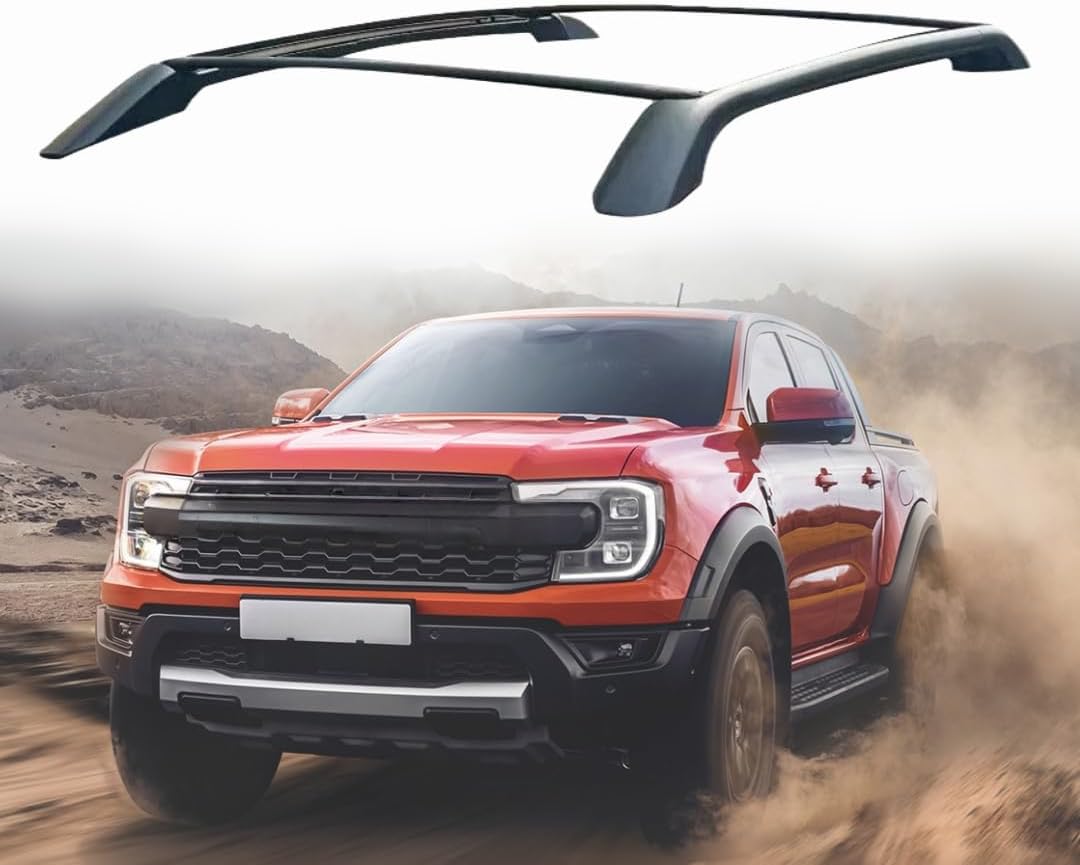
5. Leigeauto Aluminum Foldable Roof Rack Crossbars for Ford Ranger T9 (2023–2026)
Best Lightweight Roof Rack
| Compatible Vehicle | Ford Ranger T9 2023–2026 |
|---|---|
| Mounting Type | U-Bolt |
| Material | Aluminum |
| Load Capacity | 150 kg |
These Leigeauto crossbars are a lightweight, vehicle-specific roof rack option for the Ford Ranger T9 (2023–2026). Made from aluminum with a black powder-coat, the bars mount with U-bolts to factory roof rails and fold down to a low-profile position when not in use, helping reduce wind noise and drag. The listed 150 kg load capacity accommodates kayaks, bikes, skis, and cargo boxes for weekend trips while keeping added mass low so handling and fuel economy are less affected. Installation is straightforward for someone comfortable with basic tools, and the corrosion-resistant finish helps for year-round outdoor use. Limitations include the U-bolt mounting which may not be as quick-adjust as clamp-style systems and the vehicle-specific fit restricts use to Ranger T9/Everest models from 2023–2026 only. For buyers prioritizing a strong but lightweight roof solution that stows flat, these crossbars deliver a practical balance of strength and minimal weight.
Best for: Buyers who want a strong but low-mass roof rack that preserves handling and fuel economy while adding usable cargo capacity for outdoor gear on a 2023–2026 Ranger T9.
Less Ideal for: Users who need a universal or quickly removable quick-release rack system or those who plan to transfer bars between different vehicle models frequently.
- Aluminum construction keeps the bars light while providing good strength
- Foldable low-profile design reduces wind noise and drag when not carrying cargo
- Vehicle-specific fit for Ford Ranger T9 2023–2026 simplifies installation and alignment
- Black powder-coated finish resists corrosion and complements truck styling
- U-bolt mounting is less quick to adjust or remove compared with tool-free clamps
- Fitment is limited to specified Ranger T9/Everest model years and cannot be used on other vehicles
Verdict: The best lightweight roof rack for those who want a strong yet low-mass solution to minimize added weight and preserve vehicle handling and fuel economy.
Choosing the Right Ford Ranger Raptor Roof Rack: Key Factors to Consider
Load Capacity
Load capacity determines how much weight you can safely carry on the roof rack and directly affects what gear you can transport. For the Ford Ranger Raptor, prioritize systems with a high dynamic and static load rating so you can fit rooftop tents, heavy cargo trays, or multiple bikes without exceeding the vehicle's limits.
Dynamic capacity matters for driving when forces from bumps, cornering, and braking act on the load. Static capacity is important for parked loads like a rooftop tent and should exceed the combined weight of the tent plus occupants. Always compare the rack rating to the vehicle roof or mounting-point rating to avoid overstressing attachment points. Choosing a rack with a margin above your typical load reduces wear and improves safety.
Mounting Style and Fit
How the rack attaches to the Ranger Raptor affects strength, compatibility, and installation complexity. Some systems bolt directly to factory points or proprietary mounts, while others clamp to rain gutters or use a track system. For the Raptor configuration, confirm that the rack matches the roof profile and available mounting locations to avoid interference with doors, roof rails, or roof lights.
A rack with a vehicle-specific fitment reduces the need for custom brackets and gives a cleaner, more secure install. Universal racks may fit many trucks but often need additional adapters and careful torqueing to achieve the same stability. Consider whether you want a permanent roof rail solution or a removable system you can take off when not hauling cargo.
Aerodynamics and Noise
Roof racks change airflow around the truck and can add wind noise and drag if poorly shaped. Aero-shaped cross bars and low-profile mounts are designed to reduce turbulence and whistling at highway speeds, which matters if you do a lot of long-distance driving in your Ranger Raptor.
Noise is not only an annoyance but can indicate inefficient airflow that also increases fuel consumption. Consider cross bar shape and whether the rack includes wind fairings or integrates an aero bar design. If you plan to carry bulky items, check how the rack interacts with add-on gear and whether that gear will create additional turbulence.
Material and Corrosion Resistance
Off-road use, exposure to road salt, and coastal climates require racks that resist rust and wear. Aluminum alloys offer a good strength-to-weight ratio and are naturally corrosion resistant when properly finished. Steel can be stronger but needs quality powder coating or plating to survive underbody and roof exposure.
Look for racks with durable finishes, sealed fasteners, and replaceable components. Corrosion resistance affects long-term reliability and the rack's appearance, especially for owners who use their Ranger Raptor in muddy, wet, or salty conditions frequently. Maintenance requirements are also lower for materials that resist oxidation.
Accessory Compatibility
If you plan to mount bikes, rooftop tents, light bars, or cargo boxes, verify that the rack supports common accessories. Compatibility can mean having standardized T-track channels, slotted cross bars, or bolt-on mounting points. For bikes, check whether the rack supports fork mounts, tray mounts, or frame clamps and whether you will need adapters to secure multiple bike styles.
A flexible rack system that accepts accessories reduces later modification costs and makes the system more useful. It also helps to confirm load limits with accessories attached since added hardware increases weight and changes load distribution on the rack and roof.
Installation Effort and Serviceability
Consider how easy the rack is to install and whether you can service it in the field. Some racks require drilling or permanent mounting hardware and are intended for long-term installs. Others use bolt-on clamps or quick-release mechanisms that make seasonal removal practical.
Evaluate the complexity of assembly, the need for specialty tools, and whether the manufacturer supplies clear instructions and hardware for the Ranger Raptor. Serviceability also includes availability of replacement parts such as end caps, bolts, or mounting brackets. A system that is easier to install and maintain lowers the chance of improper setup and helps preserve the vehicle roof and rack components over time.
Comparing Cross Bar Shapes and Their Tradeoffs
Cross bars come in a few common profiles that affect load distribution, aerodynamics, and accessory fit. Aero bars have a flattened, curved profile to cut through air and reduce wind noise. Square or rectangular bars offer more flat surface area for mounting heavy trays and are often easier to clamp accessories to without adapters. Rounded or tubular bars are simple and rugged but can create more aerodynamic drag.
When choosing for the Ford Ranger Raptor, consider how often you will be on highways versus slow off-road trails. If low wind noise and efficiency matter, favor aero profiles. If you plan to mount wide cargo trays or need a flat platform for heavy gear, square-profile bars may perform better with less need for accessory adapters.
- Aero bars: lower noise, better fuel economy, may need adapters for some mounts
- Square bars: stable platform for trays and boxes, slightly higher wind noise
- Tubular bars: durable and simple, common for heavy off-road use
Rooftop Tents and Heavy Loads: What to Check
Rooftop tents and other heavy loads amplify the importance of load capacity and mounting security. Verify that the combined static weight of the tent and occupants does not exceed the rack or roof rating. Pay attention to mounting points and whether the rack distributes weight evenly across reinforced areas of the roof to avoid stress concentrations.
Also consider ingress and egress when planning tent placement. A wider, lower-profile rack can make tent access easier and reduce ladder angles. Think about how the tent will affect center of gravity and vehicle handling when the truck is loaded for long trips.
- Confirm static and dynamic ratings before mounting a tent
- Prefer racks that spread weight across multiple mounting points
- Check ladder fit and door clearance with tent installed
Mounting Bikes and Sporting Gear Securely
If bikes are a primary use case, understand the difference between tray mounts, fork mounts, and frame clamps and how they attach to cross bars. Tray mounts generally provide the most stability for mountain bikes, while fork mounts reduce vertical profile. Some bike mounts require specific cross bar shapes or T-track compatibility.
Also think about how many bikes you will carry at once and whether you need to stagger mounts to avoid interference from handlebars or pedals. For paddle sports, ensure kayak cradles sit securely on the bars and that tie-down points are available to anchor gear without stressing the rack.
- Tray mounts: stable, handle varying frame shapes
- Fork mounts: lower profile, may need front wheel removal
- Ensure tie-down points and adequate padding for boats and kayaks
Noise Reduction Tips and Wind Fairings
Small changes can cut roof-rack noise dramatically. Adding a wind fairing at the front can redirect airflow over the load and reduce whistling. Tightening bolts to recommended torque values and ensuring cross bars are aligned reduces vibration and intermittent noise. Padding accessory contact points prevents rattles during rough terrain.
When adding a fairing or other attachments, recheck clearances with the hood and any roof-mounted lights. Test at different speeds after installation to identify and mitigate noise sources early.
- Install a wind fairing for long-distance comfort
- Check and retorque fasteners after initial road testing
- Use vibration-damping pads where accessories touch bars
Maintaining Your Rack Under Off-Road Conditions
Regular maintenance prolongs rack life in dusty, wet, or salty conditions. Rinse off mud and salt after trips, inspect fasteners for loosening, and lubricate moving parts with appropriate corrosion-resistant lubricants. Replace any damaged end caps or seals to prevent water ingress and rust.
Check mounting hardware periodically for signs of fatigue or loosening that can develop from repeated off-road impacts. Having spare bolts and basic tools in the truck helps address issues in the field.
- Rinse and dry after muddy or salty trips
- Inspect fasteners and replace corroded parts promptly
- Carry spare mounting bolts and basic tools
Still looking for the perfect fit?
Select your Ford Ranger configuration to see the most relevant Roof Racks recommendations
How We Chose the Best Ford Ranger Raptor Roof Rack
We focused on roof rack features and attributes that matter specifically for the Ford Ranger Raptor configuration. Selection prioritized systems with confirmed fitment for the Raptor roofline and mounting points, robust load capacity ratings suitable for rooftop tents and heavy gear, and materials and finishes that resist corrosion in off-road and coastal conditions. Ease of installation and repeatable clamping or bolt patterns were weighed heavily, since many owners install or remove racks seasonally. Wind noise and aerodynamic design were considered to favor racks that reduce cabin buzz during highway driving. Accessory compatibility was included to ensure common add-ons such as bike mounts, light bars, and cargo trays integrate without major modification.We excluded generic, one-size-fits-all products unless they offered documented fitment for the Raptor roof. Products that lacked published load ratings, clear mounting instructions, or corrosion resistance claims were not considered. Final choices balance load capacity, mounting reliability, durability, and owner usability rather than brand recognition or price alone.
Our full evaluation process is outlined in our review methodology.
FAQ
How much weight can I safely carry on a Ford Ranger Raptor roof rack?
It depends on both the rack and the vehicle roof ratings. Racks list static and dynamic capacities; verify those against the Raptor's roof or mounting point limits. Typically, allow a safety margin and avoid exceeding the lower of the two ratings.
Can I install a roof rack myself on the Ranger Raptor?
Many roof racks are designed for owner installation and come with vehicle-specific hardware. Installation difficulty varies, so follow manufacturer instructions, use recommended torque values, and have a second person help with alignment. When in doubt, professional installation ensures correct fitment.
Will a roof rack increase wind noise or reduce fuel economy?
Yes, depending on the rack profile and what you carry. Aero cross bars and wind fairings minimize noise and drag. Bulky loads increase turbulence and can reduce fuel efficiency more than the rack alone.
Do I need special mounts to carry bikes on the roof rack?
Some bike mounts require T-track-compatible cross bars or specific bar shapes. Tray mounts and fork mounts are common options; check accessory compatibility with your chosen rack and consider whether adapters are necessary for your bike frames.
How do I secure a rooftop tent to avoid damaging the roof?
Use a rack with adequate static capacity and multiple attachment points to distribute the tent weight. Tighten mounting hardware to specified torque settings, and periodically inspect for movement or stress marks after the first few trips.
Are universal roof racks a good option for the Raptor?
Universal racks can fit many vehicles but often need additional brackets or careful setup to match the Raptor roofline. Vehicle-specific systems tend to provide a neater fit and simpler installation, though well-documented universal kits can work if adapted properly.
Final Verdict
When choosing a Ford Ranger Raptor roof rack, prioritize systems that match the truck's mounting points, provide sufficient load capacity, and resist corrosion from off-road use. Balance aerodynamic needs against the practical requirement for a flat, stable platform if you plan to carry heavy trays or a rooftop tent.Decide first on the primary use case—bikes, tents, cargo trays, or mixed gear—then select a rack that meets the relevant load ratings and accessory compatibility. Prioritizing fitment and durability will give you the safest and most versatile roof setup for long-term use.
Explore More:
- Check out all Ford Ranger parts & accessories
- Explore Exterior Accessories
- Browse all Accessories
