

Note: This article contains affiliate links. If you click on these links and make a purchase, I may earn a small commission at no extra cost to you. This helps support my research and content. Read my full affiliate disclosure here.
If you drive a Toyota Tundra, a healthy oxygen sensor matters for smooth running, proper fuel use, and lower emissions. Choosing the right oxygen sensor can prevent drivability issues and keep the engine management system getting accurate air-fuel data.This guide highlights seven shortlisted options that are appropriate for the Tundra and explains the evaluation criteria used, including fitment accuracy and signal response. Read on to understand what factors to check before replacing a sensor and which characteristics matter most for reliable operation.
Looking for other parts? See all Toyota Tundra parts & accessories.
Top Picks at a Glance


1. VEIFNIY Upstream & Downstream Oxygen Sensor Kit for Toyota Tundra/Sequoia 4.7L V8 (2001–2004)

| Vehicle fitment | Toyota Tundra & Sequoia 4.7L V8 (listed years) |
|---|---|
| Positions included | Upstream and downstream sensors |
| Direct replacement for | OE #234-4169 (upstream) and OE #234-4162 (downstream) |
This VEIFNIY kit supplies both upstream and downstream oxygen sensors designed as direct replacements for the Toyota 4.7L V8 (Tundra and Sequoia) 2001–2004 application. The sensors come with factory-style connectors and thread patterns intended for plug-and-play installation, so the swap typically only requires common hand tools and clearing stored fault codes afterward. The design emphasizes heat-resistant materials and quality checks that aim to restore accurate air-fuel monitoring and catalytic efficiency tracking, which helps eliminate check-engine lights and can improve idle smoothness and fuel economy. Included installation gloves are a thoughtful touch for DIY jobs. Limitations to consider are typical of aftermarket O2 sensors: longevity depends on exhaust system condition and exposure to contamination, and very rusted factory fittings may complicate removal. For buyers seeking a reliability-minded, vehicle-specific replacement without dealer pricing, this kit provides a practical OEM-style option.
Best for: Reliability-focused owners who prioritize restoring factory emissions monitoring on a Toyota Tundra or Sequoia 4.7L V8 and prefer a vehicle-specific, practical replacement over dealership parts.
Less Ideal for: People looking for a long-term performance upgrade or custom tuning component should consider specialty sensors; those with severely rusted exhaust hardware may need professional removal services.
- True direct-fit design with factory-matched connectors for plug-and-play installation on Toyota 4.7L V8 models
- Includes both upstream and downstream sensors so the vehicle's entire O2 monitoring circuit can be refreshed at once
- Built with heat-resistant materials and quality-control checks aimed at consistent sensor performance
- Supplied installation gloves reduce mess and make DIY replacement cleaner and safer
- Durability in service depends on exhaust system condition and contamination rather than the sensor design alone
- Removal can be difficult if original sensors or exhaust bungs are heavily corroded
Verdict A vehicle-specific, reliability-oriented direct-fit O2 sensor kit that refreshes both upstream and downstream monitoring on Toyota 4.7L V8 trucks without dealer pricing.
2. Denso 234-4161 Oxygen Sensor with 4-Wire 15.35" Harness

| Material | Zirconium |
|---|---|
| Maximum Supply Voltage | 2 Volts |
| Measurement Accuracy | ±1% |
| Mounting Type | Flange Mount |
| Output Type | Digital |
This Denso 234-4161 is a direct-fit oxygen sensor intended to replace a factory unit on compatible Toyota Tundra models. It measures oxygen content in the exhaust and sends digital signals through a four-wire harness so the engine computer can adjust fuel trim. Typical installation is bolt-in with the supplied wiring harness and gasket; many DIYers report the connector and wire length match Toyota factory routing which simplifies swapping the old sensor for the new one. Denso builds the sensor with multiple protection layers, a PTFE filter and stainless steel housing to resist exhaust conditions, and the part is manufactured to match factory sensor performance. Practical benefits are reliable readings that often clear related check-engine codes and help restore proper air-fuel control and emissions behavior. Limitations: fitment varies by engine, transmission and emissions equipment so confirm it is the exact downstream or upstream sensor your 1997–2004 Tundra (or other specified Tundra year) needs before buying, and stubborn exhaust studs or connector clips on older trucks can make installation harder than the part itself.
Best for: Convenience-driven buyers who want a straightforward swap that mimics factory behavior and minimizes troubleshooting time on a Toyota Tundra.
Less Ideal for: Owners seeking a universal sensor or one confirmed for multiple vehicle makes should look elsewhere; also avoid if you cannot verify exact Tundra fitment for engine and emissions configuration.
- Direct-fit replacement designed to match Toyota factory sensor performance
- Includes a 4-wire 15.35-inch harness that commonly matches stock routing
- Stainless steel housing and multi-layer protection for durability in exhaust environments
- Digital output and ±1% measurement accuracy for reliable engine management feedback
- Manufacturer lists the part as discontinued which may affect long-term availability
- Different Tundra engines, transmissions, and emissions options require careful fit verification
Verdict A factory-quality direct-fit oxygen sensor for Toyota Tundra owners who want a convenient, like-for-like replacement to restore correct emissions and fuel control.
3. QHWQJ-CHAKENG 4‑Piece Oxygen O2 Sensor Kit (Upstream and Downstream) for Toyota 4Runner/Tacoma/Tundra/FJ Cruiser/Sequoia/Land Cruiser

| Brand | QHWQJ-CHAKENG |
|---|---|
| Material | Metal, Plastic |
| Output Type | electrical signal |
| Fitment Summary | Compatible with Toyota 4Runner, Tacoma, Tundra, FJ Cruiser, Land Cruiser, Sequoia (specified years and engines) |
This kit supplies two upstream (air-fuel ratio) and two downstream oxygen sensors intended as direct replacements for affected Toyota V6 engines from the mid-2000s. Installation is the same as a standard O2 sensor swap and the set addresses both pre- and post-catalytic converter sensing so you can clear check-engine codes and restore accurate fuel trim control. The product lists metal and plastic construction and an electrical signal output consistent with factory-style sensors, and buyers reported straightforward fit and reliable operation after installation. Practical benefits include replacing all four sensors at once to avoid mismatched performance and eliminating intermittent drivability or emissions faults tied to failing sensors. Limitations are that this is an aftermarket kit from a lesser-known brand so long-term durability and exact factory-match calibration may vary compared with a factory-quality sensor, and buyers should verify plug fitment and wiring before purchase to avoid connector or heater circuit differences.
Best for: Performance-oriented buyers who want to restore correct air-fuel control and emissions sensing on mid-2000s Toyota V6 vehicles and prefer replacing all sensors at once to optimize engine response.
Less Ideal for: Buyers who require factory-branded, guaranteed lifetime durability or who need sensors with documented OEM calibration should consider factory-quality replacements or dealer parts.
- Includes both upstream and downstream sensors so all affected banks are replaced at once
- Designed to reproduce standard electrical signal output for ECU compatibility
- Covers common Toyota V6 models from 2005–2009 for straightforward fit on listed engines
- Aftermarket brand with limited track record compared with factory-quality sensors
- No explicit long-term performance data or manufacturer-backed durability specification
Verdict A complete four-sensor aftermarket kit that lets performance-focused owners restore proper fuel control on mid-2000s Toyota V6s, but expect variation from factory-quality parts.
4. A-Premium Heated O2 Oxygen Sensor (Compatible with Toyota Tundra LX470/4Runner/Tacoma)
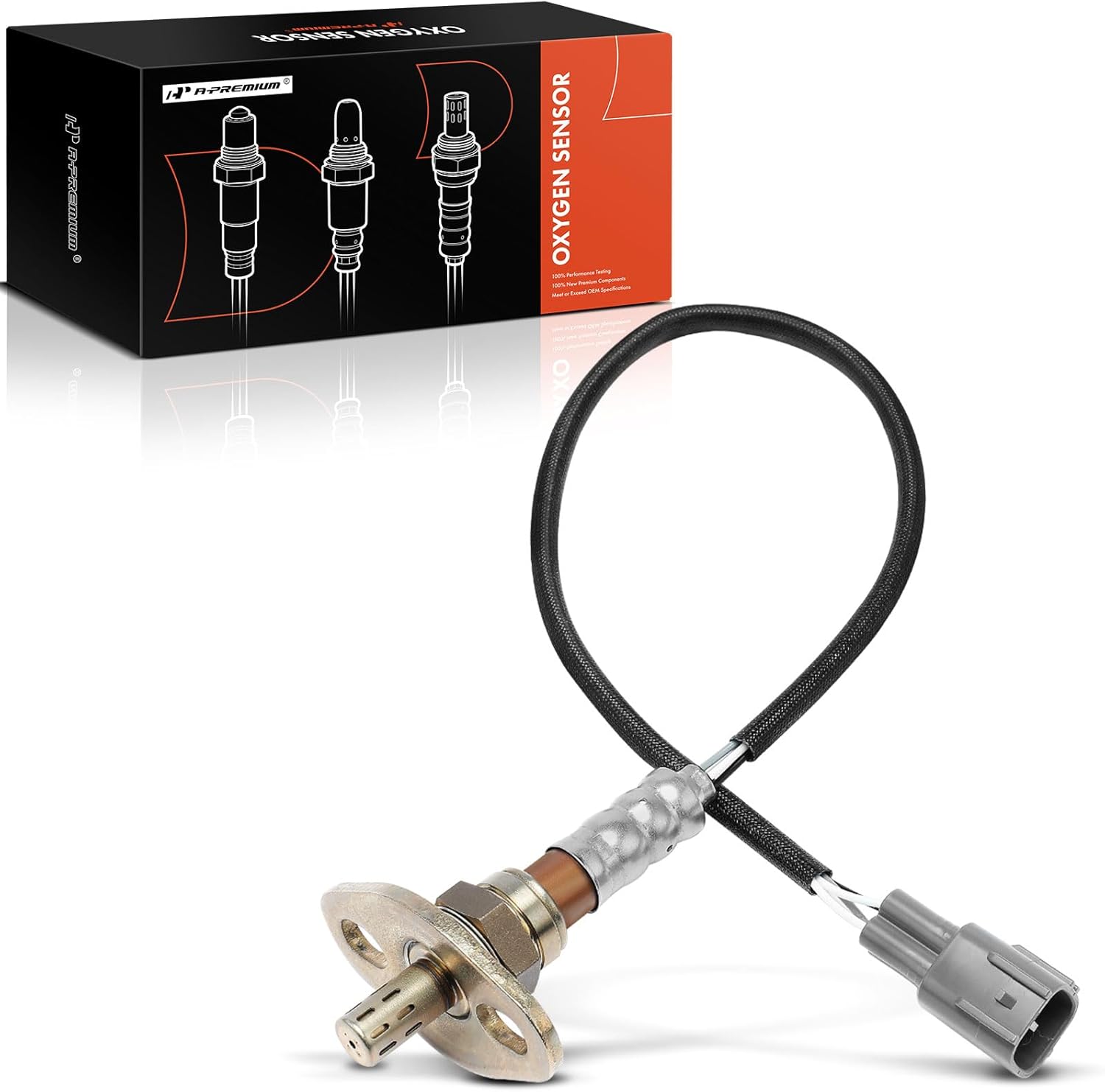
| Wire Quantity | 4 |
|---|---|
| Sensor Type | Heated |
| Mounting Type | Threaded |
| Connector Gender | Male |
This A-Premium heated oxygen sensor replaces a failing sensor in applicable Toyota Tundra and related models to restore the vehicle's closed-loop air-fuel control. It is a threaded, four-wire heated sensor with a male connector intended for upstream or downstream mounting depending on vehicle fitment, and it is supplied as a single unit with a gasket. Typical use is straightforward: swap the old sensor for this unit, reconnect the harness, and clear codes to return the engine to normal fueling behavior. Practical benefits include the built-in heater for faster warm-up and the included gasket which simplifies installation. Reviews indicate generally reliable fit and function for Tundra owners, though a few buyers reported occasional connector or fitment mismatches and that mounting hardware may need inspection or reuse of existing nuts. The sensor is backed by a one-year unlimited-mileage guarantee but buyers should test heater circuit resistance and confirm correct connector match before installation to avoid compatibility hassles.
Best for: Budget-conscious Toyota Tundra owners who need a cost-effective, practical replacement to clear a check engine light and restore normal fuel control.
Less Ideal for: Buyers who require guaranteed factory-identical lifetime durability or exact OEM parts should consider higher-end branded sensors or dealership replacements.
- Heated 4-wire design brings the sensor up to operating temperature quickly for accurate readings.
- Threaded, direct-fit design intended to match factory mounting for straightforward replacement.
- Includes gasket which reduces the need to source extra hardware for installation.
- Multiple positive user reports of fit and restored engine function on Tundra and similar models.
- Some buyers reported connector or fitment mismatches on certain vehicles despite advertised compatibility.
- Does not include new mounting nuts so you may need to reuse or purchase hardware separately.
Verdict A practical, low-cost heated O2 sensor that works for many Tundra owners but verify connector fit and reuse mounting hardware as needed.
5. Sangyue 4x Oxygen O2 Sensor Set for Toyota Tundra (Upstream & Downstream)

| Brand | Sangyue |
|---|---|
| Material | Stainless Steel |
| Mounting Type | Flange Mount |
| Output Type | Electronic |
| Upper Temperature Rating | 350 Degrees Fahrenheit |
This Sangyue kit provides two upstream (air fuel ratio) and two downstream oxygen sensors intended as direct replacements for compatible Toyota Tundra engines. It is typically used when check-engine codes indicate failed O2 sensors or when replacing worn sensors during tuneups. The parts are stainless steel with flange mounts and come labeled for upstream and downstream placement, which simplifies installation and reduces diagnostic guesswork. The sensors are electronic output type and the manufacturer states factory-quality production methods, which helps restore proper fuel trim and catalytic converter monitoring when installed correctly. Expect normal hand or shop installation with standard O2 sensor sockets and connector access. Limitations include that these are aftermarket units rather than factory-sourced parts and long-term durability can vary compared with higher-end name-brand sensors. Also ensure you confirm exact engine and bank position before ordering, since fitment depends on year and engine variant.
Best for: Risk-averse mainstream buyers who prioritize getting a complete, labeled replacement set to fix O2-sensor-related fault codes and restore normal engine operation with minimal fuss.
Less Ideal for: Shoppers seeking OEM-branded longevity or professional tuners who require high-end performance sensors should consider factory-quality or premium alternatives.
- Complete four-sensor kit covers both upstream and downstream positions for a full-system replacement.
- Stainless steel construction and flange mount design for familiar installation and corrosion resistance.
- Sensors are clearly labeled for position which reduces installation errors.
- Designed to restore closed-loop fuel control and clear O2-related fault codes when properly matched to the engine.
- Aftermarket unit rather than factory supplier so long-term reliability can be variable.
- Fitment requires careful verification of engine type and bank positions before purchase.
Verdict A practical, full four-sensor aftermarket kit for Toyota Tundra owners who want a straightforward replacement to clear O2 codes and restore normal fuel control.
6. Denso Oxygen (O2) Sensor 234-4169 — Replacement for Toyota Tundra

| Manufacturer | Denso |
|---|---|
| Mounting Type | Thread-In |
| Output Type | electrical signal |
| Upper Temperature Rating | 1200 Degrees Celsius |
This Denso 234-4169 oxygen sensor is a direct-fit replacement intended for the upstream position in compatible Toyota Tundra exhaust systems. It measures exhaust oxygen content and sends an electrical signal to the engine control unit so the ECU can adjust fuel trim and combustion. Typical use is a service repair to cure check-engine codes related to O2 sensor failure or to recover lost fuel economy and drivability. The sensor is manufactured to factory-quality standards, includes an anti-seize packet for the threads, and features Denso’s protective oxide layer to resist contamination and extend service life. Install requires an oxygen sensor socket and occasional patience to access tight connectors, but the sensor plugs directly into the factory harness with no wire cutting. Limitations are that difficult-to-reach connectors and seized threads on older trucks can complicate installation and you will need a scanner to clear fault codes after replacement.
Best for: Practical optimizer buyers who want a cost-effective, factory-quality repair that restores drivability and fuel economy on a Toyota Tundra without overspending.
Less Ideal for: Drivers seeking a performance-oriented or aftermarket-tuned sensor for non-stock engine management should look at specialized performance sensors instead.
- Direct-fit replacement manufactured to factory-quality standards for reliable performance
- Protective aluminum oxide layer and stainless steel construction improve longevity and resistance to contamination
- Includes anti-seize for sensor threads and plugs into the factory wiring harness with no splicing
- Designed for the upstream position to correct emissions codes and restore fuel economy
- Connector and sensor location can be hard to reach on some Tundra model years, making removal and reconnection fiddly
- If manifold threads are corroded, removal can be difficult and may require extra tools or repairs
Verdict A cost-effective, factory-quality upstream O2 sensor that restores Tundra emissions control and fuel economy with a direct-fit installation.
7. Denso 234-4162 Oxygen (O2) Sensor — Thread-In Replacement for Toyota Tundra and Select Toyota Models

| Manufacturer Part Number | 234-4162 |
|---|---|
| Mounting Type | Thread-In |
| Output Type | Push-Pull |
| Upper Temperature Rating | 800 Degrees Celsius |
| Sensing Distance | 10 Centimeters |
The Denso 234-4162 is a direct-fit narrow-band oxygen sensor meant to replace the factory upstream or downstream sensor on supported Toyota trucks. It installs as a threaded, plug-and-play unit with a 4-wire harness and is typically used to restore proper air-fuel feedback after a failed sensor triggers a check engine light or poor drivability. Notable features include a zirconia sensing element for quick response, a PTFE filter to block contaminants, and stainless steel construction rated for high temperatures. Those design choices translate into a sensor that fits like the factory part, responds quickly to changes in exhaust oxygen, and resists contamination that shortens life. Installation is straightforward for anyone comfortable accessing the exhaust and using a sensor socket, though corroded mounting nuts can complicate removal on older trucks. This sensor meets or exceeds factory measurement accuracy, so it is a solid replacement for keeping emissions, idle, and fuel trim behavior close to original, but it is a narrow-band unit so it does not provide the richer data of wideband sensors used for performance tuning.
Best for: Balanced buyers who want a reliable, factory-quality replacement to restore emissions, drivability, and fuel-trim behavior on a Toyota Tundra without upgrading to specialized sensors.
Less Ideal for: Drivers who need wideband data for aftermarket engine tuning or advanced real-time air-fuel monitoring should choose a wideband sensor instead.
- Direct threaded replacement designed to match factory fit and wiring for supported Toyota models
- Zirconia sensing element and PTFE filter improve response and resist contamination for longer service life
- Stainless steel, high-temperature construction for corrosion resistance and durability
- Meets or exceeds factory measurement accuracy for reliable emissions and fuel-trim control
- Narrow-band output only, so it is not suitable for applications that require wideband sensing for tuning or diagnostics
- Older vehicles may have seized or rusted mounting hardware which can make removal more difficult
Verdict A reliable, factory-quality direct replacement oxygen sensor for Toyota Tundra owners who want simple, OEM-like performance rather than wideband tuning capability.
Choosing the Right Toyota Tundra Oxygen Sensor: Key Factors to Consider
Correct Fitment and Connector Type
Ensuring a sensor physically fits the Tundra and uses the correct connector is essential for straightforward installation and reliable operation. A sensor that matches thread size, connector pinout, and harness routing reduces the chance of poor contact, water intrusion, or mechanical stress.
Incorrect fitment can lead to misaligned sensing elements or strain on the wiring, which produces intermittent signals and diagnostic trouble codes. Always verify OEM-style mounting features and connector compatibility before purchase.
Heated Versus Non-Heated Sensors
Many modern vehicles, including full-size trucks, use heated oxygen sensors to bring the sensing element up to operating temperature quickly. A functional heater shortens the time the engine runs in open-loop mode and reduces cold-start emissions and drivability issues.
If your Tundra application originally used a heated sensor, choose a replacement with the same heater specifications and electrical characteristics. Mismatched heater circuits can cause long warm-up times or trigger fault codes related to the heater circuit.
Signal Response and Accuracy
The sensor's ability to provide fast, accurate voltage or frequency changes in response to air-fuel variations directly affects engine control. A sensor with sluggish response can delay fuel trim adjustments, causing rough idling, hesitation, or increased emissions.
Look for sensors with documented response times and stable output across common temperature ranges. Consistent signal behavior helps the engine computer maintain the correct air-fuel ratio under different loads and driving conditions.
Durability and Thermal Resistance
Oxygen sensors operate in harsh exhaust environments with high temperatures and vibration. Materials and internal construction that resist thermal cycling and contamination will extend service life and maintain accuracy.
Pay attention to features such as robust protective sleeves, high-temperature ceramics, and corrosion-resistant threads. Better thermal resistance reduces the risk of element degradation from prolonged exposure to exhaust heat and contaminants.
Heater Circuit and Electrical Specifications
Understanding the heater resistance and voltage requirements matters because mismatched electrical specs can cause heater faults or insufficient warming. Confirm that the replacement sensor's heater circuit matches the vehicle's wiring and control module expectations.
Also consider overall sensor impedance and grounding; poor electrical characteristics can create noise or dampen the signal, leading to inaccurate readings and diagnostic codes.
Ease of Installation and Serviceability
Practical installation factors affect total downtime and the likelihood of a correct installation. Features such as pre-attached wiring harnesses, anti-seize on the threads, and clear polarity markings simplify the replacement process.
Sensors that allow straightforward electrical connections and have accessible mounting locations reduce the chance of trimming wires or making adapters, which can introduce failure points.
FAQ
How do I know if the oxygen sensor in my Tundra is failing?
You may notice rough idling, reduced fuel economy, or hesitation during acceleration. The engine management system often logs fault codes related to sensor performance, and in many cases the check engine light will illuminate. Intermittent symptoms, especially during warm-up or at steady cruising speeds, can also indicate sensor degradation.
Can I replace a non-heated sensor with a heated one?
Usually you should match the original sensor type. Replacing a non-heated sensor with a heated unit requires compatible wiring and control of the heater circuit. If the vehicle originally used a heated sensor, choosing the same type ensures proper warm-up behavior and avoids heater-related faults.
What does upstream and downstream oxygen sensor mean?
Upstream sensors are located before the catalytic converter and primarily inform the engine management system about the combustion mixture. Downstream sensors sit after the converter and monitor its efficiency. Both locations serve different diagnostic and control roles, which is why correct placement and function matter.
How can I test an oxygen sensor myself?
You can perform basic checks with a multimeter or scan tool to observe voltage or frequency response while the engine runs. Measure the heater circuit resistance with the sensor cold and verify the signal swings when the engine is at operating temperature. These checks provide a preliminary assessment, but comprehensive diagnosis may require professional tools.
Will a bad oxygen sensor cause a check engine light?
Yes, a failing sensor often triggers the check engine light when the engine computer detects signal faults, heater circuit problems, or values outside expected ranges. The light may come on steadily or flash depending on the fault type, and a diagnostic trouble code can point to the sensor circuit or performance.
How We Chose the Best Toyota Tundra Oxygen Sensor
We focused on items that match Toyota Tundra fitment and provide reliable oxygen-sensing performance. Selection emphasized correct connector and thread compatibility, stable voltage or frequency response, and rapid warm-up time to help reduce emissions during cold starts. We also evaluated sensor durability under heat and vibration, the quality of internal heater elements when present, and sensor signal consistency across common operating ranges.We excluded products lacking clear fitment data or showing inconsistent electrical specifications. We also filtered out sensors without documented heater circuit information for applications that require heated sensors. The final shortlist balances installation compatibility, electrical performance, and long-term reliability based on these measurable dimensions.
Our full evaluation process is outlined in our review methodology.
Conclusion
When choosing an oxygen sensor for a Toyota Tundra, prioritize correct fitment, matching heater specifications, and fast, stable signal response. These aspects most directly affect drivability, emissions, and diagnostic reliability.Balance durability and ease of installation against the electrical specifications required by the vehicle. Focusing on those tradeoffs will help you pick a sensor that performs reliably over time and minimizes repeat service.
Explore More:
- Check out all Toyota Tundra parts & accessories
- Explore Oxygen Sensors Maintenance & Repair Guides
- Explore Engine
- Browse all Auto Parts
