

Note: This article contains affiliate links. If you click on these links and make a purchase, I may earn a small commission at no extra cost to you. This helps support my research and content. Read my full affiliate disclosure here.
If your Sequoia is showing rough idle, a drop in fuel economy, or a check engine light related to emissions, the oxygen sensor may be behind it. Picking the right Toyota Sequoia oxygen sensor matters because a correct-fit, responsive sensor helps the engine control unit maintain the proper air-fuel ratio and reduces drivability issues.This guide covers seven shortlisted oxygen sensors that meet common fitment and performance needs. We evaluated each option for electrical response, connector and thread compatibility, and expected durability under typical driving conditions. Read on to see which features matter most and why these choices made the list.
Looking for other parts? See all Toyota Sequoia parts & accessories.
Top Picks at a Glance
| Best Reviewed A top-rated pick with lots of positive feedback | Denso Oxygen (O2) Sensor 234-4169 — Replacement Sensor for Select Toyota/Lexus |  |
| Most Popular A crowd favorite that many people choose with confidence | A-Premium Heated Oxygen (O2) Sensor — Compatible with Toyota Sequoia/Lexus LX470 (Upstream/Downstream) |  |
| Best Quality Built to a higher standard if you want something more solid | VEIFNIY Upstream & Downstream Oxygen Sensor Kit for Toyota Sequoia & Tundra 4.7L V8 (2001–2004) |  |
| Best Budget The cheapest option that still gets the job done reliably | NFSpeeding Oxygen Sensor 234-4162 — Upstream & Downstream Set |  |
| Most Sold A high-volume bestseller chosen again and again | MAXFAVOR Oxygen Sensor Kit (4) Replacement for 2000–2004 Toyota Tundra/Sequoia 4.7L 4WD |  |
| Best Value for Money The sweet spot between price and what you get | Autopart T ST-54006 Upstream Oxygen (O2) Sensor |  |
| Best Overall The best all-around choice for most situations | Denso Oxygen (O2) Sensor 234-4162 — Replacement for select Toyota vehicles |  |
1. Denso Oxygen (O2) Sensor 234-4169 — Replacement Sensor for Select Toyota/Lexus

| Material | Stainless Steel, Zirconium |
|---|---|
| Mounting Type | Thread-In |
| Output Type | electrical signal |
| Upper Temperature Rating | 1200 Degrees Celsius |
| Model | 234-4169 |
This Denso 234-4169 oxygen sensor is a direct-fit replacement meant to restore proper oxygen sensing and heater function on compatible Toyota and Lexus models such as the Sequoia. It threads into the exhaust system and plugs into the factory wiring harness to deliver the same electrical signal and heater operation as the original sensor. Notable features include a stainless steel housing, a zirconium sensing element, and Denso’s aluminum oxide trap layer that helps resist contamination for longer life. In real-world use you can expect straightforward installation for DIYers with the right socket and some patience in tight spaces, and fixing a faulty sensor typically clears check-engine codes and can improve fuel economy and emissions. Limitations: reach and connector access can be cramped on some vehicles and removal may require penetrating oil and an oxygen-sensor socket; this listing includes sensor hardware but not any specialist tools or diagnostic clearing of codes.
Best for: Reliability-focused buyers who prioritize factory-quality replacement parts to keep a Toyota Sequoia running dependably and avoid repeat trips to the shop.
Less Ideal for: Buyers seeking a universal sensor or a full diagnostic and installation service package should look elsewhere; this is a parts-only replacement for experienced DIYers or technicians.
- Direct factory-quality replacement fit for specified Toyota and Lexus models
- Stainless steel and zirconium construction with contamination-resistant trap layer for longer life
- Thread-in design and standard electrical output for plug-and-play replacement
- Built-in heater capability to speed up proper sensor operation at startup
- Installation can be difficult in tight engine bays and may require a deep-well O2 socket and penetrating oil
- Does not include diagnostic services or tools to clear fault codes after installation
Verdict A factory-quality direct replacement oxygen sensor that restores proper engine control and durability for Sequoia owners who want a reliable, OEM-style fix.
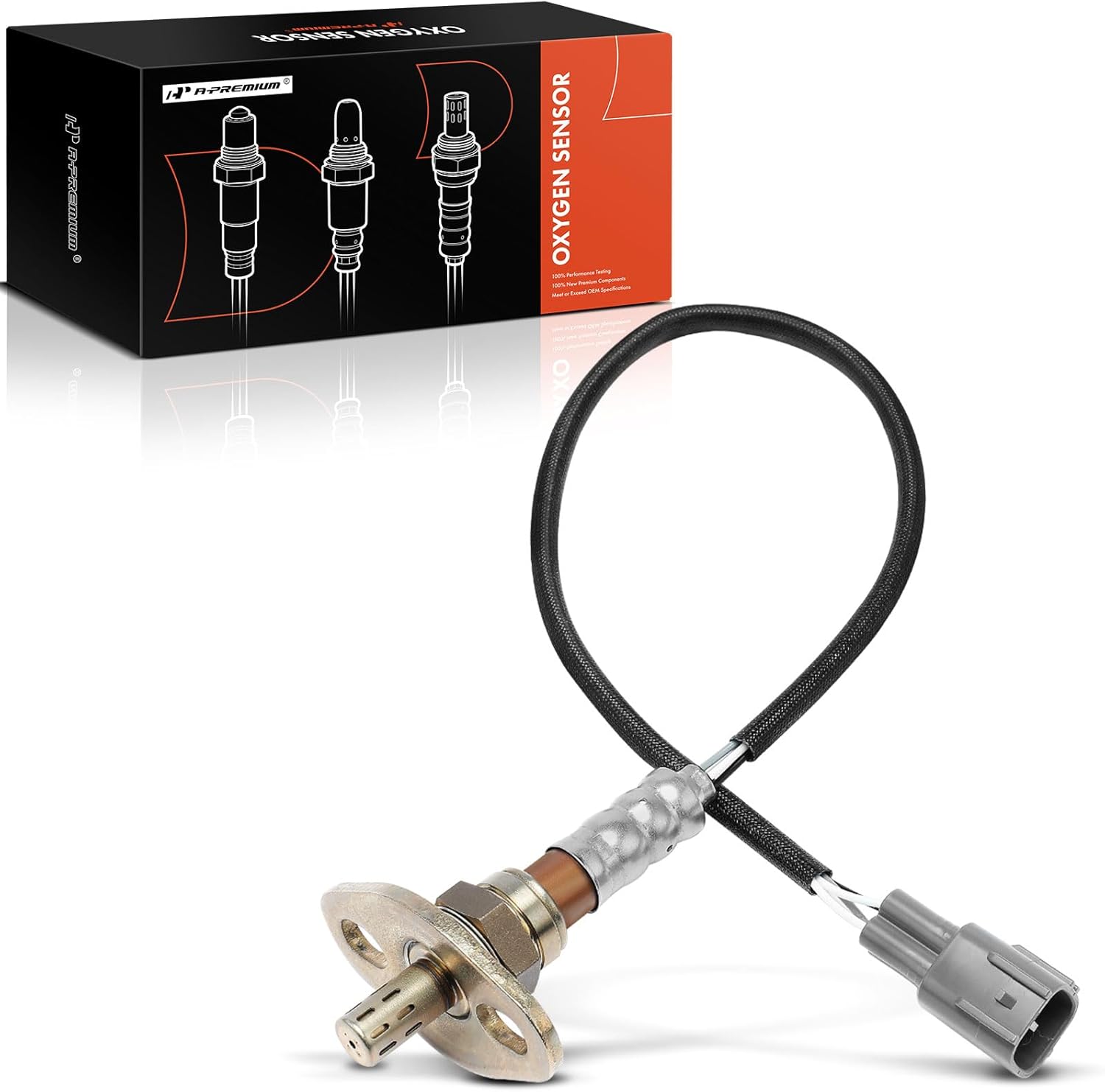
2. A-Premium Heated Oxygen (O2) Sensor — Compatible with Toyota Sequoia/Lexus LX470 (Upstream/Downstream)
| Vehicle fitment | Toyota Sequoia and Lexus LX470 models listed in product description |
|---|---|
| Wire quantity | 4 |
| Sensor type | Heated |
| Mounting type | Threaded |
| Connector gender | Male |
This A-Premium heated O2 sensor replaces the factory unit on compatible Toyota Sequoia and Lexus LX470 models and provides real-time oxygen readings to the engine control unit for closed-loop fuel control. It is a threaded, four-wire heated sensor intended for upstream or downstream locations and ships with a gasket. Typical use is straightforward: unplug the old sensor, unthread it from the exhaust, swap in this unit, and reconnect the harness. The heated element reduces warm-up time so the ECU can return to closed-loop operation sooner, which helps idle stability and emissions. Buyers report the harness fits and the slightly longer cable can ease routing in tight engine bays. Limitations include occasional fitment mismatches on some late-model connectors and a need to reuse or separately source mounting nuts on rare installs. The manufacturer offers a one-year unlimited-mileage guarantee which adds assurance for a convenience-focused replacement job.
Best for: Convenience-driven buyers who want a ready-to-install, low-effort sensor swap to restore proper fuel control and clear a check engine light with minimal troubleshooting.
Less Ideal for: Drivers who need a long-term OEM-lifetime replacement or who prefer parts with guaranteed exact-fit across many late-model variants should consider factory-quality alternatives or confirm connector compatibility before buying.
- Direct-fit replacement for listed Toyota and Lexus models with correct connector on most applications
- Heated four-wire design shortens warm-up time so the ECU returns to closed-loop control faster
- Comes with gasket and slightly longer cable to simplify installation in cramped engine bays
- Some buyers reported connector or plug incompatibility with certain vehicles despite advertised fitment
- Mounting nuts are not always included so you may need to reuse old hardware or buy replacements
Verdict A practical, convenience-focused heated O2 sensor for listed Toyota and Lexus models that makes replacement quick and usually fits straightaway, though confirm connector compatibility for some late variants.
3. VEIFNIY Upstream & Downstream Oxygen Sensor Kit for Toyota Sequoia & Tundra 4.7L V8 (2001–2004)

| Vehicle fitment | Toyota Sequoia 4.7L V8 2001–2004 |
|---|---|
| Positions included | Upstream and downstream sensors |
| Manufacturer part number | OXY-Oxygen Sensor-43 |
| OEM part numbers matched | 234-4162, 8946509020, 8946509140, 8946509190, 8946509210 |
This VEIFNIY kit supplies both upstream and downstream oxygen sensors designed specifically for the Toyota Sequoia 4.7L V8 (2001–2004) to restore emissions monitoring and fuel-control accuracy. Each sensor is built to match factory thread patterns and connectors so installation is plug-and-play with no wiring changes, which makes it practical for a performance-minded DIYer or a shop doing a fast, precise swap. The sensors are described as heat resistant with quality control checks that aim to deliver stable readings and long service life; buyers report immediate clearing of check-engine codes and steady air-fuel feedback after replacement. The kit also includes installation gloves for cleaner handling during exhaust work. Limitations to consider are typical for any replacement O2 sensor: longevity will depend on exhaust system condition and road salt or rust can complicate removal, and true long-term durability can only be judged after extended use. For owners focused on restoring engine management accuracy without paying dealer prices, this kit balances fit, functionality, and straightforward installation.
Best for: Performance-oriented owners who prioritize restoring precise air-fuel control and emissions monitoring on a Toyota Sequoia 4.7L V8 and who prefer a direct-fit, shop-friendly replacement over expensive dealer parts.
Less Ideal for: Drivers who want an extended-lifespan, heavy-duty sensor for offroad or salt-exposed use without addressing underlying exhaust corrosion should consider specialized heavy-duty options or professional installation.
- Direct-fit design matched to factory thread patterns and electrical connectors for the Toyota Sequoia 4.7L V8
- Includes both upstream and downstream sensors so both monitoring points can be replaced at once
- Plug-and-play installation requires no wiring changes or special programming
- Constructed with heat-resistant components and undergoes quality checks to promote consistent sensor readings
- Long-term durability depends on vehicle exhaust condition and cannot be verified from initial fitment alone
- Removal can be difficult if the original sensor threads are heavily corroded
Verdict A factory-matched, plug-and-play upstream and downstream O2 sensor kit that restores accurate fuel control on the Toyota Sequoia 4.7L V8 without dealer-level cost.
4. NFSpeeding Oxygen Sensor 234-4162 — Upstream & Downstream Set

| Maximum Supply Voltage | 12 Volts (DC) |
|---|---|
| Mounting Type | Flange Mount |
| Output Type | electrical signal |
| Upper Temperature Rating | 120 Degrees Celsius |
This NFSpeeding oxygen sensor set provides direct-replacement upstream and downstream sensors intended to restore correct air-fuel readings and emissions control on compatible Toyota Sequoia applications. Installed like a factory sensor, each unit uses a flange mount and a male blade-and-bullet connector for a plug-and-play swap when the original sensor fails or throws a check-engine code. In everyday use the sensors aim to stabilize idle, improve throttle response, and help the engine control module correct rich or lean running that can reduce fuel economy. The listing cites multiple OEM interchange numbers and emphasizes factory-style fitment and quality control testing. Practical benefits for a budget buyer include a low price, included pair for both upstream and downstream positions, and straightforward installation using standard oxygen-sensor sockets. Limitations to consider are that this is a third-party replacement rather than a factory part and long-term durability compared with higher-end brands may vary; also verify the sensor connector, thread and lead length against your vehicle before ordering to ensure a proper fit.
Best for: Practical, budget-conscious Toyota Sequoia owners who want an affordable direct-replacement to clear codes and restore drivability without paying for premium aftermarket or dealership parts.
Less Ideal for: Buyers who prioritize maximum longevity or factory-branded parts for warranty-level assurance should consider higher-end or dealer-sourced sensors instead.
- Direct-replacement design for upstream and downstream positions on listed Toyota models
- Includes a pair of sensors so both bank locations can be serviced at once
- Plug-and-play connector and standard flange mount simplify installation
- Cites multiple OEM interchange numbers to help confirm fitment
- Third-party unit so long-term durability may not match higher-end factory-quality sensors
- Fit can vary by connector, thread or lead length so confirmation against your existing sensor is necessary
Verdict A cost-effective direct-fit pair that restores oxygen-sensing function for budget-minded Sequoia owners, provided you confirm physical fit before installation.
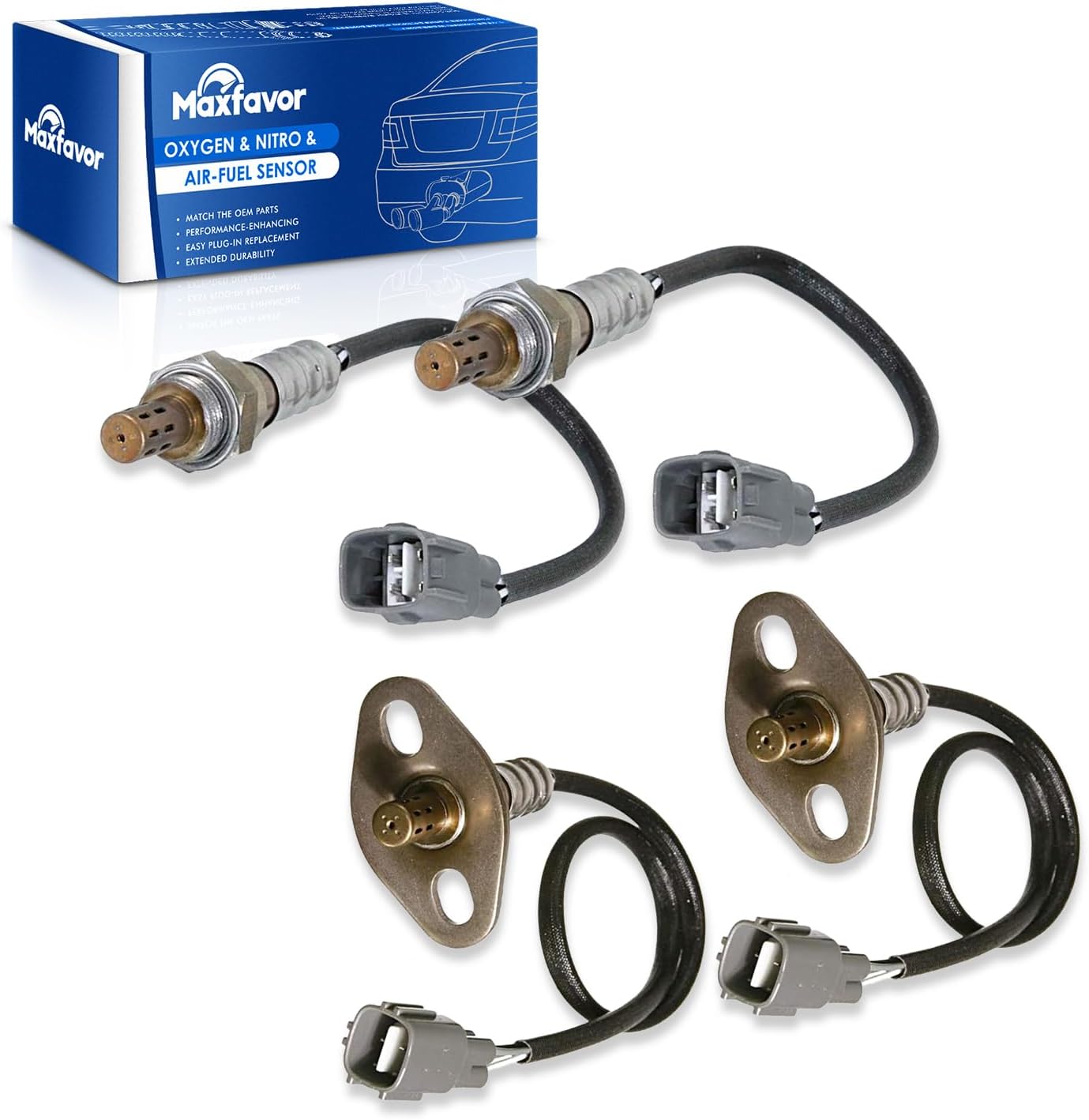
5. MAXFAVOR Oxygen Sensor Kit (4) Replacement for 2000–2004 Toyota Tundra/Sequoia 4.7L 4WD
| Specific Uses For Product | Oxygen Sensor |
|---|---|
| Mounting Type | Flange Mount |
| Output Type | Electrical Signal |
| Upper Temperature Rating | 2192 Degrees Fahrenheit |
This MAXFAVOR kit supplies two upstream and two downstream oxygen sensors intended as direct replacements for 2000–2004 Toyota Tundra and Sequoia 4.7L 4WD models. Installers use the sensors to restore proper air-fuel feedback to the engine control module, which helps smooth idle, improve fuel economy, and protect the catalytic converter. The kit lists flange-mount fitment and an electrical signal output that matches factory wiring harnesses, and the package includes four sensors so you can replace a whole bank at once instead of buying individual units. Buyers report easy fitment and acceptable performance for everyday driving, though a number of users experienced early failures after several months which could affect emissions testing. The product is a budget-focused replacement rather than a premium factory-quality part, so expect variable longevity and to verify fit and completeness before installation.
Best for: Risk-averse mainstream buyers who prioritize restoring reliable day-to-day operation and minimizing upfront cost by replacing all sensors at once.
Less Ideal for: Users who need a long-term, high-durability or emissions-guaranteed sensor should consider higher-end factory-quality replacements or OEM parts.
- Includes four sensors covering upstream and downstream positions so you can replace the entire bank at once
- Listed flange-mount design and standard electrical output for direct plug-in installation to factory harnesses
- Multiple buyers report straightforward fit and improved drivability after installation
- Some customers report premature failures after a few months which may affect emissions compliance
- Occasional missing items in shipments reported by buyers, so inspect the kit on receipt
Verdict A cost-conscious four-sensor kit that restores air-fuel sensing for 2000–2004 Toyota 4.7L 4WD vehicles but may offer shorter service life than higher-end replacements.
6. Autopart T ST-54006 Upstream Oxygen (O2) Sensor

| Manufacturer Part Number | ST-54006 |
|---|---|
| Material | Zirconia Ceramic, Platinum, Stainless Steel |
| Mounting Type | Flange Mount |
| Upper Temperature Rating | 800 Degrees Celsius |
| Specific Uses For Product | Oxygen O2 Sensor |
This Autopart T ST-54006 is an upstream oxygen sensor intended to replace a failing factory unit on compatible Toyota engines. It measures exhaust oxygen and sends a voltage signal to the engine control module so fuel trim and emissions control remain accurate. Typical use is as a like-for-like replacement during maintenance or to clear a check-engine code related to the O2 circuit. The sensor uses a zirconia ceramic sensing element with a plated tip and flange mount that mirrors factory mounting and wiring, so installation is straightforward for top-side access on many engines. Practical benefits include explicit fitment listing for Toyota models such as Sequoia 5.7L and common Corolla/Highlander/Prius applications and a high temperature rating for durability near the exhaust. Limitations to consider are variable quality control reported by some users and occasional connector or heater-circuit failures that can require troubleshooting or swapping harness components; buyers should verify the exact upstream bank/location before ordering.
Best for: Practical owners who want a budget-conscious, straightforward replacement to restore correct fuel trim and emissions behavior on a Toyota and prefer an affordable, direct-fit part over dealership service.
Less Ideal for: Do not choose this if you need guaranteed OEM-level reliability for long-term high-mileage use or if you require a parts supplier with strict factory testing and extended support.
- Direct-fit upstream replacement for listed Toyota engines including Sequoia 5.7L, reducing installation complexity
- Zirconia ceramic sensing element and plated tip designed to respond quickly to exhaust oxygen changes
- Flange-mount design matches factory mounting for secure fit and correct positioning
- High upper temperature rating supports operation in hot exhaust environments
- Some buyers report defective connectors or heater-circuit issues inconsistent with factory-quality reliability
- Fitment is specific to listed engines and locations so wrong variant selection will cause fitment problems
Verdict A cost-effective upstream O2 sensor that fits listed Toyota engines and restores emissions control, but quality can vary so confirm connector and exact fit before installation.
7. Denso Oxygen (O2) Sensor 234-4162 — Replacement for select Toyota vehicles

| Material | Stainless Steel, Zirconium |
|---|---|
| Mounting Type | Thread-In |
| Output Type | Push-Pull |
| Upper Temperature Rating | 800 Degrees Celsius |
This Denso 234-4162 oxygen sensor is a direct-fit replacement for select Toyota models and is intended to restore proper air-fuel sensing and emissions control. It installs as a threaded, four-wire sensor with an integrated wiring harness and is used in the exhaust system upstream or downstream of the catalytic converter depending on application. Key features include a zirconia sensing element for quick response, a PTFE filter to reduce contamination, and stainless steel construction for corrosion resistance, all built to meet or exceed factory-spec performance. In real-world use the sensor clears check-engine codes, helps the engine return to correct fuel trims, and can make the catalytic converter report ready after normal drive cycles. Limitations include that it is a narrow-band sensor so it does not provide the wideband accuracy required for tuning or advanced diagnostics, and older or rusted mounting hardware may need replacement during installation. Overall it is a practical factory-quality replacement for owners who need reliable fit and function on supported Toyota vehicles.
Best for: Balanced buyers who want a reliable factory-quality replacement to restore emissions and drivability on supported Toyota Sequoia and related models without aftermarket tuning ambitions.
Less Ideal for: Drivers who need wideband sensors for engine tuning, data logging, or non-stock performance tuning should choose a dedicated wideband option instead.
- Direct-fit design for the listed Toyota applications for straightforward installation
- Zirconia sensing element delivers fast response to changes in exhaust oxygen for stable fuel trims
- Corrosion-resistant stainless steel body and PTFE filter improve durability in exhaust environments
- Narrow-band output is not suitable for wideband tuning or precise AFR measurements
- Does not include replacement mounting nuts which may be corroded on older vehicles
Verdict A dependable factory-quality narrow-band oxygen sensor that restores emissions and fuel control on supported Toyota vehicles but is not intended for wideband tuning applications.
Choosing the Right Toyota Sequoia Oxygen Sensor: Key Factors to Consider
Fitment and Connector Compatibility
Correct thread size, connector type, and pigtail length are fundamental for a trouble-free install. A sensor that threads in and plugs into the factory harness without splicing minimizes the risk of poor ground, intermittent signals, or coolant and exhaust leaks.
Incorrect fitment can lead to sensor damage during installation or unreliable readings that trigger diagnostic trouble codes. Check that the replacement matches the vehicle's bank and sensor location to avoid swapping upstream and downstream positions.
Heater Function and Warm-Up Time
Many oxygen sensors include an internal heater to bring the sensor to operating temperature quickly after a cold start. Faster warm-up reduces the time the engine runs in an open-loop state, which can improve cold-start emissions and fuel economy.
Assess heater circuit compatibility and expected warm-up time because a heater that fails or heats slowly can prolong rough idle and increase emissions while the engine warms.
Electrical Response and Signal Accuracy
A sensor's ability to produce a stable, accurate voltage or current signal across rich and lean conditions directly affects fuel trim decisions. Faster and cleaner signals help the engine control unit make timely corrections to air-fuel ratio.
Look for sensors specified with reliable crossover points and low signal noise. Poor signal accuracy can cause fluctuating idle, hesitation, and misleading diagnostic codes.
Durability and Contamination Resistance
Oxygen sensors are exposed to high exhaust temperatures and contaminants such as oil, coolant, and fuel additives. Materials and protective coatings that resist these factors extend in-service life and reduce the chance of premature failure.
Consider construction features like robust ceramic elements, protective housings, and anti-fouling designs. Durable sensors reduce the frequency of replacements and maintain consistent emissions performance over time.
Placement: Upstream Versus Downstream Roles
Upstream sensors are primarily responsible for managing the engine's immediate air-fuel ratio, while downstream sensors monitor catalytic converter function. Each location has different expectations for response time and durability.
Choose a sensor designed for the intended bank and position so it can meet the required response characteristics. Using the correct type for upstream or downstream roles helps avoid misdiagnosis and ensures accurate performance monitoring.
Ease of Installation and Serviceability
Practical installation features matter when replacing an oxygen sensor. Factors like available pigtail length, included anti-seize on threads, and access to the sensor port can make the job quicker and reduce the chance of cross-threading or harness damage.
Also consider whether the sensor can be tested or swapped without extensive disassembly. Sensors that are easier to access and install lower labor time and help ensure a correct, secure connection to the vehicle harness.
FAQ
What are common O2 sensor symptoms on a Toyota Sequoia?
Common signs include rough idle, reduced fuel economy, or a check engine light with emissions-related codes. You may also notice hesitation during acceleration or unstable revs. These symptoms often prompt inspection of the oxygen sensor and related exhaust components.
How do I determine whether to replace an upstream or downstream sensor?
Diagnostic trouble codes and live data are the best guides. Upstream sensors affect fuel trim directly and show fast switching between rich and lean, while downstream sensors change more slowly and reflect catalytic converter efficiency. If a specific bank and sensor number is indicated, focus on that exact position.
Can I test an oxygen sensor before replacing it?
Yes. You can use live data from a scan tool to check signal switching and heater circuit status, or perform basic multimeter checks on the heater resistance. While these tests are informative, they may not reveal all intermittent faults, so results should be interpreted in context with symptoms.
Will a faulty oxygen sensor trigger a check engine light for my Sequoia?
Often it will. Faulty sensors typically set emissions-related trouble codes when readings fall outside expected ranges or the heater circuit fails. The check engine light may illuminate alone or alongside codes that point to fuel trim or catalytic converter performance.
How long do oxygen sensors usually last in heavy-use conditions?
Sensor lifespan varies with driving conditions and exposure to contaminants, but many will last several years under normal use. Heavy city driving, frequent short trips, or exposure to oil or coolant leaks can shorten service life, so inspect sensors if symptoms appear earlier than expected.
Is installation of an oxygen sensor a DIY task for a Sequoia owner?
It depends on access and your mechanical comfort level. Many sensors can be replaced with common hand tools and an oxygen sensor socket, but some locations may be hard to reach. Ensure you have the correct fitment and take care with the connector and threads during installation.
How We Chose the Best Toyota Sequoia Oxygen Sensor
We focused on items that match Toyota Sequoia fitment and electrical standards to reduce installation issues and ensure reliable engine management. Key evaluation criteria included connector type and thread size compatibility, sensor response time under simulated rich and lean conditions, expected durability in high-heat environments, and resistance to common contaminants that shorten service life.We also considered wiring length and pigtail quality for easier installation, the presence of OE-style heaters where applicable, and the sensor's expected lifespan based on materials and construction. Items that required nonstandard modifications, aftermarket control unit changes, or extensive vehicle wiring alterations were excluded. Products that lacked clear fitment information, inadequate electrical specs, or no stated heat-resistant construction were also filtered out. The remaining selections reflect a balance of fitment accuracy, electrical performance, and long-term durability for the Toyota Sequoia.
Our full evaluation process is outlined in our review methodology.
Conclusion
Prioritize correct fitment, reliable electrical response, and appropriate heater performance when choosing a Toyota Sequoia oxygen sensor. These attributes have the biggest impact on drivability, emissions, and how quickly the engine returns to stable operation after startup.Balance durability and ease of installation against the role of the sensor in the exhaust system. Addressing installation quality and confirming the sensor matches the vehicle bank and position will reduce the chance of recurring diagnostic trouble codes.
Explore More:
- Check out all Toyota Sequoia parts & accessories
- Explore Oxygen Sensors Maintenance & Repair Guides
- Explore Engine
- Browse all Auto Parts
