

Note: This article contains affiliate links. If you click on these links and make a purchase, I may earn a small commission at no extra cost to you. This helps support my research and content. Read my full affiliate disclosure here.
If your Corolla is running rough, getting poor fuel economy, or showing a persistent check engine light, the oxygen sensor is a common place to look. Choosing the right Toyota Corolla oxygen sensor matters because a correct-fit, reliable sensor helps the engine control module maintain proper air-fuel balance for everyday driving. This guide covers our shortlisted top picks for this category and explains the evaluation criteria used to judge fitment, responsiveness, and durability. Read on to understand which features matter most and what to expect when replacing the sensor.
Looking for other parts? See all Toyota Corolla parts & accessories.
Top Picks at a Glance
| Best Reviewed A top-rated pick with lots of positive feedback | Denso 234-4205 Oxygen Sensor |  |
| Most Popular A crowd favorite that many people choose with confidence | DrCax 234-4305 Heated Oxygen (O2) Sensor, Downstream |  |
| Best Quality Built to a higher standard if you want something more solid | DENSO Downstream Oxygen Sensor for Toyota Corolla 1.8L (2009–2013) |  |
| Best Budget The cheapest option that still gets the job done reliably | Partselect Downstream Heated Oxygen Sensor for Toyota Corolla/Matrix (1.8L) |  |
| Most Sold A high-volume bestseller chosen again and again | NewYall Upstream and Downstream Oxygen Sensor for Toyota Corolla/Matrix and Pontiac Vibe 1.8L |  |
| Best Value for Money The sweet spot between price and what you get | QIJIAUTO O2 Oxygen Sensor Upstream/Downstream for Toyota Corolla (2014–2019) — 2-Pack |  |
| Best Overall The best all-around choice for most situations | Denso 234-4233 Replacement Oxygen (O2) Sensor |  |
1. Denso 234-4205 Oxygen Sensor

| Material | Zirconium |
|---|---|
| Mounting Type | Flange Mount |
| Output Type | Digital |
| Upper Temperature Rating | 1000 Degrees Celsius |
The Denso 234-4205 is a direct-replacement upstream oxygen sensor intended to detect exhaust oxygen and send voltage signals to the engine control module so fuel trims and emissions systems run correctly. It is used where the original upstream O2 sensor has failed or is triggering a check engine light; installation is straightforward and many users report it fits and plugs into factory connectors without modification. Notable features include a zirconium sensing element and a machined flange mount manufactured to factory-quality standards, which helps the sensor reach operating temperature and produce reliable voltage readings. Practical benefits are predictable fitment on compatible Toyota Corollas, restored fuel trim behavior, and the kind of durable construction expected from an OEM supplier. Limitations are that it is a single upstream sensor only and does not address underlying catalytic converter problems that can also throw codes, so replacing the sensor may not fix codes caused by other components.
Best for: A reliability-focused buyer who wants a factory-quality, direct-fit upstream oxygen sensor to restore proper engine fueling and emissions control on a Toyota Corolla.
Less Ideal for: Drivers looking for a universal or multi-position sensor or those needing to diagnose catalytic or EVAP system faults should consider other solutions or professional diagnosis.
- Factory-quality replacement fit and connector compatibility for Toyota applications
- Zirconium sensing element produced to reach operating temperature and deliver reliable voltage readings
- Machined flange mount for straightforward installation with standard tools
- Widely used part with many user reports of clearing upstream O2-related codes
- Only replaces the upstream oxygen sensor and will not fix issues caused by a failing catalytic converter or other exhaust components
Verdict Choose this Denso upstream oxygen sensor when you want a factory-quality, direct-fit replacement to reliably restore Toyota Corolla air-fuel sensing.
2. DrCax 234-4305 Heated Oxygen (O2) Sensor, Downstream

| Compatible vehicles | Toyota Corolla 2009–2013 1.8L |
|---|---|
| Mounting type | Flange Mount |
| Output type | electrical signal |
| Measuring range | 14.7 – 18 |
| Measurement accuracy | ±1% |
This DrCax downstream heated O2 sensor is sold as a direct replacement for Toyota Corolla 1.8L models from 2009 to 2013. It measures exhaust oxygen and sends an electrical signal to the engine control unit so the ECU can adjust fuel delivery and emissions control. The sensor uses a flange-mount design and a built-in heater for faster warm-up, which helps the Corolla reach closed-loop operation sooner after a cold start. In practice you would use this part to clear oxygen-sensor related check-engine codes, restore proper fuel trim, and help the vehicle pass emissions testing. Practical benefits include claimed measurement accuracy and compatibility with factory part numbers, plus a wiring connector intended to match factory harnesses for straightforward installation. Limitations to consider are variable long-term reliability reported in some user feedback and the fact that aftermarket sensors can show different voltage response characteristics than factory-quality units, which may affect drivability or trigger codes if the signal is unstable.
Best for: Buyers who prioritize convenience and a quick DIY fix for a 2009–2013 Toyota Corolla 1.8L seeking a plug-and-play replacement to clear O2-related codes and restore emissions performance.
Less Ideal for: Owners seeking a lifetime-long OEM-level sensor or those who need guaranteed factory-identical signal behavior for performance tuning should consider higher-end or factory-brand replacements instead.
- Direct-fit replacement for Toyota Corolla 1.8L downstream position for 2009–2013 model years
- Integrated heater for faster warm-up and earlier closed-loop operation
- Designed to match factory part numbers for easier fitment and plug-and-play installation
- Claims ±1% measurement accuracy to support accurate fuel-trim feedback
- Some users report inconsistent voltage output and premature failures compared with factory-brand sensors
- Aftermarket signal characteristics may differ from factory sensors which can lead to intermittent check-engine codes
Verdict A convenient, direct-fit downstream heated O2 sensor for 2009–2013 Corolla owners who want a straightforward replacement, but expect possible variability versus factory-brand units.
3. DENSO Downstream Oxygen Sensor for Toyota Corolla 1.8L (2009–2013)

| Material | Stainless Steel |
|---|---|
| Mounting Type | Flange Mount |
| Output Type | Digital |
| Upper Temperature Rating | 1200 Degrees Fahrenheit |
This downstream oxygen sensor from DENSO is a direct-fit replacement for Toyota Corolla 1.8L models from 2009 through 2013. It installs at the downstream location to monitor exhaust oxygen after the catalytic converter and provide the engine control unit with accurate feedback for fuel trim adjustments and emissions control. The sensor is stainless steel with a flange mount and digital output, matching factory fit and function so it works with existing wiring and mounting points. For a performance-oriented buyer, the factory-quality construction and high temperature rating mean stable readings and improved long-term durability, which helps maintain optimal engine performance and fuel economy. Installation is typical for oxygen sensors and may require a proper sensor socket and oxygen-safe anti-seize on the threads. It does not change engine tuning or add features beyond factory replacement performance, so drivers seeking performance gains through tuning will need additional upgrades.
Best for: Performance-oriented buyers who prioritize accurate, factory-quality engine sensors to keep fuel control and emissions systems operating at peak efficiency.
Less Ideal for: Drivers looking for aftermarket tunable sensors or features beyond factory replacement should consider programmable or wideband options instead.
- Direct-fit replacement that matches factory mounting and electrical interface
- Stainless steel construction with high temperature rating for durability
- Digital output for consistent sensor signal to the engine control unit
- No performance-enhancing features beyond restoring factory-spec operation
- Requires basic tools and correct sensor socket for proper installation
Verdict Choose this DENSO downstream sensor to restore factory-accurate oxygen readings and reliable performance in 2009–2013 Toyota Corolla 1.8L models.
4. Partselect Downstream Heated Oxygen Sensor for Toyota Corolla/Matrix (1.8L)

| Position | Downstream |
|---|---|
| Sensor Type | Heated |
| Wire Quantity | 4 Pins |
| Harness Length | 25.59 inch |
This Partselect downstream oxygen sensor is a direct-fit replacement intended for the 1.8L Toyota Corolla and Matrix model years 2003–2008. It is a heated, 4-pin sensor with a threaded-in mounting and a female connector that matches factory wiring, so installation is the same basic procedure as swapping the original sensor. The manufacturer says it uses laser welding, a porous PTFE barrier and a high-temperature insulating sleeve to speed response and resist contamination, which should help the engine control module get accurate exhaust oxygen readings and recover normal fuel trims and performance. Practical benefits include improved idle stability and potential fuel-efficiency recovery when replacing a failing sensor, plus a long harness to ease routing. Limitations are that this is an aftermarket budget option rather than a brand-name OEM unit, so long-term durability can vary and buyers should verify connector shape and part numbers against their original sensor before purchase.
Best for: Budget-conscious Corolla owners who want a straightforward, low-cost replacement to restore normal engine operation and fuel economy.
Less Ideal for: Drivers who prioritize longest-possible service life or who prefer OEM-brand parts for warranty continuity should consider higher-end or factory-brand options instead.
- Direct-fit downstream replacement for 2003–2008 Corolla and Matrix 1.8L, matching factory connector style and threaded mounting.
- Heated 4-pin design restores sensor warm-up and maintains accurate readings under typical driving conditions.
- Manufacturer claims laser welding and high-temp insulating sleeve for faster response and contamination resistance.
- Long 25.59-inch harness eases routing to the factory plug without splicing.
- Aftermarket budget unit so long-term longevity may be less predictable than a factory-brand sensor.
- Compatibility depends on matching your vehicle's exact connector and OEM part number prior to purchase.
Verdict A wallet-friendly, direct-fit heated downstream oxygen sensor that restores function for 2003–2008 Toyota Corolla/Matrix models but may not match OEM longevity.
5. NewYall Upstream and Downstream Oxygen Sensor for Toyota Corolla/Matrix and Pontiac Vibe 1.8L
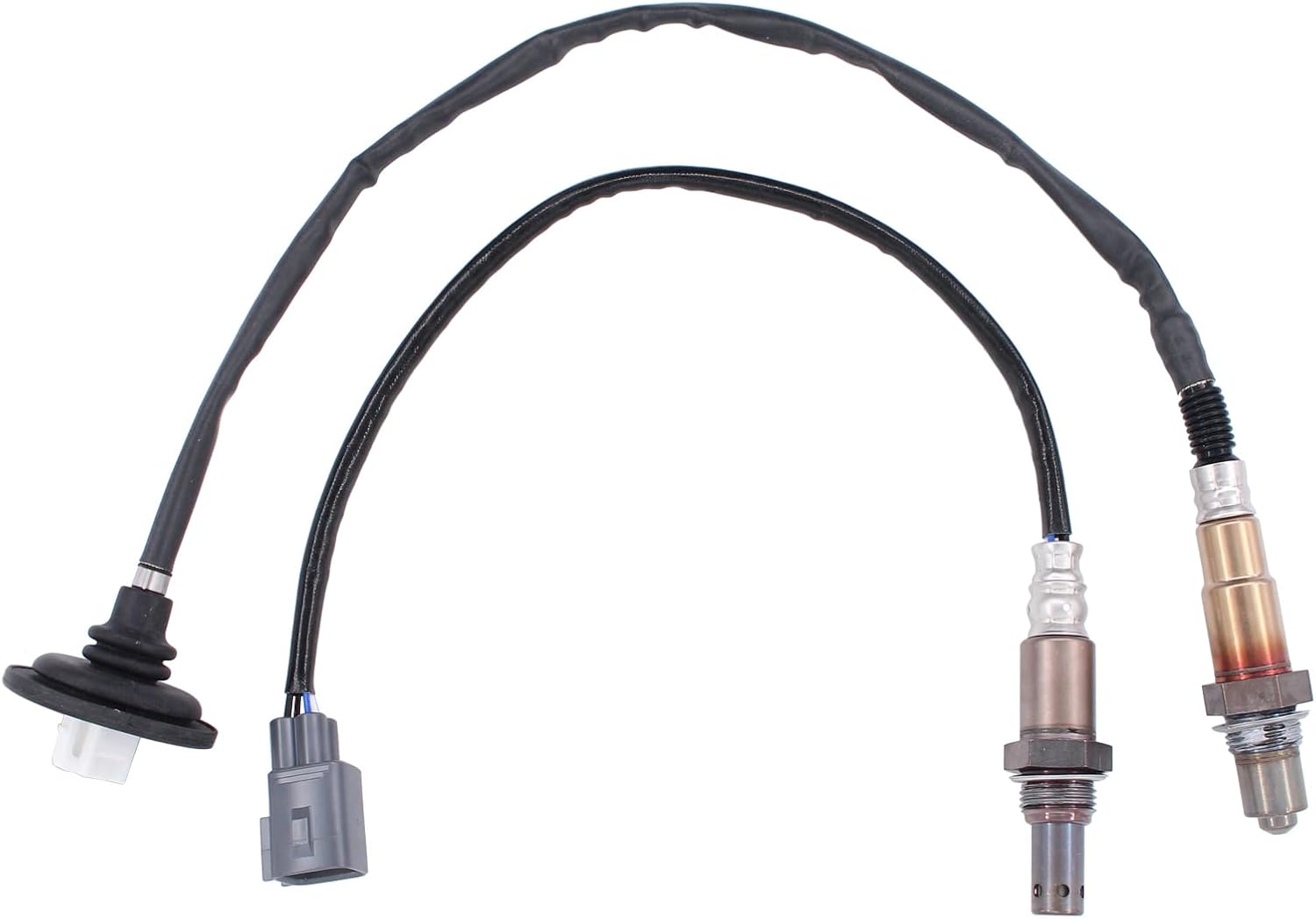
| Brand | NewYall |
|---|---|
| Material | Ceramic, Metal, Polymer |
| Measurement Accuracy | ±1.5% |
| Mounting Type | Flange Mount |
| Specific Uses For Product | Oxygen Sensor |
This NewYall oxygen sensor set replaces the upstream and downstream O2 sensors on 1.8L Toyota Corolla and Matrix models from 2005 to 2008 and the Pontiac Vibe equivalent. It senses exhaust oxygen content and feeds that signal to the engine control module to help control fuel trim and emissions. Buyers report straightforward bolt-in fit and simple plug connections that let the sensor be installed with basic hand tools, and the ceramic sensing element and flange mount provide a familiar factory-style replacement. Benefits include restoring proper closed-loop operation after a failed sensor and often clearing related check engine codes quickly. Limitations are typical of budget aftermarket sensors: long-term durability varies across users and some units have produced persistent codes for certain vehicles, so results are mixed compared with higher-end factory-quality sensors. Expect a cost-effective repair option that may require troubleshooting if intermittent codes persist or if the vehicle has other exhaust or catalytic converter issues.
Best for: A risk-averse mainstream buyer looking for an affordable, direct-fit replacement to fix a check engine light and return emissions control to normal without aftermarket complexity.
Less Ideal for: Drivers seeking the most durable, long-lived factory-quality sensors for high-mileage or performance-sensitive cars should consider premium OEM-equivalent parts or professional diagnostics first.
- Direct-fit application for 2005–2008 1.8L Toyota Corolla/Matrix and Pontiac Vibe, simplifying installation.
- Ceramic sensing element and flange mount replicate common factory-style design.
- Multiple users report easy plug-and-play installation that clears check engine codes in many cases.
- Mixed reports on long-term reliability with some users seeing recurring error codes after installation.
- Not explicitly tested to OEM performance standards, so consistency can vary vehicle to vehicle.
Verdict A budget-friendly, direct-fit O2 sensor option for 2005–2008 Corolla/Matrix owners that can clear codes and restore fuel control but may vary in long-term reliability.
6. QIJIAUTO O2 Oxygen Sensor Upstream/Downstream for Toyota Corolla (2014–2019) — 2-Pack

| Fitment | Toyota Corolla 2014-2019 |
|---|---|
| Sensor Type | Heated |
| Wire Quantity | 4 Wires |
| Placement on Vehicle | Upstream and Downstream |
This QIJIAUTO two-pack supplies both upstream and downstream heated oxygen sensors sized for Toyota Corolla model years 2014 through 2019. They plug into the factory wiring harness and thread into the exhaust manifold or pipe like a factory replacement, so installation is a standard direct-swap for DIYers or shops. The listing emphasizes a protective coating meant to resist contamination and a silver-alloy joint for easier installation, and customer feedback notes straightforward fit and quick troubleshooting of check-engine light issues. In use these sensors will restore proper air/fuel feedback to the engine control system, which can reduce rough idle and improve fuel economy compared with a failing sensor. Expect the practical benefit of getting two sensors for the price of one, making it useful when multiple sensors need replacement. Limitations include variability common to aftermarket sensors compared with factory-brand parts and the need to verify connector shape and wire lengths against your vehicle before purchase to avoid fitment surprises.
Best for: Practical optimizers who want a cost-effective, do-it-yourself solution to clear OBD-II sensor faults and improve drivability on a Toyota Corolla 2014–2019.
Less Ideal for: Buyers seeking guaranteed factory-spec parts or long-term fleet reliability should consider OEM replacements or professional-grade alternatives.
- Includes both upstream and downstream sensors so you can replace two units at once
- Heated sensor design restores faster operation and accurate readings after cold starts
- Protective coating aimed to reduce contamination and extend sensor life
- Reported easy installation and good fit for Toyota Corolla 2014–2019 in customer feedback
- Aftermarket performance can vary and may not match factory-brand longevity or calibration
- Wire harness lengths and connector details must be checked carefully to ensure exact fit
Verdict A budget-minded two-pack that restores oxygen-sensing function on Toyota Corolla 2014–2019 with straightforward fitment but may trade some long-term durability compared with factory-brand sensors.
7. Denso 234-4233 Replacement Oxygen (O2) Sensor

| Material | Stainless Steel, Zirconium |
|---|---|
| Mounting Type | Threaded |
| Output Type | Analog |
| Upper Temperature Rating | 600 Degrees Celsius |
This Denso 234-4233 is a direct-fit downstream oxygen sensor designed to replace the factory unit on 2003–2008 Toyota Corolla, 2003–2008 Toyota Matrix, and 2003–2008 Pontiac Vibe vehicles. It measures exhaust oxygen to help the engine control module adjust fuel trim, so installing a fresh sensor can clear emissions-related check engine codes and improve fuel economy. The sensor uses a zirconium sensing element and threaded mounting for straightforward installation in the exhaust system, and Denso says it includes protection against silicone and lead contamination for longer service life. In real-world use it delivers the expected factory-like fit and reliable readings, and many owners report resolving P0420 or downstream sensor codes without replacing the catalytic converter. Limitations are that it is a single replacement part for specific model years and you may still need an OBD-II reset and a short drive cycle to confirm code clearance after installation. Professional installation helps avoid cross-threading and ensures the electrical connector seats correctly.
Best for: Buyers who want a balanced, reliable factory-quality replacement that restores emissions performance and fuel economy without aftermarket guessing.
Less Ideal for: Drivers seeking a universal or multi-year sensor solution or those who need an upstream sensor or a different connector configuration.
- Factory-quality fit from Denso designed for first-time installation on specified Corolla years
- Zirconium sensing element with contamination protection for longer life
- Threaded, direct-replacement design simplifies installation
- Consistent analog output that restores proper fuel trim and emissions monitoring
- Fitment is limited to specific model years and applications
- May require OBD-II code reset and a drive cycle before codes clear
Verdict A factory-grade downstream O2 sensor that gives Toyota Corolla owners a reliable, direct-fit replacement to fix emissions codes and recover fuel economy.
Choosing the Right Toyota Corolla Oxygen Sensor: Key Factors to Consider
Fitment and Connector Compatibility
A correct mechanical fit and matching electrical connector are essential to avoid installation issues and intermittent faults. Even when a sensor looks similar, differences in thread length, hex size, or connector pinout can create poor sealing or unreliable electrical contact.
Buying a sensor designed specifically for the Corolla or with verified compatibility saves time and reduces the chance of exhaust leaks or harness adaptations. Fitment also affects placement relative to heat shields and nearby components, which influences durability and performance over time.
Signal Response And Warm-Up Time
How quickly the sensor reaches operating temperature and how accurately it reports oxygen levels affects engine control decisions. Faster warm-up reduces the period when the engine runs in a less efficient open-loop mode, improving emissions and fuel economy.
Signal responsiveness under transient throttle changes matters for smooth acceleration and stable idle. A sensor with sluggish response can leave the engine control module using outdated information, which can worsen drivability and trigger diagnostic trouble codes.
Durability And Thermal Resistance
Oxygen sensors sit in a hot, corrosive environment, so materials and construction influence service life. Look for sensors with protective coatings, robust housings, and heat-resistant wiring that resist exhaust condensates and road salt.
Thermal cycling resistance is important because repeated heating and cooling can crack sensing elements or damage internal seals. Longer-lasting sensors reduce the frequency of replacement and the likelihood of premature failures that cause drivability problems.
Wiring Length And Harness Design
Correct wiring length and a durable harness reduce installation headaches and strain on terminals. Too-short leads may require splicing, which can introduce failure points, while excessively long leads can hang near hot components if not routed properly.
A well-designed harness will include heat-resistant sleeving and secure routing features to prevent chafing and to maintain solid electrical connections under vibration and temperature cycles.
Compatibility With On-Board Diagnostics
The sensor must provide the expected voltage range or frequency output for the vehicle's oxygen-sensing circuit. Compatibility helps avoid false diagnostic trouble codes and ensures the engine control module interprets readings correctly.
For users troubleshooting codes or intermittent issues, confirm the sensor supports the same sensing strategy the vehicle uses so that data logging and live monitoring remain meaningful.
Resistance To Contaminants And Exhaust Byproducts
Sensors can degrade when exposed to oil, antifreeze, silicone, or fuel additives. Contaminant resistance extends service life and preserves accurate readings. Protective features and material choices that limit deposit formation are beneficial.
Consider the sensor's tolerance to common exhaust byproducts and the vehicle's operating conditions. Frequent short trips, cold climates, or high-mileage engines may accelerate contamination, making durability more important.
FAQ
How do I know if the Toyota Corolla oxygen sensor is failing?
Common signs include rough idle, reduced fuel economy, and a check engine light that points to an oxygen-sensing circuit. You may also notice hesitation on acceleration or irregular engine behavior during warm-up. A diagnostic scan that returns oxygen-sensor-related codes or slow sensor response in live data often indicates the sensor needs attention.
Can I install an oxygen sensor myself on a Corolla?
Many owners can install a sensor with basic hand tools and a suitable oxygen-sensor socket, as long as they confirm fitment and connector compatibility first. Be mindful of exhaust temperature and use proper torque to avoid threads damage. If electrical splicing or extensive underbody work is required, professional help is usually safer.
Should I replace upstream or downstream sensors first?
Which sensor to address first depends on the symptoms and diagnostic codes. Upstream sensors influence air-fuel control and often affect drivability and emissions more directly. Downstream sensors are typically used for catalyst monitoring. A targeted diagnostic scan helps determine which sensor is the likely cause before replacing parts.
How long does an oxygen sensor typically last in a Corolla?
Sensor life varies with driving conditions and maintenance, but oxygen sensors often last many tens of thousands of miles under normal conditions. Exposure to contaminants, frequent short trips, or coolant and oil leaks can shorten service life. Regular monitoring of performance and diagnostic data can signal when replacement is advisable.
Can a faulty oxygen sensor cause a P0135 code?
A P0135-style code generally indicates a heater circuit issue in an oxygen sensor. While the code points to the sensor circuit, the underlying cause can be a failed heater element, wiring fault, or connector problem. Inspecting wiring and confirming heater resistance before replacement can avoid unnecessary parts changes.
Are wideband sensors necessary over narrowband for Corolla applications?
Most production engines use narrowband sensors for closed-loop fuel control because they are calibrated to the vehicle's control strategy. Wideband units provide more precise air-fuel ratio data and are useful for tuning or diagnostics, but they may not be directly compatible with the factory control system unless designed for that purpose.
How We Chose the Best Toyota Corolla Oxygen Sensor
We focused on factors that directly affect performance and longevity in Toyota Corolla applications. Key criteria included mechanical fitment to the factory mounting and harness, electrical connector compatibility and wiring length, steady-state and transient signal responsiveness, long-term corrosion and thermal durability, and whether the unit meets OEM or equivalent sensor calibration standards. We also evaluated sensor warm-up time and resistance to exhaust contamination because these affect emissions control and drivability. Units that required major wiring modifications, extensive fabrication, or deviated from expected signal characteristics were excluded. We prioritized sensors that balance reliable signal output with robust construction so the selections reflect parts appropriate for routine replacement and typical road use.
Our full evaluation process is outlined in our review methodology.
Conclusion
When replacing a Toyota Corolla oxygen sensor, prioritize correct fitment, reliable signal response, and durable construction. Those factors most directly influence drivability, emissions control, and long-term service life.Balance warm-up speed and contamination resistance against ease of installation and diagnostic compatibility. Properly matched sensors reduce the chance of recurring codes and help the engine maintain efficient operation.
Explore More:
- Check out all Toyota Corolla parts & accessories
- Explore Oxygen Sensors Maintenance & Repair Guides
- Explore Engine
- Browse all Auto Parts
