

Note: This article contains affiliate links. If you click on these links and make a purchase, I may earn a small commission at no extra cost to you. This helps support my research and content. Read my full affiliate disclosure here.
If you drive a Mercedes-Benz ML-Class, a failing oxygen sensor can cause rough idling, reduced fuel economy, and a persistent check engine light. Choosing the right oxygen sensor matters because correct fitment and accurate response affect engine tuning and emissions control. This guide shortlists seven top oxygen sensor options chosen for their fit, response characteristics, and durability. Below we explain the evaluation criteria and what to expect when replacing the sensor, then present the top picks.
Looking for other parts? See all Mercedes-Benz ML-Class parts & accessories.
Top Picks at a Glance
| Best overall The best all-around choice for most situations | Bosch 16276 Premium Original Equipment Oxygen Sensor |  |
| Best quality Built to a higher standard if you want something more solid | Bosch 17200 Premium Original Equipment Oxygen Sensor |  |
| Best Value The sweet spot between price and what you get | Bosch 16749 Premium Original Equipment Oxygen Sensor |  |
| Best budget The cheapest option that still gets the job done reliably | GAGOLCAR Oxygen Sensor (Replace #17016) |  |
| Highest Rated A top-rated pick with lots of positive feedback | A-Premium 2‑Piece O2 Oxygen Sensor Set for Mercedes‑Benz (Upstream/Downstream) |  |
| Most Popular A crowd favorite that many people choose with confidence | TRQ O2 Oxygen Sensor (4‑Wire Narrow‑Band, Downstream) |  |
| Best Seller A high-volume bestseller chosen again and again | Bosch 16318 Premium Original Equipment Oxygen Sensor |  |
1. Bosch 16276 Premium Original Equipment Oxygen Sensor

| Mounting Type | Flange Mount |
|---|---|
| Output Type | electrical signal |
| Response Time | 2 seconds |
| Specific Uses For Product | Exhaust gas monitoring in select Mercedes-Benz and Chrysler vehicles |
| Material Type | Stainless Steel |
The Bosch 16276 is a direct-fit replacement oxygen sensor designed to monitor exhaust oxygen content and send an electrical signal to the vehicle ECU so the engine control can adjust air‑fuel mixture. It installs like a factory part with direct-fit connectors and threads pre-coated with anti-seize for easier fitment, and its fast-acting heater helps the sensor reach operating temperature in seconds for accurate readings right after startup. The double laser-welded stainless steel body and factory testing described by Bosch aim to resist exhaust corrosion and extend service life, which is useful on older ML-Class cars where durability matters. Practical benefits include straightforward installation for DIYers with basic tools and reliable emissions performance that can help pass smog checks. Limitations are that fitment is limited to specific model years and engine configurations, so you must verify the sensor position and compatibility for your ML-Class before buying. Also the package contains a single sensor so replacements for both upstream and downstream positions require separate purchases.
Best for: Buyers seeking a balanced, reliable factory-quality replacement for Mercedes‑Benz ML-Class maintenance who prioritize long-term fit-and-function and straightforward DIY installation.
Less Ideal for: Users who need universal or multi-vehicle coverage, complete sensor kits, or who are uncertain about exact sensor position and fitment without checking vehicle specifics.
- Direct-fit connectors and pre-coated threads simplify installation and reduce prep work
- Fast-acting heater brings the sensor to operating temperature quickly for accurate early readings
- Double laser-welded stainless steel body and factory testing improve resistance to exhaust corrosion
- Matches factory signal output for proper ECU air-fuel adjustments and emissions control
- Compatible only with specific Mercedes-Benz/Chrysler model years and engine positions, requiring careful fitment verification
- Sold as a single sensor, so replacing multiple sensor locations requires extra purchases
Verdict: A durable, factory-style direct-fit oxygen sensor that suits ML-Class owners who want reliable emissions performance and easy installation, provided you confirm exact fitment.
2. Bosch 17200 Premium Original Equipment Oxygen Sensor

| Mounting Type | Flange Mount |
|---|---|
| Output Type | Push-Pull |
| Response Time | 5 seconds |
| Upper Temperature Rating | 1200 Degrees Celsius |
This Bosch 17200 is a direct-fit oxygen sensor meant to replace a failed or aging sensor on compatible Mercedes-Benz ML-Class and other select models. It measures exhaust oxygen to help the engine control module trim fuel delivery and runs a fast-acting heater so the sensor reaches operating temperature in seconds, improving warm-up accuracy. The stainless steel, double laser-welded body and factory functional testing give it robust corrosion resistance and reliable long-term performance in a harsh exhaust environment. Threads arrive pre-coated with anti-seize and the sensor uses factory-style connectors for straightforward installation without splicing. Practical benefits include quicker closed-loop operation after start-up, more stable fuel trims, and reduced risk of CEL related to sensor faults. Limitations are that fitment depends on engine and sensor position so you must confirm it matches the ML-Class year and engine variant, and it is a single replacement part so upstream issues like catalytic converter faults are unaffected.
Best for: Performance-oriented buyers who prioritize factory-quality replacements to maintain precise engine control and emissions performance on Mercedes-Benz ML-Class vehicles.
Less Ideal for: Drivers looking for a universal or multi-position sensor solution or those who need diagnostics for related exhaust components should consider other options.
- Direct-fit factory-style connector and pre-coated threads simplify installation
- Fast-acting heater reduces warm-up time for quicker closed-loop fuel control
- Double laser-welded stainless steel body resists exhaust corrosion for longer service life
- 100% functional testing ensures each unit meets Bosch performance standards
- Compatibility varies by model year and engine position so you must verify exact fitment before purchase
Verdict: A durable, fast-heating factory-quality oxygen sensor choice for Mercedes-Benz ML-Class owners who want precise air-fuel control restored quickly.
3. Bosch 16749 Premium Original Equipment Oxygen Sensor

| Maximum Supply Voltage | 12 Volts (DC) |
|---|---|
| Measuring Range | 0.1 – 21 vol% |
| Mounting Type | Flange Mount |
| Upper Temperature Rating | 1000 Degrees Celsius |
| Output Type | electrical signal |
This Bosch 16749 is a direct-fit oxygen sensor intended as a factory-quality replacement for a range of Mercedes-Benz engines. It measures exhaust oxygen and sends an electrical signal to the engine control unit so the ECU can adjust fuel trim for efficient combustion. Installation is straightforward thanks to true direct-fit connectors, pre-coated threads, and a flange-mount design, so a DIYer with basic tools can usually swap it in without modifications. Notable features include a fast-acting heater to bring the sensor up to operating temperature quickly and a double laser-welded stainless steel body that resists exhaust corrosion. In practice that means quicker closed-loop operation after cold starts, reliable long-term exposure to exhaust gases, and fewer fitment hassles. Limitations to be aware of: fitment depends on sensor position and engine variant, so ordering the correct upstream or downstream plug pattern is essential, and while Bosch tests sensors for function, some users report intermittent failures so careful verification after installation is prudent.
Best for: A practical optimizer who wants a reliable, near-factory replacement for Mercedes-Benz ML-Class maintenance that balances cost with proven brand quality.
Less Ideal for: Technicians or owners who need a sensor guaranteed for a specific motorsport or high-mileage endurance application should consider purpose-built or heavy-duty alternatives.
- Direct-fit connectors and pre-coated threads simplify installation
- Fast-acting heater reduces warm-up time and speeds ECU closed-loop operation
- Double laser-welded stainless steel body offers strong corrosion resistance
- Factory-tested output ensures proper electrical signaling to the engine control unit
- Fitment varies by sensor position and engine variant so selecting the correct plug type is critical
- Some users have reported isolated early failures despite factory testing
Verdict: A practical, near-OEM replacement for Mercedes-Benz ML-Class owners who want straightforward installation and reliable performance at good value.
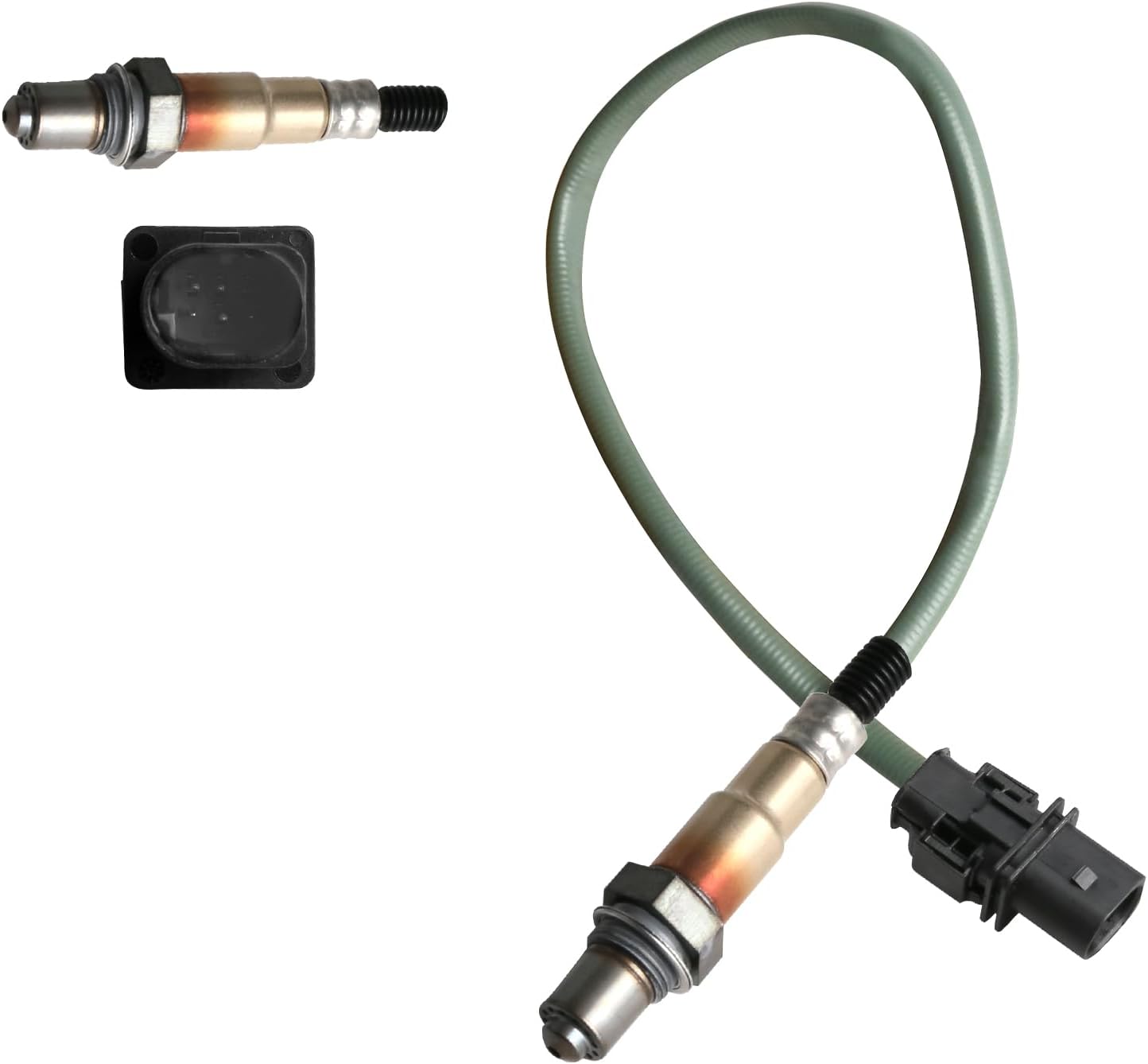
4. GAGOLCAR Oxygen Sensor (Replace #17016)
| Measuring Range | 12.5 – 18.0 % |
|---|---|
| Output Type | electrical signal |
| Specific Uses For Product | automotive, engine |
| Material Type | Stainless Steel, Ceramic, High-Temperature-Resistant Polymer |
This GAGOLCAR oxygen sensor is a low-cost replacement designed to detect the air-fuel mixture and send an electrical signal to the engine control system. It is intended for in-line use where a failed upstream or downstream O2 sensor has triggered a check-engine light on compatible Mercedes-Benz models. The sensor uses a ceramic sensing element with a stainless steel, laser-welded housing and high-temperature materials to improve response and resist exhaust conditions. In practice it provides basic functionality to restore closed-loop fuel control and extinguish diagnostic trouble codes, and many buyers report straightforward fitment and easy installation. Because this is an economy aftermarket part, build and long-term reliability vary and occasional duds are reported, so expect some variability compared with factory-quality parts. There is a one-year seller warranty and the unit is offered individually, making it an inexpensive option for quick repairs or interim fixes on ML-Class vehicles.
Best for: Budget-conscious owners who prioritize low upfront cost and a quick DIY fix to clear O2 sensor codes on their Mercedes ML-Class.
Less Ideal for: Drivers seeking a long-term factory-quality replacement or those who require guaranteed OEM calibration and extended durability should consider higher-end or OEM parts instead.
- Sold as a direct-fit replacement for many Mercedes-Benz sensors, simplifying installation.
- Stainless steel, double laser-welded body designed for high-temperature exhaust environments.
- Ceramic sensing element and specified measuring range to restore air-fuel monitoring.
- Very low price point that makes it affordable for DIY repairs or temporary replacement.
- Inconsistent quality control reported by some buyers, so a replacement may occasionally fail early.
- Not guaranteed to match factory long-term durability or exact OEM calibration.
Verdict: A very affordable, direct-fit oxygen sensor for Mercedes ML-Class repairs that restores function quickly but may not match factory durability.
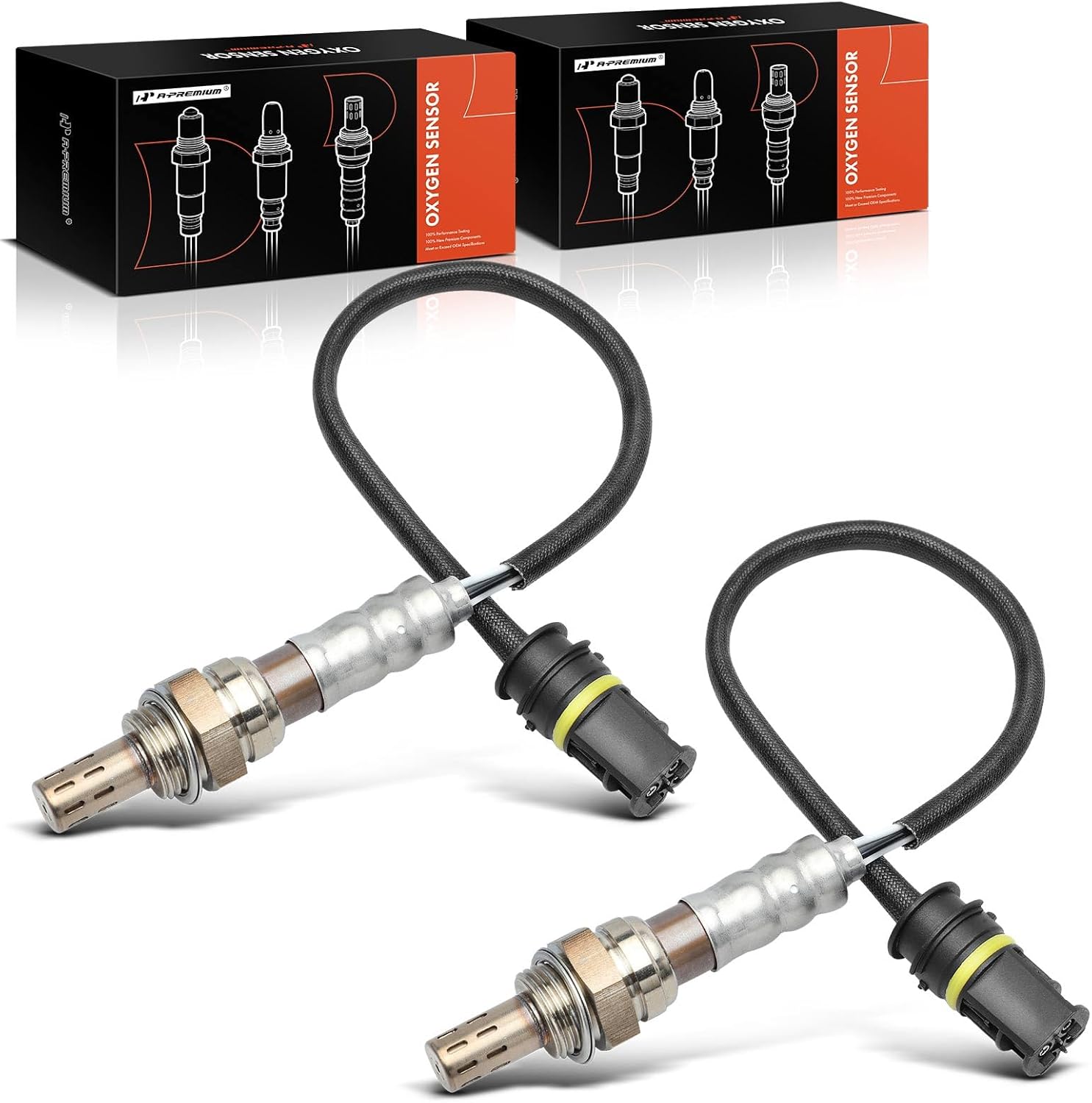
5. A-Premium 2‑Piece O2 Oxygen Sensor Set for Mercedes‑Benz (Upstream/Downstream)
| Mounting Type | Threaded Mount |
|---|---|
| Output Type | Analog |
| Sensor Type | Heated |
| Upper Temperature Rating | 1500 Degrees Fahrenheit |
This two-piece A-Premium O2 sensor set replaces failed upstream or downstream oxygen sensors on compatible Mercedes‑Benz ML‑Class and other listed models and provides the vehicle computer with real‑time oxygen readings to reestablish closed‑loop fuel control. Each sensor is a threaded, heated design with a four‑wire connector and stainless steel construction rated for high temperatures, so it is intended for direct replacement installations where the original connector and threads match. Typical use is straightforward: unplug the old sensor, unthread it from the exhaust, and install the new sensor then reconnect the wiring; buyers should expect quicker resolution of fuel trim and check‑engine light issues when fitment is correct. The practical benefits are direct compatibility with specific Mercedes model years, a heat‑rated sensor element for faster warm‑up, and a paired kit when multiple sensors are needed. Limitations include the need to confirm the exact reference numbers and connector match before purchase and that removing seized factory sensors can still require penetrating lubricant or specialty sockets during installation.
Best for: A reliability‑focused buyer who prioritizes restoring proper engine fuel control on an older Mercedes‑Benz ML‑Class and wants a factory‑style replacement that gets the ECU back to closed‑loop operation.
Less Ideal for: Drivers seeking a universal sensor for many different makes or a performance tuning sensor with modified fittings should consider alternatives tailored to their needs.
- Sold as a two‑piece set for replacing both upstream and downstream sensors when needed
- Heated 4‑wire design provides faster sensor warm‑up for reliable closed‑loop control
- Stainless steel, threaded mount rated to 1500°F for exhaust durability
- Listed fitment covers multiple Mercedes‑Benz models and common reference numbers
- Requires verifying connector and reference numbers to ensure exact fit
- Removing rusted or seized factory sensors may still be difficult and need extra tools
Verdict: A practical, heat‑rated two‑piece replacement set that restores factory‑style oxygen sensing on compatible Mercedes‑Benz models when fitment is confirmed.
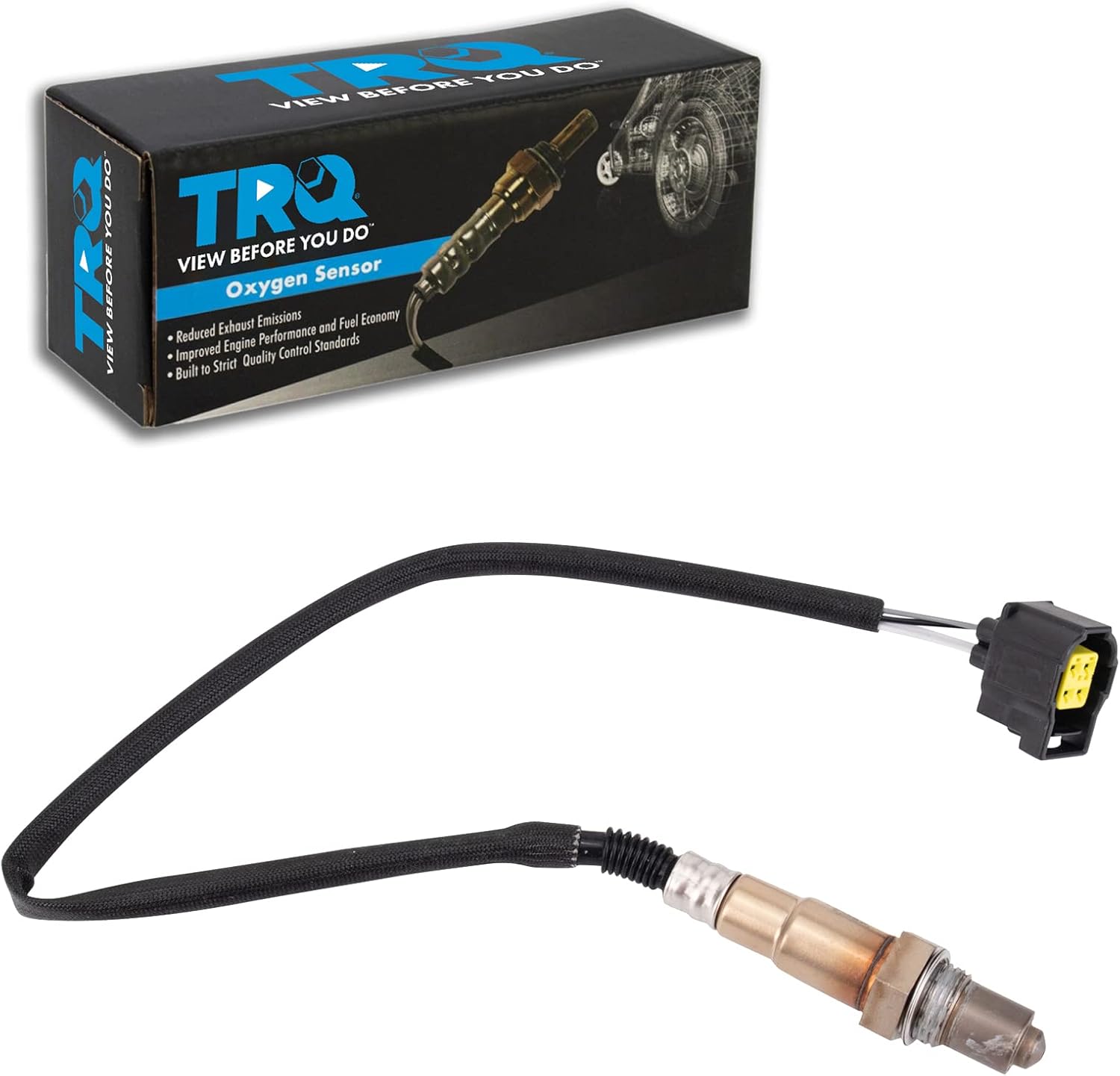
6. TRQ O2 Oxygen Sensor (4‑Wire Narrow‑Band, Downstream)
| Mounting Type | Flange Mount |
|---|---|
| Output Type | electrical signal |
| Upper Temperature Rating | 1562 Degrees Fahrenheit |
| Material Type | Alloy Steel |
This TRQ oxygen sensor is a direct-fit downstream (post-catalytic) 4-wire narrow-band replacement intended to restore proper exhaust monitoring on Mercedes-Benz applications listed as compatible. It plugs into the factory harness and mounts with a flange for a straightforward swap; TRQ says the part is pre-calibrated and includes anti-seize and a protective cover to simplify installation. The sensor uses stainless construction with a high upper temperature rating, so it is built to resist heat and contamination in the exhaust stream. In practice the unit helps clear O2-related trouble codes and lets the engine control module relearn proper fuel trims after a few drive cycles. Some users report quick, trouble-free installs and recovered driveability while a minority report early failure or connector pin differences that required minor wiring changes. If you need a convenient, lower-cost downstream replacement that installs without modification on supported Mercedes models, this is a practical choice, though longevity can vary compared with higher-cost factory replacements.
Best for: Convenience-driven buyers who want a ready-to-install, direct-replacement downstream O2 sensor to quickly clear codes and restore normal fuel control without extensive diagnostics or modification.
Less Ideal for: Buyers seeking a long-term OEM-level lifetime or those unwilling to verify connector type should consider higher-cost factory-quality sensors or professional replacement services instead.
- Direct-fit flange mount designed to plug into the factory wiring harness for easy installation
- 4-wire narrow-band design provides full signal and heater control for fast warm-up
- Stainless/alloy construction and high temperature rating improve resistance to exhaust heat and contamination
- Includes pre-applied anti-seize and protective cover to speed install and prevent thread damage
- Some buyers report premature failures, so long-term durability can be inconsistent
- Connector polarity/plug type may differ across vehicle harnesses requiring verification before install
Verdict: A pre-calibrated, direct-fit downstream 4-wire oxygen sensor that makes fast, convenient repairs to Mercedes-Benz exhaust monitoring systems.
7. Bosch 16318 Premium Original Equipment Oxygen Sensor

| Mounting Type | Flange Mount |
|---|---|
| Output Type | electrical signal |
| Specific Uses For Product | Automotive – Mercedes-Benz |
| Upper Temperature Rating | 2192 Degrees Fahrenheit |
| Material Type | Stainless Steel |
This Bosch 16318 oxygen sensor is a direct-fit replacement for specific Mercedes-Benz engines and is built to perform the basic job of measuring exhaust oxygen to keep the engine running efficiently and emissions in check. It is flange-mounted, has a fast-acting heater so it reaches operating temperature quickly, and outputs an electrical signal that the engine control unit uses to adjust fuel trim. Typical use is straightforward: swap the failing sensor for this unit to clear lean/rich running issues, improve fuel economy, and reduce emissions. The stainless steel, double laser-welded body and factory testing promise durability in an exhaust environment, and threads come pre-coated with anti-seize for easier installation. Limitations are that fitment is specific to model years and engine variants of Mercedes ML-Class, so verification of exact sensor position and engine compatibility is required before purchase, and a vehicle scan tool may be needed to confirm the sensor location and proper operation after installation.
Best for: A risk-averse mainstream buyer who prioritizes factory-quality replacements and wants a dependable, direct-fit sensor to maintain correct engine operation and emissions compliance.
Less Ideal for: Buyers looking for a universal or multi-vehicle sensor solution or those who prefer performance-tuned aftermarket sensors with altered response characteristics.
- Direct-fit factory-quality replacement for select Mercedes-Benz models for straightforward installation.
- Fast-acting heater reduces warm-up time so the sensor begins accurate reporting sooner.
- Stainless steel double laser-welded body and factory testing enhance durability in exhaust conditions.
- Threads pre-coated with anti-seize and OEM-style connector simplify installation.
- Compatible only with specific Mercedes-Benz model years and engine variants so you must confirm exact fitment before buying.
- Does not include vehicle-specific installation hardware or instructions beyond standard sensor features.
Verdict: A dependable factory-style oxygen sensor for Mercedes-Benz ML-Class drivers who want a straightforward, durable direct replacement.
Choosing the Right Mercedes-Benz ML-Class Oxygen Sensor: Key Factors to Consider
Physical Fit and Connector Type
Correct physical fit is essential for a hassle-free replacement. The sensor must match thread size, hex dimensions, and plug type to seat properly in the exhaust and connect to the vehicle wiring without splicing.
Using a sensor with the wrong connector can lead to unreliable readings, poor heater circuit connection, or the need for adapters that may introduce failure points. Confirming OEM-style fit avoids exhaust leaks around the bung and prevents stress on the wiring harness during installation.
Heater Circuit and Warm-Up Time
Most modern ML-Class oxygen sensors include an internal heater to bring the sensing element up to operating temperature quickly. Faster warm-up reduces time spent in open-loop fueling, improving cold-start emissions and drivability.
Check that the replacement sensor's heater specifications match the vehicle's electrical system. A heater that draws too much current can overload circuits, while one that heats too slowly delays closed-loop operation and can trigger diagnostic trouble codes during short trips.
Response Speed and Sensitivity
Response speed determines how quickly the sensor reflects changes in exhaust oxygen levels and influences the engine control unit's ability to adjust fueling. Faster, stable response helps maintain steady idle and efficient combustion, particularly under transient throttle conditions.
Sensitivity affects the clarity of the signal and the ECU's ability to detect rich or lean conditions. Look for sensors with documented voltage swing or lambda response suited to gasoline engines to ensure predictable feedback for the ML-Class engine management.
Upstream Vs Downstream Placement
Knowing whether you need an upstream (pre-catalyst) or downstream (post-catalyst) sensor is critical. Upstream sensors primarily control air-fuel mixture and require quicker response and higher sensitivity. Downstream sensors monitor catalyst efficiency and typically have different expected signal behavior.
Replacing the wrong bank or position can leave the engine running poorly or fail to resolve emissions monitoring faults. Confirm the correct bank and sensor position specified for your ML-Class year and engine when selecting a replacement.
Durability and Contaminant Resistance
Exhaust sensors face high temperatures and exposure to soot, oil, and fuel additives. Materials and internal coatings that resist contamination prolong sensor life and maintain accurate readings.
Sensors designed for thermal shock resistance and with robust protective housings will usually last longer in real-world driving. Consider expected operating conditions, such as frequent short trips or high-load driving, since harsher use can accelerate sensor degradation.
Diagnostic Compatibility and Testing
A replacement sensor should provide clear, testable signals so you or a technician can verify function with a scan tool or multimeter. Compatibility with standard diagnostic procedures—checking heater continuity, voltage swings, and response under varying throttle—is important for troubleshooting.
Some sensors are easier to bench test or verify on-vehicle, which simplifies confirming the fix after installation. Ensuring straightforward diagnostic behavior helps avoid repeat visits and uncertain fault codes.
How We Chose the Best Mercedes-Benz ML-Class Oxygen Sensor
We prioritized sensors that match the ML-Class sensor harness and thread specifications, have documented response times appropriate for closed-loop fueling control, and use sensing elements suited to on-vehicle diagnostics. Durability under high-temperature exhaust conditions and resistance to contamination were also key filters, since these influence service life and steady readings. Electrical compatibility was reviewed to ensure proper heater circuit function and connector match. We also considered sensors that allow straightforward replacement and clear diagnostic feedback during testing. Exclusions: we omitted universal-fit sensors that require extensive modification, any units without explicit fitment details, and sensors lacking heater circuit specification. The final list reflects fitment accuracy, response speed, thermal robustness, connector compatibility, and diagnostic reliability for the ML-Class application.
Our full evaluation process is outlined in our review methodology.
FAQ
How do I know if the ML-Class oxygen sensor is failing?
Common signs often include a rough idle, decreased fuel economy, and a check engine light that points to oxygen sensor-related codes. You may notice hesitation on acceleration or higher fuel consumption. A diagnostic scan and simple heater continuity checks usually confirm a failing sensor.
Can I install an oxygen sensor myself on an ML-Class?
Many owners can replace the sensor with basic hand tools and correct socket sizes, provided they verify thread and connector compatibility first. Work cautiously around hot exhaust components, and follow torque recommendations to avoid leaks. If you are uncomfortable with underbody work or electrical connectors, seek professional assistance.
Should I replace upstream and downstream sensors at the same time?
It often depends on age and symptoms. If only one sensor shows faulty diagnostics or clear failure signs, replacing just that sensor may be sufficient. However, if sensors are the same age and one has failed, replacing both can reduce the chance of future issues and ensure consistent emissions monitoring.
How is a bad oxygen sensor diagnosed on the ML-Class?
Diagnosis usually involves scanning for diagnostic trouble codes, checking heater circuit continuity, and observing sensor voltage or lambda response while the engine runs. Live data can reveal slow response or out-of-range readings. These checks help differentiate sensor faults from wiring or ECU issues.
Do different sensor positions use different types of sensors?
Yes. Upstream sensors are typically designed for faster response and direct air-fuel feedback, while downstream sensors are configured to monitor catalytic converter efficiency and may show steadier outputs. Selecting the correct position-specific sensor ensures proper engine management and emissions reporting.
Conclusion
When replacing an oxygen sensor on a Mercedes-Benz ML-Class, prioritize correct fitment, heater compatibility, and response characteristics that match the vehicle's engine control expectations. Balance durability and diagnostic clarity against installation ease to minimize future issues.Focusing on the factors above will help you choose a sensor that restores smooth running and reliable emissions performance while avoiding common pitfalls like connector mismatch or slow warm-up times.
Explore More:
- Check out all Mercedes-Benz ML-Class parts & accessories
- Explore Oxygen Sensors Maintenance & Repair Guides
- Explore Engine
- Browse all Auto Parts
