

Note: This article contains affiliate links. If you click on these links and make a purchase, I may earn a small commission at no extra cost to you. This helps support my research and content. Read my full affiliate disclosure here.
If your Mercedes-Benz C-Class is showing rough running, poor fuel economy, or an emissions warning, the oxygen sensor is often a key component to check. Choosing the right Mercedes-Benz C-Class oxygen sensor affects engine management, fuel trim, and emissions control, so selecting a correctly designed replacement matters for real-world drivability.This guide highlights seven shortlisted options that meet common fitment and signal-quality expectations. We evaluated each choice on fitment accuracy and signal response among other criteria to help you narrow the field before you inspect specific products.
Looking for other parts? See all Mercedes-Benz C-Class parts & accessories.
Top Picks at a Glance
| Best Overall The best all-around choice for most situations | Bosch 16272 Premium Replacement Oxygen Sensor for select Mercedes-Benz |  |
| Best Quality Built to a higher standard if you want something more solid | Bosch 16749 Premium Original Equipment Oxygen Sensor |  |
| Best Value The sweet spot between price and what you get | DrCax 234-5096 Upstream Heated Oxygen O2 Sensor for Mercedes-Benz |  |
| Best budget The cheapest option that still gets the job done reliably | GAGOLCAR Oxygen Sensor (Replace #17016) |  |
| Highest Rated A top-rated pick with lots of positive feedback | A-Premium Oxygen (O2) Sensor for Mercedes‑Benz (compatible) |  |
| Most Popular A crowd favorite that many people choose with confidence | Bosch 17016 Premium Original Equipment Oxygen Sensor |  |
| Best Seller A high-volume bestseller chosen again and again | Walker Products 350-34039 Oxygen Sensor (4-Wire, Direct Fit) |  |
1. Bosch 16272 Premium Replacement Oxygen Sensor for select Mercedes-Benz

| Maximum Supply Voltage | 12 Volts |
|---|---|
| Mounting Type | Flange Mount |
| Upper Temperature Rating | 800 Degrees Celsius |
| Material Type | Stainless Steel |
This Bosch 16272 oxygen sensor is a direct-fit replacement that restores the engine control unit’s ability to monitor exhaust oxygen and maintain proper air-fuel ratio. It is used as a plug-and-play sensor on compatible Mercedes‑Benz C‑Class and related models to correct erratic fueling, poor throttle response, or emissions faults. Notable features include a double laser‑welded stainless steel body for corrosion resistance, a fast‑acting heater that helps the sensor reach operating temperature quickly, and factory-style connectors with pre-coated threads to simplify installation. In practice the sensor helps improve throttle response and fuel economy compared with a worn sensor, and reduces the risk of catalytic converter damage by keeping combustion closer to ideal. Limitations are that fitment is specific to certain model years and engines so you must verify compatibility for your exact Mercedes variant, and installation may still require basic mechanical access or a mechanic if sensors are hard to reach or seized in place.
Best for: Balanced, practical Mercedes owners who want a factory-quality, reliable replacement to restore fuel economy and emissions control without overpaying for racing or performance parts.
Less Ideal for: Do not choose this if you need a universal sensor for multiple makes or a performance-tuned wideband solution; also avoid if you need parts for models outside the listed Mercedes fitment range.
- Direct-fit design with factory-style connector for straightforward installation
- Stainless steel double laser-welded body for durability in exhaust environments
- Fast-acting heater shortens warm-up time for accurate readings sooner
- Threads pre-coated with anti-seize to reduce risk of galling during installation
- Compatible only with specific Mercedes‑Benz model years and engine configurations so fit must be confirmed
- Sensor access on some vehicles can be difficult and may require a mechanic or special tools
Verdict: A factory-style, durable direct-fit oxygen sensor that reliably restores proper air-fuel control on compatible Mercedes‑Benz models.
2. Bosch 16749 Premium Original Equipment Oxygen Sensor

| Maximum Supply Voltage | 12 Volts (DC) |
|---|---|
| Measuring Range | 0.1 – 21 vol% |
| Mounting Type | Flange Mount |
| Upper Temperature Rating | 1000 Degrees Celsius |
This Bosch 16749 oxygen sensor is a direct-fit, factory-quality replacement intended to restore proper O2 feedback to the engine control system on compatible Mercedes-Benz models. It installs like a factory part with pre-coated threads and a matching connector, so wiring and fitment are straightforward when it matches the vehicle position. Notable features include a stainless steel double laser-welded body for corrosion resistance, a fast-acting heater that brings the sensor to operating temperature quickly, and full bench testing that results in the characteristic seared protection tube. In use it helps clear check-engine codes related to the upstream sensor, returns smooth closed-loop fueling, and reduces emissions compared with a failing sensor. Limitations are fitment sensitivity and the need to verify whether you need an upper 4-pin or a lower 6-pin sensor for your specific C-Class and engine; installing the wrong position sensor will not function correctly. Some older reports show occasional early failures, so confirming part number and inspecting on arrival is sensible for a performance-focused rebuild.
Best for: Performance-oriented owners seeking a factory-quality, direct-fit replacement to restore accurate air-fuel control and emissions performance on a C-Class during engine repairs or tune work.
Less Ideal for: Buyers who cannot verify the exact sensor position or pin configuration for their vehicle or who prefer a cheaper universal sensor and adaptive tuning workflow should consider alternatives.
- Direct-fit, factory-quality connector and pre-coated threads simplify installation
- Double laser-welded stainless steel body resists exhaust corrosion for longer service life
- Fast-acting heater reduces warm-up time so the sensor reaches operating range quickly
- 100% functional testing at the factory reduces risk of out-of-box defects
- Requires exact position and pin-count match for correct function which can be confusing to confirm
- Some user reports of early failures despite testing
Verdict: A factory-quality, direct-fit Bosch oxygen sensor built to restore accurate air-fuel feedback and durable performance on compatible Mercedes-Benz C-Class engines.
3. DrCax 234-5096 Upstream Heated Oxygen O2 Sensor for Mercedes-Benz

| Mounting Type | Flange Mount |
|---|---|
| Output Type | Analog |
| Upper Temperature Rating | 1472 Degrees Fahrenheit |
| Material Type | Ceramic, Metal, Plastic |
This DrCax heated upstream oxygen sensor replaces a failing bank 1 sensor to re-establish accurate air/fuel ratio feedback for Mercedes-Benz engines. It is used as a direct replacement where the original part number matches, plugging into the vehicle wiring and mounting to the exhaust flange. The sensor is built to meet or exceed factory specifications, includes a ceramic sensing element, and has a built-in heater that speeds warm-up for reliable closed-loop operation. In practice the sensor restores smoother idle, more consistent fuel trims, and can clear check engine codes tied to oxygen sensing. Installation is straightforward for anyone comfortable with basic underbody work, though some wiring routing and securing is required because of extra lead length. The main limitations are that fitment is specific to listed Mercedes models and long-term durability depends on installation environment and maintenance; buyers replacing multiple sensors or seeking an OEM-branded part may prefer alternatives. For a budget-focused replacement that targets correct operation and drivability, this sensor delivers sensible performance.
Best for: Buyers who prioritize getting reliable, OEM-equivalent function at a lower cost and who optimize maintenance costs by repairing rather than replacing the vehicle.
Less Ideal for: Drivers seeking a branded factory sensor or those who need coverage for multiple vehicle makes should consider other options.
- Heated element for quicker warm-up and stable closed-loop operation
- Manufactured to meet or exceed factory specifications for direct replacement
- Compatible with a long list of Mercedes-Benz models and OEM part numbers
- Ceramic sensing element designed for accurate air/fuel ratio readings
- Fitment is limited to the specific Mercedes models listed and must be verified
- Long-term durability may vary compared with a factory-branded sensor
Verdict: A cost-conscious, factory-equivalent upstream heated O2 sensor that restores engine fueling for the listed Mercedes-Benz models without the premium of a branded part.
4. GAGOLCAR Oxygen Sensor (Replace #17016)
| Measuring Range | 12.5 – 18.0 % |
|---|---|
| Output Type | electrical signal |
| Specific Uses For Product | automotive, engine |
| Material Type | Stainless Steel, Ceramic, High-Temperature-Resistant Polymer |
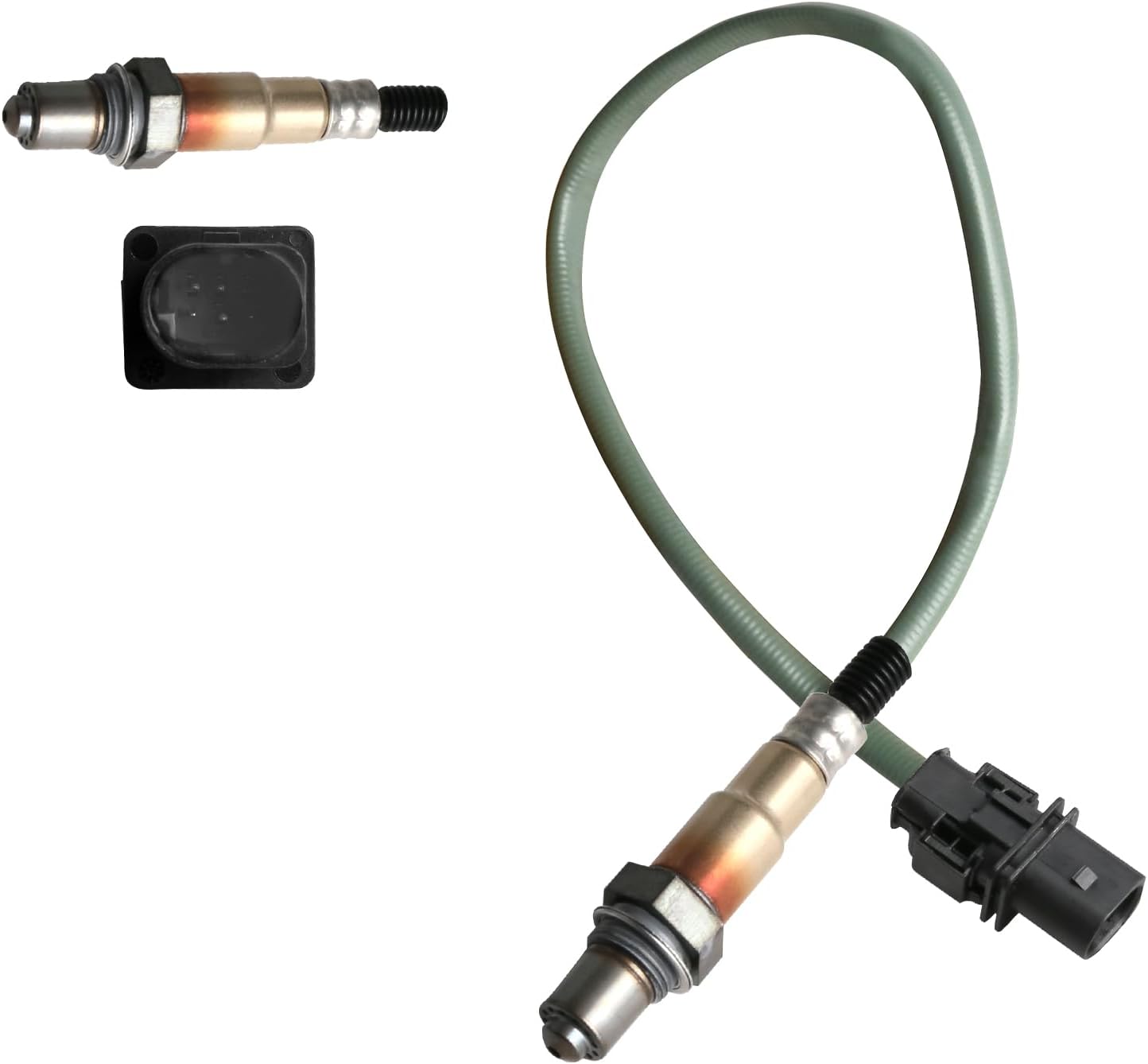
This GAGOLCAR oxygen sensor is an aftermarket replacement that measures the engine air-fuel mixture and sends an electrical signal to the vehicle computer to help maintain efficient combustion. It is intended as a direct-replacement style sensor for several Mercedes-Benz models and is installed in the exhaust stream where it detects oxygen levels to correct fuel trim and extinguish check-engine codes. The sensor uses stainless steel and high-temperature materials with a laser-welded body for seal durability and claims a faster response than low-quality units. In practice it offers a low-cost way to clear slow-response or heater-related O2 codes and get drivability back to normal, making it useful for DIY repairs or short-term fixes. Limitations include variable long-term reliability reported by users and the occasional defective unit, so expect to verify operation after installation and keep returns or replacement options in mind. Wiring length and connector fitment should also be confirmed against the C-Class year and engine before purchase.
Best for: Budget-conscious DIYers who want a low-cost, direct-replacement oxygen sensor for Mercedes-Benz C-Class repairs and prefer fixing drivability or clearing O2 codes themselves.
Less Ideal for: Owners seeking a long-term factory-quality replacement or those who want extended manufacturer-backed coverage should consider higher-end or dealer options.
- Designed to match Mercedes-Benz replacement part numbers for direct-fit installations on listed models
- Made from stainless steel and high-temperature materials for improved heat resistance
- Fast electrical output response to detect air-fuel changes and address running issues
- Single-unit packaging makes it easy to buy and install one sensor at a time
- Some buyers report inconsistent longevity compared with factory-quality sensors
- Occasional defective units reported, so verification after installation is recommended
Verdict: A low-cost direct-replacement oxygen sensor that can quickly fix O2-related drivability issues on Mercedes C-Class models but may not match factory parts for long-term durability.
5. A-Premium Oxygen (O2) Sensor for Mercedes‑Benz (compatible)

| Measurement Accuracy | High |
|---|---|
| Mounting Type | Flange Mount |
| Output Type | Analog |
| Upper Temperature Rating | 400 Degrees Celsius |
This A-Premium heated O2 sensor is a direct-fit replacement that measures exhaust oxygen and feeds that data to the ECU so the engine can regulate air-fuel ratio. It is offered as a threaded, flange-mount sensor with a four-wire connector and is intended for upstream or downstream positions on specific Mercedes‑Benz C‑Class and related models. In practice it installs like a factory replacement sensor and the stainless steel housing and 400°C upper rating mean it tolerates typical exhaust conditions. Buyers report straightforward fitment and that check-engine codes related to oxygen sensors are cleared after installation. Limitations are that this is an aftermarket part so long-term durability may vary versus factory parts, and removing a seized original sensor can still be the hardest part of the job. Also the listing covers specific model years and VIN ranges so verify exact fit before purchase.
Best for: A reliability-focused buyer who prioritizes restoring correct engine management and eliminating O2-related diagnostics on an older Mercedes‑Benz C‑Class and related models.
Less Ideal for: Drivers seeking a manufacturer-original replacement with guaranteed factory-spec longevity or those who prefer dealer-installed parts and support.
- Heated four-wire design supports closed-loop operation and quicker warm-up.
- Stainless steel construction and 400°C rating for standard exhaust durability.
- Threaded flange mount and factory-style connector for straightforward installation.
- Compatible fitment listed specifically for various Mercedes‑Benz C‑Class and related models, simplifying selection.
- Aftermarket long-term longevity can differ from factory parts.
- Removal of a corroded original sensor may require extra tools or labor.
Verdict: A practical, heated replacement oxygen sensor that offers factory-style fit and quick restoration of closed-loop fueling for compatible Mercedes‑Benz models, with the usual aftermarket durability caveats.
6. Bosch 17016 Premium Original Equipment Oxygen Sensor
| Maximum Supply Voltage | 12 Volts |
|---|---|
| Mounting Type | Flange Mount |
| Output Type | Push-Pull |
| Material Type | Alloy Steel, Stainless Steel |
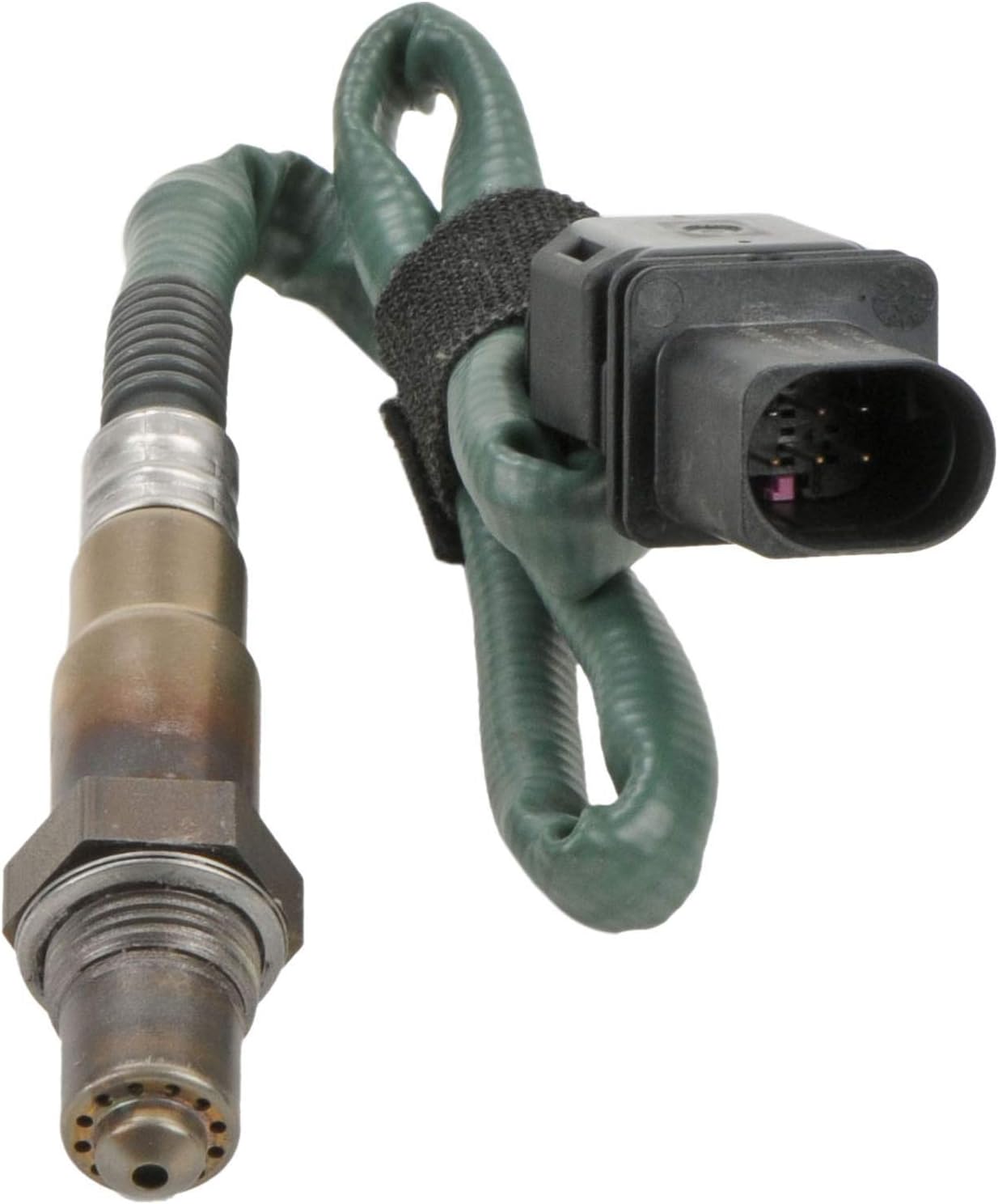
This Bosch 17016 oxygen sensor is a direct-fit, factory-quality replacement that restores the vehicle's ability to monitor exhaust oxygen and control the air-fuel mixture. It is typically used as a precatalytic or post-catalytic sensor on compatible Mercedes-Benz C-Class engines to clear check-engine codes, improve fuel economy, and protect the catalytic converter. Notable features include a double laser-welded stainless steel body for corrosion resistance, a fast-acting heater for quick warm-up, and direct-fit connectors with anti-seize on the threads for easier installation. In real-world use the unit behaves like a factory sensor, bringing sensor readings back to expected ranges and eliminating rough-running or mixture-related faults when installed correctly. Installation can be tight in some exhaust locations and post-catalytic sensors may be hard to remove if the original is seized, so plan for a breaker bar or penetrating lubricant. A small number of buyers report isolated failures of the heater circuit, but most find it a reliable, ready-to-install replacement for maintaining emission control and engine performance.
Best for: Convenience-driven buyers who want a factory-quality, ready-to-install replacement that restores emission monitoring and reduces the hassle of sourcing a correct-fit sensor.
Less Ideal for: Buyers seeking lifetime warranty coverage or dedicated dealer-backed support should consider purchasing through authorized dealer channels instead.
- True direct-fit connector and harness for straightforward installation
- Double laser-welded stainless steel body resists exhaust corrosion
- Fast-acting heater brings the sensor to operating temperature quickly
- Threads pre-coated with anti-seize to simplify removal and future service
- Post-catalytic units can be difficult to remove if the original sensor is seized
- Some isolated reports of heater circuit failures in a minority of units
Verdict: A factory-quality, direct-fit oxygen sensor that restores emission control and engine efficiency with minimal installation hassle.
7. Walker Products 350-34039 Oxygen Sensor (4-Wire, Direct Fit)
| Connector/Wiring | 4-wire heated |
|---|---|
| Mounting Type | Flange mount |
| Output Type | Electrical signal |
| Material | Ceramic, Metal |
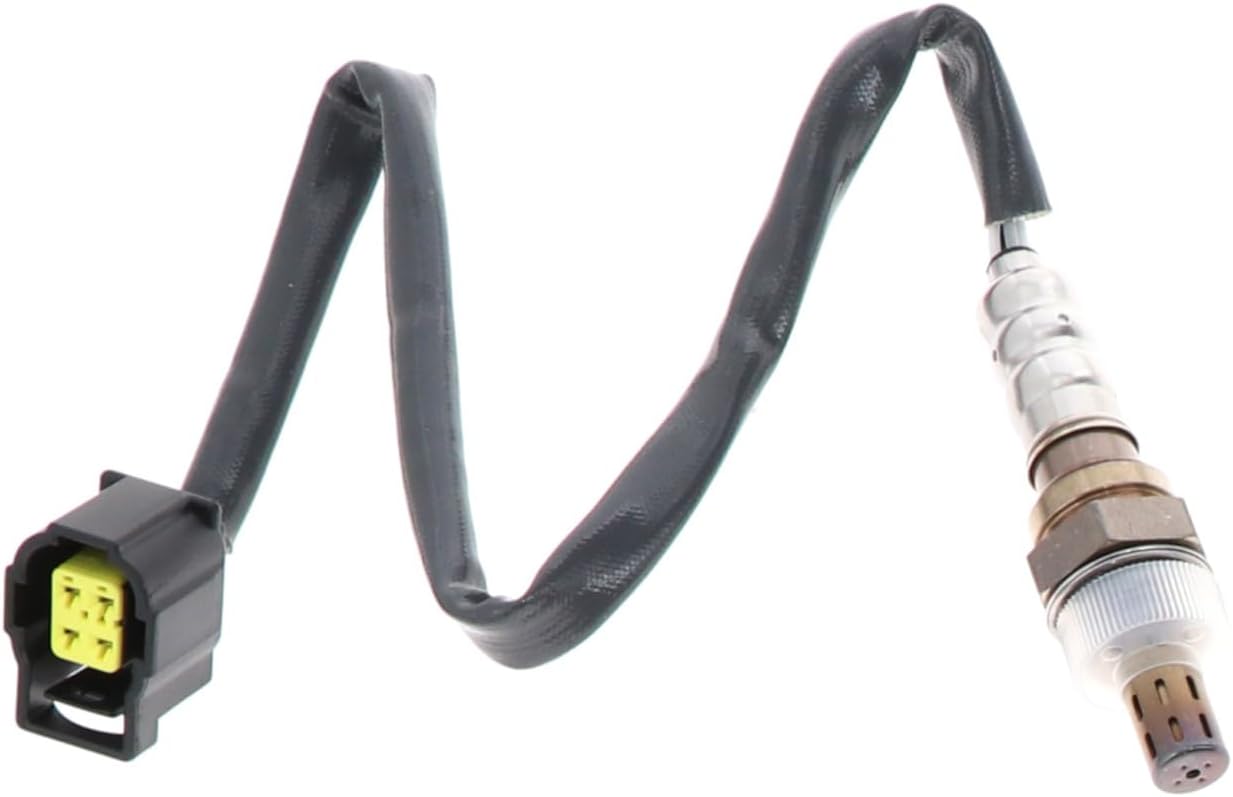
This Walker 350-34039 oxygen sensor is a direct-fit, four-wire heated O2 sensor intended to replace a factory sensor and restore correct oxygen feedback to the engine control system. It installs like a standard sensor and is typically used to clear O2-related fault codes, improve fuel trim and emissions performance, and ensure accurate air-fuel ratio readings. Notable design features listed by the manufacturer include a ceramic sensing element, dual lower shield, laser-welded body and shield, high-temperature sleeving and a plasma-sprayed protective coating that help resist corrosion and heat. The sensor is performance tested and supplied with thread treatment, which can simplify installation. Practical benefits for a Mercedes-Benz C-Class include returning a faulty sensor to factory-like function and helping the car pass emissions checks when the issue is sensor-related. Limitations to be aware of are vehicle-specific fitment variations and occasional reports of incorrect placement for certain engines, so confirm the sensor is specified for your C-Class engine before installing.
Best for: Risk-averse mainstream buyers who prioritize a factory-quality, tested replacement sensor to fix check-engine codes and maintain emissions compliance on a Mercedes-Benz C-Class.
Less Ideal for: Owners who need aftermarket performance tuning or custom wideband sensing for motorsport applications should look for dedicated wideband sensors instead.
- Direct-fit four-wire design for straightforward replacement of factory heated sensors
- Durable construction with laser-welded body, dual lower shield and protective coatings
- Performance tested and supplied with thread treatment to ease installation
- Designed to restore accurate oxygen readings and improve fuel trim and emissions
- Some buyers report fitment or function issues on specific engines, so wrong application can trigger new codes
- Not a guaranteed match for every Mercedes C-Class engine variant; verify exact fitment before purchase
Verdict: A factory-style, four-wire heated replacement that usually restores proper O2 feedback on compatible Mercedes C-Class models but always confirm fitment for your engine.
Choosing the Right Mercedes-Benz C-Class Oxygen Sensor: Key Factors to Consider
Exact Fitment and Connector Type
An oxygen sensor that matches the factory thread size, hex shape, and connector ensures a straightforward swap without adapter modifications. Correct mechanical fit prevents exhaust leaks and avoids stress on wiring that can lead to early failure.
Using the right connector and wiring length keeps the sensor heater and signal wiring routed as designed, reducing the risk of chafing or electrical interference. Fitment also influences whether you need additional gaskets or anti-seize, which affects installation complexity.
Heater Circuit Specifications
Many oxygen sensors include an internal heater to bring the sensor to operating temperature quickly. Matching the original heater voltage and resistance is important because the vehicle's control module supplies a specific current for proper warmup.
A heater that draws too much or too little current can lead to delayed sensor readiness, longer open-loop operation, and higher emissions. For vehicles that depend on a functioning heater to pass readiness checks, correct heater specs affect both drivability and inspection outcomes.
Signal Response and Accuracy
How quickly and accurately the sensor responds to changes in exhaust oxygen content affects fuel trim adjustments and overall engine control. Faster response helps the control module correct air-fuel ratio in real time, improving throttle response and efficiency.
Assess signal characteristics such as switching speed for narrowband types or linearity for wideband types when applicable. A sensor that drifts or produces noisy output can cause fluctuating performance and trigger fault codes.
Durability and Contamination Resistance
Sensors operate in a harsh exhaust environment and can be damaged by soot, oil, coolant, or silicone contamination. Construction materials, protective coatings, and tip design influence how well a sensor resists fouling and thermal stress.
Consider expected service intervals and whether the sensor uses protective features like extended guard tubes or robust element encapsulation. Durable sensors reduce the likelihood of premature failure and repeated replacements.
Upstream Versus Downstream Placement
Upstream sensors sit before the catalytic converter and primarily manage engine air-fuel control, while downstream sensors monitor catalytic converter efficiency. Choosing the correct position-specific type is essential because the control logic and expected signal behavior differ between locations.
Using a sensor designed for the other position can result in improper readings, incorrect diagnostics, and unresolved drivability issues. Confirm the intended bank and sensor position to match the vehicle's requirements.
Installation Considerations
Some installations are straightforward while others require lifting the vehicle or removing heat shields. Factors such as sensor hex size, available clearance, and whether an anti-seize compound is pre-applied can affect installation time and effort.
Also consider whether wiring extensions or pigtails are necessary for routing and whether the sensor includes instructions for torque and connector engagement. Ease of installation reduces labor time and the chance of installation-related faults.
How We Chose the Best Mercedes-Benz C-Class Oxygen Sensor
To assemble this list we focused on criteria that directly affect function and longevity for Mercedes-Benz C-Class applications. Primary filters included exact fitment to factory connector and threads, correct heater circuit specifications, and sensor tip design to match exhaust geometry. Signal fidelity and response time were assessed to ensure the sensor provides usable feedback to the engine control module. Durability factors such as heater life, sensor element construction, and resistance to contamination were considered to predict service life. Ease of installation and access to replacement hardware were also weighed, since practical installation affects total cost of ownership. We excluded units that lack clear vehicle-specific fitment information, aftermarket sensors without documented heater specs, and products intended for generic or universal fitment that require modification. The resulting selections prioritize items that align with Mercedes-Benz C-Class technical requirements and common maintenance scenarios.
Our full evaluation process is outlined in our review methodology.
FAQ
What are common O2 sensor symptoms in a Mercedes-Benz C-Class?
Common symptoms often include rough idle, reduced fuel economy, and a persistent emissions-related warning light. You may also notice hesitation or uneven throttle response. These signs usually indicate the sensor is slow or inaccurate rather than other unrelated faults.
How do I know if the check engine light is caused by the oxygen sensor?
A diagnostic trouble code that references an oxygen sensor or a related circuit is a strong indicator. Live data that shows a sensor stuck at a fixed voltage, very slow switching, or no heater current can help confirm the sensor as the source. It often depends on corroborating evidence rather than a single symptom.
Can I install an oxygen sensor myself on a Mercedes-Benz C-Class?
Many owners can complete the swap if they have basic tools and safe access to the sensor location. Tasks include disconnecting the connector, unthreading the sensor, and fitting the replacement with correct torque. Some installations require lifting the vehicle or removing heat shielding, so plan accordingly and follow safety precautions.
How do I test an oxygen sensor before replacing it?
Testing often involves checking heater resistance with a multimeter, verifying the connector and wiring for continuity, and using live data to observe voltage switching or sensor output behavior during warmup and under varying engine load. For wideband sensors, monitor the controller's reported air-fuel readings. These checks help distinguish sensor failure from other engine issues.
Does upstream versus downstream placement matter when replacing a sensor?
Yes, placement matters because upstream sensors control fuel trim while downstream sensors monitor catalyst performance. Each position has different expected signal characteristics and may use different sensor types. Install the sensor specified for the original position to ensure proper engine management and emissions monitoring.
Conclusion
Prioritize fitment accuracy, correct heater specifications, and reliable signal response when choosing a replacement for a Mercedes-Benz C-Class oxygen sensor. These factors have the greatest impact on engine control, emissions readiness, and service life.Balance durability and ease of installation against expected service intervals. Confirm sensor position and technical specs before purchase to avoid installation issues and ensure predictable, long-term performance.
Explore More:
- Check out all Mercedes-Benz C-Class parts & accessories
- Explore Oxygen Sensors Maintenance & Repair Guides
- Explore Engine
- Browse all Auto Parts
