

Note: This article contains affiliate links. If you click on these links and make a purchase, I may earn a small commission at no extra cost to you. This helps support my research and content. Read my full affiliate disclosure here.
If you own a Nissan Titan PRO-4X and want more clearance, better approach angles, or the ability to run larger tires, a lift kit is one of the most effective upgrades. Choosing the right Nissan Titan PRO-4X lift kit affects handling, steering geometry, towing stability, and ride comfort, so it is important to match the kit to how you drive the truck.This guide shortlists five top lift kits for the PRO-4X and explains the tradeoffs between ride quality, suspension travel, and installation complexity. We evaluate fitment, durability, and how each option changes vehicle dynamics to help you pick the right approach for street use, towing, or off-road adventures.
Looking for other parts? See all Nissan Titan parts & accessories.
Top Picks at a Glance
| Best Overall Lift Kit A balanced, vehicle-specific kit that improves ride and ground clearance | Truxxx 2" Front Leveling Kit for Nissan Titan (2008–2024) |  |
| Best Budget Lift Kit An inexpensive bolt-on spacer or block kit that raises ride height affordably | SCITOO 2" Front Suspension Strut Spacers Leveling Lift Kit for Nissan Titan |  |
| Best Billet Aluminum Leveling Kit CNC-machined T6/T6061 aluminum strut spacers built for light weight and corrosion resistance | Superlift Suspension 2" Leveling Kit (Model 40047) for Nissan Titan |  |
| Best Rear Block Lift Kit Rear lift blocks and U-bolts designed to raise the axle and increase rear clearance | ECCPP 3-Inch Rear Leveling Lift Kit for Nissan Titan |  |
| Best Control‑Arm / Heavy‑Duty Lift Kit Kits that include tubular or steel control arms to correct geometry for larger lifts | Kojem Front Upper Control Arm Kit for Nissan Titan / Armada — 2–4" Lift, Powder-Coated Steel |  |
1. Truxxx 2" Front Leveling Kit for Nissan Titan (2008–2024)
Best Overall Lift Kit

| Auto Part Position | Front |
|---|---|
| Material Type | Carbon Steel |
| Maximum Lifting Height | 2 inches |
| Included Components | Front strut spacers, hardware and detailed instructions. |
This Truxxx 2" front leveling kit lifts the front of Nissan Titan models (including XD and Pro4x) to correct nose-down stance and create room for bigger tires. It installs as a direct bolt-on using two front strut spacers plus the supplied hardware and instructions, so a competent DIYer can complete the job in a few hours before doing an alignment. The kit is laser cut from US mill-certified steel and is engineered to work with factory struts and shocks so aftermarket dampers are not required, which helps preserve the truck's original ride quality. The main practical benefits are improved appearance, a modest increase in ground clearance, and the ability to fit up to roughly 33" tires on stock offset wheels. Limitations are the modest 2" lift height if you want a more aggressive stance or much larger tires you will need a bigger lift, and you still need a professional alignment after installation to maintain proper handling and tire wear.
Best for: Buyers who want a reliable, factory-friendly front leveling solution that preserves ride comfort and is realistic for a competent DIY installer seeking a modest height correction.
Less Ideal for: Drivers seeking a dramatic lift for serious off-roading, much larger tires, or those who want a full suspension overhaul with new shocks and extended travel.
- Direct bolt-in design with included hardware and instructions for straightforward DIY installation
- Designed to work with factory struts and shocks to retain stock ride quality
- Made in USA from mill-certified steel with laser-cut precision for consistent fit
- Adds usable clearance and allows fitting of up to ~33" tires on stock offset wheels
- Includes alignment specs to simplify post-install setup
- Only provides a 2-inch lift so it is not suitable for aggressive off-road clearance or much larger tires
Verdict: The top pick is a well-rounded lift kit that balances ride quality, fitment, and parts completeness for most DIY installers seeking a reliable height increase.
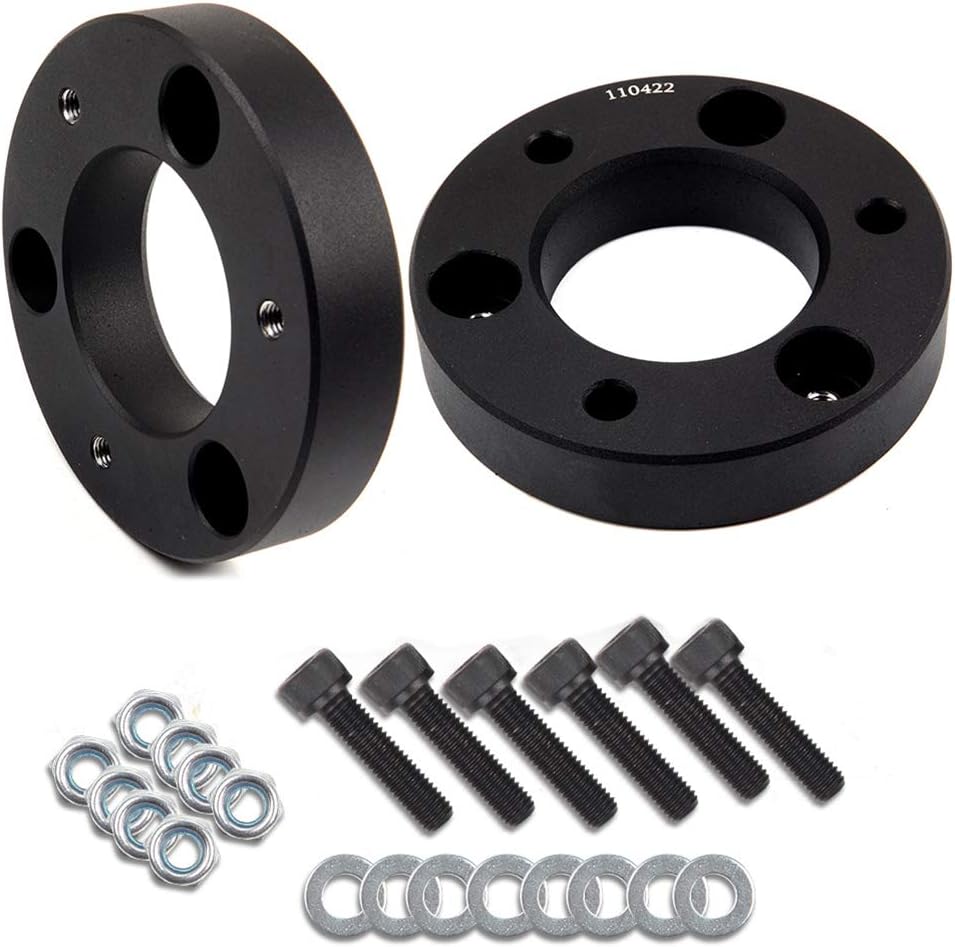
2. SCITOO 2" Front Suspension Strut Spacers Leveling Lift Kit for Nissan Titan
Best Budget Lift Kit
| Automotive Fit Type | Vehicle Specific Fit |
|---|---|
| Included Components | Strut Spacer |
| Material Type | Aluminum |
| Maximum Lifting Height | 2 inches |
| Auto Part Position | Front |
This SCITOO leveling kit uses machined 6061-T6 aluminum strut spacers to lift the front of a Nissan Titan about 2 inches and restore a level stance. It installs on the factory strut assembly, so you keep the truck's existing shocks and springs while gaining clearance for slightly larger tires or to match the rear ride height. The spacers are CNC-cut and anodized for corrosion resistance and are supplied with hardware sized for a vehicle-specific fit. In use the kit delivers a modest, factory-compatible lift that preserves on-road ride quality and steering feel better than heavier suspension swaps. You should plan a front-end alignment after installation and expect slightly increased wear on some suspension joints because of the altered geometry. Installation is straightforward for a competent DIYer with basic tools, but any vehicles with unique knuckle or shock designs may need minor bolt trimming as noted by the maker.
Best for: Buyers who want a low-cost, no-rebuild solution to level a Nissan Titan PRO-4X front end while keeping factory shocks and minimizing installation complexity.
Less Ideal for: Drivers seeking large lifts, full suspension performance upgrades, or those who want to replace shocks and springs as part of a comprehensive suspension build.
- Vehicle-specific fit for Nissan Titan front suspension
- CNC-machined 6061-T6 aluminum construction with anodized finish
- Raises front ride height about 2 inches without replacing shocks
- Keeps factory shock and spring components in place for easier installation
- Simple install that can be completed by a competent DIYer
- Does not include rear lift or full suspension components so total vehicle height change is limited
- May accelerate wear on some suspension joints due to changed geometry
Verdict: Choose this budget-friendly spacer or block kit if you want a straightforward, low-cost way to level or lift without replacing shocks or major suspension parts.
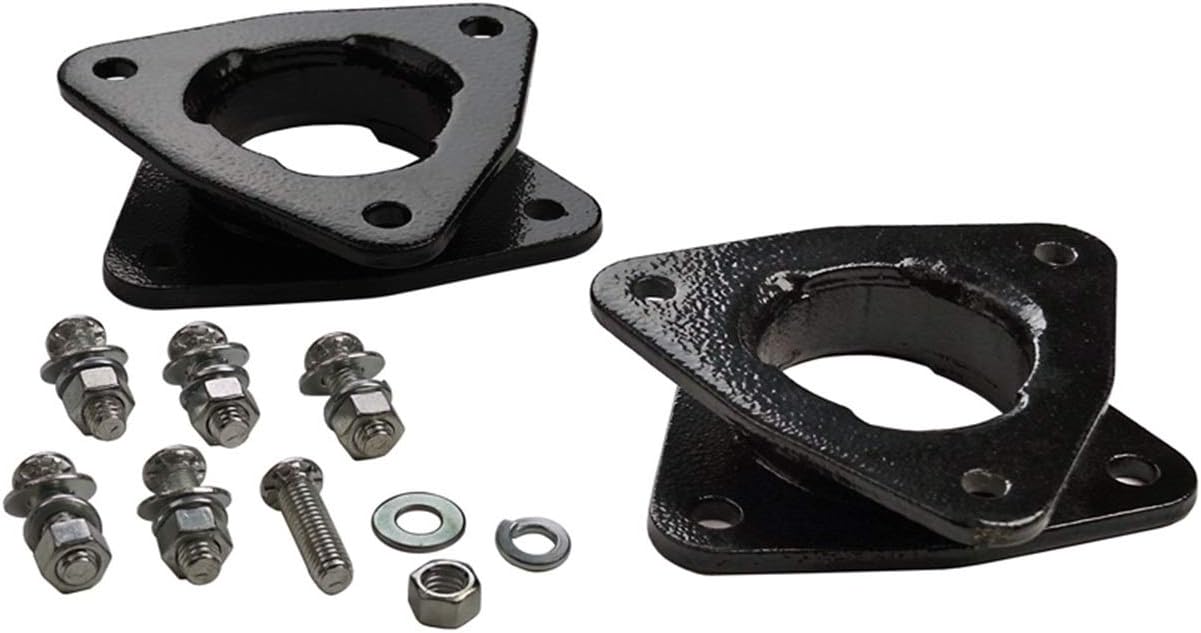
3. Superlift Suspension 2" Leveling Kit (Model 40047) for Nissan Titan
Best Billet Aluminum Leveling Kit
| Fitment | 2004-2024 Nissan Titan (not Titan XD) |
|---|---|
| Maximum Lifting Height | 2 inches |
| Auto Part Position | Front |
| Material Type | Metal |
The Superlift 2" Leveling Kit is a front strut-spacer style solution engineered to level the stance of 2004–2024 Nissan Titan models (not compatible with Titan XD). It installs as a bolt-on top-mount spacer that works with the truck's original suspension geometry so you get a modest 2-inch lift without cutting or welding. Because the kit is metal and precision manufactured, it provides a stable way to fit slightly larger tires and improve ground clearance while keeping ride comfort close to factory. Typical use is a DIY weekend install or shop fitment for owners who want a subtle, aggressive look and space for bigger tires without a full suspension overhaul. The kit is made in the USA and includes necessary hardware and instructions plus a limited lifetime warranty for peace of mind. Limitations are the modest 2-inch lift height—this will not provide the articulation or clearance of a multi-inch lift system—and it is only for the front axle so rear adjustments may be needed for a balanced stance.
Best for: Buyers who want a lightweight, precision-fit front lift to level the look of a PRO-4X Titan while keeping factory ride feel and enabling a DIY install.
Less Ideal for: Drivers seeking major off-road lifts, significant wheel travel gains, or a full suspension overhaul should choose a multi-inch lift kit instead.
- Vehicle-specific top-mount spacers that preserve factory suspension geometry for predictable handling
- Bolt-on design with included hardware and instructions simplifies DIY installation
- Made in the USA construction and precision manufacturing for long-term reliability
- Provides a clean 2-inch front raise suitable for fitting larger tires and improving front ground clearance
- Only lifts the front 2 inches so a rear solution is required for an even stance or significant lift
Verdict: This slot is for precision-machined aluminum strut-spacer kits that give true front lift with long-term corrosion resistance and a lighter-weight option for DIY installs.
4. ECCPP 3-Inch Rear Leveling Lift Kit for Nissan Titan
Best Rear Block Lift Kit

| Automotive Fit Type | Vehicle Specific Fit |
|---|---|
| Included Components | strut spacers |
| Material Type | Aluminum, Steel |
| Auto Part Position | Rear |
| Maximum Lifting Height | 3 inches |
This ECCPP kit is a simple rear leveling solution that raises the back of compatible Nissan Titan trucks about 3 inches using machined 6061-T6 aluminum spacers and extended hardware. It is designed as a bolt-on installation with preinstalled grade 10.9 bolts and claims no cutting or strut preload is required, so most installs can be completed in roughly two hours. The aluminum spacers are light and corrosion-resistant thanks to anodizing, and the kit preserves the factory ride and steering feel while providing extra clearance for larger tires and a more level stance. Because it is a rear-only block-style lift, it raises the rear without changing front geometry, making it a cost-effective way to correct rake or add minor rear lift. Limitations are that it only addresses the rear, will not increase front height, and actual lift depends on suspension geometry so the listed 3 inches may be slightly different in practice.
Best for: Buyers who want an affordable, rear-only lift to correct rake or add modest rear clearance on a Nissan Titan while keeping factory ride characteristics and a straightforward bolt-on installation.
Less Ideal for: Drivers seeking a full suspension lift, larger front lift, or significant off-road articulation improvements should choose a multi-piece or full-height lift system instead.
- Vehicle-specific rear-only solution that targets factory rake without altering front ride height.
- Billet 6061-T6 aluminum spacers offer high strength with reduced weight and anodized corrosion resistance.
- Includes hardened grade 10.9 bolts and hardware for a mostly bolt-on installation.
- Preserves factory ride and steering characteristics while providing clearance for larger tires.
- Rear-only kit so front ride height and suspension geometry are unchanged.
- Lift outcome can vary with vehicle suspension geometry so exact rear raise may be slightly under or over 3 inches.
Verdict: Choose a rear-block kit when you only need to increase rear ride height or correct rake economically using tapered blocks and extended U-bolts.
5. Kojem Front Upper Control Arm Kit for Nissan Titan / Armada — 2–4" Lift, Powder-Coated Steel
Best Control‑Arm / Heavy‑Duty Lift Kit

| Automotive Fit Type | Vehicle Specific Fit |
|---|---|
| Auto Part Position | Front Upper |
| Material Type | Alloy Steel |
| Maximum Lifting Height | 4 inches |
The Kojem front upper control arm kit is a vehicle-specific suspension arm set intended to raise the front end 2 to 4 inches while restoring correct suspension geometry. It replaces the factory front upper arm with a powder-coated alloy steel unit and polyurethane bushings to resist corrosion and wear. Typical use is on lifted Nissan Titan and Armada trucks that need reinforced upper arms to maintain alignment and steering response after adding height. The design promises improved driving stability and reduced vibration by correcting camber and caster shifts introduced by lifts, and the harder bushings extend bushing life compared with stock rubber. The kit ships with installation hardware but no instructions, so plan for professional installation or be comfortable working on front suspension. Limitations include a single-arm set rather than a full multi-component lift solution and no explicit hardware or alignment specs, so additional suspension parts or an alignment will likely be required for larger builds.
Best for: Buyers installing a larger front lift who need reinforced upper arms to retain proper alignment and steering feel on lifted Nissan Titan or Armada trucks.
Less Ideal for: Drivers seeking a full lift kit with paired components like lower control arms, track bars, or lift-specific hardware should consider more comprehensive systems instead.
- Vehicle-specific fitment for Nissan Titan and Armada front upper position
- Powder-coated alloy steel construction for corrosion resistance and strength
- Polyurethane bushings for greater wear resistance than rubber
- Designed to correct suspension geometry for 2–4 inch lifts
- Includes mounting hardware for direct bolt-on installation
- No installation instructions provided and professional installation is recommended
Verdict: This pick is for heavy-duty kits that add upper control arms or reinforced suspension arms to maintain proper alignment and durability at larger lift heights.
Choosing the Right Nissan Titan PRO-4X Lift Kit: Key Factors to Consider
Lift Height and Intended Use
Lift height determines how much clearance you gain and which tire sizes you can run. A modest 1-2 inch lift is often enough for mild off-road use and a slightly more aggressive stance while preserving factory alignment and steering geometry. Taller lifts of 3 inches or more allow substantially larger tires and better obstacle clearance but can increase drive-line angles and require additional components like extended brake lines or dropped control arms.
Consider how you use the PRO-4X: daily driving and highway towing benefit from a moderate lift that keeps handling predictable, while serious trail work favors greater wheel travel and suspension articulation. Think about future upgrades, such as larger wheels or heavier bumpers, and choose a lift height that accommodates those plans without creating excessive mechanical strain.
Suspension Type and Ride Quality
Different lift kits use different approaches: spacer lifts, coil spring lifts, strut or shock upgrades, and full suspension kits with new control arms. Coil spring lift kits typically integrate with the factory suspension and can preserve ride comfort if properly tuned. Full suspension kits that replace shocks, control arms, and sway bar links offer improved performance off-road but may alter on-road ride characteristics.
Assess how important a smooth daily ride is versus maximum off-road capability. Some kits include valved shocks calibrated for heavier loads or more aggressive damping. If you tow or carry varying loads, choose components engineered to handle those stresses without becoming harsh or unstable on pavement.
Alignment, Steering, and Drive-Line Effects
Raising the vehicle changes suspension geometry, which affects toe, camber, and caster, and can put additional strain on steering components and U-joints. Proper alignment after installation is essential to prevent uneven tire wear and to maintain stable handling. Higher lifts may require adjustable control arms, drop brackets, or track bar relocations to correct geometry.
Drive-line angles can lead to vibration or accelerated wear if not addressed. For significant lifts, consider whether the kit provides solutions for driveshaft angle correction or whether additional components such as driveshaft spacers or CV-friendly upgrades will be necessary.
Installation Complexity and Required Modifications
Some lift kits are bolt-on and straightforward for a professional shop or experienced DIYer, while others require cutting, welding, or removal of factory components. Installation complexity affects labor time and cost, and it dictates whether you can realistically do the work yourself.
Look for kits that include comprehensive hardware and clear instructions specific to the PRO-4X. Confirm whether the kit requires additional parts like extended brake lines, ABS sensor extensions, or sway bar link adapters. If welding or frame modifications are required, plan for a shop with fabrication experience to ensure safety and correct alignment.
Compatibility With Tires and Wheel Fitment
One of the primary reasons to lift a PRO-4X is to fit larger tires for better traction and ground clearance. However, larger tires can create rubbing issues with fenders, inner liners, or suspension components if wheel offset and backspacing are not considered. Verify the maximum recommended tire diameter and width for the lift height you are selecting.
Also check for recommended wheel offsets and whether spacers are needed. If you plan to use aftermarket wheels, ensure bolt pattern compatibility and confirm that the increased scrub radius will not negatively affect steering feel or tire wear.
Corrosion Resistance and Long-Term Durability
Lift kits are exposed to road salt, mud, and water, so material quality and protective finishes are important. Components made from high-strength steel with powder-coating or galvanization resist corrosion better than bare metal. Rubber components and bushings should be durable and replaceable to maintain long-term ride quality.
Consider the warranty and availability of replacement parts for suspension components. Durable mounting points and reinforced brackets reduce the risk of premature failure when using the truck off-road or when carrying heavy loads.
Understanding Lift Kit Categories
Lift kits broadly fall into categories based on how they achieve height and what components they include. Spacer kits raise the body or suspension using simple blocks or rings and are often the most affordable route to modest lift heights. Coil spring lift kits replace or modify the springs to gain height while maintaining factory shock mounting and geometry in many cases.
Full suspension lift kits replace multiple components, such as shocks, control arms, and track bars, to preserve handling while providing increased travel and articulation. Each category has tradeoffs in cost, installation complexity, and the degree to which they alter on-road manners.
- Spacer lifts: quick installation, minimal parts, best for small height gains
- Coil spring lifts: better integration with factory suspension, good daily ride
- Full suspension kits: maximum capability, more involved installation
Tire Sizing and Fender Clearance
Picking the right tire size is as important as the lift height. A lift that allows a larger diameter tire can improve approach and departure angles, but tire width and wheel offset will determine whether the tire rubs at full steering lock or over bumps.
Plan for both static fitment and dynamic clearance. When the suspension compresses and the steering is turned, parts can come much closer than in a parked measurement. Factor in trimming or fender rolling only as a last resort and verify recommended maximum tire sizes from the kit documentation.
- Measure tire diameter and width against recommended clearances
- Consider wheel offset to reduce the need for trimming
- Test full lock and full compression conditions before finalizing fitment
Towing, Payload, and Load Considerations
A lift changes load distribution and spring rates, which can affect towing and payload behavior. If you tow frequently, choose a kit that maintains or improves spring rates and shock damping to prevent excessive sag or instability. Some kits offer optional heavy-duty springs or progressive-rate coils designed to accommodate towing loads without degrading ride comfort.
Also check how the lift affects hitch height and trailer tongue angle. You may need to re-evaluate hitch accessories or use drop hitches to keep trailers level and safe when towing after a lift.
- Select springs and shocks rated for towing if you haul heavy loads
- Verify hitch and trailer geometry after lifting
- Consider adjustable options to fine-tune ride height under load
Maintaining Warranty and Vehicle Systems
Installing a lift can have implications for factory warranty coverage and vehicle systems such as ABS and traction control. While a properly engineered lift should not directly damage electronic systems, changes in wheel speed sensor positions or ABS tone rings may require attention. Check for sensor extensions or brackets included with the kit.
Document the installation and retain receipts and alignment reports. That documentation is useful if you need to discuss warranty items with a dealer or service provider, and it helps track modifications for future maintenance.
- Confirm compatibility with ABS sensors and wiring
- Keep installation and alignment records
- Consult your dealer for warranty policy clarification if concerned
Common Installation Pitfalls to Avoid
Underestimating the time and tools needed is a frequent issue. Some kits look simple but require specialized tools, press work, or suspension disassembly. Rushing installation can lead to improper torqueing of mounting bolts, which affects safety and alignment.
Another pitfall is ignoring related components that should be serviced at the same time, such as control arm bushings, sway bar links, or shocks. Reusing worn parts with a new lift can reduce the expected benefits and accelerate wear on the new components.
- Follow torque specs and alignment procedures strictly
- Replace worn suspension components during installation
- Have a professional check steering geometry after installation
Still looking for the perfect fit?
Select your Nissan Titan configuration to see the most relevant Lift Kits recommendations
How We Chose the Best Nissan Titan PRO-4X Lift Kit
We prioritized solutions that are engineered with the Nissan Titan PRO-4X chassis and factory suspension geometry in mind. Selection criteria included fitment accuracy to the PRO-4X configuration, documented impacts on steering and alignment, and the range of lift heights offered. We also weighed materials and construction quality, looking for corrosion-resistant finishes and robust mounting hardware suitable for off-road use.Ride and handling performance was a core filter: we favored kits with components designed to preserve ride comfort and to minimize changes to suspension kinematics. Installation complexity and serviceability were considered so owners can plan for professional installation or a competent DIY job. Finally, we considered compatibility with larger tires and required ancillary parts such as extended brake lines, adjustable track bars, or sway bar links.Excluded from consideration were generic, one-size-fits-all lifts without Titan PRO-4X specific fitment data, kits with unclear material specifications, and products that require extensive frame modification. The resulting shortlist focuses on well-documented options that balance real-world usability with off-road capability.
Our full evaluation process is outlined in our review methodology.
FAQ
How much lift can I safely add to a Nissan Titan PRO-4X?
It depends on the kit design and what modifications you are willing to add. Moderate lifts of 1 to 3 inches are commonly used to improve clearance while preserving handling. Larger lifts are possible but usually require additional components to correct geometry and driveline angles.
Will installing a lift kit affect my truck's alignment and tire wear?
Yes. Any lift changes suspension geometry, so a professional alignment is necessary after installation to avoid accelerated or uneven tire wear and to maintain stable handling.
Can I install a lift kit on the PRO-4X myself?
Some kits are designed for experienced DIYers and include detailed instructions, while others require specialized tools or welding and are best left to professional shops. Evaluate your skills, tools, and available time before attempting installation.
Do I need to change my shocks when I lift the truck?
Often yes. Many lifts pair best with longer or re-valved shocks to maintain proper damping and to prevent bottoming out. The need depends on the height of the lift and the specific kit design.
Will lifting the truck affect towing or payload capacity?
Lifting can change load distribution and spring rates, which may affect towing feel and payload handling. Choose components rated for towing or consider adjustable setups that help maintain stability under load.
What additional parts might I need after installing a lift kit?
Common ancillary parts include extended brake lines, adjustable track bars, sway bar end link extensions, and alignment cam kits. Larger lifts may also require driveshaft adjustments or upgraded CV components.
Final Verdict
When selecting a Nissan Titan PRO-4X lift kit, prioritize the combination of lift height and suspension design that matches how you use the truck. Moderate lifts preserve daily driving comfort and towing capability, while full suspension systems deliver better off-road articulation at the expense of more complex installation and setup.Focus on kits that address alignment and drive-line geometry, include durable hardware, and document compatibility with larger tires. With those tradeoffs in mind, you can choose a lift that delivers the clearance and capability you want without compromising safety or long-term reliability.
Explore More:
- Check out all Nissan Titan parts & accessories
- Explore Suspension & Steering
- Browse all Accessories
