

Note: This article contains affiliate links. If you click on these links and make a purchase, I may earn a small commission at no extra cost to you. This helps support my research and content. Read my full affiliate disclosure here.
If you want more ground clearance, a more aggressive stance, or room for larger tires on your Nissan Pathfinder, choosing the right lift kit matters. The correct kit affects ride quality, steering geometry, and compatibility with brakes, driveline, and bodywork. This guide highlights seven shortlisted options that represent the most practical choices across different lift heights and installation approaches.We evaluated each option for how it alters handling and compatibility, and for the level of mechanical skill required to install it. Read on for concise notes on what to expect and why each type of kit might suit your goals.
Looking for other parts? See all Nissan Pathfinder parts & accessories.
Top Picks at a Glance
| Best Quality Built to a higher standard if you want something more solid | Supreme Suspensions 2" Rear Billet Aluminum Coil Spring Lift Spacers for Nissan Pathfinder / Infiniti QX4 |  |
| Best Value The sweet spot between price and what you get | MZS 2" Front Leveling Lift Kit (vehicle-specific) |  |
| Best Budget The cheapest option that still gets the job done reliably | ECCPP Leveling Lift Kit Strut Spacer — Front 2.5 inch for Nissan Frontier |  |
| Highest Rated A top-rated pick with lots of positive feedback | AUTOPTIM 2-Inch Front Leveling Lift Kit for Nissan Frontier/Xterra/Pathfinder (Front Strut Spacers) |  |
| Most Popular A crowd favorite that many people choose with confidence | MZS 3" Front Leveling Lift Kit for Nissan Frontier/Xterra/Pathfinder/Equator | |
| Best Seller A high-volume bestseller chosen again and again | DEALPARTS 2-inch Leveling Lift Kit for Nissan Pathfinder R51 (2004–2014) |  |
Supreme Suspensions 2" Rear Billet Aluminum Coil Spring Lift Spacers for Nissan Pathfinder / Infiniti QX4

| Compatible Models | 1996-2004 Nissan Pathfinder; 1997-2003 Infiniti QX4 |
|---|---|
| Material Type | Aluminum (T6 billet) |
| Maximum Lifting Height | 2 Inches |
| Auto Part Position | Rear |
These Supreme Suspensions rear coil spring spacers are a simple, hardware-only lift solution for 1996–2004 Nissan Pathfinder and 1997–2003 Infiniti QX4 (2WD and 4WD; not for air suspension). CNC machined from T6 billet aluminum with an anodized coating, the spacers install where the factory spring perch sits to raise the rear by about 2 inches so you can run larger wheels and gain extra ground clearance. Typical installation is a one- to two-hour DIY job using basic hand tools and a spring compressor; the kit ships with instructions and the necessary spacers. The billet material and finish promise good corrosion resistance and resistance to compression versus cheaper molded spacers, which helps retain factory ride characteristics. Limitations are inherent to spacer-style lifts: they only raise ride height and do not change spring rate or suspension geometry, so heavy loads or aggressive off-road use may still require upgraded springs or shocks and an alignment after installation is advised. Overall this is a high-quality, lightweight leveling option for owners who want a precise, durable rear lift without a full suspension overhaul.
Best for: Performance-oriented owners wanting a precise, durable rear-level lift to run larger tires and improve ground clearance while keeping factory ride quality.
Less Ideal for: Drivers planning heavy-duty off-road use, carrying large loads, or looking for full suspension tuning who should consider a complete spring or shock upgrade instead.
- CNC machined from T6 billet aluminum for strength and low compression
- Anodized coating improves resistance to corrosion and oxidation
- Designed for quick DIY installation using basic tools
- Raises rear ride height about 2 inches to fit larger tires and increase ground clearance
- Spacer-only design does not alter spring rate or suspension damping
- Not compatible with models equipped with air suspension
Verdict: A high-quality, billet-aluminum rear spacer kit that delivers a reliable 2-inch rear lift for Pathfinder and QX4 owners who want durable, factory-compatible leveling without replacing springs.
MZS 2" Front Leveling Lift Kit (vehicle-specific)

| Maximum Lifting Height | 2 Inches |
|---|---|
| Material | Aluminum |
| Included Components | Installation Hardware, Strut Spacer |
| Auto Part Position | Front |
This MZS 2" front leveling kit is a bolt-on spacer kit intended to lift the front of compatible Nissan models by about two inches to match rear ride height and allow larger tires. The kit includes CNC-machined aluminum strut spacers and installation hardware and is typically fitted to the front strut assembly without modifying the coil or strut internals. For a Pathfinder buyer the result is improved fender clearance and a more balanced look while preserving ride height at the rear. Installation is straightforward for a competent DIYer using basic tools and takes roughly two hours per side on a lift or a couple of hours per axle with proper tools. Important limitations: the spacer thickness is not a one-to-one lift with measured spacer thickness so expect small geometry changes, and an alignment after installation is recommended. Some model years and trim packages are excluded, so confirm fitment for your Pathfinder before buying.
Best for: A practical optimizer looking to improve Pathfinder stance and tire clearance on a budget while keeping a mostly factory suspension setup.
Less Ideal for: Buyers seeking a full suspension overhaul, heavy-duty off-road lift, or who want a guaranteed fit for every trim and model year should consider complete lift kits or suspension upgrades instead.
- Vehicle-specific fit for supported Nissan models which simplifies installation
- CNC-machined aluminum spacers resist corrosion and are lightweight
- Includes necessary installation hardware for a single-axle install
- Bolt-on design that can be installed with common hand tools in a few hours
- Does not fit all trim packages and some model years are excluded so double-check compatibility
- Lifts the front only so rear ride height and load effects may remain unchanged
- Alters suspension geometry so a professional alignment is required after install
Verdict: A cost-effective, vehicle-specific front spacer that gives a Pathfinder about 2 inches of front lift for better clearance and stance while keeping installation simple, but expect geometry changes and the need for alignment.
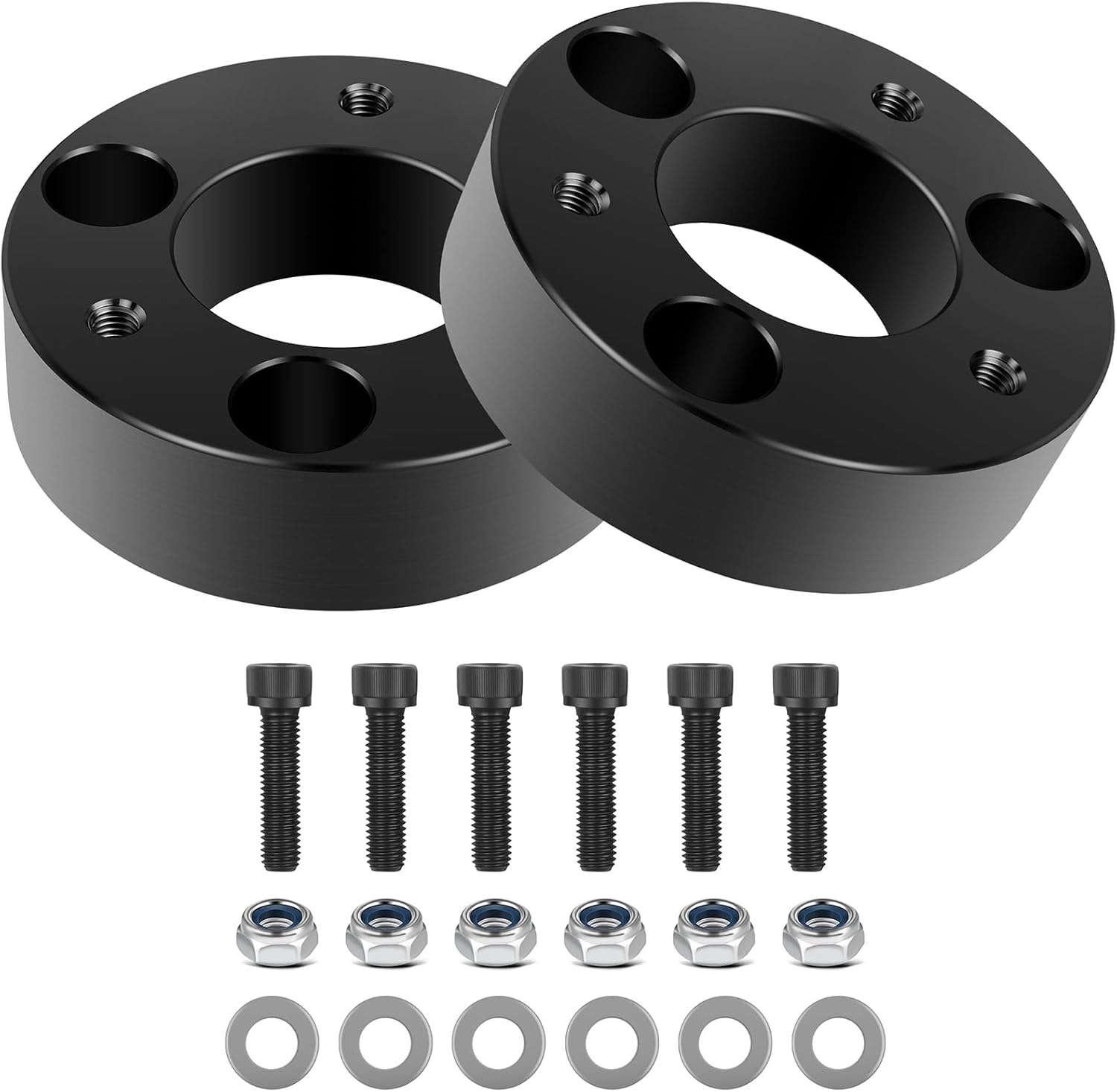
ECCPP Leveling Lift Kit Strut Spacer — Front 2.5 inch for Nissan Frontier
| Auto Part Position | Front |
|---|---|
| Material | Aluminum |
| Included Components | Strut Spacer |
| Maximum Lifting Height | 2.5 Inches |
| Automotive Fit Type | Vehicle Specific Fit |
This ECCPP leveling lift kit installs as a bolt-on strut spacer assembly to raise the front of compatible Nissan trucks about 2.5 inches and correct factory rake. It is machined from 6061-T6 aircraft-grade aluminum with hardened mounting bolts and an anodized finish to resist corrosion, and the kit is sold as a vehicle-specific front strut spacer for straightforward installation without cutting or modifying factory parts. In practice the kit provides extra fender clearance for larger tires and gives the truck a more level, aggressive stance while preserving steering and ride feel when fitted correctly. Installation is typically done by unbolting the top of the strut, placing the spacer, and reassembling; some users report needing to rotate or remove the strut assembly to align bolt patterns. Important limitations are that the listed lift is approximate because suspension geometry affects net ride height, and this solution only lifts the front rather than providing a full suspension upgrade for heavy loads or off-road articulation.
Best for: Budget-conscious buyers who want a simple, low-cost way to level their Nissan and fit slightly larger tires without altering factory suspension components.
Less Ideal for: Drivers planning heavy-duty off-road use, frequent hauling, or those who need a matched shock and spring upgrade should seek a full suspension kit instead.
- Makes the front sit level with the rear to improve stance and allow larger tires
- Machined 6061-T6 aluminum construction keeps parts lightweight and corrosion resistant
- Hardened grade 10.9 bolts supplied for secure mounting
- Bolt-on design avoids cutting or permanent modification of factory parts
- Only raises the front by an approximate 2.5 inches so final height varies with suspension geometry
- Does not upgrade shocks or springs so it is not a full suspension lift
Verdict: A cost-effective, bolt-on front spacer to level a Nissan’s stance and clear larger tires, but not a replacement for a full suspension lift.
AUTOPTIM 2-Inch Front Leveling Lift Kit for Nissan Frontier/Xterra/Pathfinder (Front Strut Spacers)

| Compatibility | 2005-2021 Nissan Frontier, 2005-2015 Xterra, 2005-2012 Pathfinder, 2009-2012 Equator |
|---|---|
| Lift height | 2 inches |
| Material | Forged T6 billet aluminum |
| Included hardware | Grade 10.9 bolts |
This AUTOPTIM 2-inch front leveling kit is a simple strut spacer solution that raises the front of compatible Nissan trucks and SUVs by about 2 inches to reduce forward rake and allow slightly larger tires. It installs at the top of the front strut assembly and is typically used by owners who want a factory-like lift without replacing shocks or springs. Key features include forged T6 billet aluminum construction, black anodized corrosion resistance, and high-strength grade 10.9 hardware. In practice the kit preserves much of the original ride and steering feel while improving ground clearance for light off-road use and achieving a more aggressive stance. Installation can be completed in roughly one to two hours per side for a mechanically inclined DIYer but may require a spring compressor and minor drilling or hardware swaps on some chassis; alignment after install is recommended. Buyers should expect a front-only raise, possible fitment adjustments on certain years, and the usual limitations of spacer kits versus full suspension systems.
Best for: Reliability-focused owners who want a straightforward, factory-style front lift to correct nose-down rake and retain predictable on-road behavior during everyday driving and light off-road use.
Less Ideal for: Drivers seeking a heavy-duty off-road suspension, large tire fitment without additional modifications, or a full-height lift should look at complete suspension systems instead.
- True 2-inch front lift for correcting forward rake and fitting slightly larger tires
- Forged T6 billet aluminum spacers with black anodized finish resist corrosion
- Includes grade 10.9 bolts for high-strength mounting
- Designed to preserve original ride and steering feel compared with full suspension swaps
- Front-only solution so rear lift or re-leveling may be needed to achieve a perfectly level vehicle
- Some vehicles require minor drilling or hardware changes and installation can be fiddly without proper tools
Verdict: A compact, factory-friendly 2-inch front spacer kit that raises the nose, preserves ride quality, and improves ground clearance for reliability-minded Pathfinder owners.
MZS 3" Front Leveling Lift Kit for Nissan Frontier/Xterra/Pathfinder/Equator
| Brand | MZS |
|---|---|
| Auto Part Position | Front |
| Material | Aluminum |
| Included Components | Installation Hardware, Strut Spacer |
| Maximum Lifting Height | 3 Inches |
This MZS front leveling lift kit uses CNC-machined aluminum spacers and includes installation hardware and a strut spacer to raise the front of compatible Nissan trucks by three inches. It bolts onto the factory strut assembly and is intended to increase fender clearance so you can fit larger tires and achieve a more level stance without replacing springs or struts. Typical installation can be completed with basic hand tools in about 1.5 to 3 hours per side depending on access; the package notes a wheel alignment is recommended after install. The aluminum construction resists rust and the vehicle-specific fit simplifies part selection, but owners should be aware the lift changes suspension geometry and may cause coil bucket or upper control arm contact on some vehicles at the 3-inch height. That can require aftermarket upper arms or camber adjustments to restore proper alignment. The kit is a cost-effective option for someone wanting a bolt-on front lift, but expect to address alignment and potential clearance issues on higher lifts.
Best for: Drivers who prioritize convenience and a straightforward bolt-on solution to level the front of their Pathfinder for improved clearance and appearance.
Less Ideal for: Buyers seeking a full suspension overhaul, precise off-road geometry, or a guaranteed no-modification fit for every Pathfinder trim should consider complete lift kits or professional installation services instead.
- Vehicle-specific fit reduces guesswork when choosing parts for supported Nissan models.
- CNC-machined aluminum spacers offer corrosion resistance and a tidy finish.
- Simple bolt-on design allows installation with common hand tools in a few hours.
- Includes installation hardware and strut spacer so no additional basic parts are required.
- A true 3-inch ride height change can alter suspension geometry and may produce coil bucket or control arm contact that requires additional parts.
- Does not fit PRO-4X or Desert Runner models and may not fit all newer generation vehicles without modification.
Verdict: A budget-friendly, bolt-on way to level the front and gain tire clearance on supported Nissan models, but expect to address alignment and possible clearance tweaks after installation.
DEALPARTS 2-inch Leveling Lift Kit for Nissan Pathfinder R51 (2004–2014)

| Maximum Lifting Height | 2 Inches |
|---|---|
| Material | Polyurethane (PU) |
| Included Components | fitting kit |
| Auto Part Position | Front, Rear |
This DEALPARTS 2-inch leveling lift kit raises a Nissan Pathfinder R51 by up to 2 inches using polyurethane strut and coil spacers supplied with a fitting kit. It is installed by replacing or stacking spacers on the front struts and adding coil spring spacers at the rear to increase ground clearance and allow larger wheels and tires. The kit’s high-density polyurethane construction is intended for longevity and resistance to road wear compared with softer rubber components, and the included hardware covers standard installation needs. Practical benefits include improved clearance for light off-road use and a more aggressive stance without changing shocks or springs. Limitations to expect are modest lift height compared with full suspension kits and potentially tricky installation that may require a spring compressor, correct-length fasteners, and a post-install alignment to correct camber or ride-height differences. This is a straightforward incremental upgrade for drivers wanting a factory-quality looking lift without extensive suspension replacement.
Best for: Risk-averse Pathfinder owners who want a conservative, factory-style clearance boost and prefer a simple parts-only upgrade over replacing springs or shocks.
Less Ideal for: Drivers seeking large lifts, serious off-road suspension upgrades, or a plug-and-play height increase without any mechanical work should look elsewhere.
- Designed specifically for Nissan Pathfinder R51 (2004–2014) for direct fitment
- Includes front strut spacers, rear coil spacers, and a fitting kit for a complete install
- High-density polyurethane construction resists compression and road wear
- Raises vehicle by up to 2 inches to improve ground clearance and allow larger tires
- Only a modest 2-inch lift, not suitable for heavy off-road modification
- Installation can require a spring compressor, replacement fasteners, and an alignment
Verdict: A conservative, vehicle-specific 2-inch lift using durable polyurethane spacers for Pathfinder owners who want modest clearance gains without swapping major suspension components.
Choosing the Right Nissan Pathfinder Lift Kit: Key Factors to Consider
Lift Height and Intended Use
How much lift you choose directly affects clearance, center of gravity, and handling. A modest 1-2 inch lift is often enough for slightly larger tires and improved approach angles while preserving on-road stability. Taller lifts increase off-road capability but can make steering feel heavier and increase body roll.
Match lift height to intended use. If you plan on moderate trail driving and need clearance for mud or rocks, a mid-range lift is a good compromise. For aggressive off-roading, prioritize components that restore geometry and braking performance after larger lifts.
Kit Type and Components Included
Lift kits come as spacers, coil spring replacements, torsion-key adjustments, or full suspension kits with shocks and control arms. Spacers or torsion tweaks are less invasive and often simpler to install but may not improve ride quality. Full suspension kits replace springs and shocks and typically offer better ride comfort and handling after a lift.
Confirm exactly which parts are included and whether additional components are required for safe operation. Kits that include shock absorbers and control arms will better maintain alignment and steering geometry than spacer-only solutions.
Compatibility With Tires And Wheel Offset
One of the main reasons to lift a vehicle is to fit larger tires. However, tire diameter and width interact with fender clearance and wheel offset. Increasing lift without adjusting wheel offset can still result in rubbing during full steering lock or compression.
Plan the wheel and tire package alongside the lift. Understand the maximum tire size recommended for a given lift height and whether trim, fender rolling, or different wheels will be necessary to avoid contact during suspension travel.
Ride Quality And Handling Tradeoffs
Lifting a vehicle changes suspension geometry and can affect ride comfort and stability. Kits that replace springs and shocks are designed to tune spring rates and damping for the new ride height, which usually keeps handling more predictable. Simple spacer kits preserve factory springs and may increase harshness or introduce vibration.
Consider whether you prioritize on-road comfort or off-road articulation. If you drive daily, look for kits that emphasize matched spring and shock tuning to reduce negative handling impacts.
Installation Complexity And Required Modifications
Some kits are bolt-on and can be completed with common hand tools, while others require specialty tools, alignment, or frame modifications. Installation complexity determines whether you can do the job yourself or need a professional shop. Kits that require brake line extensions, track bar relocation, or driveshaft adjustments add to labor and parts lists.
Account for alignment and inspection after installation. Even bolt-on kits commonly require a professional alignment to correct camber and toe settings and to ensure safe steering response.
Durability And Serviceability
Materials, corrosion protection, and the quality of bushings and fasteners determine long-term reliability. Off-road use places extra stress on components, so look for solid mounting points, replaceable wear items, and attention to hardware quality.
Also consider serviceability. Components that can be serviced or replaced without removing the entire kit reduce long-term maintenance costs and downtime. Evaluate warranty or manufacturer support as part of overall durability planning.
Trim, Model Years, and Fitment Specifics for Nissan Pathfinder
Not every lift solution fits every Pathfinder variant the same way. Confirming the model year and factory suspension layout is essential before choosing a Nissan Pathfinder lift kit. Some trim levels have different suspension components, brake line routing, or steering knuckle clearances that affect which parts in a kit will work without additional modification.
When researching kits, look for fitment notes that reference your exact year range and any factory options that change ride height or axle geometry. Pay attention to whether the kit was designed for the Pathfinder with the stock wheel-and-tire package or for the version offered with larger factory wheels, since that influences required offsets and spacer thickness.
- Verify year-specific brackets, control arm clearances, and sway bar links before buying.
- Check whether the kit retains factory electronic sensors and ABS hardware or requires separate adapters.
- If your Pathfinder has factory towing or off-road packages, confirm compatibility with those components.
Planning for Bigger Tires and Wheel Choices
Installing a lift is often paired with running larger tires for improved off-road traction and appearance. Decide early how large you want to go, since the amount of lift, wheel offset, and fender trimming or bumper clearance needs change with tire diameter. A lift kit for larger tires should be matched with wheels that provide the correct backspacing to avoid rubbing during suspension articulation and full steering lock.
Aside from physical clearance, consider the effect of larger, heavier tires on final drive ratios and fuel economy. You may need to regear differential ratios or choose lighter wheel designs to reduce unsprung weight and preserve handling on the road.
- Measure current clearance at full compression and full droop to estimate safe tire size increases.
- Plan wheel offset and backspacing to maintain proper scrub radius and steering feel.
- Consider tire width along with diameter; wider tires may require trim or flares.
Suspension Component Choices and Tuning for the Pathfinder
Several suspension approaches work on the Pathfinder, from mild spacer-based lifts to full replacement springs and dampers. A coil spring lift kit is a common choice when you want a balanced increase in height with improved spring rates for heavier tires or cargo. Upgrading dampers and sway bar end-links in tandem helps maintain predictable handling and reduces body roll introduced by additional height.
Think about how you drive day to day. A shock valving setup optimized for slow-speed off-road articulation can feel busy on highways, while touring-oriented dampers may not offer the rebound control needed off-road. Select components that let you tune firmness and control based on your primary use case.
- Match spring rate increases to expected load: passengers, cargo, roof racks, and towing.
- Replace or extend brake lines and ABS sensors as required for safety and full suspension travel.
- Consider adjustable shocks for fine-tuning ride height and damping after installation.
Off-road Setups and Real-world Use Cases
If your goal is to make the Pathfinder more capable off-road, prioritize components that improve ground clearance, approach and departure angles, and suspension articulation. Look for kits and ancillary parts designed to protect control arms, differential housings, and steering components from trail impacts. A well-chosen setup balances trail performance with on-road manners so the vehicle remains comfortable for daily driving.
Think in terms of complete systems rather than a single lift component. Recovery points, skid plates, reinforced mounting brackets, and upgraded tires all contribute to off-road reliability. Planning these elements up front prevents mid-project surprises and ensures the lift adds meaningful capability where you need it most.
- Select tire tread and compound appropriate for local trail conditions.
- Add underbody protection where the Pathfinder is vulnerable to rocks and logs.
- Upgrade steering components if you plan aggressive trail use or a significant lift.
Installation Planning, Costs, and Upkeep
Decide whether you will install the lift yourself or hire a shop. If you are comfortable with suspension work, some simpler kits can be installed at home using standard tools and a proper lift or jack stands. For more involved systems that require alignment, control-arm replacements, or fabrication, professional installation is recommended. Research lift kit installation cost in your area to budget labor and any additional parts you may need after a test drive and alignment.
Post-install maintenance is important for long-term reliability. Expect to re-torque fasteners after an initial break-in period, monitor bushings and mounts for accelerated wear, and schedule alignments whenever height or suspension geometry changes. Keeping a log of adjustments and mileage helps identify wear patterns early and extends the life of the system.
- Plan for a professional alignment after installation, and factor that into total cost.
- Budget for occasional bushing, link, and shock replacement over the life of the lift.
- Confirm warranty and serviceability for any components you install so future repairs are straightforward.
How We Chose the Best Nissan Pathfinder Lift Kit
We focused on lift kits designed specifically for the Nissan Pathfinder and evaluated them across multiple vehicle-specific dimensions. Primary criteria included lift height accuracy and how the kit preserves steering and suspension geometry. Ride quality and handling were assessed based on the kit design and the components included, such as shocks, control arms, or torsion adjustments. Installation complexity and the level of mechanical skill or specialty tools required were considered so readers can match a kit to their DIY ability or shop needs. We also looked at compatibility with larger tires and whether the kit required additional modifications like extended brake lines, track bar adjustments, or driveline realignment. Finally, durability and materials were reviewed from a use-case perspective, focusing on whether the kit would hold up under light to moderate off-road conditions.Kits that were excluded: universal or generic lift systems not vehicle-specific, solutions that require extensive chassis cutting when reasonable bolt-on alternatives exist, and products lacking clear manufacturer fitment information. The goal was to present practical, installable paths to lift a Pathfinder without committing to full frame modification.
Our full evaluation process is outlined in our review methodology.
FAQ
How much lift can I safely add to a Nissan Pathfinder?
Safe lift depends on the kit design and whether suspension geometry is corrected. Small lifts of 1 to 2 inches usually require minimal changes beyond alignment. Larger lifts often need additional components like extended brake lines, control arms, or driveshaft adjustments to maintain safe handling. Consult the kit specifications and be prepared for alignment and possible supplemental parts.
Will lifting my Pathfinder allow me to fit much larger tires?
A lift provides the vertical clearance needed for larger tires, but tire fitment also depends on wheel offset, width, and fender clearance. Lifts paired with appropriate wheel selection and possibly minor fender trimming can accommodate larger tires. Check the recommended maximum tire size for the specific lift height to avoid rubbing during full suspension travel.
Can I install a lift kit myself, or do I need a shop?
Installation difficulty varies by kit. Spacer-type lifts and minor torsion adjustments are often within the scope of an experienced DIYer with a good tool set. Full suspension kits that include shocks, control arms, or require driveline changes usually need specialty tools and alignment, making a professional installation more practical. Consider your mechanical skill and access to alignment services.
How does a suspension lift kit differ from a leveling kit?
A leveling kit raises the front slightly to match the rear ride height, primarily correcting rake for appearance or light clearance needs. A suspension lift kit raises the vehicle more substantially and often replaces springs and shocks to change ride characteristics. Suspension lifts are better suited when you need significant clearance or want to run much larger tires.
What additional upgrades might I need after installing a lift?
Common follow-ups include professional alignment, longer brake lines, upgraded track bars or control arms, and possibly driveline or CV joint adjustments for larger lifts. Wheel offset changes or minor body trim may be needed to prevent tire rub. Plan for inspection of steering and braking systems after installation to ensure safe operation.
Does lifting affect on-road fuel economy and ride comfort?
Lifting typically increases aerodynamic drag and rolling resistance when larger tires are installed, which can reduce fuel economy. Ride comfort can change depending on kit type; well-matched springs and shocks can preserve a comfortable ride, while spacer-only lifts may introduce more harshness. Expect tradeoffs between off-road capability and everyday comfort.
Final Verdict
Choosing the right Nissan Pathfinder lift kit comes down to balancing lift height, ride quality, and installation complexity. Prioritize kits that address suspension geometry and include the components needed to maintain safe steering and braking when you raise the vehicle.Think about how you drive day to day versus off road, the tire size you want, and whether you will install the kit yourself. Those factors will guide whether a modest spacer, a coil spring replacement, or a full suspension kit is the best fit.
Explore More:
- Check out all Nissan Pathfinder parts & accessories
- Explore Suspension & Steering
- Browse all Accessories
