

Note: This article contains affiliate links. If you click on these links and make a purchase, I may earn a small commission at no extra cost to you. This helps support my research and content. Read my full affiliate disclosure here.
If you own a 2007-2013 Chevrolet Silverado 1500 and are planning a lift, picking the right lift kit has a major impact on how the truck rides, steers, and handles larger tires. This guide covers the most practical lift kit options tailored to the Silverado 1500 (2007 through 2013), focusing on real-world benefits like improved ground clearance, tire fitment, and predictable handling on pavement and light trail use. We shortlisted six top-rated lift kit solutions that match common owner goals and driving conditions. Below you will find evaluation notes about ride quality, installation effort, and compatibility so you can choose the kit that meets your plans.
Looking for other parts? See all Chevrolet Silverado 1500 parts & accessories.
Top Picks at a Glance


1. Rough Country 7.5" Suspension Lift Kit with Strut Spacers and N3 Rear Shocks for 2007–2013 Silverado/Sierra 1500 4WD
Best Overall Lift Kit

| Automotive Fit Type | Vehicle Specific Fit |
|---|---|
| Included Components | (2) N3 Rear Shocks, (2) Strut Spacers, CV Spacers & Lift Blocks, Knuckles & Crossmembers, U-Bolts, Brackets & Hardware |
| Material Type | Alloy Steel, Aluminum, Rubber, Zinc |
| Maximum Lifting Height | 7.5 Inches |
This Rough Country 7.5-inch lift kit is designed to give 2007–2013 Silverado and Sierra 1500 trucks a tall, level stance while keeping everyday rideability. The kit uses front strut spacers so you gain height without disassembling the struts, and the included N3 nitrogen-charged rear shocks are tuned for smoother response and improved handling compared with stock units. Heavy-duty fabricated lift blocks, high-clearance crossmembers, skid plate, and brackets are included so the package is intended for trail use as well as street driving. Installation is mostly bolt-on but does require minor cutting and drilling and some owners report extra hardware sourcing or brake line/driveshaft changes for certain models, so plan additional time or professional installation if you are not comfortable with moderate fabrication. The kit is engineered to accept Rough Country shock options and lets you keep factory 20-inch wheels while running up to 35-inch tires with the right wheel clearance. For buyers seeking a mix of durability, improved off-road clearance, and a factory-like ride for daily driving, this kit balances those priorities effectively.
Best for: Buyers who want a single kit that raises their 2007–2013 Silverado/Sierra to a bold, off-road-capable height while retaining daily driving comfort and a durable component set.
Less Ideal for: Those who want a purely plug-and-play lift with zero modification or first-time DIYers who prefer an installation that requires minimal tools and no cutting.
- Provides full 7.5-inch lift and a level stance without strut disassembly using strut spacers
- Includes nitrogen-charged N3 rear shocks tuned for improved ride control
- Heavy-duty fabricated lift blocks and high-clearance crossmembers for better off-road durability
- Bolt-on design that avoids drivetrain, exhaust, or differential modifications for most trucks
- Installation can require minor cutting, drilling, and additional parts for some models
- Some customers reported missing hardware or fitment tweaks needed during installation
Verdict: The best all-around lift kit for buyers who want a balanced combination of ride quality, durability, ease of installation, and value for typical light-truck upgrades.
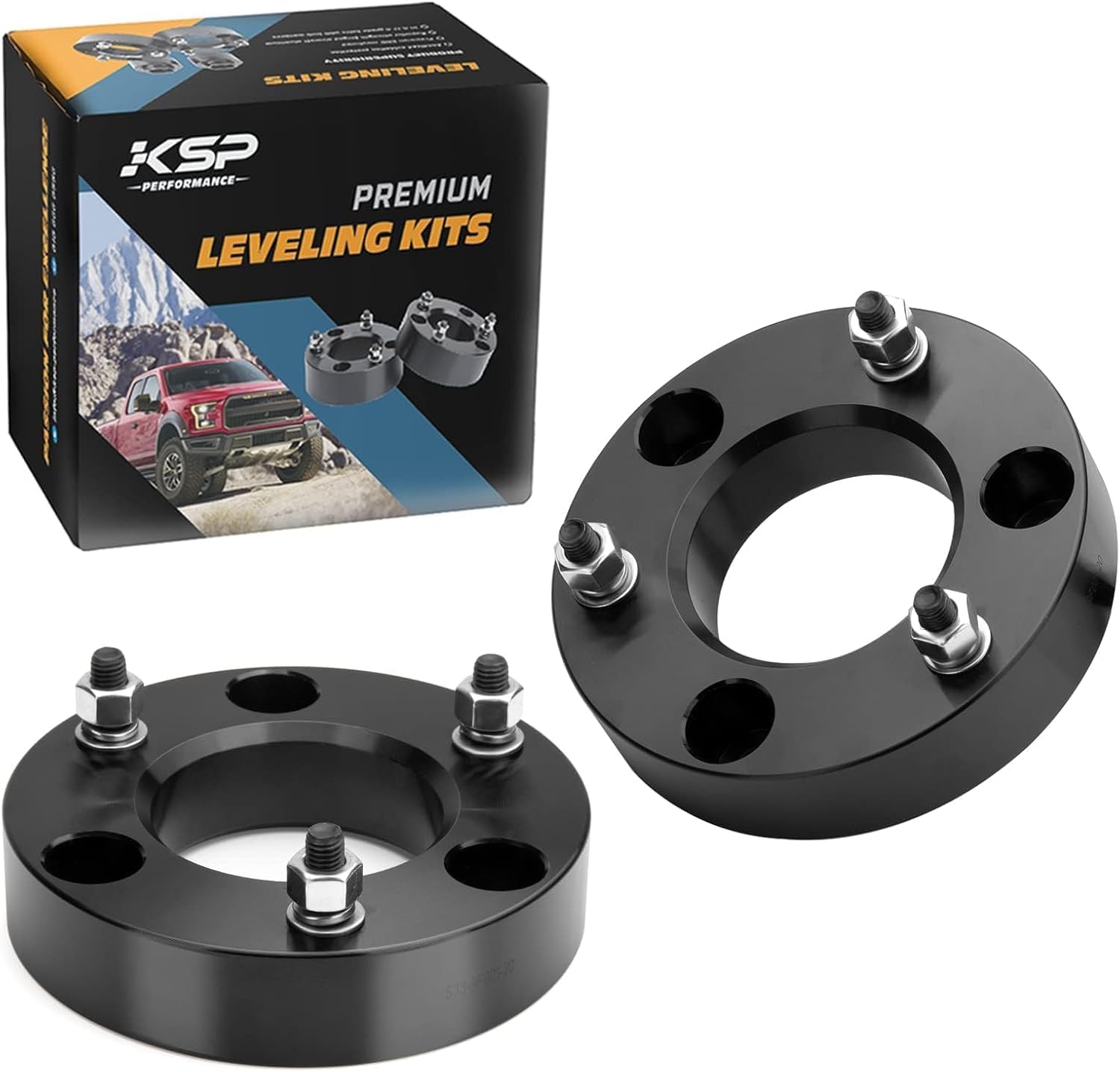
2. KSP PERFORMANCE 2" Front Leveling Lift Spacers for Silverado/Sierra 1500 (2007–2026)
Best Budget Lift Kit
| Material | Aluminum |
|---|---|
| Maximum Lifting Height | 2 Inches |
| Auto Part Position | Front |
| Included Components | 2pcs aluminum lift spacers |
These KSP 2-inch front lift spacers are a straightforward budget solution to level the nose of a Silverado or Sierra 1500. They mount between the strut and the knuckle to raise the front roughly 2 inches, improving stance and providing room for slightly larger tires without replacing springs or shocks. Made from forged aircraft-grade aluminum with anodized finish and supplied with high-strength 12.9-grade bolts, the kit is corrosion resistant and feels durable for the price. Installation is relatively simple for a home mechanic and most buyers report an easy bolt-on process, but an alignment is required afterward because suspension geometry changes. Expect a firmer front ride and possible need for longer upper control arms or shocks for larger lifts or to avoid added bounciness. This kit is vehicle-specific and does not fit Trail Boss or AT4 trim; it is best used as an inexpensive leveling solution rather than a full performance suspension upgrade.
Best for: Shoppers wanting the lowest-cost way to level a 2007–2013 Silverado 1500 for occasional street or light off-road use, prioritizing appearance and minor tire clearance over full suspension upgrades.
Less Ideal for: Drivers needing heavy-duty off-road performance, frequent rough-terrain use, or a long-term lift solution should consider full suspension kits with matched shocks and control arms instead.
- Simple bolt-on installation for front struts
- Forged aircraft-grade aluminum construction with anodized finish for corrosion resistance
- Includes high-strength 12.9-grade bolts and washers for secure mounting
- Raises front about 2 inches to level stance and allow modest tire clearance
- Can stiffen the front ride and may require longer shocks or control arms for optimal handling
Verdict: The best budget lift kit for shoppers prioritizing minimal cost while still getting a reliable, safe height increase and acceptable fitment for occasional use.
3. Rough Country 6" Suspension Lift Kit with N3 Struts and N3 Rear Shocks for 2007–2013 Silverado/Sierra 1500 4WD
Best Premium Lift Kit
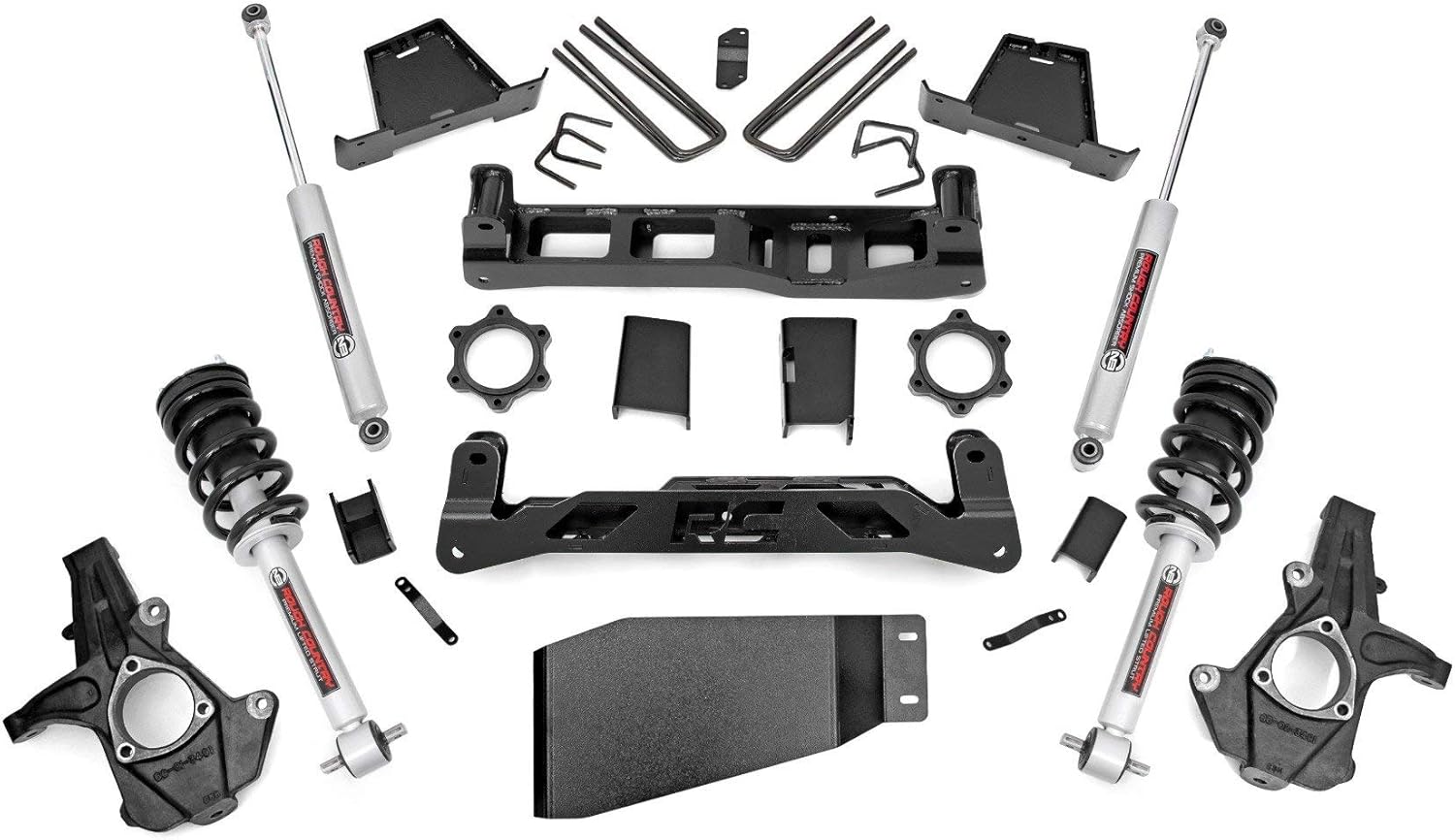
| Included components | (2) Loaded N3 Struts, (2) Premium N3 Rear Shocks, CV Spacers & Lift Blocks, Lifted Knuckles & Crossmembers, U-Bolts, Brackets & Hardware |
|---|---|
| Automotive fit type | Vehicle Specific Fit |
| Maximum lifting height | 6 Inches |
| Material type | Alloy Steel, Aluminum, Rubber, Zinc |
This Rough Country 6" lift kit is a full vehicle-specific suspension solution built around nitrogen-charged N3 loaded struts up front and premium N3 rear shocks. It replaces the factory front and rear hardware with lifted knuckles, high-clearance crossmembers, fabricated lift blocks, CV spacers, and all necessary brackets and U-bolts to achieve a level, 6-inch raise without major drivetrain or exhaust modifications. In daily driving the larger-bore N3 struts and 10-stage valved rear shocks aim to keep ride quality close to factory while improving control on rough roads and light trails. The kit supports up to 295/60R20 tires on factory 20-inch wheels and includes heavy-duty components intended for longer life than cast parts. Expect a mostly bolt-on install but note the product description calls for minor cutting and drilling and warns that AWD vehicles may need an aftermarket driveshaft. This is a good choice for buyers seeking a durable, well-engineered lift with configurable shock options, but it is not a low-cost or minimal-change bolt-on for every configuration.
Best for: Buyers who prioritize a durable, factory-like ride and precision engineering and are willing to invest in stronger components and configurable shock options for daily driving and light off-road use.
Less Ideal for: Drivers seeking the cheapest way to lift a truck, those wanting a purely reversible plug-and-play swap with no cutting, or heavy-duty off-road users who need extreme travel suspension.
- Vehicle-specific design with lifted knuckles and crossmembers for a precision fit on 2007–2013 Silverado/Sierra 1500 4WD
- Nitrogen-charged N3 loaded struts and 10-stage valved N3 rear shocks for improved ride control and reduced harshness
- Supports up to 295/60R20 tires on factory 20-inch wheels to increase clearance without aftermarket wheels
- Fabricated steel lift blocks and heavy-duty hardware designed to resist axle wrap and extend component life
- Installation may require minor cutting and drilling and AWD models might need a new driveshaft
Verdict: The best premium lift kit for buyers willing to pay more for superior materials, precision engineering, improved ride quality, and longer component life under regular driving and light off-road use.
4. Freedom Offroad 3.5" Lift Kit with Front Struts, Rear Blocks and Shocks
Best Complete Lift Kit

| Maximum Lifting Height | 3.5 Inches |
|---|---|
| Included Components | Installation Hardware |
| Material Type | Carbon Steel |
| Item Type Name | Front Struts w/ Rear Blocks and Shocks |
| Automotive Fit Type | Vehicle Specific Fit |
This Freedom Offroad lift kit gives a straightforward bolt-on way to raise a 2007-2013 Silverado 1500 roughly 3.5 inches up front and 3 inches in the rear using fully assembled front struts, rear nitro shocks, and steel lift blocks with longer u-bolts. The loaded front struts come preassembled with springs and top mounts so you do not need to disassemble struts during installation, which speeds fitment and helps retain a factory-like ride. Rear twin-tube nitrogen shocks with a 40 mm chromed piston are valved for lifted vehicles and should smooth ride quality compared with stock dampers on a raised truck. The carbon steel tapered rear blocks and included hardware replace worn components and provide reliable clearance for larger tires. This is a practical single-kit solution if you want an easy lift without custom fabrication, but it does not include control arms, alignment-specific brackets, or extensive suspension linkage upgrades, so expect to budget for alignment and possible additional components for heavy towing or extreme off-road use.
Best for: Buyers looking for a single, mostly complete lift kit that lets them raise a 2007–2013 Silverado 1500 with bolt-on components and improved ride control without custom fabrication.
Less Ideal for: Drivers planning heavy towing, aggressive off-road articulation, or those who want a complete suspension overhaul including control arms and alignment-specific components.
- Loaded front struts arrive preassembled for faster bolt-on installation
- Rear nitrogen-charged shocks with 40 mm pistons are valved for lifted ride control
- Carbon steel rear lift blocks and longer u-bolts replace corroded hardware
- Vehicle-specific fitment designed for direct installation on the specified Silverado range
- Does not include control arms or other suspension linkage upgrades needed for full suspension correction
Verdict: The best complete lift kit for buyers who want a single purchase that includes control arms, shocks, hardware, and brackets so the whole suspension is addressed at once.
5. Autsurles Adjustable 3" Front/2" Rear Leveling Lift Kit with Front Upper Control Arms
Best Adjustable Lift Kit

| Fitment | Chevrolet Silverado 1500 2007-2014; GMC Sierra 1500 2007-2018 |
|---|---|
| Front lift | 3 Inches |
| Rear lift | 2 Inches |
| Included components | Front spacers, front upper control arms, rear lift blocks, U-bolts, hardware |
| Material type | Alloy steel and aluminum |
This kit combines a 3 inch front and 2 inch rear leveling lift with adjustable front upper control arms that include ball joints, making it a practical option for raising a 2007–2014 Silverado 1500. Installation replaces the factory control arms up front and adds front spacers plus rear blocks and U-bolts, so it directly changes ride height and suspension geometry while keeping the stock mounting points. The adjustable control arms let you fine-tune front ride height within the 2–4 inch range and restore alignment after lifting, which helps maintain steering feel and reduce abnormal tire wear. Construction uses aluminum for the spacers and alloy steel control arms with corrosion-resistant surface treatment and high-strength bolts, so durability is reasonable for light off-road use. Expect to do a professional alignment after installation and be aware this is a vehicle-specific kit that modifies suspension geometry, which can affect ride and towing behavior compared with factory suspension.
Best for: Buyers who want to raise and fine-tune the front ride height on a 2007–2013 Silverado 1500 while keeping the ability to adjust corner balance and restore alignment without swapping major suspension components.
Less Ideal for: Drivers who need heavy-duty off-road suspension or frequent towing at high loads should consider a full suspension lift or purpose-built aftermarket kit instead.
- Includes adjustable front upper control arms with ball joints for height tuning and alignment.
- Front 3" and rear 2" lift provides noticeable ground clearance and room for larger tires.
- Kit includes rear lift blocks, U-bolts, and all needed hardware for a vehicle-specific install.
- Aluminum spacers and corrosion-resistant finishes improve longevity for light off-road use.
- Altering suspension geometry may change ride quality and towing characteristics compared with factory setup.
- Professional alignment is required after installation to avoid uneven tire wear.
Verdict: The best adjustable lift kit for users who want the flexibility to fine-tune ride height and corner balance without swapping major components.
6. TORCH Off Road 3" Front / 3" Rear Lift Kit with Extended Shocks for 2007–2022 Silverado/Sierra 1500
Best 2–3 Inch Lift Kit

| Fitment | 2007–2022 Chevrolet Silverado 1500 / GMC Sierra 1500 (2007 new body style) |
|---|---|
| Front lift | 3 Inches |
| Included components | Strut spacers, tapered rear blocks, extended U-bolts, extended shocks, hardware |
| Warranty | Lifetime (lift kit); 5 year / 50,000 mile (shocks) |
This TORCH Off Road lift kit raises the front and rear of compatible 1500 trucks about 3 inches using front strut spacers and tapered rear blocks, plus extended U-bolts and longer shocks. It is a bolt-on solution aimed at backyard mechanics and includes step-by-step instructions and hardware for a DIY install. The kit keeps the factory strut mount position and lower strut bar angle so you generally do not need to reposition the strut or re-angle mounts, which helps preserve near‑stock ride and handling. Stackable lift plates offer small incremental height adjustment. Extended shocks are included to maintain proper damping after the lift. Expect improved ground and tire clearance that accommodates slightly larger tires without radically changing steering or ride quality. Buyers should plan for alignment afterwards and some models like Z71 may need minor trimming; in some cases upper control arms or wheel spacers are added to fully resolve clearance and alignment issues.
Best for: Buyers who want a moderate 2–3 inch lift to gain extra ground and tire clearance while keeping near-stock drivability and a DIY-installable kit that minimizes suspension rework.
Less Ideal for: Drivers seeking large lifts, heavy off-road abuse setups, or those who want a completely bolt-on no-modification guarantee should consider more heavy-duty or professional systems instead.
- Designed to maintain factory strut mount position to simplify installation and preserve steering geometry
- Includes extended shocks sized for the lift so damping and ride quality remain usable
- Bolt-on kit with hardware and step-by-step instructions for DIY installation
- Stackable lift plates allow small additional height adjustments
- Tapered rear blocks and extended U-bolts provide a complete rear lift solution
- May require minor cutting or grinding on some Z71 variants during installation
Verdict: The best 2–3 inch lift kit for buyers seeking a moderate, commonly desired lift that improves ground clearance and tire clearance while retaining near-stock drivability.
Choosing the Right 2007-2013 Chevrolet Silverado 1500 Lift Kit: Key Factors to Consider
Lift Height and Intended Use
Lift height determines how much additional ground clearance and tire size you can fit. Small lifts under 3 inches generally allow for modestly larger tires while retaining near-stock handling and driveline angles. Medium lifts from 3 to 6 inches open up a wider range of larger tires and off-road capability but often require changes to driveshaft angles, camber correction, or extended brake lines.
Decide based on how you use the truck. If most driving is daily commuting and occasional gravel, a conservative height preserves ride comfort and steering geometry. If you plan repeated off-road use or want a more aggressive stance, a taller kit is appropriate but expect tradeoffs in ride quality, steering response, and potential additional parts.
Kit Type and Suspension Design
Different lift kit designs produce different outcomes. Leveling kits usually raise only the front to match rear ride height and are simpler to install. Coil spring or strut-based lifts replace or reindex springs and can preserve ride tuning better than spacer-only solutions. Long-arm or control-arm lift kits change suspension geometry more comprehensively, offering better articulation for serious off-road use but increasing complexity.
Choose the design that matches your goals. For improved on-road manners with slight height, coil spring or strut replacement kits are often the best balance. For heavy off-road use, a more comprehensive suspension redesign may be necessary, but expect greater cost and alignment work.
Impact on Steering, Alignment, and Drivetrain
Lifting the Silverado 1500 alters steering angles and wheel alignment specs. Camber, caster, and toe can shift enough to require adjustable components or a professional alignment. Driveshaft and CV angles can also change with taller lifts, which may introduce vibrations unless corrected with spacers, extended driveshafts, or flip kits.
Plan for post-install alignment and inspect steering components for wear before lifting. Some lift heights may also require modifications to steering knuckles or bump stops to maintain safe steering range and suspension travel.
Compatibility With Brake Lines and ABS Sensors
Raising ride height can put added strain on brake lines and wheel speed sensors. Many quality kits include extended brake lines or brackets to maintain safe routing and prevent binding over full suspension travel. ABS sensor lengths and routing should be checked since excessive tension may cause sensor damage or false fault codes.
Confirm whether the kit supplies the necessary extensions or hardware. If the kit does not include them, budget for these parts and factor the additional installation steps into the overall project.
Installation Complexity and Required Tools
Installation difficulty ranges from a straightforward bolt-on leveling spacer to a full suspension overhaul requiring spring compressors, torque-critical fasteners, and alignment after completion. Time, tools, and mechanical experience affect whether you can do the job yourself or need professional installation.
Assess the kit instructions and included hardware. Kits that include clear instructions and necessary brackets reduce unexpected issues. If the installation involves disassembling control arms or modifying brake lines, plan on professional help to ensure safety and correct geometry.
Tire and Wheel Fitment Considerations
A lift kit is often paired with larger tires and different wheels. Increased offset, backspacing, and tire width can cause rubbing or clearance issues at full lock or compression. Consider wheel diameter, offset, and tire sidewall height when planning the setup, and check for required trimming or add-on components like fender flares.
Factor in the effects on speedometer calibration and braking performance when increasing overall tire diameter. Choosing conservative tire sizes for the selected lift height minimizes the need for trim or additional modifications while preserving drivability.
Choosing the Right Lift Height for Daily Driving
If you use your Silverado 1500 primarily as a daily driver, select a lift height that balances clearance with comfort. Smaller lifts keep factory suspension geometry closer to stock and reduce the need for driveline corrections or major steering changes.
Consider how the added height will affect garage clearance, parking ramps, and fuel economy. A modest lift that accommodates slightly larger tires often achieves the visual and functional goals without introducing harsh ride characteristics.
- Under 2 inches: minimal changes to handling, mostly leveling.
- 2 to 4 inches: allows larger tires, some alignment adjustments likely.
- Over 4 inches: expect additional drivetrain and steering modifications.
Preparing Your Truck Before Installation
Inspect the suspension, steering, and braking components before starting any lift installation. Replace worn ball joints, tie-rod ends, and bushings to avoid installing new parts onto a tired system.
Measure current ride height and document factory alignment specs. Having the original numbers helps the installer set appropriate alignment targets after the lift is installed.
- Check for uneven tire wear as a sign of worn components.
- Replace hardware like fasteners if they show corrosion or fatigue.
- Gather tools and plan for an alignment after installation.
How Lift Kits Affect Towing and Payload
A lifted Silverado will change the truck's center of gravity and suspension dynamics, which can affect towing stability. Increased height may alter hitch geometry and trailer level, so check tongue weight and hitch alignment after lifting.
Payload capacity does not increase simply because the truck is lifted. Heavier suspension components or larger tires can reduce usable payload, so account for added weight when planning towing or hauling tasks.
- Verify hitch and ball height post-installation.
- Recalculate trailer setup if bed or hitch geometry changes.
- Test towing behavior at low speeds before extended trips.
Options for Matching Tires and Wheels
Select tires and wheels that match the lift height and intended use. All-terrain tires with appropriate sidewall height often provide a good compromise between off-road traction and on-road noise and economy.
Wheel backspacing and offset determine how far the wheel sits in the wheel well. Lower backspacing can increase scrub radius and change steering feel, so choose wheel specs that keep clearance without creating excessive steering loads.
- Measure clearance at full lock and full compression.
- Consider trimming inner fender components only when necessary.
- Retain correct load rating on tires when upsizing diameter.
Maintenance and Long-Term Care After Lifting
After installing a lift, inspect fasteners, mounts, and brake line routing regularly during the first few hundred miles. Torque values should be rechecked after initial use to ensure nothing has settled loose.
Suspension geometry changes can accelerate wear on tie rods, ball joints, and bushings. Schedule periodic inspections and alignment checks, especially if you use the truck off-road or carry heavy loads frequently.
- Re-torque critical fasteners after 100 to 200 miles.
- Monitor for unusual vibrations that could indicate driveshaft issues.
- Keep a maintenance log of alignment and suspension servicing.
Common Installation Pitfalls and How to Avoid Them
A frequent issue is assuming all lift kits are bolt-on with no additional parts needed. Read the kit contents carefully and verify if extended brake lines, sway bar drop brackets, or alignment cams are included. Missing components increase labor and may require additional trips to suppliers.
Another common pitfall is underestimating the need for a professional alignment and frame inspection after a larger lift. Alignments should be performed by technicians familiar with lifted trucks to set correct caster and toe for safe handling.
- Confirm included hardware and required supplemental parts before starting.
- Reserve alignment time with a shop experienced in lifted trucks.
- If uncertain, consult a suspension professional about driveshaft or steering corrections.
Still looking for the perfect fit?
Select your Chevrolet Silverado 1500 configuration to see the most relevant Lift Kits recommendations
How We Chose the Best 2007-2013 Chevrolet Silverado 1500 Lift Kit
We evaluated candidate lift kits for the 2007-2013 Chevrolet Silverado 1500 using a set of vehicle-specific criteria that reflect what owners most often need from a lift. First, fitment accuracy and compatibility with the Silverado 1500 chassis and suspension geometry were required. Second, ride quality and expected handling changes were assessed by looking at the kit design type and components. Third, installation complexity was measured by the parts included, whether alignment or additional components are necessary, and typical labor steps. Fourth, tire-fitment potential and how the kit affects wheel offset and brake clearance were considered. Fifth, component durability and materials used were reviewed to estimate long-term reliability under towing and occasional off-road use. Exclusions: we excluded any kits that require extensive frame modification or are unsuitable for the stock brake, steering, or drivetrain setup. The final picks reflect a balance of lift height, installation effort, and expected on-road behavior appropriate for the Silverado 1500 from 2007 through 2013.
Our full evaluation process is outlined in our review methodology.
FAQ
Will a 3-inch lift affect my Silverado's alignment?
Yes, a 3-inch lift typically changes camber, caster, and toe enough to require a professional alignment. Some kits include adjustable components to help correct geometry, but an alignment is still recommended after installation.
Can I install a lift kit on my Silverado at home?
That depends on the kit and your mechanical experience. Simple spacer or leveling kits can be installed with basic tools, while coil spring or control-arm kits require spring compressors and torque-critical procedures. Plan for an alignment and consider professional help for complex kits.
How does a lift kit affect towing capacity?
Lifting the truck changes suspension geometry and center of gravity but does not inherently increase factory-rated towing capacity. Added weight from the kit and larger tires can reduce payload and may alter towing dynamics, so verify hitch geometry and perform cautious testing.
Do I need new brake lines or ABS sensors after lifting?
Some lift heights require extended brake lines or brackets to prevent binding during full suspension travel. Quality kits often include these items, but if not supplied, you should budget for proper extensions and check ABS sensor routing to avoid faults.
What size tires can I fit with a typical 4-inch lift?
A 4-inch lift commonly allows significantly larger tires, but the exact maximum depends on wheel offset, tire width, and fender geometry. Expect to fit taller, wider tires with minimal trimming, but measure full lock and compression to confirm clearance.
Is a leveling kit the same as a lift kit?
Not exactly. A leveling kit typically raises only the front to match the rear ride height and is lower in cost and complexity. A full lift kit alters both front and rear suspension and may include additional components to maintain proper geometry for larger lifts.
Final Verdict
When choosing a lift kit for a 2007-2013 Chevrolet Silverado 1500, prioritize the balance between desired height and everyday drivability. Small to moderate lifts preserve better on-road manners and reduce the need for driveline corrections, while taller systems provide greater off-road capability at the cost of increased complexity and potential additional components. Factor in installation complexity, alignment, and tire fitment when you plan the project. Ultimately, select the kit that matches how you drive the truck most often and be prepared for post-install alignment and periodic inspections to maintain safe handling.
Explore More:
- Check out all Chevrolet Silverado 1500 parts & accessories
- Explore Suspension & Steering
- Browse all Accessories
