

Note: This article contains affiliate links. If you click on these links and make a purchase, I may earn a small commission at no extra cost to you. This helps support my research and content. Read my full affiliate disclosure here.
If you drive a Honda CR-V, the intake manifold is a key component that affects engine responsiveness, fuel efficiency, and drivability. Choosing the right intake manifold matters because fit and material quality determine sealing reliability, airflow consistency, and long-term durability under heat and vibration. This guide highlights our seven shortlisted intake manifolds for the Honda CR-V and explains the criteria used to evaluate them, including fitment accuracy and material durability. Read on to understand the practical differences and what to prioritize when selecting a replacement or upgrade.
Looking for other parts? See all Honda CR-V parts & accessories.
Top Picks at a Glance
| Best Reviewed A top-rated pick with lots of positive feedback | Quaneguzy Engine Intake Manifold Gasket, Rubber, 4-Pack (Fits Honda 1.5L 2016–2022) |  |
| Most Popular A crowd favorite that many people choose with confidence | ApplianPar Intake Manifold Gasket (4-pack) for Honda 1.5L 2016–2022 |  |
| Best Quality Built to a higher standard if you want something more solid | Karponal Intake Manifold Runner Control Valve 37890-PND-A01 for Honda CR-V/Acura RSX |  |
| Best Budget The cheapest option that still gets the job done reliably | Nuwedah Intake Manifold Gasket Set for Honda 1.5L (4-piece) |  |
| Most Sold A high-volume bestseller chosen again and again | BEONEO Intake Manifold and Fuel Injection Plenum Gasket Set for 2.4L Honda K24 Engines |  |
| Best Value for Money The sweet spot between price and what you get | DNJ Intake Manifold Gasket Set for 1996–2001 Acura/Honda 1.8L–2.0L |  |
| Best Overall The best all-around choice for most situations | DNJ Intake Manifold Gasket Set (IG216) for 2002–2006 Honda/Acura 2.0–2.4L |  |
1. Quaneguzy Engine Intake Manifold Gasket, Rubber, 4-Pack (Fits Honda 1.5L 2016–2022)

| Vehicle Fitment | Honda CR-V/Accord/Civic 1.5L 2016–2022 |
|---|---|
| Package Quantity | 4 x gaskets |
| Manufacturer Part Number | 17105-5AA-004 / 171055AA004 |
| Material | Rubber |
This four-pack of rubber intake manifold gaskets is a direct replacement option for Honda CR-V, Accord, and Civic 1.5L engines from 2016 through 2022. The set is intended for use whenever the intake manifold is removed or when leaks appear; each gasket is molded from flexible rubber to provide a tight seal under typical engine temperatures and pressures. Buyers will appreciate that a single purchase covers all four ports, which simplifies a full manifold reassembly and reduces the chance of future vacuum or coolant leaks. The product description includes manufacturer part numbers to help confirm fitment and a basic installation outline that follows standard removal, alignment, and torque steps. Important limitations are that these are aftermarket rubber gaskets rather than a factory-branded part and that long-term durability will depend on proper installation and engine conditions. If your engine has severe warpage or residue, additional machining or cleaning may be required for an effective seal.
Best for: Reliability-focused buyers who prioritize preventing leaks and maintaining engine health by replacing gaskets during manifold service or at the first sign of failure.
Less Ideal for: Drivers looking for an OEM-branded part or those with engines that require surface machining or specialty high-temperature materials should consider alternative options.
- Sold in a four-pack so all intake ports can be serviced at once
- Flexible rubber construction provides good conformity for reliable sealing
- Lists Honda part numbers to help verify correct fitment for 1.5L engines
- Aftermarket rubber material may not match factory-brand longevity in very high-heat or high-mileage engines
- No torque specs or step-by-step professional instructions included beyond basic guidance
Verdict A practical, reliability-focused aftermarket gasket set that lets you replace all intake seals at once for Honda 1.5L engines, but not a direct factory-branded part.
2. ApplianPar Intake Manifold Gasket (4-pack) for Honda 1.5L 2016–2022
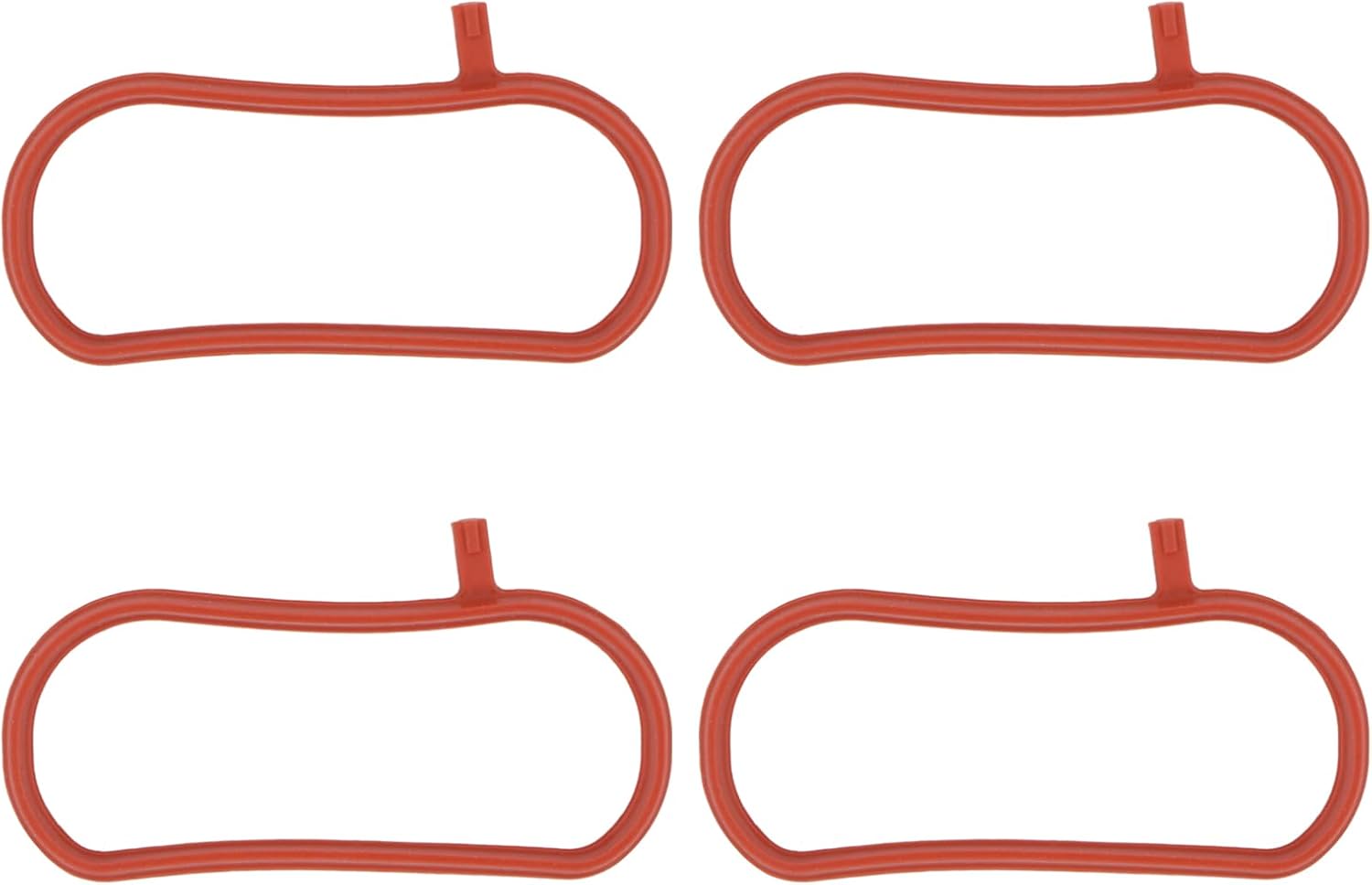
| Fitment | Honda CR-V, Accord, Civic 1.5L 2016–2022 |
|---|---|
| Package contents | 4 x Intake Manifold Gasket |
| Brand | ApplianPar |
This ApplianPar gasket kit supplies four intake manifold gaskets intended as a direct replacement for the factory parts on Honda 1.5L engines from 2016 through 2022. It is typically used during intake manifold servicing or when replacing a leaking gasket to restore proper sealing between the manifold and cylinder head. The kit’s main practical benefit is that it provides a full set of gaskets so you can complete the job without sourcing individual pieces. Customer feedback indicates correct fit and acceptable quality versus factory parts, which makes this a convenient option for DIY installers or quick repair shops. Limitations are that this is an aftermarket part rather than factory-branded hardware and long-term durability versus OEM gaskets is not documented in the listing. Also the package contains only the gaskets and no additional seals, hardware, or installation instructions, so users should have basic tools and knowledge before attempting installation.
Best for: Practical, convenience-driven buyers who want a ready-to-install gasket kit to complete a quick intake manifold repair without hunting for individual parts.
Less Ideal for: Those seeking factory-branded replacement parts for long-term peace of mind or buyers who want a full hardware and seal kit bundled with the gaskets.
- Includes four gaskets so a full manifold job can be completed without extra purchases
- Sold to fit Honda 1.5L applications from 2016–2022, matching common repair years
- Multiple customer reports of correct fit and satisfactory performance for the price
- Aftermarket part with no documented long-term durability compared to factory-quality gaskets
- Package contains only gaskets, so nuts, bolts, or extra seals are not included
Verdict A convenient, budget-friendly four-pack gasket kit that fits 1.5L Honda models for quick intake manifold repairs, but it is an aftermarket option without extra hardware.
3. Karponal Intake Manifold Runner Control Valve 37890-PND-A01 for Honda CR-V/Acura RSX

| Manufacturer Part Number | 37890-PND-A01 |
|---|---|
| Mounting Type | Intake Manifold Mount |
| Output Type | Push-Pull |
| Compatible Models | 2002-2006 Honda CR-V 2.4L; 2002-2006 Acura RSX 2.0L |
This intake manifold runner control valve replaces the factory unit for specific Honda 2.4L CR-V and Acura RSX 2.0L applications to restore proper runner angle control and idle/low-speed performance. It mounts directly to the intake manifold and uses a push-pull output to actuate the internal runners as engine control commands change. In daily use it addresses symptoms like rough idle, reduced low-end torque, or check-engine codes tied to a failing runner control sensor/valve. The listing highlights OEM part number compatibility and a straightforward single-piece replacement package. Practical benefits include simple installation without modifying the manifold, quick restoration of factory drivability, and a direct-fit option that keeps the engine management system functioning normally. Limitations are that fitment is specific to the listed model years and engines so it is not a universal fix, and the product listing does not provide extensive material or lifespan data compared with branded factory parts.
Best for: Performance-oriented DIYers or technicians looking to regain factory intake runner control and low-end torque on the specified Honda CR-V and Acura RSX engines.
Less Ideal for: Customers seeking a universal or multi-vehicle replacement or those who prefer parts with extensive manufacturer longevity data should look elsewhere.
- Direct replacement for part number 37890-PND-A01 to restore factory runner control.
- Push-pull output and intake manifold mounting for straightforward plug-and-play installation.
- Targets common drivability issues such as rough idle and reduced low-end torque by restoring runner actuation.
- Compatibility limited to the specified 2002–2006 Honda CR-V 2.4L and 2002–2006 Acura RSX 2.0L applications.
- Manufacturer information on materials and expected service life is minimal in the listing.
Verdict A direct-fit replacement valve aimed at restoring factory intake runner function and drivability on the specified Honda CR-V and Acura RSX engines.
4. Nuwedah Intake Manifold Gasket Set for Honda 1.5L (4-piece)

| Fitment | Honda CR-V Accord Civic 1.5 L 2016-2022 |
|---|---|
| Part number | 17105-5AA-004, 171055AA004 |
| Quantity | 4 x intake manifold gasket |
| Manufacturer | Nuwedah |
This 4-piece intake manifold gasket set replaces the factory gaskets on 1.5L Honda CR-V, Accord, and Civic engines from 2016 through 2022. It is supplied as four gaskets intended to seal the intake manifold to the cylinder head and prevent air and vacuum leaks that can cause rough idle or poor fuel economy. The listing emphasizes quality control and basic construction suitable for routine replacement during intake service or when diagnosing a manifold leak. Installation is typical for gasket swaps but the package does not include instructions so some mechanical experience or a service manual will help. The part matches the referenced part numbers for direct fit and should be a cost-effective option for budget repairs, though the listing provides minimal technical detail about materials or lifespan. Buyers should plan for standard prep like cleaning mating surfaces and replacing hardware as needed because those items are not included.
Best for: Budget-conscious owners who prioritize a low-cost, direct-fit replacement for routine intake manifold gasket repair on 1.5L Honda models.
Less Ideal for: Owners seeking branded OEM parts with full documentation or extended durability guarantees should consider factory-quality replacements or dealer parts instead.
- Sold as a complete 4-piece set to replace intake manifold gaskets on the specified 1.5L Honda models
- Lists specific Honda part numbers for easier verification of fit
- Marketed with factory-style fit intent for direct replacement
- Lower-cost option suitable for budget-focused repairs
- No installation instructions or additional hardware included
- Manufacturer provides limited material or longevity details
Verdict A wallet-friendly 4-piece gasket set for 1.5L Honda intake manifold replacements that offers direct-fit convenience but with minimal documentation and accessory hardware.
5. BEONEO Intake Manifold and Fuel Injection Plenum Gasket Set for 2.4L Honda K24 Engines

| Compatible Engines/Models | Honda 2.4L K24 — Accord 2003-2007, CR-V 2007-2009, Element 2003-2011, Acura TSX 2004-2008 |
|---|---|
| Manufacturer | BEONEO |
| Manufacturer Part Number | IMG-MS96473 |
This BEONEO gasket set replaces the intake manifold gasket and the fuel injection plenum gasket on 2.4L K24 Honda engines. It is intended for routine repair or reassembly when removing the intake manifold for maintenance, gasket failure, or vacuum leak diagnosis. The set matches the factory gasket shape so installation aligns with the intake ports without excessive trimming or forcing. The material is a flexible rubber compound rather than an exact factory compound, which provides a good seal for intake air under normal driving conditions and is easy to position during installation. Buyers will appreciate that the set comes clean and ready to use and that it fits the listed Honda CR-V and Accord model years. Limitations are that the gasket is a generic aftermarket part with basic packaging and an aftermarket material feel, so those seeking an exact factory-match compound or OEM-branded part may prefer to source a dealer part.
Best for: Risk-averse mainstream buyers who prioritize a reliable, low-risk replacement part for routine maintenance on their Honda CR-V and prefer a straightforward, cost-conscious repair. Ideal for owners who want a part that fits without major adjustments and avoids lengthy dealer sourcing.
Less Ideal for: Those seeking an exact factory-branded gasket compound or OEM-sourced parts for warranty or restoration-level accuracy should consider dealer replacements instead.
- Shaped to match factory intake manifold ports for straightforward installation
- Flexible rubber compound that seals intake air effectively for typical driving
- Includes both intake manifold gasket and fuel injection plenum gasket in one set
- Arrives clean and ready to install, reducing prep work for DIY repairs
- Aftermarket material differs slightly from factory compound which may feel less premium
- Basic generic packaging that can allow bending in transit
Verdict A practical, fitting aftermarket gasket set that makes intake manifold repairs on 2.4L Honda engines simple and affordable, though not an exact OEM compound match.
6. DNJ Intake Manifold Gasket Set for 1996–2001 Acura/Honda 1.8L–2.0L

| Manufacturer | DNJ ENGINE COMPONENTS |
|---|---|
| Item model number | IG213 |
| Fits | 96-01 Acura, Honda Integra, CR-V 1.8L-2.0L |
| Engine designation | B18B1, B20Z2, B20B4 |
This DNJ intake manifold gasket set supplies the seals needed when removing or reinstalling the intake manifold on 1996–2001 Acura and Honda 1.8L–2.0L engines. It is sold as a full kit intended for intake fitment and lists compatible engine codes including B18B1, B20Z2, and B20B4. In typical use you would replace this set during manifold service, gasket failure, or when swapping manifold components to restore vacuum integrity and prevent oil or coolant leaks. The practical upside is straightforward: the set covers the intake sealing surfaces and comes from a manufacturer with a stated limited warranty, which simplifies repairs and reduces the chance of sourcing mismatched parts. Limitations are that the listing focuses on fitment rather than material details, so installers should verify each gasket in the kit before installation and keep expected OEM tolerances in mind. For routine maintenance and repair jobs on the specified CR-V-era engines the kit is a cost-effective, ready-to-install option.
Best for: Practical optimizers who prioritize getting a correct, ready-made intake gasket kit for routine service or repair on late 1990s Honda CR-V engines and want to minimize parts hunting.
Less Ideal for: Buyers seeking detailed material specs, performance upgrades, or a gasket set explicitly marketed for high-performance or modified engines should consider specialty options instead.
- Full intake gasket set packaged for a complete manifold service
- Listed fitment for 1996–2001 Acura and Honda 1.8L–2.0L engines to simplify compatibility checks
- Backed by a limited 12-month or 12,000-mile warranty for part replacement coverage
- Supplied by a specialist engine parts brand with a long track record
- Specification for gasket materials and thicknesses is not provided in the listing
- Fitment details focus on engine codes rather than step-by-step installation guidance
Verdict A budget-friendly, complete intake gasket kit aimed at straightforward repairs on 1996–2001 Honda/Acura 1.8L–2.0L engines.
7. DNJ Intake Manifold Gasket Set (IG216) for 2002–2006 Honda/Acura 2.0–2.4L

| Fitment | 2002–2006 Honda, Acura 2.0L–2.4L L4 DOHC |
|---|---|
| Model number | IG216 |
| Exterior | Machined |
| Brand | DNJ |
This DNJ intake manifold gasket set supplies the replacement gaskets and O-rings needed when servicing the intake manifold on 2002–2006 Honda CR-V and compatible Acura models with 2.0–2.4L four-cylinder engines. It is sold as a full kit, so mechanics and DIYers can change all the sealing surfaces in one job rather than sourcing individual pieces. The parts are machined and arranged to match factory mating surfaces, which reviewers report fits like the original and stops intake leaks when installed correctly. For routine maintenance, intake manifold removal, or gasket replacement after age-related deterioration, this kit simplifies the repair and reduces the risk of air or vacuum leaks that cause rough idle or drivability issues. Limitations are that it is a direct gasket set only — it does not include manifold hardware, sensors, or additional grommets beyond what DNJ supplies — and care is needed to ensure the correct application for specific K20/K24 engine codes in the CR-V lineup.
Best for: A balanced, practical buyer who wants a reliable factory-quality replacement gasket set to service a 2002–2006 Honda CR-V and prefers buying a full kit for one-stop repairs.
Less Ideal for: Not suitable for someone looking to upgrade intake flow or add performance parts; also not ideal if you need manifold hardware or sensors included in the repair.
- Complete gasket kit tailored for 2002–2006 Honda 2.0–2.4L engines so you get all main seals in one purchase
- Machined components that match factory mating surfaces for reliable sealing when installed correctly
- Good fit reported by users, reducing chances of vacuum leaks and related drivability problems
- Includes the small rubber O-rings often replaced during intake service, avoiding an extra trip to source parts
- Does not include intake manifold bolts, brackets, or sensors so additional parts may be needed for a full repair
- Not a performance intake manifold—this is a gasket set for sealing only and does not change airflow or power
Verdict A practical, factory-style gasket kit that gives a complete, well-fitting set of intake seals for 2002–2006 Honda CR-V engine service.
Choosing the Right Honda CR-V Intake Manifold: Key Factors to Consider
Fitment and Compatibility
Accurate fitment is essential because the intake manifold must align with intake ports, mounting bosses, and accessory connections. A manifold that does not seat correctly can cause vacuum leaks, misaligned sensors, or interference with throttle or fuel components. Confirming bolt pattern, port shape, and clearance to nearby engine parts reduces the risk of installation issues or the need for modifications.
Compatibility also affects installation time and the availability of replacement gaskets or seals. Choosing a manifold engineered for the specific CR-V engine and model year minimizes the chance of unexpected servicing complications.
Material and Build Quality
The construction material influences heat tolerance, resistance to cracking, and how the manifold responds to repeated thermal cycling. Aluminum and composite materials each have tradeoffs: aluminum offers strength and heat resistance, while engineering-grade composites can reduce weight and dampen heat soak. Look for consistent wall thickness, smooth casting or molding, and attention to mounting flange flatness.
High build quality reduces the chance of warping or fracture over time and contributes to better sealing performance with gaskets. Surface finish at gasket interfaces is particularly important to prevent leaks.
Sealing Surfaces and Gasket Compatibility
Sealing surfaces determine how well the manifold mates to the cylinder head and throttle body. A properly machined or molded flange ensures an even compressive load on gaskets, lowering the risk of intake manifold leak and related drivability symptoms. Consider whether the manifold requires OEM-style gaskets or if it uses a proprietary seal design.
Gasket compatibility also affects maintenance: common gasket types make future replacements simpler and reduce the chance of vacuum leak issues after servicing.
Internal Airflow Design
The internal shape and runner length of the manifold influence airflow distribution to each cylinder, which affects throttle response and torque delivery across the rev range. Smoother transitions and balanced runners help maintain even fuel-air mixing and reduce turbulence that can hurt performance.
If you are considering an intake manifold performance upgrade, focus on designs that preserve port alignment and promote consistent flow without creating low-speed torque penalties.
Serviceability and Installation Ease
A manifold that is straightforward to install can save significant labor during replacement or routine maintenance. Features that improve serviceability include accessible mounting bolt locations, clearances for sensors and lines, and compatibility with existing engine harness and vacuum fittings. Consider whether the manifold requires special tools or removal of additional components.
Serviceability also covers how easy it is to inspect and clean the manifold and associated passages during routine engine work.
Resistance to Common Failure Modes
Intake manifolds can fail due to cracking, gasket deterioration, or vacuum leaks at mating surfaces. Evaluate how a design addresses these risks: reinforced mounting areas, corrosion-resistant materials, and robust flange construction help mitigate failures. Thermal stability under repeated heating and cooling cycles is another important factor.
Choosing a manifold that reduces the likelihood of common symptoms such as rough idle, reduced fuel economy, or check-engine lights means fewer unexpected repairs down the road.
FAQ
What are common intake manifold symptoms I should watch for?
Common symptoms include rough idle, loss of low-end torque, poor fuel efficiency, and unusual engine vacuum readings. You may also see fluctuating idle speed or a check-engine light related to fuel trim or sensor readings. These signs often indicate a leak or restriction rather than a single definitive failure.
How do I diagnose an intake manifold vacuum leak?
Diagnosis usually starts with a visual inspection of gasket surfaces and vacuum lines, followed by listening for hissing noises while the engine runs. A smoke test or a controlled spray of a safe aerosol around the manifold joints can reveal leaking areas by observing RPM changes or visible smoke. More involved testing may include checking intake vacuum with a gauge or scanning engine data for irregular fuel trims.
Can I clean an intake manifold myself?
Many intake manifolds can be cleaned during routine maintenance if you have basic hand tools and a safe, appropriate cleaner. Carbon buildup and deposits can be removed from accessible areas, but deep cleaning or work on passages near sensors may be better handled by a professional. When cleaning, avoid harsh abrasives that could damage sealing surfaces and follow proper re-torque procedures during reassembly.
Do intake manifold torque specs matter?
Yes, following correct torque specs is important to ensure even clamping and to prevent warping or gasket compression issues. Uneven or over-torqued bolts can lead to leaks or damage to mounting bosses. Always consult the proper service manual for the exact sequence and specification for your vehicle when reassembling the manifold.
When should I consider an intake manifold replacement instead of repair?
Replacement is usually warranted if the manifold has visible cracks, significant warping, or irreparable flange damage. Repeated or persistent vacuum leaks after gasket replacement may also indicate underlying manifold failure. Minor issues like surface corrosion or small gasket-seat imperfections can sometimes be addressed by machining or careful repair, depending on severity.
How We Chose the Best Honda CR-V Intake Manifold
We evaluated candidate intake manifolds for the Honda CR-V using focused, vehicle-specific criteria that reflect real-world ownership demands. Key factors included fitment accuracy to factory mounting points and ports, material and casting quality for heat resistance and longevity, sealing surface precision that affects gasket life and leak risk, and internal airflow characteristics that influence throttle response and efficiency. We also considered ease of installation, including access to mounting bolts and compatibility with common engine accessories, plus resistance to common failure modes such as cracking or warped flanges. Products that lacked clear vehicle-specific fit information, used low-grade materials with known durability problems, or required extensive modification to install were excluded. The final list prioritizes items that meet objective build and fit standards while offering practical serviceability for maintenance and repairs.
Our full evaluation process is outlined in our review methodology.
Conclusion
Prioritize fitment accuracy, material durability, and reliable sealing when choosing a Honda CR-V intake manifold. These factors most directly affect vacuum integrity, throttle response, and long-term serviceability. Weigh the tradeoffs between lightweight designs and heat resistance, and confirm gasket compatibility and torque procedures before installation. Focusing on those criteria will reduce the chance of recurring leaks and improve everyday drivability.
Explore More:
- Check out all Honda CR-V parts & accessories
- Explore Engine
- Browse all Auto Parts
