

Note: This article contains affiliate links. If you click on these links and make a purchase, I may earn a small commission at no extra cost to you. This helps support my research and content. Read my full affiliate disclosure here.
If you tow trailers or use hitch-mounted accessories on a Ford Explorer, a dedicated hitch lock is one of the simplest ways to protect your investment and prevent theft. The right Ford Explorer hitch lock reduces the chance of unauthorized removal, resists weather and road salt, and should be easy to install and remove when you need access to your receiver.This guide covers seven shortlisted hitch locks chosen for reliability and practicality across real-world towing and daily driving conditions. We evaluate each option for build quality and user-focused factors like fitment, corrosion resistance, and ease of use to help you pick the best solution for your Explorer. Read on for features to compare and answers to common owner questions before you buy.
Looking for other parts? See all Ford Explorer parts & accessories.
Top Picks at a Glance
| Best Overall Hitch Lock Top pick balancing security, weather resistance, and everyday ease of use | Rhino USA 2" Locking Trailer Hitch Pin with Weatherproof Slide Cap |  |
| Best Budget Hitch Lock Affordable locking pin that still fits standard 2"/2.5" receivers | CZC AUTO Dogbone Trailer Hitch Receiver Pin Lock, 5/8" Pin |  |
| Best Keyed‑Alike Lock Set Multiple locks keyed alike so one key works across your trailer kit | RETRUE Keyed-Alike Trailer Lock Set with Coupler Lock, Dual Hitch Pin Locks, and Tongue Lock |  |
| Best Coupler (Tongue) Lock Heavy coupler/ball‑head lock that secures the trailer tongue and latch | Master Lock 389DAT Universal Trailer Coupler Lock |  |
| Best Weatherproof Stainless Lock Stainless or sealed lock built to resist corrosion and salty conditions | InfiniteRule Security 2.5" Stainless Steel Receiver Hitch Lock (61072) |  |
| Best Anti‑Rattle Hitch Lock Locking pin with O‑rings or tight fit to eliminate hitch noise | METOWARE 5/8" Trailer Hitch Lock Pin for 2" Receivers |  |
1. Rhino USA 2" Locking Trailer Hitch Pin with Weatherproof Slide Cap
Best Overall Hitch Lock

| Receiver size | 2 in (Class III/IV) |
|---|---|
| Diameter | 5/8 in |
| Material | Carbon Steel |
| Included components | 2 keys, 1 hitch pin |
This Rhino USA 2" locking hitch pin is a simple, heavy-duty solution for securing a Class III/IV receiver on a Ford Explorer. The solid forged carbon steel shaft and powder-coated finish give it a robust, rust-resistant feel while the patented slide-lock cap seals the locking mechanism against dirt and mud. Installation is straightforward: slide the pin through the receiver, attach the lock housing, and turn the key. Rhino ships two keys and the dust cover helps keep the lock operable after repeated outdoor use. The pin is built for towing use rather than covert security—its solid construction deters casual theft and tampering but a determined thief with tools may still defeat most mechanical locks. The product is very user-friendly for DIY mechanics who hitch and unhitch regularly, and the lifetime replacement backing is useful if the lock mechanism ever fails. Expect reliable day-to-day protection and low maintenance, with the caveat that this is a mechanical lock rather than an alarmed or electronic anti-theft device.
Best for: A DIY-minded Ford Explorer owner who wants a durable, weatherproof mechanical lock that is quick to use for regular towing and reduces the chance of casual trailer theft.
Less Ideal for: Not the best choice for buyers who want electronic tracking or alarmed security systems or who need protection against professional theft attempts.
- Solid forged carbon steel construction for strong physical security
- Powder-coated, rust-resistant finish for long-term outdoor use
- Patented slide-lock dust cap protects the locking mechanism from dirt and debris
- Easy one-person installation and operation with included two keys
- Unlimited lifetime replacement policy for added ownership confidence
- Mechanical lock can be defeated by determined thieves with specialized tools
Verdict: The best all-around hitch lock for DIY mechanics who want solid anti-theft protection, durable weatherproofing, and simple operation for routine towing tasks.
2. CZC AUTO Dogbone Trailer Hitch Receiver Pin Lock, 5/8" Pin
Best Budget Hitch Lock

| Compatible Receiver | 2" and 2-1/2" |
|---|---|
| Pin Diameter | 5/8" |
| Material Type | Carbon Steel |
| Pull Force | 5000 Pounds |
The CZC AUTO dogbone hitch pin lock is a straightforward, budget-friendly lock that secures 2" and 2-1/2" receivers using a solid 5/8" carbon steel pin and a tubular key head. It installs like a standard hitch pin: push the pin through the receiver and trailer shank, turn the key and the head locks in place; the head rotates for easier handling. The painted carbon steel construction and rubber key cap provide basic weather resistance and the zinc alloy tubular core improves pick resistance compared with simple push-pins. In everyday use it deters opportunistic theft and keeps a bike rack or cargo tray secured when parked. Limitations are its simple mechanical key system and basic materials, which will not stop a determined thief with tools and offers less corrosion resistance than hardened stainless or heavy-duty specialty locks. For owners who want a low-cost, no-frills deterrent matched to a Ford Explorer receiver, this performs the expected job without extras.
Best for: Buyers looking for the cheapest practical way to deter quick theft of a hitch-mounted accessory and who prioritize low cost over heavy-duty security.
Less Ideal for: If you need maximum theft resistance for long-term unattended towing or frequently leave high-value gear on the hitch, choose a heavier-duty or specialty lock instead.
- Fits standard 2" and 2-1/2" receivers used on the Explorer and many accessories
- Solid 5/8" carbon steel pin provides basic resistance to bending
- Tubular key and zinc alloy core increase pick resistance over open pins
- Rubber key slot cap and painted finish add simple all-weather protection
- Not designed to withstand sustained cutting or heavy prying compared with heavy-duty locks
Verdict: A no-frills, low-cost hitch lock that gives basic theft deterrence and receiver fit for owners prioritizing price over premium features.
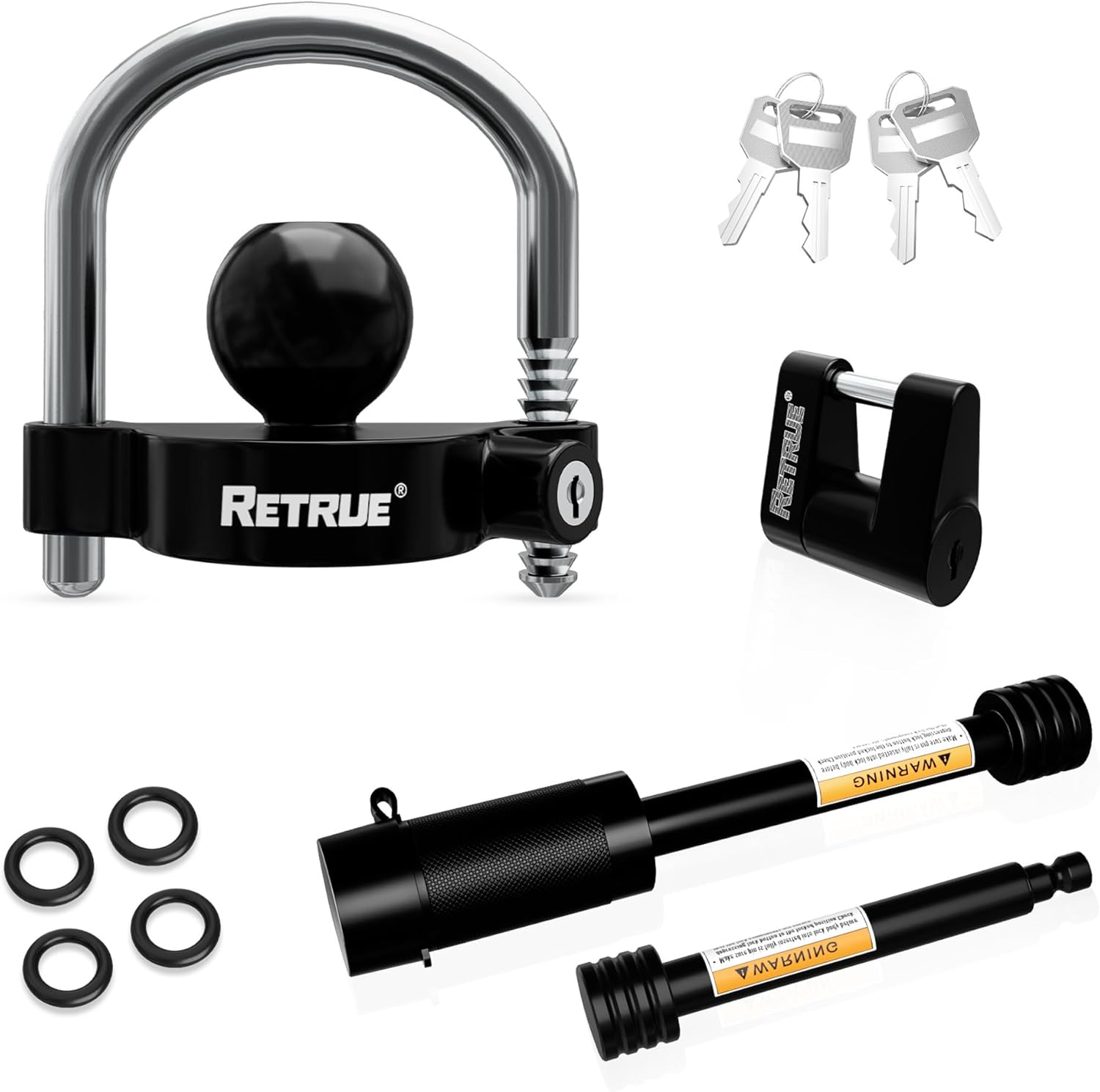
3. RETRUE Keyed-Alike Trailer Lock Set with Coupler Lock, Dual Hitch Pin Locks, and Tongue Lock
Best Keyed‑Alike Lock Set
| Compatible with Vehicle Type | Trailer |
|---|---|
| Automotive Fit Type | Universal Fit |
| Material Type | Alloy Steel, Aluminum |
This keyed-alike lock set provides a simple way to secure a trailer to a tow vehicle using one key for all components. The kit includes an adjustable coupler lock that fits common coupler sizes and two receiver pin locks sized for typical hitch pins plus a tongue latch lock for latch-type couplers. In practice the aluminum-bodied coupler and alloy steel pins give solid protection against casual tampering and weather, and the upgraded cylinder and thicker keys reduce the likelihood of picking. The keyed-alike feature is convenient when switching between hitch and coupler without swapping keys. Installation is straightforward: the coupler lock replaces the latch, and the pin locks slide through the receiver and lock in place. Limitations are that fit depends on coupler and receiver pin dimensions, so confirm spans and pin lengths before relying on it for a specific vehicle setup, and heavier professional thieves may still defeat basic hardware. For everyday towing and storage security this set balances convenience and durable materials for routine use.
Best for: Buyers who prioritize convenient single-key operation for routine towing and storage and want a ready-made kit that secures both the receiver and coupler without juggling multiple keys.
Less Ideal for: If you need maximum theft deterrence for high-value trailers or operate in high-risk areas, consider a heavy-duty hardened-steel lock or professional-grade security solution instead.
- Keyed-alike system uses one key for coupler lock, both hitch pins, and tongue lock for convenience.
- Adjustable coupler lock fits common 1-7/8", 2", and 2-5/16" couplers for broad compatibility.
- Combination of alloy steel and aluminum construction offers corrosion resistance and solid cut/shear resistance for everyday security.
- Includes multiple lock types (coupler, two receiver pins, tongue lock) so both towing and storage points are protected.
- Not a high-security, hardened-steel system intended to stop determined professional thieves.
Verdict: A keyed‑alike set is ideal if you want the convenience of a single key to operate both receiver pins and coupler locks without juggling spares.
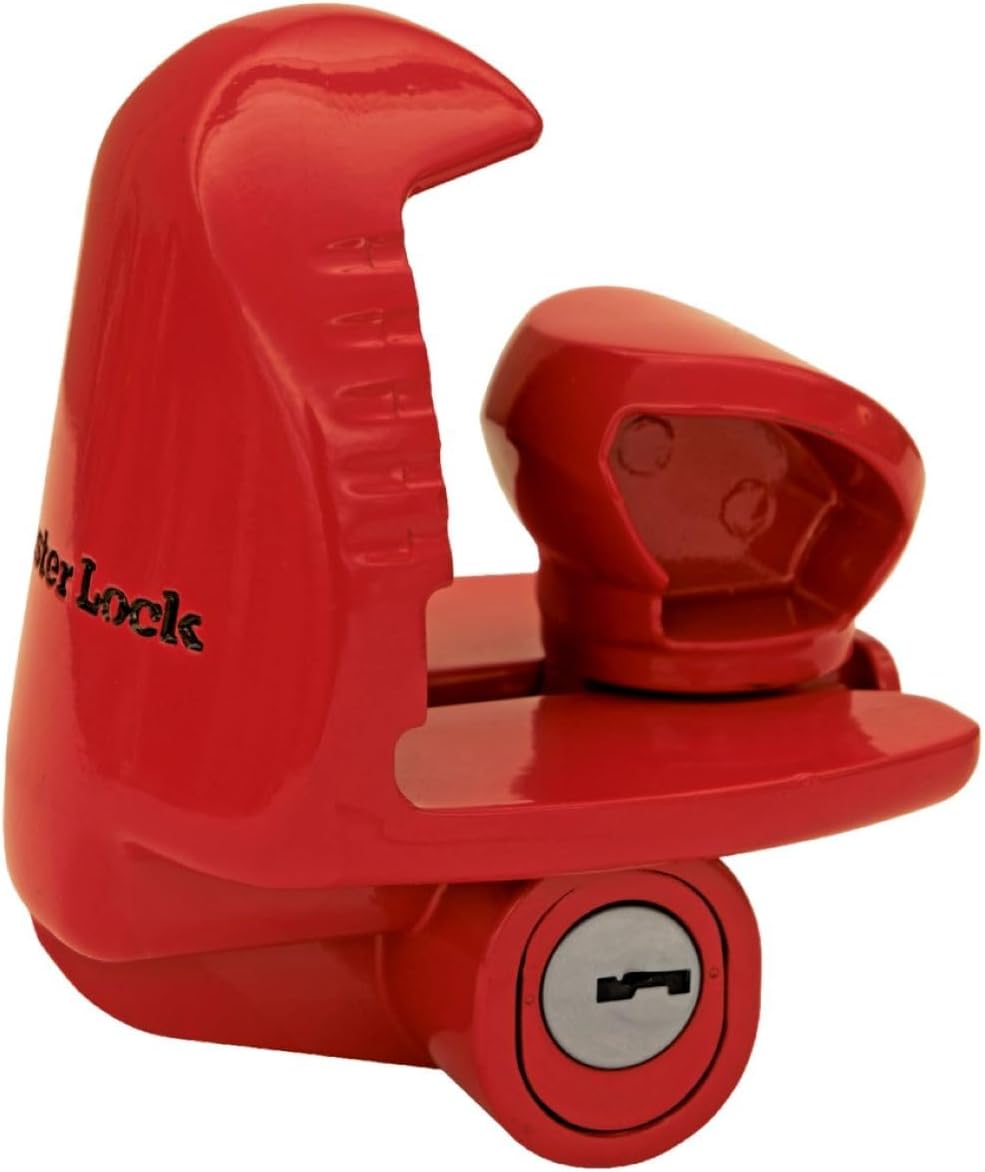
4. Master Lock 389DAT Universal Trailer Coupler Lock
Best Coupler (Tongue) Lock
| Lock Type | Key Lock |
|---|---|
| Material Type | Alloy Steel |
| Finish Types | Painted |
The Master Lock 389DAT blocks the trailer tongue and latch to stop unauthorized hitching by sliding into the coupler and locking across the opening. It is typically used whenever you leave a trailer unattended on a hitch or parked at storage, and the bright painted finish also acts as a visible deterrent. The alloy steel construction and advanced locking mechanism are built to resist common attacks like picking and prying, and the finish helps resist rust and corrosion for outdoor exposure. Installation and removal are simple and require no tools beyond the included key, which makes it convenient for daily use. The universal fit covers the most common coupler sizes so it will fit most Ford Explorer towing setups that use 1-7/8", 2" or 2-5/16" couplers, but it does add bulk to the coupler area and requires carrying a key when uncoupling. For protection focused on the trailer tongue and latch, this lock offers a durable, easy-to-use solution from a well-known lock brand.
Best for: Buyers who prioritize direct, on-tongue protection to prevent unauthorized hitching and want a durable, visible deterrent for trailers paired with a Ford Explorer.
Less Ideal for: Users who need a minimalist, low-profile security solution or those who prefer keyless electronic locks.
- Universal fit for 1-7/8", 2", and 2-5/16" couplers covers common trailer tongues
- Alloy steel body and painted finish resist rust and provide solid physical protection
- Advanced locking mechanism offers resistance to picking and prying
- Simple installation and removal with a keyed lock makes daily use fast
- Adds bulk to the coupler area which can make storage or covering the coupler more awkward
- Requires keeping and carrying a key when uncoupling the trailer
Verdict: A coupler lock is for buyers who want strong, direct protection of the trailer tongue and latch to prevent unauthorized hitching or theft.
5. InfiniteRule Security 2.5" Stainless Steel Receiver Hitch Lock (61072)
Best Weatherproof Stainless Lock

| Fits receiver | 2" and 2.5" Class III, IV & V |
|---|---|
| Material | Stainless steel |
| Pin rating | 21K lb tested |
| Keys included | 2 keys included |
| Made in | USA |
This InfiniteRule receiver lock secures 2" and 2.5" Class III–V receivers with a machined stainless steel pin and threaded locking mechanism built to resist cutting and tampering. It installs like a standard locking pin: insert through the receiver and rotate the key to engage the internal threads; a rubber dust cap and internal O-ring keep water, salt, and grime out of the cylinder so the lock remains operable in wet or corrosive environments. The pin is third‑party tested to a 21,000 lb rating and the precision lock insert is described as pick resistant, which together make it a robust deterrent for trailer or hitch accessory theft. Practical benefits include durable stainless construction for long life near salt water and keyed‑alike options when you want one key for multiple locks. The lock is a single‑pack mechanical solution, so buyers who want electronic tracking or a cable-style anchor will need an additional product to meet those needs.
Best for: Buyers who keep a Ford Explorer parked near salt water or who store hitched gear outdoors and prioritize a corrosion‑resistant, reliably operating mechanical hitch lock for year‑round use.
Less Ideal for: If you want electronic tracking, built‑in alarms, or a multi‑point cable system for chaining loose accessories, look at additional security solutions instead.
- Made from machined stainless steel for strong corrosion resistance in salty or wet conditions.
- Weatherproof rubber cap and internal O-ring protect the cylinder from water, dirt, and road salt.
- Third‑party tested 21,000 lb rated pin and thick threaded mechanism for strong physical resistance.
- Precision pick‑resistant lock insert and real key provide mechanical security.
- Keyed‑alike option available to use one key across multiple locks.
- Single mechanical lock only; no integrated alarm or GPS tracking capability.
Verdict: Pick a weatherproof stainless lock if you park near salt water or leave tow gear exposed and need corrosion resistance and reliable operation year‑round.
6. METOWARE 5/8" Trailer Hitch Lock Pin for 2" Receivers
Best Anti‑Rattle Hitch Lock

| Pin diameter | 5/8 inch |
|---|---|
| Fits receiver | 2-inch x 2-inch |
| Effective pin length | 2-3/4 inches |
This METOWARE hitch lock is a keyed locking pin that replaces a standard hitch pin to secure a 2-inch receiver and reduce movement while towing. It installs like a regular pin: slide through the receiver and lock the zinc alloy core with the supplied copper keys. The lock has four rubber O-rings around the pin to damp vibration and prevent rattling between the hitch and receiver, which is useful when towing an Explorer to cut down on noise and wear. A threaded weather cap keeps the keyway out of the elements and the steel construction gives a confident feel against theft and heavy use. Practical limits: the pin is sized for single-walled 2" receivers and provides about 2-3/4" of effective pin length, so it will not fit double-walled receiver tubes or setups that need a longer pin. For routine towing on a Ford Explorer, it balances theft deterrence, noise reduction, and simple installation in a compact package.
Best for: Drivers who tow with a Ford Explorer and want a single, easy-to-install lock that both secures the hitch and reduces rattling and road noise.
Less Ideal for: People who need a longer locking pin or have a double-walled receiver should look for a different locking solution designed for those receivers.
- Rubber O-rings reduce hitch-to-receiver rattling and vibration during towing
- Threaded weather cap protects the keyway from water and dust
- Solid steel construction with zinc alloy lock core increases theft deterrence
- Includes two stronger copper-covered keys for reliable operation
- Not compatible with double-walled receiver tubes and may be too short for some setups
Verdict: An anti‑rattle hitch lock is best for owners who want a secure connection that also absorbs vibration and prevents annoying receiver movement while towing.
Choosing the Right Ford Explorer Hitch Lock: Key Factors to Consider
Material and Construction
The base materials and how a hitch lock is built determine resistance to cutting, prying, and environmental wear. Hardened steel bodies and shanks resist bolt cutters and saws better than softer metals. Protective finishes such as powder coating, zinc plating, or ceramic coatings provide a barrier against road salt and moisture, slowing rust and prolonging service life.
Weld quality, pin tolerances, and how moving parts are protected from dirt and grit also matter. A well-constructed lock should maintain smooth operation after repeated use and exposure to highway debris. For Ford Explorer owners who tow frequently or in winter conditions, prioritize locks with thicker metal sections and robust coatings to reduce maintenance and avoid seized mechanisms.
Locking Mechanism Reliability
The type and quality of the locking mechanism dictate both security and daily usability. Disc-style or cylinder locks with anti-drill features are harder to defeat than simple push-button designs. Look for mechanisms with weather seals, protective shrouds, or recessed keyways to lower the risk of freezing or contamination.
Ease of rekeying, availability of replacement cores, and whether keyed-alike options exist can impact ownership convenience. A more complex lock might offer better protection but could require occasional lubrication or servicing. Balancing a reliable locking mechanism with straightforward maintenance is essential for long-term use on a Ford Explorer.
Fit and Compatibility With Explorer Receiver
Not all hitch locks fit every receiver size, accessory shank, or coupler style. Confirm the lock is sized for the Explorer's receiver and any accessories you use, such as ball mounts, hitch cargo carriers, or bike racks. Pay attention to the shank diameter, length, and whether the lock accommodates common receiver pinholes and accessory profiles.
A good fit minimizes rattle and prevents unwanted movement that could wear parts or cause noise. Consider locks with adjustable features or multiple sizing options if you use a variety of hitch-mounted gear. For owners who frequently swap accessories, a versatile lock that works cleanly with the Explorer's standard receiver dimensions reduces hassle.
Corrosion Resistance and Weatherproofing
Hitch locks are exposed to rain, road spray, and winter salt, so coatings and sealing details are critical. Corrosion can seize locks and compromise structural strength over time. Look for models with proven rust-resistant finishes and attention to sealing exposed lock components like keyways and internal springs.
Weatherproofing matters not only for durability but also for consistent functionality. A lock that resists water ingress will be easier to operate after prolonged exposure and is less likely to freeze in cold climates. When selecting a lock for your Ford Explorer, factor in the local climate and choose one rated for outdoor use with durable finishes.
Ease of Use and Access
Simplicity in installation and removal reduces frustration during regular towing operations. Locks with ergonomic knobs, clear orientation marks, and keys that are easy to manipulate when wearing gloves save time. Consider whether the lock can be installed without needing to bend into awkward positions or remove other hitch components.
Quick-release or single-handed designs may speed routine attachment but verify they do not sacrifice security. Storage considerations also matter: compact locks are easier to carry in the Explorer's cargo area or under-seat compartments when not in use. Prioritize a balance of secure locking and straightforward daily operation.
Visibility and Deterrence
A visible, well-built lock can deter opportunistic theft even if it is not impervious to determined attackers. Bright finishes, hardened shrouds, and a solid appearance make it clear that removing an accessory will require effort and tools. However, excessive visual bulk can interfere with accessories or vehicle clearance, so choose a deterrent that fits your setup.
Think about placement and whether the lock hides critical parts or allows inspection of the hitch area. Sometimes the psychological benefit of a robust-looking lock is as valuable as its physical resistance, especially in high-theft environments where casual tampering is the main risk.
Types of Hitch Locks That Work With an Explorer
There are several common hitch lock styles that fit the Explorer's receiver and accessory types. Receiver-style locks secure the hitch pin that passes through the receiver tube, while locking hitch pins replace the standard pin with a lockable version. Coupler locks secure the trailer coupler to prevent it from being placed on a ball, and coupler-style devices are useful when you want to secure the trailer end rather than the vehicle end.
Each style addresses a slightly different theft scenario. Choose receiver or locking pin styles when you are protecting hitch-mounted accessories and bike carriers. Select a coupler lock if your primary concern is securing an attached trailer when it is parked, as that blocks engagement at the trailer side.
- Receiver hitch locks: secure the vehicle's receiver pinhole
- Locking hitch pins: quick replacement for standard pins with integrated lock
- Coupler locks: prevent trailer coupler engagement at the trailer end
- Shrouded locks: add extra protection around the locking mechanism
Installation Tips for Ford Explorer Owners
When installing any hitch lock, make sure the receiver and accessory are clean and free of heavy corrosion or debris. Align the pin and holes fully, insert the locking device straight, and verify the lock engages fully. If a retaining clip or set screw is used, ensure it is seated correctly before driving.
Apply a light, weather-appropriate lubricant to the lock cylinder and moving parts during initial installation and as part of seasonal maintenance. Keep spare keys in a known, secure place and consider ordering keyed-alike devices if you use multiple locks to reduce key management.
- Clean receiver and accessory before fitting
- Confirm full engagement and absence of play
- Lubricate lock components periodically
- Store spare keys away from the vehicle
Maintaining Hitch Locks in Winter and Wet Climates
Ford Explorer owners who drive in rainy or snowy conditions should take extra care to prevent locks from freezing or corroding. After heavy exposure to salt or mud, rinse the area and wipe down the lock when possible. Applying a thin film of appropriate corrosion-inhibiting lubricant to exposed metal surfaces helps slow rust formation.
If a lock freezes, do not force the key. Use a safe thawing method such as a heated key or a brief application of controlled heat to the lock body. Regular seasonal inspection and light maintenance extend the life of the lock and preserve smooth operation.
- Rinse off road salt and debris after salty or muddy drives
- Use lubricants formulated for locks, not general-purpose oils
- Avoid forcing frozen keys; thaw carefully
Practical Considerations for Towing Accessories
Consider how the lock interacts with common Explorer towing accessories like ball mounts, cargo carriers, or bike racks. Ensure the lock does not block wiring harness routing or interfere with tailgate operation. For accessory-heavy setups, low-profile locks reduce the risk of accidental snags and make storage easier when the accessory is removed.
Also assess whether the lock allows enough clearance for anti-rattle solutions or if it will add additional movement. In some cases a lock that clamps the receiver tube can dampen vibration, while in others it may need a separate anti-rattle device to maintain a quiet ride.
- Check clearance with accessories and wiring
- Prefer low-profile options for tight spaces
- Consider combined anti-rattle and locking solutions
Legal and Safety Notes
Using a hitch lock does not replace proper trailer attachment and safety procedures. Always confirm trailer couplers and safety chains are connected correctly and that all towing hardware meets rated capacities. A lock is a theft deterrent, not a substitute for safe towing practices.
Be mindful of local regulations that might affect towing equipment visibility or how accessories attach to the rear of the vehicle. Ensure locks do not obscure license plates or safety lighting when installed, and reposition accessories if necessary to stay compliant.
- Locks do not replace correct hitching and safety chains
- Avoid obstructing lights or plates
- Confirm equipment remains within rated towing capacities
How We Chose the Best Ford Explorer Hitch Lock
We focused on attributes that matter most for Ford Explorer owners who tow occasionally or regularly and who need durable, low-hassle security for their hitch and accessories. Primary evaluation criteria included material and construction, locking mechanism reliability, corrosion and weather resistance, fit and compatibility with the Explorer receiver and common couplers, and ease of use during regular hook-up and removal.We also prioritized locks with straightforward maintenance requirements and clear user servicing paths such as replaceable cores or simple rekeying. Durability testing history and manufacturer-stated materials were considered when available, with an emphasis on hardened steel components and protective coatings. Locks that required vehicle or hitch modification were excluded, as were purely decorative units without meaningful theft-resistance features.Finally, we assessed real-world ownership aspects: whether the lock interferes with wiring or accessory clearance, how simple it is to carry and store, and how the mechanism behaves in wet or cold conditions. The result is a list curated for practical Ford Explorer towing scenarios rather than specialty or vehicle-specific fabrication solutions.
Our full evaluation process is outlined in our review methodology.
FAQ
Will a hitch lock prevent trailer theft completely?
A hitch lock greatly reduces opportunistic theft but cannot guarantee complete prevention against determined attackers with tools. It is an effective deterrent for casual theft and adds a layer of protection when used alongside good parking habits and additional security measures.
How do I know what size hitch lock fits my Explorer?
Measure your receiver tube and the diameter of any accessory shank you use, then match those dimensions to the lock specifications. Many locks list compatible receiver sizes and pin diameters; choose a lock that specifically supports the standard receiver size used on your Explorer.
Can I leave a hitch lock on while towing?
Most hitch locks are designed to be used while towing if they are installed correctly and do not interfere with the trailer coupling. Verify the lock does not obstruct the coupler or safety chain routing and that it is rated for use in normal towing conditions.
How should I maintain a hitch lock to prevent it from seizing?
Regularly rinse away salt and grime, dry the lock, and apply a small amount of lock-specific lubricant to the keyway and moving parts. Store spare keys in a dry place and inspect the lock periodically for corrosion or damage.
Is a keyed-alike option worth it for multiple locks?
Keyed-alike locks simplify key management by allowing a single key to operate multiple devices. This can be very convenient if you use several locks on the Explorer and trailer, as long as you secure and track that single key carefully.
Final Verdict
When choosing a hitch lock for a Ford Explorer, prioritize material strength, a reliable locking mechanism, and weather-resistant finishes. Fit and compatibility with your receiver and accessories should guide the style you pick, whether that is a receiver lock, locking pin, or coupler lock. Balance deterrence and daily usability by choosing a solution that is simple to install, resists corrosion, and does not interfere with towing operations.Focus on the factors most important to how you use the Explorer: if you swap accessories often, favor versatile fits and keyed-alike options; if you park in high-risk areas, emphasize robust construction and visible deterrence. With those priorities in mind, you can select a hitch lock that provides sensible trailer hitch security and consistent performance.
Explore More:
- Check out all Ford Explorer parts & accessories
- Explore Other Accessories
- Browse all Accessories
