

Note: This article contains affiliate links. If you click on these links and make a purchase, I may earn a small commission at no extra cost to you. This helps support my research and content. Read my full affiliate disclosure here.
If you need more cargo space without sacrificing cabin room, a hitch cargo carrier is one of the most practical upgrades for a Ford Maverick. Whether you want room for coolers, camping gear, or weekend haul chores, the right carrier balances load capacity, durability, and ease of use so you can carry more with confidence.This guide shortlists the top options for the Maverick across different designs and capacities. We evaluated candidates for build quality, hitch fit and stability, ease of mounting, and cargo retention features to help you pick the right rear storage solution. Scroll on for the top picks and the decision criteria that matter for everyday use and longer trips.
Looking for other parts? See all Ford Maverick parts & accessories.
Top Picks at a Glance
| Best Overall Hitch Cargo Carrier Top pick that balances size, build quality, and accessories for hauling | CURT 18152 60-Inch Hitch-Mounted Cargo Basket, 500 lb Capacity |  |
| Best Budget Hitch Cargo Carrier Low-cost carrier that still offers a sturdy platform and basic features | MaxxHaul 70107 53" Hitch-Mount Steel Cargo Carrier with High Side Rails |  |
| Best Aluminum Hitch Carrier Lightweight, rust‑resistant tray-style or basket made from extruded aluminum | MAXXHAUL Aluminum Hitch Cargo Carrier with High Side Rails |  |
| Best Folding Hitch Carrier Carrier with a fold-up shank or collapsible platform for easy storage | ARKSEN 60 x 23 x 5.5 Inch Folding Hitch Cargo Carrier |  |
| Best High‑rail Hitch Carrier Tall‑sided basket (high rails) that keeps bulky loads contained on the road | Mockins 60" x 24" High‑Rail Hitch Cargo Carrier with Waterproof 30 cu ft Bag and Lights |  |
| Best Hitch Carrier with Bag Carrier bundled with a waterproof cargo bag, straps, and basic tie‑downs | Mockins 60" Hitch Mount Folding Cargo Carrier with 25 cu ft Waterproof Bag |  |
| Best Ramp‑equipped Hitch Carrier Platform with integrated or included ramp for loading scooters, mowers, or e‑bikes | Ultra-Tow Aluminum Hitch Cargo Carrier with Ramp | 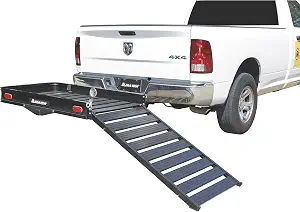 |
1. CURT 18152 60-Inch Hitch-Mounted Cargo Basket, 500 lb Capacity
Best Overall Hitch Cargo Carrier
| Load Capacity | 500 Pounds |
|---|---|
| Mounting Type | Hitch |
| Is Foldable | No |
| Compatible with Vehicle Type | Car, Trailer |
| Material Type | Alloy Steel |
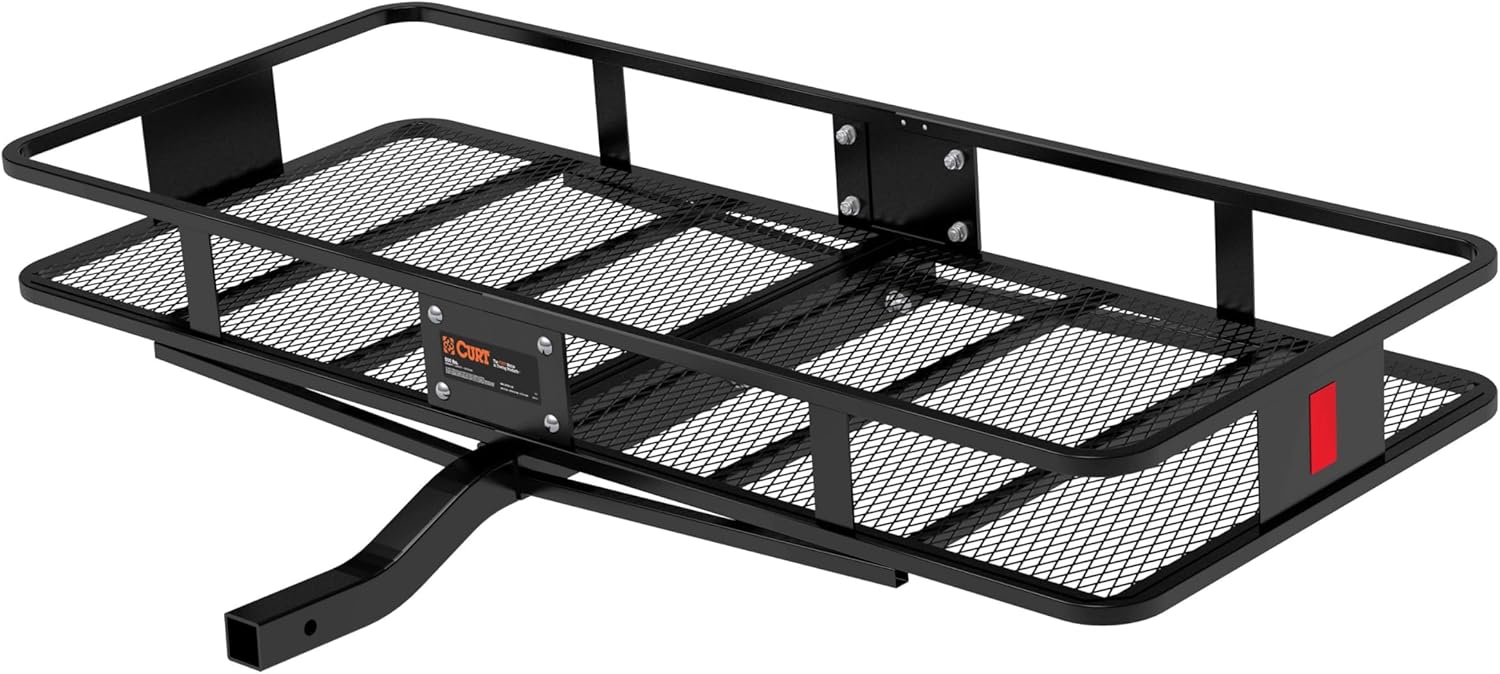
The CURT 18152 hitch cargo basket is a straightforward, heavy-duty carrier for adding external storage to a vehicle equipped with a 2-inch receiver. It mounts to the hitch with a bent 2" x 2" shank that raises the platform for extra ground clearance and offers a mesh floor that keeps cargo secure and is easy to clean. The 6" tall sides help contain loose items during highway drives while the powder-coat finish resists rust and road wear. With a 500 lb load rating and a bolt-together tubular steel frame, this basket is suited to weekend projects, camping gear, and grocery runs where interior space is limited. It is not foldable, so storage when not in use requires room, and the universal fit design means buyers should check receiver and tongue weight limits on their vehicle to avoid overloading. Installation is simple for anyone comfortable with basic hand tools, and the raised shank helps protect the carrier from scraping on driveways or rough roads.
Best for: Buyers who want a reliable, no-frills hitch basket that expands cargo space for regular hauling tasks like camping, weekend projects, and grocery or gear runs while prioritizing durability and load capacity.
Less Ideal for: People who need a compact, foldable carrier for tight storage or those looking for an integrated ramp or locking hard cargo box should consider other solutions.
- Strong 500 lb load capacity for hauling heavy or bulky items safely
- Tubular alloy steel and mesh platform provide durable, easy-to-clean construction
- Raised 2" x 2" bent shank increases ground clearance to reduce scraping
- 6-inch tall sides help keep loose cargo contained during travel
- Non-foldable design takes up storage space when not attached to the vehicle
- Universal fit requires verifying your vehicle receiver and tongue weight limits before use
Verdict: Choose this slot if you want a well-rounded hitch cargo carrier that balances roomy capacity, durable construction, and practical accessories for everyday DIY hauling.
2. MaxxHaul 70107 53" Hitch-Mount Steel Cargo Carrier with High Side Rails
Best Budget Hitch Cargo Carrier

| Fits receiver | 2 x 2 inch |
|---|---|
| Material | Alloy Steel |
| Finish Type | Powder Coated |
| Maximum Towing Capacity | 500 Pounds |
| Inner basket dimensions | 51 x 17.5 x 4.5 inches |
The MaxxHaul 70107 is a straightforward hitch-mounted cargo basket built from heavy-duty steel with a powder-coat finish and raised side rails to keep gear secure. It installs into a standard 2 x 2 inch receiver and gives you a roomy 51 x 17.5 inch inner platform for coolers, luggage, and bulky items you do not want inside the cabin. The solid welded floor and 500 pound distributed capacity mean it handles occasional heavy loads like camping gear or home improvement materials without flexing noticeably. Assembly is simple and the finish resists road grime, though the steel construction will require surface care over time in salty environments. It is a universal-fit carrier, so use with a correctly rated hitch and pin; its size adds length behind the bumper and may affect rear clearance and rear sensors. For a budget-focused buyer the carrier delivers a durable, no-frills way to expand cargo for light-to-moderate hauling on a Ford Maverick equipped with a 2" receiver.
Best for: Ford Maverick owners who want an inexpensive, durable way to carry extra gear for weekend trips, projects, or light hauling without modifying the truck.
Less Ideal for: Drivers who need a lightweight, foldable, or frequently removable carrier for daily use, or those who regularly haul in corrosive coastal or winter salt conditions without plan for upkeep.
- Heavy-duty steel construction provides sturdy platform for occasional heavy loads.
- Generous basket footprint fits large items like coolers and building materials.
- 500 pound maximum distributed capacity supports bulky, uneven loads when used correctly.
- Powder-coated finish improves corrosion resistance and makes cleanup easier.
- Steel construction is heavier and can rust over time in harsh winter conditions without maintenance.
- Adds length behind the vehicle which reduces ground clearance and may interfere with rear sensors or parking.
Verdict: Pick this when you need an inexpensive, reliable hitch cargo carrier that saves money while providing a solid steel or aluminum platform for occasional hauling.
3. MAXXHAUL Aluminum Hitch Cargo Carrier with High Side Rails
Best Aluminum Hitch Carrier

| Load Capacity | 500 Pounds |
|---|---|
| Mounting Type | Hitch Mount |
| Hitch Receiver Size | 2" |
| Basket Type | Aluminum basket with high side rails |
| Fit Type | Universal Fit |
This MAXXHAUL aluminum hitch carrier is a practical, corrosion-resistant solution for adding cargo space to a vehicle with a 2" hitch receiver. The extruded aluminum basket keeps the carrier light enough for easier installation and lifting, while the heavy-duty steel underframe and 2" x 2" hitch shaft provide a secure connection for towing use. High side rails and multiple tie-down points help keep gear contained during trips, and reflector lenses plus red corner accents improve rear visibility. The carrier is designed for general hauling tasks like camping gear, coolers, and bulky items you prefer not to fit inside the cab. Assembly is straightforward and the aluminum surface is easy to clean and maintain. Note that the listed outer and inner basket dimensions and the 500 lb capacity set how much you can carry, and the steel underframe means some corrosion-prone components remain; long-term coastal exposure may require periodic care. This is a no-frills carrier that emphasizes light weight and rust resistance where it matters most.
Best for: Buyers who want a lightweight, corrosion-resistant hitch carrier that is easier to lift and maintain for regular outdoor use and weekend hauling on a Ford Maverick.
Less Ideal for: People needing a foldable carrier or those who plan to routinely haul maximum-weight loads over 500 lb should consider other heavy-duty or folding designs.
- Extruded aluminum basket keeps overall weight low for easier handling and installation
- High side rails and multiple tie-down points secure varied cargo
- Steel under support frame and 2" hitch shaft provide a sturdy, compatible mounting
- Reflector lenses and red corner accents improve visibility for trailing traffic
- Aluminum construction resists rust and is easy to clean for long-term outdoor use
- Some structural support components are steel so occasional corrosion protection may be needed in salty environments
Verdict: Use this slot if you prioritize a lightweight, corrosion‑resistant aluminum carrier that’s easier to lift and resists rust in long-term outdoor use.
4. ARKSEN 60 x 23 x 5.5 Inch Folding Hitch Cargo Carrier
Best Folding Hitch Carrier

| Load Capacity | 500 Pounds |
|---|---|
| Mounting Type | Hitch |
| Automotive Fit Type | Universal Fit |
| Item dimensions L x W x H | 60 x 23 x 5.5 inches |
This ARKSEN hitch cargo carrier is a steel-framed, folding luggage basket built for hauling bulky items that do not fit inside a vehicle. It mounts to a 2-inch receiver and offers a flat mesh deck with raised 5.5-inch tube guardrails to help keep coolers, boxes, and firewood from shifting. The carrier folds upright via a pull-pin so you can park in tight spaces or store it in a garage without removing it from the hitch. A powder-coated finish and bolt-on construction give it weather resistance and a firm platform for heavy loads, while built-in reflectors improve night visibility. Expect straightforward assembly and a stable ride for everyday trips, tailgates, and weekend camping, but note the carrier adds length behind the vehicle and will affect rear departure angles. The universal fitment for a 2-inch receiver makes it convenient for a compact pickup but be mindful of overall vehicle load limits and securement for smaller or loose items.
Best for: Buyers who need an affordable, heavy-duty folding carrier that stays on a 2-inch hitch and can be folded up for parking or garage storage without frequent removal.
Less Ideal for: Drivers who routinely need full rear cargo access or who prefer a low-profile hitch box that does not extend past the bumper should consider alternate storage solutions.
- Folds upright with a pull-pin for easy parking and garage storage
- Heavy-duty square-tube steel frame supports up to 500 lb
- Powder-coated finish and mesh deck resist rust and contain small items
- Raised tube guardrails and bolt-on construction keep cargo stable
- Includes reflectors for better visibility at night
- Adds significant rear overhang when deployed which affects parking and clearance
Verdict: Choose a folding carrier when you need a hitch mount that folds upright for parking and garage storage without frequent removal.
5. Mockins 60" x 24" High‑Rail Hitch Cargo Carrier with Waterproof 30 cu ft Bag and Lights
Best High‑rail Hitch Carrier

| Load Capacity | 500 Pounds |
|---|---|
| Is Foldable | Yes |
| Mounting Type | hitch |
| Compatible with Vehicle Type | Car, Truck, Van |
This Mockins high‑rail hitch carrier is built for hauling bulky or loose gear that needs side containment. The 60" x 24" steel basket has tall rails and a 500 lb rated capacity, and it folds for storage when not in use. The kit bundles a 30 cu ft waterproof soft bag with reinforced seams and heavy‑duty zippers, a stabilizer and hitch lock, a cargo net and straps, a license plate bracket and a light kit with adapter so you can carry covered loads legally and safely. In practice the raised rail and included net make it easy to secure camping gear, coolers, lumber or odd‑shaped items that would otherwise shift on a low platform. The steel construction resists weathering but adds weight and may require two people to install; this model is sized for vehicles with a 2‑inch hitch and uses a universal mount approach so check clearance and tongue weight on compact pickups. The carrier trades compactness for carrying room: it is large and improves cargo capacity, but will extend rear overhang and affect maneuvering in tight parking situations.
Best for: Buyers who need extra side support to transport tall, loose, or shifting loads from a compact pickup like the Ford Maverick and prioritize secure, weatherprotected cargo over minimal rear extension.
Less Ideal for: Drivers who rarely carry bulky gear, who need minimal rear overhang for urban parking, or who require a lightweight, quick‑attach solution for occasional use.
- High 14" side rails provide strong containment for tall or shifting cargo
- 500 lb load rating supports heavy or bulky items
- Includes waterproof 30 cu ft bag with reinforced zippers for weather protection
- Comes with stabilizer, hitch lock, cargo net, straps, license plate bracket and light kit for a complete setup
- Folds for easier storage when not in use
- Steel construction and included accessories add significant weight that can make installation awkward for one person
- Large footprint increases rear overhang and can limit rear visibility and tight‑space maneuvering
Verdict: Select a high‑rail carrier if you haul taller, loose, or shifting cargo and need extra side support to prevent items from falling out.
6. Mockins 60" Hitch Mount Folding Cargo Carrier with 25 cu ft Waterproof Bag
Best Hitch Carrier with Bag

| Load Capacity | 500 pounds |
|---|---|
| Mounting Type | Hitch Mount |
| Compatible with Vehicle Type | Passenger Car, SUV, Trailer, Truck, Van |
| Automotive Fit Type | Universal Fit |
The Mockins folding hitch cargo carrier is a complete hitch-mounted hauling kit built around a 60"x24" steel basket and a 25 cu ft waterproof bag. It mounts in a 2" receiver and folds up when not in use to reduce obstruction behind the vehicle. The set is aimed at hauling luggage, camping gear, or wet and dirty items without loading the truck bed or interior thanks to the abrasion-resistant vinyl bag with waterproof zippers and reinforced seams. Included accessories such as ratchet straps, buckle straps, a bungee net, hitch stabilizer and hitch lock make securing cargo straightforward and reduce rattle on the road. The 500 lb rated capacity and raised 2" arm provide extra ground clearance for low vehicles while the license plate bracket keeps your plate visible. Expect a sturdy, factory-quality feel from the alloy steel basket but be aware the assembly and weight add noticeable mass to the hitch which can make installation and folding more physically demanding and affects rear overhang and fuel drag on longer trips.
Best for: Buyers who want a ready-to-use, weatherproof hitch cargo solution that protects gear and minimizes extra shopping for straps or locks, prioritizing convenience and cargo protection for weekend trips or outdoor gear.
Less Ideal for: Those who need an ultra-lightweight option or frequently remove the carrier between uses should consider lighter or removable alternatives to avoid handling heavy equipment.
- All-inclusive kit with a waterproof 25 cu ft cargo bag plus straps, net, stabilizer and locks
- 500 lb load capacity suitable for heavy camping or luggage loads
- Folding design saves space when not in use and raised arms improve ground clearance
- Steel construction provides robust support for repeated use
- Includes a license plate bracket so plate visibility is preserved when mounted
- Carrier and accessories are heavy which can make installation and stowing more difficult
Verdict: This slot fits buyers who want an all‑in‑one kit—carrier plus a weatherproof bag and straps—to protect gear from rain and simplify secure loading.
7. Ultra-Tow Aluminum Hitch Cargo Carrier with Ramp
Best Ramp‑equipped Hitch Carrier
| Load Capacity | 500 pound |
|---|---|
| Mounting Type | Hitch |
| Compatible with Vehicle Type | Sport-Utility-Vehicles |
| Automotive Fit Type | Universal Fit |
| Receiver Size | 2 in |
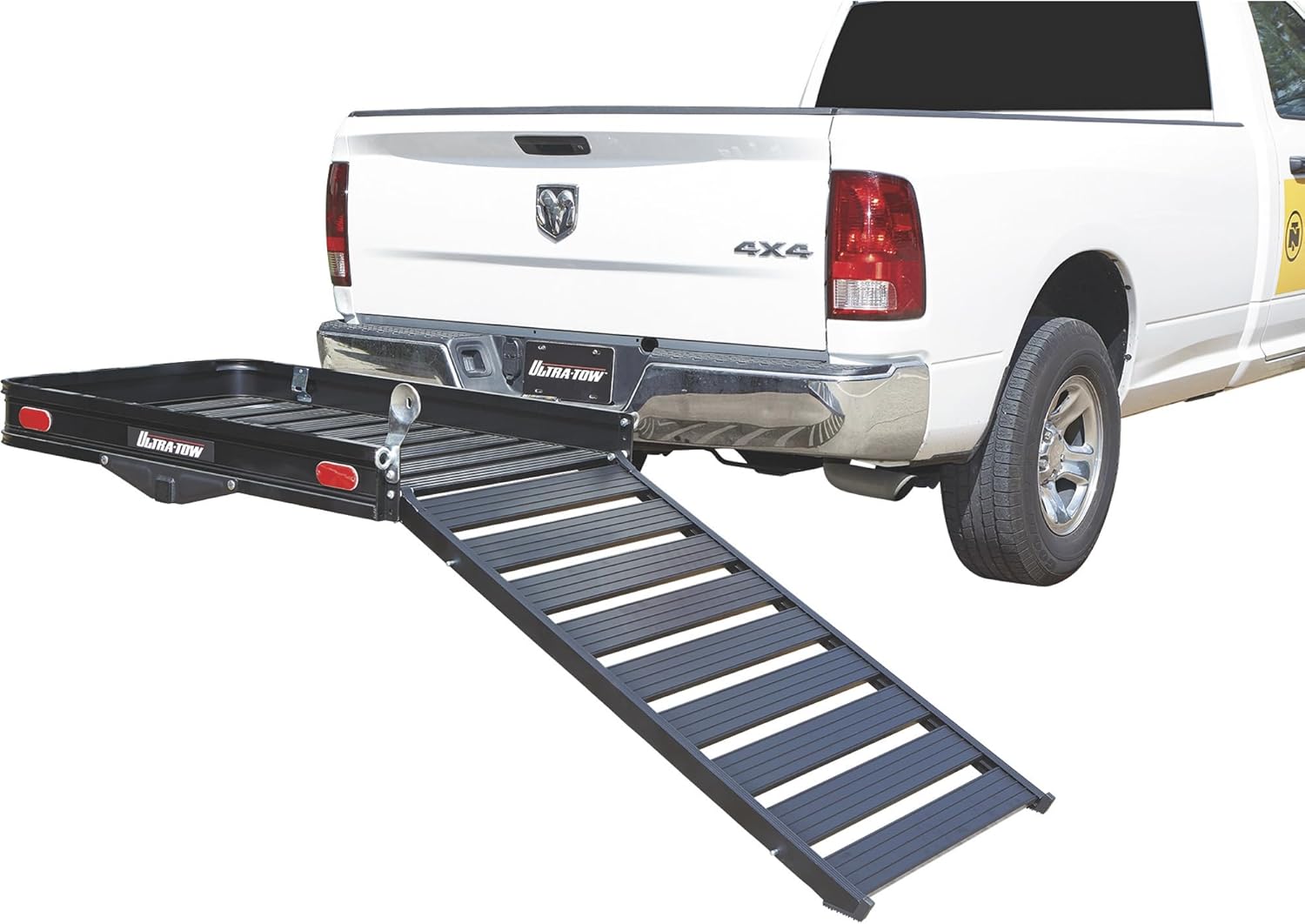
This Ultra-Tow hitch cargo carrier pairs a broad 60 x 30 inch aluminum platform with a three-position folding ramp to make loading scooters, wheelchairs, e-bikes, and lawn equipment far simpler than lifting them into a bed. It mounts to a standard 2-inch receiver and uses an aluminum construction with an e-coat finish to resist corrosion while keeping weight manageable. The ramp folds and locks in multiple positions so you can load from the rear or fold it flat for driving and parking, and a quick-release hatch speeds switching ramp modes. Assembly is straightforward and the carrier is rated for a 500 pound load, which covers most mobility devices and medium e-bikes when weight is distributed carefully. Expect to lose a bit of ground clearance and add some width behind the vehicle, and very heavy single items near the 500-lb limit should be loaded with attention to balance. Overall this is a practical ramp-equipped solution for drivers who need to move wheeled gear without a trailer or heavy lifting.
Best for: Drivers who need to transport wheeled mobility devices or medium e-bikes without a trailer and prioritize easy roll-on loading and fast setup.
Less Ideal for: People who regularly carry oversized cargo beyond the carrier platform or who need a solution that preserves original rear clearance and width.
- Integrated three-position folding ramp makes rolling wheeled gear on and off easy
- Large 60 x 30 inch platform accommodates scooters, wheelchairs, and e-bikes
- Mounts to a standard 2-inch receiver and assembles quickly
- Aluminum construction with e-coat finish resists corrosion while keeping structure relatively light
- 500-lb capacity requires careful weight distribution for heavier items near the limit
- Adds width and reduces rear ground clearance when installed
Verdict: Pick a ramp‑equipped carrier when you need to load wheeled equipment easily—wheelchairs, scooters, or e‑bikes—without heavy lifting.
Choosing the Right Ford Maverick Hitch Cargo Carrier: Key Factors to Consider
Weight Capacity and Load Distribution
Know the carrier's maximum weight rating and compare it to the loads you typically plan to carry. Exceeding the published capacity can stress the hitch receiver or carrier frame and create unsafe handling. Consider both the gross capacity and any tongue-weight limits imposed by the Maverick's hitch and the vehicle's specifications.
Pay attention to how the carrier distributes weight. A long, low basket will lengthen the load lever and increase stress at the hitch, while a short, wide deck keeps mass closer to the receiver. Proper load placement and using additional support straps can reduce bounce and sway during acceleration or braking.
Hitch Compatibility and Fit
Confirm the carrier is designed to fit the Maverick's receiver size and that any included hardware matches the hitch pin type you use. Some carriers require an adapter or shank; make sure shank length and drop/rise are appropriate to keep the platform level and avoid ground-scraping.
A good fit also minimizes wobble at the receiver. Look for carriers with anti-rattle features, keyed mounting brackets, or clamp systems to tighten the connection. Proper fitment preserves the vehicle's handling characteristics and reduces wear on both hitch and carrier.
Construction, Corrosion Resistance, and Durability
Choose carriers built from robust materials such as thicker-gauge steel or aluminum framing designed to withstand repeated loads. Weld quality, joint reinforcements, and reinforced corners extend service life under heavy use.
Since carriers are exposed to road grime and the elements, corrosion resistance matters. Powder-coated finishes, rustproof plating, and sealed hardware slow corrosion and reduce maintenance. Durable construction prevents deformation under load and helps maintain safety margins over time.
Platform Size and Clearance
Measure the carrier's deck dimensions to ensure it fits the types of cargo you plan to carry, from boxes to coolers and gear. A larger platform increases capacity but can affect vehicle clearance, visibility, and the ability to back into tight spots.
Also check vertical clearance between the carrier deck and the ground when the Maverick is loaded. Low platforms can scrape on steep driveways or uneven terrain. Folding designs can help manage clearance when the carrier is not in use.
Security, Tie-Downs, and Cargo Retention
Effective cargo retention prevents items from shifting or falling off during transit. Look for integrated tie-down points, raised rails, or grated decks that provide multiple secure attachment locations for straps and bungee cords.
If you plan to leave cargo unattended, consider carriers that accept lockable pins or have optional lock systems. Strong attachment points and a contained deck area reduce the risk of lost items and improve safety at highway speeds.
Storage Convenience and Portability
Evaluate how easy the carrier is to mount, remove, and store when not needed. Folding shanks or collapsible baskets reduce garage footprint and make it practical to take the carrier on and off as required. A heavy carrier may be durable but harder to handle without assistance.
Consider whether the carrier requires tools for setup or if quick-release mechanisms are available. Portability features are important if you only occasionally need extra cargo space and prefer to stow the carrier between uses.
Types of Hitch Cargo Carriers
Hitch cargo carriers come in several common styles that suit different needs. Basket-style carriers provide an open platform with grated floors that are good for odd-shaped items and offer multiple tie-down points. Solid-deck carriers present a flat surface that protects smaller items from falling through but can be heavier.
Folding carriers include mechanisms that let the basket collapse or the shank fold for storage and improved clearance when not loaded. Heavy-duty tubular designs focus on maximal load capacity and tougher construction for frequent or heavy use. Consider which style matches how you will load and handle gear with your Maverick.
- Basket-style: versatile and good airflow for wet gear
- Solid-deck: protects small items and offers a stable surface
- Folding: saves garage space and improves clearance when stowed
- Heavy-duty tubular: built for larger, repetitive loads
Installation Tips for the Ford Maverick
Before installing, verify the receiver size and inspect the hitch area for obstructions that could interfere with mounting or cargo clearance. Use the correct pin and clip or locking hardware rated for the carrier and the Maverick's hitch.
Tighten anti-rattle devices and check alignment with the vehicle so the platform sits level. After the first short drive, re-check hardware torque and retighten as components can seat under load. When using adapters or long shanks, be mindful of additional leverage on the hitch and verify ground clearance and tongue weight limits.
- Confirm receiver size and pin type
- Use anti-rattle hardware and check torque after initial drive
- Avoid excessive shank length that increases leverage on the hitch
Managing Weight and Vehicle Handling
Adding mass behind the rear axle changes how the Maverick handles acceleration, braking, and cornering. Keep cargo weight within the carrier and vehicle limits and distribute heavier items forward on the platform, closer to the receiver, to reduce swaying and strain on the hitch.
Check tire pressures and suspension condition when regularly carrying heavy loads, as extra weight affects braking distances and rollover resistance. For long trips, periodically inspect cargo straps and the carrier's mounting to ensure nothing has loosened.
- Place heavy items toward the hitch to minimize leverage
- Monitor tire pressure and suspension wear with frequent heavy use
- Use multiple tie-downs to limit cargo shift
Legal and Safety Considerations
Local laws may restrict how far a carrier or cargo can extend beyond the vehicle's rear. Make sure the carrier does not block license plates, lights, or rear sensors. If the carrier obscures required lighting, use auxiliary lights or move items so visibility remains compliant.
Always observe posted speed limits for loaded carriers and avoid sudden maneuvers. Periodic inspections for loose fasteners or corrosion will keep the carrier safe over its service life.
- Ensure lights and plates remain visible
- Check local overhang rules and speed recommendations
- Inspect fasteners and coatings regularly for safe operation
Maintaining Your Hitch Carrier
Rinse off road salt and grime after winter trips to slow corrosion and wash away debris from grated decks. Touch up chips in powder coat and lubricate moving parts per the manufacturer's guidance to keep folding mechanisms functioning smoothly.
Store the carrier in a dry place when not in use if possible. Periodically inspect welds, mounting bolts, and the shank for cracks, excessive wear, or elongation of holes, and replace hardware showing signs of fatigue.
- Rinse and dry after exposure to salt or mud
- Lubricate pivots and check folds regularly
- Replace worn fasteners to maintain secure mounting
How We Chose the Best Ford Maverick Hitch Cargo Carrier
We focused on attributes that directly affect real-world use on a Ford Maverick and weeded out products that did not meet basic fitment, strength, or safety expectations. Core evaluation criteria included load rating and structural design to ensure the carrier can safely handle typical cargo loads for the vehicle.We also prioritized hitch-mount interface and stability features because a secure fit to the Maverick's receiver limits sway and wear. Construction materials and corrosion resistance were reviewed to predict longevity in wet or salted-road conditions. Usability factors such as ease of installation, folding or stowing mechanisms, and tie-down points were considered for everyday convenience.Additional checks covered deck size and clearance to ensure the carrier would carry common items without adversely affecting ground clearance or blocking lights. We excluded carriers that lacked clear published weight capacities, insufficient attachment hardware, or designs likely to interfere with the vehicle's rear sensors or tailgate operation. Our final list balances safety, long-term durability, and practical usability for Maverick owners.
Our full evaluation process is outlined in our review methodology.
FAQ
How much weight can a typical hitch cargo carrier hold on a Ford Maverick?
Capacity varies by carrier, but the key limits are the carrier's published rating and the Maverick's hitch and tongue-weight limits. Add those constraints together and keep loads well below the lowest of the ratings to maintain safe handling.
Will a hitch cargo carrier block my Maverick's rear sensors or tailgate?
Some carriers, especially larger or higher-mounted designs, can interfere with sensors or obstruct the tailgate swing. Check the carrier's mounting height and consider folding or shorter shank options if you need to open the tailgate or retain sensor function.
Can I leave cargo on the carrier while parked overnight?
You can leave items on the carrier but secure them with good-quality straps and, if possible, use lockable pins or covers for valuable gear. Exposure to weather and theft risk are considerations, so avoid leaving high-value items unattended for extended periods.
How do I reduce rattle between the carrier and the Maverick's hitch?
Use anti-rattle devices, tight-fitting shanks, or wedge-style inserts to minimize movement. Proper torque on mounting hardware and periodic rechecks after the first drives will also keep connections snug and reduce noise.
Is a folding carrier practical for occasional use on the Maverick?
Yes. Folding carriers make sense if you only need extra cargo capacity occasionally because they are easier to store and improve clearance when not loaded. Ensure the folding mechanism locks securely to prevent unintentional collapse.
Final Verdict
Prioritize a carrier that balances a realistic weight capacity with a secure hitch interface and corrosion-resistant construction for dependable use on a Ford Maverick. Think through how often you will carry bulky items, whether you need folding convenience, and how cargo placement affects handling.Choose a design that fits your typical loads and includes strong tie-down points and anti-rattle features. By focusing on capacity, fit, and durability you can add useful rear storage while keeping safety and vehicle performance intact.
Explore More:
- Check out all Ford Maverick parts & accessories
- Explore Exterior Accessories
- Browse all Accessories
