

Note: This article contains affiliate links. If you click on these links and make a purchase, I may earn a small commission at no extra cost to you. This helps support my research and content. Read my full affiliate disclosure here.
Choosing the right engine oil for your Volkswagen Golf affects reliability, fuel economy, and long-term engine health. The wrong oil can accelerate wear or reduce efficiency, while the right one helps maintain performance and smooth operation. This guide covers seven shortlisted engine oils that meet common Golf specifications and owner priorities. We evaluated each option for viscosity suitability, additive package, and durability under typical driving conditions. Read on to find which types of oil align with your driving style and maintenance routine.
Looking for other parts? See all Volkswagen Golf parts & accessories.
Top Picks at a Glance
| Best Overall The best all-around choice for most situations | Castrol EDGE Euro 5W-40 A3/B4 Full Synthetic Motor Oil, 1 Quart (Pack of 6) |  |
| Best Quality Built to a higher standard if you want something more solid | Volkswagen Genuine Full Synthetic Engine Oil SAE 0W-30 (VW 504.00/507.00) |  |
| Best Value The sweet spot between price and what you get | Liqui Moly Top Tec 4200 5W-30 Fully Synthetic Engine Oil, 1 L |  |
| Best Budget The cheapest option that still gets the job done reliably | Valvoline European Vehicle Full Synthetic 5W-40 Motor Oil 1 QT |  |
| Highest Rated A top-rated pick with lots of positive feedback | Liqui Moly Molygen New Generation 5W-40 Motor Oil, 1 L |  |
| Most Popular A crowd favorite that many people choose with confidence | Valvoline European Vehicle Full Synthetic SAE 5W-40 Motor Oil, 5 qt |  |
| Best Seller A high-volume bestseller chosen again and again | Valvoline European Vehicle Full Synthetic 5W-30 XL-III Motor Oil (5 qt) |  |
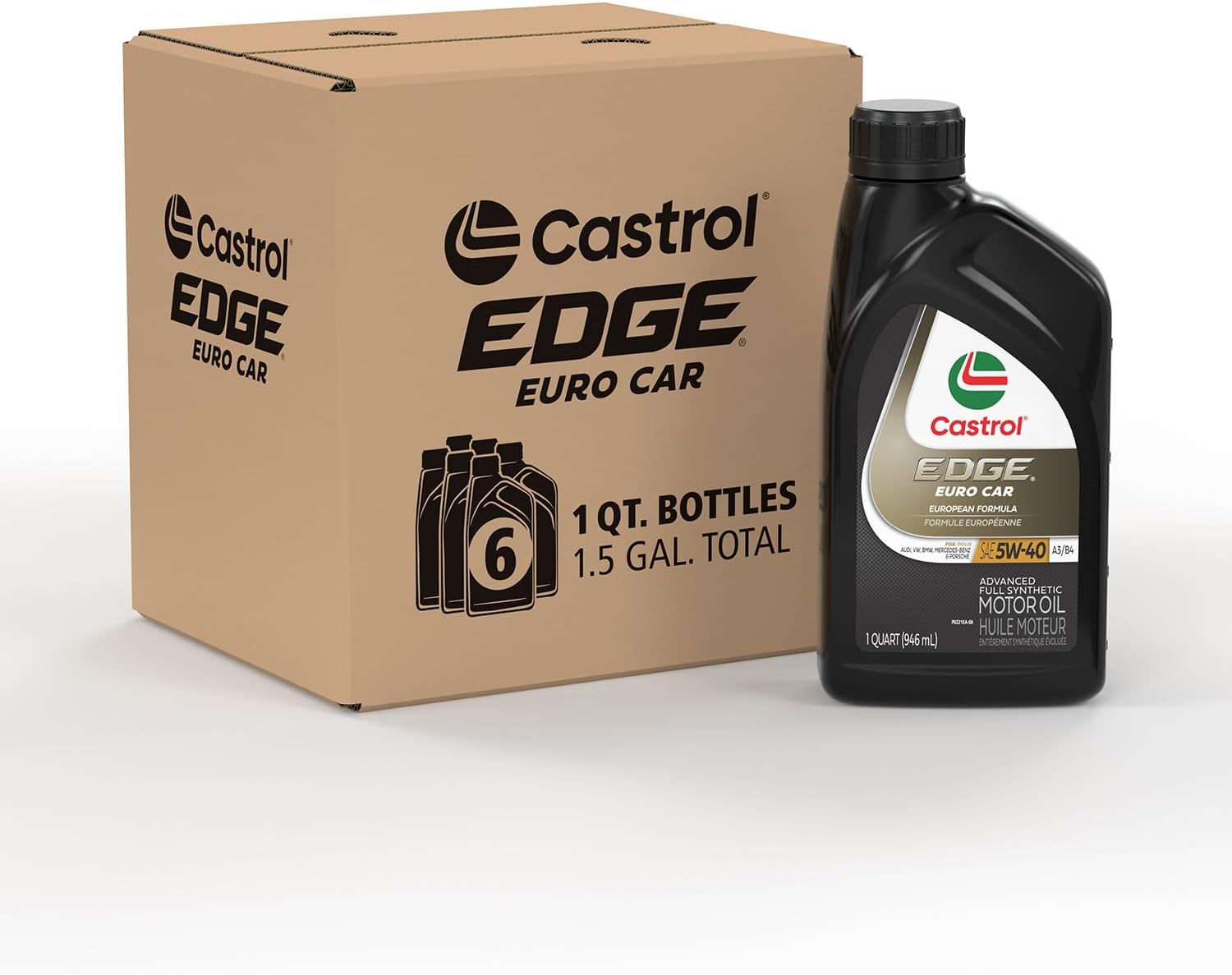
1. Castrol EDGE Euro 5W-40 A3/B4 Full Synthetic Motor Oil, 1 Quart (Pack of 6)
| SAE J300 Viscosity Grade | 5W-40 |
|---|---|
| Compatible with Vehicle Type | Car |
| Liquid Volume | 6 Quarts |
| Automotive Fit Type | Universal Fit |
Castrol EDGE Euro 5W-40 is a full synthetic motor oil engineered for high-output European engines, making it suitable for regular use and long-term protection in turbocharged and naturally aspirated VW engines. It is typically used as a drain-and-fill service oil and for oil top-ups where a factory-quality lubricant is required. Notable features include a 5W-40 SAE grade for good cold-start flow and high-temperature viscosity, manufacturer approvals such as ACEA A3/B4, API SP, BMW Longlife-01, MB 229.5, Porsche A40, Renault RN0700/RN0710 and VW 502 00/505 00, and formulation claims for improved viscosity control and engine cleanliness. In practice that means stable performance across a wide temperature range, reduced piston ring and deposit buildup in direct-injection turbos and consistent protection under sustained load. The main limitation is this specific viscosity may not match every Golf engine's required grade, so verification against the owner's manual is necessary before use. Pack sizing and source should also be confirmed to ensure you receive the intended quantity.
Best for: Balanced all-round buyers who want a factory-quality synthetic oil that covers a wide range of driving conditions and priorities without specializing solely in performance or budget.
Less Ideal for: Buyers who prefer a different SAE grade specified by their Golf model or those looking for a single-quart purchase option should consider alternatives.
- Formulated to meet ACEA A3/B4 and multiple manufacturer approvals for European vehicles
- Full synthetic base offers improved viscosity control and high-temperature protection
- 5W-40 grade balances cold-start flow with thickness at operating temperature
- Designed to help reduce deposits and maintain engine cleanliness over time
- Viscosity grade may not match every Volkswagen Golf engine spec so manual check is required
- Sold in a multi-quart pack which can cause storage or quantity mismatch for some buyers
Verdict: A factory-quality full synthetic 5W-40 oil built to meet European manufacturer approvals and keep Golf engines clean and protected across varied driving conditions.
2. Volkswagen Genuine Full Synthetic Engine Oil SAE 0W-30 (VW 504.00/507.00)

| Viscosity Level | Low to Medium |
|---|---|
| Compatible with Vehicle Type | Volkswagen |
| Container Type | Bottle |
| Liquid Volume | 946 Milliliters |
This is Volkswagen branded full synthetic 0W-30 engine oil meeting VW 504.00/507.00 specifications and aimed at maintaining factory-level protection and emissions compatibility in VW engines. It is used like any conventional engine oil during routine oil changes and is suitable for performance-oriented driving because the low-viscosity 0W-30 provides quick cold-start flow and consistent film strength at operating temperature. Notable features include its factory-grade formulation and vehicle-specific fitment, which simplify specification matching for VW engines. Practical benefits include reliable lubrication for turbocharged and direct-injection engines, preserved fuel economy where the spec calls for it, and fewer concerns about spec incompatibility compared with generic oils. Trade-offs are limited to the single-bottle 946 ml packaging that may require purchasing multiple units for a full service and that factory oils can cost more than some aftermarket equivalents despite matching factory specs.
Best for: Performance-oriented VW owners who prioritize factory-spec lubrication and consistent engine protection under spirited driving and want reassurance they are using a VW-approved product.
Less Ideal for: Buyers seeking the lowest-cost bulk oil or those wanting a multi-vehicle, high-volume jug for frequent servicing should consider larger aftermarket options instead.
- Meets Volkswagen VW 504.00/507.00 specifications for factory-level compatibility
- Full synthetic 0W-30 formula for fast cold flow and stable protection at operating temperature
- Branded, vehicle-specific fit reduces risk of using the wrong spec in VW engines
- Suitable for turbocharged and modern direct-injection VW engines where manufacturer spec is required
- Single 946 ml bottle may not cover a full oil change on many VW models without buying multiple bottles
Verdict: A factory-quality full synthetic 0W-30 oil tuned to VW 504.00/507.00 specs for owners who want OEM-level protection and performance.
3. Liqui Moly Top Tec 4200 5W-30 Fully Synthetic Engine Oil, 1 L

| Viscosity | 5W-30 |
|---|---|
| Brand | Liqui Moly |
| Vehicle Service Type | Car, Truck, Diesel Car |
| Size | 1 Liter |
Liqui Moly Top Tec 4200 is a fully synthetic 5W-30 motor oil designed for long engine life and extended oil-change intervals in many Volkswagen and Audi engines and select BMW, Mercedes-Benz and Porsche applications. In everyday use it provides stable cold-start flow and consistent film strength at operating temperature, which helps reduce wear and keeps engines running smoothly between services. The low-SAPS formulation protects aftertreatment systems in modern diesels while still supporting performance in petrol engines. Buyers will appreciate that it is marketed for vehicle-specific fit and intended for extended intervals when allowed by the manufacturer. The main limitations are that it is a single 1 liter bottle so bulk purchases are needed for full changes and you should confirm your Golf's specification before using it, since some VW engines require a specific approved oil grade. Practical owners get a high-quality European synthetic designed to preserve turbocharged and diesel engines without frequent top-ups.
Best for: A practical optimizer who prioritizes long service intervals and engine longevity for a VW Golf and wants a reputable European synthetic that balances protection and value.
Less Ideal for: Someone who prefers buying oil in bulk containers to reduce per-change handling or who has a Golf that requires a different factory-approved oil spec should consider alternatives.
- Fully synthetic 5W-30 formula offers reliable cold-start flow and high-temperature protection
- Low-SAPS chemistry suitable for modern diesel aftertreatment systems
- Formulated for extended oil-change intervals when permitted by the vehicle manufacturer
- Widely recommended for Volkswagen and Audi engines, indicating good OEM-style compatibility
- Sold in 1 liter units which means buying multiple bottles for a full oil change
Verdict: A high-quality European fully synthetic 5W-30 that delivers durable protection and supports extended oil-change intervals for Volkswagen engines.
4. Valvoline European Vehicle Full Synthetic 5W-40 Motor Oil 1 QT

| SAE J300 Viscosity Grade | 5W-40 |
|---|---|
| Compatible with Vehicle Type | Car, Truck |
| Flash Point | 390 Degrees Fahrenheit |
| Liquid Volume | 1 Quarts |
| Viscosity Level | Medium to High |
This Valvoline European Vehicle 5W-40 is a full synthetic motor oil built to meet the specific needs of many European engines. It is typically used in gasoline and diesel VW, BMW, Mercedes-Benz, Audi and Porsche applications where a 5W-40, low-SAPS formulation is recommended. Notable features include compliance with multiple European specs (BMW LL-01, VW 502/505, MB 229.5 and Porsche A40), antioxidant and detergent additives for deposit control, and a formulation designed to protect timing chains and reduce low-speed pre-ignition. In practice the oil offers confident cold starts and stable viscosity under heat, helping fuel economy and engine cleanliness compared with conventional oils. The 1 quart size is convenient for topping off between changes or servicing engines that take smaller fill volumes, but buyers should plan purchases accordingly if they need full-gallon quantities for a complete oil change. For Volkswagen Golf owners who require a 5W-40 European spec oil this delivers factory-quality protection in a compact package.
Best for: Budget-conscious Volkswagen Golf owners who prioritize meeting European spec requirements and want a reliable, factory-quality synthetic oil for top-offs or small-volume service needs.
Less Ideal for: Drivers who prefer to buy in bulk or need a single-gallon container for complete oil changes should consider larger-volume options instead.
- Formulated to meet major European OEM specifications (BMW LL-01, VW 502/505, MB 229.5, Porsche A40)
- Full synthetic base oils with antioxidants and detergents for deposit control and thermal stability
- Low-SAPS chemistry suited to modern European emission systems
- Good cold-start protection with maintained high-temperature viscosity
- Sold in small 1 quart bottles so multiple units are needed for full oil changes on most Golfs
Verdict: A cost-conscious, factory-spec full synthetic 5W-40 option tailored for European-engine needs and convenient for topping off VW Golf engines.
5. Liqui Moly Molygen New Generation 5W-40 Motor Oil, 1 L

| SAE J300 Viscosity Grade | 5W-40 |
|---|---|
| Compatible with Vehicle Type | Car |
| Container Type | Bottle |
| Liquid Volume | 1000 Milliliters |
Liqui Moly Molygen 5W-40 is a fully synthetic engine oil designed to lower friction and keep internal parts clean during extended service intervals. It is aimed at modern gasoline engines including turbocharged and multi-valve designs and is typically used for routine oil changes where longer protection and stable viscosity matter. The product features Molygen additive technology that forms a protective film on metal surfaces to reduce wear, plus high shear stability to maintain viscosity under load. In practical use drivers report quieter cold starts, smoother idling, and stable oil pressure during hard driving, which helps preserve engine components and can support consistent performance in daily and spirited driving. Limitations are that this single-liter bottle is for topping or small-capacity fills and the 5W-40 grade may not match every Volkswagen engine spec, so always confirm factory-recommended viscosity before use.
Best for: Reliability-focused owners who prioritize long-term engine protection and fewer maintenance interventions for their Volkswagen Golf.
Less Ideal for: Buyers who strictly follow Volkswagen OEM service specs requiring a different viscosity or specification should choose the exact factory-recommended oil instead.
- Fully synthetic formula for year-round protection and reduced friction
- Molygen additive creates a protective film to lower wear and help keep internals clean
- High shear stability maintains viscosity under high temperatures and heavy loads
- Single 1 liter bottle is small for a full oil change on most Golfs
Verdict: A high-stability synthetic 5W-40 engineered to reduce friction and protect modern gasoline engines over extended service intervals.
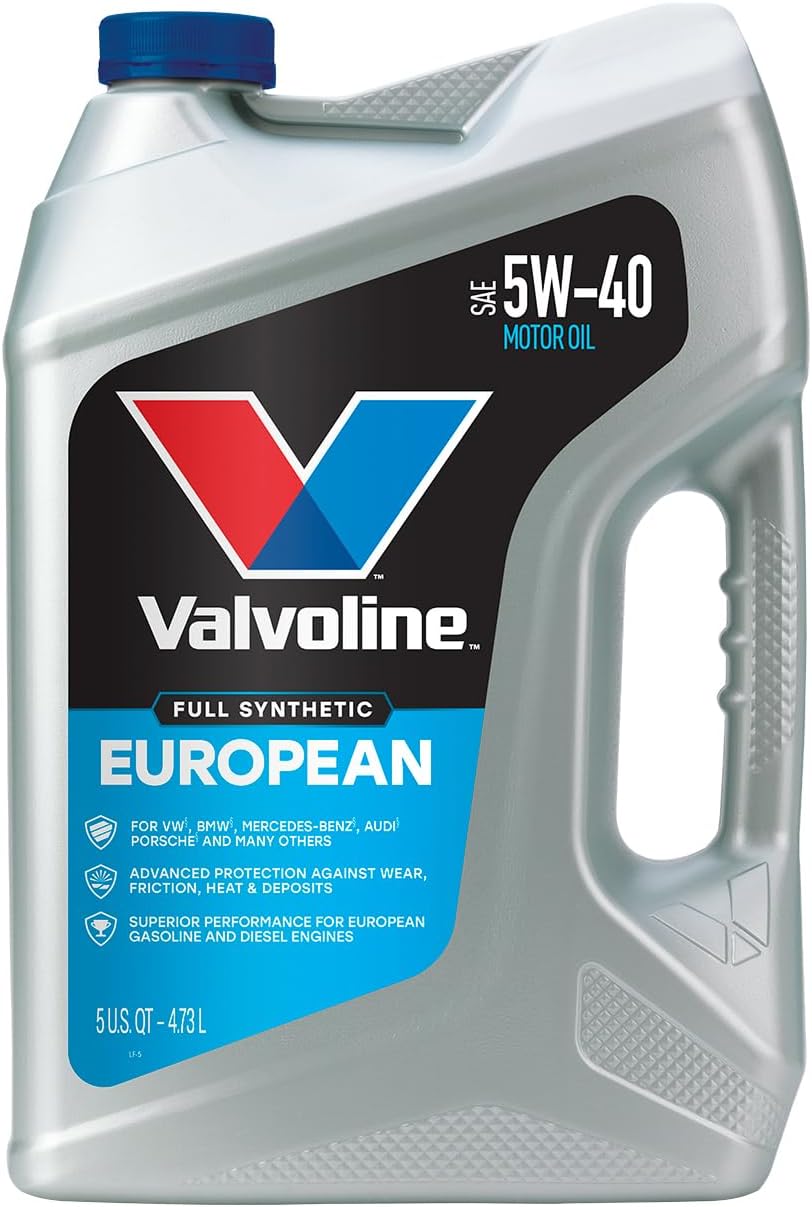
6. Valvoline European Vehicle Full Synthetic SAE 5W-40 Motor Oil, 5 qt
| SAE J300 Viscosity Grade | 5W-40 |
|---|---|
| Container Type | Bottle |
| Compatible with Vehicle Type | Car, Truck |
| Liquid Volume | 5 Quarts |
Valvoline European 5W-40 is a full-synthetic motor oil aimed at premium European cars and light trucks that need a 5W-40 grade. It is used like any engine oil for routine oil changes and is formulated to meet many European specifications including BMW, Mercedes, VW, and Porsche approvals. Notable features include high-quality synthetic base stocks, antioxidants and detergents to resist breakdown and keep engines clean, plus claimed high and low temperature protection for varied climates. For a Golf owner this oil provides convenient, factory-quality protection when a 5W-40 grade is recommended or preferred for an aftermarket setup or certain European-spec engines. The practical benefits are reduced sludge and deposits, improved resistance to thermal breakdown, and compatibility with many European manufacturer specs. Limitations are that it is a 5W-40 grade so it may not match VW-recommended lower-viscosity grades for some Golf engines and offers no special low-mileage or high-mileage formulation differences beyond the standard European formula.
Best for: Convenience-driven owners who want a widely approved, factory-quality full synthetic for European-spec engines and prefer a drop-in, multi-vehicle solution that minimizes maintenance hassle.
Less Ideal for: Drivers who must follow a specific lower-viscosity VW-recommended grade for warranty or fuel-economy reasons should choose a product matching that exact spec instead.
- Formulated to meet multiple European specifications (BMW LL, Mercedes 229.5/229.3, VW 502/505, Porsche A40)
- Full synthetic base oils and antioxidants resist thermal breakdown and deposits
- Designed for both gasoline and diesel European engines
- Good high and low temperature protection for varied climates
- 5W-40 viscosity may not be the factory-recommended grade for some VW Golf engines
- No distinct high-mileage or specialty variant included in this listing
Verdict: A convenient, factory-quality full synthetic 5W-40 oil built to meet many European manufacturer specs for reliable engine protection.
7. Valvoline European Vehicle Full Synthetic 5W-30 XL-III Motor Oil (5 qt)

| SAE J300 Viscosity Grade | 5W-40 |
|---|---|
| Compatible with Vehicle Type | Car, Truck |
| Container Type | Bottle |
| Liquid Volume | 5 Quarts |
This Valvoline European Vehicle 5W-30 XL-III is a full synthetic motor oil engineered for modern European cars and light trucks. It is designed to protect turbocharged gasoline direct injection and diesel engines by reducing wear, controlling deposits, and offering high and low temperature stability. The formula is low-SAPS to protect emissions aftertreatment and meets ACEA C3 plus API SP, with factory-style approvals including VW 504/507, BMW LL-04, MB 229.31/229.51/229.52 and Porsche C30, so it aligns with many Volkswagen specifications. In everyday use it performs like a conventional premium synthetic: good cold starts, stable viscosity under heat, and detergency that helps keep the engine clean between services. Practical benefits include broad OEM coverage and reduced risk of harming emissions systems on Euro cars. Limitations are minimal for compatible vehicles but buyers should confirm the 5W-30 grade and specific OEM approval list match their Golf model and engine before switching oils.
Best for: Risk-averse mainstream buyers who prioritize factory-compatible products and predictable engine protection for their Volkswagen Golf and prefer oils with documented OEM approvals.
Less Ideal for: Drivers who need a different viscosity grade or a specialized high-mileage formula should consider alternatives tailored to that need.
- Formulated for European engines with low-SAPS chemistry to protect emissions systems
- Meets ACEA C3 and multiple OEM approvals including VW 504/507 and BMW LL-04
- Full synthetic base offers strong high-temperature stability and wear protection
- Good detergency to help prevent deposits and sludge between oil changes
- SAE viscosity label in product details shows 5W-40 in one field which may cause confusion; verify the correct grade for your vehicle
Verdict: A full synthetic, low-SAPS 5W-30 motor oil built to meet European OEM specs and protect modern Volkswagen engines.
Choosing the Right Volkswagen Golf Engine Oil: Key Factors to Consider
Viscosity Grade
Viscosity grade determines how the oil flows at cold start and operating temperature. Choosing the correct grade ensures the oil circulates quickly at startup to protect bearings and provides a stable film at high temperature to prevent metal-on-metal contact. Weather and driving conditions influence the ideal viscosity. For example, colder climates benefit from lower cold-viscosity numbers for easier starts, whereas hotter climates may need oils that retain thickness at high temperatures. Always match the viscosity recommendations in the vehicle's handbook to maintain proper oil pressure and sealing performance.
OEM and Industry Specifications
OEM and industry approvals indicate the oil has been tested to meet certain performance and compatibility standards. For Volkswagen Golf owners, selecting oil that lists the appropriate Volkswagen or API/ACEA specifications reduces the risk of varnish, deposit formation, or compatibility issues with engine materials. Specifications also reflect testing for wear, oxidation resistance, and compatibility with emission systems. Using oils lacking the right approvals can affect warranty coverage or long-term engine reliability, so verifying specification alignment is a practical safety check before purchase.
Additive Chemistry
The additive package controls detergency, antiwear protection, and oxidation stability. Good detergents keep pistons and valves cleaner, while antiwear agents and anti-oxidants extend the oil's functional life and protect moving parts under stress. Different additive blends can also influence compatibility with seals and gaskets and determine how well the oil resists sludge and varnish. For everyday driving, an oil with balanced detergents and strong antiwear chemistry helps maintain engine cleanliness and longevity.
Synthetic Versus Conventional
Synthetic oils generally offer better cold-flow properties, higher temperature stability, and improved shear resistance than conventional oils. That means faster lubrication at startup, stronger film at operating temperature, and often longer intervals between effective service life thresholds. Conventional oils can be suitable for older engines or less demanding driving patterns, but modern engines typically benefit from synthetic formulations for consistent protection. Consider driving style, vehicle age, and the manufacturer guidance when choosing between synthetic and conventional options.
High-Mileage Considerations
Engines with higher mileage often show increased oil consumption, worn seals, and looser tolerances. Oils formulated for high mileage include seal conditioners and higher-viscosity components that help reduce leaks and maintain compression. If your vehicle has significant miles, prioritize oils designed to mitigate consumption and condition seals. These formulations can slow the progression of oil leaks and help maintain oil pressure, which supports continued drivability and reduces the likelihood of maintenance surprises.
Service Interval and Oil Life
Oil life depends on formulation, operating conditions, and service interval recommendations. Choosing an oil with proven shear stability and oxidation resistance helps it maintain protective properties between changes, especially under stop-and-go or heavy-load driving. Match the oil's expected life to your maintenance habits and the vehicle's service schedule. If you plan longer intervals between changes, favor oils engineered for extended stability and clear performance data on durability under real-world conditions.
How We Chose the Best Volkswagen Golf Engine Oil
We focused on oils that match common manufacturer viscosity ranges and modern additive formulations suitable for Volkswagen Golf engines. Our selection prioritized products with specifications that align with typical Golf engine tolerances, strong protection against wear, and stable viscosity across expected temperature ranges. Key evaluation criteria included: viscosity grade and cold-start performance, API and OEM specification compliance, additive chemistry for deposit control, shear stability over the oil's service interval, protection for high-mileage engines, and compatibility with typical service intervals and oil change practices. We also considered user-relevant factors like suitability for stop-and-go city driving versus highway use and the oil's ability to support fuel economy targets. We excluded any products that do not meet common Volkswagen specifications or lack clear technical data on viscosity and additive package. We did not include oils intended only for racing or specialty industrial equipment since those do not match everyday Golf use.
Our full evaluation process is outlined in our review methodology.
FAQ
How do I know which viscosity my Volkswagen Golf needs?
Check the vehicle handbook or the oil-cap label for the manufacturer-recommended viscosity. Recommendations consider engine design and typical climate. If you drive in extreme cold or heat, choose a grade that preserves cold-start flow or high-temperature film strength as specified.
Can I switch from conventional to synthetic motor oil in my Golf?
Yes, switching to synthetic motor oil is usually fine and can improve cold-start protection and thermal stability. Ensure the synthetic meets the required OEM or API specifications and follow normal oil change procedures. Monitor for any unusual leaks if the vehicle is older.
How often should I perform an engine oil change?
Change intervals depend on the oil type, driving conditions, and manufacturer guidance. Many modern formulations allow longer intervals, but severe driving like frequent short trips or towing shortens oil life. Consult the handbook and consider more frequent changes under heavy use.
Is high-mileage engine oil necessary for older Golfs?
High-mileage formulas can help vehicles with worn seals and increased consumption by including conditioners and slightly different base blends. They are not mandatory but can reduce leaks and oil consumption in older engines. Evaluate condition and symptoms before switching.
Will using the wrong oil harm the engine?
Using oil that does not meet recommended viscosity or specification can increase wear, cause deposit formation, or impair oil pressure. While occasional use may not cause immediate damage, consistent use of an incorrect oil raises the risk of premature component wear and may affect emissions system performance.
Conclusion
Prioritize oils that match Volkswagen specifications and the correct viscosity grade for your climate and driving style. Balance synthetic benefits like better cold-start protection and thermal stability against any specific needs for high-mileage conditioning. Focus on validated specifications, strong additive chemistry, and proven oil life for your maintenance routine. That approach helps preserve engine health and delivers the most reliable long-term performance.
Explore More:
- Check out all Volkswagen Golf parts & accessories
- Explore Fluids & Chemicals
- Browse all Accessories
