

Note: This article contains affiliate links. If you click on these links and make a purchase, I may earn a small commission at no extra cost to you. This helps support my research and content. Read my full affiliate disclosure here.
If you drive a Nissan Titan with the Cummins diesel option, choosing the right engine oil matters more than for an average passenger car. The wrong oil can increase wear, reduce fuel economy, or shorten drain intervals when the truck is used for towing or heavy loads. This guide narrows the field to the top seven engine oils suited to the Titan Cummins, focusing on viscosity, additive chemistry, and long-term protection.We shortlisted oils that address common diesel concerns for this vehicle, including soot control, high-temperature stability, and extended service intervals. The following picks are evaluated for wear protection, viscosity retention, and compatibility with typical Titan Cummins maintenance schedules. Read on to find oils that match your driving pattern and maintenance goals.
Looking for other parts? See all Nissan Titan parts & accessories.
Top Picks at a Glance
| Best Overall Engine Oil A balanced choice combining protection, specs, and broad fitment | Mobil 1 Turbo Diesel Truck Full Synthetic 5W-40 Motor Oil, 1 gal |  |
| Best Budget Engine Oil Low-cost option that still meets basic diesel engine requirements | Shell Rotella T4 Triple Protection 10W-30 Diesel Engine Oil, 1 Gallon |  |
| Best Full‑Synthetic 5W‑40 Engine Oil High‑temperature stability and synthetic protection in a 5W‑40 grade | Shell Rotella T6 Full Synthetic 5W-40 Diesel Engine Oil (1 Gallon, 3 Pack) |  |
| Best Synthetic‑Blend 10W‑30 Engine Oil Mid-tier synthetic blend for balanced wear protection and value | Shell Rotella T5 Synthetic Blend 10W-30 Diesel Engine Oil, 1 Gallon |  |
| Best Heavy‑Duty 15W‑40 Engine Oil Formulated for heavy loads, high TBN and extended drain intervals | Valvoline All Terrain 15W-40 Heavy Duty Diesel Engine Oil, 1 gal (case of 3) |  |
| Best OEM Oil Change Kit Complete factory-style oil kit including correct quarts and OEM filter | Shell Rotella T 15W-40 Triple Protection Heavy Duty Engine Oil — 5 Gallon Pail |  |
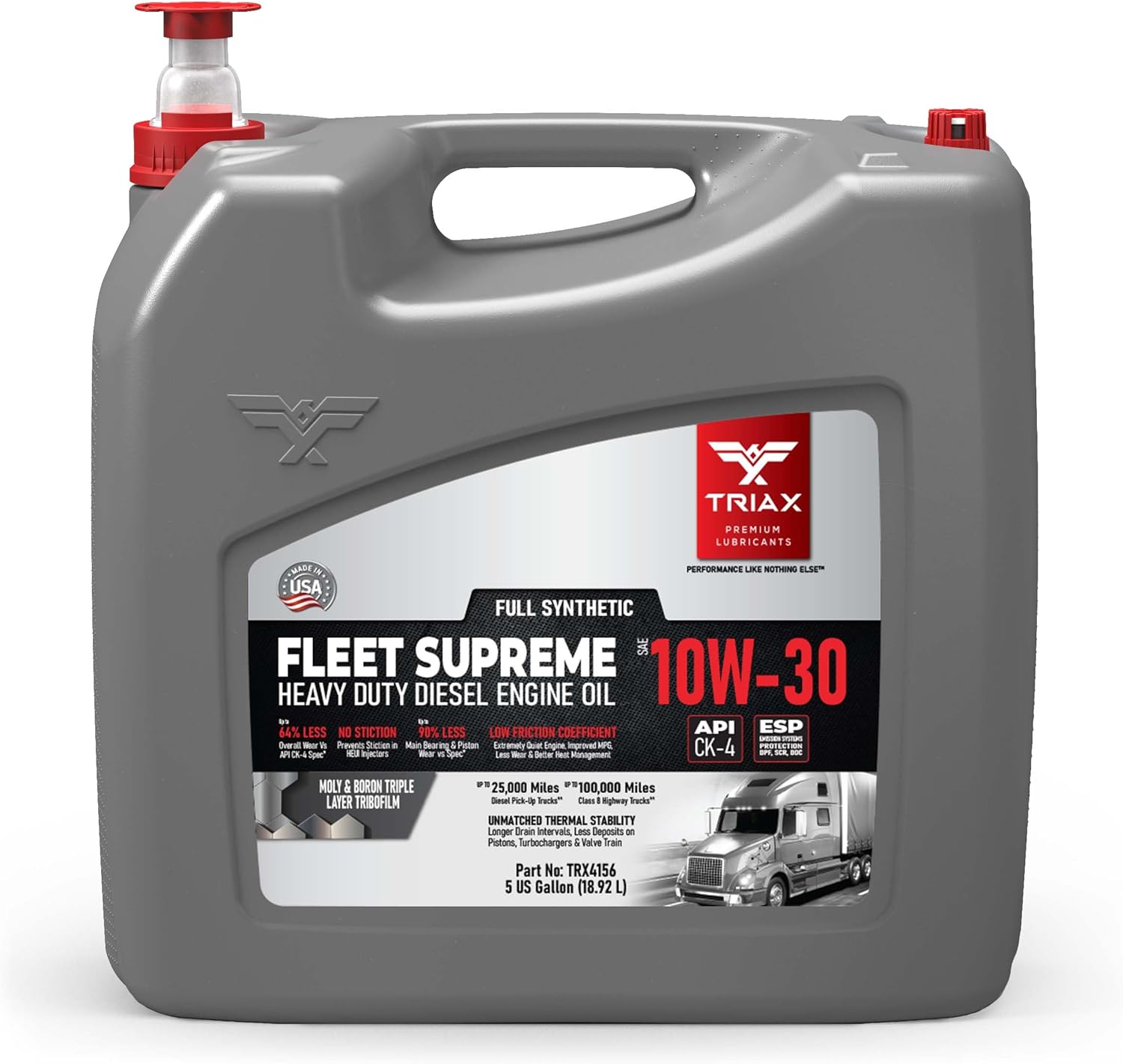
| Best Bulk / Fleet 5‑Gallon Engine Oil Large‑volume packaging for frequent oil changes or fleet maintenance | TRIAX Fleet Supreme 10W-30 Full Synthetic Heavy Duty Diesel Engine Oil (5 Gallon) |  |
1. Mobil 1 Turbo Diesel Truck Full Synthetic 5W-40 Motor Oil, 1 gal
Best Overall Engine Oil

| SAE Viscosity Grade | 5W-40 |
|---|---|
| Container Type | Jug |
| Compatible Vehicle Type | Truck |
| Flash Point | 234 Degrees Celsius |
| Unit Count | 128.0 Fluid Ounces |
Mobil 1 Turbo Diesel Truck 5W-40 is a full-synthetic heavy-duty diesel engine oil designed to protect modern turbocharged diesel truck engines, including high-performance and low-emission designs. It is used as a drain-and-fill service oil for everyday driving, towing, and mixed-fleet duty where extended drain intervals and strong high-temperature deposit control are important. Notable features include a 5W-40 viscosity grade for good cold-start pumpability and sustained film thickness at operating temperatures, formulation aimed at reducing low-temperature sludge and high-temperature deposits, and compatibility with engines that use exhaust gas recirculation systems. In practice this oil gives confident wear protection during towing and highway loads and supports long-drain schedules when used per manufacturer recommendations. Limitations are that buyers must confirm any specific Cummins or Nissan Titan Cummins oil approvals or service-interval guidance before extending drains, and heavier-duty severe-service engines may require oils specified by fleet maintenance schedules.
Best for: Drivers who need a reliable, broadly specified diesel oil for daily use, towing, and mixed-fleet duty on modern turbo diesel truck engines and who prioritize wear protection with potential long-drain capability.
Less Ideal for: Owners who must follow strict fleet or OEM-specified oil approvals for warranty or commercial heavy-duty service should consult their maintenance specifications or choose oils with documented Cummins or Nissan approvals.
- Full-synthetic formulation for strong thermal and oxidative stability
- 5W-40 grade balances cold-start flow with high-temperature protection
- Formulated to limit low-temperature sludge and high-temperature deposits
- Suitable for mixed-fleet use and recommended for modern low-emission diesel engines
- Does not list explicit Nissan or Cummins OEM approval on the product label in the provided data
Verdict: Choose this pick if you want an oil that balances wear protection, viscosity range, and industry specs for reliable everyday and towing use.
2. Shell Rotella T4 Triple Protection 10W-30 Diesel Engine Oil, 1 Gallon
Best Budget Engine Oil

| SAE J300 Viscosity Grade | 10W-30 |
|---|---|
| Compatible with Vehicle Type | Car, Tractor, Truck |
| Viscosity Level | Low to Medium |
| Liquid Volume | 128 fluid ounces |
Shell Rotella T4 10W-30 is a conventional diesel engine oil aimed at protecting heavy-duty diesel engines through Shell's Triple Protection additive system. It is typically used for routine oil changes in diesel pickups and light-duty commercial equipment where a lower-viscosity 10W-30 helps reduce drag compared with 15W-40. Key features include enhanced wear protection, deposit control, improved shear stability to retain viscosity, and a low-ash formulation to help with particulate filter compatibility. For a Nissan Titan with a Cummins diesel, this oil offers dependable protection for normal driving and light towing while supporting owner priorities of basic engine cleanliness and fuel-efficiency gains versus thicker grades. The trade-off is that T4 is a conventional formulation rather than a synthetic, so it does not provide the same high-temperature stability or extended drain capability as full-synthetic alternatives and may require standard service intervals.
Best for: Owners seeking an affordable, factory-quality diesel oil for routine service in a Cummins-powered Nissan Titan who prioritize reliable protection over extended synthetic drain intervals.
Less Ideal for: Drivers who regularly run severe towing loads, long highway routes, or want maximum oil-change intervals and the high-temperature protection of full-synthetic oils.
- Proven wear protection designed for heavy-duty diesel engines
- Lower-viscosity 10W-30 improves cold-flow and reduces engine drag versus 15W-40
- Low-ash formulation helps limit particulate filter blockage
- Widely accepted specifications and OEM approvals for many diesel engines
- Conventional base oil rather than full synthetic, so shorter high-temperature stability and shorter recommended drain intervals
Verdict: Pick this if you need an affordable oil that covers routine service intervals and basic protection without premium additive costs.
3. Shell Rotella T6 Full Synthetic 5W-40 Diesel Engine Oil (1 Gallon, 3 Pack)
Best Full‑Synthetic 5W‑40 Engine Oil

| SAE Viscosity Grade | 5W-40 |
|---|---|
| Liquid Volume | 128 fluid ounces |
| Viscosity Level | Low to Medium |
| Compatible with Vehicle Type | Car, Motorcycle, Truck |
Shell Rotella T6 5W-40 is a full synthetic heavy-duty engine oil designed to protect high-output diesel engines under heavy loads and sustained high rpm. It uses a synthetic base with advanced additives called Triple Protection Plus to resist thermal breakdown, control soot and deposits, and reduce wear on rings and bearings. Typical use cases include frequent towing, heavy payloads, and extended highway runs where film strength and oxidation resistance matter. The oil flows well at low temperatures for faster start-up protection and is low-ash to help preserve exhaust after-treatment systems. Practical benefits for a Nissan Titan Cummins include better protection during towing or sustained highway driving and modest fuel economy gains compared with 15W-40 oils. Limitations are that it is a diesel-formulated 5W-40, so buyers should confirm the Titan Cummins engine spec and service interval recommendations before switching, and any warranty or enrollment programs from the brand have conditions to meet.
Best for: Owners who prioritize full synthetic protection for heavy towing, frequent highway runs, and high‑load driving and want an oil with strong film strength and thermal stability for a Cummins‑equipped Titan.
Less Ideal for: Drivers who follow short, low‑load driving cycles with rarely stressed engines or those who must strictly adhere to a different factory‑recommended oil weight or spec.
- Full synthetic formulation offers strong thermal and oxidative stability for high‑RPM and heavy‑load use
- Triple Protection Plus additive package reduces wear and controls soot and deposits
- Improved low‑temperature flow for quicker lubrication at cold start
- Low‑ash formula helps protect exhaust after‑treatment and emissions equipment
- Diesel‑focused formulation means you should verify compatibility with Nissan Titan Cummins service requirements before use
Verdict: Use this pick when you want full‑synthetic performance—strong film strength and thermal stability—for heavy loads and high‑RPM driving.
4. Shell Rotella T5 Synthetic Blend 10W-30 Diesel Engine Oil, 1 Gallon
Best Synthetic‑Blend 10W‑30 Engine Oil

| SAE Viscosity Grade | 10W-30 |
|---|---|
| Container Type | Bottle |
| Compatible Vehicle Type | Car, Tractor, Truck |
| Liquid Volume | 128 Fluid Ounces |
| Viscosity Level | Low to Medium |
Shell Rotella T5 10W-30 is a synthetic blend diesel engine oil designed to protect high-stress diesel engines while offering better cold-start flow and reduced soot-related deposits versus conventional oils. It is typically used in on-highway fleets, construction equipment, agricultural machinery, and diesel pickup trucks where owners want stronger protection without the price of a full synthetic. Notable features include Triple Protection Plus additive chemistry, a low-ash formulation to help protect exhaust after-treatment systems, and manufacturer claims of up to 2% fuel economy improvement compared with heavier conventional oils. In practical use on a turbo diesel like the Cummins, the oil helps maintain viscosity under load, resist deposit formation, and reach critical components faster in cold starts. Limitations are that it is not a full synthetic, so it may not match the thermal stability or extended-drain potential of top-tier full synthetics, and drain-interval claims depend on service conditions and should follow manufacturer guidance. Overall it is a cost-conscious choice for owners who prioritize stronger protection and soot control without stepping up to full synthetic oil.
Best for: Owners of diesel pickups seeking stronger protection and soot control than conventional oil at a moderate cost who plan to follow routine service intervals and want improved cold-start performance.
Less Ideal for: Drivers who run extreme extended oil-change intervals, perform heavy towing constantly, or want the maximum high-temperature stability and longest drain intervals offered by full synthetic oils.
- Synthetic blend offers improved wear protection over conventional oils while costing less than full synthetics
- Low-ash formulation helps protect particulate filters and exhaust after-treatment components
- Improved low-temperature pumpability for quicker oil flow at cold starts
- Not as thermally stable or long-drain capable as full synthetic 10W-30 oils
Verdict: Choose this if you want improved protection over conventional oil with lower cost than full synthetics and good soot control.
5. Valvoline All Terrain 15W-40 Heavy Duty Diesel Engine Oil, 1 gal (case of 3)
Best Heavy‑Duty 15W‑40 Engine Oil

| Viscosity Grade | 15W-40 |
|---|---|
| Compatible Vehicle Type | Car, Truck |
| Viscosity Level | Medium to High |
| Flash Point | 394 °F |
| Liquid Volume | 3 gallons |
Valvoline All Terrain 15W‑40 is a heavy‑duty diesel engine oil designed to protect engines working under extreme loads and long idle periods. In practice it is used for high‑stress applications such as construction, agriculture, and extended towing where elevated temperatures and heavy loading accelerate wear and deposit formation. The formula emphasizes wear protection and oxidation stability, helping resist sludge and deposits while maintaining viscosity under severe conditions. Supplied in one‑gallon bottles sold as a three‑gallon case, it is convenient for frequent changes or multi‑vehicle servicing. The oil’s medium‑to‑high viscosity and high flash point make it suitable for sustained high‑temperature operation, but as a 15W‑40 diesel grade it is targeted at heavy‑duty engines rather than modern light‑duty gasoline engines or low‑temperature start performance. For Nissan Titan trucks equipped with the Cummins diesel, this oil gives robust protection during heavy towing and off‑road duty, though users should confirm any required OEM service approvals for warranty or extended service intervals.
Best for: Owners who operate a Nissan Titan with the Cummins engine in heavy‑duty roles like towing, hauling, or off‑road work and prioritize engine protection under sustained high load and temperature.
Less Ideal for: Drivers who mainly do short trips, cold‑climate frequent starts, or who require oils specified explicitly by their vehicle manufacturer for warranty compliance should consider alternatives.
- Formulated for severe duty cycles and high idle time to reduce wear under heavy load
- Enhanced oxidation stability to help fight deposits and sludge
- Medium‑to‑high viscosity retains film strength at elevated temperatures
- Sold in one‑gallon bottles in a three‑gallon case for convenient servicing or multiple changes
- No specific OEM service approvals or specifications listed on the product detail page
Verdict: Select this pick for demanding duty cycles and high‑temperature operation where a 15W‑40 heavy‑duty formulation offers robust protection.
6. Shell Rotella T 15W-40 Triple Protection Heavy Duty Engine Oil — 5 Gallon Pail
Best OEM Oil Change Kit

| SAE J300 Viscosity Grade | 15W-40 |
|---|---|
| Container Type | Pail |
| Compatible with Vehicle Type | Truck |
| Liquid Volume | 640 fluid ounces |
Shell Rotella T 15W-40 in the 5-gallon pail is a conventional heavy duty engine oil intended for truck and diesel applications. It is typically used for full-oil-change service where buyers want a robust, factory-style weight that balances cold-start flow with high-temperature protection. The formulation advertises up to 50% less engine wear and improved cleanliness and viscosity control, which helps limit piston deposits and support longer component life under load. The large pail suits homeowners or fleet operators who perform regular maintenance at home and want fewer trips to the store. As a conventional oil, it is broadly compatible but lacks the extended synthetic drain intervals and high-temperature shear resistance of full synthetics, so owners seeking maximum drain intervals or highest thermal stability may prefer a synthetic alternative. The product pairs well with a proper replacement oil filter chosen to match factory recommendations for a warranty-friendly service routine.
Best for: Buyers who prioritize using a factory-style 15W-40 oil and want a large, serviceable quantity for routine at-home maintenance and straightforward, warranty-friendly changes.
Less Ideal for: Drivers who want maximum drain intervals, highest thermal stability, or the peak protection of full synthetic oils should consider synthetic options instead.
- Factory-standard SAE 15W-40 viscosity suitable for many truck diesel engines
- Pail format provides enough oil for multiple oil changes or fleet use
- Formulation targets wear reduction and piston deposit control for cleaner operation
- Conventional base oil lacks the extended drain interval and high-temperature performance of full synthetics
Verdict: Pick this when you prefer factory‑specified oil and a matched filter for straightforward, warranty‑friendly maintenance at home.
7. TRIAX Fleet Supreme 10W-30 Full Synthetic Heavy Duty Diesel Engine Oil (5 Gallon)
Best Bulk / Fleet 5‑Gallon Engine Oil
| Viscosity grade | 10W-30 |
|---|---|
| API performance | CK-4 |
| Container type | 5 gallon pail |
| Liquid Volume | 5 gallons |
| Unit Count | 640 Fluid Ounces |
This 5‑gallon pail of TRIAX Fleet Supreme 10W‑30 is built for high‑volume use in heavy‑duty diesel applications. It meets API CK‑4 and a long list of OEM specifications and uses nano‑boron and moly friction modifiers to reduce wear, improve fuel economy, and help with turbo and injector performance. In practice it is intended for fleet cycles and repeated service: the low‑ash ESP formulation protects emission systems while lab claims and industry sequence testing support extended drain intervals under monitored conditions. For a service shop or fleet manager the pail offers easy bulk handling and consistent chemistry across fills, plus cold‑start flow and shear stability for sustained oil pressure. Limitations are that extended drain claims depend on duty cycle and oil analysis, and this grade is targeted to diesel engines, so it is not a universal replacement for gasoline engine oils or applications requiring a different viscosity. Also, single‑viscosity fleets should confirm 10W‑30 is appropriate for their operating temperatures and OEM recommendations for the Cummins in the Nissan Titan.
Best for: Fleet managers and shops that service multiple diesel vehicles and prioritize consistent, high‑volume supply and factory‑quality protection for demanding duty cycles.
Less Ideal for: Owners who only need occasional single‑vehicle oil changes, drivers of gasoline‑powered vehicles, or anyone who cannot perform regular oil analysis to support extended drain intervals.
- Full synthetic formulation meeting API CK‑4 and multiple OEM specs for heavy‑duty diesels.
- Nano‑Boron and moly friction modifiers that claim reduced wear and improved fuel economy.
- Low‑ash ESP formulation safe for DPF, SCR, and DOC emission systems.
- Available in a 5‑gallon pail for high‑volume servicing and fleet maintenance.
- Extended drain interval capability depends on duty cycle and requires regular oil analysis to validate.
- Specifically formulated for diesel engines and not suitable as a direct replacement for gasoline engine oils.
Verdict: Choose this slot if you perform multiple services or maintain a fleet and need cost‑efficient, high‑volume oil supply with consistent specs.
Choosing the Right Nissan Titan Cummins Engine Oil: Key Factors to Consider
Viscosity Grade and Temperature Performance
Viscosity grade determines how the oil flows at cold startup and how well it maintains film strength at operating temperature. For the Titan Cummins, selecting a grade that delivers easy cold starts while preserving a robust high-temperature film is crucial when towing or running at highway speeds.
Diesel engines produce higher blow-by and soot than gasoline engines, which can increase oil thickening over time. Choosing an oil with proven shear stability helps preserve the intended viscosity between oil changes and reduces risk of oil starvation under heavy load. Always match the chosen viscosity to the vehicle's expected climate and operating profile.
Wear Protection and Additive Chemistry
Heavy-duty anti-wear additives and balanced zinc or phosphorus levels bolster protection for bearings, camshafts, and turbochargers. Diesel applications benefit from additives that maintain a protective boundary film under high contact pressure and elevated temperatures.
Look for oils with detergent and dispersant packages tailored to control soot and combustion residues. Good anti-wear chemistry reduces metal-to-metal contact during high-load operation and extends component life, especially important in high-torque Cummins engines.
Soot Management and Dispersancy
Diesel combustion generates soot that can thicken oil and accelerate wear if not properly dispersed. Oils formulated with robust dispersants keep soot suspended and prevent sludge and varnish buildup in oil galleries and piston rings.
Effective soot handling supports longer drain intervals and helps maintain oil flow through narrow passages. For Titan Cummins owners who tow or perform long highway runs, prioritizing dispersancy reduces the risk of blocked passages and maintains consistent engine protection over time.
Thermal and Oxidation Stability
Oxidation-resistant oils resist viscosity increase and acid formation when exposed to high combustion temperatures and elevated oil temperatures. Thermal stability helps keep deposits from forming on pistons and valves and preserves base oil performance throughout the service interval.
Oils with strong antioxidant packages are especially valuable in diesel engines operating under heavy load or extended idling, where oil temperatures can remain high for prolonged periods.
Compatibility with Service Intervals and Maintenance
Choose an oil that aligns with your intended drain interval and maintenance habits. Some formulations are optimized for extended service intervals, while others are better for conventional change schedules.
Consider how often you perform oil changes and whether you frequently tow or haul. Oils capable of resisting viscosity breakdown and soot thickening will support longer intervals, but you should always follow manufacturer recommendations for the Titan Cummins and inspect oil condition regularly.
Seal Compatibility and Corrosion Protection
Oil additives must be compatible with engine seals to prevent leaks, and corrosion inhibitors help protect internal parts from moisture and combustion acids. In trucks that face varied climates and occasional water exposure, corrosion protection preserves components like bearings and bushings.
A formulation that balances seal friendliness with rust inhibition lowers the chance of post-service leaks and long-term corrosion, making it a practical choice for Titan Cummins owners who keep their trucks in service for many years.
Choosing Between Conventional and Full Synthetic Oils
Conventional oils can be adequate for light use and regular change intervals, but full synthetic oils typically offer superior shear stability, lower friction, and better high-temperature performance. For the Titan Cummins, where towing and heavy loads are common, the improved film strength and thermal resilience of synthetic oils often translate to better protection and longer drain intervals.
If your driving includes frequent short trips or severe stop-start use, a synthetic blend or full synthetic can maintain viscosity and resist soot-induced thickening more effectively than conventional oils. Evaluate how you use the truck and whether extended drain intervals are a priority when deciding between oil types.
- Full synthetics: better shear stability and high-temp protection
- Conventional: acceptable for routine light-duty use with frequent changes
- Synthetic blends: compromise between cost and performance
Viscosity Recommendations for Different Climates
Cold climates demand lower W grades for reliable cold starts, while hot climates require oils that resist thinning at operating temperature. Many Titan Cummins owners find mid-range viscosities work well across seasons, but extreme environments may warrant a change in grade.
Check the vehicle maintenance recommendations and align your choice with local temperature patterns. Using a grade that is too thin can increase wear at high load, while a grade that is too thick can impede cold-start lubrication.
- Colder regions: choose lower cold-start viscosities
- Hotter regions: prioritize oils with stable high-temp viscosity
- Moderate climates: mid-range grades balance start-up flow and film strength
Oil and Turbocharger Care
Cummins-equipped Titans often use turbocharging to boost torque and efficiency. Turbochargers spin at high speed and run hot, so oil must provide quick film-forming protection on start-up and withstand high turbo temperatures. Regular oil and filter changes reduce the risk of turbo deposits and oil coking.
Allowing the turbo to cool with light idling after hard use or using oils with strong thermal stability reduces oil breakdown at the turbo bearings. Proper oiling practices and appropriate viscosity choices help extend turbo life and maintain performance.
- Use oils with rapid film formation for start-up protection
- Maintain recommended change intervals to prevent deposits
- Prioritize thermal stability for turbo longevity
How Oil Choice Affects Towing Performance
Towing increases engine load, combustion temperatures, and soot production. An oil that holds viscosity and disperses soot will maintain protective film thickness during sustained heavy operation. This reduces wear on bearings, crankshafts, and pistons when the truck is under load.
For frequent towing, choose oils rated for diesel service with anti-wear and soot-control additives. Monitor oil condition more frequently when towing heavy loads or driving in hilly terrain to ensure protection is maintained between changes.
- Towing raises engine stresses—prioritize wear protection
- Soot control matters more under sustained heavy loads
- Check oil condition after extended towing trips
Oil Change Practices for the Titan Cummins
Regular oil and filter changes are the foundation of engine longevity. Follow the manufacturer's baseline recommendations, but adjust intervals based on towing frequency, mileage accumulation, and observed oil condition. Inspection for metal particles, soot level, and viscosity change can guide earlier service when necessary.
Use appropriate-quality filters and ensure proper torques on drain plugs and filter housings to avoid leaks. Dispose of used oil responsibly and keep records of service to help spot trends in oil consumption or contamination.
- Follow baseline intervals and shorten them for severe duty
- Inspect oil condition periodically between changes
- Use high-quality filters matched to diesel service demands
Still looking for the perfect fit?
Select your Nissan Titan configuration to see the most relevant Engine Oils recommendations
How We Chose the Best Nissan Titan Cummins Engine Oil
We focused our selection on attributes that directly affect the performance and longevity of the Nissan Titan Cummins diesel engine. Key evaluation criteria included viscosity stability under load and temperature, anti-wear and pressure-bearing additive packages, soot-handling and dispersancy for diesel combustion, and compatibility with recommended drain intervals. We also weighed corrosion and rust inhibitors because these engines often face stop-start operation and occasional exposure to road salt.Additional filters included manufacturer specifications and suitability for heavy-load applications like towing, plus evidence of consistent formulation stability rather than one-off performance claims. Oils that lacked appropriate diesel-focused additive chemistry or did not meet necessary viscosity and shear stability expectations were excluded. We avoided products without clear labeling on diesel suitability or those that prioritized fuel-economy viscosity grades at the cost of film strength. The result is a focused list of seven oils that meet the practical durability and service needs of Titan Cummins owners.
Our full evaluation process is outlined in our review methodology.
FAQ
Can I use 5W-30 engine oil in a Nissan Titan Cummins?
Often 5W-30 is an acceptable grade for many diesel applications, providing a balance of cold-start flow and high-temp protection. Check your vehicle's recommended viscosity range and consider climate and towing habits before selecting this grade.
Is synthetic motor oil worth it for the Cummins-equipped Titan?
Synthetic oils typically offer better shear stability, thermal resistance, and soot control, which benefit diesel engines under heavy load or towing. For owners who tow frequently or aim for longer drain intervals, synthetic formulations are usually a practical choice.
How often should I perform an engine oil change on the Titan Cummins?
Change intervals depend on driving conditions, load, and the oil formulation used. Follow the manufacturer baseline, but shorten intervals for frequent towing, high mileage, or severe operating conditions and inspect oil condition between scheduled services.
Does high mileage engine oil help with older Titan Cummins engines?
High mileage formulations focus on seal conditioning and may help reduce minor leaks while providing similar wear protection. Their benefits depend on the specific condition of the engine seals and should be weighed against the engine's actual wear and maintenance history.
Will using a lower-viscosity oil improve fuel economy in the Titan Cummins?
Lower-viscosity oils can reduce internal friction and may offer slight fuel economy gains, but they must still provide adequate film strength under load. Do not sacrifice high-temp protection or wear resistance for marginal economy improvements, especially when towing.
How can I tell if my engine oil is breaking down or contaminated?
Look for signs such as increased oil consumption, darker or thicker oil consistency, metallic particles on the drain plug, or unusual engine noise. Regular oil analysis or periodic visual checks can detect viscosity changes and contamination before serious damage occurs.
Final Verdict
Prioritize oil choices that maintain viscosity under load, control soot, and provide strong anti-wear protection for the Nissan Titan Cummins. Match viscosity to your climate and driving profile, and consider full synthetic options if you tow frequently or prefer extended drain intervals. Maintain consistent oil and filter service and monitor oil condition after heavy use.Balancing thermal stability, dispersancy, and wear additives will give the most practical protection for long-term engine health. Use the factors above to weigh tradeoffs and choose an oil that supports your typical driving and maintenance routine with confidence.
Explore More:
- Check out all Nissan Titan parts & accessories
- Explore Fluids & Chemicals
- Browse all Accessories
