

Note: This article contains affiliate links. If you click on these links and make a purchase, I may earn a small commission at no extra cost to you. This helps support my research and content. Read my full affiliate disclosure here.
Picking the right Mazda CX-9 engine oil affects longevity, fuel economy, and how the vehicle runs in different temperatures. Using the correct grade and formulation helps maintain engine seals, reduce wear, and support efficient combustion.This guide highlights the top shortlisted engine oils for the Mazda CX-9 and explains the technical factors we considered. Read on to see which options met our criteria and why those aspects matter for everyday driving and long-term maintenance.
Looking for other parts? See all Mazda CX-9 parts & accessories.
Top Picks at a Glance
| Best overall The best all-around choice for most situations | Motul 8100 X-clean EFE 5W-30 Full Synthetic Motor Oil (5 L) |  |
| Best quality Built to a higher standard if you want something more solid | Liqui Moly Top Tec 4600 SAE 5W-30 Fully Synthetic Engine Oil, 5 L |  |
| Best Value The sweet spot between price and what you get | K&N Full Synthetic 5W-30 Motor Oil, 5 Quart |  |
| Best Budget The cheapest option that still gets the job done reliably | Mazda Engine Oil 0W-20 (1 qt) |  |
| Highest Rated A top-rated pick with lots of positive feedback | Liqui Moly Special Tec AA 5W-30 Fully Synthetic Engine Oil, 5 L |  |
| Most popular A crowd favorite that many people choose with confidence | Motul 8100 X-clean+ 5W-30 Full Synthetic Motor Oil, 1 L |  |
1. Motul 8100 X-clean EFE 5W-30 Full Synthetic Motor Oil (5 L)

| Viscosity | 5W-30 |
|---|---|
| Size | 5 l |
| API specification | API SN |
| ACEA specification | ACEA C2/C3 |
Motul 8100 X-clean EFE is a full synthetic 5W-30 engine oil designed to reduce internal friction and support modern emissions systems while enabling extended drain intervals. In practice it is used like any engine oil change filling for vehicles that call for ACEA C2/C3 or API SN level fluids, and it contains friction modifiers and mid‑SAPS chemistry that help protect particulate filters and catalytic after‑treatment components. For a Mazda CX-9 this oil can improve smoothness, throttle response, and high-temperature stability during highway driving, towing, or city traffic. The formulation’s approvals and OEM-compatible specs mean it meets many factory-quality requirements for modern gasoline engines that need low-SAPS oil. The main limitations are that you must confirm Mazda’s specific viscosity and spec requirements for your CX-9 year and engine before using a low‑SAPS 5W-30, and vehicles that require a different viscosity or a factory-specified oil should stick to that recommendation. If matched to the CX-9 service spec, this oil is a strong choice for balanced performance and economy.
Best for: Buyers who want a balanced, all-round engine oil that prioritizes fuel economy, emissions system care, and reliable everyday drivability for their Mazda CX-9.
Less Ideal for: Drivers who follow an aggressive performance or track schedule that requires specialty racing or very high-viscosity oils, or owners whose CX-9 explicitly specifies a different oil viscosity or chemistry.
- 100% synthetic formula for improved engine protection and stability under heat
- Formulated to reduce friction and help improve fuel economy
- Mid‑SAPS low‑SAPS chemistry designed to protect DPF/GPF and emissions equipment
- Approved to common OEM specifications (ACEA C2/C3, API SN) for factory-quality compatibility
- Requires verification against the CX-9 model year and engine spec before use
- Not suitable if your Mazda specifically requires a different viscosity or a non low‑SAPS formulation
Verdict: A fuel-economy focused full synthetic 5W-30 that balances emissions-system protection and engine smoothness for CX-9 owners who match the oil to their model year and engine spec.
2. Liqui Moly Top Tec 4600 SAE 5W-30 Fully Synthetic Engine Oil, 5 L

| Viscosity | 5W-30 |
|---|---|
| Volume | 5 L |
| Type | Fully synthetic |
| Intended use | Gasoline and diesel engines with DPF |
Liqui Moly Top Tec 4600 is a fully synthetic low-SAPS 5W-30 engine oil intended for all-season use in modern gasoline and diesel engines. It supplies immediate lubrication on start-up, reduces wear with advanced additives, and is formulated to work with diesel particulate filters and turbochargers. In practice this means smoother idling and stable oil pressure across a broad temperature range, useful for highway driving and spirited use in larger crossovers like the Mazda CX-9. The formula aims to lower oil and fuel consumption and to meet extended service intervals, so you may see longer drain periods when paired with a compatible maintenance schedule. It mixes with most engine oils, which eases topping up, but choosing it requires attention to the CX-9 owner manual for approved viscosity and specs. The main trade-off is that premium synthetic oils like this perform best when regularly maintained and used with appropriate filters and intervals, so benefits depend on correct selection and installation for the CX-9 engine configuration.
Best for: Performance-oriented buyers who prioritize engine protection and stable operation under load and at highway speeds for a Mazda CX-9, and who follow recommended service intervals and fluid specifications.
Less Ideal for: Drivers who prefer to stick only to oils explicitly listed in Mazda CX-9 manufacturer literature or those who want the cheapest routine-change option without concern for extended-interval performance.
- Fully synthetic low-SAPS formulation suitable for modern engines with particulate filters.
- 5W-30 viscosity provides reliable cold-start flow and high-temperature protection.
- Designed to reduce wear and lower oil and fuel consumption for longer service intervals.
- Compatible with turbocharged engines and mixable with most engine oils.
- Not a direct replacement unless Mazda CX-9 recommended specifications match this 5W-30 formulation.
Verdict: A premium fully synthetic 5W-30 aimed at protecting modern engines under performance use, but confirm Mazda CX-9 compatibility before switching.
3. K&N Full Synthetic 5W-30 Motor Oil, 5 Quart

| Viscosity | 5W-30 |
|---|---|
| Size | 5 Quart |
| Vehicle Service Type | Car |
| Brand | K&N |
K&N Full Synthetic 5W-30 is a five-quart bottle of engine oil aimed at everyday use and routine oil changes for vehicles that specify 5W-30. It is formulated with Synthamax additive chemistry to reduce wear, limit sludge buildup, and maintain flow in cold starts, so you can expect consistent lubrication across a wide temperature range. Typical use is a standard oil change interval for a Mazda CX-9 that calls for 5W-30; pour directly from the jug and follow the vehicle manufacturer’s oil change procedure. Notable features include a full synthetic base, an additive package designed to protect critical engine components, and a 5-quart size that covers most single oil change needs. In practice this oil gives reliable protection and smooth cold starts without specialty additives. Limitations are that performance claims are general rather than vehicle-specific and some competing oils list more detailed OEM approvals or extended-interval specifications, so owners wanting manufacturer-certified extended service intervals should verify compatibility with Mazda recommendations before switching.
Best for: Practical optimizers who prioritize reliable, everyday engine protection for routine maintenance and want a cost-effective full synthetic option for their Mazda CX-9.
Less Ideal for: Drivers seeking oils with explicit manufacturer extended-interval approvals or those who require a different viscosity than 5W-30 for their specific CX-9 engine variant should consider alternatives.
- Full synthetic formulation for consistent protection across temperatures
- Additive package (Synthamax) aimed at reducing wear and sludge
- Five-quart jug covers a typical single oil change without needing multiples
- No explicit listing of Mazda-specific approvals or extended-interval certifications in the product details
Verdict: A budget-friendly full synthetic 5W-30 that delivers dependable, all-weather protection for routine Mazda CX-9 oil changes but check Mazda approvals if you need extended-interval coverage.
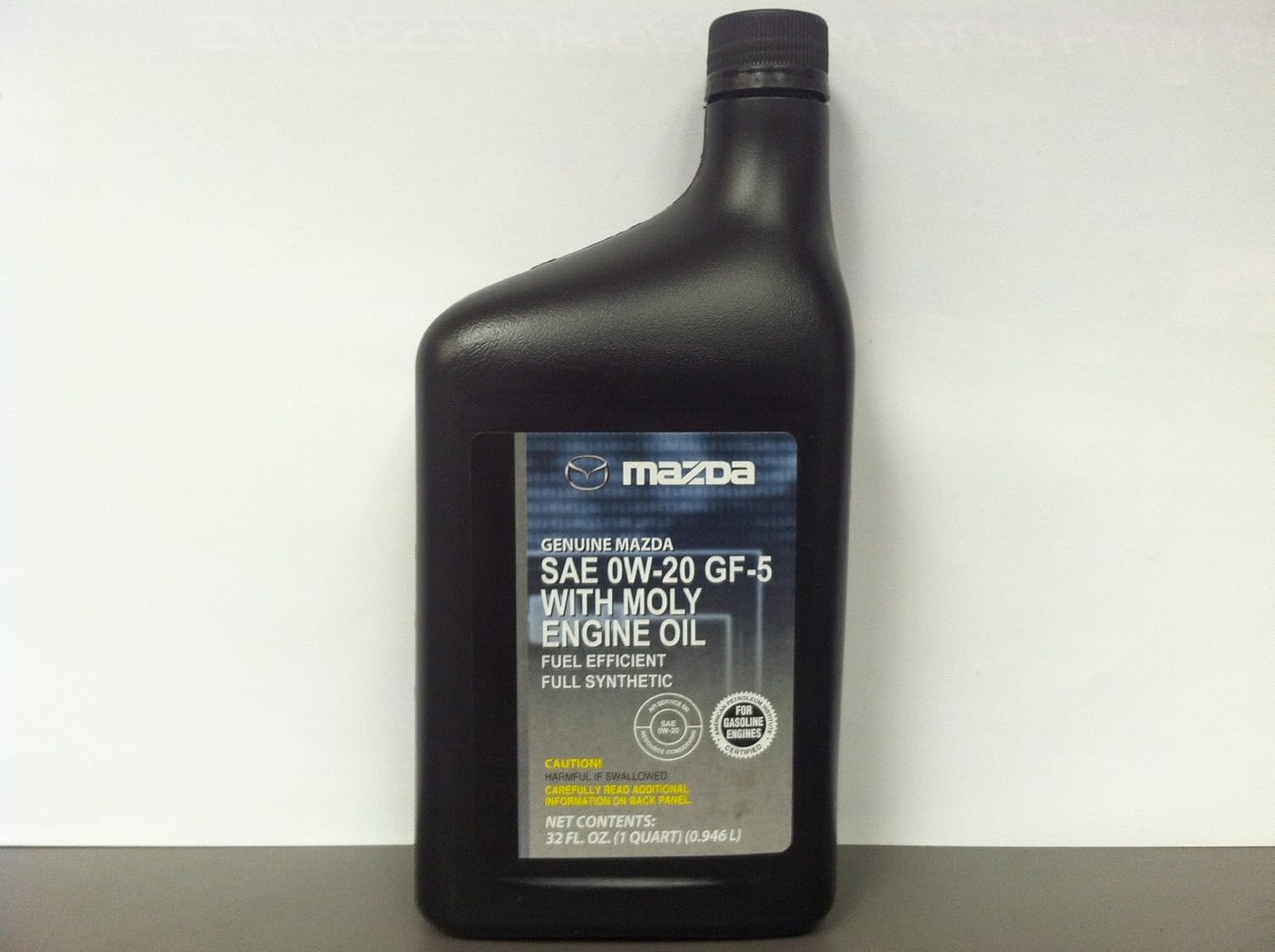
4. Mazda Engine Oil 0W-20 (1 qt)
| Viscosity | 0W-20 |
|---|---|
| Brand | Mazda |
| Vehicle Service Type | Car |
| Size | 1 qt" |
This is Mazda-branded 0W-20 engine oil sold in a one-quart bottle and intended as a factory-quality replacement for vehicles that specify 0W-20. It is used like any motor oil for routine oil changes and maintenance, providing viscosity suited to modern gasoline engines and cold-start protection. As a manufacturer-supplied fluid it matches the specification Mazda recommends, which simplifies parts selection and reduces the risk of specification mismatch. The pack size and machined exterior design make pouring and handling straightforward for DIY changers while keeping a single-quart bottle convenient for topping off. The primary limitations are capacity and cost per quart since you will need multiple bottles for a full drain-and-fill and it is positioned as Mazda-branded rather than a value-blend aftermarket option. If you prefer factory-specified fluids and easy parts matching, this delivers the expected performance, but budget-focused buyers should compare multi-quart aftermarket packs for lower per-quart cost.
Best for: Budget-conscious Mazda owners who prioritize using factory-specified fluids and want a straightforward, no-surprises product for routine maintenance.
Less Ideal for: Buyers looking to save on per-quart cost for full oil changes or those who prefer bulk multi-quart packs from aftermarket brands should consider alternatives.
- Factory-formulated to Mazda specification for correct fitment and performance
- 0W-20 viscosity provides good cold-start lubrication and fuel-efficient operation
- One-quart bottle is easy to store and convenient for topping off between changes
- Sold as single-quart bottles which increases cost and waste for full oil changes
Verdict: Mazda 0W-20 engine oil offers factory-specified performance in a convenient one-quart bottle for owners who want a risk-free, vehicle-matched fluid.
5. Liqui Moly Special Tec AA 5W-30 Fully Synthetic Engine Oil, 5 L

| Volume | 5 L |
|---|---|
| Viscosity | 5W-30 |
| Type | Fully synthetic |
Liqui Moly Special Tec AA 5W-30 is a fully synthetic motor oil formulated for modern petrol and diesel engines and intended for year-round use. In a Mazda CX-9 this oil serves as the main lubricant to protect moving parts, promote quick oiling at startup, and help keep combustion chambers and valves cleaner over time. Notable features include synthesis-based base oils plus a modern additive package that the brand says lowers fuel and oil consumption and improves aging stability. That translates to smoother, quieter operation and steady engine temperature during longer drives. The product is marketed as compatible with turbochargers and catalytic converters, so it fits the CX-9’s turbocharged engines where applicable. Trade-offs are typical for premium synthetic oil: you should follow Mazda’s service intervals and spec requirements rather than switching grades, and performance gains like improved fuel economy will vary by driving conditions. For owners prioritizing reliability, this oil focuses on protection and long-term engine cleanliness rather than lowest upfront cost.
Best for: Reliability-focused Mazda CX-9 owners who prioritize long-term engine protection and consistent, year-round performance over minimizing purchase cost.
Less Ideal for: Drivers seeking the cheapest routine oil changes or those required to use a different viscosity by Mazda should consider alternatives that match their specific service schedule or budget priorities.
- Fully synthetic formulation for better protection and stability over time
- Additive package designed to reduce oil and fuel consumption
- Compatible with turbochargers and catalytic converters, suitable for CX-9 turbo engines
- Promotes quick oiling at startup and improved engine cleanliness
- Higher-priced than budget conventional or blended oils
- Benefits like fuel economy improvements depend on driving style and vehicle condition
Verdict: A premium fully synthetic 5W-30 aimed at Mazda CX-9 drivers who put long-term engine protection and cleanliness ahead of lowest upfront cost.
6. Motul 8100 X-clean+ 5W-30 Full Synthetic Motor Oil, 1 L

| Viscosity | 5W-30 |
|---|---|
| Container Type | Bottle |
| Liquid Volume | 1 Liters |
| Compatible with Vehicle Type | Multiple vehicle types (BMW, Mercedes-Benz, etc.) |
Motul 8100 X-clean+ 5W-30 is a full-synthetic engine oil aimed at modern engines that require low-SAPS, low-friction lubricants. It is typically used as a factory-quality replacement oil for cars that specify 5W-30 and require approvals like ACEA C3 and manufacturer long-drain standards. Notable features include low HTHS and low SAPS formulation for compatibility with catalytic converters and particulate filters, resistance to oxidation under high heat, and additives intended to reduce internal friction for improved fuel economy. In real-world use you can expect stable viscosity in highway driving, quieter idling, and support for extended service intervals when matched to Mazda CX-9 service specs. The main limitations are pack size and fitment: the listing is a 1 L bottle so multiple units are needed for a full drain on the CX-9, and buyers must confirm Mazda’s required spec before switching oils. For drivers prioritizing emissions system protection and smoother engine response, this oil is a capable choice when it meets the vehicle manufacturer’s approval.
Best for: Convenience-driven buyers who want a modern, emissions-friendly synthetic oil that supports longer service intervals and smoother operation without frequent oil shopping.
Less Ideal for: Buyers seeking single-change, full-quantity packaging or those who need a different viscosity or a Mazda-specified oil grade not matching 5W-30 should look elsewhere.
- Full synthetic 5W-30 formulation suitable for modern engines and turbocharged applications.
- Low-SAPS chemistry compatible with catalytic converters and particulate filter systems.
- Meets ACEA C3 and common manufacturer long-drain specifications for emissions protection and durability.
- Sold in a 1 liter bottle which requires multiple bottles for a full oil change on the CX-9.
- Product description lists broad manufacturer approvals but you must verify the exact Mazda spec match before use.
Verdict: A modern low-SAPS full-synthetic 5W-30 that protects emissions systems and supports extended drains, but you will need multiple 1 L bottles for a CX-9 oil change.
Choosing the Right Mazda CX-9 Engine Oil: Key Factors to Consider
Viscosity Grade and Cold-Start Performance
Viscosity grade determines how the oil flows at low and high temperatures and directly affects cold-start protection and lubrication until the engine reaches operating temperature. Choosing the correct grade for the CX-9 helps reduce wear during startup and maintains a protective film under operating loads.
A lower "W" number improves cold-flow and reduces startup friction in cold climates, while the high-temperature number indicates how well the oil maintains film thickness under heat. Consider the typical climate you drive in and consult the vehicle's recommended grades when selecting an oil.
Additive Package and Wear Protection
Additives control friction, prevent wear, and keep internal surfaces clean. Detergents and dispersants limit deposit buildup, anti-wear agents protect bearings and cam lobes, and friction modifiers can influence fuel economy.
A balanced additive suite matters because aggressive detergency without dispersant support can lead to sludge issues, while insufficient anti-wear chemistry can accelerate part wear. Look for oils that specify their performance claims and meet recognized industry tests for wear protection.
Synthetic Versus Conventional Formulation
Synthetic motor oil generally offers better thermal stability, oxidation resistance, and marginally better cold-start flow than conventional oil. This can translate to longer effective service life and more consistent protection under high-temperature or heavy-load conditions.
However, conventional oils may be acceptable for light-use driving and shorter drain intervals. Consider your driving style, service interval preferences, and the manufacturer's recommendations when choosing between synthetic and conventional formulations.
Compatibility With Emissions And Sealing Systems
Modern engines and emissions hardware can be sensitive to certain additive chemistries. Oils formulated to be compatible with catalytic converters, turbochargers, and PCV systems help prevent deposit formation that could affect emissions performance or component life.
Seal compatibility is important for engines with aging gaskets and seals. Some formulations are designed to condition seals and reduce leaks, while others may cause swelling or drying over time. Prioritize oils that state compatibility with modern emissions systems and engine materials.
High-Mileage Considerations
Engines with higher mileage often have increased clearances, worn seals, and accumulated deposits. High mileage engine oil formulations include seal conditioners and extra detergency to address leaks and clean internal surfaces.
If your CX-9 has significant miles, a high-mileage formulation may help reduce seepage and rejuvenate older seals, but it is not a guaranteed fix for mechanical wear. Match the oil's properties to the engine's condition and follow the vehicle's recommended service intervals.
Manufacturer Specifications And Approvals
Meeting the vehicle maker's required specifications and industry approvals ensures the oil has passed standardized tests for performance areas like wear, volatility, and deposit control. API and ILSAC ratings, along with any specific manufacturer approvals, are practical indicators of suitability.
Always cross-check the oil's stated approvals with the Mazda CX-9's owner manual or service documentation to confirm compatibility. Using an oil without the appropriate specifications can affect warranty coverage or long-term engine health.
How We Chose the Best Mazda CX-9 Engine Oil
To assemble this list we focused on items that meet Mazda factory recommendations and deliver consistent protection across real-world driving conditions. We prioritized oils with the correct viscosity grades for the CX-9, proven additive packages for wear and deposit control, and formulations that support fuel economy. Thermal stability and shear resistance were evaluated to ensure viscosity control over longer drain intervals. Compatibility with engine seals and emissions-system components was also considered, along with availability in common fill sizes.We excluded products that do not meet the vehicle manufacturer's spec, lack clear viscosity or specification data, or have limited technical documentation. Our filters emphasized measurable performance attributes such as viscosity grade, API/ILSAC specifications, additive chemistry, and oxidative stability rather than marketing claims or brand popularity.
Our full evaluation process is outlined in our review methodology.
FAQ
How often should I change engine oil in a Mazda CX-9?
The interval depends on the oil formulation, driving conditions, and the vehicle's maintenance guidelines. Many modern oils and normal driving allow longer intervals, while severe driving or frequent short trips usually require more frequent changes. Check the owner manual recommendations and monitor oil condition between services.
Can I switch viscosity grades between oil changes?
You can switch grades if the alternative is within the vehicle manufacturer's recommended range. Changing to a different approved viscosity for seasonal conditions is common, but avoid using grades outside those specified for the engine. If in doubt, follow the factory recommendations for best protection.
Is synthetic motor oil necessary for the Mazda CX-9?
Synthetic oil offers benefits such as better thermal stability and cold-start flow, which may be advantageous depending on driving habits and climate. It is often recommended for extended drain intervals and heavy-duty use, but the necessity depends on the vehicle's requirements and your maintenance preferences.
Will high-mileage oil stop leaks in an older engine?
High-mileage formulations often include seal conditioners that can reduce minor seepage by softening and revitalizing seals. They can help with small leaks, but they do not fix mechanical failures or major gasket issues. For significant leaks, professional inspection and repair are usually required.
How do I know if an oil is compatible with my emissions system?
Look for oils that state compatibility with modern emissions-control hardware and carry relevant industry approvals. Manufacturer specifications and product technical data sheets commonly indicate emissions compatibility and whether the oil is suitable for engines with catalytic converters and turbochargers.
Conclusion
Choosing the right Mazda CX-9 engine oil means balancing viscosity, formulation, and the vehicle's operating conditions. Prioritize oils that meet the manufacturer's specifications, offer a suitable additive package for wear and deposit control, and match the climate and driving style you use most.Tradeoffs are common: formulations that maximize fuel economy may use different friction modifiers than those that prioritize anti-wear chemistry, and high-mileage options can help older engines but will not correct mechanical faults. Use the criteria above to narrow choices and follow recommended service intervals to maintain long-term reliability.
Explore More:
- Check out all Mazda CX-9 parts & accessories
- Explore Fluids & Chemicals
- Browse all Accessories
