

Note: This article contains affiliate links. If you click on these links and make a purchase, I may earn a small commission at no extra cost to you. This helps support my research and content. Read my full affiliate disclosure here.
Choosing the right engine oil for a Dodge Challenger matters for longevity, fuel delivery, and daily drivability. The wrong viscosity or weak additive package can increase wear, reduce efficiency, and impact how the engine responds under load.This guide highlights the top shortlisted engine oils for Dodge Challenger owners, chosen for their viscosity ranges, additive protection, and compatibility with common Challenger engines. We evaluated performance-related factors and durability considerations to help you make a confident selection before your next oil change.
Looking for other parts? See all Dodge Challenger parts & accessories.
Top Picks at a Glance
| Best Overall The best all-around choice for most situations | Mopar MaxPro 5W-20 Motor Oil, 6-Quart Case |  |
| Best Quality Built to a higher standard if you want something more solid | Pennzoil Ultra Platinum Full Synthetic 0W-40 Motor Oil (1 Quart, 6-Pack) |  |
| Best Value The sweet spot between price and what you get | Valvoline Advanced Full Synthetic SAE 5W-20 Motor Oil, 5 qt |  |
| Best Budget The cheapest option that still gets the job done reliably | Castrol GTX High Mileage 5W-20 Synthetic Blend Motor Oil, 5 Quart Bottle |  |
| Highest Rated A top-rated pick with lots of positive feedback | Mobil 1 Advanced Fuel Economy Full Synthetic Motor Oil 0W-20 (5 Quart, Pack of 2) |  |
| Most Popular A crowd favorite that many people choose with confidence | Valvoline MaxLife Full Synthetic High Mileage 5W-20 Motor Oil, 5 qt |  |
| Best Seller A high-volume bestseller chosen again and again | Castrol EDGE High Mileage 5W-30 Full Synthetic Motor Oil, 5 Quart |  |
1. Mopar MaxPro 5W-20 Motor Oil, 6-Quart Case

| Container Type | Bottle |
|---|---|
| Compatible with Vehicle Type | Passenger cars, light trucks, and SUVs |
| Automotive Fit Type | Vehicle Specific Fit |
| Liquid Volume | 6 Quarts |
Mopar MaxPro 5W-20 is a factory-branded motor oil packaged as a six-quart case for routine engine service. It is used like any conventional/synthetic blend motor oil for oil changes and is suitable for vehicles that call for 5W-20 viscosity. The product comes in retail bottles and is positioned as a vehicle-specific, factory-quality option that helps maintain oil pressure and engine smoothness according to user reports. Buying a case is convenient for owners who perform regular maintenance at home or keep spares for scheduled services. The primary benefits are direct fitment to Chrysler/Dodge/Jeep/Ram service recommendations and the value of buying multiple quarts at once. Limitations are straightforward: viscosity is fixed at 5W-20 so it is only appropriate where that grade is specified, and the listing does not include detailed performance certifications or an extended-interval claim on the packaging information provided.
Best for: Balanced buyers looking for a factory-quality, no-nonsense motor oil that simplifies maintenance and keeps a Dodge Challenger within factory service recommendations.
Less Ideal for: Drivers who need a different viscosity grade, aftermarket performance oils, or oils explicitly marketed for extended drain intervals should consider other options.
- Factory-branded formulation matched to Mopar service recommendations
- Sold as a six-quart case which is convenient for multiple oil changes
- Suitable for passenger cars, light trucks, and SUVs that require 5W-20
- Consistently positive user reports about smooth operation and oil pressure
- Fixed viscosity of 5W-20 limits use to vehicles specifying that grade
- Product details do not list specific performance certifications or extended-interval claims
Verdict: A factory-branded 5W-20 motor oil sold in a six-quart case that makes routine maintenance simple for vehicles specified to use 5W-20.
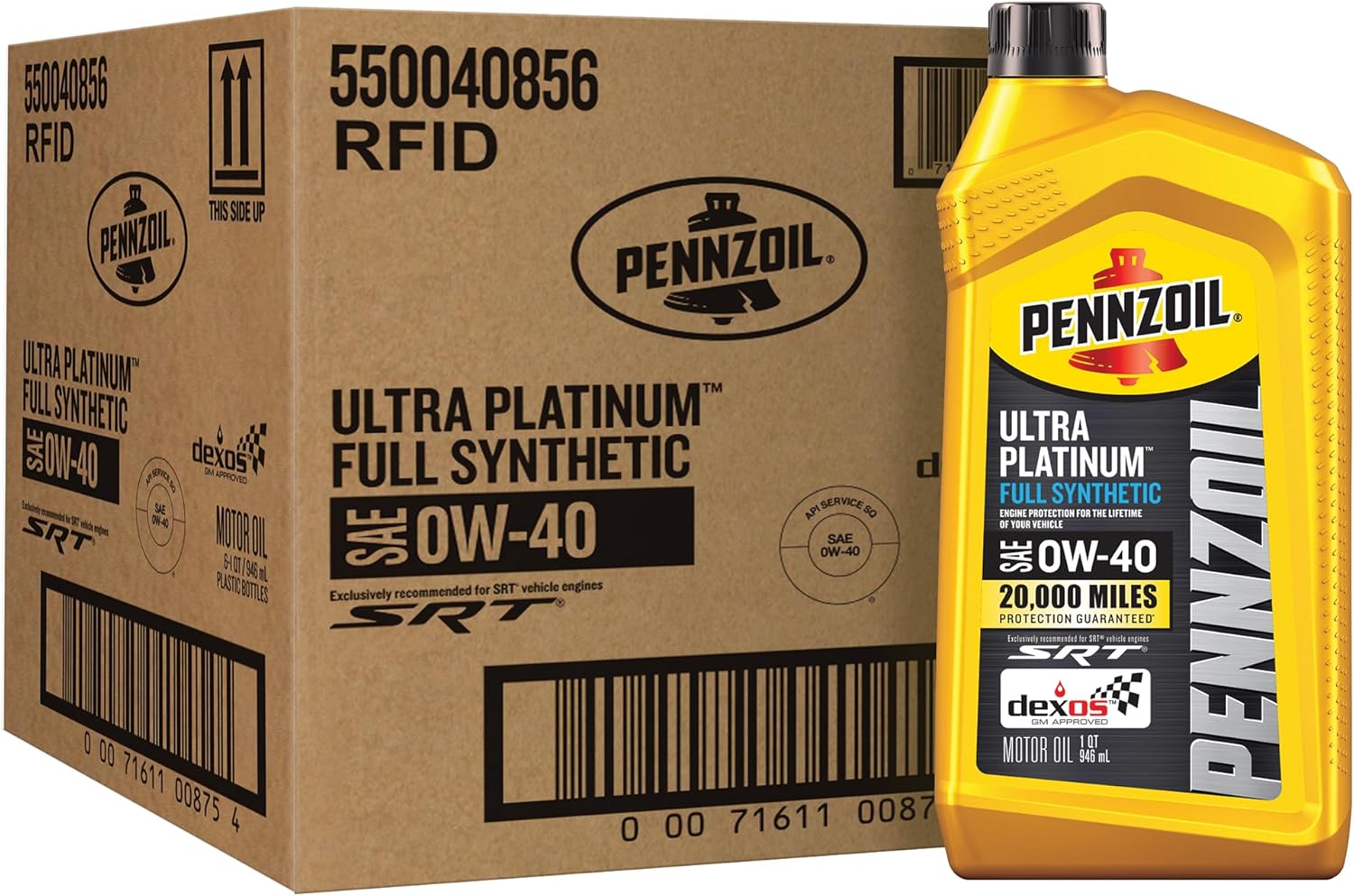
2. Pennzoil Ultra Platinum Full Synthetic 0W-40 Motor Oil (1 Quart, 6-Pack)
| SAE J300 Viscosity Grade | 0W-40 |
|---|---|
| Compatible with Vehicle Type | Car |
| Unit Count | 192.0 Fluid Ounces |
| Liquid Volume | 3780 Milliliters |
Pennzoil Ultra Platinum 0W-40 is a full synthetic engine oil aimed at high-performance applications where consistent protection and clean operation matter. In practice it is used for oil changes in performance cars to help keep pistons cleaner, reduce wear, and maintain horsepower under demanding conditions. Notable features include a gas-to-liquid base oil, claims of superior piston cleanliness versus industry standards, and a formulation designed for fast low-temperature flow and stability at high heat. For a Challenger with a performance V6 or Hemi V8, the 0W-40 grade offers robust film strength during hard driving and improved cold starts for short trips or cold climates. The product is sold as a six-quart case for complete service intervals and carries manufacturer guidance on drive conditions and oil-change frequency. Limitations are typical for premium synthetics: it is a specialty viscosity that may not match every factory recommendation and costs more than conventional oils, so confirm your Challenger's approved viscosity before switching.
Best for: Performance-oriented owners who prioritize maximum engine protection and cleanliness for spirited driving and track use on a Dodge Challenger.
Less Ideal for: Owners looking for the lowest-cost oil or those who need to strictly follow a factory-recommended viscosity different from 0W-40 should consider alternatives.
- Full synthetic 0W-40 formulation designed for extreme temperature performance
- Gas-to-liquid base oil aimed at cleaner pistons and reduced deposits
- Designed to protect horsepower and reduce wear under high-load driving
- Packaged as a 6-quart case suitable for multiple services
- Specialty 0W-40 viscosity may not match every Dodge Challenger engine's manufacturer recommendation
- Premium formulation is higher cost than conventional oils
Verdict: A premium full synthetic 0W-40 aimed at high-performance engines to maximize cleanliness and protection under demanding driving.
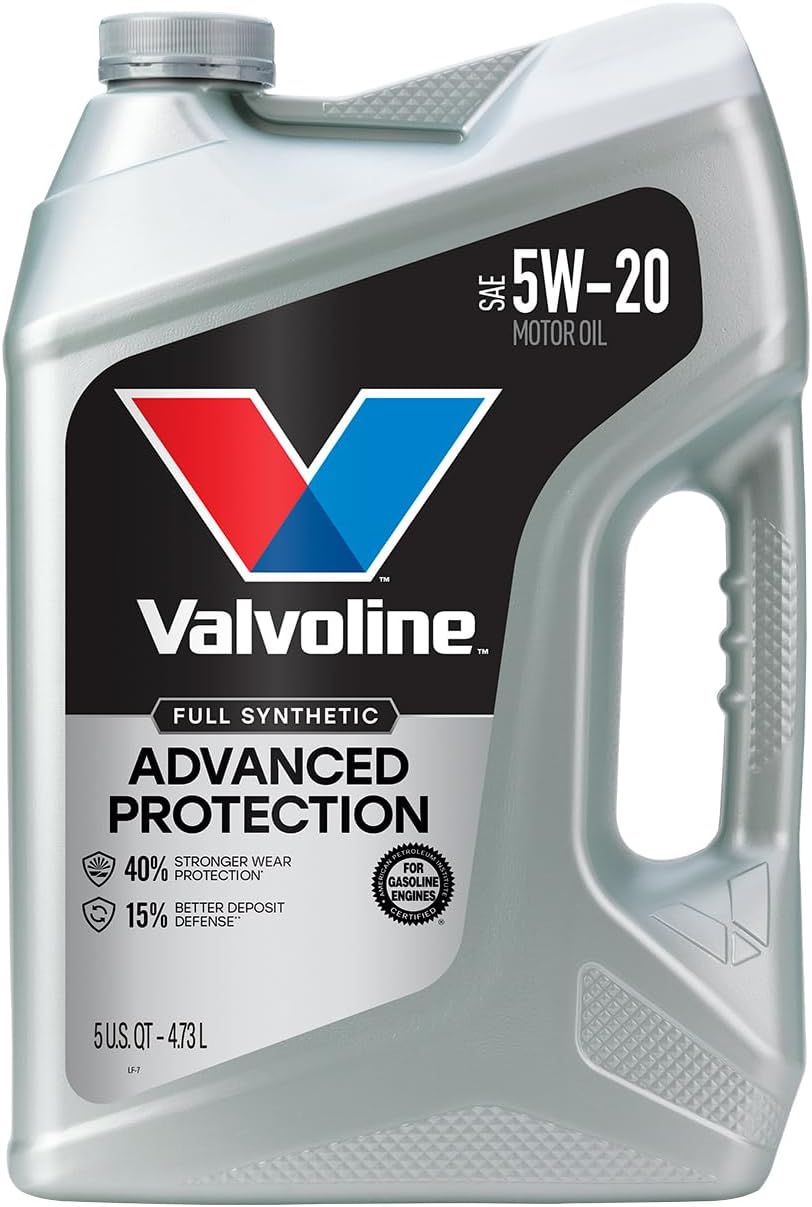
3. Valvoline Advanced Full Synthetic SAE 5W-20 Motor Oil, 5 qt
| SAE J300 Viscosity Grade | 5W-20 |
|---|---|
| Liquid Volume | 5 Quarts |
| Compatible with Vehicle Type | Truck |
This Valvoline Advanced Full Synthetic SAE 5W-20 is a five-quart bottle of factory-grade motor oil formulated to reduce wear, control deposits, and resist thermal breakdown in daily-driven engines. For Dodge Challenger owners running a 5W-20 specification, it is used just like any motor oil during routine oil changes to maintain lubrication, lower friction, and protect critical parts during stop-and-go driving, towing, or short trips. Notable features include a full synthetic base, detergents for deposit control, and stated test gains for wear protection versus industry standards. In practice that translates to cleaner internals and improved protection at higher operating temperatures compared with conventional oils. The practical benefits are straightforward: consistent protection across typical driving conditions and broad compliance with ILSAC and API specs so it fits service intervals recommended for compatible Challengers. Limitations are the grade itself — 5W-20 is only suitable for Challenger engines that specify that viscosity; it is not appropriate for models that require thicker grades like 5W-30 or 0W-40, and drivers seeking specialized high-mileage or extreme-performance formulations may prefer a different Valvoline variant.
Best for: Practical optimizers who prioritize getting reliable, factory-quality protection at a reasonable cost and want an easy drop-in full synthetic for routine maintenance on compatible Challenger engines.
Less Ideal for: Drivers who run Challengers that require a different viscosity or who need a dedicated high-mileage or race-focused oil should consider alternative formulations.
- Full synthetic formula for better high-temperature stability and wear protection
- Detergent additives that help reduce deposits and keep engine internals cleaner
- Meets ILSAC and API performance specifications for modern gasoline engines
- Viscosity limited to 5W-20 so it is only compatible with engines that specify that grade
Verdict: A dependable full synthetic 5W-20 that delivers strong wear and deposit protection for Challenger engines that call for that viscosity.
4. Castrol GTX High Mileage 5W-20 Synthetic Blend Motor Oil, 5 Quart Bottle

| Compatible with Vehicle Type | For use in vehicles with over 75,000 miles, Passenger cars, trucks, and SUVs |
|---|---|
| SAE J300 Viscosity Grade | 5W-20 |
| Container Type | Bottle |
| Liquid Volume | 160 Fluid Ounces |
Castrol GTX High Mileage 5W-20 is a synthetic blend motor oil designed for higher-mileage engines and is commonly used during routine oil changes in older Scion xB models that call for 5W-20. It contains dispersants and additives targeted at reducing sludge and deposit buildup, seal conditioners to help reduce minor leaks, and a phosphorus replacement technology intended to protect the catalytic converter and emission system. In practice this oil helps maintain cleanliness, resists burn-off, and offers wear protection for pistons, rings, and timing components so older engines run smoother between services. As a budget-minded option it provides many high-mileage benefits found in pricier formulations while keeping cost down, but it is a synthetic blend rather than a full synthetic so extreme performance, maximum fuel economy gains, and the longest possible drain intervals may be more limited compared with full synthetic grades. Use it when you want targeted high-mileage protection for a Scion xB without paying premium full-synthetic prices.
Best for: Budget-conscious owners seeking a cost-effective high-mileage oil to protect and clean an aging Scion xB engine without paying for full-synthetic options.
Less Ideal for: Drivers wanting maximum thermal protection, the longest possible oil change intervals, or who require a different viscosity should consider full synthetic alternatives or the correct SAE grade for their engine.
- Formulated specifically for high-mileage engines to help reduce sludge and extend engine life
- Phosphorus replacement technology to lessen harm to the catalytic converter and emission system
- Includes seal conditioners that can reduce minor oil leaks common in older engines
- Lower-cost synthetic blend option that retains many protective additives of premium oils
- Synthetic blend rather than full synthetic so it may not match highest thermal stability or longest drain intervals
- Viscosity fixed at 5W-20 so not suitable if your engine requires a different SAE grade
Verdict: A cost-conscious high-mileage 5W-20 synthetic blend that delivers sludge control and emission-system protection for older Scion xB engines.
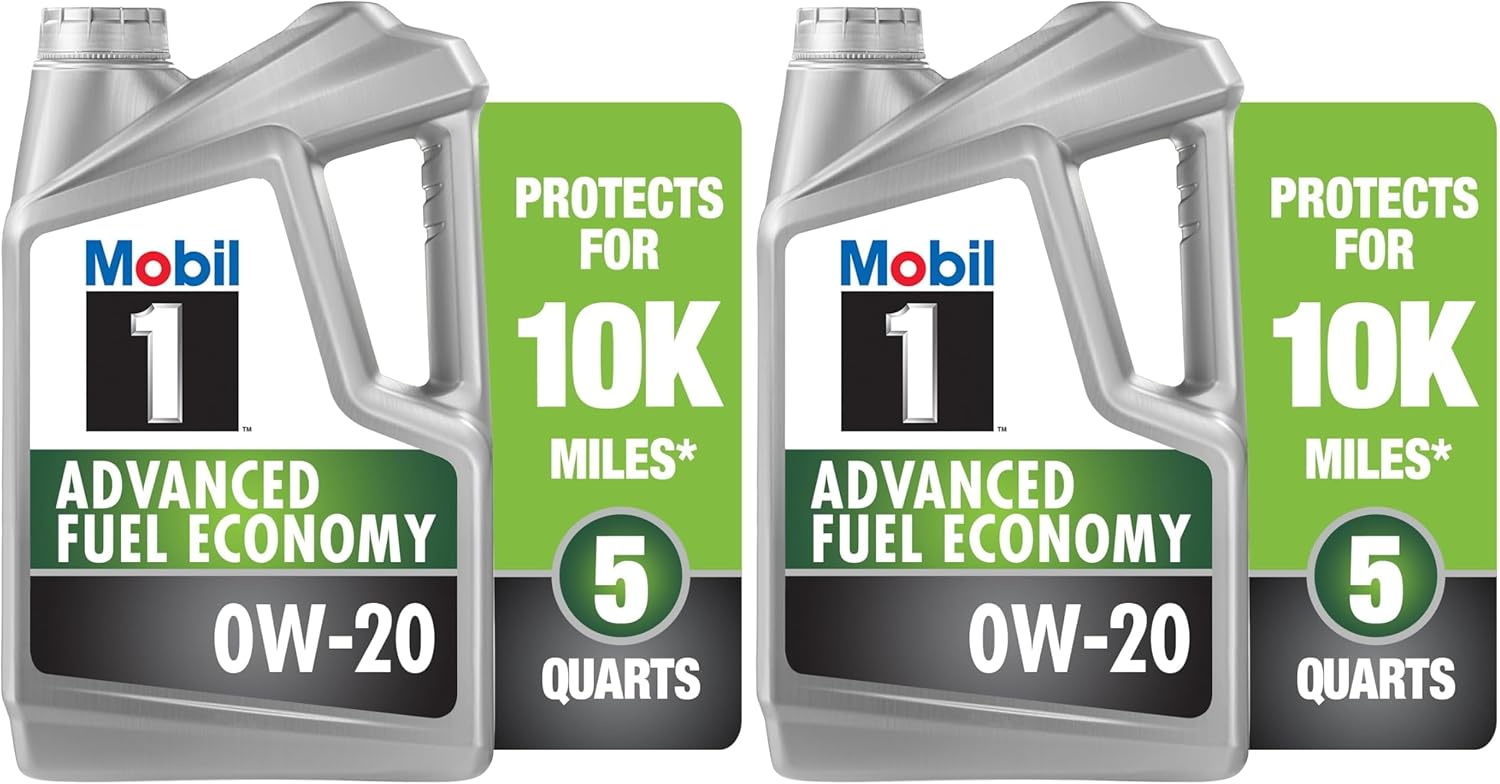
5. Mobil 1 Advanced Fuel Economy Full Synthetic Motor Oil 0W-20 (5 Quart, Pack of 2)
| Viscosity | 0W-20 |
|---|---|
| Type | Full Synthetic |
| Size | 5 Quart (Pack of 2) |
| Unit Count | 320.0 Fluid Ounces |
Mobil 1 Advanced Fuel Economy 0W-20 is a low-viscosity full-synthetic engine oil designed to reduce friction, help control deposits, and support longer drain intervals. It is typically used as a factory-quality replacement oil for passenger cars and light trucks; for the Dodge Challenger article focus, it fits naturally on models that call for 0W-20 viscosity. Mobil 1’s Triple Action Formula and specialty components aim to keep internal parts clean, resist oxidation, and protect timing chains and turbocharged components against wear. The formulation is rated to protect up to 10,000 miles or one year between changes when following manufacturer guidelines, and it offers low-temperature start protection and high-temperature stability. Practical benefits include potential modest fuel-economy gains when moving from higher-viscosity oils and improved engine cleanliness over conventional oils. Limitations are that it is specific to engines requiring 0W-20 and therefore is not suitable for Challengers that require a different viscosity; also, claimed drain intervals depend on driving conditions and manufacturer recommendations, so owners should follow Dodge’s service schedule.
Best for: Reliability-focused owners who prioritize factory-quality protection and longer scheduled service intervals for daily-driven Challengers that call for 0W-20 oil.
Less Ideal for: Owners of Dodge Challengers that require a different oil viscosity or who prefer very frequent short-interval oil changes regardless of manufacturer guidance.
- Full-synthetic formula reduces friction and helps improve fuel economy relative to higher-viscosity oils
- Engine cleanliness and deposit control to help extend component life
- Formulated to meet ILSAC GF-6 standards for modern engines including turbocharged units
- Rated protection up to 10,000 miles or one year under recommended conditions
- Only appropriate for engines that specify 0W-20 viscosity, not all Dodge Challenger engines require this grade
Verdict: A factory-quality full-synthetic 0W-20 oil that prioritizes engine cleanliness and extended protection for vehicles specified to use 0W-20.
6. Valvoline MaxLife Full Synthetic High Mileage 5W-20 Motor Oil, 5 qt

| SAE J300 Viscosity Grade | 5W-20 |
|---|---|
| Compatible Vehicle Type | Car, Truck |
| Liquid Volume | 5 Quarts |
| Flash Point | 390 Degrees Fahrenheit |
Valvoline MaxLife Full Synthetic 5W-20 is a high-mileage motor oil aimed at vehicles with over 75,000 miles but suitable for any engine requiring 5W-20. In a Scion xD this oil supplies full synthetic protection during normal driving and highway use, helping reduce wear and control sludge while the included seal conditioners can help limit minor leaks common in older engines. Notable features include a formula that Valvoline says improves wear protection, sludge defense, and heat resistance compared with typical industry baselines, and it meets current API and ILSAC gasoline specifications. Practical benefits for an xD owner are longer engine life, steadier oil consumption, and potentially improved fuel economy versus conventional oils. Trade-offs are limited: 5W-20 is a specific grade so you must confirm factory recommendations for your xD year and engine, and high-mileage additives can slightly change oil change intervals or cost compared with basic synthetic blends. The product comes in a standard 5 quart bottle with Valvoline's anti-glug pour design that makes DIY oil changes cleaner.
Best for: Practical owners who prioritize long-term engine health and cost-effective maintenance, looking to extend the life of a higher-mileage Scion xD without overcomplicating service decisions.
Less Ideal for: Drivers who maintain a low-mileage or brand-new Scion xD and prefer a basic synthetic blend or the exact factory-recommended low-viscosity oil without high-mileage additives.
- Formulated for high-mileage engines to reduce wear and help prevent leaks
- Full synthetic 5W-20 provides stronger sludge and heat protection than many conventional oils
- Meets ILSAC GF-7A and current API gasoline standards for broad compatibility
- 5 quart bottle with anti-glug pour design eases DIY oil changes
- Only available in the 5W-20 grade so not suitable if your Scion xD requires a different viscosity
- High-mileage additive package may be unnecessary for low-mileage engines
Verdict: A practical full synthetic 5W-20 high-mileage oil that helps extend engine life and reduce common ageing issues in higher-mileage Scion xD vehicles.
7. Castrol EDGE High Mileage 5W-30 Full Synthetic Motor Oil, 5 Quart

| Compatible with Vehicle Type | For vehicles with over 75,000 miles |
|---|---|
| SAE J300 Viscosity Grade | 5W-30 |
| Liquid Volume | 160 Fluid Ounces |
| Viscosity Level | Low to Medium |
Castrol EDGE High Mileage 5W-30 is a full synthetic motor oil formulated for vehicles with more than 75,000 miles and is intended to reduce wear and deposits while protecting the emission system. For a Dodge Challenger with a high-mileage V6 or V8, this oil is used like a conventional engine oil during routine oil changes and can help control sludge, neutralize acids, and limit oil burnoff on older engines. Notable features include Castrol's Phosphorus Replacement Technology to lower phosphorus exposure to the catalytic converter and additives targeted at timing chain and friction wear protection. Practical benefits are cleaner operation, reduced volatility that can cut down top-offs, and formulation claims that support longer service intervals when following manufacturer guidance. Limitations: it is optimized for high-mileage engines so its advantages are less relevant for low-mileage or brand-new engines, and drivers should always verify SAE grade and manufacturer oil specifications for their Challenger's model year and engine before switching.
Best for: Risk-averse, mainstream owners who prioritize proven, factory-quality protection for an older Dodge Challenger and prefer products that aim to reduce emissions system wear and engine deposits.
Less Ideal for: Drivers with a low-mileage or newly rebuilt Challenger engine seeking a formulation specifically tuned for break-in or maximum performance should consider alternatives tailored to those needs.
- Formulated specifically for engines with over 75,000 miles to address wear and deposits.
- Phosphorus Replacement Technology to help protect the catalytic converter and emission system.
- Additives aimed at reducing sludge and controlling oil volatility for longer-lasting protection.
- Universal fit and common 5W-30 viscosity suitable for many Dodge Challenger engines when matched to manufacturer specs.
- Designed for high-mileage engines so benefits are limited on newer engines.
- Claims about extended mileages depend on following vehicle maker service intervals and conditions.
Verdict: A practical, factory-quality full synthetic 5W-30 tuned to protect high-mileage engines and the emission system in an older Dodge Challenger.
Choosing the Right Dodge Challenger Engine Oil: Key Factors to Consider
Viscosity Grade
Viscosity grade determines how the oil flows at cold start and operating temperature. Choosing the correct grade affects cold cranking, oil pressure, and film strength when the engine is hot.
A too-thin oil can reduce protection under load, while a too-thick oil can increase drag and reduce fuel economy. Match the viscosity to the vehicle manufacturer recommendation and to the climate you drive in to ensure proper protection from startup through prolonged operation.
Additive Package
The additive package controls wear, deposits, and oxidation. Anti-wear agents protect camshafts, lifters, and bearings, detergents keep combustion byproducts from forming deposits, and dispersants help suspend contaminants until the next drain.
A balanced additive formulation prolongs engine life and maintains performance. Look for oils with proven anti-oxidants and detergents, especially if you do spirited driving or frequent short trips that promote deposit formation.
Synthetic Versus Conventional
Synthetic oils generally offer better thermal stability, flow at low temperatures, and resistance to breakdown than conventional oils. That makes them useful for performance-oriented engines that see higher operating temperatures and stress.
Conventional oils can still be adequate for routine driving, but synthetics often extend drain intervals and provide more consistent protection under heavy use. Consider your driving habits and maintenance schedule when choosing between synthetic, synthetic blend, and conventional formulations.
High-Mileage Considerations
Engines with elevated mileage can benefit from oils formulated for high-mileage use. These formulations often include conditioners to help seal aging gaskets and reduce oil consumption, along with additives that address increased wear and deposit control.
If your Dodge Challenger has higher miles, a high-mileage oil can improve seal performance and reduce leaks. Assess engine condition, typical trip lengths, and any history of oil consumption when deciding whether a high-mileage formulation is appropriate.
Manufacturer Approvals and Certifications
Look for industry certifications such as API service categories and any OEM approvals relevant to Dodge Challenger engines. These specifications indicate the oil meets minimum standards for protection, emission system compatibility, and performance.
Certifications do not tell the whole story, but they are practical filters to eliminate underqualified products. Prioritize oils that list clear technical data and meet or exceed the manufacturer recommendations for your specific engine.
Cold-Start Performance and Operating Temperature
An oil must protect the engine during cold starts and maintain film strength at normal and elevated operating temperatures. Cold-start performance affects wear during the first seconds of startup, while thermal stability prevents viscosity loss under sustained load.
Consider the typical ambient temperatures you drive in and whether you often start the engine from cold. Oils with strong low-temperature flow and high-temperature stability reduce startup wear and help maintain consistent oil pressure across driving conditions.
How We Chose the Best Dodge Challenger Engine Oil
We focused on engine oils that suit the typical operating profiles and engine designs found in Dodge Challenger vehicles. Selection prioritized oils with appropriate viscosity grades for performance and ambient temperature ranges, robust additive packages for wear and deposit control, and formulations that support both regular and extended drain intervals.Key evaluation criteria included viscosity stability across temperature ranges, anti-wear and anti-oxidation additive chemistry, API and OEM-recommended performance categories, and compatibility with engines that have higher torque and frequent load changes. We also considered oils marketed for high-mileage engines and those designed to protect valve trains and turbochargers where applicable.Excluded items were generic or poorly specified blends without clear performance credentials, and products lacking third-party certification or technical data. We did not include specialty fluids intended for other equipment types. The final list represents oils that balance protection, drivability, and maintenance practicality for Dodge Challenger engines.
Our full evaluation process is outlined in our review methodology.
FAQ
How often should I change the engine oil in my Dodge Challenger?
Frequency depends on driving habits and the oil type used. For regular driving with conventional oil, many follow manufacturer intervals. With full synthetic oils and less severe duty cycles, intervals can often be extended within the manufacturer guidelines. Always follow the vehicle maintenance schedule and monitor oil condition between changes.
Can I switch to a different viscosity grade than currently in my Challenger?
You can change viscosity grades if the new grade is within the ranges recommended for your engine and climate. Changing to a grade outside manufacturer guidance can affect oil pressure and protection. Consult the owner manual or a service professional to confirm acceptable grades for your specific engine and environment.
Is synthetic motor oil better for a performance car like the Dodge Challenger?
Synthetic motor oil often offers advantages for performance engines, including better thermal stability and low-temperature flow. These properties can provide more consistent protection under high load and temperature swings. Whether it is the right choice depends on driving style and maintenance preferences.
Should I use a high-mileage formula if my Challenger has many miles?
High-mileage engine oils can help address common age-related issues like seal drying and oil consumption. They often contain conditioners that can reduce leaks and additives that help control deposits. Use high-mileage formulations when engine wear or oil consumption becomes noticeable, and monitor results.
Will switching oils affect engine performance or fuel economy?
Changing oil formulations can influence friction characteristics and therefore have a small impact on performance and fuel economy. A properly matched viscosity and quality additive package typically supports consistent performance. Any gains are usually modest and depend on the starting condition of the engine.
Conclusion
Prioritize the viscosity grade and additive chemistry that match your Dodge Challenger engine and driving conditions. Balancing cold-start flow, high-temperature stability, and anti-wear additives will address most durability and drivability concerns.If you drive aggressively or have higher mileage, consider formulations that emphasize thermal stability and seal conditioning. Follow the manufacturer guidance for drain intervals and certifications to ensure consistent protection over time.
Explore More:
- Check out all Dodge Challenger parts & accessories
- Explore Fluids & Chemicals
- Browse all Accessories
