

Note: This article contains affiliate links. If you click on these links and make a purchase, I may earn a small commission at no extra cost to you. This helps support my research and content. Read my full affiliate disclosure here.
If you own a Chevrolet Equinox with the 2.0L turbo engine, picking the right engine oil affects fuel economy, turbo longevity, and overall reliability. The wrong viscosity or formulation can lead to higher wear, poor cold starts, or excessive deposits that reduce performance over time. This guide shortlists seven top-performing engine oils suited to the 2.0L turbo application and explains the tradeoffs between viscosity grades and additive chemistries.Below we cover the evaluation criteria used to choose the shortlist, practical considerations for routine service and high-mileage use, and answers to common owner questions to help you make a confident choice for your Equinox 2.0L turbo.
Looking for other parts? See all Chevrolet Equinox parts & accessories.
Top Picks at a Glance
| Best Overall Engine Oil A balanced full-synthetic oil that meets modern performance specs | Valvoline Extended Protection Full Synthetic Motor Oil 0W-20, 5 qt |  |
| Best Budget Engine Oil An affordable option that still meets common API/ILSAC standards | Valvoline Daily Protection SAE 5W-20 Synthetic Blend Motor Oil, 5 qt |  |
| Best Dexos-Certified Engine Oil Formulated to meet GM dexos specifications for turbocharged engines | ACDelco GM Original Equipment dexos1 Gen 3 Full Synthetic 5W-30 Motor Oil, 1 qt |  |
| Best 0W-20 Engine Oil Low-viscosity synthetic for improved cold starts and fuel economy | Valvoline Advanced Full Synthetic 0W-20 Motor Oil, 5 qt |  |
| Best 5W-30 Engine Oil Higher-viscosity full-synthetic for slightly thicker protection at temperature | ACDelco GM Original Equipment dexos1 Gen 2 Full Synthetic 5W-30 Motor Oil (1 qt, pack of 6) |  |
| Best High‑Mileage Engine Oil Additive-rich formula designed to protect aging engines and seals | Valvoline High Mileage 150K with MaxLife Plus Technology 5W-20 Motor Oil, 5 qt |  |
| Best Multi‑Quart Value Pack Bulk or multi‑quart packs that cut per‑quart cost for frequent changers | ACDelco GM Original Equipment dexos1 Gen3 Full Synthetic 0W-20 Motor Oil – 5 qt (Pack of 3) |  |
1. Valvoline Extended Protection Full Synthetic Motor Oil 0W-20, 5 qt
Best Overall Engine Oil
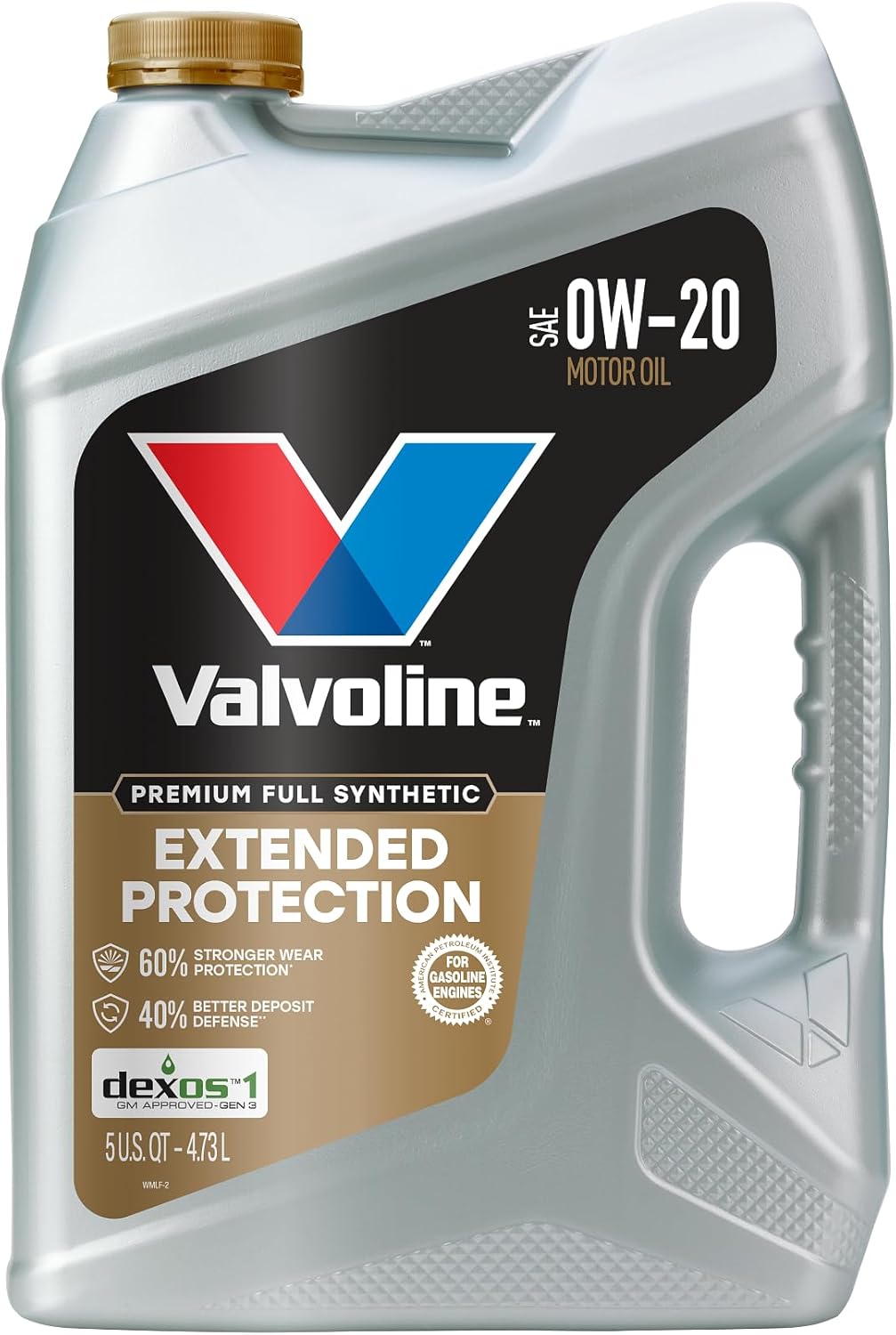
| SAE J300 Viscosity Grade | 0W-20 |
|---|---|
| Compatible with Vehicle Type | Car, Truck |
| Container Type | Bottle |
| Liquid Volume | 5 Quarts |
| Meets/Exceeds | ILSAC GF-7A, API SP, API SN |
Valvoline Extended Protection 0W-20 is a premium full synthetic motor oil designed to protect small, modern gasoline engines, including turbocharged 2.0L units. It is typically used at routine oil changes by DIY mechanics who want a factory-replacement-quality fluid with boosted additives for wear and deposit control. Notable features include Dual Defense Additive Technology and claims of substantially better wear, deposit defense, and heat protection compared with industry baselines. In practice that means stronger film strength at high temperatures, improved resistance to sludge and deposits, and support for fuel-economy-focused engines that run hotter or under boost. The oil meets current ILSAC and API specs and lists manufacturer approvals such as GM dexos1 Gen 3 and Ford WSS-M2C962-A1, which helps compatibility with modern turbocharged engines. Limitations are that its SAE grade is 0W-20 only, so vehicles requiring a different viscosity need another product, and performance claims are manufacturer-provided rather than independently measured in every application.
Best for: DIY mechanics with a turbocharged small-displacement engine who want a ready-to-use full synthetic oil that prioritizes wear protection and engine cleanliness.
Less Ideal for: Drivers whose Equinox or other vehicle requires a different viscosity grade or a specifically different manufacturer specification should choose a matched oil instead.
- Full synthetic formulation for improved protection under heat and stress
- Dual Defense additives for enhanced wear and deposit control
- Meets ILSAC GF-7A and API SP/SQ sequences for modern gasoline engines
- Listed approvals including GM dexos1 Gen 3 and Ford WSS-M2C962-A1 support compatibility
- Available in a 5 quart bottle convenient for DIY oil changes
- Only available in the 0W-20 viscosity grade shown here, so not suitable for engines specifying other grades
Verdict: The go-to full-synthetic engine oil for most DIY mechanics who want reliable protection and broad compatibility with turbocharged small-displacement engines.
2. Valvoline Daily Protection SAE 5W-20 Synthetic Blend Motor Oil, 5 qt
Best Budget Engine Oil

| Viscosity | 5W-20 |
|---|---|
| Formulation | Synthetic Blend |
| Container Type | Bottle |
| Liquid Volume | 5 Quarts |
| Compatible with Vehicle Type | Car, Truck |
Valvoline Daily Protection 5W-20 is a synthetic blend motor oil intended for standard oil-change intervals and everyday driving. It flows well at cold temperatures for reduced start-up wear, contains detergents to resist sludge and deposits, and uses low-friction additives aimed at modest fuel-efficiency gains. Typical use is straightforward: pour into the engine during scheduled maintenance on vehicles that specify 5W-20 viscosity and factory-quality replacement oils. The 5-quart bottle covers a full service with room for topping off and is packaged for easy pouring. This oil is designed to strike a balance between performance and cost, offering better protection than a conventional oil without the price of a full synthetic. It is not marketed as a high-mileage or extreme-performance formulation, so drivers seeking extended drain intervals or maximum turbo protection under severe track conditions should consider dedicated synthetic or manufacturer-recommended premium oils instead.
Best for: Drivers needing a cost-conscious, factory-quality replacement oil for routine maintenance on a 2.0L turbo vehicle who prioritize reliable day-to-day protection over extended or track-focused performance.
Less Ideal for: Owners who run extended oil-change intervals, frequently tow or track their vehicle, or require a full synthetic formulation for maximum thermal and shear stability.
- Synthetic blend formula offers better cold-start flow and wear protection than conventional oils
- Detergent additives help resist sludge and keep the engine cleaner between changes
- Low-friction technology can modestly improve fuel efficiency
- Five-quart bottle is convenient for a full oil change plus a reserve
- Not positioned for extended drain intervals or extreme performance use
Verdict: Choose this economical motor oil when you need decent protection on a tight maintenance budget or for routine oil-change intervals.
3. ACDelco GM Original Equipment dexos1 Gen 3 Full Synthetic 5W-30 Motor Oil, 1 qt
Best Dexos-Certified Engine Oil

| Viscosity | 5W-30 |
|---|---|
| Specification | dexos1 Gen 3 |
| Liquid Volume | 1 Quarts |
| Compatible with Vehicle Type | Car |
This ACDelco dexos1 Gen 3 5W-30 is a factory-aligned full synthetic engine oil intended for GM-derived gasoline engines, including turbocharged four-cylinders like the 2.0L in the Equinox. It is designed to control deposits and varnish, resist oxidation at high temperatures, and offer improved turbocharger protection and compatibility with exhaust particulate filters compared with older formulas. Typical use is routine oil changes to maintain engine cleanliness and performance while preserving manufacturer guidance and warranty considerations. The bottle is a single-quart size suited for topping off or single-qt changes, and the formulation is backward compatible with prior dexos1, ILSAC GF-6 and API SP grades. Limitations are the small one-quart packaging if you need a full drain refill and the product listing does not include a warranty; buyers should follow vehicle service intervals and use the correct viscosity and oil capacity for their Equinox 2.0L Turbo.
Best for: Buyers who prioritize using GM-recommended chemistry and want a factory-aligned oil for routine maintenance of a Chevrolet Equinox 2.0L Turbo to protect turbocharging and engine cleanliness.
Less Ideal for: Those who prefer bulk packaging for frequent full-capacity oil changes or want an oil marketed with an explicit manufacturer warranty should consider larger-volume options or alternative brands.
- Meets dexos1 Gen 3 specification for GM passenger-car engines
- Full synthetic base offers high oxidation resistance and deposit control
- Formulation improves turbocharger protection and exhaust particulate filter compatibility
- Sold in 1-quart bottles which may require multiple bottles for a full oil change
Verdict: Pick a dexos-certified motor oil when you want factory-recommended chemistry and warranty-friendly protection for GM-derived engines.
4. Valvoline Advanced Full Synthetic 0W-20 Motor Oil, 5 qt
Best 0W-20 Engine Oil

| Viscosity grade | 0W-20 |
|---|---|
| Size | 5 QT |
| Flash point | 200 Degrees Celsius |
| SAE J300 Viscosity Grade | 0W-20 |
| Manufacturer | Valvoline |
Valvoline Advanced Full Synthetic 0W-20 is a passenger-car motor oil aimed at protecting modern gasoline engines while helping fuel economy and low-temperature performance. It is typically used as a direct replacement during oil changes for vehicles that call for 0W-20 viscosity, where it helps the crank and valvetrain receive oil quickly at cold start and maintains protective film at operating temperature. Notable features include synthetic base stocks and additive boosters that Valvoline says increase wear protection, reduce deposits, and improve heat tolerance compared with industry baselines. In practice that means smoother running, reduced sludge risk, and potentially better mileage when the engine is under light load or during stop-and-go driving. The formulation meets current API and ILSAC specs and several manufacturer specifications, which supports compatibility with turbocharged four-cylinder engines. Trade-offs are minimal for vehicles requiring 0W-20, but drivers with older high-mileage engines or those needing a different viscosity should choose a product matched to their engine requirements.
Best for: Drivers who want an oil that prioritizes easy cold starts, consistent oil flow, and fuel-economy benefits for modern turbocharged 2.0L engines in everyday driving.
Less Ideal for: Owners of older high-mileage engines that benefit from thicker grades or drivers instructed to use a different viscosity by their vehicle manufacturer should consider alternate formulations.
- Designed for strong low-temperature flow to reduce wear at cold starts
- Claims improved wear protection versus industry standards for longer engine life
- Enhanced deposit and heat resistance to help maintain engine cleanliness
- Meets modern API and ILSAC performance categories and several manufacturer specs
- Viscosity fixed at 0W-20 so not suitable where a different grade is required
Verdict: Use this 0W-20 formulation if you prioritize easier cold starts and the fuel-economy and oil-flow characteristics suited to modern turbocharged engines.
5. ACDelco GM Original Equipment dexos1 Gen 2 Full Synthetic 5W-30 Motor Oil (1 qt, pack of 6)
Best 5W-30 Engine Oil

| Viscosity | 5W-30 |
|---|---|
| Specification | dexos1 Gen 2 |
| Service Class | API SN |
| ILSAC | GF-5 |
| Container Type | Bottle |
This ACDelco dexos1 Gen 2 5W-30 is a factory-quality full synthetic motor oil designed to meet GM specifications for modern engines. It is typically used in routine oil changes where manufacturer compliance and elevated-temperature stability matter, such as turbocharged four-cylinder engines. The formulation is targeted at deposit control and high-temperature protection, which helps keep combustion chambers and turbocharger passages cleaner under sustained load. Because it meets ILSAC GF-5 and API SN classifications, it supports fuel economy measures and broad compatibility with current engine designs while still focusing on durability. The product comes in one-quart bottles and is convenient for DIY changes or topping up at the shop. Limitations are that this listing is a packaged multipack and does not include oil filters or installation hardware, and buyers should confirm dexos1 Gen 2 approval is appropriate for their specific vehicle year and oil-change interval before switching from a different spec.
Best for: Buyers who want a slightly thicker 5W-30 aimed at elevated-temperature stability and strong deposit control for turbocharged or high-load GM engines and who prioritize manufacturer-approved fluids.
Less Ideal for: Drivers who need a different oil specification for non-GM vehicles or who prefer a different viscosity strategy such as 0W-20 for maximum cold-start efficiency.
- Licensed to GM dexos1 Gen 2 specification for factory-quality compatibility with GM-recommended fluids
- Full synthetic base stocks for improved high-temperature stability and engine cleanliness
- Meets ILSAC GF-5 and API SN standards for modern engine protection and fuel economy support
- Sold as a multipack of one-quart bottles which may not match single-change needs
Verdict: Opt for a 5W-30 motor oil when you prefer a slightly thicker operating viscosity for elevated-temperature stability and deposit control.
6. Valvoline High Mileage 150K with MaxLife Plus Technology 5W-20 Motor Oil, 5 qt
Best High‑Mileage Engine Oil
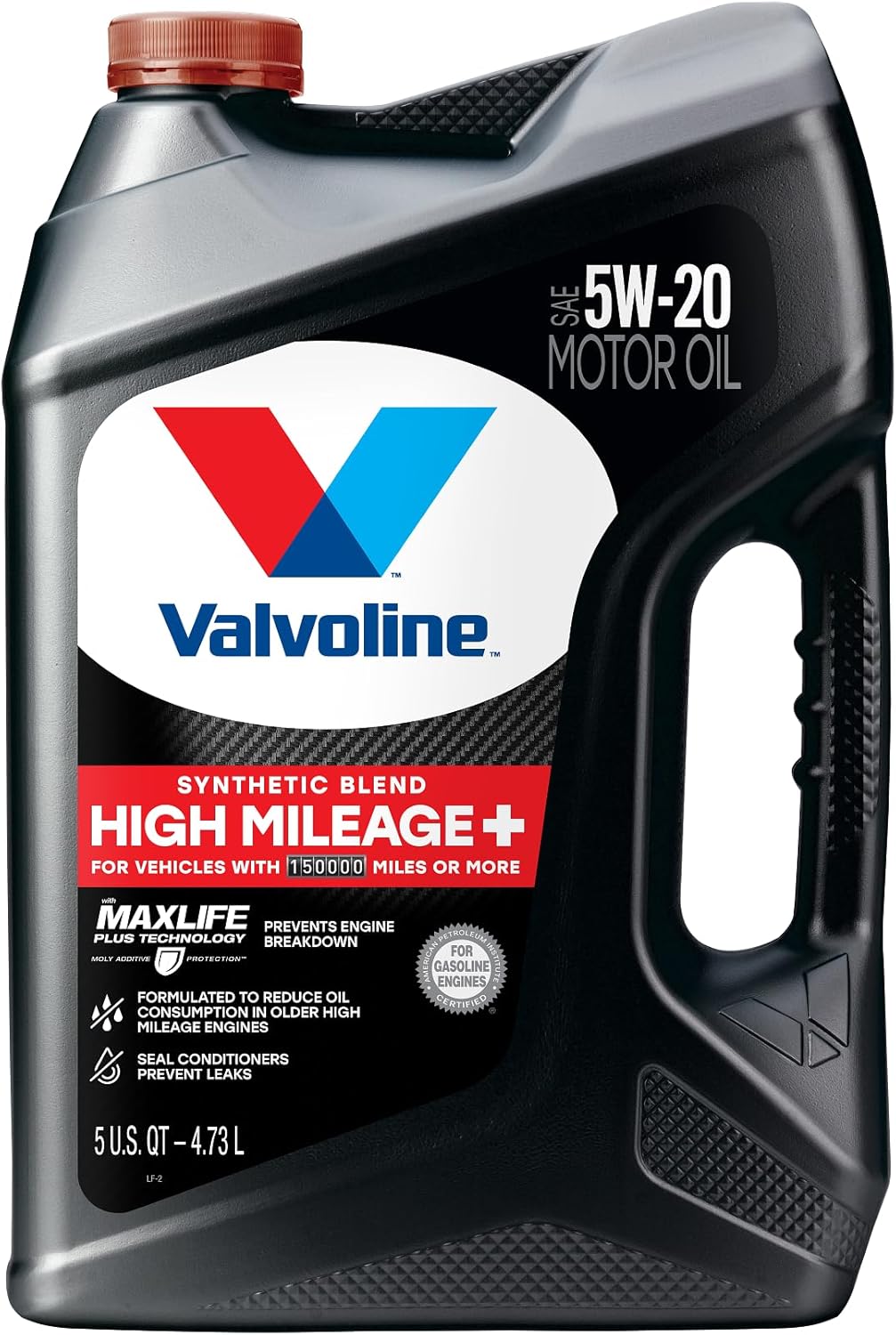
| Viscosity grade | 5W-20 |
|---|---|
| Container type | Bottle |
| Liquid volume | 5 Quarts |
| Compatible vehicle type | Car, Truck |
| Standards | ILSAC GF-6A, API SP |
Valvoline High Mileage 150K is a synthetic blend designed to protect aging engines by reducing wear, conditioning seals, and fighting deposits. In typical DIY oil changes for a Chevrolet Equinox 2.0L Turbo, it is used like any 5W-20 motor oil but with additives targeted at high-mileage concerns: a molybdenum-based anti-wear package to form a protective film on metal surfaces, boosted detergents and antioxidants to clean sludge and resist thermal breakdown, and seal conditioners intended to reduce small leaks and oil consumption. The practical benefits are straightforward for a turbocharged, high-mileage Equinox: improved wear protection under boost, potential reduction in minor seepage, and cleaner internals between services. Limitations are that it is a synthetic blend rather than a full synthetic, so there are modest compromises in shear stability and long-term high-temperature performance compared with top-tier full synthetics, and it should be matched to the vehicle maker's 5W-20 viscosity recommendation and service specs.
Best for: DIY owners of a Chevrolet Equinox 2.0L Turbo who prioritize reducing oil leaks, conditioning aging seals, and extending engine life on a car with high mileage.
Less Ideal for: Drivers seeking the absolute highest thermal and shear stability should consider a premium full synthetic motor oil instead; this is not intended to fix major mechanical failures.
- Formulated specifically for engines with 150,000+ miles to address common aging issues
- Moly additive system provides rapid anti-wear film formation to reduce friction
- Seal conditioners and detergents help reduce small leaks and combat sludge
- Meets modern service categories including ILSAC GF-6A and API SP for broad compatibility
- Synthetic blend rather than full synthetic, so slightly less high-temperature durability than premium full synthetics
- Designed for high-mileage benefits but not a substitute for mechanical repair of significant leaks or turbo issues
Verdict: Select a high-mileage motor oil to help reduce leaks, condition seals, and extend the life of higher‑mileage engines during DIY maintenance.
7. ACDelco GM Original Equipment dexos1 Gen3 Full Synthetic 0W-20 Motor Oil – 5 qt (Pack of 3)
Best Multi‑Quart Value Pack

| SAE Grade | 0W-20 |
|---|---|
| Compatible Vehicle Type | Car |
| Viscosity Level | Low |
| Liquid Volume | 5 Quarts |
This three‑pack of ACDelco dexos1 Gen3 0W-20 is aimed at DIYers who change oil frequently and want factory‑validated fluid for GM turbocharged engines like the 2.0L. The oil meets GM dexos1 Gen3 specification and is backward compatible with earlier dexos1 and ILSAC GF-6 and API SP grades, so it covers modern protections such as improved oxidation resistance, turbocharger protection, and reduced deposit formation. In practice the pack gives you enough volume for multiple service intervals, saving trips to buy single quarts and simplifying storage. Notable features include full synthetic base stocks and GM validation, which helps preserve engine cleanliness and compatibility with exhaust particulate systems. Trade-offs are that the pack is limited to 0W-20 viscosity, so it fits vehicles that require or accept that grade but is not a multi-viscosity solution for engines needing a different SAE. Also there is no explicit warranty information included with the listing.
Best for: DIY owners who perform regular oil changes on GM turbocharged cars and want a cost‑effective, factory‑validated multi‑quart pack to keep on hand for scheduled servicing.
Less Ideal for: Drivers who need a different SAE viscosity or who perform infrequent oil changes and prefer single containers or professional shop service.
- Pack of three 5‑quart containers provides multiple full oil changes and lower per‑quart cost
- Meets GM dexos1 Gen3 specification and is backward compatible with ILSAC GF-6 and API SP
- Full synthetic formulation with improved oxidation resistance and turbocharger protection
- Designed to help control deposits and keep engines cleaner under normal driving conditions
- Only offered in 0W-20 viscosity which may not suit engines requiring other grades
Verdict: Buy a multi‑quart or bulk pack when you change oil frequently or want the lowest per‑quart cost for routine DIY oil servicing.
Choosing the Right Chevrolet Equinox 2.0L Turbo Engine Oil: Key Factors to Consider
Viscosity Grade and Cold-Start Performance
Viscosity grade determines how the oil flows at low and high temperatures and directly affects starting protection and fuel economy. For the 2.0L turbo, select a viscosity that matches the vehicle manufacturer recommendations and your local climate. A lower winter viscosity helps reduce wear during cold starts because the oil circulates faster to critical components.
At operating temperature the oil must maintain a stable film to protect bearings, cam lobes, and the turbocharger shaft. If the viscosity is too thin at temperature the engine may experience increased wear and reduced oil pressure under load. Conversely, too heavy a grade can impair cold starting and reduce fuel efficiency. Choose an oil with proven multi-grade performance so it behaves appropriately across seasons while preserving turbocharger durability.
Synthetic Vs Conventional Formulation
Synthetic motor oil typically offers better thermal stability, shear resistance, and cleanliness compared with conventional oils. For a turbocharged 2.0L engine, synthetics help manage higher operating temperatures and resist breakdown that could lead to deposits in the turbo and combustion chamber.
While synthetic blends can be a middle ground for owners on shorter change intervals, full synthetic oils are usually preferred for sustained turbo protection and longer drain intervals. Consider your driving style and service schedule when choosing between full synthetics and blends, keeping in mind that turbocharged engines gain the most benefit from higher-performance base stocks.
Additive Package and Deposit Control
The additive package determines how well an oil resists deposits, controls sludge, and neutralizes acids formed during combustion. Effective detergents and dispersants keep piston crowns, rings, and oil control passages cleaner, which is important for maintaining boost response and preventing oil consumption in a turbocharged engine.
Antiwear additives such as zinc dialkyldithiophosphate provide protection to high-contact surfaces, while friction modifiers and corrosion inhibitors preserve components over time. For the Equinox 2.0L turbo, look for oils formulated to limit varnish and carbon buildup that can impair turbo seals and exhaust gas recirculation components.
Turbocharger Protection and Oil Film Strength
Turbochargers spin at high RPM and depend on a continuous oil film for bearing protection. Oils with strong film strength and shear stability maintain a protective layer even under boost and high-speed operation. Shear-resistant formulations avoid viscosity loss that could reduce clearance control and bearing protection.
Good turbo protection also means the oil resists coking at elevated temperatures. Oils designed for turbocharged engines include additives and base stocks that reduce the risk of hot-end deposits on the turbo shaft and turbine housing, helping preserve performance and preventing oil leakage through seals.
Manufacturer Approvals and Specifications
Manufacturer approvals, OEM specifications, and industry certifications indicate that an oil meets baseline performance benchmarks for the engine. For the Equinox 2.0L turbo, confirming that the oil aligns with the recommended specs helps ensure compatibility with engine materials and emissions systems.
Always check the vehicle owner manual for the approved viscosity and specification list. Choosing an oil with the correct approvals reduces the risk of warranty or compatibility issues and gives confidence that the formulation has passed the relevant bench and engine tests for modern gasoline engines.
Oil Change Interval and Maintenance Practicalities
Your expected oil change interval affects which oil makes sense. Longer drain intervals favor higher-quality full synthetics with robust additive retention, while shorter intervals allow more flexibility in formulation choice. Consider your typical driving conditions, whether that includes a lot of short trips, towing, or frequent highway runs, because these affect oil life and contamination rates.
Also factor in filter selection and how easy it is to perform routine maintenance. An owner who prefers to DIY should consider oils that are readily available in the recommended viscosity and that work well with common filter options for the Equinox 2.0L turbo.
Recommended Viscosity Options for Different Climates
The Equinox 2.0L turbo can benefit from different viscosity choices depending on temperature extremes and driving patterns. In colder climates, a 0W-20 or 0W-30 grade helps reduce cold-start wear and improves startup circulation. Warmer regions or frequent heavy-load driving may justify 5W-30 or 5W-40 to maintain film strength at operating temperature.
Stick to the manufacturer guidance when possible, but use these adjustments only when climate or load conditions make them necessary. Avoid switching viscosities frequently; pick a grade that balances year-round performance in your environment.
- 0W-20 and 0W-30: better cold-start flow and fuel economy in cold zones
- 5W-30: common balance for moderate climates and mixed driving
- 5W-40: considered where sustained high temperatures or heavy loads occur
How Oil Choice Affects Turbocharger Lifespan
Turbochargers are sensitive to oil degradation and contamination. An oil that maintains cleanliness and resists thermal breakdown reduces the chance of bearing wear and hot-end deposits. Regularly using a formulation with strong deposit control helps prevent oil coking around the turbine, which can interfere with seal integrity and balancing.
In practice, consistent oil quality and timely changes are more impactful than marginal differences between similar high-quality synthetics. Combine appropriate oil selection with recommended service intervals to maximize turbo life.
- Shear-stable oils preserve oil film under boost
- Detergent packages reduce piston and ring deposits
- Thermal stability limits turbo hot-end coking
High-Mileage Considerations for the 2.0L Turbo
Engines with higher mileage may show increased oil consumption or seal wear. High mileage-specific formulations include seal conditioners and additives that help reduce leaks and maintain compression. If your Equinox has substantial miles, consider an oil designed to support older seals and reduce varnish buildup.
Monitor for signs of consumption, blow-by, or decreased vacuum that could indicate the need for a different formulation or earlier service intervals. Periodic compression or leak-down checks can guide whether a high-mileage oil is a worthwhile choice for long-term preservation.
- High-mileage oils often include conditioners to swell seals slightly
- They may also have higher detergent levels to manage existing deposits
- Use them as part of a broader maintenance plan including filter changes
Practical Tips for Oil Changes and Maintenance
Follow the oil and filter change intervals recommended in the owner manual, but adjust based on driving conditions. Severe service routines with frequent short trips or lots of idling may require shorter intervals. Always use a quality filter that matches the vehicle specifications to ensure proper flow and filtration efficiency.
When topping off between changes, match the existing oil's viscosity and specifications rather than mixing drastically different grades. Keep records of each change and any symptoms you notice, such as knocking, increased oil consumption, or unusual exhaust smoke, and address them promptly with a technician if they persist.
- Replace the oil filter at every oil change
- Use the same viscosity and spec for top-offs
- Keep a maintenance log to track consumption and symptoms
Environmental and Fuel Economy Tradeoffs
Lower-viscosity oils often yield modest fuel economy benefits by reducing internal friction. However, choosing a too-thin oil solely for fuel economy can compromise wear protection under high load or at operating temperature. Balance fuel savings with the need to protect turbo bearings and other high-stress components.
Additionally, oil drain intervals and disposal practices affect environmental impact. Using a long-life synthetic can reduce waste volume over time, but only when paired with proper filtration and maintenance to avoid premature contamination.
- 0W-grade oils may improve cold-start economy
- Higher-viscosity oils may slightly reduce fuel economy but increase protection
- Longer drain intervals lower waste but require robust formulations
Still looking for the perfect fit?
Select your Chevrolet Equinox configuration to see the most relevant Engine Oils recommendations
How We Chose the Best Chevrolet Equinox 2.0L Turbo Engine Oil
We selected oils that meet the performance needs of the Chevrolet Equinox 2.0L turbo by applying vehicle-specific filters and real-world decision criteria. First, we required formulations that meet or exceed the OEM viscosity and specification recommendations for the 2.0L turbo application. We prioritized full synthetic and high-quality synthetic blend options because turbocharged engines run higher temperatures and place greater stress on lubrication.Evaluation criteria included viscosity behavior across temperature ranges, anti-wear additive package, turbocharger protection, deposit control and piston cleanliness, compatibility with recommended oil change intervals, and suitability for higher-mileage engines. We also considered oils with strong shear stability and robust viscosity index improvers to maintain film strength under boost and high-load conditions.Excluded items included conventional-only formulations that do not meet the performance expectations for modern turbocharged engines and any oils lacking industry-standard certifications relevant to this engine. The final list balances protection, drivability, and serviceability specific to the Chevrolet Equinox 2.0L turbo.
Our full evaluation process is outlined in our review methodology.
FAQ
How often should I change oil in a Chevrolet Equinox 2.0L turbo?
The recommended interval depends on driving conditions and the oil used. Many owners follow the manufacturer schedule for typical driving, while severe conditions like frequent short trips or heavy towing usually require shorter intervals. Using a high-quality full synthetic can allow longer intervals if specified by the manufacturer.
Can I switch between 0W-20 and 5W-30 in my Equinox 2.0L turbo?
Switching grades should be done with caution and only within the bounds of manufacturer recommendations. Small, climate-driven adjustments are acceptable, but routinely changing viscosities can affect seal performance and wear. Consult the owner manual and, when in doubt, choose the viscosity best suited to your prevailing climate and driving style.
Is synthetic motor oil necessary for the 2.0L turbo engine?
Synthetic motor oil is strongly recommended for turbocharged engines due to better thermal stability and shear resistance. While some blends or conventional oils may work in limited scenarios, full synthetic formulations generally provide superior turbo protection and cleaner operation under higher temperatures.
What signs indicate my oil is not protecting the engine properly?
Watch for increased oil consumption, unusual engine noises, reduced boost response, excessive exhaust smoke, or oil that smells burnt. These symptoms often indicate oil degradation or contamination and should prompt an inspection and possibly an earlier oil change.
Should I use a high-mileage oil if my Equinox has over 100,000 miles?
High-mileage oils can help by including seal conditioners and additives that address wear-related leaks and deposit control. They are a good option for older engines showing minor leaks or increased oil consumption, but they are not a substitute for mechanical repairs when significant wear is present.
Does oil choice affect emissions systems on the Equinox 2.0L turbo?
Yes, oil formulation can influence deposit formation and the longevity of emissions components. Oils that produce fewer deposits help keep EGR passages and catalytic converter performance stable. Always choose an oil meeting the correct specifications to minimize adverse effects on emissions systems.
Final Verdict
Prioritize an oil that matches the Chevrolet Equinox 2.0L turbo's recommended viscosity and that offers strong thermal stability and deposit control. For most owners, a full synthetic with the correct viscosity provides the best balance of cold-start protection, turbo longevity, and service practicality. If your vehicle has high mileage or faces severe service, opt for formulations designed to address seals and deposit reduction while maintaining regular monitoring of oil consumption and engine symptoms.
Explore More:
- Check out all Chevrolet Equinox parts & accessories
- Explore Fluids & Chemicals
- Browse all Accessories
