

Note: This article contains affiliate links. If you click on these links and make a purchase, I may earn a small commission at no extra cost to you. This helps support my research and content. Read my full affiliate disclosure here.
Choosing the right Chevrolet Colorado Diesel engine oil matters more than many owners realize. Diesel engines place different stresses on oil than gas engines do, from higher soot levels to greater thermal loads. Using an oil that matches the Colorado Diesel's viscosity and detergent needs helps preserve turbochargers, reduce wear, and keep oil intervals predictable.This guide covers six shortlisted engine oils suited to the Colorado Diesel and explains the evaluation criteria used to pick them, including viscosity grades, additive chemistry, and suitability for common driving conditions. Read on to understand the tradeoffs and decide which oil matches your driving style and maintenance plan.
Looking for other parts? See all Chevrolet Colorado parts & accessories.
Top Picks at a Glance
| Best Overall Engine Oil The best all-around oil balancing protection and performance | LAPB Oil Change Kit with 5W-30 Engine Oil and Original Oil Filter for 2.8L Diesel (2016–2020) |  |
| Best Budget Engine Oil A low-cost oil that still meets essential specs | ACDelco GM Original Equipment dexosD 0W-20 Diesel Motor Oil (1 qt, pack of 6) |  |
| Best Premium Engine Oil A top-tier oil for maximum protection and longevity | Mobil Delvac 1 Advanced Full Synthetic Diesel Engine Oil 5W-30, 1 Gal |  |
| Best Synthetic Engine Oil Full synthetic formulation for better flow and protection | TRIAX Synergy D 0W-20 Full Synthetic Diesel Engine Oil (5 Quart) |  |
| Best Diesel Engine Oil Specifically formulated to meet diesel engine demands and additives | ACDelco dexos2 Full Synthetic SAE 5W-30 Motor Oil, 1 qt (Case of 12) |  |
| Best 5W-40 Engine Oil A specific viscosity choice for hotter climates or loads | Mobil 1 Turbo Diesel Truck Full Synthetic Motor Oil 5W-40, 1 Gal |  |
1. LAPB Oil Change Kit with 5W-30 Engine Oil and Original Oil Filter for 2.8L Diesel (2016–2020)
Best Overall Engine Oil

| Viscosity | 5W-30 |
|---|---|
| Vehicle Service Type | Pickup Truck |
| Automotive Fit Type | Vehicle Specific Fit |
| Manufacturer Part Number | 19354306 |
This LAPB oil change kit supplies the fluids and filter needed to service a 2.8L diesel Chevrolet Colorado or GMC Canyon from 2016–2020. The kit pairs 5W-30 engine oil that meets API SN, ILSAC GF-5 and dexos1-like performance claims with a factory-style oil filter sized for the application. For DIY mechanics the boxed kit simplifies maintenance by including the correct quantity of oil and a filter that fits factory filter housings, saving trips to match parts. The oil is formulated for good cold-start flow, resistance to oxidation and protection against high-temperature deposits, so it supports longer drain intervals and steady wear protection in day-to-day driving. Practical limitations are that the kit is vehicle-specific and uses a 5W-30 grade only, so it is not a one-size-fits-all solution for different engines or climates that require other viscosities. Expect straightforward installation but verify the included filter part number against your truck before ordering.
Best for: DIY owners of 2016–2020 Chevrolet Colorado or GMC Canyon 2.8L diesel trucks who want a single packaged solution that balances wear protection, cold-start performance, and longer drain intervals for everyday driving.
Less Ideal for: People with different engine types, older/newer model years, or those who require a specific non-5W-30 viscosity should choose a kit matched to their exact requirements.
- Complete boxed kit includes correct oil quantity and a matching oil filter for the 2.8L diesel
- 5W-30 formulation claims API SN and dexos1-level performance for oxidation resistance and deposit control
- Engine oil designed for good low-temperature flow to aid cold starts and pumpability
- Saves time for DIY oil changes by bundling parts and eliminating guesswork on fitment
- Only supplied in 5W-30 viscosity, so not suitable if your engine or climate calls for a different grade
Verdict: The best all-around engine oil for DIY mechanics that balances wear protection, cold-start flow, fuel economy, and long drain intervals for everyday use.
2. ACDelco GM Original Equipment dexosD 0W-20 Diesel Motor Oil (1 qt, pack of 6)
Best Budget Engine Oil

| Viscosity | 0W-20 |
|---|---|
| Specification | dexosD |
| Liquid Volume | 6 Quarts |
| Unit Count | 32.0 Fluid Ounces |
This ACDelco dexosD 0W-20 is a factory-quality diesel motor oil packaged in six one-quart bottles for routine DIY service. It is formulated to meet GM dexosD specifications, which means it targets the lubrication, wear protection, and deposit control needs of modern GM diesel engines. Typical use is straightforward: change the oil and filter at recommended intervals using the same viscosity and spec the vehicle manual calls for. Notable features include a low-viscosity 0W-20 grade for cold starts and engineered detergents to resist sludge and deposits. Practical benefits for a budget-focused DIYer are clear: you get validated spec compliance backed by GM engineering and enough volume for multiple oil changes without buying single expensive bottles. Limitations are that the 0W-20 viscosity is vehicle-dependent so it is only appropriate where the Chevrolet Colorado diesel calls for a dexosD 0W-20; it is not a universal replacement for higher-viscosity needs and offers no bundled filters or accessories, so you will need to purchase those separately.
Best for: DIY mechanics who prioritize reliable, factory-spec diesel lubrication at a low per-change cost and want enough oil on hand for several services.
Less Ideal for: Drivers who need a different viscosity grade or those seeking an all-in-one service kit with filters and accessories.
- Meets GM dexosD specification for diesel engines
- Pack of six one-quart bottles supplies multiple oil changes
- Full-synthetic formulation designed for wear protection and deposit control
- Viscosity limited to 0W-20 so not suitable where higher grades are required
Verdict: The best budget engine oil for DIY mechanics who need reliable lubrication and spec compliance at the lowest practical price without unnecessary extras.
3. Mobil Delvac 1 Advanced Full Synthetic Diesel Engine Oil 5W-30, 1 Gal
Best Premium Engine Oil

| Viscosity | 5W-30 |
|---|---|
| Vehicle Service Type | Diesel-powered vehicles |
| Size | 1 Gallon |
| Manufacturer | ExxonMobil |
| SAE J300 Viscosity Grade | 5W-30 |
Mobil Delvac 1 Advanced 5W-30 is a full synthetic diesel engine oil designed to protect modern turbocharged and direct-injection diesel engines across severe duty cycles. It is typically used as a factory-quality replacement oil for diesel pickups and light-duty commercial vehicles, delivering improved low-temperature flow for quicker startup protection and additives that control deposits, wear, and oxidation. The formula targets long drain intervals by resisting thickening and degradation, which helps reduce the frequency of oil changes when following manufacturer guidance. Notable features include compatibility with low-sulfur diesel and many biodiesel blends and conformance with API CK-4/CJ-4 performance categories. Practical benefits for DIY mechanics include strong anti-wear protection during high-load driving and good thermal stability for extended service intervals. Limitations are that extended drain claims depend on following the vehicle maker's service schedule and that 5W-30 may not match every diesel engine's recommended viscosity, so always verify the Chevrolet Colorado diesel's required grade before switching.
Best for: DIY mechanics who prioritize a premium synthetic oil that supports long service intervals and strong thermal and anti-wear protection for modern diesel truck engines.
Less Ideal for: Those who must strictly follow a different viscosity or a manufacturer-mandated oil spec not matched by this 5W-30 formulation should choose the specified alternative.
- Full synthetic formulation for strong oxidation and thermal resistance
- Designed for turbocharged and direct-injection diesel engines, including low-emission designs
- Good low-temperature flow for improved startup protection
- Meets multiple API diesel performance categories for broad engine compatibility
- Formulated to resist thickening and support longer drain intervals when allowed by the vehicle maker
- Extended drain performance depends on following the engine maker's service schedule and operating conditions
Verdict: The best premium engine oil for DIY mechanics seeking superior thermal stability, advanced additive chemistry, and extended protection for longer service intervals.
4. TRIAX Synergy D 0W-20 Full Synthetic Diesel Engine Oil (5 Quart)
Best Synthetic Engine Oil
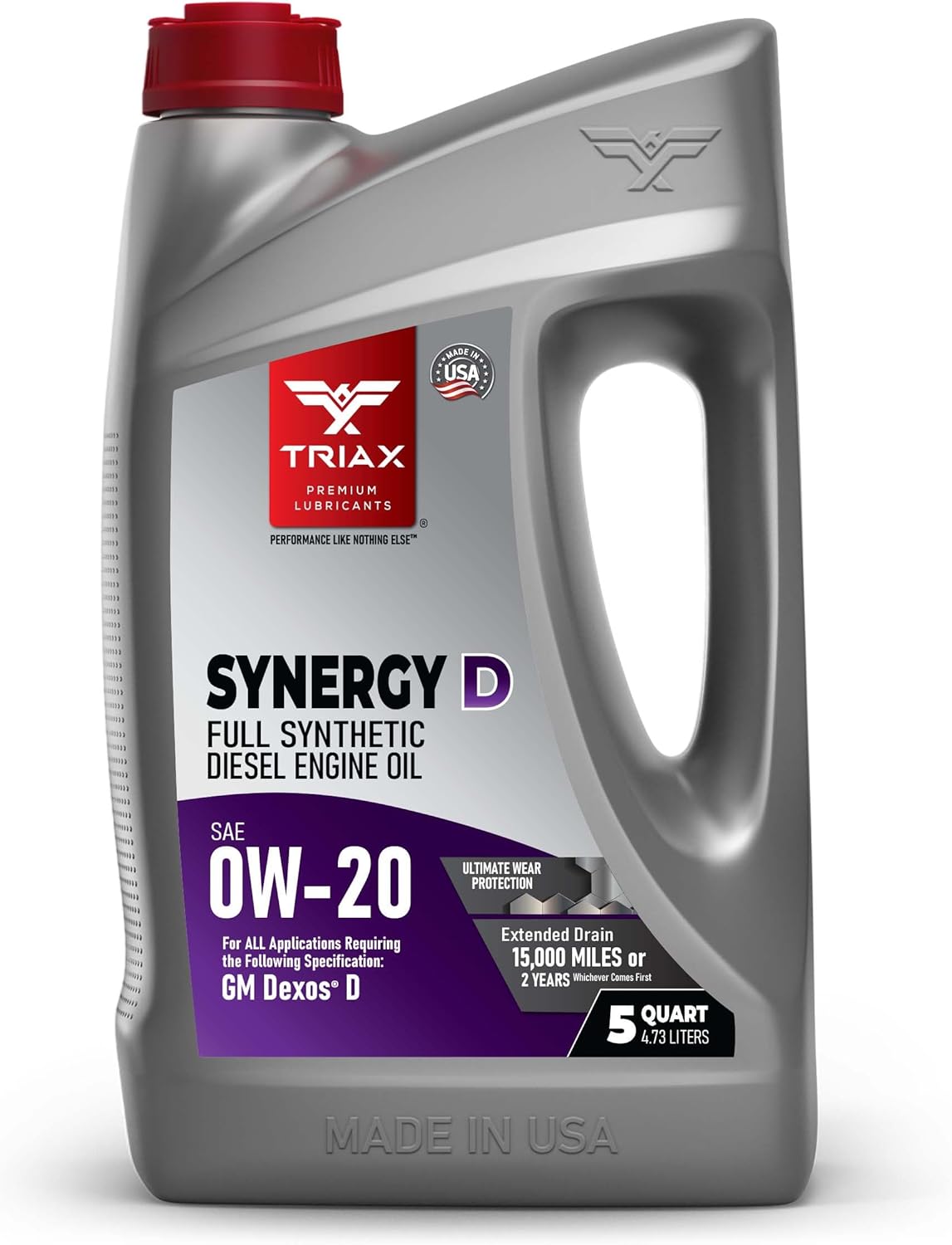
| SAE J300 Viscosity Grade | 0W-20 |
|---|---|
| Container Type | Bottle |
| Viscosity Level | Low |
| Liquid Volume | 160 fluid ounces |
The TRIAX Synergy D 0W-20 is a full-synthetic engine oil engineered for modern light-duty diesel engines, including applications that require dexos D compatibility. It is designed to protect turbocharged, direct-injection engines by offering strong anti-wear chemistry and soot control to limit deposit buildup and extend drain intervals. The low-viscosity 0W-20 base improves cold-start flow so oil circulates quickly in chilly conditions while still maintaining oxidation stability and film strength at higher operating temperatures. For DIY mechanics this oil is straightforward to use during routine changes and can help maintain fuel economy thanks to lower internal friction. The main limitations are that it is tuned to modern diesel platforms with dexos D requirements, so it may not be appropriate for older diesel engines that call for different viscosities or spec approvals, and the 0W-20 grade is a low-viscosity choice that some builders may prefer to upsize under heavy-duty towing or extreme high-load use.
Best for: DIY mechanics running modern light-duty diesel engines who prioritize improved cold-start protection, lower friction for better fuel economy, and reliable wear and soot control during routine oil changes.
Less Ideal for: Drivers of older or heavily modified diesel engines that require higher viscosity oils or different manufacturer specifications should consider other grades or approved formulations.
- Formulated to meet dexos D compatibility for modern light-duty diesel engines
- 0W-20 viscosity offers improved cold-start flow for quicker lubrication on startup
- Advanced anti-wear additives and soot control reduce deposits and protect turbocharged components
- Designed for oxidation stability and high-temperature film strength to support extended performance
- 0W-20 may be too low-viscosity for older diesels or heavy-duty towing where higher grades are recommended
- Specifically targeted to dexos D applications so it may not list other manufacturer approvals a buyer might require
Verdict: The best synthetic engine oil for DIY mechanics who want improved cold-start performance, reduced engine wear, and greater stability under high temperatures compared with conventional oils.
5. ACDelco dexos2 Full Synthetic SAE 5W-30 Motor Oil, 1 qt (Case of 12)
Best Diesel Engine Oil
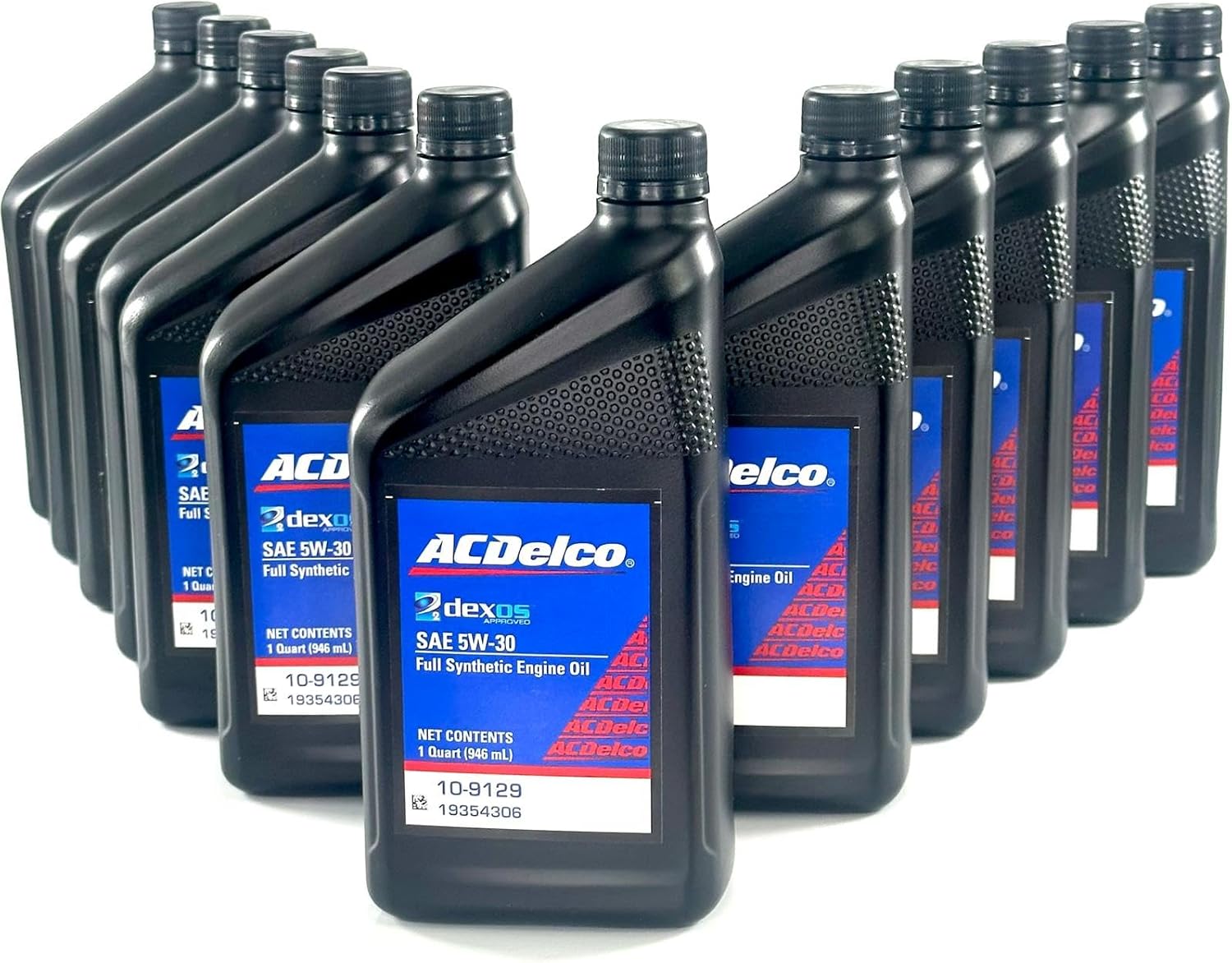
| Viscosity Grade | SAE 5W-30 |
|---|---|
| Volume | 12 quarts (384 fl oz) |
| Formulation | Full Synthetic |
| Specification | dexos2 |
This ACDelco dexos2 SAE 5W-30 comes as a twelve-pack of one-quart bottles and is formulated to meet GM dexos2 requirements for modern engines, including late-model diesel applications. For DIY diesel mechanics, it offers a full synthetic base and an additive package designed to control wear, reduce friction, and help manage soot and combustion byproducts typical of diesel operation. The 5W-30 viscosity gives reliable cold-start protection while supporting fuel efficiency, and the vehicle-specific fit notes list compatibility with 2.8L Duramax diesel applications used in Colorado and Canyon diesel models from 2016 onward. Practical benefits include ready supply for multiple oil changes and consistent OEM-grade formulation appropriate for engines calling for dexos2. Limitations are that this is a factory-branded pack with no extended-service claims listed and no warranty, so users who require long-drain or performance-graded diesel-specific oils for heavily modified engines may want a product explicitly rated for extended intervals or heavy-duty diesel service.
Best for: DIY diesel owners who want a factory-spec full synthetic 5W-30 suitable for routine oil changes on Chevrolet Colorado/Canyon 2.8L Duramax diesel engines and prefer buying supply in bulk.
Less Ideal for: Drivers seeking specialty heavy-duty diesel oils for extreme duty cycles, extended drain intervals, or heavily modified engines should consider purpose-built heavy-duty diesel formulations instead.
- Full synthetic SAE 5W-30 formulation suitable for modern engines
- Meets GM dexos2 specification for factory-quality performance
- Sold as a 12-quart case, convenient for multiple DIY oil changes
- Formulated to help control wear and manage soot in diesel operation
- No manufacturer warranty or explicit extended-drain interval specified
Verdict: The best diesel engine oil for DIY mechanics working on diesel powertrains, engineered to handle soot control, higher combustion byproducts, and diesel-specific detergency needs.
6. Mobil 1 Turbo Diesel Truck Full Synthetic Motor Oil 5W-40, 1 Gal
Best 5W-40 Engine Oil

| SAE Viscosity Grade | 5W-40 |
|---|---|
| Item Type | Full Synthetic Motor Oil |
| Compatible Vehicle Type | Truck |
| Liquid Volume | 3800 Milliliters |
Mobil 1 Turbo Diesel Truck 5W-40 is built for heavy-duty and high-temperature diesel use while still offering usable cold-start flow. It is designed for turbo diesel trucks and modern low-emission engines and is typically used in pickup trucks and light- to heavy-duty applications that face towing, hauling, or severe duty cycles. Key features include full synthetic base oils and additive technology aimed at reducing high-temperature deposits and low-temperature sludge, improving thermal and oxidative stability, and supporting extended drain intervals. In practice this oil will give a thicker operating film at running temperatures compared with 5W-30 grades, which helps protect engine parts under sustained load and higher coolant/ambient temperatures. It also claims good low-temperature pumpability for easier starts. Limitations are that its heavier 40 high-temp viscosity may be unnecessary in mild climates or for drivers prioritizing maximum cold-weather flow, and you should follow manufacturer service intervals and specifications for your specific diesel engine before switching grades.
Best for: DIY mechanics who run turbo diesel trucks that tow or haul frequently and want a 5W-40 that balances thicker hot-film protection with workable cold-start performance.
Less Ideal for: Drivers in consistently very cold regions who prioritize the absolute best low-temperature flow or owners whose engines specifically call for a lower high-temperature viscosity grade.
- Full synthetic formulation for strong thermal and oxidative stability under high-temperature, heavy-load operation
- 5W-40 high-temperature viscosity provides a thicker lubricating film during towing or sustained highway loads
- Designed for modern low-emission diesel engines and stated compatibility with turbocharged diesel truck applications
- Low-temperature pumpability that aids easier cold starts compared with many heavy-duty oils
- Higher operating viscosity can reduce cold-weather thin-film protection compared with lower high-temp grades in very cold climates
Verdict: The best 5W-40 engine oil for DIY mechanics who need a thicker operating viscosity for higher temperatures, heavy loads, or towing conditions while retaining reasonable cold-start flow.
Choosing the Right Chevrolet Colorado Diesel Engine Oil: Key Factors to Consider
Viscosity and Seasonal Range
Viscosity determines how the oil flows at cold start and how it protects under high temperatures. For the Chevrolet Colorado Diesel, selecting the correct viscosity grade helps ensure fast oil pressure build at startup and adequate film thickness at operating temperature. In colder climates, a lower cold-cranking viscosity reduces wear during initial seconds after start, while hotter regions demand oils that resist thinning under load.
Many diesel owners face a compromise between winter starting performance and summer shear stability. Check the vehicle manufacturer recommendations for acceptable grades and choose an oil whose published viscosity-temperature curve suits your local temperature extremes. Staying within recommended grades also helps maintain turbocharger lubrication and reduces oil consumption.
Diesel-Specific Detergency and Soot Control
Diesel engines generate more soot and combustion byproducts than gasoline engines, and the oil must be able to suspend these contaminants to prevent abrasive wear and sludge buildup. Oils formulated for diesel service include detergents and dispersants engineered to keep soot from agglomerating and to maintain oil flow and filterability.
Poor soot control can shorten oil life and increase engine wear, especially in Colorado Diesel trucks used for towing or frequent short trips. Prioritize oils that list diesel performance specifications and that describe soot-handling chemistry suitable for extended drain intervals if that is part of your maintenance plan.
Wear Protection and Additive Chemistry
Additives such as anti-wear agents, zinc dialkyldithiophosphate alternatives, and friction modifiers affect how well the oil prevents metal-to-metal contact in high-load areas. For the Colorado Diesel, which may experience high cylinder pressures and frequent turbocharger use, robust anti-wear chemistry helps protect cam lobes, bearings, and piston rings.
Consider oils that highlight high TBN (total base number) retention and anti-wear performance under diesel conditions. Adequate corrosion inhibitors are also important to guard against acid formation from combustion byproducts.
Compatibility With Emissions and Turbo Systems
Many Colorado Diesel engines use turbochargers and exhaust aftertreatment systems that can be sensitive to oil composition. Oils with appropriate low-ash or mid-ash formulations help protect particulate filters and catalytic components from premature fouling. Turbocharger bearings require oils with stable viscosity and oxidation resistance to avoid coking and deposit formation.
Selecting an oil that lists compatibility with modern diesel emissions hardware reduces the risk of service issues and helps maintain engine and aftertreatment performance over time.
Manufacturer Specifications and Service Intervals
Always cross-check oils against Chevrolet and engine manufacturer specifications. Approved performance categories and spec numbers indicate the oil has been tested for critical parameters important to the Colorado Diesel, such as shear stability, soot handling, and acid neutralization.
Manufacturer guidance also informs safe drain intervals. If you plan to extend intervals beyond standard service recommendations, choose oils that document longer-term stability under diesel service. Otherwise, match oil change frequency to driving habits like towing, idling, and short-trip operation.
Oil Base Stock and Longevity
Full synthetic oils typically offer superior thermal stability, lower volatility, and better shear resistance compared with conventional oils, which can translate to longer effective life and better protection for the Colorado Diesel. Synthetic blends provide a middle ground between cost and performance and may be appropriate for older engines or mixed-use vehicles.
Consider the expected lifespan of the oil between services and the vehicle's mileage. For high-mileage Colorado Diesel engines, look for formulations that emphasize seal conditioning, oxidation resistance, and stability under contamination.
Choosing the Right Viscosity for Your Climate
Match oil viscosity to the ambient temperature range where you drive most often. For cold-weather starts around or below freezing, prioritize oils with better cold-flow properties to reduce initial wear. In consistently hot environments or when towing, select grades with proven high-temperature film strength to maintain protection.
If you routinely operate the truck across varying climates, consider using a multi-grade synthetic that preserves protection across the expected temperature swing. Always verify the owner's manual for allowed viscosity grades before changing to an alternative.
- Colder climates benefit from lower cold-crank viscosity numbers.
- Towing or heavy loads favor oils with strong high-temperature stability.
- Multi-grade synthetics bridge seasonal extremes without frequent oil changes.
Oil Change Practices for Diesel Use
Diesel engines often accumulate more contaminants than gasoline engines, which can shorten oil life. Follow Chevrolet's recommended intervals as a baseline, then adjust based on usage. Severe duty patterns like towing, frequent idling, or many short trips typically require shorter intervals.
Use quality filters rated for diesel contamination levels and replace them with every oil change. Changing both oil and filter together ensures the new oil stays cleaner longer and maximizes protection for the Colorado Diesel engine.
- Short-trip and severe-duty cycles need more frequent oil changes.
- Always replace the oil filter at each oil change.
- Record service intervals to monitor oil consumption and condition.
Signs Your Diesel Oil Needs Attention
Watch for elevated oil consumption, darker oil color, or a drop in oil pressure as signals that the oil may be degraded. Excessive soot accumulation can increase viscosity and reduce flow, which may present as harder cold starts or rough idling.
Also be alert for increased exhaust smoke, unusual noises from turbochargers, or dashboard warnings. Addressing oil issues early helps prevent accelerated wear and more costly engine repairs in the long run.
- Check dipstick for oil level and color regularly.
- Schedule oil analysis if you suspect contamination or excessive wear.
- Respond to turbocharger or filter-clog symptoms promptly to avoid secondary damage.
Synthetic Vs Blend Vs Conventional for the Colorado Diesel
Full synthetic oils offer the best protection for high-heat and high-load conditions commonly seen in diesel operation. They resist thermal breakdown and maintain viscosity better over time, which benefits turbocharged diesel engines. Synthetic blends can be a cost-effective compromise for owners not pushing the engine to extremes.
Conventional oils remain an option for older, low-mileage engines if they meet diesel specifications, but they will generally require shorter service intervals and may not provide the same long-term protection as synthetics.
- Full synthetics: best thermal stability and longevity.
- Blends: balanced cost and improved performance over conventional.
- Conventional: acceptable only if diesel-rated and used with conservative intervals.
Oil Monitoring and When to Consider Analysis
If you tow frequently, run the engine hard, or are tracking unusual consumption, oil analysis can provide insights into wear metals, soot levels, and additive depletion. A lab report helps decide if you can safely extend intervals or if internal wear is accelerating.
Routine visual checks and scheduled analysis for high-use Colorado Diesel trucks help tailor maintenance and avoid surprises. Use analysis results to choose future oil types or adjust service intervals based on measured condition rather than fixed mileage alone.
- Oil analysis is useful for high-mileage or heavily used trucks.
- Monitor wear metals and soot as primary indicators in diesel analysis.
- Use results to justify interval extensions or to change oil formulations.
Still looking for the perfect fit?
Select your Chevrolet Colorado configuration to see the most relevant Engine Oils recommendations
How We Chose the Best Chevrolet Colorado Diesel Engine Oil
We started by narrowing candidates to oils formulated for modern diesel light trucks and that list diesel-specific performance claims or specifications. From there we evaluated each option against criteria that directly affect Chevrolet Colorado Diesel owners: viscosity range and seasonal performance, diesel-rated detergency and soot-management, wear and corrosion protection for high-compression components, compatibility with emissions systems and turbochargers, and recommended drain intervals under typical towing or stop-and-go use.We favored oils with full synthetic base stocks when they offered measurable advantages for thermal stability and shear resistance, but also considered high-quality synthetic blends where useful for older engines. We excluded products that lacked clear diesel performance specifications or that were primarily marketed for gasoline engines without diesel credentials. Final selections balanced real-world durability, maintenance considerations, and documented spec compliance rather than marketing claims alone.
Our full evaluation process is outlined in our review methodology.
FAQ
How often should I change oil in my Colorado Diesel?
Follow Chevrolet's recommended interval as the baseline. If you tow, idle frequently, or make many short trips, shorten intervals. Many owners check oil at least every 5,000 miles but adjust based on use and oil type.
Can I switch from conventional to full synthetic in my diesel Colorado?
Yes, you can typically switch to full synthetic as long as the oil meets Chevrolet's diesel specifications. Full synthetics offer better thermal stability and may extend intervals under proper monitoring.
What viscosity is best for a turbocharged Colorado Diesel?
Choose a viscosity within the manufacturer's recommended range that also offers strong high-temperature film strength. For turbocharged duty, prioritize oils proven to maintain protective viscosity under sustained load.
Will a diesel-formulated oil help with soot-related wear?
Diesel-formulated oils contain detergents and dispersants designed to suspend soot and reduce abrasive wear. Using an oil with diesel-specific soot-management chemistry helps protect the engine between changes.
Is lower-viscosity oil better for fuel economy in the Colorado Diesel?
Lower-viscosity oils can marginally improve fuel economy by reducing internal friction, but they must still meet diesel protection requirements and the manufacturer's viscosity recommendations to avoid compromising engine wear protection.
Should I use low-ash oil if my Colorado Diesel has a particulate filter?
Low- or mid-ash formulations can be beneficial for protecting particulate filters from accelerated fouling. Check vehicle guidance and choose an oil compatible with the emissions hardware to reduce the risk of aftertreatment issues.
Final Verdict
Prioritize oils that match Chevrolet's diesel specifications, offer strong soot-control chemistry, and maintain protective viscosity under your typical operating conditions. Your choice should balance seasonal needs, duty cycle, and whether you plan to extend drain intervals.Ultimately, focus on diesel-rated formulations with proven wear protection and appropriate additives for emissions and turbo compatibility. That approach will help preserve performance and reliability for your Colorado Diesel over the long term.
Explore More:
- Check out all Chevrolet Colorado parts & accessories
- Explore Fluids & Chemicals
- Browse all Accessories
