

Note: This article contains affiliate links. If you click on these links and make a purchase, I may earn a small commission at no extra cost to you. This helps support my research and content. Read my full affiliate disclosure here.
Picking the right engine oil for a BMW X1 affects engine protection, fuel efficiency, and long-term reliability. You want a product that matches the vehicle's viscosity needs and offers the right balance of detergency and wear protection so daily driving and occasional long trips do not accelerate wear.This guide highlights seven shortlisted options that meet common BMW X1 requirements. We evaluated viscosity compatibility, additive chemistry, and longevity to help you identify which oils are likely to suit your driving pattern and maintenance plan. Read on to see the top picks and which factors mattered most during selection.
Looking for other parts? See all BMW X1 parts & accessories.
Top Picks at a Glance
| Best Overall The best all-around choice for most situations | BMW Longlife-14FE+ SAE 0W-20 Full Synthetic Motor Oil, 1 Quart |  |
| Best Quality Built to a higher standard if you want something more solid | Castrol EDGE High Mileage 5W-30 Full Synthetic Motor Oil, 5 Quart |  |
| Best Value The sweet spot between price and what you get | BMW SAE 5W-30 Full Synthetic Motor Oil, 1 Quart |  |
| Best Budget The cheapest option that still gets the job done reliably | Valvoline European Vehicle Full Synthetic SAE 0W-20 Motor Oil, 1 qt |  |
| Highest Rated A top-rated pick with lots of positive feedback | Mobil 1 Advanced Fuel Economy Full Synthetic Motor Oil 0W-20 (2 × 5 qt) |  |
| Most Popular A crowd favorite that many people choose with confidence | Castrol GTX Full Synthetic 0W-20 Motor Oil, 5 Quart |  |
| Best Seller A high-volume bestseller chosen again and again | Valvoline European Vehicle Full Synthetic 5W-30 XL-III Motor Oil, 5 Quart |  |
1. BMW Longlife-14FE+ SAE 0W-20 Full Synthetic Motor Oil, 1 Quart

| SAE J300 Viscosity Grade | 0W-20 |
|---|---|
| Viscosity Level | Low to Medium |
| Container Type | Bottle |
| Compatible with Vehicle Type | Car |
| Size | 1 Quart, 16 Fluid Ounces |
This BMW Longlife-14FE+ 0W-20 full synthetic motor oil is sold in a 1 quart bottle and is intended as a factory-quality replacement for vehicles calling for Longlife-14FE+ or equivalent low-viscosity oils. It is typically used at oil changes where the manufacturer specifies 0W-20 to improve cold-start protection and maintain fuel efficiency. Notable features include BMW branding and compliance with common industry specifications, and the low to medium viscosity helps reduce drag in modern gasoline engines. Practical benefits for an X1 include reliable cold starts, smooth idle and potential small gains in highway fuel economy while preserving clearances designed for thin oils. Limitations are the single-quart size which means multiple bottles are needed for a full drain and that it is intended specifically for applications requiring 0W-20 longlife formulation rather than higher-viscosity or performance-tuned oils.
Best for: Balanced, all-round BMW X1 owners who prioritize factory-quality maintenance and steady year-round performance with attention to fuel efficiency and smooth operation.
Less Ideal for: Drivers seeking higher-viscosity oils, performance-tuned or heavy-duty formulas, or a single-bottle solution for large-capacity oil changes should consider alternative products.
- Factory-branded formula meeting BMW Longlife-14FE+ and ACEA A1/B1 specifications.
- Full synthetic 0W-20 viscosity provides strong cold-start protection and low friction at operating temperature.
- Sold in a familiar quart bottle that is easy to store and pour.
- Made for passenger cars and labeled for vehicle-specific fit, matching BMW service recommendations.
- One-quart size means you will likely need multiple bottles for a complete oil change.
- No additional performance or synthetic blend options listed for high-mileage or heavy-duty use.
Verdict: A factory-branded full synthetic 0W-20 engineered to give BMW X1 owners reliable cold-start protection and factory-spec lubrication.
2. Castrol EDGE High Mileage 5W-30 Full Synthetic Motor Oil, 5 Quart

| Compatible with Vehicle Type | For vehicles with over 75,000 miles |
|---|---|
| Viscosity Level | Low to Medium |
| SAE J300 Viscosity Grade | 5W-30 |
| Liquid Volume | 160 Fluid Ounces |
Castrol EDGE High Mileage 5W-30 is a full synthetic motor oil engineered to protect older, high-mileage engines by reducing wear, controlling sludge, and limiting corrosion. It is typically used as a factory-quality replacement at oil change intervals and is formulated with Castrol’s Phosphorus Replacement Technology to help protect catalytic converters while still delivering anti-wear performance. For a BMW X1 with higher miles, this oil helps maintain cleaner internals and reduces timing and friction wear that can sap performance. The product is rated to meet modern API and ILSAC standards and is designed to lower volatility and oil burnoff, which keeps oil levels more stable between services. Trade-offs are that it is targeted at engines with more than 75,000 miles so newer engines seeking manufacturer-specified low-SAPS or BMW Longlife formulations may prefer a BMW-approved synthetic; always verify BMW-approved spec requirements before use in warranty-sensitive vehicles.
Best for: Performance-oriented BMW X1 owners who prioritize engine longevity and cleaner internals in higher-mileage cars and want a synthetic oil that supports sustained power and reduced wear.
Less Ideal for: Owners of newer BMW X1s that require specific BMW-approved Longlife or low-SAPS oils for warranty compliance or exact factory specifications should consider BMW-specified products instead.
- Full synthetic formulation for strong wear protection and reduced friction
- Phosphorus Replacement Technology to help protect the catalytic converter and emission system
- Formulated to reduce sludge and deposits for cleaner engine internals
- Lower volatility to reduce oil burnoff and maintain oil levels between services
- Positioned for vehicles with over 75,000 miles rather than new-engine BMW Longlife approvals
Verdict: A full synthetic 5W-30 high-mileage oil that prioritizes wear protection and emission system preservation for performance-focused, higher-mileage BMW X1s.
3. BMW SAE 5W-30 Full Synthetic Motor Oil, 1 Quart

| SAE J300 Viscosity Grade | 5W-30 |
|---|---|
| Viscosity Level | Low to Medium |
| Compatible with Vehicle Type | Car |
| Liquid Volume | 16 Fluid Ounces |
This BMW-branded 5W-30 full synthetic motor oil is formulated to the manufacturer's BMW LL01 and API SL specifications for gasoline engines and is intended as the factory-quality replacement used by dealerships. It is used for routine oil changes and topping up in BMW gasoline engines including turbocharged N20/N54/N55 families and many MINI engines, and was formulated for U.S. fuel sulfur conditions. In real-world use the oil provides consistent viscosity at operating temperatures, supports long service intervals cited by owners, and helps maintain smooth engine operation in daily driving and highway use. The product is sold in single-quart bottles for easy handling and pouring. Limitations are the narrow scope of compatibility — it is not for diesel engines or some high-performance M engines — and buyers will need to purchase multiple bottles for full oil change volumes rather than larger containers.
Best for: Practical optimizers who want factory-quality oil that supports long service intervals and consistent daily performance in BMW gasoline engines.
Less Ideal for: Owners looking for diesel-specific oils or who need bulk jugs for frequent full-volume service should consider other options.
- Factory-formulated to BMW LL01 and API SL specifications for gasoline engines
- Full synthetic formulation for stable viscosity and protection across temperatures
- Suitable for turbocharged N20/N54/N55 engines common in BMWs
- Sold in easy-pour 1-quart bottles for convenient topping up
- Not intended for diesel engines or certain high-performance M3/M5/M6 variants
- Single-quart packaging requires buying multiple bottles for complete oil changes
Verdict: A factory-formulated 5W-30 full synthetic BMW oil that delivers consistent, dealer-grade protection for gasoline BMW engines.
4. Valvoline European Vehicle Full Synthetic SAE 0W-20 Motor Oil, 1 qt

| SAE J300 Viscosity Grade | 0W-20 |
|---|---|
| Compatible with Vehicle Type | Car, Truck |
| Liquid Volume | 1 Quarts |
| Contains | Low-SAPS full synthetic |
Valvoline European Vehicle Full Synthetic 0W-20 is a one-quart bottle of low-SAPS synthetic motor oil engineered to meet European specifications such as ACEA C5 and API SN with SN PLUS and approved to VW 508.00/509.00. For a BMW X1 that calls for 0W-20 or the equivalent ACEA/API specs, this oil provides high and low temperature protection, detergents and antioxidants to control deposits, and additives intended to reduce wear and help prevent LSPI in modern turbocharged engines. It is positioned as a budget-friendly European-grade option, so you get factory-style compatibility for emissions systems without premium-brand pricing. Practical benefits include broad European approvals and a full-synthetic base that supports everyday commuting and light performance driving. Limitations are that single-quart purchases are less convenient than multi-quart packs for full oil changes and that formulation differences can affect fuel economy and operating temperature slightly versus specific factory-branded oils, so stick to manufacturer service intervals and spec recommendations for your X1.
Best for: Budget-conscious owners seeking a factory-compatible, lower-cost synthetic oil for routine maintenance on a BMW X1 who prioritize specification compliance and value over brand prestige.
Less Ideal for: Owners who prefer buying large multi-quart packs for DIY oil changes or who want the exact factory-branded oil that may be recommended by their BMW dealer.
- Formulated to meet ACEA C5 and API SN/SN PLUS for European engines
- Low-SAPS formula to protect emissions systems in European cars
- Full synthetic base offers strong high/low temperature protection and deposit control
- Approved to VW 508.00/509.00 which aligns with European OEM requirements
- Sold in single 1-quart bottles which may be inconvenient for complete oil changes
Verdict: A budget-friendly full synthetic 0W-20 formulated to meet European specs for BMW X1 owners who want factory-compatible protection without premium-brand cost.
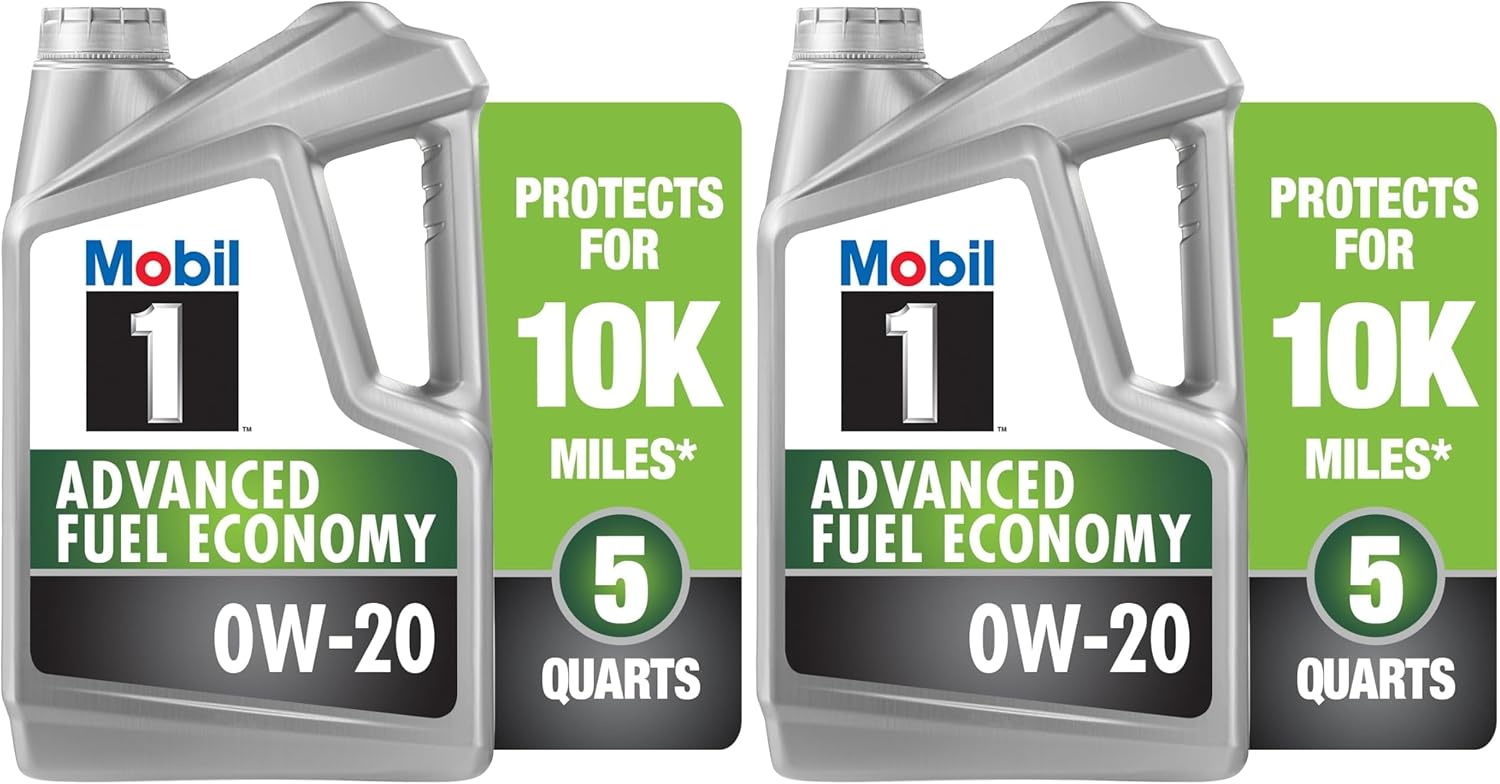
5. Mobil 1 Advanced Fuel Economy Full Synthetic Motor Oil 0W-20 (2 × 5 qt)
| Viscosity grade | 0W-20 |
|---|---|
| Product type | Full Synthetic Motor Oil |
| Unit count | 320.0 Fluid Ounces |
| Compatible vehicle type | Car |
Mobil 1 Advanced Fuel Economy 0W-20 is a full-synthetic motor oil designed to reduce internal friction and help improve fuel economy for modern engines. It is typically used as a factory-style replacement oil in passenger cars and is formulated to meet ILSAC GF-6 standards, offering protection against low-speed pre-ignition and timing chain wear. Mobil 1’s Triple Action Formula and specialty additives aim to keep critical parts clean, control oxidation, and provide thermal protection up to 500°F and low-temperature start-up protection down to -40°F—enabling reliable cold starts and extended protection up to 10,000 miles between changes per manufacturer guidance. For BMW X1 owners who specify 0W-20 or seek a low-viscosity synthetic, the product delivers smooth operation, reduced deposit formation, and consistent viscosity retention. Limitations to note are the specified grade: if your X1 requires a different viscosity or BMW Longlife specification, choose the factory-recommended grade instead, and real-world fuel-economy gains depend on driving conditions and vehicle setup.
Best for: Reliability-focused buyers who prioritize proven, factory-quality full-synthetic oil that helps maintain engine cleanliness and supports longer service intervals for everyday driving.
Less Ideal for: Owners who must use a different viscosity or a BMW-specified Longlife oil for warranty or engineering reasons should choose a factory-recommended alternative.
- Full synthetic 0W-20 formulation reduces friction and supports fuel economy improvements when switching from higher-viscosity oils
- Meets ILSAC GF-6 standards to help protect against LSPI and timing chain wear in modern gasoline engines
- Formulation resists oxidation and helps keep engines clean to support longer drain intervals up to 10,000 miles as specified
- Wide temperature protection that supports reliable cold starts and high-temperature engine protection
- Only suitable where 0W-20 viscosity is recommended and may not meet specific BMW Longlife or manufacturer-specific approvals
Verdict: A trusted full-synthetic 0W-20 formulation that prioritizes engine protection and fuel-efficiency gains for cars specified to use this viscosity.
6. Castrol GTX Full Synthetic 0W-20 Motor Oil, 5 Quart

| SAE J300 Viscosity Grade | 0W-20 |
|---|---|
| Compatible with Vehicle Type | Car, Truck |
| Automotive Fit Type | Universal Fit |
| Liquid Volume | 5 Quarts |
Castrol GTX Full Synthetic 0W-20 is a ready-to-use engine oil packaged in a five quart jug for routine maintenance on vehicles that call for 0W-20. It is designed to reduce engine wear, resist viscosity breakdown at high temperature, and help prevent sludge build-up so engines run cleaner between services. Typical use is a standard oil change for daily-driven compact cars like the Scion xD where manufacturers recommend 0W-20 and drivers want extended protection. Notable features include claimed improved wear protection versus industry standards, sludge-fighting detergents, and formulation intended to support longer oil change intervals. In practice you get a factory-quality replacement that simplifies topping off and full drain-and-fill service because one jug covers a full change on most small engines. Limitations are that you must confirm manufacturer approvals for your model year and that benefits such as longer change intervals depend on driving style and inspection rather than guaranteed service schedules.
Best for: Convenience-driven owners who prioritize an easy, reliable oil change and want a widely available factory-quality 0W-20 for everyday compact cars.
Less Ideal for: Drivers looking for specialty formulations for racing, turbocharged high-mileage engines, or those who must follow manufacturer-specific extended service approvals not listed here.
- Formulated to reduce engine wear and resist high-temperature breakdown
- Claims improved sludge protection to keep engines cleaner between services
- 5 quart jug is convenient for a full oil change without needing multiple containers
- Meets common industry specifications used by modern gasoline engines
- Extended oil change interval claims depend on driving conditions and may not match every service schedule
Verdict: A convenient, full synthetic 0W-20 in a five quart jug that offers strong wear and sludge protection for everyday compact cars.
7. Valvoline European Vehicle Full Synthetic 5W-30 XL-III Motor Oil, 5 Quart

| SAE J300 Viscosity Grade | 5W-40 |
|---|---|
| Container Type | Bottle |
| Compatible with Vehicle Type | Car, Truck |
| Liquid Volume | 5 Quarts |
This Valvoline European Vehicle 5W-30 XL-III is a full synthetic engine oil designed for European imports and engineered to meet ACEA C3 and modern API specs. It is intended for turbocharged gasoline and diesel engines common in BMWs and other European brands, offering low-SAPS formulation to protect emissions systems and extended protection against wear, heat, deposits and LSPI. In practical use the oil provides strong high- and low-temperature stability, good cleaning detergency, and anti-wear additives that support longer engine life between services when matched to the correct BMW spec. The product is packaged as a 5 quart bottle suitable for a single change on many vehicles. Limitations: you must confirm the BMW X1 year and engine require 5W-30 XL-III or an approved BMW specification before use, and this single-grade choice may not be ideal for all X1 engines or extreme climates where different viscosities are recommended.
Best for: Risk-averse mainstream buyers who prioritize factory-quality protection and emissions-system compatibility for their European vehicle and want a well-reviewed, manufacturer-backed synthetic oil.
Less Ideal for: Owners who need a different viscosity or a BMW-specific branded oil mandated by the vehicle handbook, or those who prefer oils targeted solely at high-mileage engines or extreme cold-start conditions.
- Formulated for European engines with low-SAPS chemistry to protect emissions systems
- Meets ACEA C3 and modern API specifications and approvals relevant to European makes
- Claims enhanced protection against wear, deposits and LSPI for turbocharged engines
- Full synthetic base offers strong temperature stability for varied driving conditions
- Not guaranteed to match every BMW X1 engine specification so buyers must verify compatibility
- Only provided in a 5 quart bottle which may be excess or insufficient depending on specific service needs
Verdict: A factory-quality full synthetic 5W-30 formula tuned for European engines that prioritizes emissions-system compatibility and wear protection.
Choosing the Right BMW X1 Engine Oil: Key Factors to Consider
Viscosity Grade
Viscosity grade determines how the oil flows at cold start and at operating temperature. Choosing the correct grade affects cold-start protection and oil pressure immediately after ignition, which is crucial for minimizing wear during the most vulnerable minutes of operation.
If the wrong viscosity is used you may experience sluggish oil flow at low temperatures or insufficient film strength at high temperatures. Always match the vehicle's recommended grade to maintain proper clearances and lubrication behavior under different operating conditions.
Additive Chemistry
Additives control detergency, dispersancy, anti-wear, and corrosion protection, which together keep internal components clean and protected. A well-balanced additive package reduces deposit formation and helps maintain compression and oil flow over time.
Different additive blends are optimized for longevity, high-load protection, or fuel economy. Understanding the primary goals—cleaning agents for sludge-prone engines or anti-wear chemistry for higher stress applications—helps you pick an oil that supports the engine's needs.
Synthetic Vs Conventional Base Oil
Synthetic base stocks typically offer better thermal stability and shear resistance than conventional oils, which can translate to more consistent protection and longer drain intervals. Synthetics also tend to flow better at cold temperatures, improving startup protection.
Conventional oils may be acceptable for low-stress use or older engines with different tolerances, but for modern turbocharged or tightly toleranced engines, synthetic formulations are often recommended to preserve performance and reduce volatility-related oil consumption.
Manufacturer Specifications and Approvals
Using oil that meets the vehicle maker's specifications ensures compatibility with engine materials and protection strategies. Approvals and specifications indicate the oil has been tested for properties like wear protection, oxidation resistance, and compatibility with emission-control systems.
Selecting oils that reference the correct OEM spec reduces the risk of warranty or compatibility issues and provides assurance that the lubricant suits the engine's design and operating profile.
Mileage and Engine Condition
High-mileage engines often benefit from formulations that include seal conditioners and anti-wear boosters to address age-related leaks and wear. Newer or low-mileage engines may prioritize low-viscosity, fuel-economy-focused oils to minimize internal drag.
Assessing your vehicle's mileage helps determine whether to prioritize detergency and cleaning power or extra anti-wear additives. Regular monitoring of oil condition and consumption will inform whether switching formulations is needed as the engine ages.
Oil Longevity and Drain Interval
Oil longevity depends on formulation stability and how the vehicle is driven. Some formulations are engineered to maintain protective properties for extended drain intervals, while others are intended for more frequent changes to ensure cleanliness.
Consider whether your driving habits involve lots of short trips, towing, or high-load conditions, which can shorten oil life. Matching the oil's expected drain interval to your maintenance routine helps you plan service and maintain consistent protection.
How We Chose the Best BMW X1 Engine Oil
We focused on oils that meet the technical and operating requirements typical of the BMW X1 powertrains. Selection prioritized API and manufacturer-specified viscosity ratings, thermal stability at operating temperatures, and proven additive packages for wear control. We also considered oil drain intervals and detergency to address sludge prevention under varied driving conditions.Our editorial filters required compatibility with common service intervals and a history of stable viscosity retention under heat. We excluded products that did not list clear viscosity grade coverage or lacked documentation on additive formulation. The dimensions that mattered most were viscosity grade adherence, shear stability, oxidation resistance, additive chemistry for engine cleanliness, and suitability for the vehicle's anticipated mileage and driving style.
Our full evaluation process is outlined in our review methodology.
FAQ
How often should I change the oil in a BMW X1?
Frequency depends on driving style and the oil used. Many drivers change oil every 7,500 to 10,000 miles with modern synthetic oils under normal conditions, while severe driving can require shorter intervals. Check oil condition and follow the vehicle's maintenance schedule for best results.
Can I use a lower-viscosity oil to improve fuel economy?
Lower-viscosity oils can reduce internal friction and offer modest fuel economy gains, but they must still meet the vehicle's specified grade. Using an improperly low viscosity may compromise film strength and protection, so prioritize the manufacturer-recommended viscosity and spec.
Is synthetic motor oil necessary for the BMW X1?
Synthetic oils often offer better thermal stability, cold-flow characteristics, and resistance to breakdown, which suits modern engines. While not always strictly required, synthetics are commonly recommended for vehicles with tighter tolerances or turbocharging because of their consistent performance.
What does the 5W-30 or 0W-20 label mean for oil performance?
Those labels indicate the oil's cold-start viscosity and its behavior at operating temperature. The first number with W relates to low-temperature flow, and the second number indicates high-temperature film thickness. Choose the grade that matches the engine's requirements and local climate.
Should I switch oil types as the engine ages?
Switching can be beneficial depending on wear and leak tendencies. High-mileage formulations with conditioners can help older engines, while newer engines often do best with low-viscosity, high-stability oils. Monitor consumption and engine condition before making changes.
Conclusion
When choosing BMW X1 engine oil, prioritize matching the manufacturer-recommended viscosity and meeting the correct technical specifications. Balance needs between thermal stability, additive protection, and the engine's age to maintain performance and longevity.Consider driving pattern and expected drain intervals when selecting between synthetic and conventional formulations. Focusing on viscosity, approved specs, and additive chemistry will guide you to an oil that supports reliable operation and sensible maintenance planning.
Explore More:
- Check out all BMW X1 parts & accessories
- Explore Fluids & Chemicals
- Browse all Accessories
