

Note: This article contains affiliate links. If you click on these links and make a purchase, I may earn a small commission at no extra cost to you. This helps support my research and content. Read my full affiliate disclosure here.
If you own a 2018-2023 Subaru Crosstrek, choosing the right engine oil matters for reliability, fuel economy, and long-term engine health. The right oil supports cold starts, protects against wear, and helps maintain the Crosstrek's factory tolerances across varying climates and driving styles. This guide shortlists six top-rated options that suit the Crosstrek's needs and highlights the practical differences that matter to owners.We evaluated choices against viscosity fit, additive chemistry, and real-world durability to help you pick an oil that balances protection, efficiency, and service intervals. Read on for the factors we used and practical guidance for selecting and changing oil in your Crosstrek.
Looking for other parts? See all Subaru Crosstrek parts & accessories.
Top Picks at a Glance
| Best Overall Engine Oil Top-performing synthetic oil that balances protection and fuel economy | Subaru Synthetic Motor Oil SAE 0W-20 5-Quart Bottle |  |
| Best Budget Engine Oil Low-cost synthetic or blend that still meets manufacturer specs | Valvoline Advanced Full Synthetic 0W-20 Motor Oil, 5 qt |  |
| Best OEM Subaru Oil Factory-formulated genuine oil sold in OEM-sized quart or 5‑qt containers | Subaru Genuine 0W-20 Synthetic Motor Oil, 1 Quart (SOA427V1310) |  |
| Best Complete Oil Change Kit Includes oil, genuine filter, and crush gasket for one DIY change | Subaru Complete Oil Change Kit with 5 qt 0W-20 Synthetic Oil, Filter, and Crush Gasket |  |
| Best High-Mileage Engine Oil Formulated with seal conditioners and extra detergents for older engines | Castrol EDGE High Mileage 0W-20 Full Synthetic Motor Oil, 5 Quart |  |
| Best 5‑Quart Value Pack Five-quart bottles from mainstream brands offering lowest cost per quart | Valvoline Extended Protection Full Synthetic Motor Oil SAE 0W-20, 5 qt |  |
1. Subaru Synthetic Motor Oil SAE 0W-20 5-Quart Bottle
Best Overall Engine Oil
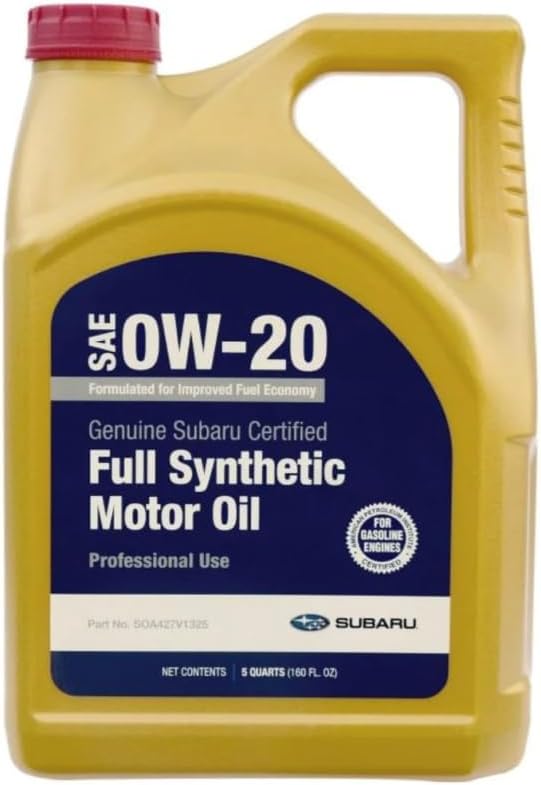
| Viscosity | SAE 0W-20 |
|---|---|
| Liquid Volume | 5 Quarts |
| Compatible with Vehicle Type | Car |
| Flash Point | 227 Degrees Celsius |
This Subaru-branded 0W-20 full synthetic motor oil is intended as a factory-style replacement for many 4-cylinder Subaru engines from recent model years. It delivers very low-viscosity cold-start flow for faster oil circulation at startup, while providing the wear protection and medium-range viscosity control needed for everyday driving. Typical use is straightforward DIY oil changes or dealer service where a vehicle-specific factory replacement is preferred; the 5-quart container covers a single change for most compact Subaru engines. Notable features listed include vehicle-specific fitment, a 5-quart liquid volume, and a high flash point, which point to stable thermal performance during normal operating conditions. Practical benefits are quick lubrication on cold mornings, consistent oil pressure during highway driving, and an OEM-branded formula that simplifies parts matching. Limitations are that this product is a single SAE grade optimized for 0W-20 applications, so it is not suitable if a different viscosity is required by an engine or by extreme-duty driving beyond regular passenger use.
Best for: DIY mechanics and owners wanting a direct Subaru-branded synthetic replacement that balances cold-start protection, wear control, and everyday fuel efficiency for 4-cylinder Subaru models from 2018 to 2023.
Less Ideal for: Drivers who require a different viscosity grade for modified engines, racing, or heavy towing should choose a purpose-built oil instead.
- Full synthetic 0W-20 formulation for fast cold-start flow and fuel-efficiency benefits.
- Factory-branded formula that matches Subaru vehicle fitment and simplifies oil selection.
- 5-quart container sized for a single oil change on most compact Subaru 4-cylinder engines.
- High flash point indicating good thermal stability under normal driving conditions.
- Only available in a single 0W-20 viscosity so it cannot be used where a different grade is specified.
Verdict: The go-to synthetic oil for most DIY mechanics who want the best balance of cold-start flow, wear protection, and everyday fuel-efficiency performance.
2. Valvoline Advanced Full Synthetic 0W-20 Motor Oil, 5 qt
Best Budget Engine Oil

| Viscosity | 0W-20 |
|---|---|
| Size | 5 QT |
| Meets specifications | ILSAC GF-7A, API SP/SN |
| Manufacturer | Valvoline |
Valvoline Advanced Full Synthetic 0W-20 is a full synthetic engine oil designed to protect modern gasoline engines through everyday driving and routine maintenance. It is typically used at oil changes for vehicles that call for 0W-20 viscosity, flowing well at cold starts to reduce wear and helping maintain cleanliness with additive boosters that resist deposits and sludge. Notable features include claims of stronger wear protection, improved deposit defense, and enhanced heat protection versus industry benchmarks, plus specifications that cover current API and ILSAC categories and manufacturer requirements relevant to many late-model cars. In practice it helps support fuel economy and long-term engine cleanliness while remaining suitable for standard change intervals; it is sold in a 5-quart container that fits a full service. The main limitation is that it is viscosity-specific, so it only applies to engines requiring 0W-20 and will not be appropriate where a different grade is specified by the vehicle manufacturer.
Best for: Budget-minded owners seeking a wallet-friendly full synthetic 0W-20 that meets modern specs and supports routine oil-change intervals for their 2018–2023 Crosstrek.
Less Ideal for: Drivers who require a different viscosity grade, who use severe-duty or extended-interval service beyond factory recommendations, or who prefer specialty high-mileage or performance formulations.
- Full synthetic base oil provides improved low-temperature flow for reduced cold-start wear.
- Formulation claims stronger wear protection and better deposit control versus industry standards.
- Meets modern API and ILSAC specifications and several manufacturer requirements for contemporary gasoline engines.
- Sold in a 5-quart container suitable for a complete oil change without needing multiple bottles.
- Only available in 0W-20 viscosity so not suitable for engines requiring other grades.
Verdict: A wallet-friendly motor oil choice for routine maintenance that meets required specifications while keeping per-change costs down.
3. Subaru Genuine 0W-20 Synthetic Motor Oil, 1 Quart (SOA427V1310)
Best OEM Subaru Oil

| SAE J300 Viscosity Grade | 0W-20 |
|---|---|
| Container Type | Bottle |
| Compatible with Vehicle Type | Car |
| Liquid Volume | 32 fluid ounces |
This is Subaru's factory-formulated 0W-20 full synthetic motor oil in a 1-quart bottle intended as a direct fluid for vehicle maintenance. It is designed to meet Subaru specifications and is typically used for scheduled oil changes where the manufacturer calls for 0W-20 viscosity. Notable features include a synthetic base for improved oxidation resistance and additives aimed at reducing deposits and varnish, which helps the engine run cleaner and supports longer oil life between changes. Practical benefits are straightforward: you get a fluid that matches the maker's recommendations for compatibility and warranty confidence, and it is easy to pour from the bottle at home or in a shop. Limitations are that this is a single-quart retail packaging rather than bulk or multi-pack options, so frequent changers may prefer larger volumes or value packs, and the product is specific to vehicles requiring 0W-20 so it is not a universal oil choice for all engines.
Best for: Buyers who prioritize using manufacturer-labeled fluids for guaranteed fitment and peace of mind during routine maintenance on their Subaru Crosstrek from 2018 to 2023.
Less Ideal for: People who change oil frequently and want bulk containers or those whose engines require a different viscosity than 0W-20 should consider alternative packaging or formulations.
- Factory-formulated to Subaru specifications for compatibility and warranty alignment
- Full synthetic 0W-20 base offers strong oxidation resistance and deposit control
- Sold in a convenient 1-quart bottle suitable for DIY oil changes
- Only available as a single 1-quart retail bottle which may be less convenient for multiple oil changes
Verdict: Choose this slot if you prefer factory-spec fluids designed and labeled by the vehicle maker for guaranteed compatibility and warranty peace of mind.
4. Subaru Complete Oil Change Kit with 5 qt 0W-20 Synthetic Oil, Filter, and Crush Gasket
Best Complete Oil Change Kit

| Viscosity grade | 0W-20 |
|---|---|
| Liquid Volume | 5 quarts |
| Compatible with Vehicle Type | Subaru Forester, Outback, Impreza, Ascent, Legacy, Crosstrek |
| Automotive Fit Type | Vehicle Specific Fit |
This Subaru kit supplies everything needed to perform a single oil change on supported Subaru 4-cylinder models: five quarts of factory-spec 0W-20 synthetic motor oil, a matched Subaru oil filter, and the crush gasket. It is designed for do-it-yourself maintenance and removes the need to source separate parts. The genuine filter and gasket help ensure proper sealing and filtration compared with generic aftermarket kits, and the factory oil spec matches Subaru recommendations for models covered in the fit list. Using the kit is straightforward: drain the old oil, replace the drain gasket, swap the filter, and refill to the correct level. Limitations include vehicle fitment—this package targets Subaru 4-cylinder models listed by the manufacturer and will not suit engines requiring different viscosities or capacities. Also check your owner’s manual for the exact fill volume and change interval since some model years and configurations have different specs. For a single, correct-match oil change at home this kit simplifies the job and reduces parts mismatch risk.
Best for: Home mechanics who want one package that supplies the correct brand-match oil, filter, and drain gasket to finish a single Subaru 4-cylinder oil change without sourcing parts separately.
Less Ideal for: People servicing vehicles with non-Subaru-specified viscosities, turbocharged engines that require different parts, or shops that perform frequent multi-vehicle servicing.
- Complete single-purchase kit with oil, genuine filter, and crush gasket
- Includes factory-recommended 0W-20 synthetic oil matched to Subaru 4-cylinder engines
- Genuine Subaru filter and gasket reduce risk of fitment and sealing issues
- Simplifies DIY oil changes by eliminating the need to source separate parts
- Fitment limited to specific Subaru 4-cylinder models and years listed by the manufacturer
- Not suitable for engines that require a different oil viscosity or larger/smaller fill capacity
Verdict: For owners who want a single purchase that supplies the correct quarts plus the proper oil filter and drain/crush gasket to finish an at-home oil change.
5. Castrol EDGE High Mileage 0W-20 Full Synthetic Motor Oil, 5 Quart
Best High-Mileage Engine Oil
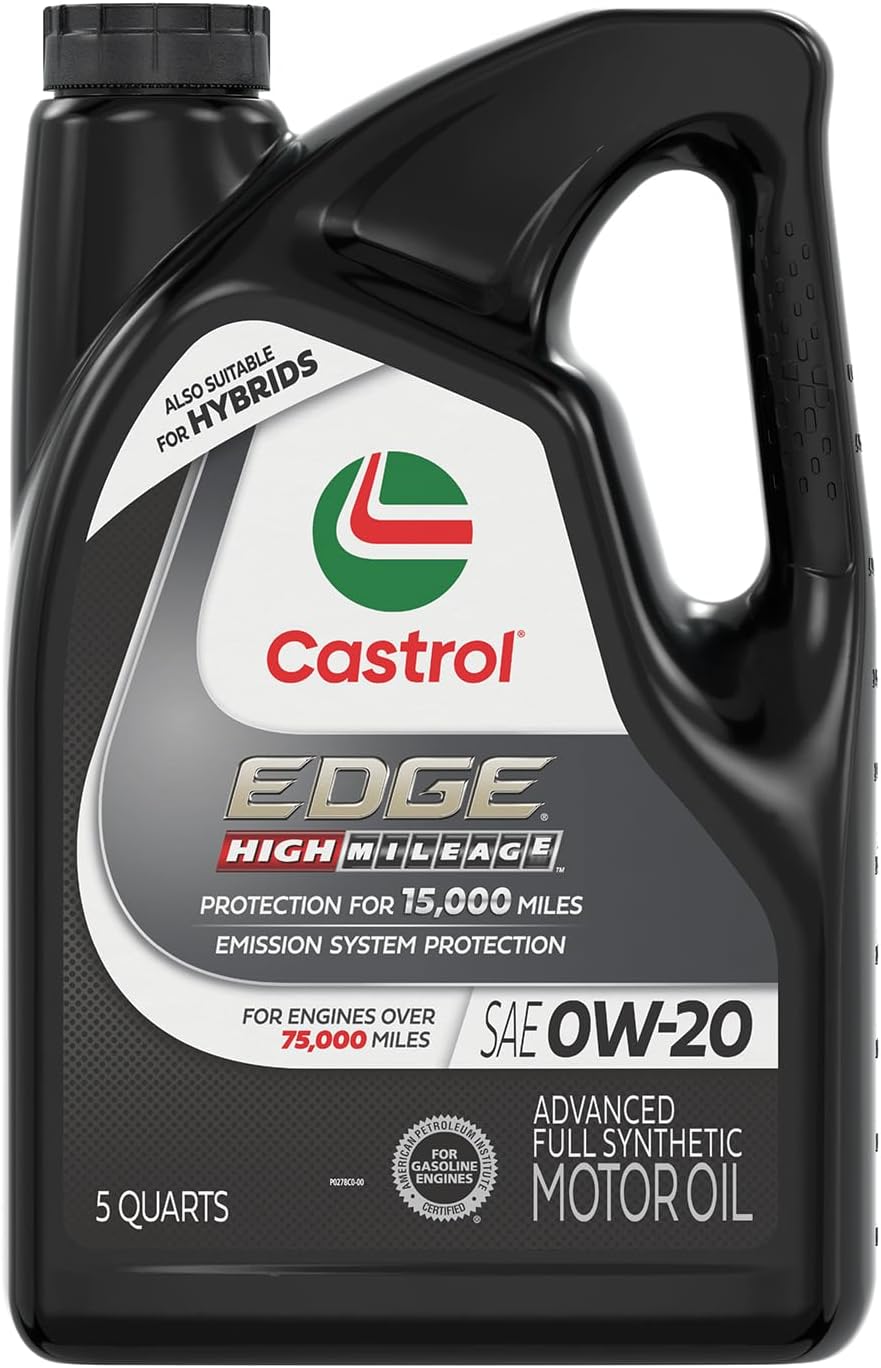
| SAE J300 Viscosity Grade | 0W-20 |
|---|---|
| Compatible with Vehicle Type | For vehicles with over 75,000 miles |
| Liquid Volume | 5 Quarts |
| Meets specifications | API SP | ILSAC GF-6 |
Castrol EDGE High Mileage 0W-20 is a full-synthetic engine oil formulated to help older engines run cleaner and reduce common high-mileage issues. For a 2018–2023 Subaru Crosstrek, this oil is used like any factory-grade 0W-20: pour during a routine oil change to provide low-temperature flow at startup and stable protection at operating temperature. Notable features include phosphorus replacement technology aimed at protecting catalytic systems, additives targeted at sludge control and corrosion prevention, and components intended to condition seals to reduce leaks and oil burnoff. Castrol rates the product for up to 15,000 miles between changes under recommended conditions, and it meets industry specifications including API SP and ILSAC GF-6 plus several manufacturer test requirements. The practical benefit is improved deposit control and potential reduction in minor leaks on higher-mileage Crosstreks while maintaining the correct viscosity for factory tolerances. Buyers should follow Subaru service intervals and fluid-change recommendations since extended drain intervals depend on operating conditions and vehicle history.
Best for: Owners of 2018–2023 Subaru Crosstreks with higher mileage who prioritize deposit control, reduced oil burnoff, and seal conditioning to maintain engine performance between services.
Less Ideal for: Drivers who follow strict short-interval service schedules, track their Crosstrek, or who prefer OEM-branded fluids and factory-prescribed change intervals.
- Formulated specifically for higher-mileage engines with additives for sludge control and seal conditioning
- 0W-20 viscosity matches Subaru Crosstrek factory recommendation for modern engines
- Includes phosphorus replacement technology to protect the emission system and catalytic converter
- Meets current industry specs including API SP and ILSAC GF-6 for broad compatibility
- Extended 15,000-mile drain interval is conditional and may not suit hard-use or severe-service vehicles
Verdict: Ideal for higher-mileage engines that need added detergency and seal conditioning to reduce leaks, clean deposits, and extend engine life between services.
6. Valvoline Extended Protection Full Synthetic Motor Oil SAE 0W-20, 5 qt
Best 5‑Quart Value Pack
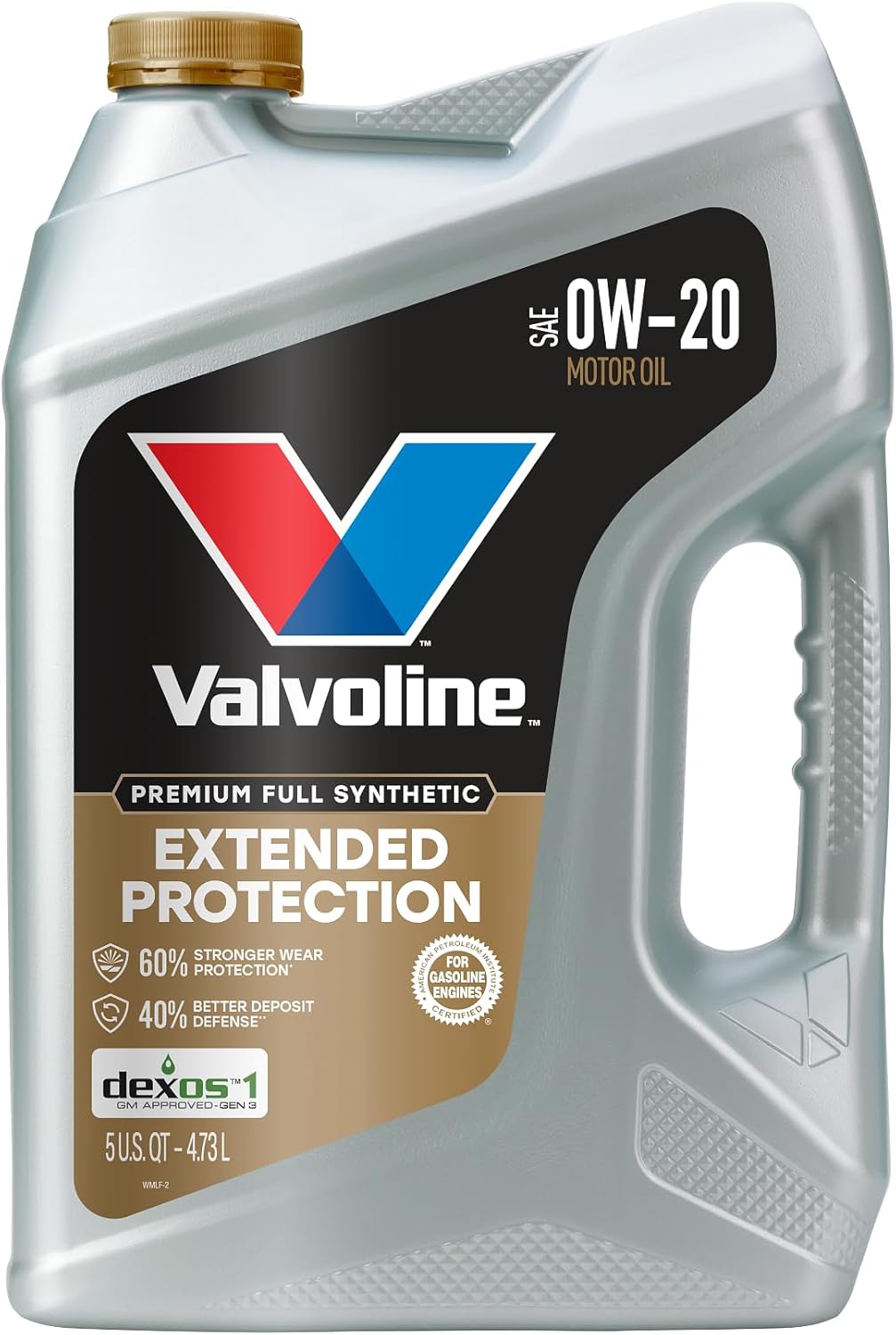
| SAE J300 Viscosity Grade | 0W-20 |
|---|---|
| Liquid Volume | 5 Quarts |
| Automotive Fit Type | Universal Fit |
| Viscosity Level | Low to Medium |
Valvoline Extended Protection 0W-20 is a premium full synthetic oil sold in a single 5-quart container intended for a complete oil change. It uses Dual Defense Additive Technology to reduce wear, fight deposits, and withstand higher temperatures, which makes it suitable for modern small-displacement and turbocharged engines. In practice you pour one bottle to refill the crankcase during a routine service and benefit from stronger wear protection, improved deposit control, and claimed fuel economy gains compared with industry-standard oils. The product meets common industry and manufacturer specifications and lists additional manufacturer approvals useful for many gasoline engines. The main limitation for Crosstrek owners is the fixed 0W-20 grade and single-bottle format: it only fits vehicles that call for 0W-20 and does not provide multiple smaller containers for staged topping or mixing with other viscosities. For a Subaru Crosstrek requiring factory-recommended 0W-20, this is a convenient, well-known brand option for a full oil change.
Best for: Buyers who want a single, reputable-brand 5-quart container to complete an oil change on a Subaru Crosstrek that specifies 0W-20 and who prioritize convenience and per-quart value.
Less Ideal for: Do not choose this if your Crosstrek calls for a different viscosity, if you plan to blend oils, or if you prefer smaller bottles for storage or partial top-offs.
- Single 5-quart bottle is convenient for a complete oil change without transfers or combining containers
- Full synthetic formulation with additives designed to reduce wear and control deposits
- Meets industry and manufacturer specifications relevant to modern gasoline engines
- Claims improved heat protection which helps durability under higher operating temperatures
- Only available in a single 5-quart container and only in SAE 0W-20 grade
- Not suitable if your Crosstrek requires a different viscosity or if you prefer multiple smaller bottles
Verdict: Buy this when you want a full 5‑quart container from a reputable brand for economical, single-change convenience and better per-quart value.
Choosing the Right 2018-2023 Subaru Crosstrek Engine Oil: Key Factors to Consider
Viscosity and Cold-Start Performance
Viscosity determines how quickly oil flows at startup and how well it protects moving parts once the engine reaches operating temperature. For the 2018-2023 Subaru Crosstrek, picking an oil with the correct SAE grade helps ensure adequate film strength without creating excessive drag. Cold-start performance matters because oil that is too thick in low temperatures delays lubrication to critical components, increasing wear during the first moments of operation.
When evaluating options, consider multi-grade oils that meet the vehicle's recommended cold-flow specifications. Some formulations include viscosity improvers that minimize thickness change across temperature swings. A balance between thinness for cold-weather pumpability and sufficient high-temp protection is especially important if you frequently drive in cold climates or take short trips that do not allow full warm-up.
Additive Package and Wear Protection
Additives control detergency, anti-wear properties, corrosion protection, and sludge prevention. A robust additive package helps keep piston rings, valve train components, and bearings clean and protected under mixed city and highway driving. For the Crosstrek, which often sees varied driving conditions, detergents and dispersants reduce deposit buildup while anti-wear agents protect contact surfaces.
Look for oils with proven anti-wear chemistries and balanced detergent levels. Too aggressive detergency in an older, high-mileage engine can unseat deposits all at once, but modern additive blends aim to maintain cleanliness without stripping protective films. Compatibility with seal materials used in Subaru engines is also important to avoid leaks or seal hardening over time.
Manufacturer Specifications and Approvals
Adherence to Subaru and industry specifications ensures the oil meets minimum performance standards for this engine family. Recommended viscosity ranges and API/ILSAC categories indicate that a product has passed baseline tests for things like oxidation control and wear. Choosing oils within the manufacturer-recommended spec reduces the risk of warranty issues and ensures functional compatibility with the engine's clearances and materials.
Check vehicle documentation for the suggested grade and any notes about synthetic vs conventional oils. For year-to-year continuity across the 2018-2023 range, prefer oils that explicitly meet common passenger car categories suitable for the Crosstrek's engines.
High-Mileage Considerations
As mileage climbs, engines experience increased tolerances, seal wear, and deposit formation. High-mileage formulations often include seal conditioners and additional detergents to manage leaks and keep older engines running smoothly. For Crosstrek owners with higher-mileage vehicles, selecting an oil designed for long-term engine care can help control consumption and reduce oil-related leaks.
These oils may also emphasize oxidation resistance to limit sludge and varnish formation. While not every high-mileage engine requires a specialized formula, owners should weigh the engine's current condition, mileage, and any minor leaks when deciding whether a high-mileage product is appropriate.
Synthetic Vs Conventional Base Stocks
Synthetic base stocks generally offer superior thermal stability, lower volatility, and better low-temperature flow than conventional oils. For the Crosstrek, a synthetic oil can provide more consistent protection across a broad temperature range and may reduce consumption in engines prone to light oil use. Synthetics also tend to maintain viscosity and additive performance longer between changes.
However, conventional oils still meet basic protection needs and can be appropriate for drivers who follow short-interval maintenance and have milder operating conditions. Consider the vehicle's age, driving habits, and service interval preferences when choosing between synthetic and conventional options.
Drain Interval and Long-Term Oxidation Resistance
How long an oil holds up before it degrades affects maintenance planning and long-term engine cleanliness. Oils with strong oxidation resistance maintain protective properties longer and reduce sludge formation, which is important for owners seeking extended drain intervals or who frequently do highway miles. The recommended drain interval should align with your maintenance habits and the vehicle's usage pattern.
Note that longer drain intervals require oils with proven durability and stable additive packages. If you plan to extend intervals beyond the factory recommendation, prioritize products with documented shear stability and oxidation control to reduce the risk of reduced protection between services.
Recommended Viscosity Choices for Different Conditions
Selecting the correct viscosity grade depends on your local climate and driving style. For many 2018-2023 Crosstrek engines, manufacturers recommend specific grades that balance cold-start protection and operating viscosity. In colder regions, a lower winter number improves pumpability at startup, while in hotter climates a higher hot-grade helps maintain film strength under load.
If you split time between short city trips and occasional highway driving, choose a multi-grade oil that offers proven cold-flow and high-temperature protection. For high-mileage Crosstreks, consider whether a slightly heavier nominal grade at operating temperature will better preserve oil pressure and reduce consumption.
- Cold climates: prioritize lower winter viscosity for faster lubrication at startup
- Mixed driving: choose multi-grade oils with stable high-temp viscosity
- High-mileage: consider formulations that resist thinning and reduce consumption
Timing Oil Changes and Inspection Intervals
Regular oil changes remain one of the most effective maintenance steps for engine longevity. Follow the factory schedule as a baseline, then adjust intervals based on driving conditions such as towing, frequent short trips, or dusty environments. Checking oil level between services is important with any formulation, especially if you run higher-mileage engines.
When changing oil, inspect the drained oil for unusual odors, metallic particles, or excessive soot. These observations can indicate an underlying engine condition that no oil alone will correct and may prompt further inspection.
- Use factory interval as the baseline and shorten intervals for severe use
- Check oil level monthly or before long trips
- Inspect drained oil for signs of abnormal wear or contamination
Cold-Weather Tips for Crosstrek Owners
Cold starts place the most stress on engine components because oil flow is temporarily reduced. If you live in an area with frequent freezing temperatures, choose an oil that maintains low-temperature fluidity without sacrificing high-temperature protection. A quick warm-up after start and avoiding heavy loads immediately after a cold start will reduce wear.
Consider using synthetic oils with strong low-temperature performance during winter months and switch seasons if the vehicle sees extreme temperature swings. Also, allow the engine to reach operating temperature before driving hard to ensure the oil has developed adequate film strength.
- Select oils with good cold-pour and low-temperature viscosity ratings
- Avoid heavy loads or spirited driving immediately after a cold start
- Synthetic options commonly improve pumpability in subzero conditions
Managing Oil Consumption and Leak-Prone Symptoms
Some higher-mileage engines show increased oil consumption or minor seepage from seals. If you notice consistent consumption, track the rate and look for external leaks. Switching to an oil with better oxidation resistance and appropriate viscosity can sometimes reduce consumption, but it will not fix mechanical causes like worn piston rings or PCV system issues.
For engines with small leaks, high-mileage oils with seal conditioners may help soften and swell gaskets slightly to reduce seepage. However, if leaks are significant, mechanical repair is the reliable solution.
- Track oil consumption by measuring level between fill-ups
- High-mileage formulations can help with minor seepage
- Persistent consumption usually indicates mechanical wear needing inspection
Environmental Considerations and Disposal
Used oil is a regulated waste in many areas and should be handled responsibly. When planning oil changes, collect used oil in sealed containers and take it to a local recycling or disposal facility. Using longer-lasting oils can reduce the volume of waste oil generated but only if the oil's condition is suitable for extended drain intervals.
Be mindful that additives and contaminants can affect recyclability. Keeping drains clean and minimizing contaminants during service helps recycling efforts and prevents environmental harm.
- Store used oil in sealed, labeled containers before disposal
- Use approved recycling centers for proper handling
- Consider longer-life oils only if they support safe recycling and fit service intervals
Still looking for the perfect fit?
Select your Subaru Crosstrek configuration to see the most relevant Engine Oils recommendations
How We Chose the Best 2018-2023 Subaru Crosstrek Engine Oil
We focused on criteria that matter specifically to 2018-2023 Subaru Crosstrek owners and excluded options that do not align with the vehicle's engine design or Subaru-recommended viscosity ranges. Primary evaluation metrics included viscosity compatibility and cold-start performance to ensure oils behave correctly across the Crosstrek's production years and climate conditions. We also reviewed additive formulations and shear stability to assess how well products maintain film strength and protect against wear in both regular and spirited driving. Thermal stability and volatility were used to judge how oils handle higher-mileage engines and preserve consumption rates. Finally, durability and recommended drain intervals were considered to reflect real maintenance schedules.Excluded from consideration were oils formulated only for heavy-duty diesel engines, specialty racing lubricants intended for track-only use, and any product that explicitly conflicts with Subaru engine material compatibility. The resulting shortlist balances daily drivability, extended protection, and proven formulation traits that suit the Crosstrek's boxer engine characteristics.
Our full evaluation process is outlined in our review methodology.
FAQ
What viscosity oil should I use in a 2018-2023 Subaru Crosstrek?
Viscosity depends on the engine variant and climate. Refer to the vehicle's recommended grades, but generally choose a multi-grade oil that provides good cold-start flow in winter and stable high-temperature protection for summer driving.
Can I switch between 0W-20 and 5W-30 in my Crosstrek?
Switching grades should be guided by manufacturer recommendations and climate considerations. Moving between grades can be acceptable within approved ranges, but check the owner's guidance and consider engine age and operating conditions before changing.
Is synthetic motor oil necessary for the Crosstrek?
Synthetic motor oil often offers better thermal stability and cold-start performance, which benefits Crosstrek owners in extreme climates or those seeking longer drain intervals. However, conventional oils can still be suitable if you maintain regular service intervals.
How often should I check oil level on a Crosstrek?
Check the oil level at least once a month and before long trips. Frequency should increase if you notice higher consumption, leaks, or after towing and heavy-duty use.
Will a high-mileage oil help an older Crosstrek with minor leaks?
High-mileage oils include seal conditioners that can reduce minor seepage in older engines. They may provide temporary improvement, but significant leaks typically require mechanical repair.
Can changing oil grade improve fuel economy in the Crosstrek?
A lower-viscosity oil that still meets engine specs can slightly improve fuel economy by reducing internal friction. Gains are usually modest and depend on driving style and operating conditions.
Final Verdict
Prioritize oils that match the Crosstrek's recommended viscosity and meet recognized industry specifications. For most owners, a modern multi-grade synthetic offers the best balance of cold-start protection, wear resistance, and thermal stability across the 2018-2023 model years. If your Crosstrek has higher miles or minor leaks, consider a high-mileage formulation but be mindful that oil selection complements rather than replaces mechanical repairs.Ultimately, align your choice with driving conditions, service interval preferences, and observed engine behavior. That approach helps you maintain performance and reliability without unnecessary compromise.
Explore More:
- Check out all Subaru Crosstrek parts & accessories
- Explore Fluids & Chemicals
- Browse all Accessories
