

Note: This article contains affiliate links. If you click on these links and make a purchase, I may earn a small commission at no extra cost to you. This helps support my research and content. Read my full affiliate disclosure here.
Picking the right Toyota Tundra coolant matters because the wrong fluid can accelerate corrosion, reduce heat transfer, or shorten service life. You need a formulation that matches your truck's cooling system chemistry and offers reliable protection under towing, idling, and daily driving loads.This guide highlights seven shortlisted options that meet strict durability and compatibility criteria. We evaluated each type for corrosion protection, heat-transfer performance, and service interval expectations to help you choose the best fit for your Tundra. Read on for the factors that guided our selections and what to consider before you buy.
Looking for other parts? See all Toyota Tundra parts & accessories.
Top Picks at a Glance
| Best overall The best all-around choice for most situations | Genuine 00272 SLLC2 Engine Coolant/Antifreeze |  |
| Best quality Built to a higher standard if you want something more solid | Toyota Genuine Antifreeze/Coolant (00272-1LLAC) |  |
| Best Value The sweet spot between price and what you get | PEAK OET Extended Life Red/Pink 50/50 Prediluted Antifreeze/Coolant for Asian Vehicles, 1 Gal. |  |
| Best Budget The cheapest option that still gets the job done reliably | Zerex Original Green 50/50 Prediluted Antifreeze/Coolant 1 gal |  |
| Highest Rated A top-rated pick with lots of positive feedback | Valvoline Multi‑Vehicle 50/50 Ready-to-Use Antifreeze/Coolant, 1 Gallon |  |
| Most popular A crowd favorite that many people choose with confidence | Zerex Asian Vehicle Red Prediluted 50/50 Antifreeze/Coolant (1 gal) | 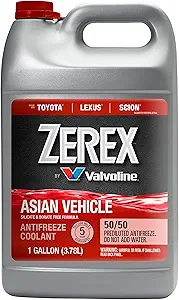 |
| Best Seller A high-volume bestseller chosen again and again | Zerex Asian Vehicle Blue Prediluted 50/50 Antifreeze/Coolant 1 Gal |  |
1. Genuine 00272 SLLC2 Engine Coolant/Antifreeze

| Manufacturer Part Number | 00272SLLC2 |
|---|---|
| Brand | Genuine |
| Item model number | 13 |
| Is Discontinued By Manufacturer | No |
This is Toyota's genuine 00272 SLLC2 engine coolant, sold as a ready-to-use antifreeze designed for Toyota and Lexus cooling systems. It is typically used when flushing and refilling the radiator or topping off the reservoir during maintenance. The formula is pink and includes corrosion inhibitors and a bittering agent to discourage ingestion. Practical benefits include factory-spec compatibility with Toyota cooling system materials, consistent temperature control in a wide range of conditions, and protection against corrosion that helps prolong water pump and radiator life. The product comes in a single-quantity container that is easy to pour. Limitations are price relative to generic coolants and the single-part-number offering means you must ensure it matches the Tundra model year and Toyota specifications; it is not a universal aftermarket formula for all vehicles. Buyers should follow Toyota service intervals and mixing instructions when using this coolant in a Tundra.
Best for: Balanced owners who prioritize factory-spec maintenance for a reliable daily-driving Tundra and want straightforward, recommended coolant for routine service.
Less Ideal for: Budget-focused DIYers who prefer lower-cost universal coolants or those restoring a non-Toyota vehicle should consider alternatives.
- Factory-quality formula specified for Toyota and Lexus cooling systems
- Includes corrosion inhibitors to help protect radiator, hoses, and water pump
- Easy-to-pour single container suitable for routine flush and fill service
- Contains a bittering agent to deter accidental ingestion
- Higher cost compared with generic aftermarket coolants
- Part number must match Toyota specifications for correct fitment and performance
Verdict: Choose this genuine Toyota coolant for reliable, factory-specified protection for a Tundra, but expect to pay a premium over generic options.
2. Toyota Genuine Antifreeze/Coolant (00272-1LLAC)

| Manufacturer | Toyota |
|---|---|
| Model | Antifreeze Coolant |
| Item model number | 00272-1LLAC |
| Manufacturer Part Number | 00272-1LLAC |
This Toyota Genuine Antifreeze/Coolant is a factory-quality concentrate designed for use in Toyota vehicles, including the Tundra. It is sold as genuine Toyota fluid intended to match factory formulations rather than aftermarket blends. You use it concentrated and dilute to the proper ratio for your cooling system, which yields the corrosion protection and heat-transfer characteristics Toyota engineers specify. Notable features include Toyota branding and a vehicle-specific formulation that helps maintain thermostat and radiator performance while guarding metal and internal cooling passages against rust. Practical benefits are straightforward: it simplifies service decisions by keeping your coolant chemistry consistent with factory recommendations and supports long-term cooling-system reliability. Limitations are that this is a concentrate that requires proper mixing and handling, and it is a single, Toyota-specific formula so it may not match the hybrid or specialty coolant chemistries some performance conversions require.
Best for: Performance-oriented buyers who prioritize maintaining factory cooling behavior and reliability for a Toyota Tundra and prefer parts that preserve engineered performance characteristics.
Less Ideal for: Drivers planning nonstandard cooling-system modifications or using specialty coolants for extreme motorsport applications should consider alternative formulations tailored to those needs.
- Factory-quality formulation matched to Toyota specifications
- Concentrate provides flexibility to mix to the correct dilution for the vehicle
- Formulated to reduce corrosion and protect cooling-system components
- Widely recognized part number for straightforward dealer-level replacement
- Requires correct dilution and handling since it is sold as a concentrate
- Single Toyota-specific formula may not suit unconventional aftermarket coolant chemistries
Verdict: Choose this genuine Toyota concentrate when you want factory-matched coolant chemistry to preserve Tundra cooling performance and corrosion protection.
3. PEAK OET Extended Life Red/Pink 50/50 Prediluted Antifreeze/Coolant for Asian Vehicles, 1 Gal.

| Liquid Color | Red/Pink |
|---|---|
| Dilution | 50/50 Prediluted |
| Volume | 1 gallon |
| Manufacturer | PEAK |
This PEAK OET coolant is a ready-to-use, phosphate-enhanced organic acid formula sold premixed 50/50 in a one-gallon jug and designed to match red/pink factory coolants used by many Asian manufacturers. For a Tundra owner focused on practical maintenance, it simplifies topping off or refilling the cooling system without mixing, and its extended-life chemistry is intended to reduce how often you need a full flush when installed as part of a complete service. The formulation claims corrosion and rust protection for cooling system components and is labeled for Asian vehicle specifications, which means color and inhibitor profile are aligned with many factory red coolants. Because it is specific to a phosphate-enhanced POAT type, confirm your Tundra model year and factory coolant spec before use since Toyota trucks may require a particular formula; using the wrong coolant chemistry can affect long-term seal and gasket compatibility. The bottle also includes a bittering agent and a gallon size that is convenient for larger top-offs or service jobs but can be bulky for quick small fills.
Best for: Practical optimizers who prioritize straightforward, low-hassle maintenance and want a premixed extended-life coolant that reduces service complexity and frequency.
Less Ideal for: Owners who require a specific Toyota-designated coolant chemistry for their Tundra or those who prefer concentrate product to control dilution and storage space.
- Ready-to-use 50/50 premix eliminates the need to measure or mix distilled water.
- Extended-life POAT formulation intended to reduce full-flush frequency when used as part of a proper service.
- One-gallon size is practical for full system fill or multiple top-offs.
- Matches red/pink factory coolant color and inhibitor profile for many Asian-spec systems.
- Formulated for phosphate-enhanced POAT systems so it may not match Toyota Tundra factory specs for every model year.
- Gallon jug can be bulky for small top-off tasks and lacks an integrated pour spout or level indicator.
Verdict: A convenient premixed extended-life red/pink coolant that makes topping off or refilling simple while matching common factory coolant color and inhibitor profiles.
4. Zerex Original Green 50/50 Prediluted Antifreeze/Coolant 1 gal

| Brand | Zerex |
|---|---|
| Model | Original Green |
| Formulation | 50/50 prediluted |
| Technology | Inorganic Additive Technology (IAT) |
Zerex Original Green is a ready-to-use 50/50 antifreeze that focuses on basic corrosion and freeze/boil protection using a low-silicate inorganic additive formula. You pour it straight into the cooling system when topping off or after a flush, which makes it handy for DIY maintenance on trucks and older engines that call for a green IAT-type coolant. The formula is designed to limit corrosion and scale, protect water pumps and radiators, and avoid borates, nitrites and amines that some systems avoid. Its prediluted format removes the need to mix concentrate with water and helps ensure consistent protection down to the listed cold-weather rating. The main limitation is that this IAT-style coolant is intended for older vehicles that specify a green low-silicate formula and is not suitable where extended-life organic acid or Toyota factory-specified long-life coolants are required, so verify your Tundra's coolant specification before use.
Best for: Budget-conscious DIY owners who prioritize an affordable, no-mix coolant for routine topping off and maintenance on older Toyota Tundra engines that accept a green IAT-type coolant.
Less Ideal for: Owners of newer Tundra models that require Toyota long-life or extended-service coolants should choose a factory-recommended formulation instead.
- Ready-to-use 50/50 mix eliminates need to dilute and reduces mixing errors
- Low-silicate IAT formula targets corrosion and scale protection for older cooling systems
- Prediluted gallon size is convenient for topping off or a single-system refill
- Not a long-life organic-acid formula so it may not meet Toyota long-life coolant requirements for newer Tundra models
Verdict: A convenient, budget-friendly ready-to-use low-silicate coolant for older Tundra engines that require a green IAT-type antifreeze.
5. Valvoline Multi‑Vehicle 50/50 Ready-to-Use Antifreeze/Coolant, 1 Gallon

| Size | 1 Gallon |
|---|---|
| Flash Point | 250 Degrees Fahrenheit |
| Model | Multi-Vehicle |
| Vehicle Service Type | Automobiles and light duty trucks |
Valvoline Multi‑Vehicle 50/50 Ready-to-Use Antifreeze/Coolant is a factory-style, pre-mixed coolant made for topping off or refilling passenger car cooling systems. It is formulated with Valvoline’s Alugard Plus additive to be compatible with other ethylene glycol-based coolants and to protect aluminum and other cooling system metals against corrosion, deposits, and leaks. The product arrives ready to use in a 50/50 mix, which simplifies maintenance and eliminates the need to measure concentrate and water. In practical use it protects against winter freezing and summer boiling and is suitable for routine flush-and-fill services on vehicles that call for ASTM D3306 ethylene glycol coolant. Limits to consider are that this is a universal, non-extended-life formula so owners seeking very long service intervals or manufacturer-specific long-life coolants should verify their Scion tC service requirements before swapping. The pre-mixed gallon is convenient for single fills and topping off the system during routine maintenance.
Best for: Risk-averse mainstream buyers who prioritize a straightforward, factory-style coolant replacement and want a ready-made solution that minimizes mixing errors during routine maintenance.
Less Ideal for: Owners who require manufacturer-prescribed long-life or specialty coolants for extended service intervals or who need a vehicle-specific formula tuned to non-ethylene glycol systems.
- Ready-to-use 50/50 mix removes guessing when topping off or refilling the cooling system
- Alugard Plus additive formulated for compatibility with other ethylene glycol coolants and protection of aluminum components
- Protects against freezing and boiling extremes for year-round use
- Designed to inhibit corrosion, scaling, and deposits to help extend component life
- Not marketed as a long-life or extended service formula compared with some OEM-specific coolants
Verdict: A convenient, ready-to-use universal coolant that protects modern engines and simplifies routine Scion tC cooling system maintenance.
6. Zerex Asian Vehicle Red Prediluted 50/50 Antifreeze/Coolant (1 gal)

| Formulation | Prediluted 50/50 HOAT |
|---|---|
| Color | Red |
| Compatible makes listed | Toyota, Lexus, Scion and other Asian vehicles |
| Chemistry notes | Silicate-free, borate-free, phosphate P-HOAT |
| Service life claim | 5 year / 150,000 mile |
This Zerex Asian Vehicle Red 50/50 coolant is a premixed HOAT formula intended as a direct replacement for manufacturer-specified red coolants used by many Asian-built trucks and SUVs. For Toyota Tundra owners looking for a convenient top-off or complete coolant swap, the gallon jug arrives ready to pour so you avoid mixing concentrate and measuring water. The silicate-free, borate-free, phosphate-containing chemistry targets long-life protection against rust, corrosion, scale and boilover, and the formulation lists industry and manufacturer specifications used by Asian automakers. In practice that means straightforward coolant changes, stable temperature control and reduced risk of introducing incompatible additives. The main limitations are that the product is formulated specifically for vehicles that require a red P-HOAT type coolant, so it is not universal, and some owners may prefer OEM-labeled fluid or concentrate for custom mixing. Also the price is higher than commodity green or universal ethylene-glycol blends, but you gain fit-for-purpose chemistry and ready-to-use convenience.
Best for: Convenience-driven buyers who prioritize an out-of-the-box, correct-for-spec replacement that makes topping off or flushing the cooling system quick and simple.
Less Ideal for: Owners who need a universal or green-type coolant, those who prefer to mix concentrate for bulk servicing, or shoppers seeking the lowest-cost generic fluid.
- Premixed 50/50 ready-to-use formula eliminates the need to mix and measure at installation
- Formulated for Asian manufacturers with P-HOAT chemistry to protect cooling-system metals from corrosion and deposits
- Silicate-free and borate-free composition reduces the risk of incompatible additive interactions
- Meets multiple OEM and industry specifications relevant to Asian vehicle requirements
- Designed for vehicles that require red P-HOAT coolant so it is not a universal replacement for all engines
- Sold as a single gallon jug which may be more expensive per unit than bulk concentrate for frequent service
Verdict: A convenient, ready-to-use red HOAT coolant suited for Toyota Tundra owners who want a factory-style replacement without mixing concentrate.
7. Zerex Asian Vehicle Blue Prediluted 50/50 Antifreeze/Coolant 1 Gal

| Brand | Zerex |
|---|---|
| Model | Asian Vehicle Blue |
| Formulation | Prediluted 50/50 |
| Technology | HOAT with phosphate additive |
| Contains | Silicate and borate free |
Zerex Asian Vehicle Blue is a ready-to-use 50/50 antifreeze/coolant formulated with Hybrid Organic Acid Technology and a phosphate additive for use in Asian-made cars that specify a blue, silicate- and borate-free formula. It is supplied prediluted so you can top off the radiator or refill after a flush without measuring concentrate, which simplifies DIY maintenance and saves time at service. The formula is designed to protect aluminum and other metals from corrosion, reduce scale and deposits, and maintain freeze and boil protection to prevent common cooling system failures. Because it avoids silicates, borates, amines and nitrites, it matches factory guidance for vehicles that require this chemistry. The main limitation is that the color and HOAT chemistry make it suitable only for engines that call for a blue Asian-spec coolant, so it is not a universal swap-in. For convenience-focused owners who want a straightforward, factory-compatible refill, this product minimizes mess and mixing while delivering long-life protection.
Best for: Convenience-driven owners who prioritize quick, no-mess maintenance and want a factory-compatible refill for Asian-spec vehicles like the Scion xB.
Less Ideal for: Owners who need a different coolant chemistry or are servicing vehicles that specify a green, yellow, or different OEM coolant color and formulation.
- Prediluted 50/50 formula ready to pour with no mixing required
- HOAT formula with phosphate additive protects aluminum and other metals from corrosion
- Silicate- and borate-free chemistry matches Asian vehicle coolant specifications
- Long-life formula designed to resist deposits and maintain freeze/boil protection
- Only appropriate for vehicles that require a blue, silicate-free HOAT coolant and not suitable for systems using different chemistries
Verdict: A convenient, factory-compatible prediluted blue coolant that simplifies topping off or refills for Asian-spec vehicles.
Choosing the Right Toyota Tundra Coolant: Key Factors to Consider
Coolant Chemistry and Compatibility
Coolant chemistry determines how the fluid interacts with the metal and rubber components in the cooling system. Different formulations use distinct inhibitor packages; some are silicate-based, others use organic acid inhibitors. Choosing a compatible chemistry reduces the risk of gasket damage, rubber hose deterioration, and accelerated corrosion.
Verify that the coolant chemistry matches the vehicle maker's specification or the replacement guideline for Toyota Tundra coolant. Mismatched chemistries can require a full system flush before switching and may shorten the useful life of parts inside the cooling circuit.
Corrosion Protection
Corrosion inhibitors are the primary defense against pitting and galvanic corrosion in radiators, water pumps, and engine passages. The effectiveness and longevity of these inhibitors determine how often you need to change the coolant and how well metal surfaces stay protected over time.
Look for products with clear test results or manufacturer claims about aluminum protection and mixed-metal compatibility. Higher-performing inhibitor packages usually translate to longer service intervals and reduced risk of unexpected coolant system failures.
Thermal Stability and Heat Transfer
A coolant must move heat away from the engine efficiently while remaining chemically stable at high temperatures. Thermal conductivity affects how quickly the system can shed heat, which matters during towing, off-idle acceleration, and heavy loads.
Poor heat-transfer properties can lead to higher operating temperatures and greater stress on engine components. Consider fluids designed to maintain consistent thermal performance over their service life rather than those that degrade quickly under high heat.
Service Life and Maintenance Interval
Service life influences maintenance planning and the total ownership cost of the cooling system. Some formulations are rated for extended intervals measured in years or miles, while others require more frequent changes to maintain protective levels of inhibitors.
Factor in how often you are willing to perform coolant maintenance and whether you prefer a longer-life product that reduces service frequency. Remember that longer service life assumes proper concentration and system condition; neglected systems may still need earlier fluid replacement.
Freeze and Boil-Over Protection
Freeze point and boiling point protection determine how well the cooling system performs across seasons and operating conditions. The correct mixture of coolant and water provides freeze resistance in cold climates and raises the boiling point to resist vapor lock during heavy use.
Always mix to recommended concentrations and verify that the chosen coolant supports the temperature extremes you commonly face. Vehicles used for towing or in very hot regions benefit from higher boil-over protection, while cold climates demand reliable freeze protection.
Compatibility With Cooling System Components
Beyond chemistry, consider compatibility with seals, hoses, plastic tanks, and sensors. Some inhibitor packages can be harsh on certain elastomers or discolor plastic components, while others are formulated to be gentle on modern materials.
Check manufacturer guidance for compatibility with OEM parts and be cautious with additives that claim to alter pH or stop leaks. Using a product that is confirmed to be safe for the Toyota Tundra cooling system helps avoid premature component wear and maintains sensor accuracy.
How We Chose the Best Toyota Tundra Coolant
Our editorial process focused on properties that directly affect performance and long-term engine health in this vehicle. We prioritized chemistry compatibility with Toyota cooling systems, corrosion inhibitors tailored for aluminum and mixed-metal radiators, and thermal conductivity that supports stable engine temperatures under load. Longevity and recommended service intervals were assessed to reflect maintenance frequency and total cost of ownership. We also considered freeze and boil-over protection to ensure year-round reliability in diverse climates.We excluded formulations intended only for specialty or racing applications and any fluids lacking clear manufacturer specifications for compatibility with passenger trucks. Products without transparent technical data on inhibitor type, concentration, or recommended service life were also filtered out. The remaining candidates represent the best balance of compatibility, protection, and predictable maintenance needs for a Toyota Tundra.
Our full evaluation process is outlined in our review methodology.
FAQ
How often should I change the coolant in a Toyota Tundra?
It depends on the coolant formulation and your driving conditions. Many modern coolants are rated for extended intervals measured in years or miles, but heavy towing, frequent short trips, or contaminated systems often require earlier changes. Check the vehicle's service recommendations and monitor coolant condition; discoloration or debris can indicate the need for a flush sooner.
Can I mix different coolant types in my Tundra?
Mixing coolant chemistries is usually not recommended because different inhibitor packages can react and reduce effectiveness. If you need to switch types, a complete system flush is often advised to remove residual fluid. When in doubt, follow the vehicle manufacturer's specified chemistry for replacement fluids.
What concentration of coolant to water should I use?
A 50/50 mix of coolant and distilled water is a common starting point because it balances freeze protection, boiling point elevation, and corrosion inhibition. Depending on climate extremes, you might adjust toward 60/40 for more freeze protection or higher boiling resistance. Always follow guidance on the coolant label and vehicle manual for best results.
Does coolant protect the entire cooling system or just the radiator?
Coolant protects the whole closed cooling system, including the engine, head gasket area, water pump, heater core, and radiator. Its inhibitor package is designed to prevent corrosion and scale across the system's different metals. Proper circulation and concentration are necessary to ensure all components receive protection.
Is there a benefit to using long-life coolant in a Tundra?
Long-life coolant can reduce maintenance frequency and keep inhibitor levels effective for extended periods when the system is in good condition. However, its benefits depend on correct chemistry compatibility and a clean system before installation. If the system is dirty or previously maintained with incompatible fluids, expected longevity may be shorter.
Conclusion
Choosing the right Toyota Tundra coolant means balancing chemistry compatibility, corrosion protection, and thermal performance against your maintenance preferences. Prioritize fluids that match the vehicle's recommended inhibitor type and offer proven protection for aluminum and mixed-metal systems.Also weigh service interval expectations and whether you need enhanced freeze or boil-over resistance for your climate or towing use. A carefully chosen coolant will extend component life and reduce the likelihood of cooling-system issues when proper mixing and routine checks are performed.
Explore More:
- Check out all Toyota Tundra parts & accessories
- Explore Fluids & Chemicals
- Browse all Accessories
