

Note: This article contains affiliate links. If you click on these links and make a purchase, I may earn a small commission at no extra cost to you. This helps support my research and content. Read my full affiliate disclosure here.
Picking the right coolant for your Toyota Sienna matters for everyday reliability and long-term engine health. The wrong fluid or degraded coolant can reduce heat transfer, allow corrosion, and increase the risk of overheating during heavy use or hot weather.This guide covers seven shortlisted coolants that meet common service needs for the Sienna. We evaluated options for thermal performance and materials compatibility, and highlight fluids suited to routine maintenance and extended-interval service. Read on to find the coolant types that align with your maintenance plan and driving conditions.
Looking for other parts? See all Toyota Sienna parts & accessories.
Top Picks at a Glance
| Best quality Built to a higher standard if you want something more solid | Genuine 00272 SLLC2 Engine Coolant/Antifreeze |  |
| Best Value The sweet spot between price and what you get | Zerex Asian Vehicle Red Prediluted 50/50 Antifreeze/Coolant, 1 gal | 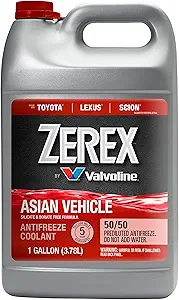 |
| Best Budget The cheapest option that still gets the job done reliably | Zerex Pre-Charged 50/50 Prediluted Heavy Duty Antifreeze/Coolant (1 gal) |  |
| Highest Rated A top-rated pick with lots of positive feedback | Valvoline Multi‑Vehicle 50/50 Ready-to-Use Antifreeze/Coolant, 1 Gallon |  |
| Most Popular A crowd favorite that many people choose with confidence | Zerex Asian Vehicle Blue Prediluted 50/50 Antifreeze/Coolant 1 Gal |  |
1. Genuine 00272 SLLC2 Engine Coolant/Antifreeze

| Manufacturer Part Number | 00272SLLC2 |
|---|---|
| Brand | Genuine |
| ASIN | B0071N5DM4 |
This Genuine 00272 SLLC2 coolant is a factory-quality pink antifreeze designed to meet Toyota/Lexus cooling system requirements. It is used as a direct replacement when servicing the radiator or during scheduled coolant changes and is packaged for single-quantity pours with no core charge. The formula is intended to regulate engine temperature, reduce overheating risk, and provide corrosion protection to internal components, which helps preserve longevity and maintain consistent performance under varied driving conditions. Owners report it matches manufacturer recommendations and is easy to identify by color when checking levels. Limitations are cost and that it is specific to Toyota/Lexus formulations, so it is not a universal coolant for other makes; users should follow Toyota service intervals for optimal results. For performance-focused Toyota Sienna owners this coolant provides a conservative, factory-aligned choice but adds a bit more expense compared with generic alternatives.
Best for: Performance-oriented buyers who prioritize using manufacturer-recommended fluids to preserve engine reliability and steady operating temperatures in their Toyota Sienna.
Less Ideal for: Drivers looking for the lowest-cost universal coolant option or those who need a coolant specified for non-Toyota vehicles should consider alternatives.
- Factory-formulated for Toyota and Lexus cooling systems to ensure compatibility with factory components
- Provides temperature regulation and corrosion protection to help maintain engine performance
- Single-quantity packaging and easy-to-see pink color make service and level checks straightforward
- Higher cost compared with generic or universal coolants
- Not suitable as a universal coolant for vehicles outside Toyota/Lexus specifications
Verdict: Choose this factory-formulated coolant for a performance-focused Toyota Sienna when you want manufacturer-aligned protection and temperature control, accepting a higher price for that fitment.
2. Zerex Asian Vehicle Red Prediluted 50/50 Antifreeze/Coolant, 1 gal

| Formulation | Prediluted 50/50 ready-to-use |
|---|---|
| Chemistry | Silicate-free, borate-free P-HOAT with phosphate |
| Intended vehicle types | Asian vehicles (Toyota, Lexus, Scion) |
| Volume | 1 gal |
Zerex Asian Vehicle Red is a ready-to-use 50/50 antifreeze aimed at Asian-brand cars and SUVs, formulated as a silicate- and borate-free Hybrid Organic Acid Technology coolant with phosphate additives. For a Toyota Sienna this product can be poured straight into the cooling system for topping off or used when performing a full flush and refill, eliminating the need to mix concentrate. Notable features include long-life chemistry designed to protect cooling system metals from rust and corrosion and compatibility with manufacturers that specify a red P-HOAT coolant. Practical benefits are convenience of premix, a formula intended to limit scale and deposits, and a track record of OEM-aligned specifications that reduce compatibility risk. Important limitations are that you must verify Toyota Sienna model-year coolant requirements before use and that a premixed gallon may be more expensive per volume than concentrated options for large coolant changes.
Best for: Practical owners who prioritize a straightforward, factory-spec replacement that minimizes maintenance steps and uncertainty when servicing a Toyota Sienna.
Less Ideal for: Shop technicians or owners doing large-volume coolant changes on fleets who prefer concentrate for lower per-unit cost and smaller storage footprint.
- Premixed 50/50 ready to use so no dilution mistakes and quick top-offs or refills
- P-HOAT chemistry formulated to protect against rust and corrosion in Asian-brand cooling systems
- Silicate-free and borate-free formula reduces risk of harmful deposits on engine components
- Higher per-gallon cost compared with concentrated coolants that require dilution
- Must confirm Toyota Sienna model-year coolant specification before using to avoid mismatch
Verdict: A convenient, manufacturer-aligned premixed red coolant that makes topping off and refills easy for Toyota Sienna owners who want a hassle-free, compatible option.
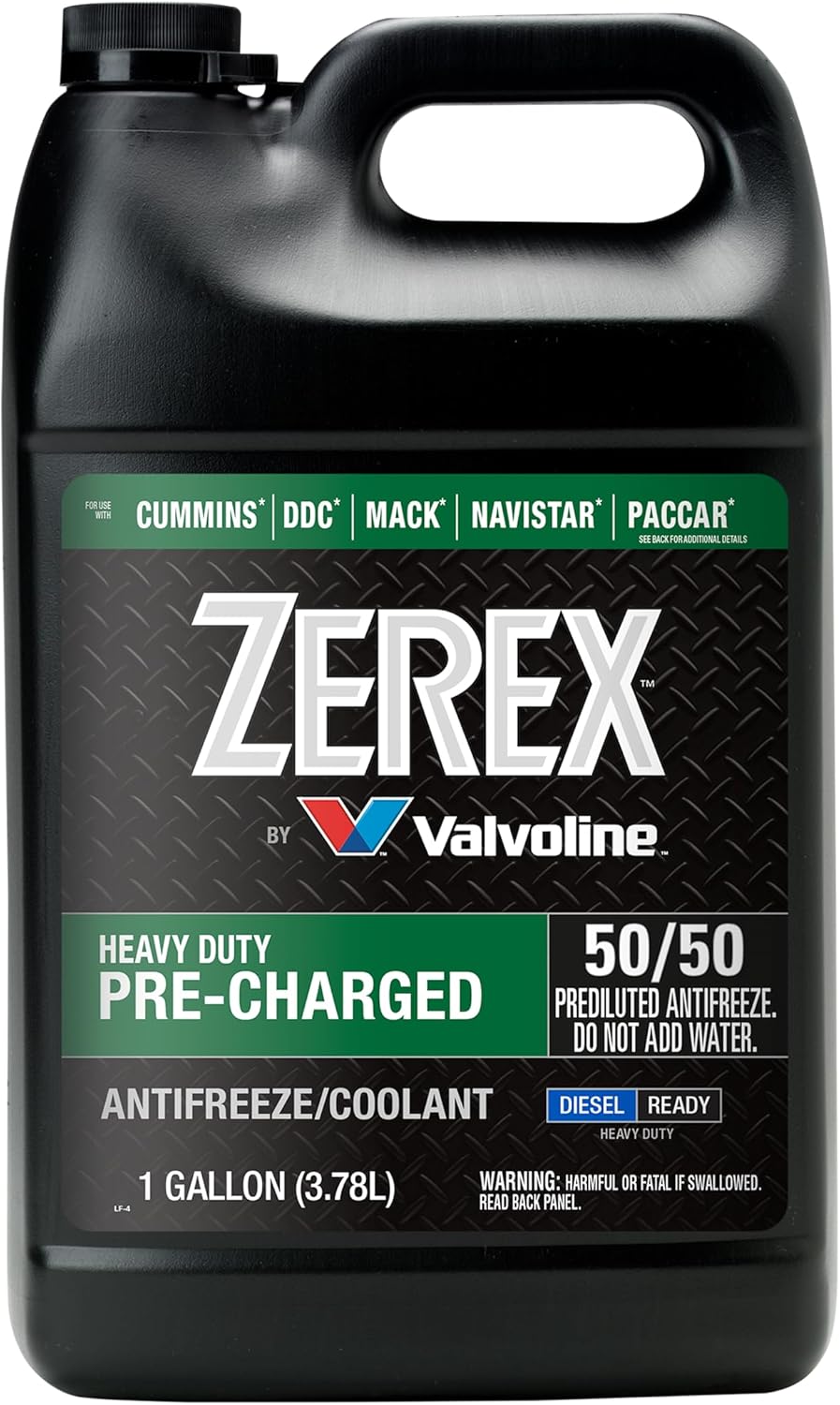
3. Zerex Pre-Charged 50/50 Prediluted Heavy Duty Antifreeze/Coolant (1 gal)
| Formulation | 50/50 prediluted ready-to-use |
|---|---|
| Intended use | Heavy-duty and universal automotive coolant |
| Special features | Pre-charged with corrosion, scale and rust inhibitors |
| Guaranteed life | 3 years / 150,000 miles |
Zerex Pre-Charged 50/50 is a ready-to-use antifreeze/coolant designed to protect cooling systems from corrosion, scale and cavitation without the need to mix concentrate. It is typically used for topping off or refilling after a flush and is formulated with nitrite and a low-silicate chemistry aimed at protecting metal parts including aluminum. The pre-mixed 50/50 ratio removes dilution guesswork and includes a defoamer and corrosion inhibitors to limit deposits and protect water pumps, radiators and hoses. Valvoline states the formula is proven in heavy-duty diesel fleets but is sold as a universal coolant that meets many vehicle specifications. Practical benefits for a Toyota Sienna buyer include easy installation, strong corrosion resistance, and a 3 year/150,000 mile performance guarantee when used per label directions. Limitations are that this is a green, prediluted product so it may not match every Toyota model specification that calls for concentrated or a specific OEM-formulated coolant color or chemistry, and using a premix prevents customizing freeze/boil protection with distilled water if needed.
Best for: Budget-conscious owners prioritizing a straightforward, no-mix coolant replacement who want reliable corrosion protection and easy top-offs for routine maintenance on their Toyota Sienna.
Less Ideal for: Owners who need a model-specific concentrated coolant or who prefer to control antifreeze concentration for extreme climates should consider manufacturer-specified concentrates or dealer-recommended products instead.
- Ready-to-use 50/50 mix eliminates need to measure or add water
- Formulated with corrosion, scale and rust inhibitors for long-term system protection
- Low-silicate, nitrite-charged formula intended to protect aluminum and heavy-duty components
- Backed by a stated 3 year or 150,000 mile performance guarantee when used per instructions
- Prediluted liquid may not match every Toyota cooling specification that requires a concentrated or specific OEM coolant chemistry
Verdict: A convenient, budget-friendly prediluted coolant that delivers strong corrosion protection and eliminates the need to mix concentrate.
4. Valvoline Multi‑Vehicle 50/50 Ready-to-Use Antifreeze/Coolant, 1 Gallon

| Size | 1 Gallon |
|---|---|
| Flash Point | 250 Degrees Fahrenheit |
| Model | Multi-Vehicle |
| Vehicle Service Type | Automobiles and light duty trucks |
Valvoline Multi‑Vehicle 50/50 Ready-to-Use Antifreeze/Coolant is a factory-style, pre-mixed coolant made for topping off or refilling passenger car cooling systems. It is formulated with Valvoline’s Alugard Plus additive to be compatible with other ethylene glycol-based coolants and to protect aluminum and other cooling system metals against corrosion, deposits, and leaks. The product arrives ready to use in a 50/50 mix, which simplifies maintenance and eliminates the need to measure concentrate and water. In practical use it protects against winter freezing and summer boiling and is suitable for routine flush-and-fill services on vehicles that call for ASTM D3306 ethylene glycol coolant. Limits to consider are that this is a universal, non-extended-life formula so owners seeking very long service intervals or manufacturer-specific long-life coolants should verify their Scion tC service requirements before swapping. The pre-mixed gallon is convenient for single fills and topping off the system during routine maintenance.
Best for: Risk-averse mainstream buyers who prioritize a straightforward, factory-style coolant replacement and want a ready-made solution that minimizes mixing errors during routine maintenance.
Less Ideal for: Owners who require manufacturer-prescribed long-life or specialty coolants for extended service intervals or who need a vehicle-specific formula tuned to non-ethylene glycol systems.
- Ready-to-use 50/50 mix removes guessing when topping off or refilling the cooling system
- Alugard Plus additive formulated for compatibility with other ethylene glycol coolants and protection of aluminum components
- Protects against freezing and boiling extremes for year-round use
- Designed to inhibit corrosion, scaling, and deposits to help extend component life
- Not marketed as a long-life or extended service formula compared with some OEM-specific coolants
Verdict: A convenient, ready-to-use universal coolant that protects modern engines and simplifies routine Scion tC cooling system maintenance.
5. Zerex Asian Vehicle Blue Prediluted 50/50 Antifreeze/Coolant 1 Gal

| Brand | Zerex |
|---|---|
| Model | Asian Vehicle Blue |
| Formulation | Prediluted 50/50 |
| Technology | HOAT with phosphate additive |
| Contains | Silicate and borate free |
Zerex Asian Vehicle Blue is a ready-to-use 50/50 antifreeze/coolant formulated with Hybrid Organic Acid Technology and a phosphate additive for use in Asian-made cars that specify a blue, silicate- and borate-free formula. It is supplied prediluted so you can top off the radiator or refill after a flush without measuring concentrate, which simplifies DIY maintenance and saves time at service. The formula is designed to protect aluminum and other metals from corrosion, reduce scale and deposits, and maintain freeze and boil protection to prevent common cooling system failures. Because it avoids silicates, borates, amines and nitrites, it matches factory guidance for vehicles that require this chemistry. The main limitation is that the color and HOAT chemistry make it suitable only for engines that call for a blue Asian-spec coolant, so it is not a universal swap-in. For convenience-focused owners who want a straightforward, factory-compatible refill, this product minimizes mess and mixing while delivering long-life protection.
Best for: Convenience-driven owners who prioritize quick, no-mess maintenance and want a factory-compatible refill for Asian-spec vehicles like the Scion xB.
Less Ideal for: Owners who need a different coolant chemistry or are servicing vehicles that specify a green, yellow, or different OEM coolant color and formulation.
- Prediluted 50/50 formula ready to pour with no mixing required
- HOAT formula with phosphate additive protects aluminum and other metals from corrosion
- Silicate- and borate-free chemistry matches Asian vehicle coolant specifications
- Long-life formula designed to resist deposits and maintain freeze/boil protection
- Only appropriate for vehicles that require a blue, silicate-free HOAT coolant and not suitable for systems using different chemistries
Verdict: A convenient, factory-compatible prediluted blue coolant that simplifies topping off or refills for Asian-spec vehicles.
Choosing the Right Toyota Sienna Coolant: Key Factors to Consider
Coolant Chemistry and Inhibitor Type
Coolants use different chemistries and inhibitor packages that control how they protect metal surfaces and seals. Organic acid technology, hybrid formulations, and traditional silicate-based inhibitors each behave differently over time and under temperature stress. Understanding the inhibitor type helps you pick a fluid that resists corrosion for the metals in your cooling system and matches recommended service intervals.
Inhibitor chemistry also affects compatibility when topping off or mixing with an existing fluid. Using a mismatched chemistry can reduce protection or cause sludge, so choose a coolant whose inhibitor approach aligns with the vehicle maker's guidance or plan to perform a complete flush before switching chemistries.
Freeze and Boilover Protection
The primary thermal functions of coolant are to lower freeze point and raise boiling point when mixed to the correct concentration. The level of freeze protection is vital if you drive in cold climates, while boiling resistance and pressure-capacity matter in heavy-load or high-temperature situations.
Check the manufacturer's concentration recommendations and use the proper water-to-coolant ratio to achieve the targeted freeze and boilover numbers. A coolant that maintains thermal performance under load helps prevent localized hot spots and reduces the risk of overheating during towing or prolonged highway driving.
Corrosion Resistance and Deposit Control
Effective corrosion inhibitors prevent electrochemical attack on aluminum, steel, and other metals in the radiator, cylinders, and water pump. Deposit control is also essential because scale and sludge reduce heat-transfer efficiency and can clog narrow coolant passages or heater cores.
Look for fluids with demonstrated inhibitor longevity and those tested for deposit suppression. A product that resists forming gels or particulates will help maintain consistent cooling performance and reduce the frequency of service interventions.
Materials Compatibility
Modern cooling systems contain a mix of aluminum, cast iron, copper, and various elastomers for hoses and seals. The wrong coolant chemistry can prematurely degrade rubber components or accelerate pitting and corrosion in certain metals.
Choose a coolant that specifies compatibility with common automotive materials and OEM elastomers. If you plan to reuse hoses and seals, selecting a fluid with proven rubber compatibility will reduce the chance of leaks and costly repairs.
Service Life and Maintenance Interval
Service-life claims affect how often you need to flush and replace coolant, which influences long-term maintenance costs and convenience. Some formulations are marketed for extended intervals while others are designed for more frequent changeover.
Consider how the fluid's reported inhibitor life fits your driving profile and maintenance schedule. If you prefer low-frequency servicing, select a coolant with documented long-life performance and ensure the system is properly maintained to realize those extended intervals.
Mixing Rules and Topping-Off Practices
How a coolant behaves when diluted or topped off matters for real-world ownership. Some fluids require precise mixing with distilled water, while others are sold pre-diluted for convenience. Topping off with an incompatible fluid can alter inhibitor balance and reduce protection.
Follow the product's mixing guidance and be cautious when combining different formulations. If you often need to top off between services, pick a coolant that remains safe and effective when small quantities of a compatible fluid are added.
How We Chose the Best Toyota Sienna Coolant
Our selections focus on fluids that match the thermal, corrosion, and materials demands of modern V6 engines and aluminum-copper cooling systems. We prioritized coolant formulations that explicitly address freeze and boilover protection, long-term corrosion inhibition, and compatibility with the elastomers and metal alloys commonly found in Sienna cooling systems. Heat-transfer efficiency under high-load conditions and maintenance interval recommendations were key technical filters.We also considered compatibility with typical service procedures, such as the ability to mix with factory-specified concentrations and whether a product supports standard coolant-flush practices. Durability criteria included inhibitor longevity and resistance to deposit formation.Excluded items were generic antifreeze mixes and specialty additives that require additional, nonstandard maintenance steps. We did not include fluids that lack clear materials-compatibility data or adequate corrosion testing information. The final list emphasizes practical, serviceable options that suit routine Sienna maintenance and extended service intervals.
Our full evaluation process is outlined in our review methodology.
FAQ
How often should I replace the coolant in a Toyota Sienna?
Replacement intervals depend on the coolant formulation and the vehicle's maintenance schedule. Many modern coolants are designed for extended service intervals, often multiple years, but older or conventional fluids typically require more frequent changes. Check the vehicle maintenance recommendations and the coolant manufacturer's service-life guidance, and inspect the fluid condition during routine service.
Can I mix different types of coolant if I need to top off the reservoir?
Mixing different coolant chemistries is not ideal because incompatible inhibitors can reduce corrosion protection or create deposits. If you must top off, use a fluid that matches the existing chemical family, or plan a complete flush and refill with the preferred formulation at the next service to ensure consistent protection.
What symptoms indicate the coolant needs attention or replacement?
Signs include discolored or cloudy fluid, visible debris or sludge, frequent overheating, loss of heater performance, or coolant odor inside the cabin. Low coolant level without an obvious leak can also indicate internal degradation. If you notice any of these symptoms, have the cooling system inspected and consider a service flush.
Is distilled water necessary when mixing coolant concentrates?
Using distilled or deionized water is recommended because it lacks minerals that can contribute to scale and deposits. Tap water can contain minerals that reduce corrosion protection and degrade heat transfer over time. When mixing concentrates, follow the manufacturer's water-quality recommendations to preserve inhibitor performance.
Does using a long-life coolant eliminate the need for periodic system checks?
Long-life coolants can extend service intervals, but they do not remove the need for periodic inspections. Regular checks help catch leaks, verify concentration, and ensure the system components such as hoses and clamps remain in good condition. Periodic testing of coolant condition is a good preventive practice even with extended-service fluids.
Conclusion
Choosing the right coolant for a Toyota Sienna means balancing thermal protection, corrosion control, and materials compatibility with your maintenance preferences. Prioritize a formulation that matches the cooling system metals and seals, offers stable inhibitor life, and delivers the freeze and boilover protection you need for your climate.If you plan on extended service intervals, pick a coolant with documented long-life durability and follow proper mixing and flush practices when changing chemistries. Regular inspections and correct topping-off habits will help maintain cooling performance and reduce the likelihood of corrosion-related failures.
Explore More:
- Check out all Toyota Sienna parts & accessories
- Explore Fluids & Chemicals
- Browse all Accessories
