

Note: This article contains affiliate links. If you click on these links and make a purchase, I may earn a small commission at no extra cost to you. This helps support my research and content. Read my full affiliate disclosure here.
Picking the right Hyundai Accent coolant matters because the wrong formula can reduce corrosion protection, shorten component life, or leave you vulnerable in extreme temperatures. You want a coolant that protects the engine, maintains proper heat transfer, and matches the vehicle's recommended chemistry.This guide covers seven shortlisted coolants chosen for their suitability for the Hyundai Accent. We evaluated each option on freeze and boil protection, corrosion inhibition, and compatibility with cooling system materials, then narrowed the list to the most practical choices. Read on to see the top picks and the criteria used to select them.
Looking for other parts? See all Hyundai Accent parts & accessories.
Top Picks at a Glance
| Best Overall The best all-around choice for most situations | Hyundai Genuine Long Life Coolant Concentrate – 1 Gallon |  |
| Best Quality Built to a higher standard if you want something more solid | Genuine 00272 SLLC2 Engine Coolant/Antifreeze |  |
| Best Value The sweet spot between price and what you get | Zerex Original Green 50/50 Prediluted Antifreeze/Coolant 1 gal |  |
| Best Budget The cheapest option that still gets the job done reliably | Prestone MAX Asian Green 50/50 Antifreeze Coolant (Premixed) |  |
| Highest Rated A top-rated pick with lots of positive feedback | Zerex Asian Vehicle Blue Prediluted 50/50 Antifreeze/Coolant 1 Gal |  |
| Most Popular A crowd favorite that many people choose with confidence | Zerex Asian Vehicle Red 50/50 Prediluted Antifreeze/Coolant, 1 Gallon | 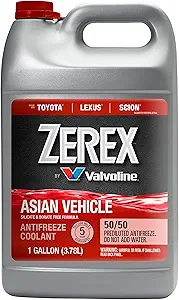 |
| Best Seller A high-volume bestseller chosen again and again | PEAK OET Extended Life Blue 50/50 Prediluted Antifreeze/Coolant for Asian Vehicles, 1 Gal |  |
1. Hyundai Genuine Long Life Coolant Concentrate – 1 Gallon

| Unit Count | 128.0 Fluid Ounces |
|---|---|
| Liquid Volume | 1 Gallons |
| Container Type | Bottle |
| Item Form | Liquid |
This is the factory replacement long life coolant concentrate Hyundai specifies for its vehicles and is sold as a one-gallon bottle to be mixed with distilled water. It is intended for routine coolant flushes and refill jobs and matches the chemistry used in Hyundai cooling systems, which helps avoid compatibility problems with aluminum radiators. Because it is a concentrate you mix to a 50/50 ratio it yields about two gallons of ready-to-use coolant, making it economical for a full system fill. Users report it performs reliably in a range of temperatures and that the product arrives sealed and unchanged, though some buyers have encountered poor packaging during transit. The product is straightforward to use for DIY maintenance or shop service, but you must follow the vehicle service manual for mix ratio and disposal instructions. This is not a premixed item so plan to provide distilled water and appropriate tools for a proper flush and fill.
Best for: Balanced, all-around Hyundai owners who prioritize using factory-quality fluids to preserve cooling system reliability and prefer a straightforward coolant for regular maintenance.
Less Ideal for: If you want a premixed, ready-to-pour coolant for immediate use or you prefer universal aftermarket formulas, this concentrated OEM product is not the best fit.
- Factory-formulated coolant that matches Hyundai cooling system chemistry
- Sold as concentrate so one gallon mixes to about two gallons of usable coolant
- Long-life formulation suitable for routine flush and refill maintenance
- Not premixed so purchaser must provide distilled water and mix correctly
- Some reports of inadequate packaging during shipping leading to leaks
Verdict: Choose this Hyundai genuine long life concentrate when you want factory-matching coolant chemistry and the economy of a concentrate for a proper flush and refill.
2. Genuine 00272 SLLC2 Engine Coolant/Antifreeze

| Brand | Genuine |
|---|---|
| Manufacturer Part Number | 00272SLLC2 |
| Item model number | 13 |
| Is Discontinued By Manufacturer | No |
This Genuine 00272 SLLC2 coolant is a factory-quality antifreeze formulated to regulate engine temperature and protect cooling-system components. It is used like any ready-to-use coolant during a coolant change or top-up and is designed to provide corrosion protection and stable boil/freeze performance for vehicles specified by the manufacturer. The product comes in a single quantity container with an easy-pour design and includes a bittering agent to discourage ingestion. Buyers can expect consistent temperature control and good long-term protection for metal components when the correct coolant type is required by the vehicle. The main limitation is that this is a vehicle-specific factory coolant, so it should only be used where the Chevrolet Malibu owner’s manual or dealer specifies a compatible Toyota/Lexus-formulated pink coolant; it is not a universal replacement for every system and may be more expensive than generic alternatives.
Best for: Balanced buyers who prioritize using factory-quality, vehicle-specific fluids and want reliable cooling-system protection for routine maintenance on their Chevrolet Malibu.
Less Ideal for: Drivers who need a universal or budget coolant for mixed-vehicle fleets or who prefer to strictly follow Chevrolet-specified coolant chemistry without cross-referencing other manufacturers should consider alternatives.
- Factory-quality formulation intended to provide reliable temperature regulation and corrosion protection.
- Sold as the manufacturer part number 00272 SLLC2, matching factory replacement specifications where required.
- Easy-pour single-quantity container with a bittering agent for safety.
- High customer satisfaction based on long-term use reports.
- Not a universal coolant; compatibility must be confirmed against the Chevrolet Malibu cooling system requirements.
- Typically priced higher than generic coolants.
Verdict: A factory-quality, vehicle-specific coolant that delivers dependable protection when its chemistry is appropriate for your Chevrolet Malibu, but confirm compatibility before use.
3. Zerex Original Green 50/50 Prediluted Antifreeze/Coolant 1 gal

| Brand | Zerex |
|---|---|
| Model | Original Green |
| Prediluted | 50/50 Ready-to-Use |
| Volume | 1 GA |
Zerex Original Green is a 50/50 prediluted antifreeze designed for straightforward radiator maintenance on vehicles that call for a low-silicate IAT formula. You pour it in to top off or refill the cooling system without additional mixing, and the inorganic additive package helps control corrosion and scale in metal cooling components. For a Jeep Compass that specifies a low-silicate green coolant, this product gives reliable freeze and boil protection and is easy to use for routine service or a full coolant change. Notable features include low silicate content, no borates or nitrites, and additives intended to protect aluminum and steel parts. The main limitation is that this is an older-style IAT coolant rather than a long-life organic acid formula, so it is intended for vehicles compatible with traditional green coolants and will require more frequent changes than extended-life coolants recommended for some newer models.
Best for: Budget-conscious buyers who prioritize a low-cost, ready-to-use coolant for routine maintenance on a Jeep Compass that specifies a traditional green IAT formula.
Less Ideal for: Owners seeking a long-life extended-interval coolant or those whose Jeep Compass requires a different manufacturer-specified coolant chemistry should look elsewhere.
- Prediluted 50/50 ready to use so no mixing required
- Low silicate IAT formula suited for older cooling systems that require green coolant
- Inorganic additives help protect radiators, water pumps and other metal components from corrosion
- Works for routine topping off or full system flushes without special handling
- Not a long-life organic acid coolant so it needs more frequent replacement in systems that allow extended-life fluids
- Formulated for vehicles that specify low-silicate green coolant and may be incompatible with coolants specified for newer Jeep Compass models
Verdict: A practical, low-cost ready-to-use green coolant for Jeep Compass models that accept low-silicate IAT formulas, but not the best choice if you need extended-life coolant chemistry.
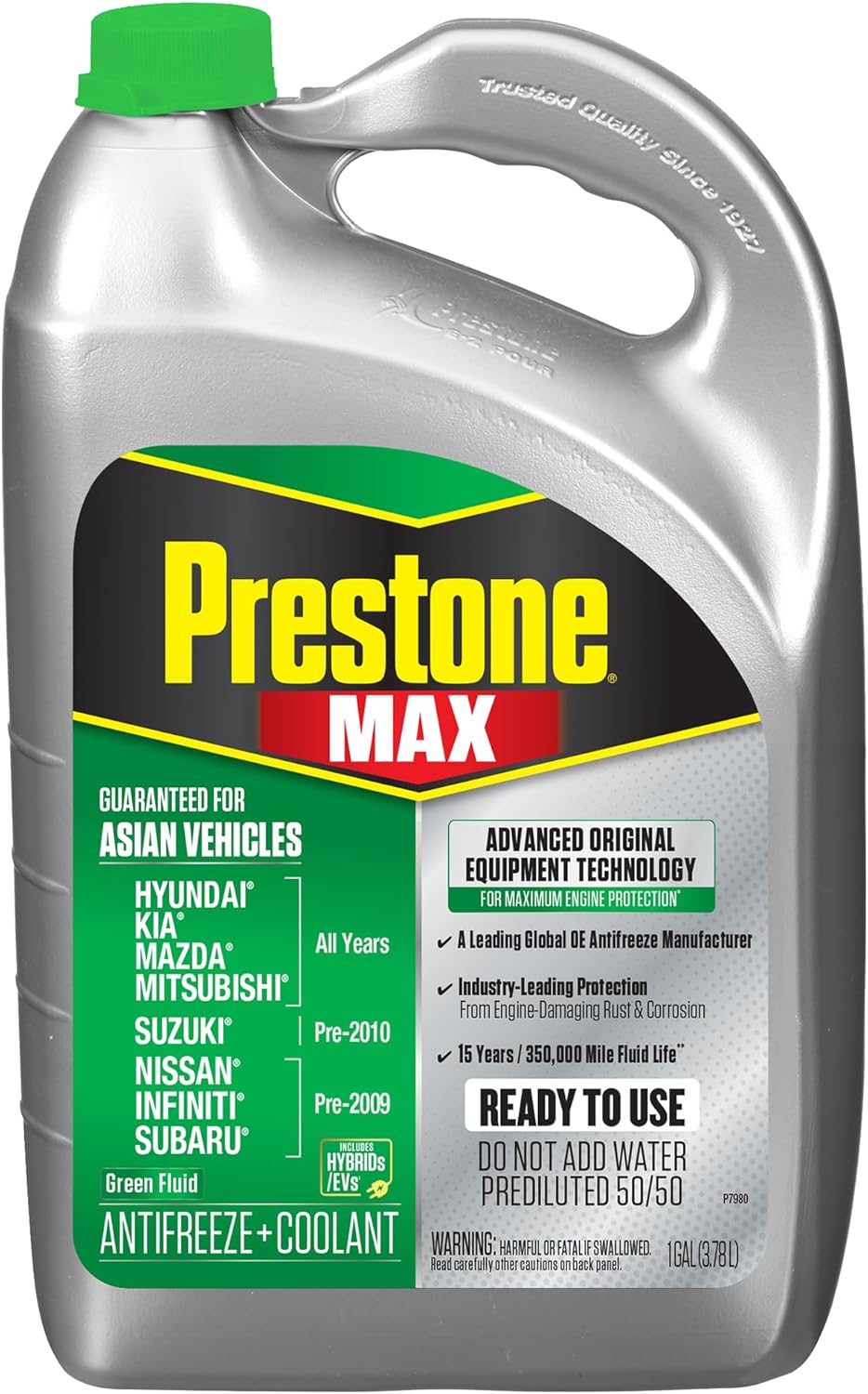
4. Prestone MAX Asian Green 50/50 Antifreeze Coolant (Premixed)
| Model | AF6610/F |
|---|---|
| Contains | Premixed 50/50 Asian green antifreeze |
| Manufacturer | Prestone |
Prestone MAX Asian Green 50/50 is a ready-to-use coolant formulated for Asian vehicle applications where green coolant is specified. It arrives premixed so you can pour it straight into the radiator or overflow reservoir after the system is cool, which simplifies top-offs and full coolant changes. The formula advertises patented corrosion protection technology and includes a bitterant to discourage ingestion. For a budget-focused buyer this product delivers solid temperature protection in both winter and summer and is commonly used during service intervals or when flushing and refilling the cooling system. Because it is a vehicle-specific green coolant, it is a better match for older Hyundai models that call for Asian green-type antifreeze than universal or dex-cool formulas. The limitation is that it is color- and chemistry-specific so it should not be mixed with different coolant types; follow your vehicle manual to avoid compatibility issues.
Best for: Practical, budget-conscious owners who prioritize straightforward maintenance and want an affordable, vehicle-specific coolant that reduces the chance of mixing errors.
Less Ideal for: Owners who prefer long-life orange or hybrid organic coolants or those with vehicles that require a different coolant chemistry should choose an alternative.
- Premixed 50/50 formula ready to use with no mixing required
- Formulated for Asian vehicle coolant specs, suitable where green antifreeze is recommended
- Includes corrosion protection technology to help cooling system longevity
- Not compatible with other coolant chemistries so do not mix with different colors/types
Verdict: An affordable, premixed green coolant made to match Asian vehicle specifications for easy, no-mix refills.
5. Zerex Asian Vehicle Blue Prediluted 50/50 Antifreeze/Coolant 1 Gal

| Brand | Zerex |
|---|---|
| Model | Asian Vehicle Blue |
| Formulation | Prediluted 50/50 |
| Technology | HOAT with phosphate additive |
| Contains | Silicate and borate free |
Zerex Asian Vehicle Blue is a ready-to-use 50/50 antifreeze/coolant formulated with Hybrid Organic Acid Technology and a phosphate additive for use in Asian-made cars that specify a blue, silicate- and borate-free formula. It is supplied prediluted so you can top off the radiator or refill after a flush without measuring concentrate, which simplifies DIY maintenance and saves time at service. The formula is designed to protect aluminum and other metals from corrosion, reduce scale and deposits, and maintain freeze and boil protection to prevent common cooling system failures. Because it avoids silicates, borates, amines and nitrites, it matches factory guidance for vehicles that require this chemistry. The main limitation is that the color and HOAT chemistry make it suitable only for engines that call for a blue Asian-spec coolant, so it is not a universal swap-in. For convenience-focused owners who want a straightforward, factory-compatible refill, this product minimizes mess and mixing while delivering long-life protection.
Best for: Convenience-driven owners who prioritize quick, no-mess maintenance and want a factory-compatible refill for Asian-spec vehicles like the Scion xB.
Less Ideal for: Owners who need a different coolant chemistry or are servicing vehicles that specify a green, yellow, or different OEM coolant color and formulation.
- Prediluted 50/50 formula ready to pour with no mixing required
- HOAT formula with phosphate additive protects aluminum and other metals from corrosion
- Silicate- and borate-free chemistry matches Asian vehicle coolant specifications
- Long-life formula designed to resist deposits and maintain freeze/boil protection
- Only appropriate for vehicles that require a blue, silicate-free HOAT coolant and not suitable for systems using different chemistries
Verdict: A convenient, factory-compatible prediluted blue coolant that simplifies topping off or refills for Asian-spec vehicles.
6. Zerex Asian Vehicle Red 50/50 Prediluted Antifreeze/Coolant, 1 Gallon

| Brand | Zerex |
|---|---|
| Model | Asian Vehicle Red |
| Formulation | Pre-mixed 50/50 HOAT |
| Longevity | 5 year/150,000 mile |
| Chemistry notes | Silicate-free, borate-free, phosphate HOAT |
Zerex Asian Vehicle Red is a ready-to-use 50/50 antifreeze designed for Asian makes that require a red, silicate-free HOAT formula. It is typically used for top-offs or complete cooling system flushes and replaces factory coolant without mixing. Notable features include a phosphate-containing hybrid organic acid technology chemistry, silicate- and borate-free formulation, and long-life protection rated for 5 years or 150,000 miles. In practice this means straightforward maintenance: pour in the premixed gallon to restore coolant level or refill after a drain and fill without worrying about measuring concentrate. The formula targets protection against rust, corrosion, scale and deposits across common cooling system metals, which helps stabilize engine temperature and extend component life. Limitations are that the product is color-specific and intended for vehicles calling for this red HOAT chemistry, so it should only be used where the manufacturer permits this coolant type and color to avoid compatibility issues.
Best for: Convenience-focused owners who want a ready-to-use, factory-replacement coolant for routine maintenance on compatible Asian-brand vehicles without measuring or mixing.
Less Ideal for: Drivers who need a different coolant chemistry or color specified by their manufacturer should choose the exact factory-recommended fluid instead of this product.
- Comes pre-mixed 50/50 for easy top-offs and refills with no dilution needed
- Formulated specifically for Asian vehicles requiring red, silicate-free HOAT chemistry
- Long-life formula rated for up to 5 years or 150,000 miles
- Silicate- and borate-free to reduce the risk of harmful deposits
- Only appropriate for vehicles that specify red HOAT coolant, so not universal across all makes
Verdict: A convenient, premixed red HOAT coolant made to match many Asian manufacturers' specifications for reliable, long-life protection.
7. PEAK OET Extended Life Blue 50/50 Prediluted Antifreeze/Coolant for Asian Vehicles, 1 Gal

| Volume | 1 gallon |
|---|---|
| Dilution | 50/50 prediluted |
| Intended use | Asian vehicles |
| Chemistry | Phosphate-enhanced OAT |
This 1-gallon PEAK OET blue antifreeze is a prediluted, extended-life coolant intended for Asian vehicle cooling systems and is ready to top off without mixing. It uses a phosphate-enhanced organic acid technology formula designed to prevent rust and corrosion across cooling system components and is labeled for brands like Honda and Subaru, which makes it suitable for the Scion xB when a blue POAT coolant is specified. The product is marketed as compatible with other extended-life coolants and includes a bittering agent to discourage ingestion. Practical benefits include the convenience of 50/50 predilution for immediate use, a factory-style formulation aimed at protecting aluminum and mixed-metal systems, and a long service interval when used after a full flush and fill. Limitations are that it is tailored to vehicles requiring the specific blue POAT chemistry, so it should not be mixed with incompatible coolant types, and buyers should confirm Scion xB coolant color/chemistry requirements before topping off.
Best for: Practical owners focused on cost-effective maintenance who want a ready-to-use, long-life coolant that matches factory chemistry for Asian cars like the Scion xB.
Less Ideal for: Buyers who need a different coolant chemistry or color for their vehicle or who plan to mix multiple coolant types should choose a product matched exactly to their vehicle specifications.
- Comes 50/50 prediluted for immediate top-offs without mixing
- Extended-life POAT formulation protects against rust and corrosion
- Formulated specifically for Asian vehicle coolant specifications
- 1-gallon size provides multiple top-offs or a full refill after a flush
- Designed for vehicles that require blue phosphate-enhanced OAT coolant and may be incompatible with other coolant chemistries
Verdict: A convenient, factory-style prediluted extended-life coolant for Scion xB owners who want a practical, low-effort maintenance solution.
Choosing the Right Hyundai Accent Coolant: Key Factors to Consider
Coolant Chemistry and Compatibility
Coolant chemistry determines how inhibitors protect metal surfaces and how the fluid interacts with seals and hoses. Hyundai vehicles typically require a specific inhibitor package; using a formula with incompatible additives can accelerate gasket and hose degradation.
Always check for compatibility with aluminum radiators and mixed-metal systems. Look for formulations that specify suitability for the vehicle or that match the original equipment chemistry. This reduces the risk of chemical reactions that can form sludge or deplete inhibitors prematurely.
Corrosion Inhibitor Type and Longevity
Different inhibitors provide protection over different service intervals. Organic acid technology tends to offer longer life with steady inhibition, while silicate-based formulas can give strong short-term protection but may require more frequent changes.
Consider how often you want to service the cooling system. Longer-life inhibitors reduce maintenance frequency but still require periodic testing to ensure inhibitor levels remain adequate. The right balance depends on your driving patterns and maintenance preferences.
Freeze and Boil-Over Protection
Effective freeze point depression and a high boiling point are essential for year-round reliability. In cold climates you need sufficient freeze protection to prevent expanded fluid from damaging the engine or radiator. In hot or heavy-load conditions, higher boil-over resistance helps maintain pressure control and cooling performance.
Mixing concentration matters. Manufacturers typically specify a dilution ratio that achieves the intended freeze and boil characteristics, so follow those guidelines to get the protection advertised on the product.
Material Compatibility and Seal Safety
Coolant contacts many components: aluminum heads, cast-iron blocks, plastic tanks, and rubber seals. A suitable coolant will protect metals without attacking modern elastomers or plastics used in the cooling system. Some formulas can cause swelling or shrinking of hoses and seals if not compatible.
Verify that the coolant explicitly lists compatibility with the materials present in your vehicle. This helps avoid leaks and premature component wear that can lead to overheating or coolant loss.
Maintenance Needs and Service Interval
Some coolants are formulated for long-life service intervals, while others are designed for more frequent replacement. Longer intervals reduce the need for routine flushing but may require monitoring of inhibitor levels and periodic testing with test strips or meter readings.
Think about how often you are willing to perform coolant flushes and top-ups. If you prefer minimal maintenance, prioritize long-life formulations that still match your vehicle's chemistry and manufacturer recommendations.
Labeling, Instructions, and Ease of Use
Clear labeling on concentration, dilution ratios, and safety precautions makes routine service easier and reduces the risk of incorrect mixing. Products that provide straightforward instructions for performing a coolant flush and refill save time and reduce mistakes.
Seek fluids that specify whether they are pre-diluted or require mixing, and that include guidance on disposal and handling. Good documentation supports correct installation and long-term system health.
How We Chose the Best Hyundai Accent Coolant
We focused on coolant formulas that are compatible with the Hyundai Accent cooling system and that offer documented corrosion inhibition and heat-transfer properties. Key evaluation criteria included freeze and boil-over protection, the type and longevity of corrosion inhibitors, compatibility with aluminum radiators and mixed-metal systems, and manufacturer guidance on dilution and maintenance intervals. We also reviewed clarity of labeling for concentration and mixing instructions, as well as guidance for performing a coolant flush and top-up. Products were excluded if they lacked explicit compatibility with the vehicle's coolant chemistry or if technical specifications were unclear. Our selection favors fluids that balance long service life with straightforward maintenance, helping owners maintain reliable engine temperatures and reduce the risk of premature component failure.
Our full evaluation process is outlined in our review methodology.
FAQ
How often should I change the coolant in a Hyundai Accent?
Frequency often depends on the coolant type and the vehicle maker's guidelines. Many long-life formulas recommend multi-year intervals, while traditional formulations may require more frequent changes. Check the vehicle manual and monitor inhibitor levels; if the fluid is discolored or test strips show depleted inhibitors, schedule a flush.
Can I mix different types of coolant in my Hyundai Accent?
Mixing different chemistries can reduce inhibitor effectiveness and sometimes cause sludge. It usually depends on the specific formulas involved. If you cannot match the existing type, a complete flush and refill with a single, compatible formula is the safer approach.
What is the difference between concentrate and pre-diluted coolant?
Concentrate requires mixing with distilled water to achieve the recommended freeze and boil protection, while pre-diluted products come ready to use. Using distilled water and following the specified dilution ratio ensures the expected corrosion protection and thermal performance.
Do I need to flush the cooling system before switching coolants?
A flush is often recommended when changing inhibitor types to remove residual chemicals and deposits that could reduce performance. Flushing helps ensure the new coolant's inhibitors perform as intended and reduces the risk of conflicting chemistries.
Can coolant affect engine temperature regulation?
Yes, coolant influences heat transfer and the prevention of localized hot spots. A fluid with degraded inhibitors or improper concentration may not transfer heat efficiently, which can lead to higher operating temperatures or reduced protection under load. Maintain correct concentration and replace coolant per recommendations.
Conclusion
When choosing a Hyundai Accent coolant, prioritize chemical compatibility with the vehicle, effective corrosion inhibitors, and the freeze and boil protection appropriate for your climate. Balance desired service intervals against maintenance habits; long-life formulas reduce service frequency but still need periodic monitoring.Check labeling for material compatibility and clear mixing instructions, and perform a proper flush when changing inhibitor types. Focusing on these criteria will help keep the cooling system reliable and extend component life.
Explore More:
- Check out all Hyundai Accent parts & accessories
- Explore Fluids & Chemicals
- Browse all Accessories
