

Note: This article contains affiliate links. If you click on these links and make a purchase, I may earn a small commission at no extra cost to you. This helps support my research and content. Read my full affiliate disclosure here.
Picking the right coolant for a GMC Sierra 2500 HD matters more than many owners realize. The heavy-duty duty cycle, towing loads, and stop-and-go work can push engine temperatures and expose cooling system metals to corrosion. Choosing a coolant formulated for heavy-duty use helps protect the radiator, water pump, heater core, and engine block while maintaining consistent operating temperature.This guide covers five top-rated coolant options shortlisted for the Sierra 2500 HD and explains the criteria used to evaluate them, including corrosion protection, service interval, and compatibility with common OEM seals and alloys. Read on for practical guidance that helps you pick the coolant that suits your driving and maintenance preferences before the product-specific picks below.
Top Picks at a Glance
| Best Overall Coolant A balanced all-around formula that fits most repair needs | PEAK DEX‑Cool Antifreeze + Coolant, 1 Gallon |  |
| Best Premium Coolant Higher-end formulation with enhanced additives and longer protection life | ACDelco DEX-COOL Extended Life Coolant, 1 Gallon |  |
| Best Concentrate Coolant Undiluted concentrate you mix to a custom antifreeze-water ratio | Valvoline Zerex Dex-Cool Concentrate Antifreeze/Coolant, 1 Gallon |  |
| Best Pre-Mixed Coolant Ready-to-use solution that eliminates mixing and reduces guesswork | PEAK OET Extended Life Orange 50/50 Prediluted Antifreeze/Coolant, 1 Gal. |  |
| Best Heavy-Duty Coolant Robust formulation tailored for high-heat, high-load engine conditions | Zerex Heavy Duty Extended Life 50/50 Prediluted Antifreeze/Coolant (Red) 1 gal |  |
1. PEAK DEX‑Cool Antifreeze + Coolant, 1 Gallon
Best Overall Coolant

| Vehicle fit | GM vehicles 1995 and newer requiring orange OAT coolant |
|---|---|
| Service life | Up to 10 years/150,000 miles (with flush and fill) |
| Standards met | ASTM D3306, D4985, GMW3420, GM6277M |
This DEX‑Cool formula is designed specifically for GM vehicles and is intended as a direct replacement for factory‑specified orange OAT coolant in Sierra 2500 HD models from 1995 onward. It protects against rust and corrosion on aluminum and other metals, and the manufacturer rates service life at up to 10 years or 150,000 miles when the cooling system is completely flushed and refilled. The concentrate‑style formulation contains no amines, phosphate, borate, nitrite, or silicate, and it meets ASTM D3306, D4985 and GM performance specifications cited for GM systems. In practice this means fewer coolant changes and reduced risk of galvanic corrosion in mixed‑metal cooling systems common on late‑model GM trucks. Buyers should note this is the orange DEX‑Cool chemistry required for many GM engines; it is not a universal coolant and should not be mixed with conventional green or blue antifreezes. The product includes a bittering agent for safety and comes in a one‑gallon container suitable for maintenance top‑offs or a single flush and fill on most Sierra 2500 HD cooling systems.
Best for: Technically minded GMC Sierra 2500 HD owners who want a factory‑specified replacement coolant that minimizes maintenance frequency and protects mixed‑metal cooling systems.
Less Ideal for: Drivers looking for a universal or multi‑vehicle coolant solution or those who plan to mix chemistries should choose a different product or perform a full system flush to switch types.
- Formulated to meet GM DEX‑Cool OAT requirements for GM vehicles 1995 and newer
- Long service life rating up to 10 years or 150,000 miles with proper flush and fill
- Protects aluminum and other cooling system metals against rust and corrosion
- Free of amines, phosphate, borate, nitrite and silicate to match GM chemistry
- Not compatible with conventional green/ethylene‑glycol coolants and should not be mixed with different chemistries
Verdict: The go-to coolant that balances corrosion protection, freeze/boil performance, and compatibility for typical maintenance and repairs.
2. ACDelco DEX-COOL Extended Life Coolant, 1 Gallon
Best Premium Coolant

| Volume | 1 Gallon |
|---|---|
| Brand | ACDelco |
| Model | Extended Life Coolant |
This ACDelco DEX-COOL Extended Life Coolant is a factory-replacement orange coolant designed to deliver extended corrosion inhibitor life and sustained heat transfer in modern cooling systems. It is typically used as a complete coolant fill or when topping off systems that require DEX-COOL compatible fluid. Notable features include its extended-life formulation and the inclusion of a bittering agent to discourage ingestion. In practice the product provides longer service intervals compared with conventional green coolants and helps protect aluminum and mixed-metal engine components common in heavier trucks. Important limitations are that it is a specific DEX-COOL formula, so it must not be mixed with non-compatible coolants without a full system flush, and it is sold as conventional concentrate rather than a pre-mixed antifreeze ready for some service procedures. For owners prioritizing durability and corrosion control for heavy-duty use, this coolant supports longer maintenance cycles but requires adherence to compatibility guidelines during installation.
Best for: Buyers who prioritize long-lasting corrosion protection and reduced coolant change frequency for heavy-duty trucks and engines and who will follow proper compatibility and service procedures.
Less Ideal for: People looking for a ready-to-use pre-mixed coolant or those who need a universal coolant that can be mixed with unrelated formulations.
- Extended-life inhibitor package for longer service intervals
- Formulated for protection of aluminum and mixed-metal cooling systems
- Factory-replacement formulation matching common DEX-COOL specifications
- Includes bittering agent to reduce accidental ingestion risk
- Not compatible with all coolant chemistries and requires a full flush before switching from different types
Verdict: A premium coolant that delivers superior corrosion inhibitors and longer-lasting protection for users willing to pay more for longevity and performance.
3. Valvoline Zerex Dex-Cool Concentrate Antifreeze/Coolant, 1 Gallon
Best Concentrate Coolant

| Product type | Concentrate antifreeze/coolant |
|---|---|
| Technology | Organic Acid Technology (OAT) |
| Volume | 1 gallon |
| Compatibility note | Formulated for vehicles requiring orange OAT coolant |
| Additive details | Silicate- and phosphate-free |
Valvoline Zerex Dex-Cool concentrate is an orange organic acid technology coolant designed to be mixed to the buyer’s preferred antifreeze/water ratio. It is intended for vehicles that call for Dex-Cool style OAT coolant and provides corrosion resistance for aluminum and other metals, plus protection against scale and deposits. Typical use is mixing at 50/50 or stronger ratios depending on expected low temperature exposure, then topping off or doing a full system flush when replacing old coolant. Notable features include a silicate- and phosphate-free formula, manufacturer approvals for multiple OEMs, and additives that help prevent leaks and protect water pumps and radiators. For GMC Sierra 2500 HD owners this concentrate lets you match freeze point and additive strength to heavy-duty towing and seasonal needs. The product is a concentrate only, so you must mix with clean water and follow recommended ratios; it is not a ready-to-use premix and requires correct handling during a coolant change.
Best for: Buyers who prefer to mix coolant themselves to dial in freeze protection and additive strength for heavy towing and seasonal extremes in a GMC Sierra 2500 HD.
Less Ideal for: Drivers who want a ready-to-use product or who are uncomfortable measuring and mixing automotive fluids should choose a premixed coolant instead.
- Concentrate format lets you control freeze point and additive concentration.
- OAT formula protects aluminum and other metals from corrosion and scale.
- Silicate- and phosphate-free formulation reduces deposit risk and is compatible with OAT systems.
- Manufacturer approvals and fleet testing indicate suitability for heavy-use applications.
- Requires correct dilution and handling since it is not pre-mixed.
Verdict: A concentrated coolant for buyers who prefer to mix their own antifreeze/water ratio to control freeze point and additive strength.
4. PEAK OET Extended Life Orange 50/50 Prediluted Antifreeze/Coolant, 1 Gal.
Best Pre-Mixed Coolant

| Dilution | 50/50 prediluted |
|---|---|
| Vehicle coverage | North American vehicles |
| Volume | 1 gallon |
| Service life claim | Up to 400,000 miles or 15 years when used with a full flush and fill |
This one‑gallon PEAK OET Extended Life Orange coolant is a 50/50 prediluted formula designed for North American engines and is ready to pour without mixing. It uses organic acid technology aimed at protecting aluminum and other cooling system metals from rust and corrosion and is intended for vehicles that specify an orange OAT coolant. Typical use is a flush and fill or topping off the radiator and overflow reservoir during routine maintenance; the premix removes the need to measure concentrate or add distilled water. The formulation includes a bittering agent for safety and PEAK guarantees long service life when used with a complete system flush and fill. Practical benefits are time saved during maintenance and consistent coolant concentration that helps avoid improper dilution. Limitations are that this color and chemistry target vehicles requiring orange OAT coolants, so it should only be used where that coolant type is specified, and users who need a concentrate or a different chemistry should choose an alternate product.
Best for: Drivers who want a ready‑to‑use coolant for fast top‑offs and routine maintenance on a GMC Sierra 2500 HD and prefer a factory‑quality, orange OAT formulation.
Less Ideal for: People who prefer concentrated coolant to adjust mixture ratios, or owners whose Sierra model requires a different coolant chemistry should look elsewhere.
- Comes 50/50 prediluted so no mixing or measuring is required for quick top‑offs
- Formulated with organic acid technology to protect aluminum and other cooling system metals from corrosion
- Sold in a one‑gallon container, convenient for multiple top‑offs or a complete radiator fill on many trucks
- Designed specifically for North American vehicles that call for orange OAT coolant
- Not suitable for vehicles that require a different coolant chemistry or color specification
Verdict: A pre-mixed coolant that’s convenient for quick top-ups and swaps, removing the need to measure or dilute before use.
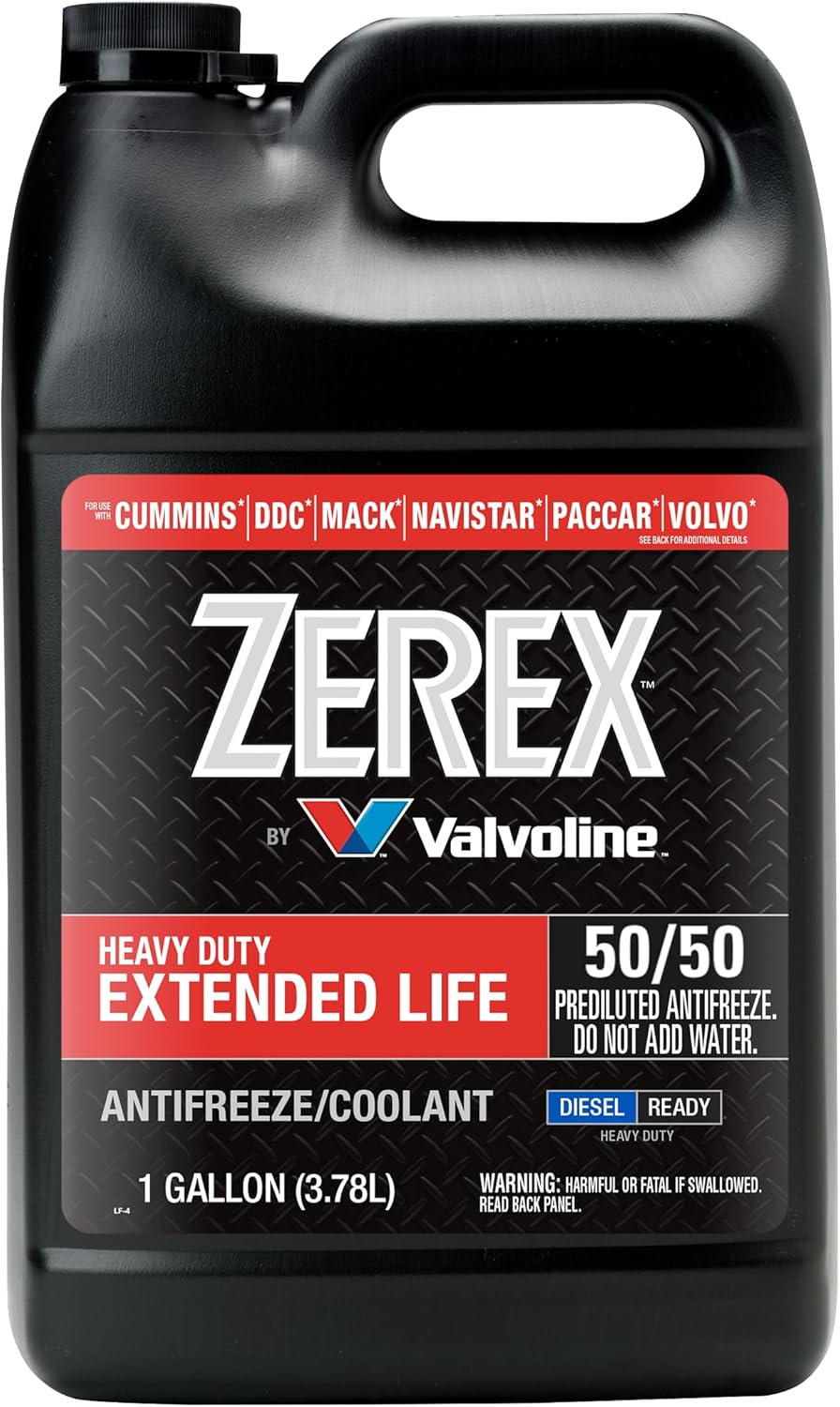
5. Zerex Heavy Duty Extended Life 50/50 Prediluted Antifreeze/Coolant (Red) 1 gal
Best Heavy-Duty Coolant
| Formulation | Organic Acid Technology (OAT) |
|---|---|
| Mix | 50/50 prediluted ready-to-use |
| Service interval | Up to 3 years or 30,000 miles / 7,000 hours |
| Intended applications | Heavy-duty diesel, gasoline, marine, stationary power |
| Brand | Zerex by Valvoline |
This prediluted 1 gallon Zerex Heavy Duty Extended Life coolant is built for demanding engines and long service intervals. It uses Organic Acid Technology with targeted inhibitors to resist corrosion, pitting, cavitation and hard-water scale that commonly affect heavy-duty diesel systems, and it is compatible with gasoline, marine, natural gas and light-duty applications. The ready-to-use 50/50 mix removes the need to measure concentrate and helps prevent freezes and boil-overs right out of the bottle. Valvoline rates the formula for up to three years, 30,000 miles or 7,000 hours of operation without supplemental additives when used per instructions. Practical benefits include extended protection for aluminum and other cooling-system metals and reduced maintenance frequency on engines that see sustained heavy loads. Limitations are that the red OAT formulation is optimized for heavy-duty applications and heavy-duty engine specs, so confirm it matches Sierra 2500 HD coolant requirements before topping off an existing system that uses a different chemistry color or spec.
Best for: Buyers who need a heavy-duty, long-life coolant for sustained towing, hauling, or commercial use on a GMC Sierra 2500 HD and prefer a ready-to-install, low-maintenance solution.
Less Ideal for: Drivers who require a specific coolant chemistry mandated by a dealer service or who must match a different existing coolant type in their system should seek a coolant specified for that requirement.
- Formulated for heavy-duty diesel engines with inhibitors for pitting, cavitation and corrosion.
- Prediluted 50/50 mix ready to install with no measuring required.
- Organic Acid Technology designed for extended service intervals up to 3 years or 30,000 miles.
- Compatible with multiple engine types including diesel, gasoline, marine and stationary power.
- Protects aluminum and other cooling-system metals without harming hoses or gaskets.
- Red OAT chemistry may be incompatible with systems using different coolant chemistries or colors.
Verdict: A heavy-duty coolant engineered with stronger inhibitors and heat resistance for demanding engines and frequent heavy loads.
Choosing the Right GMC Sierra 2500 HD Coolant: Key Factors to Consider
Corrosion Inhibitors and Metallurgy Compatibility
The Sierra 2500 HD cooling system contains aluminum radiators and a mix of engine alloys that require inhibitors tailored to those metals. A coolant with the right inhibitor package reduces electrochemical corrosion that can cause pitting, scale, and premature component failure. Over time, depleted inhibitors accelerate wear on the radiator, water pump, heater core, and cylinder head passages.
When choosing coolant, prioritize formulations that specify protection for aluminum, cast iron, and mixed-metal systems. That ensures the product will form stable protective films on metal surfaces and avoid reactions that produce sludge or scale. For long-term reliability, consider how the inhibitor chemistry ages and whether the coolant maintains effectiveness over the manufacturer-recommended service interval.
Service Interval and Long-Life Performance
Service interval expectations influence maintenance planning for owners who tow or run fleet operations. Long-life coolants can extend drain intervals and reduce downtime, but only if the formulation maintains inhibitor strength over time and under thermal stress. Some formulas advertise extended life, but real-world conditions like heavy towing or frequent stop-and-go operation can shorten effective service life.
Evaluate recommended intervals and whether the coolant supports top-off with similar chemistry. If you prefer longer intervals, choose a coolant with demonstrated long-life claims and clear guidance on when to perform a coolant flush or analysis to confirm inhibitor levels.
Heat Transfer and Thermal Stability
A coolant must reliably transfer heat away from the engine under the Sierra 2500 HD's load spectrum, which includes towing heavy trailers and hauling payloads. Thermal stability impacts how well the coolant resists breakdown at elevated temperatures and pressure. Coolants with stable formulations resist acid buildup and maintain neutral pH longer, preserving heat-transfer surfaces.
Consider products that balance freeze protection with high boiling points when mixed at the correct concentration. Good thermal stability supports consistent engine temperatures under load and reduces the risk of local hotspots that can damage gaskets and heads.
Seal and Hose Compatibility
Coolants interact with rubber and plastic components such as hoses, gaskets, and O-rings. Incompatible chemistries can cause swelling, hardening, or cracking, leading to leaks. The Sierra 2500 HD uses specific elastomers that may tolerate certain inhibitor packages better than others.
Verify that the coolant you choose explicitly lists compatibility with typical heavy-duty truck elastomers or states compatibility with OEM specifications. If you perform a partial drain or top-off, ensure the new coolant is chemically compatible with the remaining fluid to avoid adverse reactions.
Freeze and Boil Protection at Recommended Concentration
The coolant concentration you use determines freeze and boilover resistance. Owners often rely on a 50/50 mix for balanced freeze and boil protection, but regional climate and operating demands can justify different ratios. For a Sierra 2500 HD that sees heavy towing, prioritize a mix that raises the boiling point to resist vapor lock and vapor pockets under load.
Check manufacturer recommendations for target concentrations and how antifreeze-to-water ratios affect protection. Also consider whether supplemental test kits or fluid analysis are recommended to verify concentration and inhibitor levels during service intervals.
Maintenance Practicality and Availability
Maintenance considerations include how easy it is to find compatible coolant, whether it can be used for top-offs, and whether service centers are familiar with its use. For a heavy-duty truck, predictable service intervals and widely available products simplify fleet upkeep and emergency top-offs while traveling.
Choose a coolant with clear instructions for mixing, topping off, and flushing. Products that align with commonly accepted OEM specifications reduce the chance of confusion during maintenance and help ensure consistent protection across service providers.
Mixing and Concentration Best Practices
Getting the concentration right is one of the simplest but most impactful steps you can take. For most climates and heavy-duty use, a 50/50 antifreeze-to-water mix balances freeze protection with a higher boiling point and corrosion inhibitor efficiency.
If you tow frequently or operate under sustained heavy loads, higher antifreeze concentration can raise boiling protection, but excessive concentrations can reduce heat-transfer efficiency. Use distilled water when preparing mixes to avoid introducing minerals that encourage scale.
After filling, use a coolant tester or refractometer to confirm the freeze/boil protection and replace any fluid that tests outside recommended ranges.
- Use distilled or deionized water for mixing
- Confirm concentration with a tester after filling
- Avoid exceeding manufacturer-recommended ratios
When to Perform a Coolant Flush
Flush intervals depend on the coolant chemistry and your driving patterns. Heavy towing and frequent short trips can accelerate inhibitor depletion and may call for earlier flushing than the advertised long-life interval. Regular visual checks for discoloration, sludging, or particulate can help identify when a flush is needed.
If you switch coolant chemistries, a full flush and system flush are often recommended to avoid mixing incompatible inhibitor packages. Follow the vehicle manufacturer's guidance for volume and proper disposal of drained fluid.
- Inspect fluid annually for color and contaminants
- Flush sooner if you observe sludging, fouling, or loss of inhibitor performance
- Perform a full system flush when changing inhibitor types
Protecting the Radiator and Heater Core
The radiator and heater core can be vulnerable to scale and corrosion when inhibitors fail. Properly formulated coolant protects internal passages and helps maintain efficient heat exchange. Avoid using tap water for top-offs, as minerals precipitate and form deposits in narrow passages.
If you notice reduced heater output, overheating under load, or localized coolant loss, have the cooling system inspected for blockages or internal corrosion. Early attention prevents more extensive repairs tied to restricted flow.
- Use compatible coolant to prevent galvanic corrosion
- Avoid mineral-rich tap water for top-offs
- Address heater or cooling performance changes promptly
Addressing Leaks and Seal Degradation
Seal and hose condition is as important as coolant chemistry. Even the best coolant cannot compensate for degraded rubber components. Regular visual inspection of hoses, clamps, and the area around the water pump can catch leaks before they grow larger.
When selecting a coolant, check compatibility notes for common seal materials and use the product that aligns with OEM recommendations. If you suspect an incompatibility after a top-off or flush, replace hoses and seals as needed to restore system integrity.
- Inspect hoses and clamps during coolant service
- Replace brittle or swollen hoses promptly
- Confirm coolant compatibility with OEM seal materials
Coolant Testing and On-Vehicle Diagnostics
Testing coolant periodically provides meaningful insight into inhibitor levels and freeze/boil protection. Simple test strips or refractometers measure concentration and pH, while professional lab tests can quantify inhibitor depletion and contamination.
For Sierra 2500 HD owners who use their trucks for towing or commercial work, establishing a testing schedule tied to service intervals helps avoid unexpected failures. Keep records of test results and service dates to spot trends in fluid condition.
- Use inexpensive test strips for routine checks
- Consider lab analysis for long-life systems nearing interval end
- Record test results to track fluid condition over time
How We Chose the Best GMC Sierra 2500 HD Coolant
We focused on attributes that matter for heavy-duty gasoline and diesel applications typical of the GMC Sierra 2500 HD. Primary evaluation criteria included corrosion protection across aluminum and cast-iron components, thermal stability under high-load towing conditions, and compatibility with the truck's seals and hoses to avoid leaks or premature degradation. We also considered expected service life and recommended change intervals, since longer-life formulations reduce maintenance frequency for fleet and owner-operator use.Other important filters were freeze and boil-over protection at the concentrations used in the Sierra 2500 HD cooling system, and the coolant's ability to maintain inhibitor levels over time rather than relying on frequent top-offs. We excluded products formulated strictly for passenger car applications with incompatible inhibitor chemistries and any coolant that lacked clear manufacturer guidance on heavy-duty truck use. The final shortlist favors formulas offering balanced corrosion control, extended protection, and clear compatibility guidance for this vehicle.
Our full evaluation process is outlined in our review methodology.
FAQ
Can I top off my Sierra 2500 HD with plain water in an emergency?
You can use plain water in an emergency to prevent overheating, but it reduces corrosion protection and freeze/boil resistance. If you add water, refill with the correct coolant mix at the next opportunity and flush the system if you used mineral-rich tap water.
How often should I test my coolant on a truck that tows regularly?
For frequent towing, test coolant at least annually or with each scheduled service interval. Heavy towing accelerates inhibitor depletion, so more frequent checks help ensure ongoing corrosion protection and thermal stability.
Is it necessary to flush the cooling system when switching coolant types?
Yes. Switching inhibitor chemistries can cause adverse reactions if residues are left behind. Perform a full flush and follow the new coolant's instructions to avoid compatibility issues and preserve inhibitor performance.
Will a long-life coolant reduce the chance of radiator failure?
A properly formulated long-life coolant can lower the risk of internal corrosion and extend component life under typical conditions. However, real-world factors like maintenance practices and towing loads also influence radiator longevity.
How do I know if the coolant is compatible with my truck's hoses and seals?
Check the coolant documentation for stated compatibility with elastomers and OEM specifications. If the product does not list compatibility, consult a service manual or technician before use, and monitor hoses and clamps after installation.
Does coolant color indicate performance or compatibility?
Color alone is not a reliable indicator of performance. Manufacturers use different dyes for identification, but compatibility and inhibitor chemistry determine protection. Use product specifications and testing rather than color to assess suitability.
Final Verdict
For the GMC Sierra 2500 HD, prioritize coolant choices that offer robust corrosion protection for mixed-metal systems and stable thermal performance under towing and heavy loads. Balance the convenience of long-life formulas against your maintenance habits and operating conditions, and ensure any coolant you select is compatible with the truck's elastomers and service procedures.Regular testing and proper concentration management deliver the best long-term protection. When in doubt, favor a coolant with clear OEM compatibility guidance and maintain a schedule for inspections and flushes so you can keep the cooling system reliable during demanding use.
