

Note: This article contains affiliate links. If you click on these links and make a purchase, I may earn a small commission at no extra cost to you. This helps support my research and content. Read my full affiliate disclosure here.
Picking the right coolant for your Dodge Charger matters because it protects the engine from corrosion, controls operating temperature, and supports long-term reliability. The cooling system is critical to preventing overheating and costly repairs, so using a suitable product tailored to your vehicle helps maintain performance and lifespan.This guide covers seven shortlisted coolant options chosen for their chemistry, corrosion protection, and service life. We evaluated each entry across key criteria like compatibility with Chrysler cooling systems and thermal stability to help you narrow the field. Read on to see which features to prioritize when selecting a coolant for your Charger.
Looking for other parts? See all Dodge Charger parts & accessories.
Top Picks at a Glance
| Best overall The best all-around choice for most situations | Mopar 50/50 Prediluted 10-Year/150,000-Mile Coolant |  |
| Best Quality Built to a higher standard if you want something more solid | Mopar 10 Year/150,000 Mile Antifreeze-Coolant Concentrate (1 Gallon) |  |
| Best Value The sweet spot between price and what you get | PEAK OET Extended Life Orange 50/50 Prediluted Antifreeze/Coolant, 1 Gal. |  |
| Best Budget The cheapest option that still gets the job done reliably | Shell Zone Dex‑Cool Extended Life Antifreeze & Coolant 50/50 Pre‑Diluted (1 Gallon) | 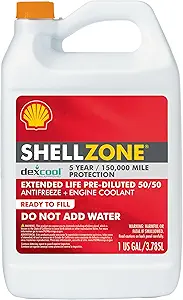 |
| Most popular A crowd favorite that many people choose with confidence | Engine Ice TYDS008 High Performance Coolant, 0.5 Gallon |  |
| Best Seller A high-volume bestseller chosen again and again | PEAK Global Lifetime Concentrate Antifreeze and Coolant, 1 gal |  |
1. Mopar 50/50 Prediluted 10-Year/150,000-Mile Coolant

| Formulation | 50/50 premixed OAT |
|---|---|
| Service life rating | 10 years / 150,000 miles |
| Meets specification | ASTM D3306 – Type 3 |
| Part number | 68163849AB |
This Mopar 50/50 premixed coolant is a factory-quality, long-life OAT formula intended as a direct replacement for recommended Dodge cooling systems. It arrives ready to pour and is formulated to provide corrosion protection and freeze/boil coverage rated for up to 10 years or 150,000 miles under the specified service conditions. Typical use is a straightforward drain-and-refill or top-up during routine cooling system service on a Dodge Charger that calls for Mopar OAT coolant. Practical benefits include the convenience of premix (no measuring or deionized water required), compatibility with factory service guidelines, and an extended service interval that reduces maintenance frequency. Limitations are that it must not be mixed with incompatible coolant chemistries and long-life claims depend on following correct service procedures rather than simply topping off indefinitely. Also this is a vehicle-specific factory replacement, so it is only appropriate where the owner’s manual specifies this type of coolant.
Best for: Balanced owners who prioritize a reliable, low-maintenance factory-spec coolant that simplifies service and matches manufacturer recommendations for a Dodge Charger.
Less Ideal for: If you prefer universal or multi-vehicle coolants for mixed-fleet use or need a coolant formulated for non‑Dodge materials, choose a product designed for broader compatibility.
- Premixed 50/50 for easy, mess-free topping or refill
- Factory-formulated OAT chemistry matched to Chrysler/Dodge cooling systems
- Rated for long service intervals up to 10 years or 150,000 miles under service recommendations
- Reduces need for frequent coolant changes when service schedule is followed
- Not compatible with older or different coolant chemistries and must not be mixed with HOAT-type coolants
- Long-life performance depends on proper system maintenance and periodic refreshes rather than indefinite topping off
Verdict: A convenient factory-formulated premix that gives Dodge Charger owners long-life, OEM-compatible protection when used per service recommendations.
2. Mopar 10 Year/150,000 Mile Antifreeze-Coolant Concentrate (1 Gallon)

| Type | Concentrate |
|---|---|
| Volume | 1 gallon |
| Service Life | 10 years / 150,000 miles |
| Compatibility | Gas and diesel engines |
This is Mopar factory-concentrate coolant sold in a one-gallon bottle for mixing with distilled water. It is a long-life OAT formula rated for 10 years or 150,000 miles and is designed to restore or top up the cooling system on Chrysler, Dodge, Jeep and Ram engines where Mopar coolant is specified. Typical use is a full coolant flush and refill or emergency top-up after a leak or overheating event; the concentrate lets you control dilution for year-round protection. Notable features include manufacturer-approval, a bittering agent to discourage ingestion, and compatibility with gas and diesel engines and radiators used across the Mopar lineup. Practical benefits are factory-spec corrosion protection and long service intervals that suit high-mileage or performance use on a Charger. Limitations are that it is a concentrate so buyers must mix it correctly with distilled water and it is intended for vehicles that require Mopar formula rather than a universal ready-mix coolant.
Best for: Performance-oriented buyers who prioritize factory-quality fluids and long service intervals for Dodge Charger upkeep and want a coolant that matches factory chemistry for sustained engine protection.
Less Ideal for: Casual owners who prefer a ready-to-use premixed coolant or drivers of vehicles that do not specify Mopar formula should consider other universal or premixed options.
- Factory-formulated OAT long-life coolant approved for Mopar vehicles
- Long service interval rated at 10 years or 150,000 miles for reduced maintenance frequency
- Sold as concentrate so you can mix to the correct ratio for seasonal needs
- Suitable for both gasoline and diesel engines used in Chrysler/Dodge/Jeep/Ram platforms
- Requires correct dilution with distilled water before use
- Intended specifically for Mopar-specified cooling systems and not a universal ready-mix alternative
Verdict: Choose this Mopar long-life concentrate when you want factory-specified coolant chemistry and extended service intervals for a Dodge Charger.
3. PEAK OET Extended Life Orange 50/50 Prediluted Antifreeze/Coolant, 1 Gal.

| Volume | 1 gallon |
|---|---|
| Dilution | 50/50 prediluted |
| Recommended vehicle region | North American vehicles |
| Formula type | Organic acid technology |
This PEAK OET extended-life antifreeze is a ready-to-use 50/50 coolant intended for top-offs or full coolant exchanges on compatible North American vehicles like the Dodge Charger. It uses an organic acid technology formulation aimed at preventing rust and corrosion across the cooling system and is marketed for long service life when used as part of a full flush and fill. The prediluted bottle removes the need for mixing, so installation is straightforward and quick during routine maintenance. Practical benefits include visible orange fluid for easy leak checks and factory-replacement compatibility with systems specifying an orange OAT formula. Limits to consider are color-specific formulation requirements for some Charger model years and the need to confirm this orange OAT matches the factory coolant spec for your specific Charger before mixing with an existing different-type coolant. This product is a convenient, long-life option when used according to your vehicle manufacturer’s coolant recommendations.
Best for: Practical optimizers who value straightforward maintenance and long service intervals and want a ready-to-use coolant that simplifies routine top-offs and flushes for their Dodge Charger.
Less Ideal for: Drivers who prefer to use the exact factory-specified coolant color/type without verification or who need a concentrate to custom-mix specific dilution ratios.
- Prediluted 50/50 formula ready to pour with no mixing required
- Extended-life organic acid formulation designed to reduce rust and corrosion
- Orange color makes leaks and level checks easier
- Marketed compatibility with North American manufacturers that use orange OAT coolants
- Requires confirming color/type compatibility with the Charger’s factory coolant before adding to an existing system
- Prediluted format limits flexibility if a different dilution ratio is required
Verdict: A convenient, long-life prediluted orange OAT coolant that delivers easy top-offs and corrosion protection for Dodge Chargers when matched to the factory coolant type.
4. Shell Zone Dex‑Cool Extended Life Antifreeze & Coolant 50/50 Pre‑Diluted (1 Gallon)

| Formulation | Ethylene glycol, carboxylate inhibitor system |
|---|---|
| Mix | Pre‑diluted 50/50 |
| Service life | Up to 5 years or 150,000 miles |
| Meets OEM specs | GM GMW3420, GM6277M; Chrysler MS‑12106; Ford ESE‑M97B44‑D; Volkswagen/Audi G‑12 |
Shell Zone Dex‑Cool is a ready‑to‑use 50/50 ethylene glycol coolant that follows the Dex‑Cool carboxylate inhibitor chemistry for extended life service. For Dodge Charger owners needing Dex‑Cool compatible fluid, this product promises corrosion protection for aluminum, brass, cast iron, steel, solder, and copper while maintaining heat transfer because it is silicate‑free. It is typically used as a straight replacement during coolant changes or top‑offs where the vehicle manufacturer specifies Dex‑Cool formulations. Notable features include a long service interval rated up to five years or 150,000 miles in automotive use and claims of improved water‑pump life and high‑temperature aluminum protection. Practical benefits are reduced maintenance frequency and compatibility with GM/Chrysler/VW specs listed by the brand. Important limitations are that it is ethylene glycol based and pre‑diluted, so it must be used only where factory guidance allows Dex‑Cool chemistry and pre‑mixed coolant; owners of Chargers that require a different coolant specification should follow Dodge's manual rather than assume universal fitment.
Best for: Budget‑conscious owners seeking a low‑cost, ready‑to‑use Dex‑Cool compatible coolant for routine coolant service on Dodge Charger models that specify Dex‑Cool chemistry.
Less Ideal for: Owners whose Dodge Charger explicitly calls for a different coolant specification or concentrate mixing; also not ideal for those who prefer propylene glycol or specialty coolant formulations.
- Pre‑diluted 50/50 ready to use with no mixing required
- Extended life formula rated up to five years or 150,000 miles in automotive service
- Silicate‑free carboxylate chemistry preserves heat transfer and reduces silicate gel formation
- Manufacturer claims broad metal corrosion protection including aluminum and improved water‑pump life
- Specific Dex‑Cool chemistry means it is not interchangeable with all coolant types if your Charger specifies a different formula
- Ethylene glycol base is toxic and requires careful handling and proper disposal
Verdict: A low‑cost, ready‑to‑use Dex‑Cool extended‑life coolant that simplifies maintenance for Dodge Chargers requiring Dex‑Cool chemistry.
5. Engine Ice TYDS008 High Performance Coolant, 0.5 Gallon

| Capacity | 0.5 Gallons |
|---|---|
| Phosphate Free | Yes |
| Freeze protection | to -7F |
| Boil-over protection | to 256F |
| Base | Propylene Glycol |
Engine Ice TYDS008 is a premixed, propylene-glycol-based coolant designed for powersports but also applicable where a high-heat-capacity coolant is desired for Dodge Charger cooling systems when a safe, non-toxic formulation is preferred. It is ready to pour with no mixing required and advertises boil-over protection up to about 256F and freeze protection down to -7F for this formula. The formula aims to reduce operating temperatures by roughly 10 to 20F compared with common alternatives and includes corrosion inhibitors intended to protect aluminum, copper, cast iron and other metals found in automotive radiators and engine passages. In practical use it simplifies maintenance because you can flush and refill without measuring concentrate, and reviewers report consistent temperature drops and stable performance under extended runs. Limitations are that this is a specialty, half-gallon packaged product sized for smaller systems so multiple bottles may be needed for a Charger full system refill, and it is positioned as a premium option so cost per gallon will be higher than basic universal coolants.
Best for: A convenience-driven buyer who values a ready-to-use, easy-to-install coolant that helps keep operating temperatures down and minimizes maintenance steps.
Less Ideal for: Buyers who want the lowest cost per gallon for a full-size sedan service or those who prefer coolant formulated and tested specifically for heavy-duty car radiator cycles.
- Premixed ready-to-use formula eliminates mixing errors and speeds refills
- High heat capacity and thermal conductivity to help reduce operating temperatures
- Claims broad corrosion protection compatible with common engine metals
- Propylene glycol base is less toxic than ethylene-glycol alternatives
- Well-reviewed in real-world use for sustained cooling under heavy load
- 0.5 gallon size may require multiple bottles to refill a Dodge Charger cooling system
- Formulated for powersports so some performance claims are based on small-engine testing rather than large-car lab data
Verdict: A convenient, premixed high-performance coolant that reduces operating temperatures and simplifies refills, but the small 0.5-gallon bottle may mean buying extra for a Dodge Charger service.
6. PEAK Global Lifetime Concentrate Antifreeze and Coolant, 1 gal

| Formulation | Concentrate |
|---|---|
| Technology | Phosphate-enhanced Organic Acid Technology (POAT) |
| Compatibility | All American, Asian, and European automobiles |
| Free of | Silicate, borate, nitrite and amines |
This PEAK Global Lifetime concentrate is a universal coolant designed to protect a vehicle's cooling system from rust and corrosion when mixed and used as part of a proper flush and fill. It uses a phosphate-enhanced Organic Acid Technology inhibitor package that guards aluminum and other cooling-system metals and is free of silicates, borates, nitrites and amines, which makes it suitable for topping off or completing a refill. For a Dodge Charger, the concentrate gives flexibility to meet factory-quality cooling needs across model years without being vehicle-specific, and the amber color makes top-offs straightforward. Practical benefits include long-life protection when maintenance is kept up and broad compatibility with American, Asian, and European coolant chemistries. Limitations are that it is a concentrate so it requires correct dilution before use and some owners prefer vehicle-specific formulations; if you want a manufacturer-prescribed spec for a particular Charger model year, confirm compatibility with your service manual before using this product.
Best for: Risk-averse mainstream buyers who prioritize long-term cooling system protection and compatibility across model years for their Dodge Charger and want a single coolant that simplifies maintenance decisions.
Less Ideal for: Owners who strictly follow manufacturer-specified coolant chemistries for a particular Charger model year or those who prefer ready-to-use premixed solutions should consider alternatives.
- Universal formula compatible with a wide range of vehicle cooling systems
- Organic Acid Technology protects aluminum and other metals against corrosion
- Amber color allows safe top-offs without altering existing coolant color
- Available as a concentrate so you can mix to the correct ratio for your needs
- Requires correct dilution before installation rather than coming pre-mixed
- Not a vehicle-specific coolant so owners seeking a Charger model-specific spec may prefer an OEM-specified fluid
Verdict: A broadly compatible, long-life concentrate coolant that suits Dodge Charger owners who want reliable, maintenance-focused protection but requires proper dilution and checks against manufacturer specs.
Choosing the Right Dodge Charger Coolant: Key Factors to Consider
Coolant Chemistry and Inhibitors
The base chemistry determines how well the coolant prevents corrosion and protects aluminum, cast iron, and soldered joints in the cooling system. Organic acid technology, inorganic additives, and hybrid inhibitor packages each perform differently over time. Understanding the inhibitor type helps you predict how often the cooling system will need service and which parts of the engine the fluid will best protect.
Compatibility with the Charger's materials is essential because incompatible inhibitors can accelerate corrosion or degrade seals. Always check the coolant chemistry relative to the vehicle manufacturer's recommendations to avoid premature component wear.
Freeze and Boil Protection
Freeze point and boil-over resistance determine the coolant's ability to protect the engine in extreme temperatures and under heavy load. Adequate freeze protection prevents blockages in cold climates, while a high boiling point reduces the risk of vapor pockets and overheating when the engine runs hot or the cooling system is stressed.
Concentration matters: many coolants require mixing with distilled water to achieve the intended protection range. The right balance ensures safe operation across seasonal variations and heavy-duty driving conditions.
Compatibility With Seals and Hoses
Coolant interacts continuously with rubber hoses, gaskets, and seals. Some formulations can cause swelling, shrinking, or hardening of elastomers if they are not compatible. This can lead to leaks and reduced system integrity over time.
Choosing a coolant that lists compatibility with common automotive elastomers and plastics reduces the risk of premature failures. When in doubt, follow the vehicle maker's guidance on acceptable fluid types to maintain seal longevity.
Service Life and Maintenance Interval
Different coolant formulas advertise varying lifespans, from short-term solutions to long-life treatments rated for many miles. Longer-life coolants can reduce the frequency of flushes and replacements, which lowers maintenance time if the chemistry remains effective and compatible with system materials.
Consider the tradeoff between extended service intervals and the need for periodic system inspection. Even long-life formulas benefit from occasional checks for concentration and contamination to ensure ongoing protection.
Compatibility With Cooling System Components
Modern cooling systems include aluminum radiators, water pumps, thermostat housings, and heater cores. Coolant must protect all of these components from cavitation corrosion, galvanic effects, and scale buildup. A formula that prevents deposits will help maintain efficient heat transfer and consistent flow.
Check for statements about compatibility with aluminum and mixed-metal systems. A coolant that supports the full set of components reduces the chance of localized corrosion and helps preserve overall cooling efficiency.
Ease of Use and Mixing Requirements
Some coolants come pre-mixed while others require dilution with distilled water to reach the correct concentration. Pre-mixed products remove the guesswork but can be heavier to store and transport. Concentrates allow precise control of freeze and boil points but require proper measuring and mixing.
Also consider labeling clarity and instructions for performing a coolant flush or top-up. Clear guidance on mixing ratios and when to replace the fluid reduces the risk of user error and helps maintain consistent protection.
How We Chose the Best Dodge Charger Coolant
We focused on formulations and attributes that directly affect Dodge Charger cooling systems. Primary evaluation criteria included corrosion inhibition chemistry, compatibility with Chrysler-specified materials, and thermal stability under high operating temperatures. We also considered expected service life and recommended change intervals because longer-lasting chemistry reduces maintenance frequency.Additional filters included freeze and boil-over protection across typical operating ranges and compatibility with common radiator and heater-core materials. We excluded products lacking clear compatibility information or those intended only for heavy-duty commercial engines. The final list favors coolants that balance long-term protection, stable heat transfer, and clear guidance for use with passenger-vehicle cooling systems.
Our full evaluation process is outlined in our review methodology.
FAQ
How often should I change the coolant in my Dodge Charger?
Interval recommendations vary by coolant type and chemistry, but many modern long-life formulas extend change intervals. It often depends on the specific coolant used and the vehicle's maintenance history. Check concentration and condition periodically and follow manufacturer guidance for service intervals.
Can I top off my Charger with plain water in an emergency?
Topping off with distilled water in an emergency is usually acceptable for short-term use, but plain water lacks corrosion inhibitors and long-term protection. Use distilled water rather than tap water to avoid mineral deposits, and replace the mix with a proper coolant as soon as practical.
Is a coolant flush necessary or can I just add new coolant?
A flush is useful when the system contains old, contaminated, or chemically incompatible fluid. Adding new coolant to a degraded system may dilute inhibitors and leave deposits. Periodic flushing helps restore inhibitor balance and remove buildup, though frequency depends on the coolant type and system condition.
Does coolant type affect heater core and radiator longevity?
Yes, coolant chemistry influences corrosion and deposit formation, which in turn affects heater core and radiator life. A compatible coolant that resists scale and galvanic corrosion helps maintain heat-transfer efficiency and reduces the risk of component failure.
Can I mix different types of coolant in my Charger?
Mixing different chemistries can neutralize inhibitors or create precipitates, so it usually causes more harm than good. If a different type must be used, a full system flush and proper refill with the intended formulation is the safer approach to preserve protection.
Conclusion
Prioritize coolant chemistry compatibility, corrosion protection, and the expected service life when choosing a solution for a Dodge Charger. Balancing freeze/boil protection with compatibility for seals and cooling-system metals will preserve performance and reduce maintenance.Think of coolant as preventive maintenance: selecting an appropriate formulation and following recommended service intervals helps avoid overheating, leaks, and premature component wear. Favor clarity in labeling and documentation so you can maintain the system correctly over time.
Explore More:
- Check out all Dodge Charger parts & accessories
- Explore Fluids & Chemicals
- Browse all Accessories
