

Note: This article contains affiliate links. If you click on these links and make a purchase, I may earn a small commission at no extra cost to you. This helps support my research and content. Read my full affiliate disclosure here.
Keeping the cooling system in good shape matters for Tacoma owners who rely on their truck for daily driving, towing, and off-road trips. Choosing the right coolant for a 2016-2023 Toyota Tacoma helps prevent corrosion, maintain proper boiling and freezing points, and extend service intervals so you spend less time on maintenance and more time on the road. This guide shortlists seven of the best coolant choices compatible with the 2016–2023 Tacoma scope and explains the factors that matter for that chassis generation.Below you will find the top candidates chosen for longevity and compatibility, plus practical advice on flushing, topping off, and monitoring coolant condition before you buy.
Looking for other parts? See all Toyota Tacoma parts & accessories.
Top Picks at a Glance
| Best Overall Coolant A well-balanced, reliable coolant suited to most DIY needs | Toyota Genuine Antifreeze/Coolant (Part 00272-1LLAC) |  |
| Best Budget Coolant An affordable coolant that provides basic protection without extra features | PEAK 50/50 Prediluted Antifreeze & Coolant, 1 Gal. |  |
| Best Premium Coolant Higher-end formula with long-term protection and advanced additives | Toyota Genuine Antifreeze/Coolant (undiluted, 1 gallon) |  |
| Best Long-Life Coolant Formulated for extended drain intervals and reduced maintenance frequency | PEAK OET Extended Life 50/50 Prediluted Red/Pink Antifreeze/Coolant, 1 Gal |  |
| Best Concentrated Coolant Concentrate requiring dilution, offering flexible mixing and economical shipping | Zerex Asian Vehicle Red Antifreeze/Coolant Concentrate, 1 Gallon |  |
| Best Pre-Mixed Coolant Ready-to-use coolant that eliminates measuring and immediate installation | Zerex Asian Vehicle Red 50/50 Prediluted Antifreeze/Coolant 1 gal | 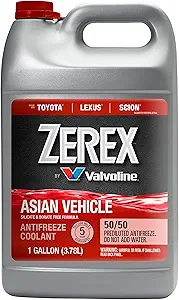 |
| Best OAT Coolant Organic-acid technology formula focused on long-term aluminum protection | PEAK OET Extended Life Purple 50/50 Prediluted Antifreeze/Coolant (1 Gal) |  |
Toyota Genuine Antifreeze/Coolant (Part 00272-1LLAC)
Best Overall Coolant

| Manufacturer | Toyota |
|---|---|
| Model | Antifreeze Coolant |
| Item model number | 00272-1LLAC |
| Manufacturer Part Number | 00272-1LLAC |
This is the factory replacement concentrated coolant from Toyota intended for routine maintenance and repairs on Toyota vehicles. It is a red, concentrated formula that is mixed to specified dilution and used to protect the cooling system from freezing, boiling, and internal corrosion. The product emphasizes vehicle-specific formulation and factory-quality standards, so it is suitable when you want a direct replacement that matches dealer fluid. In practice it is used during coolant service, flushes, or topping off the reservoir after repairs. Benefits include corrosion inhibitors tuned for Toyota engines and a concentrated format that yields more usable pre-mixed volume than a ready-to-use bottle. Limitations are that it is vehicle-specific so you should confirm compatibility with the Tacoma model years listed in the article goal and follow the correct mix ratio; it is not a universal “one-size-fits-all” coolant and requires dilution before use.
Best for: Buyers who prioritize a factory-quality, vehicle-specific coolant for routine maintenance and want a direct replacement that aligns with Toyota service recommendations.
Less Ideal for: Drivers seeking a universal, no-mix ready-to-use coolant or those who need a coolant formulated for non-Toyota vehicles should look at alternative, multi-vehicle products.
- Genuine Toyota formulation matched to factory specifications for consistent performance
- Concentrated fluid stretches further than pre-mixed coolant, lowering refill frequency
- Designed to provide corrosion and rust protection for cooling system metals
- Red formulation commonly used in Toyota/Lexus cooling systems for compatibility
- Requires proper dilution before use and correct disposal of old coolant
Verdict: The best overall coolant balances corrosion protection, freeze/boil performance, and compatibility for general maintenance and repair tasks.
PEAK 50/50 Prediluted Antifreeze & Coolant, 1 Gal.
Best Budget Coolant

| Container Type | Jug |
|---|---|
| Compatible with Vehicle Type | Car, Truck, Motorcycle, SUV |
| Automotive Fit Type | Universal Fit |
| Liquid Volume | 1 Gallons |
| Size | 50/50 |
This PEAK 50/50 prediluted antifreeze is a ready-to-use coolant you can pour straight into the Tacoma's cooling system when topping off or during a routine service. It supplies basic freeze and boil protection and includes inhibitors formulated to protect metals, including aluminum, from rust and corrosion. The one-gallon jug is convenient for a single top-off or partial drain-and-fill, and the universal fit claim means it is compatible with common coolant technologies so you do not need to mix concentrate. For owners focused on cost-effective maintenance, the product performs the essential job of stabilizing engine temperature and preventing corrosion without specialty additives. Limitations are that it is a conventional prediluted formula rather than a vehicle-specific long-life coolant, so if your Tacoma requires a manufacturer-specified long-life or hybrid organic acid technology coolant for extended service intervals, follow the factory guidance instead.
Best for: Tacoma owners seeking an affordable, no-fuss coolant for regular top-offs and conventional service intervals who prioritize reliable basic protection over extended-life specs.
Less Ideal for: Drivers wanting manufacturer-matched long-life or specialty hybrid OAT coolants for extended service intervals should choose a coolant specified by Toyota instead.
- Ready-to-use 50/50 mix eliminates measuring and mixing errors
- Contains corrosion inhibitors suitable for aluminum and common cooling system metals
- Universal fit for passenger cars and light trucks simplifies topping off across service needs
- One-gallon size is convenient for partial fills and routine maintenance
- Not specified as a vehicle-specific long-life or OEM-matching formula for extended intervals
Verdict: The best budget coolant delivers essential freeze/boil protection and corrosion inhibition at the lowest reasonable cost for routine servicing.
Toyota Genuine Antifreeze/Coolant (undiluted, 1 gallon)
Best Premium Coolant

| Brand | Toyota |
|---|---|
| Viscosity | 50 sae_grade |
| Vehicle Service Type | Car |
| SAE J300 Viscosity Grade | 50 |
| Model | Antifreeze |
This Toyota genuine antifreeze is an undiluted, factory-quality coolant intended for Toyota vehicles that require the manufacturer long-life formula. It is supplied as concentrated red coolant that you dilute with distilled or deionized water to the correct mixture for your cooling system. Typical use is during a full coolant service or when topping off after a flush; owners commonly pair it with multiple gallons of distilled water to achieve the recommended mix and extended protection. Notable features include Toyota factory assurance and a SAE viscosity grade listing for consistent flow characteristics. Practical benefits are corrosion protection tailored to Toyota metals and the reassurance of using a manufacturer-recommended fluid that helps maintain cooling system longevity and seals. Limitations are that it ships undiluted so you must supply distilled water and measure mixture ratios, and it is positioned as a premium, vehicle-specific part so it may cost more than universal aftermarket coolants.
Best for: Buyers who prioritize extended protection and factory-matched corrosion inhibitors for Toyota cooling systems and are willing to pay for manufacturer-specified fluid and longer service life.
Less Ideal for: Drivers who want a ready-to-use universal coolant or prefer the lowest-cost aftermarket options should consider pre-mixed or budget alternatives instead.
- Genuine Toyota formula matched to Toyota cooling systems
- Undiluted concentrate lets you set exact coolant-to-water ratio
- Designed for long-life protection and corrosion inhibition
- Widely reviewed and used by Toyota owners for reliable fit and performance
- Requires dilution with distilled or deionized water before use
Verdict: The best premium coolant is for buyers who want extended protection, superior corrosion inhibitors, and longer service intervals despite a higher price.
PEAK OET Extended Life 50/50 Prediluted Red/Pink Antifreeze/Coolant, 1 Gal
Best Long-Life Coolant

| Formulation | Phosphate-Enhanced Organic Acid Technology (POAT) |
|---|---|
| Dilution | 50/50 prediluted |
| Volume | 1 gallon |
| Vehicle focus | Designed for Asian vehicles, listed for Toyota |
PEAK OET Extended Life is a one-gallon, 50/50 prediluted coolant formulated for Asian vehicles that aims to replace factory red/pink coolant with a long-life phosphate-enhanced organic acid formula. It is ready to use straight from the jug, so DIYers can top off the radiator or complete a flush-and-fill without mixing concentrate. The label highlights rust and corrosion protection and PEAK guarantees service life protection when installed as part of a full flush and fill. For routine maintenance on a Toyota Tacoma this product matches the red/pink factory type and removes the need to calculate dilution, making it convenient for at-home service. Limitations to note are the vehicle-specific formulation requirement and that color matching matters for some Toyota systems, so confirming Tacoma coolant specs before use is important. The gallon size is practical for one full service or multiple top-offs, but users who prefer concentrate options for bulk mixing will want a different SKU.
Best for: DIY owners who want a low-maintenance, long-life coolant that matches Toyota Tacoma factory red/pink formulations and simplifies routine flush-and-fill or top-off service.
Less Ideal for: Owners who need a concentrate to mix for multiple vehicles or fleet servicing, or who require a different coolant chemistry than Toyota specifies for their Tacoma.
- Prediluted 50/50 ready to use for quick top-offs or flush-and-fill service
- Formulated for red/pink phosphate-enhanced organic acid applications common to many Toyota cooling systems
- Extended-life chemistry intended to reduce frequency of coolant changes when installed as directed
- Gallon size provides enough fluid for a full service or multiple top-offs
- Provides rust and corrosion protection for cooling system components
- Designed for specific red/pink Asian vehicle formulas so it is not a universal coolant for all vehicle types
Verdict: The best long-life coolant is intended for DIYers who prefer fewer changes by offering extended service life and stable protection over time.
Zerex Asian Vehicle Red Antifreeze/Coolant Concentrate, 1 Gallon
Best Concentrated Coolant

| Brand | Zerex |
|---|---|
| Model | Asian Vehicle Red |
| Form | Concentrate |
| Manufacturer | Valvoline |
Zerex Asian Vehicle Red is a concentrate formulated for Asian-brand cooling systems and is intended to be diluted to the correct ratio for use. It uses hybrid organic acid technology with a phosphate additive and is free of silicates, borates, amines and nitrites, so it targets corrosion protection for aluminum and other metals found in modern cooling systems. Typical use is diluting 50/50 for standard protection or richer mixes for extreme cold, then topping off or performing a full flush and refill. The concentrate format is handy for full-system jobs and storage between uses, and it reduces waste compared with pre-mixed bottles. Practical benefits include strong anti-corrosion performance, protection against freezing and boiling across recommended mixes, and compatibility with factory-style red/pink coolant specifications for many Asian vehicles. Important limitations are that concentrate must be measured and mixed correctly and that color matching matters for some factory service recommendations, so verify fitment and mix ratio before replacing factory coolant.
Best for: Buyers who plan to mix their own coolant to hit specific freeze or boil points, do full-system flushes, or want the cost and storage advantages of a concentrated product for Asian vehicles.
Less Ideal for: Drivers who prefer ready-to-use, pre-mixed fluids or who are uncomfortable measuring and mixing concentrate precisely should choose a premixed coolant instead.
- Concentrate form lets you mix 50/50 or stronger ratios for precise freeze and boil protection
- HOAT formula with phosphate additive targets corrosion protection for aluminum and mixed-metal systems
- Free of silicates, borates, amines and nitrites, matching many Asian vehicle coolant specs
- Available in a one-gallon concentrate convenient for full flushes and longer-term storage
- Requires accurate dilution with clean water or demineralized water to achieve intended protection
- Red concentrate color may differ from some factory pre-mixed pink fluids, so color alone is not a compatibility guarantee
Verdict: The best concentrated coolant is for users who want to mix to a specific ratio for cost savings, storage efficiency, or precise freeze/boil points.
Zerex Asian Vehicle Red 50/50 Prediluted Antifreeze/Coolant 1 gal
Best Pre-Mixed Coolant

| Type | Prediluted 50/50 |
|---|---|
| Chemistry | Silicate-free, borate-free P-HOAT with phosphate |
| Volume | 1 gal |
| Manufacturer | Valvoline |
Zerex Asian Vehicle Red arrives ready to pour, so DIYers avoid measuring or mixing concentrates when topping off or refilling a cooling system. It is a silicate- and borate-free Hybrid Organic Acid Technology formula with phosphate, designed to match the coolant chemistry many Asian manufacturers specify. In practice that means straightforward use during routine maintenance on compatible trucks: drain and refill or top off without adding water, and expect corrosion and rust protection for aluminium and other cooling system metals. The long-life formulation is intended for extended service intervals and helps minimize scale and deposit formation. Limitations: this product is specifically formulated for Asian-spec red P-HOAT systems and should only be used where the Tacoma’s manufacturer coolant spec calls for a red, phosphate-containing, silicate-free premixed fluid; it is not a universal substitute for all Toyota coolants. Also it comes prediluted, so there is no way to adjust freeze/boil protection on the fly if your climate or system needs differ.
Best for: A DIY owner who wants a drop‑in, prediluted coolant to avoid mixing mistakes and complete routine coolant changes quickly on a Tacoma when the manufacturer recommends a red, P-HOAT type.
Less Ideal for: Drivers whose Tacoma requires a different factory-specified coolant formulation or technicians who need adjustable concentrate for custom freeze or boil point requirements.
- Prediluted 50/50 ready-to-use pack removes mixing errors and speeds DIY coolant service.
- Formulated as P-HOAT with phosphate for compatibility with many Asian vehicle specs.
- Silicate- and borate-free chemistry reduces risk of harmful deposits and scale.
- Long-life formula aims to protect cooling system metals from rust and corrosion over extended intervals.
- Intended for vehicles that require red P-HOAT coolant only and is not suitable where a different Toyota coolant spec is required.
- Prediluted fill means you cannot change concentration for extreme climates or nonstandard service needs.
Verdict: The best pre-mixed coolant suits DIYers who prefer the convenience of out-of-the-bottle use with correct dilution and no mixing errors.
PEAK OET Extended Life Purple 50/50 Prediluted Antifreeze/Coolant (1 Gal)
Best OAT Coolant

| Formulation | Ethylene glycol OAT |
|---|---|
| Mixture | 50/50 prediluted |
| Volume | 1 Gal. |
| Service life claim | Up to 5 years/350,000 miles when installed as part of a complete flush and fill |
This PEAK OET Extended Life Purple 50/50 is a ready-to-use OAT (organic acid technology) antifreeze and coolant designed to deliver long-term corrosion protection without mixing. It is typically used for full flush-and-fill service or topping off cooling systems on modern North American engines and provides factory-style inhibitor chemistry aimed at protecting aluminum, cast iron, and other common cooling-system metals. The pre-diluted 50/50 mix simplifies service and reduces the chance of over- or under-concentration when refilling. PEAK advertises extended service life, and the formula includes corrosion inhibitors that help prevent rust and scale buildup over time. Limitations to note are that OAT coolants should not be mixed with incompatible coolant types, so a full drain is recommended before switching, and the purple color indicates a specific formulation that may not match every OEM specification. For users focused on long-term corrosion control and simple maintenance, this coolant removes the hassle of measuring concentrate while delivering extended protection.
Best for: Buyers who prioritize long-term corrosion protection for modern engines and want an OAT-based coolant that is easy to use without mixing.
Less Ideal for: Owners seeking a universal coolant blend or those who cannot fully flush their existing system before switching should consider alternatives.
- Prediluted 50/50 formula ready to pour, eliminating mixing errors
- OAT chemistry formulated for long-term corrosion protection of modern engine metals
- Marketed for extended service life to reduce frequency of coolant changes
- Color-coded purple makes identification and leak checks easier
- Not compatible with all coolant chemistries so system must be fully drained before switching
Verdict: The best OAT coolant is for buyers seeking an organic-acid formulation that prioritizes long-term corrosion protection for modern engine metals.
Choosing the Right 2016-2023 Toyota Tacoma Coolant: Key Factors to Consider
Chemical Formulation and Compatibility
Coolant formulations vary—inorganic additive technology, organic acid technology, or hybrid mixes—and compatibility with Toyota cooling systems is critical. Using an incompatible chemical can cause accelerated corrosion, degradation of seals, or reduced inhibitor life. For the 2016–2023 Tacoma, check whether the coolant is explicitly stated as suitable for Asian or Toyota vehicles, or whether it lists compatibility with aluminum radiators and mixed-metal systems.
Also consider whether the product is a concentrate or pre-diluted solution. Concentrates allow you to control freeze and boil protection but require correct mixing to achieve the right inhibitor concentration. Incorrect dilution reduces corrosion protection and can shorten service life.
Corrosion Protection and Inhibitor Life
The primary job of coolant beyond temperature control is to protect metal surfaces from corrosion. Look for coolants with proven corrosion inhibitor packages and published inhibitor life expectations. For Tacomas used in wet, salty, or high-humidity environments, robust corrosion protection for aluminum heads, blocks, and the radiator is essential to avoid premature component failure.
Longer inhibitor life typically means longer intervals between coolant changes, which can be a practical benefit for vehicles that see a lot of miles or seasonal use. However, real-world inhibitor longevity depends on service history and whether the system has been properly flushed before switching chemistries.
Boil and Freeze Protection
Freeze point and boilover resistance affect everyday reliability. Choose a coolant mix that provides adequate freeze protection for cold starts in winter and high boilover protection for heavy loads or towing. For a Tacoma that tows or works in hot climates, a higher boiling point with proper water-to-concentrate ratio helps prevent vapor lock and local overheating.
If you live in an area with harsh winters, ensure the coolant mix delivers the necessary freeze point. Many owners opt for a concentrate so they can tailor the ethylene- or propylene-glycol concentration to their climate and driving demands.
Compatibility With Rubber Hoses and Seals
Coolant chemistry can affect rubber components over time. Some inhibitor packages are kinder to hose compounds and seal materials used in Toyota vehicles, while others can cause swelling, hardening, or accelerated wear. When selecting a coolant, consider manufacturer guidance on seal compatibility and any recommended break-in or flush procedures.
Replacing aged hoses and inspecting seals during a coolant change is a good practice, especially if you are switching coolant types. Doing this reduces the risk of leaks after the change and maximizes system longevity.
Impact on Sensors and Electronics
Modern Tacomas include temperature sensors, level sensors, and sometimes flow or pressure sensors that interact with the cooling system. Coolant formulation and contaminants can leave deposits that affect sensor accuracy. Choosing a coolant with low deposit tendencies and avoiding contaminants during a flush will help sensors continue to provide accurate readings.
When performing a coolant flush or refill, follow proper bleeding procedures to avoid trapped air pockets that can trigger false temperature readings or lead to local overheating.
Service Interval and Maintenance Practicality
Service interval expectations influence long-term maintenance planning. Long-life coolants advertise extended change intervals, which can reduce frequency of flushes but may require specific testing to confirm inhibitor depletion. Consider whether you prefer longer drain intervals or more frequent scheduled replacement for peace of mind.
Also consider practical issues such as whether the coolant is available in concentrate and pre-mix forms, ease of sourcing the correct type, and clear mixing instructions. These factors affect how easy it is to maintain the Tacoma on your own or at a shop.
When to Flush Your Tacoma Cooling System
Flush frequency depends on the coolant type previously used and the truck's service history. If your Tacoma has an unknown coolant history or shows signs of contamination, a full system flush is advisable before refilling with a different formulation to avoid chemical conflicts that reduce inhibitor life.
Symptoms that indicate a flush are necessary include discolored coolant, visible debris, persistent overheating, or frequent top-offs. For vehicles using long-life coolant with documented extended intervals, schedule periodic checks of pH and inhibitor concentration rather than automatic annual replacement.
- Flush before changing chemical types to avoid compatibility issues
- Inspect hoses and the radiator cap when the system is drained
- Bleed air pockets after refilling to prevent hot spots
Mixing Ratios: Concentrate Vs Pre-Diluted
Concentrate gives you control over freeze and boil protection but requires accurate measurement. For most climates, a 50/50 mix of concentrate and distilled water is common and balances freeze protection, boiling point elevation, and corrosion inhibitor concentration.
Pre-diluted coolants are convenient and reduce the risk of incorrect mixing. If you choose pre-diluted, confirm it meets Toyota-compatible specifications and that it offers the inhibitor life you expect.
- Use distilled water to avoid mineral deposits when mixing concentrate
- Adjust concentration for extreme climates only when you understand tradeoffs
- Label the fill date and expected service interval after refilling
Signs of Coolant Degradation to Watch For
Regularly inspect the coolant color and clarity. Cloudiness, a slimy film, or rust-colored deposits indicate contamination or reduced inhibitor performance. Pay attention to heater performance changes or unexplained temperature swings, which can be signs of reduced coolant effectiveness.
Odors, persistent leaks, or frequent top-offs may also point to head gasket issues or coolant loss that requires attention beyond a simple refill. Use simple test strips or visit a shop for coolant condition testing if you suspect degradation.
- Discolored or murky coolant signals contamination
- Air in the system can cause temperature fluctuation
- Reduced heater output sometimes points to low or degraded coolant
Towing and Heavy Use Considerations
Tacomas used for towing or heavy loads generate more heat under load. For those duties, prioritize coolant options with strong boil protection and stable inhibitor packages that resist breakdown at higher temperatures. Maintaining proper coolant level and ensuring the radiator and fan system are in good condition are equally important.
If your truck frequently tows in hot weather, make sure the coolant concentration provides additional boiling point margin and monitor system temperatures during heavy use. Regular system checks and periodic coolant condition testing reduce the risk of overheating-related damage.
- Confirm coolant mix provides extra boil protection for towing
- Monitor temperature gauge closely during heavy loads
- Inspect radiator and fan operation before long towing trips
Single-Vehicle Fleet Tips for Tacoma Owners
If this Tacoma is your primary vehicle, a long-life coolant might reduce maintenance frequency and simplify scheduling. Keep records of fill dates and any service performed on the cooling system so future checks can focus on inhibitor life and condition rather than arbitrary intervals.
If you maintain multiple Tacomas with the same year range, standardizing on a single coolant formulation reduces the chance of mixing incompatible chemistries during top-ups and simplifies parts and fluids inventory management.
- Standardize coolant type across vehicles to avoid mixing chemistries
- Record service dates and product used on the fill cap or in maintenance log
- Test inhibitor condition periodically if using long-life formulations
Still looking for the perfect fit?
Select your Toyota Tacoma configuration to see the most relevant Coolants recommendations
How We Chose the Best 2016-2023 Toyota Tacoma Coolant
We evaluated candidate coolants using criteria that matter specifically to Toyota Tacoma owners across the 2016–2023 model years. Primary considerations included chemical formulation compatibility with Toyota cooling systems, measured corrosion protection for common engine and aluminum components, and recommended service interval or inhibitor life. We also looked at freeze/boil protection ratings to ensure safe operation in varied climates, compatibility with typical Toyota radiator materials and seals, and whether the product supports extended drain schedules without accelerating wear.Additional filters excluded any coolant lacking clear specs for inhibited organic acid technology or equivalent long-life inhibitor packages, products that require proprietary additives not commonly available, and options that posed compatibility concerns with Toyota-specified hoses or sensors. We prioritized products with published test data or manufacturer guidance about compatibility and durability. Practical factors such as availability of concentrate versus pre-diluted formulations and clarity of mixing instructions were also weighted, because correct dilution affects performance and longevity.
Our full evaluation process is outlined in our review methodology.
FAQ
Can I use the same coolant across all 2016–2023 Tacoma engines?
It often depends on the coolant chemistry and the engine's materials. Many long-life formulations are suitable for the 2016–2023 Tacoma family, but confirm the product lists Toyota-compatible mixed-metal protection. If the vehicle has known OEM-specified coolant type, match that or consult a service guide before switching.
How often should I check coolant level and condition?
Check level monthly and inspect color and clarity at least once per year. For trucks used for towing or heavy duty, inspect more frequently and test inhibitor concentration at recommended service intervals.
Is it safe to top off with a different coolant type?
Topping off with a different chemistry risks reducing inhibitor effectiveness and creating deposits. If you must top off, try to use the same formulation. When changing types, a complete system flush is the safer approach to avoid compatibility issues.
What are common signs that coolant has lost its protective properties?
Look for discoloration, rust-colored particles, a sticky or oily film, and reduced heater performance. Overheating or unexplained temperature fluctuations can also indicate coolant degradation or failing inhibitors.
Should I use distilled water when mixing coolant concentrate?
Yes. Distilled water prevents mineral deposits that can reduce heat transfer and clog narrow passages. Using tap water can introduce hardness and contaminants that shorten inhibitor life.
Does coolant type affect radiator or sensor lifespan?
Yes. Coolant chemistry influences corrosion rates and deposit formation, which in turn affect radiator life and sensor accuracy. Choosing a low-deposit, Toyota-compatible formulation helps protect these components.
Final Verdict
Prioritize coolant compatibility, corrosion protection, and the right freeze/boil performance when selecting a coolant for a 2016–2023 Toyota Tacoma. For trucks used for towing or heavy-duty work, favor formulations with stronger boil protection and stable inhibitor packages. If you change coolant chemistry, perform a full system flush and inspect hoses and seals to avoid leaks or compatibility issues.Balancing longer service intervals against the need for regular condition checks will help you choose a coolant that fits your maintenance habits and driving demands. Focus on verified compatibility and clear mixing instructions to ensure reliable cooling performance and extended component life.
Explore More:
- Check out all Toyota Tacoma parts & accessories
- Explore Fluids & Chemicals
- Browse all Accessories
