

Note: This article contains affiliate links. If you click on these links and make a purchase, I may earn a small commission at no extra cost to you. This helps support my research and content. Read my full affiliate disclosure here.
Picking the right coolant for a 2010-2014 Subaru Legacy matters more than most owners realize. Coolant does more than control temperature: it protects the aluminum cylinder head, water pump, hoses, and radiator from corrosion, helps maintain proper heat transfer, and influences how often you need a coolant service. Using a formula that matches Subaru recommendations lowers the risk of premature part failure and keeps the cooling system stable under varied driving conditions.This guide shortlists the top options for this Legacy range and explains why each made the cut. We focus on corrosion inhibitors, freeze/boil protection, and compatibility with Subaru cooling systems. Read on to understand the criteria we used and which coolant characteristics will matter most for your Legacy.
Looking for other parts? See all Subaru Legacy parts & accessories.
Top Picks at a Glance
| Best Overall Coolant The best all-around coolant balancing protection, compatibility, and value | Subaru Super Coolant Blue Prediluted 50/50 Gallon |  |
| Best Budget Coolant A low-cost coolant that still meets basic protection requirements | PEAK OET Extended Life Blue 50/50 Prediluted Antifreeze/Coolant for Asian Vehicles, 1 Gal. |  |
| Best Premium Coolant Higher-end formulation with advanced additives and longer service intervals | Zerex Asian Vehicle Blue Prediluted 50/50 Antifreeze/Coolant 1 Gal |  |
| Best Long-Life Coolant Formulated for extended change intervals and long-term corrosion control | PEAK OET Extended Life Green Concentrate Antifreeze/Coolant (1 Gal) |  |
| Best Concentrated Coolant Undiluted concentrate that you mix to the desired antifreeze/water ratio | Prestone MAX Asian Green 50/50 Antifreeze Coolant |  |
1. Subaru Super Coolant Blue Prediluted 50/50 Gallon
Best Overall Coolant

| Model | SOA868V9270 |
|---|---|
| Formulation | Prediluted 50/50 |
| Vehicle fitment note | 2009 and newer Subaru models |
| Freeze protection | To -62° F |
This Subaru Super Coolant comes premixed 50/50 for direct use, so there is no measuring or adding distilled water required. It is formulated with organic corrosion inhibitors to protect aluminum and other cooling system components and is specifically listed for 2009-and-newer Subaru vehicles. Typical use is straightforward: drain the old coolant, flush if needed, and refill with this factory-grade fluid to restore proper freeze and boil protection and help prevent corrosion over time. The product advertises cold-weather protection down to very low temperatures and includes a bittering agent to discourage accidental ingestion. Practical benefits include vehicle-specific chemistry that reduces compatibility worries and the convenience of a ready-to-pour gallon container. Limitations are that it is Subaru-branded and targeted to Subaru cooling systems, so buyers wanting a universal or extended-life retrofit formula should verify compatibility before switching, and the single-gallon packaging may require multiple bottles for large-capacity systems or full flushes on some models.
Best for: Buyers who want a straightforward, factory-formulated coolant for routine maintenance on 2010–2014 Subaru Legacy models and prefer the convenience of a ready-to-use product.
Less Ideal for: Technicians or owners looking to switch to a different coolant chemistry or those who need bulk quantities for fleet servicing should consider other fluid options.
- Premixed 50/50 for immediate use with no mixing required
- Formulated with organic corrosion inhibitors for long-term protection of cooling system components
- Factory-branded formula matched to 2009-and-newer Subaru engines to reduce compatibility concerns
- Sold as a single-gallon container which may be insufficient for full coolant system flushes on some vehicles
Verdict: The best all-around coolant for most buyers, offering a balance of corrosion protection, engine compatibility, and long-term value for routine maintenance.
2. PEAK OET Extended Life Blue 50/50 Prediluted Antifreeze/Coolant for Asian Vehicles, 1 Gal.
Best Budget Coolant

| Volume | 1 gallon |
|---|---|
| Dilution | 50/50 prediluted |
| Chemistry | Phosphate-enhanced OAT |
| Compatibility | Formulated for Asian vehicles (blue) |
This PEAK OET Extended Life Blue 50/50 prediluted coolant is a ready-to-use antifreeze designed for vehicles that call for a phosphate-enhanced organic acid technology formula. It is typically used to top off or perform a flush-and-fill during routine cooling system maintenance and comes prediluted so you can pour it straight into the overflow or radiator without mixing. The formula includes corrosion inhibitors aimed at protecting engine cooling components and PEAK advertises extended service life when used as part of a full system flush and fill. Practical benefits include quick installation, compatibility with other extended-life coolants, and a bittering agent to discourage accidental ingestion. Limitations to note are that this product is marketed specifically for Asian applications that require a blue POAT formula, so fitment guidance should be followed for vehicles that need a different chemistry, and prediluted options add shipping volume compared with concentrate versions if you prefer to carry less fluid for long-term storage.
Best for: Shoppers wanting an inexpensive, ready-to-use extended-life coolant for routine maintenance on Asian-chemistry vehicles who value convenience and low upfront cost.
Less Ideal for: People looking for a universal coolant for mixed-fleet use or those who need a concentrated product to store less volume for long-term use.
- Ready-to-use 50/50 mix for quick topping off or refill without dilution.
- Extended-life OAT formula provides longer service intervals when used with a full flush and fill.
- Formulated with corrosion inhibitors to protect cooling system components.
- Designed to match blue phosphate-enhanced OAT specifications common to many Asian vehicles.
- Targeted chemistry means it may not be suitable for engines that require a different coolant formulation.
Verdict: The best low-cost coolant for shoppers prioritizing price while still getting adequate freeze and boil protection and basic corrosion inhibitors for everyday use.
3. Zerex Asian Vehicle Blue Prediluted 50/50 Antifreeze/Coolant 1 Gal
Best Premium Coolant

| Brand | Zerex |
|---|---|
| Model | Asian Vehicle Blue |
| Formula | HOAT, silicate- and borate-free |
| Mixture | Prediluted 50/50 |
Zerex Asian Vehicle Blue is a ready-to-use 50/50 antifreeze designed to match the blue HOAT formula specified by many Asian manufacturers. It is used as a direct replacement or top-off during routine coolant service and system flushes, offering protection against corrosion, scale, freezing and boiling through a phosphate-enhanced hybrid organic acid chemistry. The silicate- and borate-free formulation helps keep aluminum radiators, water pumps and other cooling system metals clean while minimizing deposits. Because it comes prediluted, installation is straightforward with no mixing required, and the long-life chemistry means fewer coolant changes under normal driving conditions. For heavier-duty use it advertises extended protection and meets several industry and OEM specifications. Limitations include the single-color, vehicle-specific formula so it must be compatible with the Subaru Legacy coolant spec for 2010-2014 and cannot be mixed with incompatible green or OAT-only coolants without a full flush.
Best for: Buyers who prioritize a premium, long-life coolant and prefer a ready-to-use product that protects aluminum cooling components and reduces deposit formation during normal and heavier-duty driving.
Less Ideal for: Owners who need a specific non-HOAT green or OAT-only coolant or who prefer to mix concentrate themselves should look for a different product or confirm factory coolant specs first.
- Prediluted 50/50 mix for easy installation with no onsite mixing
- HOAT chemistry with phosphate additive protects aluminum and other cooling system metals
- Silicate- and borate-free formula reduces risk of deposits and scale
- Meets multiple OEM and industry specifications for long-life protection
- Color- and chemistry-specific formula requires confirming compatibility with the vehicle's specified coolant before use
Verdict: The best premium coolant for buyers willing to pay more for superior additive packages, improved thermal stability, and extended protection under heavier-duty conditions.
4. PEAK OET Extended Life Green Concentrate Antifreeze/Coolant (1 Gal)
Best Long-Life Coolant

| Volume | 1 gallon |
|---|---|
| Vehicle application | Asian vehicles |
| Formula type | Concentrated POAT |
| Manufacturer | PEAK |
| Part number | PAG0B3-01 |
This concentrated PEAK OET green antifreeze is designed for Asian-engine cooling systems and is intended for use when you need a long-life coolant for a Subaru Legacy from 2010–2014 that specifies a phosphate-enhanced organic acid technology formula. It is a concentrate so you dilute it to the correct 50/50 mix for flushing, filling, or topping off the cooling system. The formula emphasizes extended corrosion protection and rust prevention across cooling components, and the brand guarantees protection up to long service intervals when installed as part of a complete flush and fill. Practical benefits include compatibility with other extended-life coolants, a concentrated format that reduces shipping volume, and a bittering agent to discourage accidental ingestion. Important limitations are that it must be properly diluted before use and that compatibility depends on the vehicle requiring a green POAT-type coolant, so confirm your Legacy's coolant specification before switching.
Best for: Buyers who prioritize minimizing coolant changes and want a long-lasting corrosion inhibitor for a 2010–2014 Subaru Legacy that calls for a green POAT-style coolant.
Less Ideal for: Owners who cannot verify their Legacy’s coolant specification or who prefer ready-to-use, prediluted coolant straight from the bottle.
- Extended-life POAT formulation aimed at long service intervals.
- Concentrated product lets you mix to the correct 50/50 ratio for flushes or top-offs.
- Formulated to prevent rust and corrosion across cooling system components.
- Requires correct dilution and a full flush to achieve the guaranteed long service life.
Verdict: The best long-life coolant for owners who want longer service intervals and sustained corrosion protection without frequent fluid changes.
5. Prestone MAX Asian Green 50/50 Antifreeze Coolant
Best Concentrated Coolant
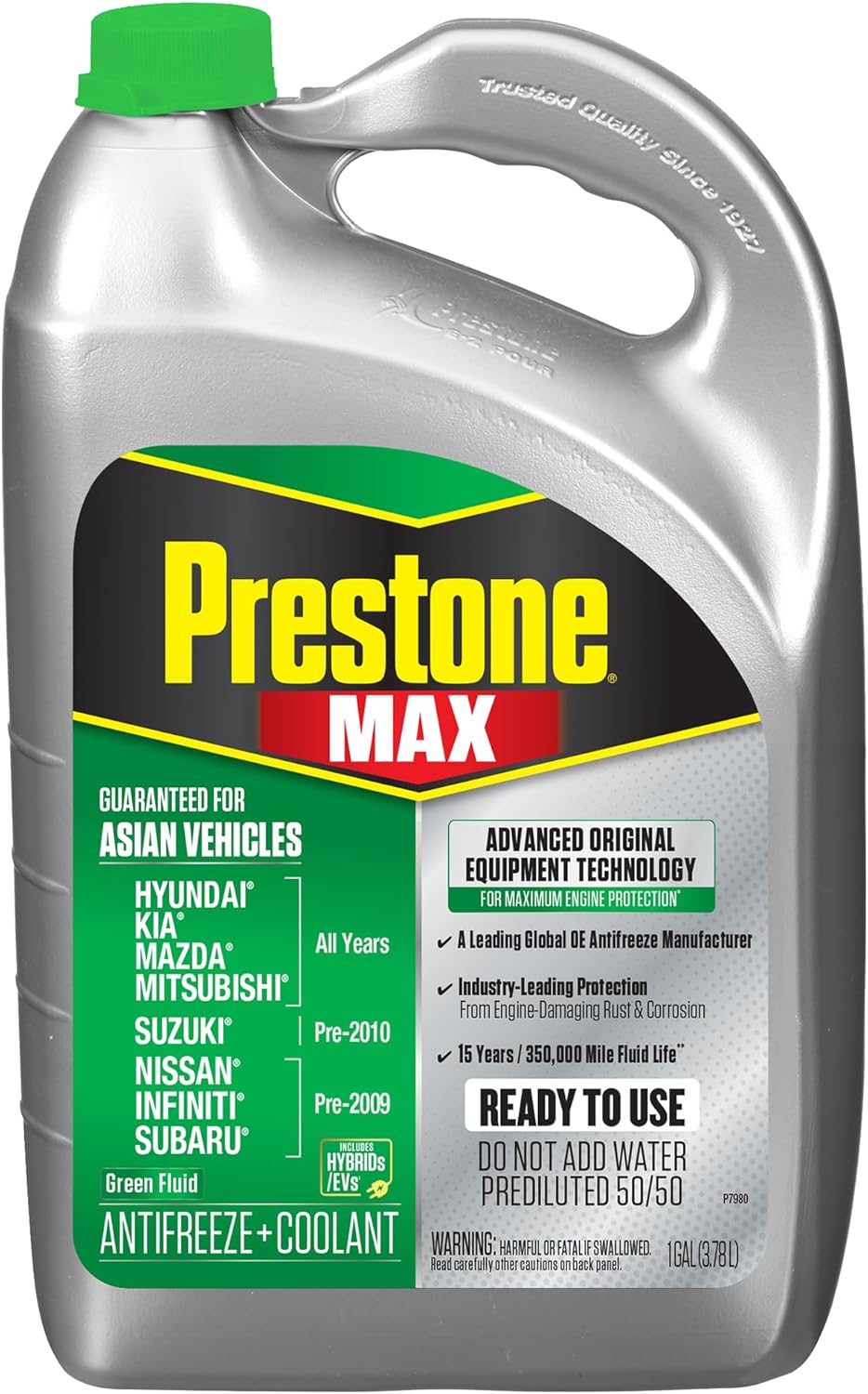
| Model | AF6610/F |
|---|---|
| Brand | Prestone |
| Item Weight | 9.17 pounds |
| Date First Available | March 26, 2024 |
This Prestone MAX Asian Green 50/50 antifreeze arrives ready-mixed at a 50/50 ratio and uses Prestone CorGuard technology to protect against freezing, boiling, and corrosion in compatible cooling systems. It is intended for vehicles that require an Asian-style coolant formulation and provides corrosion inhibitors and a bitterant to discourage accidental ingestion. Typical use is straightforward: pour into the cooling system during a flush or top-up to maintain the recommended mix and protect aluminum and other common engine metals. The pre-mixed format removes the need to dilute and ensures the labeled freeze/boil protection without measuring, which is convenient when you want the right concentration immediately. The main limitation for buyers who prefer concentrated coolant is that this SKU is pre-diluted, so you cannot control the antifreeze-to-water ratio for fine-tuning freeze or boil points or to save cost by buying concentrate and mixing yourself.
Best for: Buyers who want a ready-to-use Asian-spec coolant that delivers dependable corrosion protection and correct freeze/boil performance without mixing or measuring.
Less Ideal for: Buyers who prefer to purchase concentrated coolant to mix precise antifreeze/water ratios for cost savings or tailored freeze/boil protection.
- Formulated for Asian vehicle cooling systems with corrosion protection
- Pre-mixed 50/50 for correct freeze and boil protection out of the bottle
- Includes CorGuard inhibitors to help extend cooling system life
- Bitterant added for safety to reduce accidental ingestion
- Sold as pre-diluted 50/50 so you cannot customize concentration for exact freeze/boil targets
Verdict: The best concentrated coolant for buyers who prefer to mix coolant to exact antifreeze/water ratios for cost savings and customizable freeze/boil protection.
Choosing the Right 2010-2014 Subaru Legacy Coolant: Key Factors to Consider
Compatibility with Subaru Cooling Systems
Subaru Legacy cooling systems use aluminum components and specific elastomeric seals that can react poorly to the wrong inhibitor chemistry. Choosing a coolant that states compatibility with aluminum and mixed-metal systems reduces the chance of corrosion and galvanic reaction. This matters because the wrong fluid can accelerate pitting or cause softening of hoses and seals, which leads to leaks and component wear.
Check technical data for recommended concentrations and whether the coolant is formulated for modern automotive aluminum radiators and heads. Compatibility also affects whether you must fully flush the old fluid before switching or if a fluid is designed as a direct replacement. For owners, the right compatibility reduces maintenance headaches and extends component life.
Inhibitor Type and Longevity
Coolants use different inhibitor technologies such as inorganic acid technology, organic acid technology, or hybrid blends. Each type has a characteristic depletion profile and maintenance interval. For the 2010-2014 Legacy, inhibitor longevity determines how often you need a coolant flush and whether periodic additive top-ups are necessary.
Long-life inhibitors can stretch service intervals and lower the frequency of coolant changes, but they must still match Subaru materials. Understanding inhibitor type helps you plan maintenance and avoid mixing incompatible chemistries that could reduce protection.
Freeze and Boil Protection at Recommended Concentrations
Thermal protection is a primary function of coolant. Performance is concentration-dependent, so a coolant that lists freeze and boil points at a practical dilution (commonly 50/50) is more useful than vague claims. For a Legacy used in cold winters, freeze protection prevents blockages and freeze damage. In hot or towing conditions, boil protection reduces the risk of overheating under load.
Look for clear guidance on dilution and expected temperature protection at that dilution. This matters because owners often top up with water or use different tap water hardness, which affects freezing and boiling points and corrosion tendencies.
Corrosion Protection for Aluminum and Mixed Metals
The Legacy's cooling system includes aluminum heads and radiators alongside other metals. A coolant must inhibit corrosion uniformly across these materials to prevent localized attack. Products that demonstrate electrochemical compatibility or provide published test results for mixed-metal systems offer better reassurance.
Failing to prioritize corrosion protection can lead to pitting in aluminum components, rust in steel parts, and premature water pump failure. For owners, consistent corrosion inhibition translates directly into fewer repairs and longer service life for expensive cooling system components.
Seal and Hose Compatibility
Coolant interacts constantly with rubber seals, O-rings, and hoses. Some formulations can cause swelling, hardening, or softening of elastomers over time. Choosing a coolant that lists compatibility with common automotive elastomers reduces the risk of leaks and seal deterioration.
Evidence of compatibility typically appears in technical sheets. For Legacy owners, ensuring the coolant preserves hose flexibility and seal integrity avoids roadside issues and extends the life of cooling system auxiliary parts.
Maintenance Requirements and Service Interval
Different coolants call for different service intervals, from relatively frequent changes to extended-life fluids. Maintenance requirements affect ownership costs and the frequency of coolant flushes. Long-life coolants can lower service frequency but require attention to concentration and monitoring of inhibitor condition.
Also consider whether the coolant requires special flushing procedures before switching chemistry types. A product with clear service intervals and simple maintenance guidance makes long-term ownership easier and reduces the chance of accidental mixing that compromises protection.
Understanding Coolant Formulations
Not all coolants are chemically the same. Formulations range from traditional inorganic acid blends to organic acid long-life types and hybrid formulations. Each approach balances corrosion inhibition, inhibitor depletion rate, and compatibility with metals and elastomers. For a 2010-2014 Subaru Legacy, the critical consideration is a formula that protects aluminum components while maintaining seal and hose compatibility.
When evaluating labels and technical data, look for documented inhibitor chemistry, recommended dilution ratios, and any manufacturer compatibility statements. That information tells you whether a product is intended as a direct replacement or as a specialty fluid that requires a full system flush before use.
- Inorganic acid inhibitors often require more frequent changes but are robust in certain systems.
- Organic acid inhibitors typically offer longer service life when matched to compatible materials.
- Hybrid formulas aim to combine short-term protection with extended-life inhibitors.
When to Do a Coolant Flush on Your Legacy
Timing a coolant flush depends on the type of fluid previously used, driving conditions, and visible signs of contamination. If you do not know the coolant type or it has never been changed, a flush is prudent to remove old inhibitors and deposits. Regular inspection for discoloration, suspended particles, or a rusty appearance can signal the need for service.
Follow the recommended service interval for your chosen coolant and check inhibitor concentration periodically if the product recommends it. Flushing before switching inhibitor chemistries helps avoid unwanted reactions and restores optimal corrosion protection.
- Flush if coolant is dirty, has particles, or shows color change.
- Consider a flush before switching inhibitor types to avoid mixing chemistries.
- Check concentration and top up with the recommended ratio of coolant to distilled water.
Mixing and Dilution Best Practices
Always follow the manufacturer-recommended dilution ratio. Most passenger car coolants are specified at 50/50 coolant to water by volume for balanced freeze/boil protection and inhibitor concentration. Using distilled water avoids introducing minerals that can promote corrosion or scale buildup.
Avoid mixing different inhibitor chemistries unless the technical data explicitly states compatibility. If you must top up between services, match the existing coolant type or perform a complete flush and refill with the new product.
- Use distilled or deionized water for mixing to minimize minerals.
- Maintain the recommended 50/50 ratio unless the coolant data sheet advises otherwise.
- Never mix unknown formulations without consulting technical guidance.
Signs of Cooling System Trouble to Watch For
Recognize early signs that cooling system protection is failing. Watch for overheating incidents, unexplained coolant loss, coolant discoloration, or a sweet smell that could indicate leaks. A failing water pump or corroded radiator can present as inconsistent temperature readings or steam under load.
Addressing these signs promptly reduces the chance of head gasket damage or catastrophic overheating. Using the correct coolant reduces the likelihood of corrosion-driven failures and makes troubleshooting more straightforward.
- Overheating during normal driving or under load.
- Visible coolant leaks or low reservoir levels without external drips.
- Rust-colored or sludgy coolant indicating degraded inhibitors.
Practical Tips for DIY Coolant Service
If you plan to handle a coolant flush or top-up yourself, prepare by obtaining the correct coolant, distilled water, and a suitable collection container. Work on a cool engine, follow the vehicle manual for drain points, and dispose of old coolant responsibly at an appropriate facility.
Bleeding air from the cooling system after refilling is important to avoid hotspots and poor heater performance. Many Subaru engines have specific bleed steps which aid in removing trapped air. After service, run the engine to operating temperature and recheck levels once cooled.
- Use a proper catch pan and follow local disposal rules for used coolant.
- Reference the Legacy service manual for bleed procedures and torque values.
- Recheck coolant level after a short drive and top up if necessary.
How Climate Should Influence Your Choice
Your local climate affects the dilution and freeze protection you need. In colder regions, prioritize freeze point specifications and maintain the recommended dilution to ensure protection down to expected low temperatures. In hot climates or for towing and heavy-load use, higher boiling-point protection and strong thermal stability are more important.
Consider seasonal checks to ensure concentration remains appropriate, particularly if you top up with water or if the vehicle sees a mix of short trips and highway driving that can concentrate or dilute inhibitors differently.
- Adjust concentration for winter to maintain freeze protection without over-concentrating inhibitors.
- In hot climates, ensure the chosen coolant maintains stable boil protection at recommended dilution.
- Perform periodic checks when climates shift between seasons.
Still looking for the perfect fit?
Select your Subaru Legacy configuration to see the most relevant Coolants recommendations
How We Chose the Best 2010-2014 Subaru Legacy Coolant
We selected coolants based on technical fitment for the 2010-2014 Subaru Legacy and on performance attributes that directly affect longevity and component protection. Our evaluation prioritized corrosion control for aluminum and mixed-metal systems, the stability of freeze and boil protection across common concentration ranges, compatibility with Subaru elastomers and seals, and maintenance intervals tied to inhibitor life. We also considered ease of use for a routine coolant flush and top-up, chemical formulation types, and whether a product supports long service intervals without frequent additive top-ups.Excluded items included generic or unspecified formulations that did not document inhibitor chemistry or compatibility with Subaru cooling systems, and products aimed solely at high-radiator-flow performance rather than corrosion protection. The final short list reflects fluids that balance inhibitor longevity, thermal stability, and material compatibility that matter for Legacy owners. We also favored products with clear dilution guidelines and documented maintenance intervals so owners can plan coolant flushes appropriately.
Our full evaluation process is outlined in our review methodology.
FAQ
Can I use any long-life coolant in my 2010-2014 Subaru Legacy?
It depends. Long-life coolants can be suitable if their chemistry is compatible with Subaru aluminum and elastomer materials. Check the technical sheet for compatibility and recommended service interval. If the current fluid type is unknown, a flush before switching is often recommended.
How often should I have the coolant changed on this Legacy?
Service interval depends on the coolant type and inhibitor longevity. Traditional inorganic formulas may need more frequent changes, while organic or hybrid long-life types can extend intervals. Follow the product guidance and inspect coolant condition periodically.
Is a 50/50 coolant-to-water mix the right ratio for this Subaru?
A 50/50 mix is commonly recommended because it balances freeze and boil protection with inhibitor concentration. Verify the coolant maker's dilution instructions and use distilled water to avoid mineral buildup.
What are the signs that my coolant is failing?
Look for overheating, coolant discoloration, particle-laden or sludgy fluid, unexplained coolant loss, or degraded heater performance. These signs can indicate depleted inhibitors or contamination and warrant inspection or a flush.
Do I need to flush the system before switching coolant types?
Usually yes. Flushing removes existing inhibitors and deposits that can react poorly with a new chemistry. A full flush reduces the risk of compatibility issues and restores the system for proper protection.
Will changing coolant prevent water pump failure?
Using the correct coolant with proper corrosion inhibitors helps protect the water pump bearings and seals, lowering the risk of premature failure. However, water pump lifespan also depends on mechanical wear and bearing condition.
Final Verdict
Prioritize a coolant that documents compatibility with aluminum components, provides robust corrosion protection, and offers a maintenance interval that fits your service habits. Balancing inhibitor type, dilution guidance, and seal compatibility will reduce the risk of leaks, corrosion, and premature component failure in a 2010-2014 Subaru Legacy.Opt for a fluid with clear technical guidance and follow recommended flush intervals and mixing practices. That approach gives the most reliable long-term protection and the confidence to choose the best coolant for your Legacy.
Explore More:
- Check out all Subaru Legacy parts & accessories
- Explore Fluids & Chemicals
- Browse all Accessories
