

Note: This article contains affiliate links. If you click on these links and make a purchase, I may earn a small commission at no extra cost to you. This helps support my research and content. Read my full affiliate disclosure here.
Choosing the right brake fluid for your Ford Focus matters for both safety and long-term system health. The wrong fluid can reduce stopping performance, accelerate component wear, or cause moisture-related problems that lower boiling point and responsiveness.This guide shortlists seven top-performing brake fluids suitable for Ford Focus models and explains the practical factors we considered, such as boiling point, corrosion inhibitors, and compatibility with brake system seals. Read on to see the top picks and the criteria used to evaluate them.
Looking for other parts? See all Ford Focus parts & accessories.
Top Picks at a Glance
| Best Reviewed A top-rated pick with lots of positive feedback | Motorcraft PM20 DOT4 LV Brake Fluid, 16 fl oz |  |
| Most Popular A crowd favorite that many people choose with confidence | Prestone DOT 4 Brake Fluid, Synthetic, 12 oz. |  |
| Best Quality Built to a higher standard if you want something more solid | Endless RF-650 Brake Fluid (0.5 L) |  |
| Best Budget The cheapest option that still gets the job done reliably | EBC Brakes DOT 4 Brake Fluid, 260 mL |  |
| Most Sold A high-volume bestseller chosen again and again | Valvoline DOT 3 & DOT 4 Synthetic Brake Fluid, 32 oz |  |
| Best Value for Money The sweet spot between price and what you get | Brembo Premium DOT4 Brake Fluid (L04010) |  |
| Best Overall The best all-around choice for most situations | Motul DOT 5.1 High Temp Brake Fluid (3-Pack) |  |
1. Motorcraft PM20 DOT4 LV Brake Fluid, 16 fl oz

| Liquid Volume | 16 Fluid Ounces |
|---|---|
| Recommended Uses For Product | Ford vehicles specifying WSS‑M6C65‑A2 (DOT 4 LV) and WSS‑M6C65‑A1 (DOT 3) |
Motorcraft PM20 DOT4 LV is a brake fluid formulated to meet Ford specifications for vehicles that call for WSS‑M6C65‑A2 (DOT 4 LV) or WSS‑M6C65‑A1 (DOT 3). It is used to replace or top up system fluid during routine maintenance or a full brake flush and is intended for modern ABS systems and vehicles that benefit from a low-viscosity formula. The low viscosity improves hydraulic response at low temperatures and the DOT 4 LV formulation raises minimum boiling points compared with standard DOT 3, which helps resist fade during demanding use. Packaged in a single 16 fl oz bottle, it is convenient for individual jobs or keeping a spare on hand. Limitations are the small bottle size if you need a full system flush on larger vehicles and the product is color‑coded yellow which requires care to avoid cross-contamination with other fluids during service. For Ford Focus owners wanting a reliability-focused, factory-specified fluid, this provides a direct, manufacturer-aligned option.
Best for: Reliability-focused owners who prioritize factory-specified maintenance and want a brake fluid that aligns with Ford recommendations for dependable day-to-day and spirited driving use.
Less Ideal for: People looking for bulk volumes for repeated workshop use or buyers who need a high-capacity supply for servicing multiple vehicles should consider larger containers or professional-size packs.
- Meets Ford WSS‑M6C65‑A2 and WSS‑M6C65‑A1 specifications for compatibility with specified Ford brake systems
- Low viscosity formula improves cold-temperature pedal response and suits ABS with stability control
- Higher minimum boiling point than DOT 3, reducing risk of fade under heavier braking
- Branded Motorcraft product engineered to factory fit and function for Ford vehicles
- Single 16 fl oz bottle may be too small for a full system flush on some vehicles
- Yellow-colored fluid requires careful handling to avoid mixing different brake fluids during service
Verdict For Ford Focus owners seeking factory-recommended reliability, Motorcraft PM20 DOT4 LV delivers a low-viscosity, manufacturer-aligned brake fluid in a convenient 16 fl oz bottle.
2. Prestone DOT 4 Brake Fluid, Synthetic, 12 oz.

| Liquid Volume | 340.2 Milliliters |
|---|---|
| Recommended Uses For Product | Corrosion Inhibitor |
| Upper Temperature Rating | 510 Degrees Fahrenheit |
| Unit Count | 12.0 Fluid Ounces |
Prestone DOT 4 is a synthetic brake fluid designed to replace factory-spec DOT 4 in vehicles that call for that specification, including the Ford Focus. It is typically used when flushing or topping off the brake system and comes in small 12 oz. bottles that make it convenient for one-off maintenance jobs. The formula advertises an elevated dry boiling point to reduce the risk of overheating and brake fade and contains corrosion inhibitors to protect metal components inside the braking system. Because it is compatible with other DOT 4 fluids, it can be mixed during routine service without affecting system compatibility. The extended-life formulation is intended to last longer between changes, which suits drivers who prefer fewer maintenance intervals. Limitations are that the smaller bottles are not ideal for full-system flushes on multiple vehicles, and drivers who require higher boiling performance for track use should consider a DOT 5.1-grade product instead.
Best for: Practical, convenience-driven buyers who want a reliable, factory-spec replacement that reduces service frequency and is easy to store for routine Ford Focus maintenance.
Less Ideal for: Enthusiasts who push brakes hard on track days or shops that perform frequent multi-vehicle flushes should choose higher-capacity or higher-grade fluids instead.
- Synthetic DOT 4 formulation with higher dry boiling point to resist overheating
- Corrosion inhibitors help protect metal components in the brake system
- Small 12 oz. bottles are convenient for single-service top-offs or small flushes
- Compatible with other DOT 4 fluids for straightforward mixing during maintenance
- Small bottle size may require buying multiple units for full system flushes or servicing several cars
- Not intended for extreme track use where DOT 5.1 or race-grade fluids are preferable
Verdict A convenient, factory-compatible DOT 4 fluid for Ford Focus owners who want higher boiling protection and corrosion defense without specialty racing performance.
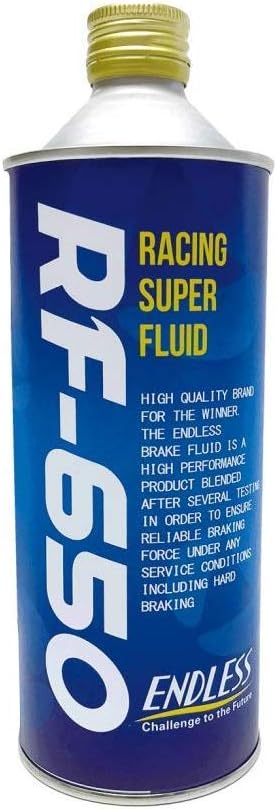
3. Endless RF-650 Brake Fluid (0.5 L)
| Liquid Volume | 0.5 Liters |
|---|---|
| SAE J300 Viscosity Grade | 0W |
| Unit Count | 16.9 Fluid Ounces |
| Flash Point | 328 Degrees Celsius |
The Endless RF-650 is a race-focused brake fluid formulated to hold boiling point under extreme heat and produce a firmer, more consistent pedal feel during heavy use. In practice it is used for track days, rally stages, and high-load braking where standard fluids soften and introduce sponginess. The product description and user reports highlight very stable compressibility characteristics and a low freezing point, which helps maintain consistent response in cold as well as hot conditions. For a Ford Focus used for aggressive track work or performance upgrades, RF-650 gives quicker brake response and resistence to fade compared with typical DOT fluids. The main compromise is cost and service frequency: high-spec fluids like this are more expensive and can require careful system maintenance and compatible seals and components. Also, because it is formulated for racing, it may exceed what is necessary for everyday commuting and could be more than most Focus daily drivers need.
Best for: Performance-oriented Ford Focus owners who push their cars on track or use aggressive braking setups and prioritize consistent pedal feel and high-temperature resistance.
Less Ideal for: Drivers who only use their Focus for commuting or light street driving and prefer lower-cost, lower-maintenance fluids better matched to everyday use.
- Very high wet and dry boil resistance for sustained high-temperature braking
- Produces a firmer, more consistent pedal feel under repeated heavy use
- Low freezing point supports reliable operation in cold conditions
- Engineered for racing use so provides predictable response during track sessions
- Higher purchase cost than standard DOT brake fluids
- Race-spec formulation may require more frequent system attention and careful compatibility checks
Verdict Choose RF-650 for a Ford Focus when track-grade boil resistance and a firmer pedal are the primary goals, but expect higher cost and maintenance compared with everyday fluids.
4. EBC Brakes DOT 4 Brake Fluid, 260 mL

| Material | Glycol |
|---|---|
| Liquid Volume | 260 Milliliters |
| Upper Temperature Rating | 270 Degrees Celsius |
| Flash Point | 155 Degrees Celsius |
EBC Brakes DOT 4 is a glycol-based brake fluid packaged in a small 260 mL bottle for topping off or small service jobs on hydraulic brake and clutch systems. It is formulated with a higher boiling point than DOT 3, so it handles moderate brake temperatures encountered during everyday driving and occasional spirited use. Typical use is topping the master cylinder reservoir during routine maintenance or bleeding brakes on a Ford Focus during a DIY service. Notable details include corrosion prevention additives and an upper temperature rating listed by the manufacturer, which helps maintain braking performance under heat. The compact bottle is convenient for carrying in a garage or tool kit, but the small volume means it is best for single small jobs rather than full fluid flushes on a vehicle that needs complete replacement. For budget-focused buyers keeping a Focus running safely, this fluid provides a cost-effective DOT 4 option, though professionals or high-performance drivers may prefer larger containers or specialty formulations with higher wet boiling points.
Best for: Budget-conscious DIY owners who perform routine maintenance on a Ford Focus and need an affordable DOT 4 fluid for topping off or minor brake work.
Less Ideal for: Drivers who require a full-system flush, frequent high-performance braking, or who prefer professional-grade fluids with detailed wet boiling specifications should consider larger or premium alternatives.
- DOT 4 formulation gives a higher dry boiling point than DOT 3 for better heat tolerance
- Corrosion prevention additives help protect braking system components
- Compact 260 mL bottle is convenient for topping off reservoirs and small jobs
- Glycol base is compatible with brake systems specifying DOT 3 or DOT 4 fluids
- Small 260 mL volume is insufficient for full brake fluid flushes on most vehicles
- Not marketed with high-performance wet boiling point data for track or heavy-duty use
Verdict A wallet-friendly DOT 4 brake fluid that works well for topping off a Ford Focus but comes in a small bottle best suited to minor maintenance rather than full fluid changes.
5. Valvoline DOT 3 & DOT 4 Synthetic Brake Fluid, 32 oz

| Unit Count | 32.0 Fluid Ounces |
|---|---|
| Liquid Volume | 0.92 Liters |
| Recommended Uses For Product | Automotive |
| Specific Uses For Product | Vehicle Brake Systems |
This Valvoline bottle is a multi-spec glycol brake fluid formulated to meet DOT 3 and DOT 4 requirements, so it handles routine brake maintenance and full-system flushes on compatible vehicles. It is typically used when bleeding calipers, replacing old fluid, or servicing ABS hydraulic components. Notable features include a low-moisture formulation for improved vapor lock resistance and a boiling point suitable for heavier braking, which helps reduce fade during sustained stops. In practice it mixes with conventional fluids, flows cleanly through ABS valves with minimal foaming, and gives predictable pedal feel after a proper flush. The practical benefits are straightforward reliability for everyday driving and broad compatibility across systems that accept DOT 3 or DOT 4. Limitations are inherent to glycol brake fluids: it is hygroscopic so it will absorb moisture over time and requires periodic replacement, and it is not a high-end racing fluid with extreme-temperature margins. Handle with care and avoid skin contact or contamination of painted surfaces.
Best for: A risk-averse mainstream buyer who wants a reliable, factory-quality replacement fluid for regular brake service on a Ford Focus and values predictable, maintenance-friendly performance.
Less Ideal for: Drivers seeking race-grade performance or extended high-temperature braking margins should consider specialty DOT 4+ or racing fluids instead.
- Meets both DOT 3 and DOT 4 specifications for broad vehicle compatibility
- Low-moisture formula improves resistance to vapor lock and brake fade
- Flows cleanly during bleeding with minimal foaming, aiding full system flushes
- Trusted brand formulation suitable for routine shop or DIY maintenance
- Hygroscopic by nature so it requires regular replacement to maintain performance
- Not formulated for extreme racing or motorsport thermal demands
Verdict A dependable DOT 3/4 brake fluid that gives Ford Focus owners predictable, shop-ready performance for routine flushing and maintenance.
6. Brembo Premium DOT4 Brake Fluid (L04010)

| Brand | Brembo |
|---|---|
| Item model number | L04010 |
| Viscosity | Very Low |
| Position | Left |
Brembo Premium DOT4 brake fluid is a direct replacement fluid designed to keep brakes performing under heavier use. It is intended for routine fluid changes and system flushes on vehicles that call for DOT4, where it provides higher dry and wet boiling points, low-temperature flow, and anti-oxidation properties that slow fluid degradation. In practice that means reduced risk of vapor lock under spirited driving or towing and a firmer, more consistent pedal feel over time. The product is sold in a single bottle suitable for topping up or refilling master cylinders during a brake service. Benefits include improved long-term compressibility and corrosion protection for internal components, which helps preserve system integrity between services. Limits to consider are that it is a DOT4 fluid only and must be fully flushed from lines if switching from fluids with different specifications, and like all brake fluids it can damage paint on contact so care is needed during handling.
Best for: Practical optimizers who prioritize reliable, long-lasting braking performance without upcharging on motorsport-grade fluids and want a sensible upgrade for regular maintenance on their Focus.
Less Ideal for: Drivers chasing extreme track-spec fluid performance or those whose vehicle specifically requires DOT3 or DOT5 fluids should look at other specialized options.
- Higher dry and wet boiling points reduce vapor lock risk during heavy use
- Low-temperature viscosity helps consistent pedal feel in cold conditions
- Anti-oxidation and anti-corrosion additives help preserve fluid chemistry and system components
- Compatible with ABS-equipped brake systems and usable as a direct DOT4 replacement
- Only offered as DOT4 specification so not suitable where a different DOT rating is required
- Can strip paint on contact and requires careful handling during service
Verdict A practical DOT4 upgrade that gives better boiling resistance and corrosion protection for everyday and occasional spirited driving, provided your Ford Focus recommends DOT4.
7. Motul DOT 5.1 High Temp Brake Fluid (3-Pack)

| Liquid Volume | 500 Milliliters |
|---|---|
| Viscosity | 820 centipoises at -40°C (-40°F) |
| Upper Temperature Rating | 516 Degrees Fahrenheit |
| Specific Uses For Product | Vehicle hydraulic brake systems with ABS, compatible with DOT 5.1, DOT 4, and DOT 3 specifications |
Motul DOT 5.1 is a synthetic high-temperature brake fluid intended for hydraulic brake and clutch systems, including vehicles with anti-lock braking systems. It is typically used when flushing and refilling a system or upgrading from DOT 3 or DOT 4 to a higher boiling point fluid. Key features include non-silicone formulation, a high dry boiling point (270C) and wet boiling point (185C), and stated compatibility with ABS-equipped systems. For a Ford Focus, this translates to stronger resistance to vapor lock under demanding driving or heavy braking and longer useful life between full fluid changes. The product comes in 500 ml bottles packaged as a 3-pack, which is generally enough for multiple service jobs on a compact car. Limitations to consider are that DOT 5.1 is not compatible with silicon or mineral-based fluids, so a complete system flush is required before switching, and its benefits are most noticeable under high-heat conditions rather than routine city commuting.
Best for: Balanced drivers who want a reliable, higher-boiling brake fluid for regular maintenance and occasional spirited driving on a Ford Focus.
Less Ideal for: Drivers who never exceed light braking demands or who prefer to stick with dealer-recommended fluids without performing a full system flush should consider simpler DOT 4 alternatives.
- High dry boiling point (270C) and high wet boiling point (185C) for sustained performance under heavy braking
- 100% synthetic, non-silicone formulation suitable for ABS and modern hydraulic systems
- Compatible with DOT 3 and DOT 4 systems so it can replace lower-spec fluids after a proper flush
- Three 500 ml bottles provide enough volume for multiple service jobs on a compact car
- Requires a full system flush before switching from silicon or mineral-based fluids
- Performance advantage is limited for drivers who do only light city commuting and never push brakes to high temperatures
Verdict A strong, factory-quality DOT 5.1 choice for Ford Focus owners who want higher boil resistance and longer-lasting brake performance after a proper system flush.
Choosing the Right Ford Focus Brake Fluid: Key Factors to Consider
Boiling Point (Dry and Wet)
Boiling point determines how well a brake fluid resists vapor lock under heavy braking and high temperatures. A high dry boiling point indicates the fluid’s performance when new, while the wet boiling point shows how the fluid behaves after absorbing moisture over time. Both values matter because moisture buildup is inevitable and reduces the effective boiling point.
For everyday driving you want a fluid with a healthy margin above typical operating temperatures to avoid vapor formation, which can cause a spongy pedal or loss of braking. Track use or repeated hard stops demand fluids with especially high dry boiling points. Consider the wet boiling point to estimate how the fluid will perform toward the end of its service life.
Compatibility With Seals and Materials
Brake fluids must be chemically compatible with the rubber seals, hoses, and caliper materials in the Ford Focus hydraulic system. Some formulations can cause swelling, shrinking, or accelerated degradation of elastomers, leading to leaks or component failure. Compatibility information is typically available in technical data sheets.
Choosing a fluid specified for automotive systems reduces the risk of seal issues. If you are unsure about seal materials in an older vehicle, prioritize fluids that advertise broad compatibility with common elastomers used in passenger cars. Proper compatibility helps maintain system integrity and reduces the likelihood of unexpected repairs.
DOT Specification and Performance Level
DOT ratings, such as DOT 3 or DOT 4, indicate baseline chemical composition and performance expectations. These standards affect boiling point ranges and general hygroscopic behavior. Selecting the DOT level recommended by the vehicle manufacturer helps ensure the fluid matches the intended thermal and material requirements.
Higher DOT numbers generally correspond to higher boiling points and different additive packages. Verify the Ford Focus service specification before switching DOT levels, as using an incompatible DOT type can affect system performance or warranty-related concerns. If a higher-performance DOT grade is chosen, ensure it is compatible with existing system components.
Moisture Absorption and Maintenance Interval
Most brake fluids absorb moisture over time, which lowers the wet boiling point and increases corrosion risk inside the braking system. Fluids with additives or formulations that slow moisture uptake can extend service intervals and retain performance longer.
Consider typical driving conditions when planning maintenance. Vehicles in humid climates or those that see frequent heavy braking may benefit from more frequent fluid checks and flushes. Knowing the expected maintenance interval helps you schedule brake fluid flushes before performance degrades significantly.
Corrosion and Lubricity Additives
Brake fluid formulations often include additives to inhibit corrosion of metal components and to lubricate moving parts in the master cylinder and calipers. Effective corrosion protection helps preserve lines, pistons, and other hydraulic components, which reduces long-term repair risk.
Lubricity is important for preventing seal wear and ensuring consistent pedal feel. When choosing a fluid, look for formulations that specifically mention corrosion inhibition and adequate lubrication for automotive braking systems. These properties support long-term reliability in a Ford Focus.
Manufacturer Recommendations and Intended Use
Always consider the vehicle maker’s guidance for brake fluid type and service intervals. Manufacturer recommendations reflect the design choices made for the Ford Focus braking system, including acceptable DOT specifications and maintenance schedules. Following these recommendations reduces the risk of compatibility issues and helps maintain expected performance.
If you have special requirements, such as heavy towing or track use, select a fluid formulated for the increased thermal stress those conditions impose. For typical street driving, a fluid that balances performance and longevity is usually preferable to a specialized racing formula.
FAQ
How often should I change the brake fluid in a Ford Focus?
Change intervals vary by fluid type and driving conditions, but many manufacturers recommend checking fluid condition annually and flushing every 1 to 3 years. Vehicles in wet or high-temperature climates or those subjected to heavy braking often need more frequent service. Use fluid condition tests or boiling point data to guide exact timing.
Can I switch between DOT 3 and DOT 4 in my Ford Focus?
Switching between DOT 3 and DOT 4 is often possible because both are glycol-based, but you should verify the vehicle maker’s recommendation first. DOT 4 typically has a higher boiling point. Mixing different DOT grades can change performance characteristics, so consider a full flush when changing grades to ensure predictable behavior.
What does a brake fluid flush involve and why is it important?
A brake fluid flush replaces old, moisture-laden fluid with fresh fluid and helps restore boiling point and corrosion protection. The process typically involves bleeding each brake line until clean fluid runs through. Regular flushes help prevent vapor lock, reduce internal corrosion, and maintain consistent pedal feel.
Are synthetic brake fluids better for everyday driving?
Synthetic formulations can offer higher boiling points and more stable performance under stress, but 'better' depends on your driving needs. For normal commuting, a standard automotive-grade fluid that meets manufacturer specs is usually sufficient. For severe-duty or high-heat use, consider a formulation designed to handle greater thermal loads.
How can I tell if my brake fluid is contaminated or failing?
Signs include a spongy or soft brake pedal, reduced stopping responsiveness, or visible discoloration and debris in the fluid reservoir. A lab test or boiling point check can confirm moisture content and degradation. If you observe any of these symptoms, inspect the fluid and consider a flush.
How We Chose the Best Ford Focus Brake Fluid
We focused on properties that matter specifically to Ford Focus brake systems and everyday driving conditions. Our selection process prioritized boiling point performance under wet and dry conditions, compatibility with common seal materials used in passenger car hydraulic systems, corrosion and seal protection, and resistance to moisture absorption. We also considered fluid longevity and maintenance needs, including how often a fluid typically requires flushing in normal service.Products were excluded if they lacked clear specifications for wet/dry boiling point, did not list compatibility with standard automotive brake system materials, or were intended only for racing applications without practical road-use data. We filtered out formulations that rely on unclear additive packages or omit manufacturer test data. The final list emphasizes fluids that balance thermal performance, seal compatibility, and reasonable service intervals for typical Ford Focus use.
Our full evaluation process is outlined in our review methodology.
Conclusion
Prioritize boiling point, moisture resistance, and seal compatibility when choosing Ford Focus brake fluid. These factors most directly affect safety, pedal feel, and component longevity. Balance higher thermal performance against the need for compatibility and regular maintenance to get consistent braking performance.Plan on periodic fluid checks and scheduled flushes based on your driving conditions. Selecting a fluid that aligns with manufacturer recommendations and your typical use will minimize surprises and keep the braking system reliable.
Explore More:
- Check out all Ford Focus parts & accessories
- Explore Fluids & Chemicals
- Browse all Accessories
