

Note: This article contains affiliate links. If you click on these links and make a purchase, I may earn a small commission at no extra cost to you. This helps support my research and content. Read my full affiliate disclosure here.
When you own a 2003-2007 Honda Accord, brake fluid condition directly affects pedal feel, stopping power, and long-term hydraulic health. Choosing the right brake fluid keeps the master cylinder, calipers, and ABS modulator working reliably, especially as the system ages. This guide looks at a short list of the top brake fluids suited to the Accord's hydraulic requirements and daily driving demands. We evaluated fluids for boiling resistance, corrosion inhibitors, and compatibility with seals and ABS systems. Below are the recommended options and a clear explanation of the criteria used to pick them.
Looking for other parts? See all Honda Accord parts & accessories.
Top Picks at a Glance
| Best Overall Brake Fluid A balanced pick with wide compatibility and reliable performance | Valvoline DOT 3 & DOT 4 Synthetic Brake Fluid, 32 oz |  |
| Best Budget Brake Fluid Low-cost, standard-spec fluid for routine maintenance and top-ups | Prestone Synthetic Hi-Temp DOT 3 Brake Fluid, 32 oz |  |
| Best OEM Honda Brake Fluid Factory-formulated fluid sold as genuine Honda OEM packaging and spec | Honda Genuine Brake Fluid DOT 3 — 2 × 12 fl oz Bottles |  |
| Best High‑Boiling Synthetic Brake Fluid Performance-grade synthetic fluid with higher dry/wet boiling points for heat resistance | Motul RBF 600 Factory Line Racing Brake Fluid DOT 4, 500 ml |  |
| Best DOT 4 Brake Fluid Higher-spec DOT 4 fluid for systems that call for stronger heat tolerance | Honda DOT 4 Brake Fluid |  |
| Best DOT 5.1 Brake Fluid Very high-performance DOT 5.1 fluid for low-viscosity and high-temperature needs | Liqui Moly Brake Fluid DOT 5.1, 250 ml |  |
| Best Travel‑Size / Small Bottle 12–16 oz bottles that are easy to store, handle, and use for quick jobs | Valvoline DOT 3 & 4 Synthetic Brake Fluid, 12 oz |  |
1. Valvoline DOT 3 & DOT 4 Synthetic Brake Fluid, 32 oz
Best Overall Brake Fluid

| Liquid Volume | 0.92 Liters |
|---|---|
| Unit Count | 32.0 Fluid Ounces |
| Material | Abs |
| Manufacturer | Valvoline |
Valvoline DOT 3 & DOT 4 Synthetic Brake Fluid is a glycol-based fluid formulated to meet both DOT 3 and DOT 4 specifications for normal passenger vehicles. It is typically used for brake system flushes, topping off reservoirs, and bleeding systems that include ABS modules. The fluid mixes with conventional glycol brake fluids and is designed with a low-moisture formula to improve vapor lock resistance and reduce foaming during bleeding, which helps purge air from lines faster. Practical benefits include higher wet and dry boiling margins for more consistent pedal feel under repeated or heavier braking and corrosion protection that helps preserve internal components. The 32-ounce bottle is a convenient size for a full flush on many mid-size cars and leaves some leftover for follow-up service. Limitations are that it is a general-purpose DOT 3/4 fluid and not formulated for competition or extreme track use where specialty fluids with much higher boiling points are required, and care is needed when handling because of strong chemical odor and safety precautions when bleeding brakes.
Best for: A DIYer or home mechanic who wants a reliable, factory-quality replacement fluid for routine brake flushing and ABS-equipped mid-size cars and values consistency and easy bleeding.
Less Ideal for: Drivers who regularly do track days or require extreme high-temperature performance should choose a dedicated racing or high-temperature brake fluid instead.
- Meets both DOT 3 and DOT 4 specifications for broad compatibility
- Higher dry and wet boiling points than basic fluids for better vapor lock resistance
- Low-moisture formula and minimal foaming improve bleeding and ABS circulation
- 32 oz bottle size is convenient for a single full flush on most mid-size passenger cars
- Not a racing-grade fluid so boiling point margins are lower than specialty track formulations
Verdict: The top choice when you want a dependable, all-around brake fluid that balances boiling point, corrosion protection, and compatibility for everyday DIY maintenance.
2. Prestone Synthetic Hi-Temp DOT 3 Brake Fluid, 32 oz
Best Budget Brake Fluid

| Liquid Volume | 32 Fluid Ounces |
|---|---|
| Minimum dry boiling point | 460 degrees Fahrenheit (238 C) |
| Minimum wet boiling point | 284 degrees Fahrenheit (140 C) |
| Recommended Uses For Product | Automotive |
Prestone Synthetic Hi-Temp DOT 3 is a straightforward, full-synthetic brake fluid intended for routine maintenance tasks such as bleeding the system or topping off a reservoir. It uses polyglycol-based chemistry to raise dry and wet boiling points well above government minima, which helps prevent vapor lock and a spongy pedal under normal and elevated operating temperatures. The formula includes corrosion inhibitors to protect calipers, lines, and master cylinders, and the bottle pours cleanly for controlled servicing. For a 2003–2007 Honda Accord this matches factory DOT 3 requirements and is suitable for periodic flushes and DIY brake jobs. The limitation is that it is DOT 3 only, so it is not the higher-temperature DOT 4 option some drivers choose for heavy towing or track use, and frequent exposure to moisture still requires regular replacement to maintain wet boiling performance. Packaging is durable and the 32 oz size is convenient for a full system flush on most sedans.
Best for: Buyers wanting an affordable, factory-spec DOT 3 fluid for routine bleeding, topping off, or scheduled flushes on a daily-driven sedan who prioritize reliable, no-frills maintenance products.
Less Ideal for: Drivers seeking higher-temperature DOT 4 performance for heavy loads, towing, or aggressive driving should consider a DOT 4 fluid instead.
- Full synthetic DOT 3 formula with elevated dry and wet boiling points
- Inhibitor package helps protect brake system metals from corrosion
- 32 oz bottle size is convenient for a full brake flush or multiple top-offs
- Limited to DOT 3 specification and not optimal where DOT 4 performance is required
Verdict: Choose this economical option if you need a DOT-spec fluid for basic bleeding or topping off without paying extra for specialty formulas.
3. Honda Genuine Brake Fluid DOT 3 — 2 × 12 fl oz Bottles
Best OEM Honda Brake Fluid

| Material | Glycol Ethers |
|---|---|
| Liquid Volume | 12 Fluid Ounces per bottle |
| Unit Count | 24 Fluid Ounces total |
| Item Form | Liquid |
This is factory-quality Honda DOT 3 brake fluid sold in a two-bottle pack that matches the manufacturer formula for compatible Hondas. It is intended for topping off or replacing fluid in the master cylinder and brake lines and is used the same way as any glycol-based DOT 3 fluid during routine bleeding, flushing, or ABS service. Notable features are the genuine Honda branding and packaging that identifies part number and fitment, which gives installers confidence they are using the vehicle maker's specified fluid. Practical benefits include direct compatibility with Honda brake systems that call for DOT 3 and the convenience of two bottles to complete a master cylinder fill plus a bleed. Limitations are inherent to DOT 3 chemistry: it has a lower boiling point and absorbs moisture faster than higher-spec DOT 4 or DOT 5.1 fluids, so it may require more frequent replacement in heavy-use or high-heat conditions. Some buyers have reported imperfect retail packaging but the fluid itself matches factory specifications.
Best for: Buyers who prioritize using the manufacturer recommended fluid and want confidence that the formula matches Honda's specification for brake system maintenance on compatible vehicles.
Less Ideal for: Drivers who need higher high-temperature performance for track use or heavy towing should choose a higher-spec brake fluid instead.
- Manufacturerspecified Honda DOT 3 formula for exact fitment to Honda systems
- Two 12 fl oz bottles provide enough fluid for a master cylinder service plus bleeding
- Clear, factory-labeled product that simplifies correct selection for Honda vehicles
- DOT 3 chemistry has lower boiling point and absorbs moisture faster than DOT 4 or DOT 5.1
Verdict: Pick an OEM Honda bottle when you want the manufacturer's specified formula and confidence in exact conformance to the vehicle's original requirements.
4. Motul RBF 600 Factory Line Racing Brake Fluid DOT 4, 500 ml
Best High‑Boiling Synthetic Brake Fluid

| Liquid Volume | 500 Milliliters |
|---|---|
| Type | 100% synthetic DOT 4 |
| Dry Boiling Point | 312 C / 593 F |
| Wet Boiling Point | 216 C / 420 F |
| Item Form | Oil |
Motul RBF 600 is a high‑temperature, synthetic DOT 4 brake and clutch fluid designed for demanding driving and motorsport conditions. It raises boiling resistance well above typical shop‑brand fluids, helping retain pedal feel during repeated hard stops and reducing the chance of vapor lock when brakes heat up. Typical use is system flushes and refills on hydraulic brake and clutch circuits; for a 2003–2007 Honda Accord it works as a direct DOT 4 replacement when you want stronger thermal performance for spirited driving or occasional track days. Notable features include a very high dry boiling point (312 C/593 F) and a high wet boiling point, plus non‑silicone formulation. Practical benefits are better fade resistance and more consistent pedal response under heat. Important limitations are that it is hygroscopic so it absorbs moisture over time, meaning more frequent fluid changes are needed compared with lower‑performance fluids, and it costs more than standard DOT 4 options.
Best for: Drivers of 2003–2007 Honda Accords who push their cars harder than daily commuting and want a brake fluid that keeps pedal feel consistent during spirited driving or occasional track use.
Less Ideal for: If you only use the car for normal commuting with low brake loads and prefer minimal maintenance, a standard DOT 4 fluid with less frequent change intervals is a more practical choice.
- Very high dry boiling point for strong resistance to brake fade under repeated heavy use
- Synthetic, non‑silicone formulation maintains thermal stability at elevated temperatures
- Suitable for both brake and hydraulic clutch systems so one fluid covers both circuits
- Highly hygroscopic so it requires more frequent system flushes to avoid moisture‑related boiling point drop
Verdict: Go with a high‑boiling synthetic if you need stronger vapor-lock resistance and more consistent braking under heavy use or higher temperatures.
5. Honda DOT 4 Brake Fluid
Best DOT 4 Brake Fluid

| Brand | Honda |
|---|---|
| Brake fluid type | DOT 4 |
| Compatible systems | Hydraulic brake and clutch systems requiring DOT 3 or DOT 4 |
This Honda DOT 4 brake fluid is a factory-brand hydraulic fluid formulated for higher boiling temperatures than DOT 3, so it is suited to demanding driving and heavy-duty braking. It is used for brake flushes, topping off reservoirs, and clutch hydraulic systems where a DOT 4 specification is required. The product description highlights a high-temperature formula, which translates to better resistance to vapor lock and fade under repeated hard braking. Buyers will appreciate that it is the same brand specification that Honda recommends for many of its vehicles, which simplifies compatibility concerns and reduces the risk of mixing incompatible fluids. Packaging is a standard pour bottle that makes filling reservoirs straightforward, though one past buyer noted missing a cap on arrival so inspect packaging when you receive it. This fluid does not list corrosion inhibitors or extended service claims beyond DOT 4 performance, so plan regular fluid changes per the vehicle schedule rather than relying on extended-life intervals.
Best for: Buyers who need a DOT 4 fluid with higher boiling performance for safety during spirited driving or heavier braking and who prefer a brand-recommended, factory-quality fluid for maintenance on Honda vehicles.
Less Ideal for: If you want a long-life synthetic brake fluid with advertised extended change intervals or enhanced corrosion protection, consider specialty aftermarket fluids that list those features.
- High-temperature DOT 4 formula improves resistance to vapor lock and brake fade under heavy use
- Factory-brand Honda formulation reduces compatibility concerns for Honda vehicles
- Suitable for both brake and hydraulic clutch systems that accept DOT 3 or DOT 4 fluids
- No explicit extended-life or enhanced corrosion-inhibitor claims listed
- Some customers reported packaging issues such as missing cap on arrival
Verdict: Select a DOT 4 formula when the braking system requires a higher boiling point than DOT 3 for improved safety under demanding conditions.
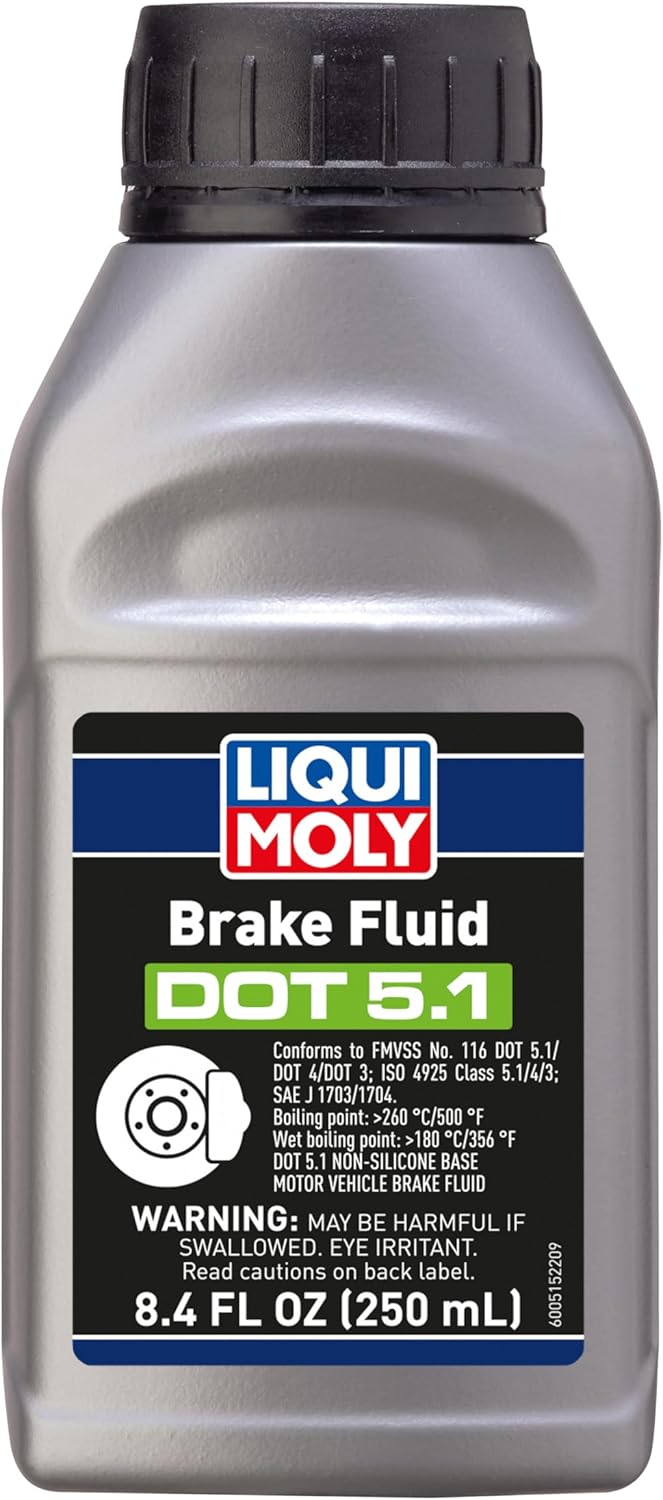
6. Liqui Moly Brake Fluid DOT 5.1, 250 ml
Best DOT 5.1 Brake Fluid
| Liquid Volume | 250 Milliliters |
|---|---|
| Compatibility | DOT 5.1 specification |
| Form | Liquid |
| Manufacturer | Liqui Moly |
Liqui Moly DOT 5.1 is a synthetic brake fluid designed to maintain braking performance under high temperatures and in systems sensitive to fluid viscosity. Packaged in a 250 ml bottle, it is suitable for topping off or performing a full fluid change on compact sedans like the 2003–2007 Honda Accord. The formula offers higher wet and dry boiling points than DOT 3 and DOT 4, corrosion and oxidation inhibitors, and additives that reduce vapor formation when moisture accumulates. In practice that means more consistent pedal feel under heavy braking and improved resistance to boil-induced fade during spirited driving or towing. The small bottle is convenient for single-service use but means you may need multiple bottles for a full system flush. Handle with care and use protective equipment since the fluid can irritate eyes and is flagged for reproductive hazards in safety guidance. For Accord owners running ABS and factory-calibrated anti-lock systems, the lower-viscosity characteristics of DOT 5.1 help preserve ABS performance compared with thicker fluids.
Best for: Drivers of 2003–2007 Honda Accords who want a high-boiling, low-viscosity fluid to preserve ABS and consistent pedal feel during spirited driving or occasional heavy braking.
Less Ideal for: People who only need a basic, inexpensive fluid for light everyday driving and do not require the higher thermal performance of DOT 5.1.
- High wet and dry boiling points for better resistance to brake fade under heavy use
- Synthetic formulation with corrosion and oxidation inhibitors to protect the hydraulic circuit
- Compatible and miscible with other high-quality synthetic DOT fluids allowing straightforward top-offs
- 250 ml bottle may be insufficient for a full system flush on a passenger car without purchasing multiple bottles
Verdict: Choose DOT 5.1 when you need a very high boiling point and low-viscosity characteristics, for modern ABS or performance-oriented braking systems.
7. Valvoline DOT 3 & 4 Synthetic Brake Fluid, 12 oz
Best Travel‑Size / Small Bottle

| Unit Count | 12.0 Fluid Ounces |
|---|---|
| Specific Uses For Product | Hydraulic Brake Systems, Disc Brake Systems |
| Item Form | Liquid |
| Material | Abs |
This compact 12 oz bottle of Valvoline DOT 3 & 4 synthetic brake fluid is aimed at routine service tasks like one‑off bleeds, small top‑offs, or keeping a spare in the garage for an Accord from 2003 to 2007. It meets both DOT 3 and DOT 4 specifications so it will work with systems requiring either rating and mixes with conventional glycol‑based fluids. The low‑moisture formulation provides better resistance to vapor lock and brake fade compared with aged fluid, and reviewers note clean bleeding behavior with minimal foaming, which helps purge air from ABS modules and calipers. The small bottle is easy to handle for a single brake flush or emergency top‑up, but it is too small for a full system overhaul on larger cars if you prefer a single‑pour refill. Expect the typical sharp chemical odor during bleeding and use gloves and ventilation when handling. For owners who need a compact, dependable fluid for occasional maintenance, this is a practical, factory‑quality option for the specified Accord years.
Best for: Someone who wants a compact, ready‑to‑use brake fluid for occasional bleeding, topping off, or keeping a small spare specifically for a 2003–2007 Honda Accord.
Less Ideal for: Drivers planning to perform a full system overhaul or frequent fluid changes who prefer buying larger containers for multiple services should choose a quart or gallon size instead.
- DOT 3 and DOT 4 compatible so it fits a broad range of factory brake systems
- Small 12 oz bottle is easy to store and convenient for single bleeds or top‑offs
- Low‑moisture formula improves vapor lock and brake fade resistance
- Mixes with conventional glycol‑based fluids for straightforward service with existing fluid
- 12 oz volume may be insufficient for a complete system flush on some vehicles
Verdict: Pick a small bottle when you want a compact, easy-to-use container for one-off bleeds, top-offs, or to keep in the garage without committing to a full quart.
Choosing the Right 2003-2007 Honda Accord Brake Fluid: Key Factors to Consider
Boiling Point (Wet and Dry)
Boiling point is the most important thermal performance metric for brake fluid. Dry boiling point measures fresh fluid resistance to vaporization at high temperatures, while wet boiling point reflects performance after the fluid has absorbed moisture over time. For a 2003-2007 Honda Accord, higher wet boiling point reduces the risk of vapor lock under repeated heavy braking or downhill driving.
Because brake fluid is hygroscopic, moisture absorption lowers the wet boiling point progressively. Choosing a fluid with a solid wet boiling rating extends safe service intervals and helps preserve consistent pedal feel during spirited or emergency stops.
Compatibility With Seals and Metals
Brake fluid must be chemically compatible with the rubber seals, hoses, and aluminum components in the Accord's braking system. Incompatible formulations can cause swelling, softening, or deterioration of seals and accelerate corrosion of calipers and the master cylinder.
Confirming that a fluid is formulated to be seal-safe and non-corrosive is essential for preventing leaks and maintaining hydraulic integrity. Long-term compatibility reduces the chance of repairs related to degraded hoses or corroded metal parts.
DOT Rating and Specification
The Department of Transportation (DOT) rating signals baseline performance and system compatibility. DOT 3 and DOT 4 are common in passenger cars and reflect different boiling point and glycol composition characteristics. For the 2003-2007 Accord, selecting a fluid that meets the recommended DOT specification ensures proper viscosity and interaction with ABS and other hydraulic components.
Upgrading to a higher DOT rating can provide better thermal tolerance but may come with tradeoffs in hygroscopic behavior and seal compatibility. Always verify the vehicle's recommended specification and understand the implications of switching.
Moisture Tolerance and Maintenance Interval
Brake fluid absorbs moisture over time, which degrades performance and promotes internal corrosion. Fluids with better moisture tolerance or slow-absorption formulations can lengthen safe service intervals and reduce the frequency of flushes.
However, even higher-performance fluids require scheduled maintenance. For older Accords, planning routine inspection and flush intervals based on fluid type and local climate (humidity) will keep braking performance consistent and protect system components.
ABS and Modulator Performance
The 2003-2007 Accord may be equipped with ABS components that are sensitive to fluid viscosity and compressibility. Fluid selection influences how quickly and precisely the ABS modulator can react during a stop.
Using a fluid designed to maintain stable viscosity over operating temperatures helps preserve ABS responsiveness and reduces the chance of pulsation or uneven pedal feel. This factor is particularly important if you drive in varied temperatures or encounter frequent stop-and-go conditions.
Serviceability and Packaging
How the fluid is packaged and the ease of pouring matter for safe, clean servicing. Containers with drip-free spouts, clear volume markings, and tamper-evident seals reduce contamination risk during a brake fluid flush or top-up.
Also consider manufacturer guidance on shelf life and unopened storage. For DIY owners or independent shops servicing a 2003-2007 Accord, straightforward packaging and clear labeling speed the job and cut the risk of introducing moisture or debris into the system.
DOT 3 Versus DOT 4: What Fits the Accord
DOT 3 and DOT 4 fluids are common choices for this generation of Accord. DOT 4 generally offers a higher dry boiling point than DOT 3, which can be useful if you subject the brakes to heavier loads or more frequent hard stops. However, DOT 4 can be slightly more hygroscopic, so it requires disciplined maintenance to preserve wet boiling performance.
If your Accord's owner's manual specifies a DOT rating, that is the starting point. For owners seeking improved thermal margin, DOT 4 is an option, but you should plan for more frequent brake fluid checks and possible flushes to manage moisture buildup.
- DOT 3: Adequate for standard commuting and routine driving.
- DOT 4: Higher dry boiling point, better for occasional spirited driving or heavier loads.
- Switching ratings requires a full system flush to avoid mixing incompatible fluids.
Synthetic Formulations and Performance Benefits
Synthetic brake fluids are designed to improve thermal stability and reduce compressibility under high heat. For a 2003-2007 Accord, a synthetic formulation can help maintain pedal firmness during repeated stops or under towing loads if applicable.
Some synthetic fluids also include advanced corrosion inhibitors and additives that are engineered to protect aluminum master cylinders and calipers. That extra protection can be meaningful in regions with high humidity or where brake systems have aged.
- Look for seal-safe formulations explicitly tested with typical passenger-car materials.
- Consider the tradeoff between higher performance and potentially stricter maintenance intervals.
When to Perform a Brake Fluid Flush on a 2003-2007 Accord
Rather than relying solely on elapsed time, check brake fluid for discoloration and have moisture content tested if possible. Many owners find a flush every two years is reasonable for mixed climate use, but conditions like frequent mountain driving or high-humidity regions may justify annual service.
A flush replaces contaminated fluid and restores boiling margin, reducing the risk of spongy pedal feel and internal corrosion. During a flush, inspect hoses, calipers, and the master cylinder for signs of wear or leakage and address any component issues discovered.
- Signs you need a flush: dark or cloudy fluid, inconsistent pedal feel, or ABS anomalies.
- Flushing reduces moisture and restores thermal performance compared with topping up.
DIY Service Tips for Brake Fluid Replacement
If you plan to perform a brake fluid change yourself on a 2003-2007 Accord, prepare a clean work area and use fresh, sealed fluid straight from the manufacturer packaging. Use proper bleeding procedures starting from the wheel farthest from the master cylinder and follow the correct sequence to minimize air entrapment.
Avoid mixing different fluid types and ensure tools and containers are dry and free of contaminants. Dispose of used fluid responsibly according to local regulations.
- Bleed sequence: typically passenger rear, driver rear, passenger front, driver front, but verify for the specific Accord brake system.
- Keep the master cylinder reservoir topped during bleeding to prevent introducing air.
Handling Older Systems and Corrosion Concerns
For Accords in the 2003-2007 range, age-related corrosion in calipers and lines can be a concern. Selecting a brake fluid with strong corrosion protection and scheduling fluid changes helps limit internal rust and pitting that can lead to leaks or component failure.
During fluid service, carefully inspect exposed metal and connection points. If you find advanced corrosion, address mechanical repairs before completing the hydraulic service to avoid trapping debris that could accelerate wear.
- Prioritize fluids with proven corrosion inhibitors for aging systems.
- Regular inspections during service help catch seal deterioration early.
Choosing Fluid Based on Driving Style
Your typical driving affects the fluid choice. If your use is primarily daily commuting with light braking, a DOT 3 or standard DOT 4 fluid that meets manufacturer specs will provide reliable performance. If you occasionally perform spirited driving or drive in hilly terrain, prioritize higher wet boiling ratings and stable viscosity.
Match the fluid to both the car and your habits. This prevents over-specifying a racing-grade fluid when it offers no real benefit for everyday driving while ensuring you have enough thermal margin when needed.
- Commuter: standard DOT-rated fluid focused on longevity and seal protection.
- Occasional spirited driving: higher boiling point formulations with robust corrosion protection.
Still looking for the perfect fit?
Select your Honda Accord configuration to see the most relevant Brake Fluids recommendations
How We Chose the Best 2003-2007 Honda Accord Brake Fluid
We narrowed candidates by focusing on performance and compatibility dimensions that matter to 2003-2007 Honda Accord owners. Primary evaluation criteria included wet and dry boiling points to ensure vapor-lock resistance during heavy use, and compatibility with the vehicle's rubber seals and aluminum components to prevent leaks and corrosion. We prioritized formulations with effective moisture tolerance and corrosion inhibitors because this generation of Accord benefits from fluids that limit internal system degradation over time. ABS and modulator compatibility was another key filter, ensuring the fluid performs predictably with the Accord's anti-lock components. We also checked viscosity stability across typical operating temperatures to maintain consistent pedal feel and ABS response. Finally, we considered fluid shelf life and packaging that supports contamination-free servicing. We excluded specialty racing-only fluids that require dedicated system prep, and we did not include products marketed only for exotic applications. The result is a shortlist focused on long-term reliability, safe boiling margins, and proven material compatibility for the specified Accord years.
Our full evaluation process is outlined in our review methodology.
FAQ
Can I use DOT 4 in my 2003-2007 Honda Accord if it currently has DOT 3?
Often you can, but it requires a complete system flush to avoid mixing fluids. DOT 4 offers higher dry boiling resistance, but you should confirm compatibility with seals and plan for monitoring moisture and service intervals.
How often should I flush the brake fluid in a 2003-2007 Accord?
Many owners follow a two-year interval as a baseline, though humid climates or heavy braking demand may make annual flushes more appropriate. Inspect fluid color and consider moisture testing to set the right schedule.
Will higher-performance brake fluid make the pedal firmer on my Accord?
A fluid with better thermal stability can maintain a firmer pedal under hard use by resisting vapor formation. It will not change pedal leverage or mechanical advantage, so improvements are most noticeable under sustained or heavy braking.
Is synthetic brake fluid necessary for everyday driving in a 2003-2007 Accord?
Not usually. Synthetic formulations can offer better boiling characteristics and corrosion protection, but for routine commuting, a quality DOT-rated fluid that matches the vehicle specification is typically sufficient.
What are signs that the brake fluid has degraded in my Accord?
Degraded fluid often appears dark or cloudy, and you may notice a spongy pedal, inconsistent braking, or ABS irregularities. If you see these signs, schedule a fluid check and possible flush.
Can I top off brake fluid instead of doing a full flush?
Topping off addresses low reservoir levels but does not remove moisture or contaminants. For restoring boiling margins and long-term protection, a full flush is the recommended service.
Final Verdict
When selecting brake fluid for a 2003-2007 Honda Accord, prioritize wet boiling performance, corrosion protection, and confirmed compatibility with the car's seals and ABS components. Match the DOT rating to your driving demands and maintain a disciplined service schedule to manage moisture buildup. For most daily drivers, a DOT-rated fluid that balances boiling resistance and seal safety is the sensible choice. If you push the brakes harder or drive in challenging terrain, favor fluids with higher wet boiling margins and plan for more frequent inspections and flushes to preserve braking performance and system longevity.
Explore More:
- Check out all Honda Accord parts & accessories
- Explore Fluids & Chemicals
- Browse all Accessories
