

Note: This article contains affiliate links. If you click on these links and make a purchase, I may earn a small commission at no extra cost to you. This helps support my research and content. Read my full affiliate disclosure here.
If you own a 1997-2001 Toyota Camry, choosing the correct brake fluid matters for reliable stopping, consistent pedal feel, and long-term system health. Brake fluid ages and absorbs moisture, which lowers boiling point and increases corrosion risk to calipers, lines, and master cylinders. That makes the right fluid selection and regular maintenance more than just routine upkeep.This guide covers seven top brake fluid options suitable for the 1997-2001 Camry, shortlisted for performance, boil resistance, and compatibility with this vehicle's hydraulic system. We evaluate each choice based on boiling point, moisture tolerance, and material compatibility so you can pick the option that matches your driving style and maintenance plan. Next, review the factors to consider and practical tips for fluid changes and flushing.
Looking for other parts? See all Toyota Camry parts & accessories.
Top Picks at a Glance
| Best Overall Brake Fluid for DIY Mechanics A well-balanced choice combining performance, protection, and everyday reliability | Bosch ESI6 Low Viscosity Extended Life Brake Fluid, 1 Quart |  |
| Best Budget Brake Fluid for DIY Mechanics An affordable formula that still meets basic safety and performance standards | Valvoline DOT 3 & 4 Synthetic Brake Fluid, 12 oz |  |
| Best DOT 4 Brake Fluid A DOT 4-spec fluid with higher boiling points for improved heat resistance | ATE TYP 200 Racing-Quality DOT 4 Brake Fluid, 1 L Can |  |
| Best DOT 5.1 Brake Fluid High-performance DOT 5.1 glycol fluid with very high boil resistance | Liqui Moly Brake Fluid DOT 5.1, 250 ml |  |
| Best High-Boiling-Point Brake Fluid Specifically formulated for maximal dry and wet boil resistance under stress | Valvoline DOT 3 & DOT 4 Synthetic Brake Fluid, 32 oz |  |
| Best Long-Life Brake Fluid Formulated to resist moisture uptake and extend service intervals significantly | Brembo Premium Brake Fluid DOT 4 (L04010) |  |
| Best Bulk-Size Brake Fluid Larger bottle sizes offering cost-effective supply for multiple bleeds and refills | Prestone Synthetic Hi-Temp DOT 3 Brake Fluid, 32 oz |  |
Bosch ESI6 Low Viscosity Extended Life Brake Fluid, 1 Quart
Best Overall Brake Fluid for DIY Mechanics

| Compatible DOT types | DOT 3, DOT 4, DOT 5.1 |
|---|---|
| Volume | 32 Fluid Ounces |
| Viscosity | 5w |
| Wet boiling point | ~360–365 °F |
Bosch ESI6 is a next-generation glycol-based brake fluid that combines a high wet boiling point with lower cold-temperature viscosity so modern anti-lock and stability systems respond quickly while resisting vapor lock. For a 1997–2001 Toyota Camry this product is used as a direct replacement for DOT 3 or DOT 4 systems when you want longer service intervals and improved resistance to moisture-related boiling. Notable features include a high wet boiling point (about 360–365°F), claimed extended drain intervals versus traditional DOT 3/4 fluids, and lubricity additives to reduce internal wear and noise. In practice you would perform a full fluid change and system bleed rather than just topping off to get the stated benefits; one quart is enough for partial jobs but multiple quarts are needed to fully flush the system. Important limitations: it is not compatible with silicone-based DOT 5 systems, and opened fluid can degrade if stored long-term, so plan quantities accordingly.
Best for: DIY mechanics working on 1997–2001 Toyota Camry models who want a single, high-performance brake fluid that balances high wet boiling point, corrosion protection, and easy compatibility with DOT 3/4/5.1 systems to get longer service intervals and quieter operation without frequent top-offs.
Less Ideal for: Owners who need a silicone DOT 5 fluid or who prefer to stick strictly to the original fluid specification without adopting newer formulations should choose a different product.
- High wet boiling point improves resistance to vapor formation under heavy braking
- Lower viscosity at cold temperatures helps faster ESP/ABS response in modern systems
- Extended service life claims reduce how often full fluid changes are needed
- Good lubricity to protect internal components and reduce brake noise
- Not compatible with DOT 5 silicone-based brake systems
Verdict: The best all-around brake fluid for DIY mechanics that balances boiling point, corrosion protection, Toyota compatibility, and overall value.
Valvoline DOT 3 & 4 Synthetic Brake Fluid, 12 oz
Best Budget Brake Fluid for DIY Mechanics

| Unit Count | 12.0 Fluid Ounces |
|---|---|
| Item Form | Liquid |
| Specific Uses For Product | Hydraulic Brake Systems, Disc Brake Systems |
| Brand Name | Valvoline |
Valvoline DOT 3 & 4 Synthetic Brake Fluid is a multi-spec glycol fluid designed for routine service and full system flushes. It mixes with conventional DOT 3 and DOT 4 fluids, so you can use it when flushing the master cylinder, calipers, wheel cylinders, and ABS components on older vehicles. The higher boiling point and low-moisture formulation reduce the risk of vapor lock and brake fade during sustained braking, which helps maintain firm pedal feel after a proper bleed. Bottle packaging is convenient for DIY bleeding but the 12 oz size may be small for a complete flush on some cars. The fluid flowed cleanly during bleeding in user reports, with minimal foaming and predictable hydraulic pressure through ABS valves. Expect the normal sharp chemical odor while working and follow standard safety precautions such as gloves and ventilation. This product is a practical, factory-replacement style option for maintaining braking performance on compatible vehicles.
Best for: Cost-conscious DIY owners of late 1990s Toyota Camrys who need an affordable, compatible brake fluid for routine maintenance and occasional top-offs and prefer a straightforward, factory-quality replacement that mixes with conventional fluids.
Less Ideal for: Those looking for specialized racing or high‑temperature competition fluids should choose a performance brake fluid formulated for motorsport use.
- Meets both DOT 3 and DOT 4 specifications for broad compatibility
- Higher boiling point and low-moisture formulation for improved vapor lock and fade resistance
- Mixes with conventional glycol-based fluids for straightforward system flushes
- Clean flow with minimal foaming during bleeding, aiding complete air purge
- 12 oz bottle may be too small for a full system flush on many vehicles
Verdict: The best low-cost brake fluid that still meets safe boiling-point and compatibility standards for routine maintenance on older Camrys.
ATE TYP 200 Racing-Quality DOT 4 Brake Fluid, 1 L Can
Best DOT 4 Brake Fluid

| Liquid Volume | 32 Fluid Ounces |
|---|---|
| Recommended Uses For Product | Brake System |
| Specific Uses For Product | Suitable for all DOT-compliant brake and clutch systems |
| Flash Point | 280 Degrees Celsius |
ATE TYP 200 is a DOT 4 brake fluid aimed at drivers who need higher heat resistance and stable pedal feel under demanding use. It is used like any conventional brake fluid during a system flush and refill and is mixable with other glycol-based DOT fluids. Notable features include high dry and wet boiling points, corrosion-inhibiting additives, low foaming during bleeding, and a metal can that is easy to pour and store. In real-world use this means firmer, more responsive brake pedal feel during spirited driving or mountainous descents and reduced risk of vapor lock compared with lower-grade fluids. The formulation’s water tolerance helps keep boiling-point decline minimal over time, which supports longer intervals between changes when stored and installed correctly. Limitations are that it is a DOT 4 glycol-based fluid so it must not be used in systems requiring silicone fluids, and brake fluid should still be changed periodically since contamination and moisture absorption are inevitable in service. The product is discontinued by the manufacturer but remains a strong performer where high-temperature stability is the priority.
Best for: Drivers of 1997–2001 Toyota Camry looking for a DOT 4 brake fluid that delivers higher wet and dry boiling points and reliable compatibility with standard hydraulic brake and clutch systems, especially those who prioritize long-term corrosion protection and longer change intervals.
Less Ideal for: Drivers seeking a silicone-based or non-glycol brake fluid or those who prefer the newest manufacturer formulations with current production status should consider alternatives.
- High dry and wet boiling points for better resistance to brake fade under heavy use
- Additives provide corrosion protection to extend component life
- Low foaming properties make bleeding and filling cleaner and easier
- Metal one-liter can is easy to store and pour and helps protect the fluid until use
- Manufacturer lists the product as discontinued which may limit long-term availability
Verdict: The best DOT 4 formula that meets DOT 4 specifications for higher wet and dry boiling points while remaining compatible with standard hydraulic brake systems.
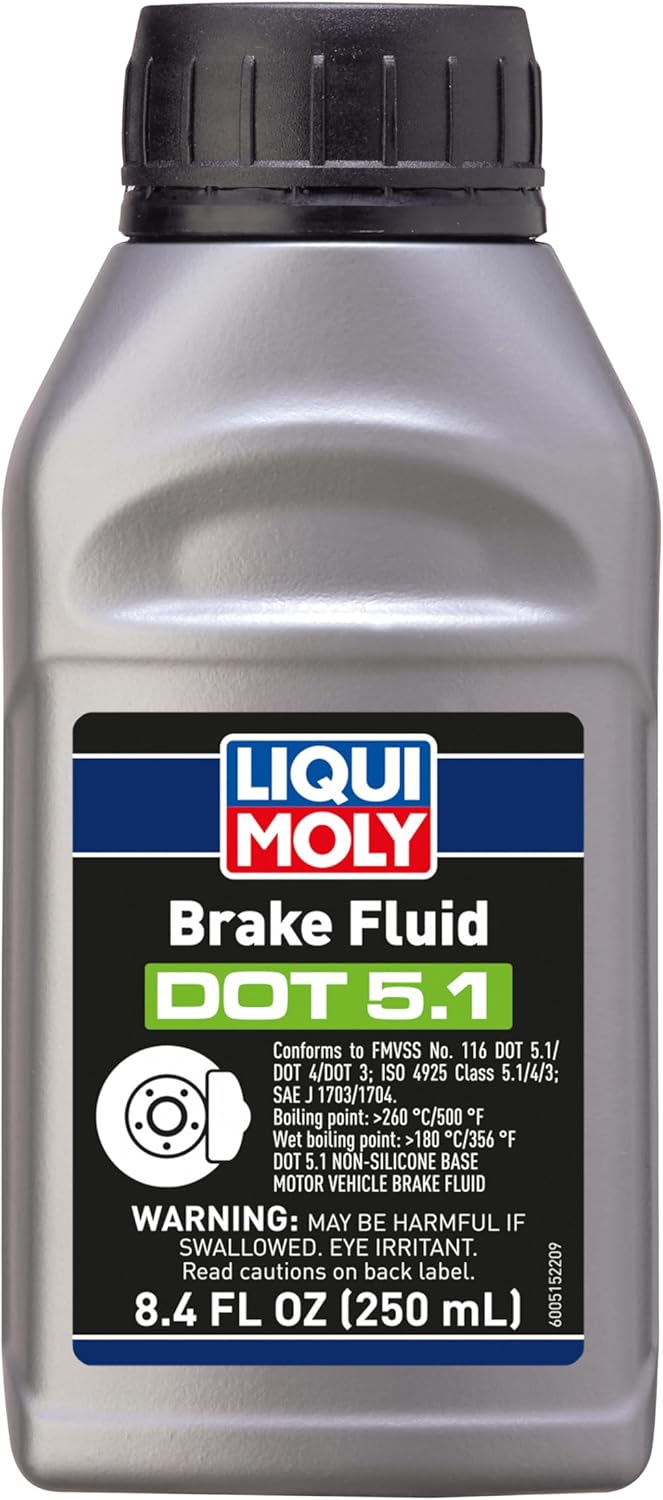
Liqui Moly Brake Fluid DOT 5.1, 250 ml
Best DOT 5.1 Brake Fluid
| Liquid Volume | 250 Milliliters |
|---|---|
| Item Form | Liquid |
| Brand | Liqui Moly |
| Model | 20158 |
Liqui Moly DOT 5.1 is a synthetic brake fluid formulated for high-temperature stability and resistance to moisture-related vapor formation. It is typically used when topping off or flushing brake systems that require a DOT 5.1 specification, delivering higher wet and dry boiling points than DOT 3 or DOT 4 fluids and added corrosion and oxidation inhibitors for longer system life. The 250 ml bottle is convenient for small servicing tasks or topping off during a brake bleed and its composition is miscible with other high-quality synthetic brake fluids. Practical benefits include improved performance under sustained heavy braking and protection for internal brake components in older systems exposed to higher temperatures. Important limitations are that DOT 5.1 is glycol-based and not compatible with silicone-based DOT 5 fluids, and the small 250 ml volume may not be enough for a full system flush on vehicles that require several bottles.
Best for: Drivers of 1997–2001 Toyota Camry looking to upgrade to a high-performance, glycol-based DOT 5.1 brake fluid for stronger, more fade-resistant braking and reliable compatibility with ABS systems, especially those who routinely tow, drive in hilly terrain, or push brakes hard in spirited driving.
Less Ideal for: Someone needing fluid for a full-system flush on a sedan that requires multiple liters or owners who must use silicone-based DOT 5 fluid should look elsewhere.
- Higher wet and dry boiling points than DOT 3 and DOT 4 for better fade resistance under heavy braking
- Synthetic formulation provides corrosion and oxidation protection for hydraulic components
- Compatible and miscible with other high-quality glycol-based brake fluids
- Small 250 ml bottle is convenient for topping off or single-wheel services
- 250 ml volume may be insufficient for a complete brake system flush on many cars
- Not compatible with silicone-based DOT 5 fluids
Verdict: The best DOT 5.1 fluid offering very high boiling points and low compressibility for stronger braking performance while staying glycol-based and compatible with most ABS systems.
Valvoline DOT 3 & DOT 4 Synthetic Brake Fluid, 32 oz
Best High-Boiling-Point Brake Fluid

| Unit Count | 32.0 Fluid Ounces |
|---|---|
| Liquid Volume | 0.92 Liters |
| Recommended Uses For Product | Automotive |
| Specific Uses For Product | Vehicle Brake Systems |
Valvoline DOT 3 & DOT 4 Synthetic Brake Fluid is a versatile glycol-based fluid designed to replace or top up factory brake fluid during service. It blends with conventional fluids and meets both DOT 3 and DOT 4 specifications, which gives it higher boiling point margins than basic DOT 3 formulations and better resistance to vapor lock during repeated or heavy braking. Typical use is a full brake flush or targeted top-up while bleeding the system; reviewers note clean flow with minimal foaming, which helps purge air and yields a firm, predictable pedal feel afterward. The product is packaged in a convenient 32-ounce bottle suitable for one or two vehicle services and is chemically compatible with ABS components. Limitations include the normal hygroscopic nature of glycol fluids so it will absorb moisture over time and requires proper disposal and safe handling during service. This is a practical, shop-friendly choice for routine maintenance on older braking systems where DOT 3/DOT 4 compatibility is required.
Best for: Drivers of 1997–2001 Toyota Camry seeking a brake fluid that tolerates heavy or repeated braking and reduces fade, such as commuters who tow occasionally or owners who want a confident, high-boiling replacement to upgrade the vehicle's stock fluid.
Less Ideal for: People seeking a long-term non-hygroscopic or racing-spec fluid should consider silicone-based or specialized racing brake fluids instead.
- Meets both DOT 3 and DOT 4 specifications for broader vehicle compatibility
- High boiling point formulation reduces risk of vapor lock and brake fade under heavy use
- Mixes with conventional glycol-based fluids for straightforward flushes and top-ups
- Flows cleanly with minimal foaming which aids efficient bleeding and consistent pedal feel
- Glycol-based and hygroscopic so it absorbs moisture over time and needs periodic replacement
Verdict: The best brake fluid selected primarily for its exceptionally high dry and wet boiling points to resist fade under heavy or frequent braking.
Brembo Premium Brake Fluid DOT 4 (L04010)
Best Long-Life Brake Fluid

| Brand | Brembo |
|---|---|
| Item model number | L04010 |
| Viscosity | Very Low |
This Brembo DOT 4 brake fluid is built for routine brake system service and performance-focused maintenance on vehicles like the 1997–2001 Toyota Camry. It is used as a direct replacement when your system calls for DOT 4 or when upgrading from DOT 3 for improved boiling resistance. Notable features include higher wet and dry boiling points than standard fluids, low-temperature viscosity for consistent pedal feel, and anti-corrosion properties that slow oxidation and help preserve system components between changes. In practical terms that means reduced risk of vapor lock under heavy or repeated braking and more stable brake response over longer intervals. The product is straightforward to use during a full fluid flush and refill, but it does require a proper system flush when switching fluid classes to avoid compatibility issues. Also avoid spill contact with painted surfaces since brake fluid can damage paint.
Best for: Owners of 1997–2001 Toyota Camry looking to extend service intervals with a stable, high-boiling brake fluid that resists moisture and preserves braking performance over time, prioritizing lower maintenance and reliable pedal feel between fluid changes.
Less Ideal for: Drivers unwilling to perform or pay for a full brake flush when changing fluid class, or those who need a DOT 5 silicone fluid for specific system requirements.
- Higher wet and dry boiling points reduce risk of vapor lock during repeated braking
- Low-temperature viscosity preserves consistent pedal feel in cold starts
- Anti-corrosion and oxidation resistance helps maintain fluid integrity over time
- Compatible with DOT 3 and DOT 4 systems when lines are properly flushed
- Can damage vehicle paint on contact, so spills must be cleaned immediately
Verdict: The best long-service-interval brake fluid formulated to resist moisture absorption and maintain performance longer between changes for lower-maintenance owners.
Prestone Synthetic Hi-Temp DOT 3 Brake Fluid, 32 oz
Best Bulk-Size Brake Fluid

| Liquid Volume | 32 Fluid Ounces |
|---|---|
| Upper Temperature Rating | 238 Degrees Celsius |
| Flash Point | 93 Degrees Celsius |
| Model | AS401 |
Prestone Synthetic Hi-Temp DOT 3 is a ready-to-use brake fluid intended for flushes, top-offs, and routine brake maintenance on vehicles that call for DOT 3. It combines polyglycol ethers and corrosion inhibitors to raise dry and wet boiling points well above minimum standards, which helps prevent vapor lock and a spongy pedal under heavy braking. The fluid is compatible with ABS, disc, and drum systems and pours cleanly from a practical 32 ounce bottle that is easy to handle for DIY servicing. The main benefit is dependable, factory-quality braking feel after bleeding with minimal foaming or contamination. Limitations include DOT 3 performance ceilings compared with DOT 4 fluids, so it is not the best choice where higher boiling points are required by heavy-duty or track use, and users should follow vehicle manufacturer recommendations when switching fluid types.
Best for: DIY mechanics and budget-conscious owners looking to service multiple brake lines or keep a long-term spare on hand for a 1997–2001 Toyota Camry, who prioritize buying a larger bottle to complete full-system bleeds and occasional flushes without repeated trips to the store.
Less Ideal for: Drivers who demand higher boiling point fluid for track days, heavy towing, or extreme braking conditions should choose a DOT 4 or higher-spec product instead.
- Full synthetic formula with high dry and wet boiling points for reduced vapor formation under heat
- Includes corrosion inhibitors to protect brake system metals
- Suitable for ABS, disc, and drum brake systems for broad compatibility
- Practical 32 oz bottle size for flushes or multiple top-offs
- DOT 3 chemistry has lower boiling point limits than DOT 4, so it is less suited to heavy track or towing use
Verdict: The best value-sized brake fluid sold in larger bottles for DIYers who need enough fluid to refill multiple bleeds, flush systems, or keep spare supply on hand.
Choosing the Right 1997-2001 Toyota Camry Brake Fluid: Key Factors to Consider
Boiling Point (Dry and Wet)
Boiling point is the single most important thermal-performance measure for brake fluid. The dry boiling point represents a fresh, unused fluid and indicates how well the fluid resists vapor formation under heavy braking. The wet boiling point, measured after the fluid absorbs a standard amount of moisture, shows real-world performance because brake fluid is hygroscopic and will take on water during service life.
For the 1997-2001 Camry, prioritize fluids with higher wet boiling points to maintain consistent pedal feel during everyday driving and occasional hard stops. A high dry boiling point is useful if you plan on towing, spirited driving, or heavy stop-and-go use, but do not ignore the wet number since it reflects condition after months in service.
DOT Specification and Compatibility
DOT ratings define the baseline chemical composition and performance standards. Most 1997-2001 Camrys specify a DOT 3 or DOT 4 glycol-based fluid in the owner's manual or service literature. DOT 4 generally offers higher boiling points, while DOT 3 meets older OEM recommendations.
Choosing the correct DOT class ensures compatibility with rubber seals, hoses, and master cylinder materials used in this vehicle. Always confirm the Camry's recommended DOT level before switching, because mixing incompatible chemistries or unnecessary upgrades can stress seals and potentially shorten component life.
Hygroscopic Properties and Service Interval
Brake fluids absorb moisture from the atmosphere over time. How quickly a fluid picks up water affects how often you should flush and replace it. Faster absorption lowers wet boiling point and increases corrosion potential, so a fluid with better resistance to moisture uptake extends service life and preserves braking performance.
For a 1997-2001 Camry, consider the expected service interval—many owners perform a brake fluid flush every two years. If you prefer longer intervals between services, select a fluid with slower hygroscopic gains and good corrosion inhibitors to protect internal components.
Seal and Component Compatibility
Glycol-based fluids interact with the rubber and polymer compounds in the braking system. Some formulations include additives that can swell or harden older seals if they are not compatible. For an older Camry, check that the fluid's chemistry is suitable for existing hoses, master cylinder, and ABS unit materials.
If the braking system shows signs of aging, prioritize fluids known for gentle compatibility with older seals and for including corrosion inhibitors. That reduces the risk of leaks or degraded pedal feel after a fluid change.
Corrosion Inhibition and Additives
Brake fluid needs to protect steel and aluminum components from corrosion while maintaining hydraulic performance. Effective additive packages include corrosion inhibitors that coat metal surfaces and counteract the effects of moisture and oxidation.
For the 1997-2001 Camry, look for fluids that emphasize corrosion control in their specifications. Good inhibitors extend component life, reduce the chance of internal rust flaking that can clog valves, and help maintain consistent braking response over time.
Service Practicality and Bleeding
Even the best fluid is only as good as the service performed when it is installed. Some fluids make bleeding and flushing easier by being less prone to foaming and having predictable viscosity changes with temperature. Consider whether you plan to do the flush yourself or have a shop perform it, and choose a fluid that aligns with that plan.
For DIYers working on a 1997-2001 Camry, favor fluids with clear bleeding instructions and stable viscosity to help achieve a firm pedal. Also account for the vehicle's ABS system when bleeding to ensure trapped air is removed.
DOT 3 Versus DOT 4: What Works Best For The 1997-2001 Camry
Understand the practical differences between DOT 3 and DOT 4 when deciding on brake fluid for the Camry. DOT 4 typically provides higher boiling points due to different additive packages, which benefits thermal resistance during heavy braking. DOT 3 meets many original-equipment recommendations and is suitable for everyday commuting and light-duty driving.
If the Camry is used mostly for normal street driving and routine commuting, a DOT 3-rated fluid that meets the vehicle's original specification will normally be adequate. If you expect heavier braking demands, frequent highway driving, or want extra margin against vapor lock, selecting a DOT 4 fluid is worth considering provided the seals are compatible.
- DOT 3: adequate for normal driving and standard service intervals
- DOT 4: higher boiling points for heavier braking demands
- Do not mix glycol-based fluids with non-glycol types
When To Flush Brake Fluid On A 1997-2001 Camry
Regular flushing prevents moisture buildup and maintains safe wet boiling point. A common recommendation for vehicles of this age is a flush every 2 years, but actual intervals depend on mileage, driving conditions, and how the Camry is stored. Cars that often sit in humid environments or that see lots of stop-and-go traffic may benefit from more frequent service.
Look for signs that the fluid needs attention: a spongy pedal, a change in pedal travel, or darkened fluid in the master cylinder reservoir. Those symptoms warrant a brake fluid inspection and likely a full flush to restore thermal margin and reduce corrosion risk.
- Inspect fluid color and pedal feel during routine servicing
- Consider a 2-year baseline interval, adjust for driving and storage conditions
- Flush immediately if moisture readings or symptoms indicate degradation
DIY Brake Fluid Change: Practical Steps For Camry Owners
If you plan to change the brake fluid yourself, prepare the Camry with safe jacking and wheel removal procedures, and use a proper brake-bleeding method. Have a clean container to collect old fluid and avoid spills onto painted surfaces. Follow the recommended DOT class when refilling the master cylinder.
Bleed the brakes in the correct order for this vehicle to minimize trapped air, and check the ABS by cycling the system if necessary. After bleeding, top off to the correct level and test pedal firmness at low speed before returning the car to regular use.
- Use clean tools and avoid contaminating fresh fluid
- Bleed in the recommended sequence to remove air
- Dispose of old fluid properly to avoid environmental harm
Signs Of Brake Fluid Problems Specific To Older Camrys
Older Camrys can develop issues like slower pedal return, slight dragging at calipers, or master cylinder seal wear that reveal themselves after a fluid change or as the system ages. Darkened fluid color often indicates oxidation and contaminants, while a soft pedal under repeated stops signals reduced boiling-point margin or air in the lines.
Pay attention to minor leaks at flex hoses, wheel cylinders, or bleeder screws since these can allow moisture ingress and accelerate degradation. Addressing leaks and scheduling a flush are practical maintenance steps that preserve braking safety and extend component life.
- Dark fluid color suggests contamination and oxidation
- Soft pedal can indicate moisture-lowered boiling point or air in lines
- Inspect hoses and fittings for age-related leaks
Choosing A Brake Fluid For Occasional Performance Driving
If the Camry sees occasional spirited driving or longer downhill stretches, consider a fluid with a higher wet boiling point to reduce the risk of vapor formation. This does not require race-grade fluids but does mean prioritizing thermal performance and moisture resistance.
Balance performance with seal compatibility and service frequency. A higher boiling fluid can offer peace of mind during rare heavy use while still being serviceable in a typical maintenance schedule.
- Prioritize wet boiling point for real-world safety
- Ensure seal compatibility before switching to higher-spec fluids
- Plan for periodic monitoring and more frequent flushes if needed
Still looking for the perfect fit?
Select your Toyota Camry configuration to see the most relevant Brake Fluids recommendations
How We Chose the Best 1997-2001 Toyota Camry Brake Fluid
We focused on criteria that directly affect braking performance and system longevity for the 1997-2001 Toyota Camry. Primary evaluation factors included dry and wet boiling points to assess performance under heat and with absorbed moisture, and compatibility with the Camry's seals and metal components to avoid swelling or corrosion. We also considered hygroscopic behavior, since fluids that absorb moisture rapidly lower wet boiling point and hasten system wear. Long-term oxidation stability and additive packages were reviewed to judge corrosion inhibition and service life. Practical service factors such as recommended service interval, ease of bleeding during a brake fluid change, and compatibility with conventional DOT specifications were also weighted.Excluded from consideration were fluids that fall outside the Camry's acceptable DOT classes or that require system modifications. We did not include specialty racing-only formulations that mandate hardware changes. The final shortlist reflects balance across thermal performance, moisture resistance, seal compatibility, and real-world serviceability for this vehicle.
Our full evaluation process is outlined in our review methodology.
FAQ
Can I switch from DOT 3 to DOT 4 in my 1997-2001 Camry?
Switching to DOT 4 is usually possible because both are glycol-based, but confirm seal compatibility first. DOT 4 offers higher boiling points, which can improve thermal margin. Always fully flush the old fluid and follow recommended service procedures when changing DOT classes.
How often should I perform a brake fluid flush on a 1997-2001 Camry?
A common baseline is every two years, but frequency depends on driving conditions and climate. Inspect fluid color and pedal feel periodically; if fluid darkens or the pedal feels spongy, perform a flush sooner.
What are signs the brake fluid is failing in this Camry?
Look for a soft or spongy pedal, increased pedal travel, darkened fluid in the reservoir, and occasional minor leaks. These signs indicate moisture contamination, oxidation, or component wear and should prompt a fluid inspection and likely replacement.
Is synthetic brake fluid necessary for a 1997-2001 Camry?
Most fluids suitable for this Camry are glycol-based and meet DOT specifications. Some synthetic formulations offer improved boiling points and stability, but they must be compatible with the vehicle's seals. Evaluate whether the performance benefits match your driving demands.
Can I do a brake fluid change at home on a Camry of this age?
Yes, a competent DIYer can change the fluid with proper tools, safe vehicle support, and attention to bleeding order. Make sure to avoid contamination, use the correct DOT class, and verify pedal firmness after bleeding. If you encounter ABS-related issues, professional assistance may be needed.
Will higher boiling point fluid reduce corrosion inside the braking system?
Higher boiling point primarily improves thermal resistance, not direct corrosion protection. Corrosion inhibition comes from the additive package. Choose a fluid that specifies robust corrosion protection in addition to suitable boiling points for the Camry.
Final Verdict
Prioritize boiling-point performance, moisture resistance, and seal compatibility when choosing brake fluid for a 1997-2001 Toyota Camry. For everyday commuting, a DOT 3 fluid that meets the vehicle's original specification is usually sufficient, while drivers who expect heavier braking should consider DOT 4 options with higher wet boiling points. Remember that regular inspection and a scheduled flush are as important as the specific fluid you choose.Balance thermal margin against compatibility and service practicality to pick the right fluid. Follow proper bleeding and flushing procedures, and if in doubt about seal condition or ABS system behavior, consult a qualified technician to ensure safe, consistent braking.
Explore More:
- Check out all Toyota Camry parts & accessories
- Explore Fluids & Chemicals
- Browse all Accessories
