

Note: This article contains affiliate links. If you click on these links and make a purchase, I may earn a small commission at no extra cost to you. This helps support my research and content. Read my full affiliate disclosure here.
If you use a GMC Sierra 1500 to haul bikes, the right bike rack makes transport safer and less stressful. You need a solution that fits the truck bed or hitch, holds your bike securely, and is simple to mount and remove when not in use. This guide presents the top picks for the GMC Sierra 1500, shortlisted for their stability, compatibility with truck platforms, and practical features that matter for owners.Below we cover the most relevant mounting styles, installation considerations, and performance factors so you can pick a rack that matches how you use your Sierra 1500 and the bikes you ride.
Looking for other parts? See all GMC Sierra 1500 parts & accessories.
Top Picks at a Glance
| Best Overall Bike Rack The best all-around bike rack balancing fit, security, and convenience | Allen Sports Deluxe 4-Bike Hitch Mount Rack (2-Inch Receiver) |  |
| Best Budget Bike Rack A low-cost rack that provides reliable basic bike transport | MaxxHaul 70210 4-Bike Hitch-Mount Rack (150 lb capacity) |  |
| Best Premium Bike Rack Higher-end rack with top build quality and advanced features | RockyMounts Monorail 2-Bike Platform Rack |  |
| Best Hitch Bike Rack A rack that mounts to a trailer hitch for easy loading | YAKIMA DoubleDown 4 Tilting Hitch-Mounted Bike Rack |  |
| Best Trunk Bike Rack An affordable, non-permanent rack that straps to the vehicle rear | Himal Outdoors Tailgate Pad for Mountain Bikes (fits up to 5 bikes) |  |
1. Allen Sports Deluxe 4-Bike Hitch Mount Rack (2-Inch Receiver)
Best Overall Bike Rack
| Mounting Type | Hitch |
|---|---|
| Load Capacity | 48.5 Pounds |
| Receiver Size | 2-Inch |
| Special Features | Foldable; Tilting; No-wobble bolt |
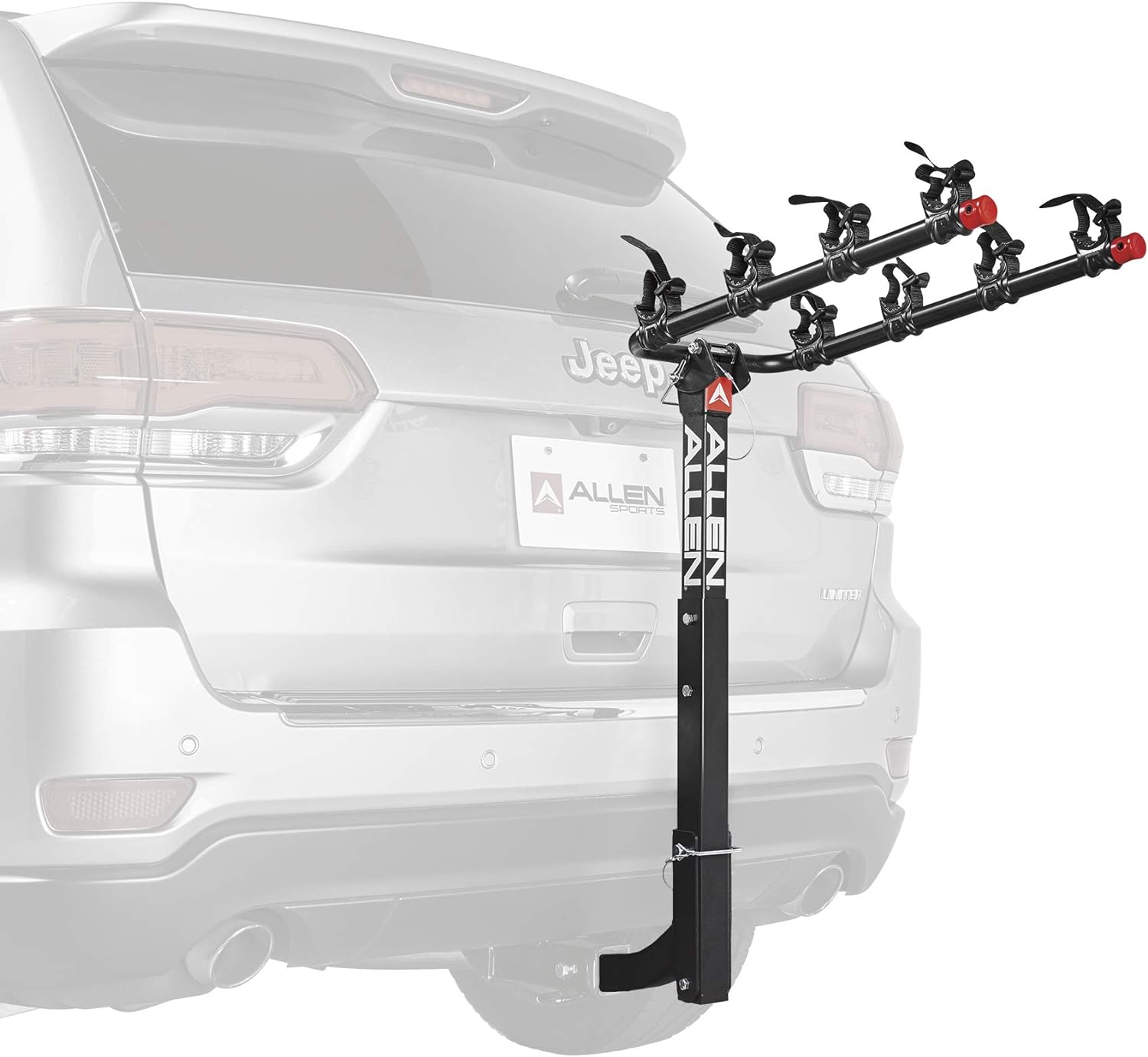
The Allen Sports Deluxe 4-Bike hitch rack is a straightforward, heavy-duty carrier that fits a 2-inch receiver and is built to hold family-sized bike loads. It uses individual cradles with patented tie-downs to secure frames and rotating mounts to help fit differently shaped bikes, and the carry arms fold up when not in use. The rack tilts down for tailgate access and includes a no-wobble bolt to reduce hitch movement while driving. In practice this means easy loading for two people and reasonably simple single-person use when lighter loads are involved, and the foldable design makes storage convenient. Limitations are its weight and the manual pin system for tilting, which can be stiff with four bikes and may require two people to operate; fitting four full-size bikes is possible but can be tight. Overall it is a durable, utilitarian choice that prioritizes secure mounting and bike protection over lightweight portability.
Best for: Buyers who need a reliable, no-nonsense hitch rack that keeps bikes secure on long drives and who prioritize stable mounting and bike protection over ultralight portability.
Less Ideal for: If you regularly need a rack one person can lift and tilt easily or you transport four large adult bikes every trip, a lighter platform rack or a model with assisted tilt mechanisms may be a better fit.
- Fits standard 2-inch hitch receivers for wide truck compatibility
- Individual tie-down cradles and rotating mounts secure different bike frame shapes
- Tilting function gives access to the tailgate without fully removing the rack
- Foldable carry arms and lanyarded retainer clips reduce lost parts and ease storage
- Relatively heavy which makes tilting and lifting with four bikes more difficult
- Tight fit with four full-size bikes may require rotating or inverting bikes to avoid contact
Verdict: The best all-around bike rack that balances ease of use, bike protection, stable mounting, and broad compatibility for most riders.
2. MaxxHaul 70210 4-Bike Hitch-Mount Rack (150 lb capacity)
Best Budget Bike Rack

| Load Capacity | 150 Pounds |
|---|---|
| Mounting Type | Hitch Mount |
| Hitch Receiver Size | 2" |
| Max Bikes | 4 |
| Finish | Powder-coated steel |
The MaxxHaul 70210 is a straightforward hitch-mounted bike rack built from powder-coated steel to carry up to four bikes and a combined 150 lb load. It installs into a 2" receiver and secures bikes in four cradles with hook-and-loop straps; the vertical assembly swings down so you can open the truck tailgate without unloading the bikes. Expect a simple multi-bolt assembly that is doable with common hand tools and quick to attach or remove from the receiver. Practical features include a hitch pin, reflector, and adjustable cradles that work well with horizontal top-tube frames; heavier or nonstandard frames may need extra straps or a crossbar. Reviewers note robust welds and low movement at highway speeds, though some report early surface rust in hidden spots and strap wear over time. For occasional hauling and weekend trips this rack delivers reliable performance at a budget price, but heavy frequent use or long-term salt exposure may require extra upkeep or replacement straps.
Best for: Drivers who want an inexpensive, no-frills hitch rack for occasional family rides and weekend trips and prioritize easy installation and solid carrying capacity over premium materials.
Less Ideal for: If you plan heavy daily hauling, frequent long-distance trips, or transport of multiple heavy e-bikes, consider a heavier-duty platform-style rack or a model with dedicated locks and more corrosion protection.
- Fits standard 2" hitch receivers and carries up to four bikes for group or family trips
- Swing-down hinge lets you access the Sierra's bed or tailgate without removing bikes
- Steel construction and powder coat give solid rigidity and basic corrosion resistance
- Adjustable cradles and hook-and-loop straps hold bikes securely during highway driving
- Straps and some painted areas can show wear or surface rust with extended outdoor exposure
- Designed for horizontal top-tube frames so other frame types may need a crossbar or extra straps
Verdict: The best low-cost bike rack that gives dependable bike-carrying capability with straightforward installation and acceptable durability for occasional use.
3. RockyMounts Monorail 2-Bike Platform Rack
Best Premium Bike Rack

| Load Capacity | 60 Pounds |
|---|---|
| Is Foldable | Yes |
| Mounting Type | Tire Mount,Bolt Mount,Hitch Mount |
| Automotive Fit Type | Universal Fit |
The RockyMounts Monorail is a two-bike hitch platform built for secure, low-contact transport by holding bikes at the front wheel. It mounts to a 2" hitch and folds upright when not in use, while a built-in tilt mechanism lets you lower the rack for hatch or tailgate access. Assembly is straightforward and the platform-style arms make loading and unloading quicker than over-the-frame racks; the front-wheel clamps and optional wheel straps keep bikes steady during long drives. Users report the rack holds heavy bikes, including fat-tire and e-bike styles, without wobble when the hitch pin is properly tightened. Practical downsides are fiddly endcap hardware during assembly and locks that look less robust than the rest of the frame, so add secondary straps or stronger locks if security is a priority. For a buyer focused on a refined, durable hitch-mounted platform that minimizes frame contact, the Monorail delivers solid real-world performance on trucks.
Best for: Truck owners who want a premium-feeling hitch platform that loads quickly, keeps bikes stable on long trips, and folds away neatly when not in use.
Less Ideal for: Buyers who need an integrated, high-security locking system out of the box or who prefer a rack that allows frame contact for certain bike types should consider other options.
- Platform design makes loading and unloading bikes faster and reduces frame contact
- Folds upright for storage and tilts to provide access to the vehicle tailgate or hatch
- Rated to carry up to 60 pounds total so it can handle heavier bikes including many e-bikes
- Sturdy construction with minimal wobble when the hitch pin is properly tightened
- Included locks appear less durable than the main hardware and may warrant aftermarket security upgrades
- Some assembly steps (endcap nuts/bolts) can be fiddly and may scratch paint if tools are needed
Verdict: The best premium bike rack for buyers willing to pay more for superior materials, refined fitment, extra security features, and long-term durability.
4. YAKIMA DoubleDown 4 Tilting Hitch-Mounted Bike Rack
Best Hitch Bike Rack
| Load Capacity | 120 Pounds |
|---|---|
| Mounting Type | Hitch |
| Fits Receiver | 1.25" and 2" |
| Bike Capacity | 4 Bikes |
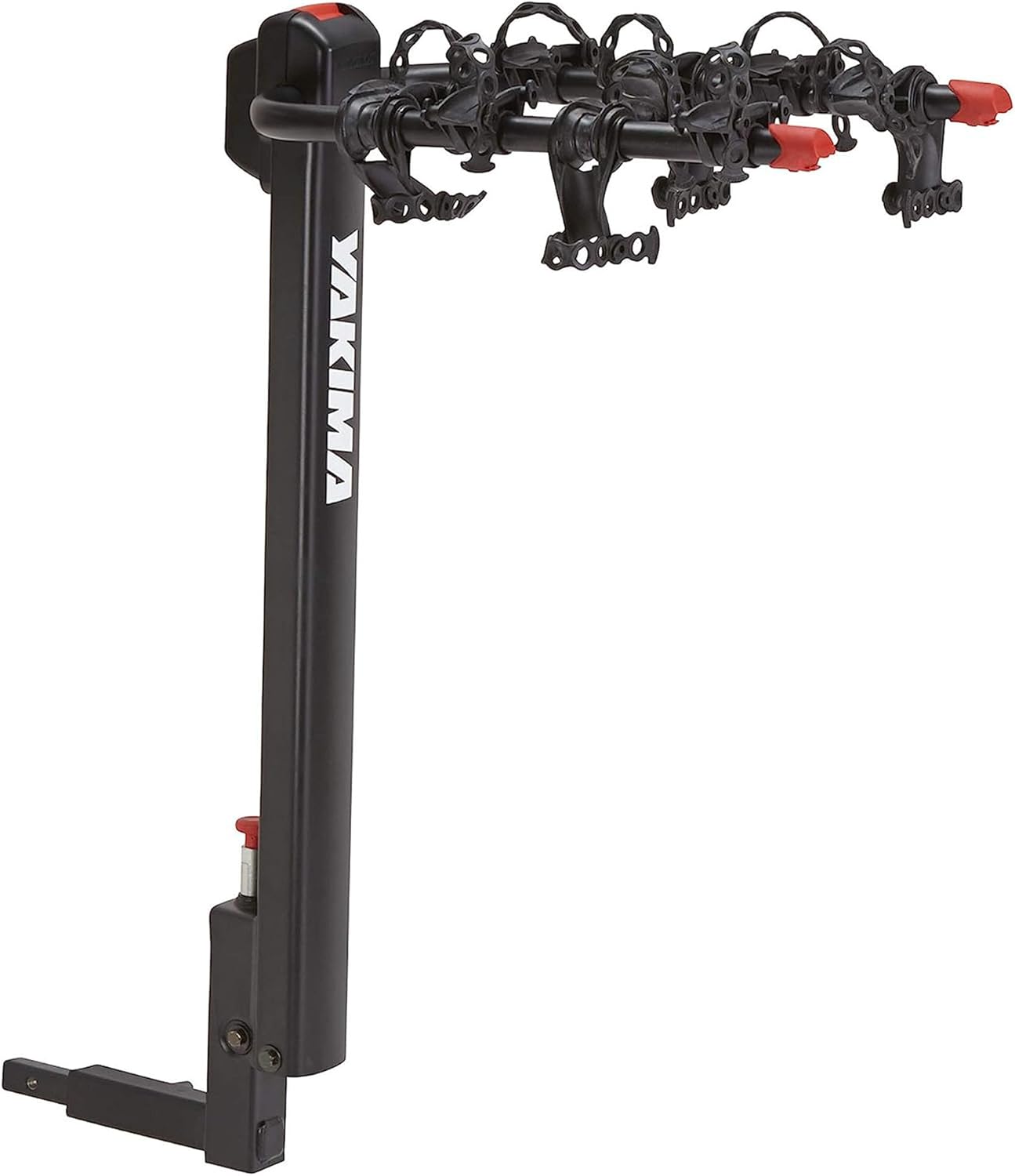
The Yakima DoubleDown 4 is a heavy-duty hitch bike rack designed to carry up to four conventional road, mountain, or hybrid bikes on a 1.25" or 2" receiver. It bolts into the hitch and locks down tightly to minimize wobble, then uses individual U-shaped cradles and straps to secure each frame while allowing the arms to slide so you can space bikes to avoid contact. The rack tilts to grant access to the truck bed without full removal, which is handy for loading and short stops. Construction is robust and feels stable at highway speeds, and optional locks add theft resistance. Limitations to expect are the effort required to load four adult bikes—tighter packing often means rotating handlebars or removing front wheels—and it is not rated for e-bikes. The unit is fairly heavy, so mounting and uninstalling the rack takes some muscle, and the rubber straps that secure bikes can be stiff to hook and unhook during frequent use.
Best for: Drivers who want a sturdy hitch-mounted solution for transporting multiple conventional bikes and value secure mounting and a tilt feature for bed access.
Less Ideal for: Riders who need to carry heavy e-bikes, want a lightweight single-person lift option, or who prioritize ultra-fast tray-style loading for frequent short trips.
- Carries up to four conventional bikes on a single hitch for group trips or family use.
- Fits both 1.25" and 2" hitch receivers common on trucks and adapters.
- Tilting mechanism lets you access the truck bed without removing the entire rack.
- Solid bolt-in hitch connection reduces wobble and improves road stability.
- Adjustable cradles and straps let you space and secure different frame shapes.
- Not rated for e-bikes so cannot carry heavier electric models.
- Heavy construction makes the rack awkward to lift on and off the hitch by one person.
- Loading and arranging four adult bikes can be time consuming and may require partial wheel removal.
Verdict: The best hitch bike rack for users who prioritize simple loading, strong bike support, and quick attachment to a vehicle hitch receiver.
5. Himal Outdoors Tailgate Pad for Mountain Bikes (fits up to 5 bikes)
Best Trunk Bike Rack

| Material Type | Polyvinyl Chloride (PVC) |
|---|---|
| Water Resistance Level | Water Resistant |
| Closure Type | Hook & Loop |
| Fits width | 52" wide (fits most compact and mid-sized trucks) |
This tailgate pad is designed to drape over a pickup tailgate and hold multiple mountain bikes for short shuttles to the trail without tools. It fastens with wide cinch straps that wrap around the tailgate and Velcro straps that secure each bike frame, while a soft flannelette underside protects factory paint and a 3/4-inch foam core reduces contact between bikes. The pad includes two zippered tool pockets and a rear camera access flap so you can open the tailgate and, in many trucks, retain backup camera visibility. Installation is simple: place the pad, route the straps under the tailgate and tighten the cinch straps. Practical limits show up in the details — some reviewers found the camera flap misaligned on certain trucks and bikes with very wide downtubes can be hard to secure with the supplied straps. A few reports also cite durability issues where cable ends or aggressive rubbing caused small tears. For short drives and frequent tool-free install/removal, it is a convenient, compact solution that stores flat when not in use.
Best for: Buyers who want a non-hitch, tool-free way to shuttle multiple mountain bikes on short trips and prefer something that installs and stores quickly between uses.
Less Ideal for: If you need a permanent, long-distance rack or carry bikes with very wide frames regularly, a more rigid hitch or platform rack is a better choice.
- Holds multiple bikes—rated to carry up to five mountain bikes for short shuttles.
- Tool-free installation using cinch straps and Velcro makes it fast to fit and remove.
- Soft inner layer and foam padding protect truck paint and reduce bike-to-bike contact.
- Rear camera access flap and zippered tool pockets add practical convenience.
- Secondary reinforcement on cinch straps improves long-term stability compared with single-stitched straps.
- Vinyl outer material can be punctured by sharp cable ends or heavy rubbing over time.
- Camera flap alignment may not match every truck model, reducing backup camera visibility in some fits.
- Straps may be too short for bikes with very large downtubes without modification.
Verdict: The best trunk bike rack for shoppers needing a tool-free, non-hitch option that installs quickly and stores compactly between uses.
Choosing the Right GMC Sierra 1500 Bike Rack: Key Factors to Consider
Mounting Style and Truck Fit
Mounting style determines where the rack installs on your Sierra 1500 and affects access to the bed and tailgate. Hitch-mounted racks are common for trucks because they leave the bed free, but you need to confirm receiver class and clearance behind the hitch. Roof or bed clamps may interfere with bed covers or tie-down points, and trunk-style carriers are not typically ideal for pickup tailgates.
Think about how often you need full bed access, whether you use a tonneau cover, and if you prefer mounting on the hitch versus inside the bed. A good fit minimizes interference with cargo and allows the truck tailgate to open when required. For many Sierra 1500 owners, a hitch-mounted or bed-mounted quick-release solution offers the best balance of convenience and usability.
Weight Capacity and Bike Types
Weight capacity affects how many bikes you can carry and which types are safe to transport. Consider the combined weight of your bikes, including any e-bikes or heavier full-suspension models. Check the rack's per-bike rating and the total capacity to ensure it does not exceed the hitch or truck load limits.
Remember tongue weight and the receiver class limit on the Sierra 1500. Overloading can compromise handling and damage mounting hardware. Choose a rack with some margin above your heaviest expected load so you do not stress the rack during routine use.
Ease of Installation and Adjustment
Installation time and required tools influence how practical a rack is for daily use. Look for racks that offer bolt-on simplicity, hand-tightened clamps, or quick-release pins that let you mount and remove the rack without specialized tools. Adjustable arms, wheel trays, and height settings make fitting different frame sizes faster and reduce the need for frame contact.
Good adjustment also speeds loading and improves bike stability, which matters on rough roads. If you swap between different bike geometries, prioritize racks with wide adjustment ranges and straightforward tightening mechanisms to save time and reduce the risk of improper installation.
Security Features and Locking Options
Security features reduce the risk of theft when your vehicle is unattended. Integrated locks for the bikes and the rack-to-vehicle connection are valuable for park-and-ride use or overnight storage. Evaluate whether the rack includes keyed locks or has built-in lock cores and whether aftermarket locks can be used to augment security.
A secure mounting design also prevents accidental release while driving. Choose racks with reinforced attachment points and durable locking hardware to protect both the rack and your bicycles in typical parking and travel situations.
Durability and Weather Resistance
Racks on a pickup are exposed to road grime, salt, and varying weather. Corrosion-resistant finishes, stainless fasteners, and robust welds extend service life. Consider how the rack will perform when left mounted for extended trips or through off-season storage in wet climates.
Materials and coatings also affect maintenance needs. Powder-coated steel or aluminum components resist rust and abrasion better than bare steel. Inspect how exposed pivot points and straps are protected, since these are common failure points when racks see frequent use.
Storage and Portability
How compact a rack becomes determines where you store it when not in use and how easy it is to handle. Folding features, removable arms, and quick-disconnect mounts reduce the space required and make it simpler to stow the rack in the bed or a garage shelf. Portability also matters if you frequently swap the rack between vehicles or need to carry it by hand.
Choose a rack design that matches your storage constraints and the level of portability you need. Lighter, foldable racks are easier to handle but sometimes sacrifice load capacity. Balance compactness with the durability and capacity you require for Sierra 1500 use.
Hitch Receiver Considerations
The majority of truck owners will use the Sierra 1500 receiver for mounting a bike rack. Confirm the receiver class on your truck and the available clearance behind the bumper before selecting a hitch-mounted option. Some racks require a class-specific receiver and clearance to accommodate hanging carriers or those with tilting mechanisms.
If you plan to use a bed-mounted adapter or a through-bed mount, factor in any bed liners, covers, or tie-down systems that could interfere. Proper measurement of tongue length and the distance to the tailgate will prevent unexpected rubbing or restricted tailgate operation.
- Measure receiver height and distance from bumper
- Check for interference with spare tire access or trailer wiring
- Consider a tilt or fold feature for tailgate access
Transporting E-bikes and Heavy Frames
E-bikes and full-suspension models add significant weight and bulk. If you ride heavier bikes, focus on racks rated for higher per-bike loads and with reinforced contact points. Some carriers provide wheel-mount systems that avoid frame clamping, which is useful for carbon frames or non-traditional geometries.
Be mindful of how weight distribution affects the truck's handling and hitch tongue weight. Staggering bikes and using secure straps will reduce sway and vibration during transit.
- Confirm per-bike ratings and total capacity
- Look for wheel-based support for delicate frames
- Use additional straps to secure heavier bikes
Access and Loading Ergonomics
Loading bikes onto a Sierra 1500 should be practical for the rider height and typical trailhead setups. Rack designs with lower lift heights, tilting functions, or assisted loading cut down on shoulder strain and speed up the process. For roof-mounted options, consider whether ladder or step assistance will be needed.
Also consider how the rack affects access to the truck bed if you need to carry both bikes and other gear. Some solutions fold flat against the vehicle when not in use, saving space and reducing aerodynamic drag on longer trips.
- Prioritize low lift and tilt mechanisms for frequent loading
- Check folded dimensions for bed storage
- Evaluate whether loading requires extra tools or helpers
Maintenance and Routine Checks
Regular inspections lengthen rack life and reduce the chance of failures on the road. Check fasteners for proper torque, inspect straps and rubber cradles for wear, and lubricate moving pivots to prevent seizing. Replace worn components before they fail under load.
Pay attention to signs of corrosion, especially on hardware exposed to road salt. Keeping a small repair kit in the truck with spare pins, straps, and basic tools helps you address minor issues during trips.
- Inspect straps and cradles before each trip
- Tighten hitch connections and check locking pins
- Lubricate pivots and replace corroded fasteners
Legal and Safety Considerations
Ensure the rack does not obscure brake lights, turn signals, or the license plate. Some jurisdictions require additional lighting or license plate relocation when rear cargo extends beyond certain dimensions. Check local regulations to remain compliant while carrying multiple bikes.
Secure reflectors or auxiliary lights if the bikes block visibility. Also confirm that bikes do not extend laterally beyond vehicle width limits and that load signs or flags are used when required for longer protrusions.
- Verify visibility of lights and plate with bikes mounted
- Use additional lighting when required
- Follow local overhang and width regulations
Accessories That Improve Usability
Small accessories can make a big difference in everyday use. Anti-wobble hitch devices reduce movement between the receiver and rack. Frame adapters help fit nonstandard frames, while wheel straps and soft cradles protect paint and carbon tubing.
Consider locks and keyed hitch pins to deter theft, and look for integrated cable routing or locking systems that secure both the rack and the bikes. Simple add-ons like pad protectors and extra-length straps increase compatibility with different bike sizes and reduce setup frustration.
- Anti-wobble kits for hitch-mounted racks
- Frame adapters for non-traditional bike frames
- Locking hitch pins and cable locks for security
How We Chose the Best GMC Sierra 1500 Bike Rack
We started by focusing on features that matter specifically for GMC Sierra 1500 owners and truck use. Priority criteria included hitch compatibility and tongue weight handling, ease of installation and daily use on a truck platform, secure bike retention and anti-theft features, and adjustment range for different bike frames and wheel sizes. We also evaluated load capacity and stability under common road conditions, durability of materials and finishes to resist weather exposure, and how compact each rack becomes for storage in a truck bed or garage.Products that required extensive vehicle modification or did not offer clear hitch or bed compatibility were excluded. We favored racks with clear installation instructions and commonly available mounting hardware. Editorial filters removed options that lacked sufficient adjustment for common bike types or that had poor user serviceability for straps and locks. The final list balances practical everyday handling, safe load capacity, and installation simplicity for Sierra 1500 owners.
Our full evaluation process is outlined in our review methodology.
FAQ
Will a hitch-mounted rack fit the Sierra 1500 without modifications?
Often a hitch-mounted rack fits directly if the receiver class and clearance match the rack specification. Verify the receiver size and measure distance to the bumper to confirm there is enough room for the carrier and any tilting action.
Can I carry an e-bike on a standard truck bike rack?
It depends on the rack's per-bike rating and total capacity. Many standard racks are not rated for heavier e-bikes, so choose a model specifically rated for higher weight or one with reinforced wheel-mounted support.
How do I prevent rack wobble on a pickup hitch?
Use an anti-wobble device and ensure the hitch pin and bolts are tightened to spec. Properly tightened hardware and a receiver adaptor or wedge can reduce play between the rack and the hitch.
Is it safe to leave a bike rack mounted on the truck year-round?
You can leave racks mounted, but exposure to weather increases corrosion risk. Regular inspections and cleaning are important, and removing the rack during long storage periods reduces wear and theft risk.
Will a roof-mounted rack work with the Sierra 1500?
Roof-mounted racks require crossbars or a compatible roof system, which most pickup cabs do not have standard. Consider whether you have a suitable roof setup and whether lifting bikes overhead is practical for regular use.
What is the best way to secure bikes to prevent frame damage?
Use padded cradles or wheel-mounted supports and avoid clamping directly on delicate frame sections. Soft straps and proper tightening prevent movement without overcompressing paint or carbon tubing.
Final Verdict
Choosing the right bike rack for a GMC Sierra 1500 means balancing capacity, mounting style, and day-to-day convenience. Prioritize racks that match your truck's receiver class and tongue weight limits, and opt for secure attachment points if you carry heavier or multiple bikes. Consider ease of loading and storage so the rack fits your routine as well as your bikes.Focus on safety and durability over convenience alone. When you select a rack with the right capacity, simple installation, and solid security features, you will have a reliable solution that keeps your bikes safe and your Sierra 1500 ready for both short trips and longer adventures.
Explore More:
- Check out all GMC Sierra 1500 parts & accessories
- Explore Exterior Accessories
- Browse all Accessories
