

Note: This article contains affiliate links. If you click on these links and make a purchase, I may earn a small commission at no extra cost to you. This helps support my research and content. Read my full affiliate disclosure here.
If you own a 2010-2014 Subaru Outback and want to transport bikes reliably, choosing the right bike rack matters for safety, convenience, and vehicle access. The right rack preserves ground clearance, avoids contact with the tailgate or paint, and matches the way you use your Outback whether you tow, commute, or go off-road.This guide shortlists six top options that fit the 2010-2014 Outback and explains how we evaluated them. We focus on mounting style, weight capacity, ease of installation, and how each rack affects cargo access and vehicle use. Read on to find the best bike rack type and features for your riding habits and Outback configuration.
Looking for other parts? See all Subaru Outback parts & accessories.
Top Picks at a Glance
| Best Overall Bike Rack A well-rounded pick that balances fit, durability and ease-of-use | Yakima DoubleDown 4 Tilting Hitch-Mount Bike Rack |  |
| Best Budget Bike Rack An affordable, no-frills rack that gets bikes on the road | MAXXHAUL 50025 Hitch-Mount 2-Bike Rack, 100 lb Capacity |  |
| Best Hitch-Mounted Bike Rack Heavy-duty receiver-mounted racks with higher capacity and simpler loading | RockyMounts MonoRail Solo 1-Bike Hitch Platform Rack |  |
| Best Roof-Mount Bike Rack Low-profile rooftop carriers and compatible crossbars for secure roof transport | Subaru Roof-Mount Bike Carrier (Model SOA567B020) |  |
| Best Ebike & Fat-Tire Rack Racks rated for higher loads and wide tires or electric bikes | WELLUCK 2-Bike Hitch Rack for 2" Receiver — 200 lb Capacity, Folding Platform for Ebikes and Fat Tires |  |
| Best Trunk-Mounted Bike Rack Compact, strap-on carriers that fit without a hitch receiver | Saris Solo 1-Bike Trunk Rack |  |
1. Yakima DoubleDown 4 Tilting Hitch-Mount Bike Rack
Best Overall Bike Rack
| Load Capacity | 120 Pounds |
|---|---|
| Mounting Type | Hitch |
| Automotive Fit Type | Universal Fit |
| Fits Hitch Sizes | 1.25" and 2" |
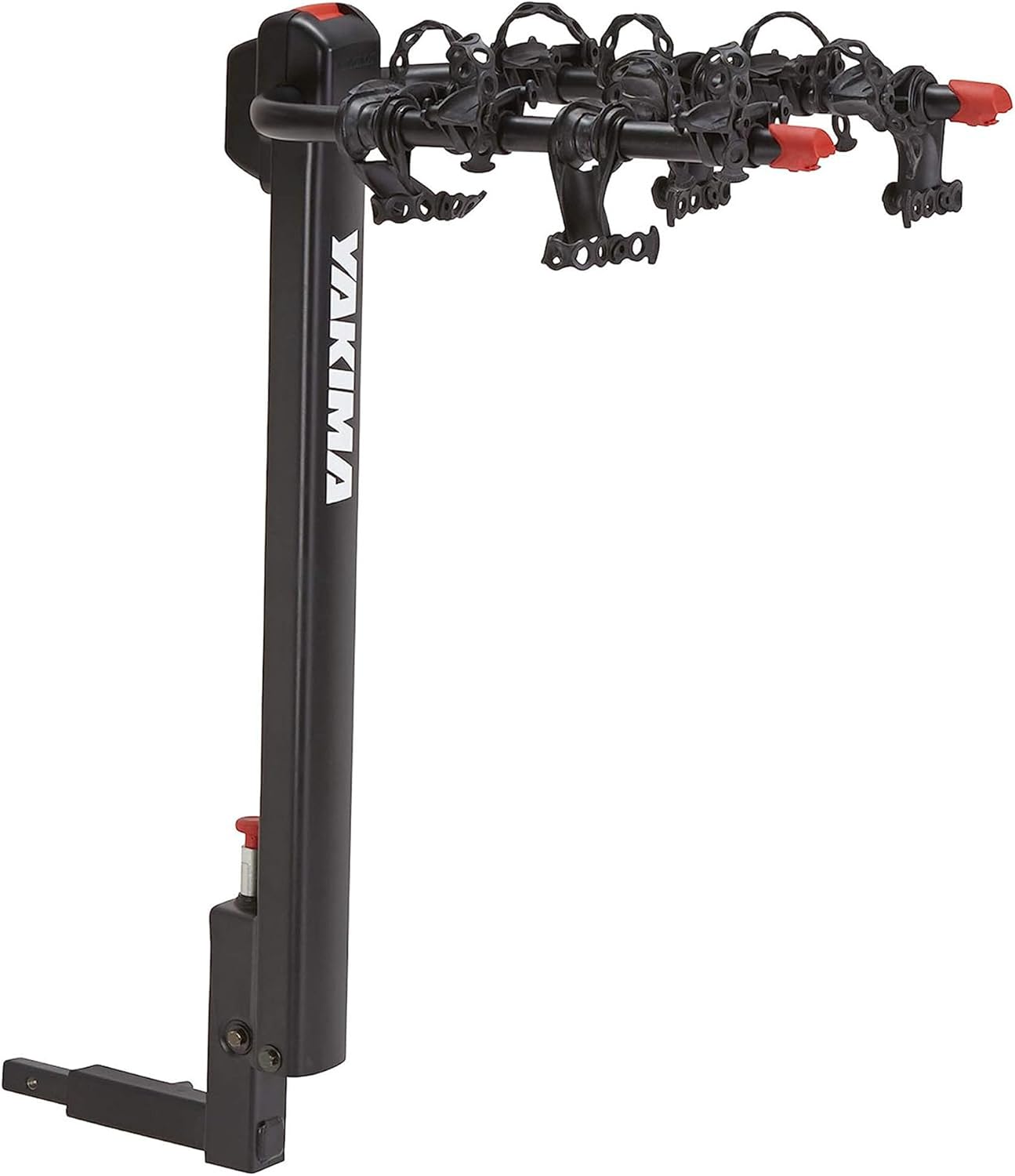
The Yakima DoubleDown 4 is a heavy-duty hitch-mounted bike carrier designed for everyday use on a vehicle with a compatible receiver. It secures four bikes using individual cradles and straps and includes a tilting pivot so you can lower the rack to reach the Outback's rear hatch without removing bikes. The carrier fits both 1.25 and 2 inch hitch receivers common on the 2010–2014 Subaru Outback and is built from robust materials for stable road performance. Practical features include compatibility with Yakima security accessories and optional tube adapters for step-through or unconventional frames. Installation is straightforward for a DIYer: insert, pin, and tighten the anti-wobble hardware then load bikes into the cradles. Limitations to expect are the rack's weight and bulk when not in use and the fact that it is not rated for e-bikes, so heavier electric bicycles are out of scope. Overall it is a dependable everyday carrier for families or riders who need a secure, tilt-away hitch rack for routine trips and weekend rides.
Best for: Buyers who want a dependable, easy-to-use hitch rack for routine rides and family trips and who prioritize build quality and simple DIY installation for a Subaru Outback.
Less Ideal for: Riders who need to transport heavy e-bikes or who prefer a compact folding or rooftop rack for occasional use.
- Carries four bikes with individual cradles for stable transport
- Tilting mechanism provides rear hatch access without unloading bikes
- Fits both 1.25" and 2" hitch receivers for broad fitment on the Outback
- Solid construction and compatibility with Yakima security accessories
- Not rated for e-bikes or very heavy bicycles
Verdict: The Best Overall slot is for a bike rack that delivers reliable build quality, straightforward installation, and broad bike compatibility so DIY mechanics get a dependable everyday carrier.
2. MAXXHAUL 50025 Hitch-Mount 2-Bike Rack, 100 lb Capacity
Best Budget Bike Rack

| Load Capacity | 50 Pounds Per Bike |
|---|---|
| Mounting Type | Straps, Hitch |
| Is Foldable | Yes |
| Compatible with Vehicle Type | SUV |
The MAXXHAUL 50025 is a budget-friendly hitch-mounted two-bike rack aimed at occasional riders who need a no-frills way to carry bikes on a receiver hitch. It installs quickly into standard 1-1/4" or 2" hitch receivers and uses improved rubber cradles plus buckle straps to hold two bikes (50 lb per bike, 100 lb total). A built-in locking knob tightens the upright to reduce wobble, and the all-steel hitch adapter gives a sturdy connection for short trips. The rack folds for storage when not in use and is described as a universal fit for SUVs. Practical benefits include easy setup, compatibility with common hitch sizes found on a 2010–2014 Subaru Outback, and straightforward strap-based restraint that avoids complex clamps. Limitations are that it is best for bikes with a horizontal top tube or those retrofitted with a crossbar, and strap cradles offer less anti-theft protection and frame isolation than higher-end platform racks. For regular long-distance or heavy-duty transport, a platform-style rack would be a safer long-term choice.
Best for: Buyers seeking the lowest-cost, simple hitch rack for occasional local trips who prioritize easy installation and basic secure transport over premium features.
Less Ideal for: Riders who frequently haul bikes long distances, carry heavy or unusual-frame bikes, or who need maximum theft resistance and frame protection should consider a platform-style rack instead.
- Fits both 1-1/4" and 2" hitch receivers common on Outbacks
- Quick installation and foldable for compact storage
- Strap and rubber cradle system secures two bikes up to 50 lb each
- All-steel hitch adapter and locking knob reduce wobble during short trips
- Designed for bikes with a horizontal top tube or requiring a separate crossbar
- Strap-based retention offers less frame protection and security than platform racks
Verdict: Choose this slot if you want the lowest-cost rack that still secures bikes adequately for occasional use without complicated installation or expensive hardware.
3. RockyMounts MonoRail Solo 1-Bike Hitch Platform Rack
Best Hitch-Mounted Bike Rack

| Load Capacity | 60 pounds |
|---|---|
| Mounting Type | Hitch Mount (also Tire/Bolt Mount listed) |
| Compatible Tires | Up to 5.0" wide |
| Wheel Size Compatibility | 20" to 29" |
The RockyMounts MonoRail Solo is a compact platform-style hitch rack designed for secure, easy loading and stable highway towing. It carries one bike by the front wheel, avoiding frame contact, and accepts tires up to 5.0 inches wide and wheel diameters from 20 to 29 inches. The rack ships with a sleeve to fit both 1.25 and 2 inch receivers plus an anti-wobble bolt, a locking hitch pin, cable lock, and keyed-alike lock pods for basic security. It folds flat against the vehicle and tilts down about 30 degrees for hatch access, which is handy for daily use on an Outback with a rear hatch. At about 25 pounds rack weight, it is light enough to remove when not in use but substantial enough to feel solid on the road. Limitations include single-bike capacity unless you buy the add-on and that it is not intended for bikes with fenders. For Subaru Outback owners seeking a stable, low-profile platform rack that balances easy loading with good highway behavior, the MonoRail Solo is a practical choice.
Best for: Buyers who prioritize a stable, easy-to-load hitch platform rack for regular road trips and hatch access on a 2010–2014 Subaru Outback.
Less Ideal for: People needing to transport multiple bikes without buying add-ons or those who must carry fender-equipped bicycles.
- Platform-style cradle provides stable highway performance and easy loading
- Fits both 1.25 and 2 inch hitches out of the box with anti-wobble hardware
- Supports wide tires up to 5.0 inches and common wheel diameters 20"–29"
- Includes locking hitch pin and cable lock with keyed-alike lock pods for security
- Folds flat and tilts down to allow rear hatch access on vehicles with a liftgate
- Carries a single bike out of the box unless an add-on is purchased
- Not compatible with bicycles that have fenders
Verdict: This slot is for platform- or cradle-style racks that attach to a trailer hitch, offering stability, easy loading, and better highway performance than strap-on alternatives.
4. Subaru Roof-Mount Bike Carrier (Model SOA567B020)
Best Roof-Mount Bike Rack

| Compatible with Vehicle Type | Ascent, Crosstrek, Forester, Impreza, Legacy, Outback, Solterra, STI, WRX |
|---|---|
| Load Capacity | 45 pound |
| Mounting Type | Strap |
| Included Components | Thule Bike Carrier – Roof |
This Subaru roof-mount bike carrier is a factory-style option for carrying one bike on crossbars. It clamps to the bike frame with self-adjusting jaws that wrap the downtube and uses ratcheting straps for the front and rear wheels, so installation and securing the bike is straightforward. The clamp hardware is adjustable to fit multiple vehicle crossbar locations and the carrier accepts bikes with 20" to 29" wheels and tires up to 2.6" wide. A tethered lock is included for basic theft deterrence while parked. Practical benefits include keeping bikes off the rear of the vehicle to preserve trunk access and maintaining a low visual profile compared with hitch racks. Limitations to note are the roof-mount tradeoffs: lifting bikes onto the roof is required and airflow/noise can increase at highway speeds. The 45 pound load capacity suits most single-bike setups but is not intended for heavy e-bikes.
Best for: Buyers who want a low-profile roof solution that keeps the rear hatch accessible and prefer carrying one standard bike on crossbars rather than using a rear-mounted option.
Less Ideal for: People who frequently transport heavy e-bikes or want a no-lift mounting solution should look at alternative hitch or platform-style carriers.
- Self-adjusting jaws provide a secure, tool-free clamp around the downtube for quick loading
- Ratcheting wheel straps hold front and rear wheels firmly during transit
- Works with a wide range of wheel sizes from 20" to 29" and tires up to 2.6"
- Includes a lock for basic security when the vehicle is unattended
- Requires lifting the bike onto the roof which can be difficult for heavier bikes
- 45 pound capacity is not suitable for most e-bikes
Verdict: Pick this when you prefer carrying bikes on the roof using crossbars or fork-mounts for a low-profile setup that preserves rear access and keeps bikes clear of the bumper.
5. WELLUCK 2-Bike Hitch Rack for 2" Receiver — 200 lb Capacity, Folding Platform for Ebikes and Fat Tires
Best Ebike & Fat-Tire Rack

| Load Capacity | 200 pounds |
|---|---|
| Mounting Type | Hitch |
| Automotive Fit Type | Universal Fit |
| Material Type | Alloy Steel |
The WELLUCK 2-bike hitch rack is a reinforced platform-style carrier built to move heavier e-bikes and wide-tire rigs on a 2" receiver. Its alloy steel frame and 200-pound capacity let you carry two large bikes or an e-bike plus a second bicycle; the design uses a top J-hook, tire grooves and supplied tire straps to lock bikes down while the U-shaped stabilizer and shock-absorbing bolt latch cut vibration on long drives. The platform folds and the center post tilts, saving storage space and allowing trunk access when tilted 57 degrees. Adjustable wheelbase and large tire accommodation make it practical for fat tires up to the listed width, and silicone hook covers protect vehicle finish. Important limitations: it requires removal of e-bike batteries for safe loading and it is intended for a 2" hitch receiver only, so verify your Outback has that receiver size before buying. Installation and adjustments are typical for platform racks and may take two people for heavy e-bikes.
Best for: Buyers looking to transport heavier e-bikes or wide-tire bicycles on a reinforced platform rack for reliable long-distance trips with a Subaru Outback from 2010–2014 that has a 2" hitch receiver.
Less Ideal for: Drivers who need a rack for occasional lightweight road bikes or who do not have a 2" hitch receiver should consider lighter tray or trunk-mounted options instead.
- 200-pound load capacity supports heavier e-bikes and two-bike loads.
- Alloy steel platform frame and U-shaped stabilizer reduce vibration for long-distance transport.
- Adjustable wheelbase and included tire straps fit a wide range of bikes including fat tires.
- Folding center post and 57° tilt provide trunk access and reduce storage footprint.
- Silicone hook covers and reflective stickers protect paint and improve rear visibility.
- Requires removing e-bike battery before mounting for safety.
- Designed for a 2" hitch receiver only, so it will not fit smaller receiver sizes.
Verdict: This slot highlights racks built to handle heavier e-bikes and wide/treaded tires with reinforced frames, higher weight ratings, and platform designs for safer long-distance transport.
6. Saris Solo 1-Bike Trunk Rack
Best Trunk-Mounted Bike Rack

| Load Capacity | 35 Pounds |
|---|---|
| Mounting Type | Trunk Mount, Strap Mount |
| Compatible with Vehicle Type | Car |
| Is Foldable | Yes |
The Saris Solo is a compact, no-tools trunk rack built for single-bike transport on cars and SUVs. It attaches with straps to the trunk or hatch and carries the bike by the top tube using ratcheting straps and an integrated anti-sway cradle to keep the bike steady on short trips. Its injection-molded plastic frame makes it extremely light and simple to lift and store, while the foldable design reduces trunk clutter when not in use. The rack is aimed at casual riders who want a fast, portable solution rather than a permanent carrier; setup and removal are straightforward and the minimal design limits interference with hatch access. Important practical limits are its 35 pound load capacity and universal-fit approach, so you should confirm compatibility with the Outback’s hatch profile and your bike’s frame—some bikes need top-tube adapters or extra wheel straps for a safe fit. Expect solid short-distance performance for standard road and hybrid bikes but plan for extra precautions with heavier or unusually shaped frames.
Best for: Buyers who want a portable, quick-install trunk solution for occasional trips and easy storage rather than a permanent carrier for frequent heavy use.
Less Ideal for: Do not choose this if you need to carry heavier e-bikes, multiple bikes, or require a permanent, high-capacity hitch-mounted solution.
- Very lightweight and easy to lift and store
- Tool-free, quick strap mounting for fast on/off use
- Built-in anti-sway and ratcheting straps hold standard bikes securely
- Foldable design minimizes trunk space when stored
- Made from corrosion-resistant injection-molded plastic
- 35 lb maximum load limits use to lighter road, hybrid, or kids’ bikes
Verdict: Choose a trunk-mount rack when you need a portable, tool-free solution that straps to the hatch or trunk for occasional use and easy storage.
Choosing the Right 2010-2014 Subaru Outback Bike Rack: Key Factors to Consider
Mounting Style and Vehicle Fit
Mounting style determines how the rack attaches and how it interacts with the Outback. Roof-mounted carriers work with factory or aftermarket crossbars and keep the rear hatch fully accessible but add wind resistance, can be harder to load for heavier bikes, and require secure roof rail fitment.
Hitch-mounted racks use the vehicle receiver and often offer higher weight capacity and easier loading; confirm your Outback has the appropriate receiver size and that tongue weight limits are observed. Trunk- or tailgate-mounted racks avoid a hitch or roof setup but must clear the Outback's tailgate curvature and should include protective contact points to prevent paint damage. Each mounting style affects rear access, fuel economy, and ease of everyday use on the 2010-2014 Outback.
Weight Capacity and Bike Types
Weight capacity is critical because it determines whether the rack can carry lighter road bikes, heavier mountain bikes, or e-bikes. For the Outback, consider the rack's per-bike and total load ratings in the context of the bikes you plan to transport. Exceeding capacity risks structural failure or damage to the vehicle.
Also check how weight is distributed. Hitch-mounted platforms spread load through the receiver and frame, while roof racks transfer weight to the roof rails and crossbars. Make a list of typical bike weights you will carry and match racks that offer sufficient margin above those values.
Installation and User Ergonomics
How easy the rack is to install and use affects day-to-day satisfaction. For roof carriers, consider whether you can safely lift your bikes overhead onto the Outback's roof. Hitch and folding designs often allow one-person installation and lower lift heights, which is an important ergonomic benefit for many owners.
Look for features that speed installation such as tool-free clamps, indexed mounting points, and clear instructions. Also consider whether the rack offers tilt or swing functions that allow rear hatch access without removing the rack, and whether it folds compactly for storage when not in use.
Security and Bike Retention
Security includes both how well the rack holds bikes in place during transit and theft deterrence. Strong straps, locked cradles, and frame clamps reduce bike movement on rough roads and help protect finish and components. Integrated locks or lock-ready designs let you secure bikes to the rack and the rack to the vehicle, which matters when leaving bikes unattended.
For the Outback, ensure retention systems do not contact painted surfaces without padding. High-quality straps and ratchets that resist loosening under vibration provide peace of mind on long drives.
Vehicle Access and Clearance
Consider how the rack affects access to your Outback's cargo area and ground clearance. Some hitch racks tilt or swing away to allow hatch access; roof racks preserve hatch use but raise the vehicle height which can matter in garages and under low branches.
Also note whether the rack blocks rear lights or license plate visibility. For trunk-mounted units, check that the rack leaves enough room to fully open the hatch and that straps do not impede rear sensors or cameras.
Durability and Weather Resistance
The Outback is often used in variable weather, so pick a rack built to resist corrosion from rain, snow, and road salt. Look for robust materials, sealed hardware, and durable finishes. Moving parts such as hinges and locking mechanisms should be easy to maintain and less prone to seizing.
Consider warranty coverage and the availability of replacement parts for straps, buckles, and pads. A rack that stands up to repeated outdoor use will lower long-term ownership hassle and maintain secure bike transport over many seasons.
Choosing Between Hitch, Roof, and Trunk Options
Each mounting style has tradeoffs for the 2010-2014 Outback. Hitch-mounted racks offer lower loading height and higher capacity, which helps with heavier bikes or frequent loading. Roof racks keep the rear hatch fully usable and are better when you also carry roof cargo, but they add wind noise and require lifting bikes overhead.
Trunk-mounted racks are lightweight and inexpensive to fit temporarily, but they must be installed carefully to avoid contact with the Outback's paint and to preserve trunk access. Match the style to how often you transport bikes, the typical distance of trips, and whether you need easy rear access at your destination.
- Hitch racks: easier loading, higher capacity, may block access unless they tilt
- Roof racks: full cargo access, increased drag, higher lift required
- Trunk racks: low cost, quick install, potential for vehicle contact
Preparing Your Outback for Rack Use
Before mounting any rack, confirm your Outback's roof rail type, crossbar compatibility, or hitch receiver size. Check owner manual limits for roof load and hitch tongue weight to avoid overloading the vehicle structure.
Clean mounting areas and inspect for corrosion or damage. Use protective pads where straps or contact points touch paint, and periodically re-check fasteners during long trips to maintain safe attachment.
- Verify roof load and hitch tongue weight limits in the owner manual
- Inspect rails, crossbars, and the receiver for wear before each use
- Use soft padding to prevent scratches where straps contact the vehicle
Load Securement Best Practices for Long Trips
Secure bikes at multiple points to prevent movement during travel. Use primary retention at the frame or wheel tray and an additional strap on the wheel or fork to minimize torque. Confirm straps remain snug after the first few miles and at rest stops.
Balance heavy bikes centrally and keep the total load within the rack and vehicle limits. For multi-bike loads, stagger handlebars or use riser adapters to prevent contact between bikes.
- Use two attachment points per bike when possible
- Double-check strap tension after driving a short distance
- Place heavier bikes closer to the vehicle for better weight distribution
Storage and Foldability Considerations
If you do not need the rack year-round, folding and removable designs simplify storage. Evaluate how compact the rack becomes when folded and whether folding requires tools. A rack that folds against the vehicle or within a compact footprint is easier to keep in a garage or basement.
Consider whether the rack's folded dimensions interfere with other equipment in your storage area and check how lightweight it is for handling when not attached.
- Tool-free folding speeds removal and storage
- Compact folded profiles save garage space
- Assess weight if you will be lifting the rack on and off the vehicle frequently
Maintaining the Rack and Accessories
Regular maintenance extends the life of any bike rack. Rinse off road salt and grit after winter trips, lubricate pivot points sparingly, and inspect straps and buckles for wear. Replace worn straps promptly to maintain safe retention.
Keep a small kit with spare strap hardware, basic tools, and touch-up paint for minor scratches. Periodic checks of fasteners and weld joints can catch issues before they become safety hazards.
- Clean and dry after exposure to salt or heavy moisture
- Inspect and replace straps and buckles as needed
- Store folded to reduce weather exposure when not in use
Still looking for the perfect fit?
Select your Subaru Outback configuration to see the most relevant Hitch-mounted Bike Racks recommendations
How We Chose the Best 2010-2014 Subaru Outback Bike Rack
We selected the six bike racks included here using a focused set of vehicle- and use-specific criteria to ensure practical choices for 2010-2014 Subaru Outback owners. Key evaluation dimensions included mounting compatibility with Outback roof rails, hitch receivers, and trunk/tailgate geometry; verified weight capacity relative to common bike types including e-bikes and full-suspension models; and whether the rack preserves access to the rear cargo area when installed.We also assessed ease of installation and everyday handling, favoring racks that one person can mount and load safely, plus features that reduce bike-to-bike and bike-to-vehicle contact such as padded trays, wheel straps, and frame cradles. Durability and corrosion resistance for exposure to road salt and outdoor storage were considered. Practical user features such as foldability for storage, integrated locks or lock-ready designs, and tilt-away or swing-away functions were weighed as well.Excluded from our list were racks that require modification to the vehicle, those lacking clear capacity specs, and options that do not physically fit the 2010-2014 Outback mounting points. The final set emphasizes safe, repeatable performance for the typical Outback owner.
Our full evaluation process is outlined in our review methodology.
FAQ
Will a hitch-mounted rack fit my 2010-2014 Outback?
It often depends on whether your Outback has a hitch receiver installed and the receiver size. Confirm the receiver class and the rack's hitch size requirement. Also check tongue weight limits and whether the rack's design clears the hatch when loading or opening.
Can I carry an electric bike on my Outback roof?
Roof mounting an electric bike is usually impractical because e-bikes are heavy and may exceed roof load limits. For heavier bikes, consider a hitch-mounted platform or a rack explicitly rated for heavier per-bike loads.
How do I avoid scratching the Outback when using a trunk-mounted rack?
Use soft protective pads at all vehicle contact points and route straps in a way that avoids abrasive contact with paint. Inspect straps for dirt or grit and clean both the rack and vehicle surfaces before installation to reduce abrasion.
Do I need a specific crossbar type for a roof rack on the 2010-2014 Outback?
Roof racks require compatible crossbars or factory rails that match the carrier's mounting hardware. Verify whether your Outback has raised rails, flush rails, or fixed mounting points and choose a rack that lists compatibility with that configuration.
How much clearance should I allow for hitch racks when opening the rear hatch?
Allowance varies by rack design. Look for tilt or swing features that permit hatch access without removing the rack. If your rack does not offer such a function, measure the combined hatch swing and rack protrusion to ensure you can still open the hatch safely.
What basic maintenance keeps straps and locks working well?
Rinse straps to remove grit and allow them to dry before storage. Lubricate lock cylinders sparingly with a graphite or silicone product designed for locks, and replace frayed straps. Regular inspections will catch problems before a trip.
Final Verdict
Choosing the right bike rack for a 2010-2014 Subaru Outback comes down to matching mounting style to how you load bikes, the typical bike weights you will carry, and how often you need rear cargo access. Hitch-mounted platforms are convenient for heavier bikes and frequent use, roof options preserve hatch access and work well if you already use crossbars, while trunk carriers suit occasional transport when properly protected.Prioritize secure attachment, sufficient weight capacity, and user-friendly installation when deciding. If you balance those priorities against your riding routine and storage needs, you can confidently pick a rack that keeps bikes safe and makes trips with your Outback simpler and more reliable.
Explore More:
- Check out all Subaru Outback parts & accessories
- Explore Exterior Accessories
- Browse all Accessories
