

Note: This article contains affiliate links. If you click on these links and make a purchase, I may earn a small commission at no extra cost to you. This helps support my research and content. Read my full affiliate disclosure here.
If you own a 1997–2003 Ford F-150 and are chasing charging problems, swapping the alternator is often the fastest way to restore dependable electrical performance. The right alternator fixes dimming lights, prevents battery drain, and supplies stable voltage for accessories under load. This guide covers seven top alternators chosen for direct fitment to the 1997–2003 F-150, with attention to output rating, connector and bracket compatibility, and installation ease. We evaluated durability and installation considerations so you can pick an option that fits your use, whether you drive a daily truck or run power-hungry accessories. Read on for the shortlist and the technical factors that matter when replacing the alternator on this F-150 generation.
Looking for other parts? See all Ford F-150 parts & accessories.
Top Picks at a Glance
| Best Overall The best all-around choice for most situations | A-Premium 130A Replacement Alternator for Ford F-150 / F-250 / Expedition / E-Series |  |
| Best Quality Built to a higher standard if you want something more solid | Bosch AL7526N 130A New Alternator |  |
| Best Value The sweet spot between price and what you get | Parts Player 130A 12V Replacement Alternator for Ford 4.6/5.4L (CW Rotation, S6 Pulley) |  |
| Best Budget The cheapest option that still gets the job done reliably | Hkingoxia 7750 Replacement Alternator 95A 12V with 6-Groove Pulley |  |
| Highest Rated A top-rated pick with lots of positive feedback | BDELI Alternator Replacement for Ford F-Series 1997–2002 (5.4L/4.6L) |  |
| Most Popular A crowd favorite that many people choose with confidence | Parts Player 3G Series 12V 130A Alternator for Ford 4.6L / 5.4L (1997–2003) |  |
| Best Seller A high-volume bestseller chosen again and again | Youxmoto Alternator YXALT066 for Ford 4.6L / 5.4L 1997–2002 (select models) |  |
A-Premium 130A Replacement Alternator for Ford F-150 / F-250 / Expedition / E-Series

| Amperage | 130 Amps |
|---|---|
| Voltage | 12 Volts |
| Pulley | 8-Groove (S8) |
| Rotation | Clockwise |
This A-Premium 130 amp alternator is a direct-fit factory-quality replacement for many 1997–2002 Ford F-150 and related Ford/Econoline applications. It installs in the stock location and uses an 8-groove S8 pulley with clockwise rotation, so it is intended to swap in without modification on compatible engines. Typical use is restoring charging system performance after a failed or weak alternator and as preventative maintenance on older trucks. The unit includes an internal regulator and fan and delivers 12V/130A output, which provides ample charging capacity for stock electrical loads and accessories. Customers report reliable fit and straightforward installation; because it is a higher-amperage unit for the era, it helps keep batteries topped under heavier accessory use. Limitations are that fitment is vehicle-specific and depends on optional equipment and engine variants, so confirm the reference numbers and pulley type before buying; no wiring adapters are included and professional installation may be required if connectors or brackets differ.
Best for: Buyers who want a balanced, reliable factory-style replacement to restore or maintain charging performance on late 1990s to early 2000s Ford trucks and vans and who value straightforward fit and sufficient amperage for common accessories.
Less Ideal for: If you need a high-output performance upgrade beyond 130A or universal fitment across many different vehicles, this specific, vehicle-matched alternator is not the best choice.
- Direct-fit replacement for many 1997–2002 Ford F-150, F-250, Expedition and E-Series applications
- 130 amp output supplies enough current for stock systems plus common accessories
- Factory-style 8-groove pulley and clockwise rotation for bolt-in compatibility
- Built-in regulator and fan simplify installation and system integration
- Fitment depends on optional equipment and specific engine variants so requires verification
- No wiring adapters or extra brackets provided for nonstandard configurations
Verdict: A practical, bolt-in 130A replacement that restores reliable charging for 1997–2002 Ford F-150 and related models without major modification.
Bosch AL7526N 130A New Alternator
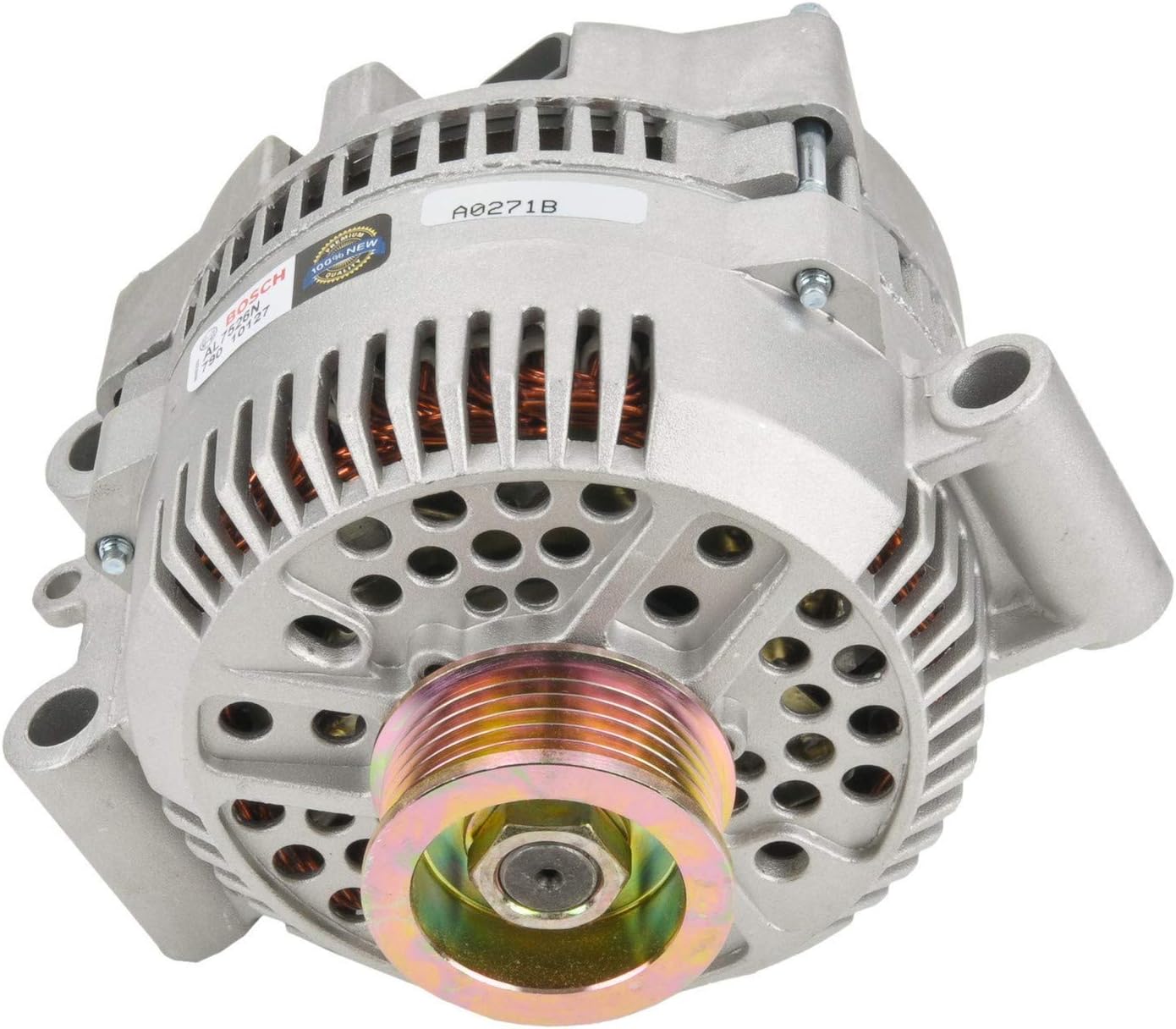
| Amperage | 130 Amps |
|---|---|
| Manufacturer | Bosch Automotive |
| Model | AL7526N |
| Exterior | Machined |
The Bosch AL7526N is a 100% new, factory-quality alternator built to deliver steady charging under high electrical loads common in trucks. With a 130 amp rating it is used as a direct replacement for select Ford F-150 and other Ford/Mazda applications where extra charging capacity is needed. Bosch emphasizes new components, upgraded bearings for longer life, and welded electrical connections to resist high-heat environments. In real-world use this alternator helps prevent voltage sag at idle when accessories and HVAC are demanding, and several installers report straightforward bolt-in fit and reliable output once installed. Fitment can be finicky on some model years and applications: a few buyers had pulley or connector mismatches and needed to reuse or swap parts from the old unit. If your truck requires a specific pulley or connector, expect minor modification or parts transfer during installation. Overall it is a robust choice when you want higher amperage and factory-style construction, provided you verify fit details for your exact year and engine before swapping units.
Best for: Buyers who prioritize stronger charging capacity and factory-quality construction for trucks that see heavy electrical loads or accessory use and who are prepared to verify fitment before installation.
Less Ideal for: Drivers who want a guaranteed no-modification drop-in across all model years or who cannot swap pulleys or connectors should consider a unit specifically confirmed for their exact engine and trim.
- 130 amp output handles heavy accessory loads and reduces voltage drop at idle
- All-new components and upgraded bearings for improved durability over remanufactured units
- Rigid welded electrical connections designed to withstand high-heat environments
- Direct-replacement design aims to match factory mounting points and connectors for many compatible trucks
- Some customers reported pulley or terminal differences requiring reuse or modification of the original pulley or connector
- Not universally drop-in for every listed vehicle; fitment must be confirmed for specific trim and engine combinations
Verdict: Choose this Bosch 130A new alternator when you need reliable, higher-capacity charging with factory-quality components for heavy-accessory Ford F-150 use.
Parts Player 130A 12V Replacement Alternator for Ford 4.6/5.4L (CW Rotation, S6 Pulley)

| Voltage | 12V |
|---|---|
| Amperage | 130A |
| Rotation | CW |
| Pulley class | S6 |
| Regulator | Internal (IR/IF) |
This Parts Player replacement alternator supplies 130 amps at 12 volts for Ford 4.6L and many 5.4L applications and is intended as a direct charging-system replacement. Typical use is to swap it in for a failed unit to recover battery charging and electrical performance; reviewers report straightforward installs on 1997–2003 F-150s with a steady running voltage around 14.4V. Notable features include an internal regulator, clockwise rotation, and an S6 (6-rib) pulley class which matches many passenger-style pulleys. Practical benefits are solid charging output, generally correct fitment to common Ford bolt patterns, and an option for DIY replacement that can be installed with basic tools. Important limitations are pulley compatibility for trucks that use wider 8-rib belts and the absence of mounting hardware, which may require transferring the original pulley or sourcing a matching pulley and bolts. Build origin and longevity vary by unit, so expect to monitor performance after installation.
Best for: Buyers who want an affordable, practical replacement alternator they can install themselves to restore reliable charging on a 1997–2003 Ford F-150 and prioritize correct electrical output and straightforward fitment.
Less Ideal for: Do not choose this if your truck uses an 8-rib belt system or if you need a plug-and-play unit that includes pulleys and mounting hardware; look for a unit matched exactly to your belt and pulley configuration instead.
- 130 amp output suitable for restoring charging on stock electrical systems
- Internal regulator and clockwise rotation that match many Ford charging setups
- S6 6-rib pulley class compatible with vehicles using a 6-rib belt
- Users report easy DIY installation and reliable charging voltage after install
- Pulley is 6-rib which may not fit trucks equipped with 8-rib accessory belts
- Mounting hardware is not included so reuse or source of original bolts is required
- Variation in longevity reported so long-term durability can be inconsistent
Verdict: A no-frills 130A replacement that gets a 1997–2003 F-150 charging again quickly, ideal for practical DIY repairs when pulley fitment matches.
Hkingoxia 7750 Replacement Alternator 95A 12V with 6-Groove Pulley
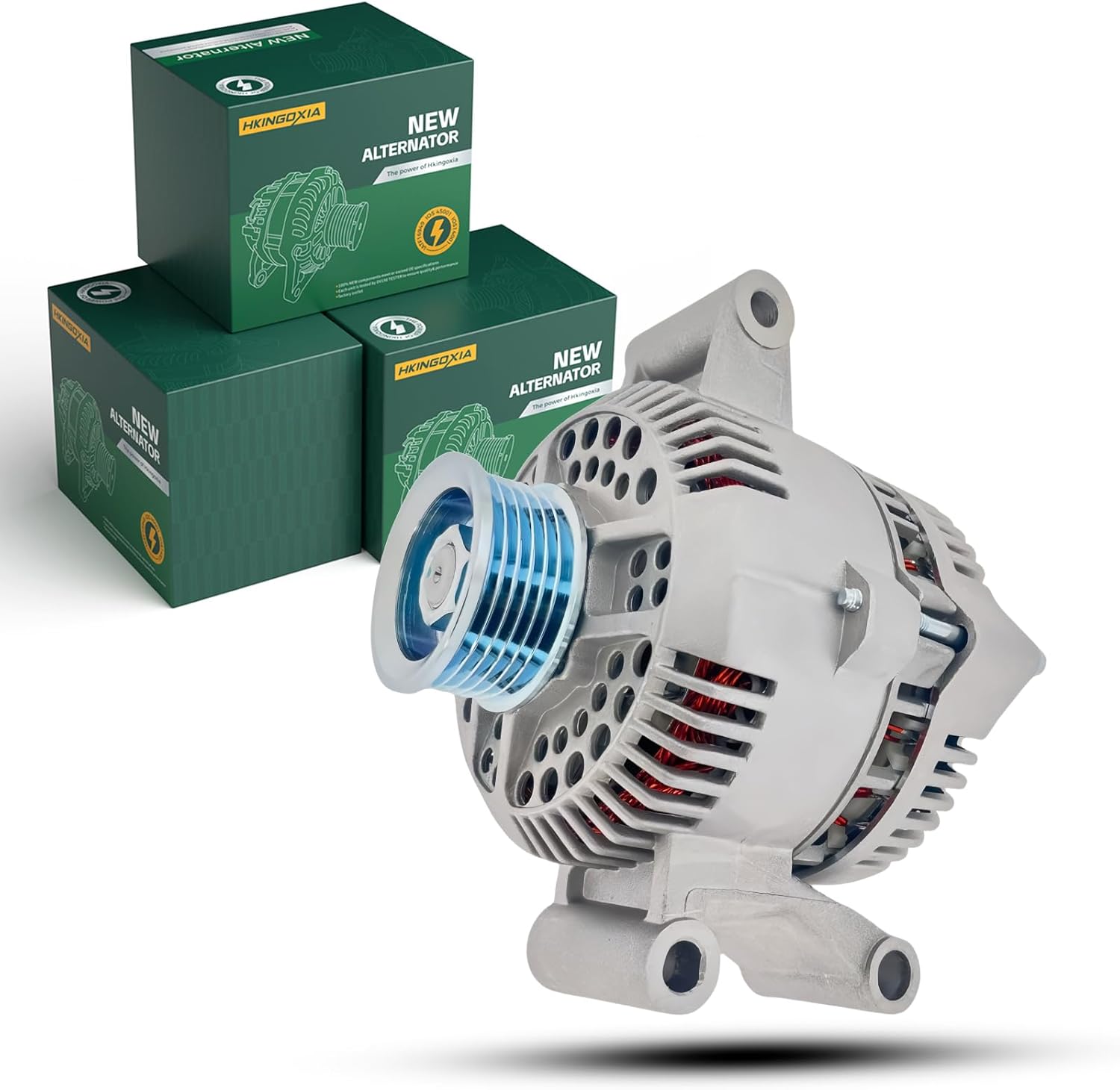
| Output | 95A |
|---|---|
| Voltage | 12V |
| Pulley | 6-Groove |
| Rotation | Clockwise |
This Hkingoxia 7750 alternator is a straightforward replacement unit aimed at restoring charging performance when the original alternator fails. It provides a 95 amp, 12 volt output with a clockwise rotation and a 6-groove pulley, built using copper windings, sealed bearings, and an internal regulator and fan. Installation is typical for alternator swaps: remove the old unit, transfer any required brackets or hardware, and bolt this into the front inner position when the OE numbers and pulleys match. In everyday use it supplies stable charging for lights, accessories, and battery maintenance and recent buyer reports show steady mid-13 volt readings at modest rpm. The practical benefits are an economical alternative to dealer units and parts that fit multiple Ford Ranger/Explorer and related engines when spec-matched. Expect a basic no-frills part rather than a premium performance unit and confirm pulley, plug, and part number before ordering since incorrect match will prevent a proper direct swap.
Best for: Buyers looking for an affordable, factory-style replacement to restore charging on compatible older Ford vehicles who prioritize cost-effectiveness over upgraded output.
Less Ideal for: Drivers who need higher amperage for heavy aftermarket electrical systems or who want a premium, warranty-backed dealer unit should consider other options.
- Factory-style output: 95A at 12V suitable for restoring normal charging
- Built with pure copper coils and sealed bearings for durability
- Includes internal regulator and fan for stable voltage control
- 6-groove pulley and clockwise rotation match many stock applications
- Lower-cost alternative to dealer or remanufactured units
- Not a high-output or performance alternator for added electrical load
- Fitment depends on exact OE number, pulley and plug so it is not universal
Verdict: A budget-friendly, factory-match 95A replacement that restores normal charging for compatible older Ford vehicles without premium extras.
BDELI Alternator Replacement for Ford F-Series 1997–2002 (5.4L/4.6L)

| Brand | BDELI |
|---|---|
| Model | B18948 |
| Manufacturer Part Number | BDALAT7791NA |
| Amperage | 10 Amps |
| Wattage | 1.4 KW |
This BDELI alternator is a direct-replacement unit intended for Ford F-Series trucks and compatible E-Series vans from the late 1990s to early 2000s. It replaces factory alternators on 4.6L and 5.4L V8 engines and is used the same way as the original: remove the failed unit and fit this one in place using the factory mounting points and belt. Notable features listed by the maker include ISO-certified manufacturing, professional testing, and a one-year replacement promise. In practice that means buyers can expect a product built to consistent quality standards and backed by a short manufacturer remedy if problems emerge. Reviews show generally good fit and easy installation for experienced DIYers, though a few users reported early bearing failures on some vehicle matches. The unit delivers typical alternator output suitable for stock electrical loads but you should confirm the amperage required for your specific trim and accessory setup before buying. If you want a factory-style swap with decent quality control and a one-year replacement path, this performs well, but long-term durability varies across individual cases.
Best for: Buyers who prioritize a reliable, factory-style replacement and expect consistent build quality with a short-term manufacturer remedy; suitable for owners planning a direct swap and practical DIY installers.
Less Ideal for: Not ideal for owners who need a high-output alternator for heavy aftermarket electrical loads or for those who require a long factory-length warranty and documented long-term durability data.
- Made by an ISO 9001 and IATF-certified manufacturer indicating controlled production quality
- Designed to match factory mounting and electrical fit for 1997–2002 Ford F-Series 4.6L and 5.4L engines
- Professional testing reported and one-year manufacturer replacement support
- Many buyers report straightforward installation and correct fitment
- One-year coverage is helpful but some users reported bearing or early-failure issues after several months
- Amperage rating varies by variation so must be checked to ensure it meets higher-output trims or added electrical accessories
Verdict: A factory-style replacement built under certified production standards that offers dependable fitment for 1997–2002 Ford F-Series trucks and a one-year manufacturer replacement guarantee.
Parts Player 3G Series 12V 130A Alternator for Ford 4.6L / 5.4L (1997–2003)

| Amperage | 130 Amps |
|---|---|
| Voltage | 12 Volts |
| Rotation | CW |
| Regulator/Fan | IR/IF |
This Parts Player 3G alternator is a direct replacement designed for 1997–2003 Ford 4.6L and 5.4L engines and similar Expedition applications. It supplies 130 amps at 12 volts and uses a clockwise rotation with an internal regulator and fan configuration, so installation matches the factory unit and integrates with the vehicle charging system. Buyers will appreciate the factory-style plug code and pulley class that simplify swap‑outs and the generally positive user reports of straightforward fit and immediate functionality. Practical benefits include quick restoration of charging capacity and compatibility with common OEM part numbers for easy cross-reference. Important limitations are that mounting hardware is not included and occasional reports show inconsistent regulator performance or units with signs of prior use, so verifying output voltage after installation is recommended. This alternator is a cost‑focused replacement that works well when matched correctly and checked at installation.
Best for: Buyers who want an affordable, factory‑style replacement that restores charging behavior on late 1990s to early 2000s Ford 4.6L and 5.4L vehicles and who will verify output during installation.
Less Ideal for: People seeking a premium remanufactured unit with included hardware or a long factory warranty should consider higher‑end or remanufactured alternatives.
- Direct fit for Ford 4.6L and 5.4L 1997–2003 engines matching common OEM part numbers
- Delivers 130 amps at 12 volts suitable for stock electrical loads
- Factory‑style electrical plug and pulley class simplify installation
- Many users report immediate, correct operation after install
- Mounting hardware is not included with the unit
- Some customers reported voltage regulator failures or evidence of prior use on individual units
Verdict: A budget‑minded, factory‑style 130A replacement that fits Ford 4.6L and 5.4L trucks from 1997–2003 and restores charging when verified at installation.
Youxmoto Alternator YXALT066 for Ford 4.6L / 5.4L 1997–2002 (select models)

| Voltage | 12V |
|---|---|
| Amperage | 130A |
| Rotation | Clockwise (CW) |
| Regulator | Internal (IR) |
This Youxmoto alternator is a direct-replacement unit built to match factory fit and charging performance for compatible Ford 4.6L and 5.4L applications. It supplies 12 volts at up to 130 amps with clockwise rotation and an internal regulator, making it suitable for restoring battery charge and running stock electrical systems on trucks and vans of that era. The housing is machined aluminum and the windings are copper, which should help heat dissipation and durability compared with lower-quality cast units. Installation is intended to be bolt-in with no modifications; many buyers report easy swaps and immediate restoration of normal charging. The alternator uses an S8 pulley and internal fan design, so it will work with standard accessory drive setups. Expect the usual caveats for aftermarket units: you should confirm the exact replacement numbers and pulley/clocking before ordering, and long-term reliability can vary versus higher-cost factory replacements. For risk-averse buyers, test-fit and verify output with a meter at installation to confirm proper operation.
Best for: Buyers who want a low-risk, direct-replacement alternator that restores proper charging to a late-1990s F-150 or similar Ford vehicle without custom modification and prefer a straightforward bolt-in repair.
Less Ideal for: Owners who need aftermarket performance upgrades, significantly higher amperage for heavy electrical accessories, or who prefer factory-brand parts with extended proven service histories.
- Direct-fit design for specified 4.6L and 5.4L Ford engines so installation is typically bolt-in
- 130A rated output supports factory electrical loads and charging needs
- Machined aluminum housing and copper windings for improved heat dissipation and durability
- Internal regulator and standard CW rotation match factory electrical configuration
- Aftermarket unit so long-term longevity may not match higher-priced factory replacements
Verdict: A practical, bolt-in 130A replacement that gets late-1990s Ford F-150 charging systems back to factory-level performance with minimal fuss.
Choosing the Right 1997-2003 Ford F-150 Alternator: Key Factors to Consider
Output Rating and Amperage Capacity
Alternator output rating determines how much electrical current the charging system can supply at operating RPMs. For a 1997–2003 F-150, your daily needs depend on headlights, blower motors, stereo, and any auxiliary lights or winches. Choosing an alternator with a slightly higher continuous amperage rating helps prevent voltage sag when accessories draw power, especially during idling or slow-speed operation. However, simply picking the highest amp unit is not always ideal. Over-sizing can strain belts and pulleys and may require upgrading wiring and fusing to handle the increased load.
Confirm the rated output at typical operating RPM ranges and ensure that the vehicle's battery and wiring harness are compatible with the higher output. A correct match avoids nuisance charging system faults and extends the life of the battery and electrical components.
Mechanical Fitment and Mounting
Mechanical fitment covers mounting hole locations, bracket type, and clearance within the engine bay. The 1997–2003 F-150 had several engine and accessory configurations, so verify the alternator matches your truck's specific mounting footprint. A direct-fit unit uses the same bolt pattern and tensioner routing as the original, which makes installation faster and reduces the risk of alignment problems that can wear belts prematurely.
Poor fitment can necessitate bracket adapters, spacer plates, or different pulley arrangements. Those workarounds increase installation time and can introduce vibration or clearance issues around hoses and cooling components. Choose alternators advertised for your exact model year range and engine configuration to minimize surprises.
Electrical Connector and Pulley Compatibility
Alternator replacements must mate with the F-150's factory wiring harness and belt system. Pay attention to the plug type for the voltage regulator and any sense or field wires so you do not have to cut or splice factory connectors. Pulley diameter and type matter for belt tension and charging behavior. Some replacements use a shared serpentine pulley while others may require swapping the old pulley or using an included pulley that matches the truck's belt profile.
Mis-matched pulleys can alter alternator RPM relative to the engine, affecting charge voltage and bearing life. Ensure the replacement's pulley matches the stock diameter and the vehicle's belt routing to preserve proper charging and reduce mechanical wear.
Durability, Bearings, and Cooling
Alternators operate in a hot environment and need robust bearings and cooling to survive long service intervals. Bearing quality influences how well the alternator tolerates vibration and load cycles common to truck use, such as towing or rough roads. Cooling vents and internal fan design determine heat rejection during sustained high output.
A unit with better sealing and heavier-duty bearings will usually last longer in a work truck. Consider alternators with corrosion-resistant housings if you drive in wet or salted-road conditions. These durability features lower the chance of premature failure and reduce the need for mid-life rebuilds.
Serviceability and Rebuild Options
Alternators can sometimes be repaired rather than replaced. Check whether common service parts like brushes, regulators, rectifiers, and bearings are available for the replacement unit and whether the housing can be opened with standard tools. For owners who prefer to rebuild rather than swap, the availability of a rebuild kit reduces downtime and cost.
Serviceability also includes how easy it is to bench-test the unit with standard alternator testing gear. Units that follow OEM electrical layouts and use replaceable components are usually easier to maintain and repair in the long term.
Warranty and Documentation
Warranty terms indicate the manufacturer or supplier's confidence in the alternator's longevity. For a vehicle like the 1997–2003 F-150, look for clear warranty coverage that addresses premature failure of the regulator, diode pack, and bearing assemblies. Documentation should include electrical schematics, torque specs for mounting bolts, and instructions for pulley or plug swaps if needed.
Good documentation reduces installation errors and makes it easier to verify compatibility before purchase. Warranty service that covers core exchange or repair can also simplify long-term ownership.
Common Alternator Symptoms on the 1997–2003 F-150
Recognizing alternator symptoms early helps avoid a dead battery or stranded condition. Typical signs include dashboard warning lights, flickering or dim headlights at idle, and intermittent electrical failures. You may also notice a battery that loses charge overnight or a smell of hot electrical components when the alternator is under load.
Some symptoms mimic battery failure, so testing is important before replacing parts. Pay attention to condition changes under accessory load or while idling, since many alternator issues appear only when the engine is not at highway RPM.
- Dim or flickering headlights when idling
- Battery warning lamp illumination
- Difficulty starting after short drives
- Electrical accessories cutting out under load
- Unusual noises from the alternator area
Basic Alternator Testing Steps
A few simple tests can confirm whether the alternator is the root cause of charging problems. Start with a voltage check across the battery terminals with the engine off and then running. A healthy charging system typically registers around 13.8 to 14.6 volts at normal idle; lower readings often indicate weak alternator output.
Load testing with headlights and blower on helps reveal voltage drop under real-world demand. If you have access to an alternator tester or multimeter, also check for AC ripple which can point to diode or rectifier failures. Always follow safety precautions and disconnect the battery when performing any wiring or connector inspection.
- Measure battery voltage with engine off and running
- Check for voltage drop under accessory load
- Test for AC ripple on the charging output
- Inspect connections and ground points for corrosion
Installation Considerations for the F-150
Plan the install before you start by confirming the replacement alternator's mounting pattern, plug style, and pulley type match your truck. Gather basic tools: ratchets, appropriate sockets, belt tensioner tool or pry bar, and common hand tools. Depending on engine bay access and the alternator location, you may need to support the vehicle on jack stands for better leverage.
Labeling plugs and photographing routing before removal can prevent confusion during reassembly. Tighten mounting bolts to proper torque and verify belt alignment after installation. Finally, clear any stored charging system codes by disconnecting the battery briefly or using an OBD reader if needed.
- Verify mount and plug compatibility before removal
- Use photos to document wiring and belt routing
- Check pulley alignment and belt tension after install
- Reconnect battery and confirm charging voltage
When to Consider a Rebuild Versus Replacement
Deciding between rebuilding an alternator and installing a replacement depends on cost, availability of parts, and the unit's condition. Rebuilding may be economical if the housing is undamaged and the core components are available as a kit. It is more attractive for owners comfortable with bench disassembly and with access to brushes, bearings, and rectifier components that match the unit.
Replacement is often preferred when the alternator shows multiple failures, when service parts are scarce, or when a long warranty is desired. For older trucks, balance the remaining life expectancy of surrounding systems and whether a new unit reduces future downtime.
- Rebuild if housing and rotor are sound and parts are available
- Replace if multiple internal failures exist or parts are scarce
- Consider warranty and expected future use of the truck
Wire and Ground Checks That Prevent False Replacements
A weak ground or corroded connector can mimic alternator failure. Inspect the main battery ground strap, chassis ground points, and the alternator's ground path for corrosion, loose bolts, or frayed wires. Cleaning and tightening these connections sometimes restores proper charging without replacing the alternator.
Also inspect the battery terminals and the sense wire that feeds the voltage regulator. A poor sense connection can cause erratic charging even when the alternator is mechanically sound.
- Inspect and clean battery terminals and ground straps
- Check alternator harness for damaged or corroded pins
- Verify sense wire continuity to the battery
Tools and Parts to Have on Hand
Prepare a basic kit before starting the swap. Essential items include a quality ratchet set, extension bars, a torque wrench, a serpentine belt tool or suitable pry bar, and a multimeter for post-install testing. Spare hardware such as mounting bolts and lockwashers can save time if originals are corroded.
If you plan to rebuild, acquire the correct rebuild kit for your alternator core, including brushes and rectifier components. Keep replacement fuses and a small supply of electrical cleaner to address connector corrosion during reassembly.
- Ratchet and socket set, torque wrench
- Serpentine belt tool or pry bar
- Multimeter for voltage and ripple testing
- Rebuild kit components if doing a repair
Still looking for the perfect fit?
Select your Ford F-150 configuration to see the most relevant Alternators recommendations
How We Chose the Best 1997-2003 Ford F-150 Alternator
We prioritized alternators that meet the factory electrical specifications for the 1997–2003 Ford F-150 and that offer dependable charging under typical truck loads. Evaluation criteria included output rating and amperage stability to ensure adequate power for lights, ignition, and common accessories; mechanical fitment covering mounting points, pulley size, and connector type so replacements align with the F-150's engine bays; and build quality indicators such as bearing design, cooling vents, and warranty coverage that affect lifespan under highway and towing duty. We also considered installation factors: whether the unit keeps the stock pulley, uses OEM-style electrical terminals, and allows bolt-on replacement with common hand tools. Durability under load and heat resistance were weighted more heavily than marginal amp increases that require further electrical upgrades. Units requiring extensive wiring changes, custom fabrication, or that lack sufficient documentation were excluded. Finally, we cross-checked typical failure modes and serviceability, favoring alternators with available rebuild components and clear testing guidance.
Our full evaluation process is outlined in our review methodology.
FAQ
How do I know if my 1997–2003 F-150 alternator is failing?
Common signs include a battery warning light, dim headlights at idle, intermittent accessory dropout, or a battery that does not hold charge. Run a voltage test with the engine running; readings below about 13.5 volts typically indicate charging issues.
Can I test the alternator without removing it from my F-150?
Yes. Use a multimeter to measure voltage across the battery with the engine off and running. Perform a load test with headlights and blower on. Checking for AC ripple can also reveal diode problems. These tests often diagnose charging faults without removal.
Is it better to rebuild my alternator or buy a replacement?
It depends on the unit's condition and parts availability. Rebuild if the rotor and housing are sound and parts are obtainable. Replace if there are multiple internal failures, corrosion, or if you prefer a longer warranty and minimal bench work.
Will a higher-amperage alternator harm my F-150?
A higher-amperage alternator generally does not harm the truck if installed correctly, but it may require checking belt capacity, pulley compatibility, and wiring. Ensure fuses and connectors are rated for the increased output to avoid overheating.
How long does it typically take to replace the alternator on these F-150s?
For someone with basic tools and experience, a direct-fit alternator swap can take one to two hours. The time increases if access is limited, if additional parts are needed, or if wiring repairs are required.
What should I check after installing a new alternator?
Verify belt alignment and tension, reconnect all plugs and grounds, then measure charging voltage with the engine running. Confirm there is no unusual noise and that warning lights clear. Also inspect for any wiring harness interference or rubbing points.
Do I need a special pulley tool for alternator replacement?
Most direct-fit replacements use the same pulley configuration and do not require special tools. If the replacement uses a different pulley type, you may need a puller or press to swap pulleys, so check compatibility before starting.
Final Verdict
When replacing the alternator on a 1997–2003 Ford F-150, prioritize correct mechanical and electrical fitment, adequate amperage for your accessory load, and durability features that match how you use the truck. Confirm plug type, pulley compatibility, and mounting footprint to avoid installation complications. Balance the benefits of higher output against the need for complementary upgrades to belts and wiring. With those tradeoffs in mind, choose a unit that matches your truck's original specifications or provides a modest, well-documented upgrade for reliable charging and long-term service.
Explore More:
- Check out all Ford F-150 parts & accessories
- Explore Alternators Maintenance & Repair Guides
- Explore Electrical System
- Browse all Auto Parts
