

Note: This article contains affiliate links. If you click on these links and make a purchase, I may earn a small commission at no extra cost to you. This helps support my research and content. Read my full affiliate disclosure here.
If you tow trailers, boats, or cargo with a Ford Expedition, choosing the right tow hitch receiver matters for safety, stability, and ease of use. The wrong receiver can limit how much you can tow, create fitment headaches, or complicate installation. This guide shortlists the top options we vetted for the Ford Expedition and explains the criteria that matter most, including towing capacity and mounting compatibility. Read on to find the kinds of receivers that best match your towing needs and vehicle setup.
Looking for other parts? See all Ford Expedition parts & accessories.
Top Picks at a Glance
| Best Quality Built to a higher standard if you want something more solid | CURT Class 3 Trailer Hitch Receiver 13125 |  |
| Best Budget The cheapest option that still gets the job done reliably | CURT 31083 2-Inch Front Receiver Hitch |  |
| Highest Rated A top-rated pick with lots of positive feedback | CURT 31038 2" Front Receiver Trailer Hitch for 1999–2004 Ford Expedition and F-150 Heritage (4WD with Tow Hooks) |  |
| Most Popular A crowd favorite that many people choose with confidence | CURT Front 2-Inch Receiver Hitch (Model 31068) |  |
| Best Seller A high-volume bestseller chosen again and again | CURT Front Mount Receiver Hitch (31352) |  |
1. CURT Class 3 Trailer Hitch Receiver 13125
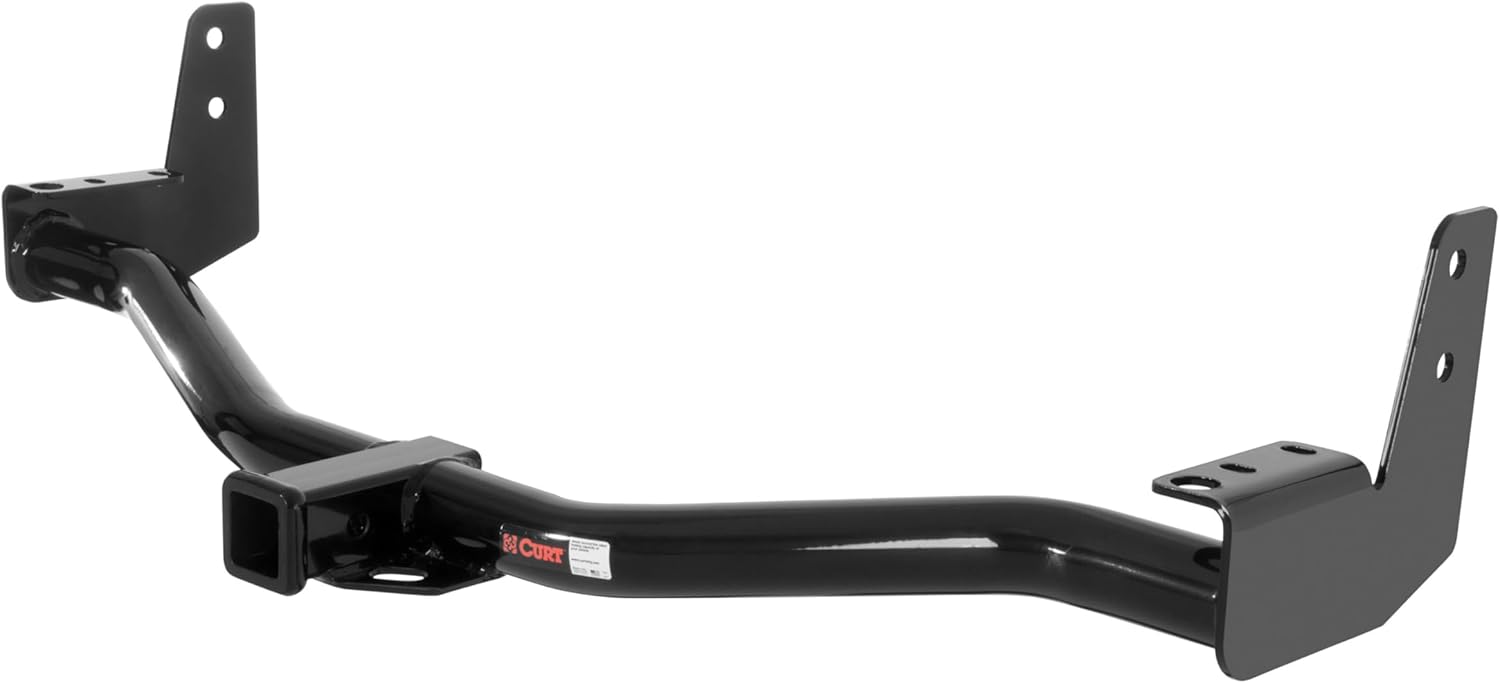
| Weight carrying capacity (GTW) | 5,000 lbs |
|---|---|
| Tongue weight (TW) | 500 lbs |
| Weight distribution capacity (WD) | 7,500 lbs |
| Receiver tube size | 2 inches |
| Material | Carbon Steel |
This CURT Class 3 hitch is a custom-fit receiver designed for select Ford Expedition and Lincoln Navigator model years and gives your vehicle a standard 2-inch hitch ready for everyday towing. It is typically used to tow utility trailers, boats, campers and ATV haulers and is engineered with high-strength carbon steel and precise welds. Notable features include a vehicle-specific design for a bolt-on, no-drill installation on compatible years, a co-cured liquid A-coat plus powder coat finish for improved rust and chip resistance, and tested weight ratings of 5,000 lb GTW and 500 lb tongue weight with higher ratings when used with weight distribution equipment. In practice you get a rugged, factory-quality replacement that simplifies hitching and supports common towing tasks without modification. Limitations are that fitment is limited to the specified Expedition/Navigator years so you must verify compatibility before buying and the kit may arrive with missing small hardware in rare cases, which can require sourcing replacement fasteners.
Best for: Risk-averse mainstream buyers who prioritize a factory-style, vehicle-specific hitch that installs cleanly and supports typical family and recreational towing without modification.
Less Ideal for: Owners who need a universal hitch for multiple vehicle models or those who plan to tow above the listed weight ratings should consider alternative classes or vehicle-specific options.
- Vehicle-specific design for a direct bolt-on fit on compatible Ford Expedition/Lincoln Navigator years
- Rated for 5,000 lb gross trailer weight and 500 lb tongue weight for common towing needs
- Durable dual-coat finish with liquid A-coat plus powder coat for enhanced rust, chip and UV resistance
- Constructed from high-strength carbon steel with precise welding for long-term strength
- Fitment is limited to certain model years so incorrect year selection will prevent installation
- Some buyers have reported occasional missing fasteners in the package
Verdict: A rugged, vehicle-specific Class 3 hitch that delivers factory-style fit and 5,000 lb towing capacity for Expedition owners who want reliable, no-drill installation.
2. CURT 31083 2-Inch Front Receiver Hitch

| Material Type | Carbon Steel |
|---|---|
| Finish Type | Gloss, Powder-Coated |
| Included Components | Front Mount Hitch |
| Rated GTW | 5,000 lbs |
| Rated Tongue Weight | 500 lbs |
The CURT 31083 is a front-mount receiver designed to give Ford trucks and Expeditions a usable 2"x2" receiver at the nose of the vehicle. It installs to the frame and accepts common front-hitch accessories such as winch mounts, cargo carriers, tow hooks, and light trailer use. Built from carbon steel with a gloss powder-coated finish, the hitch is engineered for a custom fit and comes with the hardware needed for installation. CURT rates it at 5,000 lbs. gross trailer weight, 500 lbs. tongue weight, and 9,000 lbs. straight-line pull when used with a tow hook or shackle. Buyers will appreciate the sturdy welds and included guide wire hardware that simplify fishing bolts through frame openings, though some users report alignment fiddliness or the need to trim bumper material during fitment. The hitch sits relatively low compared with some front mounts, so it can affect ground clearance and may require careful selection of accessories or minor vehicle adjustments. It is a practical, cost-conscious way to add a front receiver for light towing and accessory mounting on supported Ford models.
Best for: Budget-conscious Ford Expedition and F-150 owners who want a robust, factory-style front receiver for occasional towing, winch or cargo-carrying tasks without paying for dealer or heavy-duty specialty options.
Less Ideal for: Drivers who need high ground clearance, heavy-duty front towing beyond the stated ratings, or a plug-and-play fit without any trimming or minor fabrication should consider higher-end or vehicle-lifted solutions.
- Vehicle-specific design for a near-custom fit to supported Ford models
- Includes mounting hardware and guide wires to aid installation
- Carbon steel construction with powder-coated finish for durability
- Rated for useful front-duty loads: 5,000 lbs GTW and 500 lbs tongue weight
- Some owners report difficult hole alignment and occasional need for drilling or trimming during installation
- Lower-than-expected mounting position can reduce ground clearance and may interfere with large tires
Verdict: A solid, budget-friendly front receiver that adds practical mounting and light towing capability to compatible Ford trucks and Expeditions.
3. CURT 31038 2" Front Receiver Trailer Hitch for 1999–2004 Ford Expedition and F-150 Heritage (4WD with Tow Hooks)
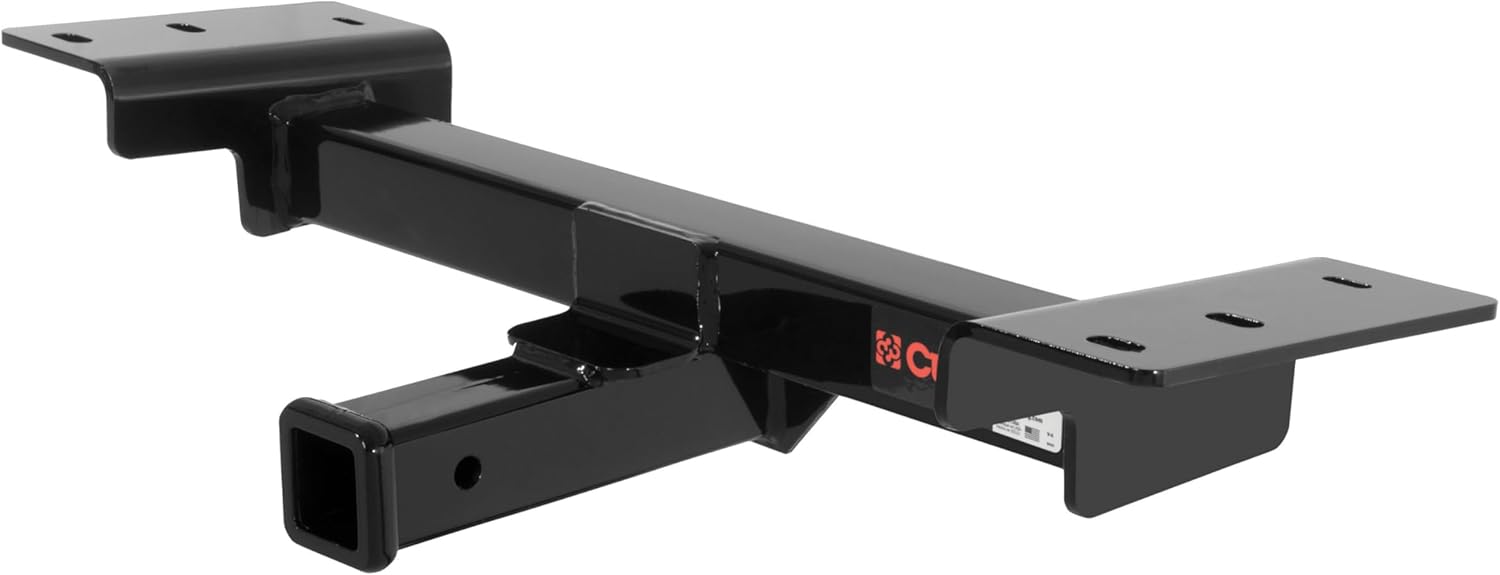
| Compatible vehicle type | Truck |
|---|---|
| Receiver opening | 2" x 2" |
| Maximum towing capacity | 5000 Pounds |
| Pull force | 5000 Pounds |
| Finish type | Gloss, Powder-Coated |
The CURT 31038 is a front receiver hitch engineered to give compatible 1999–2004 Ford Expeditions and F-150 Heritage trucks a factory-quality 2" x 2" mounting point at the front of the vehicle. It installs using the truck frame where the tow hooks mount and provides a solid platform for a range of uses such as a cargo carrier, winch mount, snow plow, or improved trailer control at boat ramps. Built from carbon steel with a powder-coated gloss finish, it is rated for a 5,000 lb gross trailer weight and 500 lb tongue weight and includes hardware for installation. In practice the unit is heavy-duty and straightforward to fit on many trucks, though some owners report trimming or modifying splash shields or drilling frame holes on certain years to get a perfect fit. The receiver tube is reinforced with a welded collar for strength, but extreme applications like constant plow duty can accelerate wear. Backed by a limited lifetime warranty and strong owner feedback, this hitch is a dependable upgrade when you need a front-mounted receiver on the specified Ford models.
Best for: Reliability-focused buyers who prioritize a durable, factory-style front mounting point to add practical towing and accessory capability to their 1999–2004 Ford Expedition or F-150 Heritage.
Less Ideal for: Drivers who need a universal hitch or who plan continuous, extreme-duty plow work should consider a reinforced commercial bumper or a purpose-built plow mount instead.
- Designed specifically for 1999–2004 Ford Expedition and F-150 Heritage 4WD with tow hooks, providing a tailored fit
- Industry-standard 2" x 2" receiver tube with welded steel collar for sturdy accessory mounting
- High load ratings suitable for many front-mounted tasks with 5,000 lb GTW and 500 lb tongue weight
- Carbon steel construction with powder-coated finish resists corrosion and looks factory-quality
- Includes installation hardware and is backed by a limited lifetime warranty
- Some model years require trimming, drilling, or extra effort to align all mounting points
- Extended heavy-duty use like frequent plow work has been reported to twist or stress the receiver tube
Verdict: A rugged, vehicle-specific front 2" receiver that reliably adds towing and accessory capability to 1999–2004 Ford Expedition and F-150 Heritage 4WD trucks.
4. CURT Front 2-Inch Receiver Hitch (Model 31068)
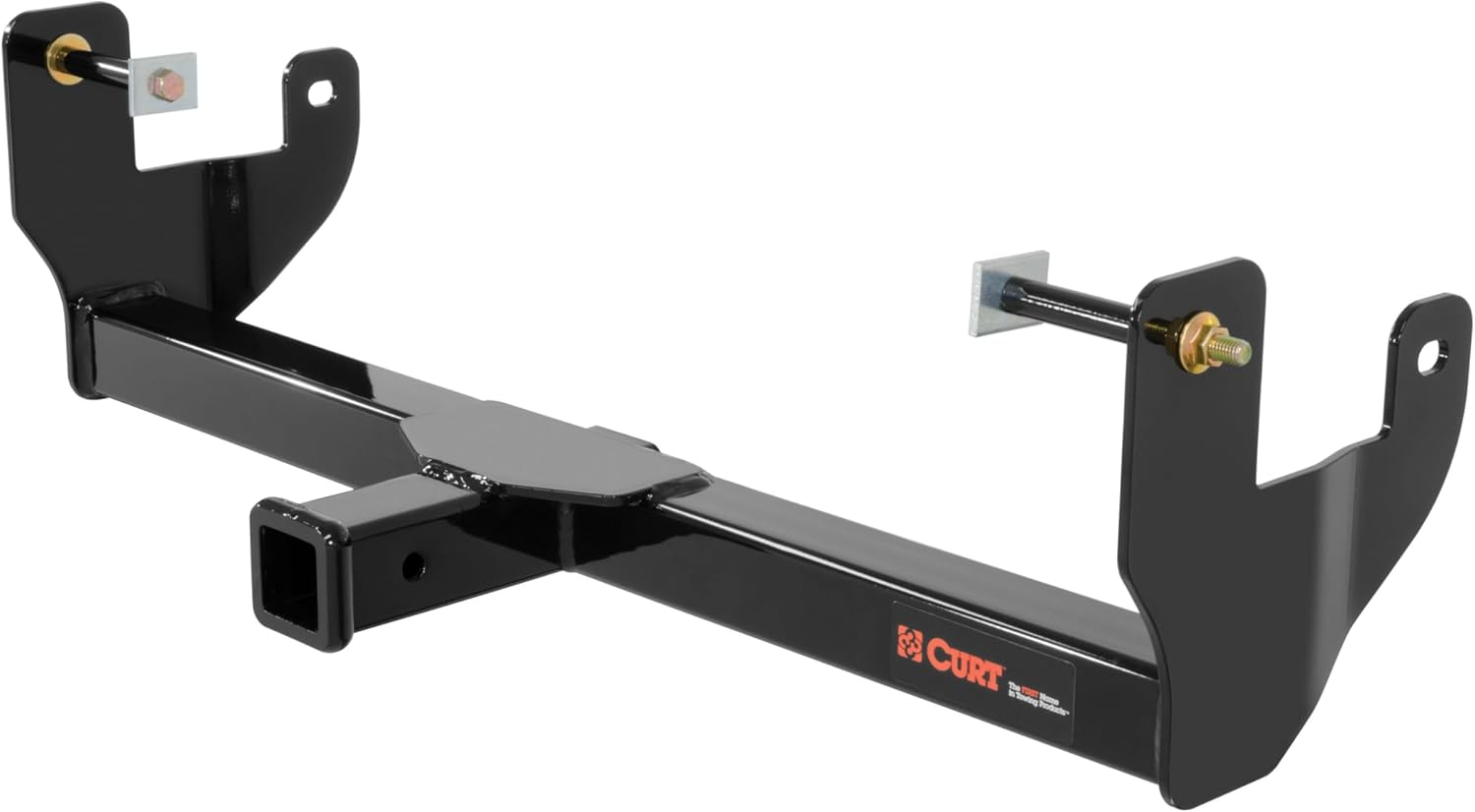
| Maximum Towing Capacity | 5000 Pounds |
|---|---|
| Material Type | Carbon Steel |
| Finish Type | Gloss, Powder-Coated |
The CURT 31068 front hitch installs on select Ford Expedition, F-150 and Lincoln Navigator models to add a 2-inch front receiver for accessories, temporary towing and better trailer control at launch. It is built from carbon steel with a powder-coated finish and accepts standard 2" x 2" shanks, letting you mount cargo carriers, bike racks, winch adapters and some snow plows. CURT rates it for 5,000 lb GTW, 500 lb tongue weight and a 9,000 lb straight-line pull for tow hook or shackle mounts, so it handles most light towing and accessory tasks while keeping the rear receiver free. Install is vehicle-specific and customers report the kit includes hardware and helpful spring wires to ease rear bolt installation, though getting it in place can be tight and may require a jack or a second person. The finish and construction feel robust, but if you need extra forward clearance for a large winch cradle you may have to add an extension which changes load characteristics. For owners wanting a convenient factory-style front receiver, this is a practical and well-made option.
Best for: Convenience-minded owners who want a factory-style front receiver to carry cargo carriers, bike racks or occasional light towing without sacrificing the rear hitch.
Less Ideal for: Buyers who need heavy-duty front towing or who plan to mount large winches that require extra forward clearance should consider a purpose-built heavy-duty bumper or a hitch with greater extension.
- Vehicle-specific design for a snug, custom fit on supported Ford models
- Solid carbon steel construction with powder-coated finish for durability
- Provides a standard 2" x 2" receiver to mount carriers, racks, winches and other accessories
- Rated for 5,000 lb gross trailer weight and 500 lb tongue weight for light towing tasks
- Comes with installation hardware and helpful fitment aids like spring wires
- Receiver tube may not extend far enough forward for some winch cradles without an extension
- Tight fit during installation can require a jack or two people to position the hitch
Verdict: Adds a strong, vehicle-specific 2-inch front receiver to supported Ford trucks and SUVs for convenient accessory mounting and light towing tasks.
5. CURT Front Mount Receiver Hitch (31352)

| Maximum Towing Capacity | 5000 Pounds |
|---|---|
| Pull Force | 5000 Pounds |
| Material Type | Carbon Steel |
| Finish Type | Gloss, Powder-Coated |
The CURT 31352 front mount receiver is a heavy-duty, vehicle-specific front hitch designed for select Ford Expedition and F-150 models and the Lincoln Mark LT. It provides a 2" x 2" receiver tube for mounting a winch, cargo carrier, snow plow, tow hooks, or other front-mounted towing accessories and comes with the hardware needed for installation. Built from carbon steel with a powder-coated finish, the hitch feels very robust and the welds and finish resist road wear and corrosion during regular use. Its 5,000 lb GTW and 500 lb tongue weight ratings make it suitable for demanding tasks like winching and occasional trailering control at the ramp. Installation is straightforward for mechanically handy owners using the supplied fish wire and hardware, though the generic instructions and potentially variable bolt counts may require some attention or minor trimming on certain models. The receiver is welded below the crossbar which keeps it visually low-profile but can limit some plow brace layouts. Overall it is a solid, high-quality front hitch for owners who need a durable mounting point up front.
Best for: Performance-oriented buyers who prioritize a strong, factory-quality front mounting point for winches, plows, or heavy accessories and want a durable, truck-specific solution.
Less Ideal for: Buyers who need a universal or above-crossbar receiver layout for specific plow brace systems or who prefer a product with very detailed step-by-step installation guidance.
- Vehicle-specific design for a custom fit to supported Ford trucks
- Rated for 5,000 lb gross trailer weight and 500 lb tongue weight for heavy-duty use
- Carbon steel construction with powder-coated finish for durability and corrosion resistance
- Includes installation hardware and fish wire to simplify mounting
- Instructions are generic and may be confusing for less experienced installers
- Receiver tube is welded below the crossbar which can limit some plow brace configurations
Verdict: A rugged, vehicle-specific front receiver that gives Ford Expedition owners a durable, factory-quality mounting point for winches and heavy front accessories.
Choosing the Right Ford Expedition Tow Hitch Receiver: Key Factors to Consider
Towing Capacity
Towing capacity is the primary limiter on what you can haul and directly affects safety and legal compliance. You should match a receiver's rated capacity to the gross trailer weight you expect to tow, while leaving a margin for tongue weight, cargo, and passengers. Higher-capacity receivers are typically heavier and built with thicker tubing or reinforced plates, which can affect installation and ground clearance. Verify both gross trailer weight and maximum tongue weight ratings to ensure the receiver suits trailers like campers, utility trailers, or boat trailers.
Mounting Method and Fitment
Mounting method determines how the receiver attaches to the Expedition's frame and affects installation complexity and long-term stability. Bolt-on receivers that use factory-threaded holes usually require less labor and avoid welding or drilling, while weld-on or custom-fit units may offer a lower profile or greater strength but need professional work. Exact fitment for the Ford Expedition reduces the risk of alignment issues, interference with exhaust or sensors, and the need for trimming or modifying bumper components. Check whether the receiver aligns with frame rails, spare tire placement, and wiring access.
Receiver Class and Tube Size
Receiver class and tube size are shorthand for the type of towing loads the hitch supports and which accessories will fit. Common sizes, like 2-inch by 2-inch openings, support a broad range of ball mounts and accessories and are standard on many SUVs. Larger openings or specialized classes may be needed for heavier duty towing or fifth-wheel setups. Choose a class and tube size that match the hitch accessories you plan to use, and confirm tongue weight limits because physical fit does not guarantee adequate load capacity.
Corrosion Resistance and Finish
A durable finish extends the life of the receiver and reduces maintenance in wet, salty, or humid conditions. Look for receivers with robust coatings such as powder coat or multi-stage plating and consider additional rustproofing in high-exposure climates. Hardware quality matters too; stainless or zinc-plated bolts resist seizing and simplify future removal. Corrosion can compromise structural integrity over time, so prioritize protection if you keep the vehicle in harsh environments.
Installation Complexity and Hardware
Installation complexity affects whether you can do the job yourself or need professional help, which influences total cost and downtime. Clear instructions, included hardware, and pre-drilled frame holes reduce installation time and error. Some receivers are true bolt-on designs that fit existing factory holes, while others require temporary lowering of exhaust, removing trim pieces, or access to hard-to-reach fasteners. Consider whether you have a lift, jack stands, or basic mechanical tools, and check whether the kit includes torque specs and locking hardware for a secure installation.
Accessory Compatibility and Wiring Access
A receiver's usefulness depends on how well it supports common towing accessories and integrates with the vehicle's wiring. Ensure the receiver supports the ball mount sizes and accessory types you use, and confirm there is space for electrical connectors and any trailer brake control routing. Integrated provisions for wiring or clear access points make adding trailer wiring and brakes simpler. Also think about clearance for backup sensors, spare tire access, and whether accessories obstruct cargo area operation.
How We Chose the Best Ford Expedition Tow Hitch Receiver
We focused on receivers that offer safe, dependable performance for a Ford Expedition and screened options by towing capacity, mounting method, fitment precision, corrosion resistance, and ease of installation. Towing capacity is critical because it dictates what trailers and loads the receiver can safely handle. Mounting method and fitment precision matter because some receivers bolt directly to factory frame points while others require minor drilling or modification. Corrosion resistance affects longevity, especially in wet or salted-road environments. Ease of installation and access to hardware influence installation time and whether professional help is likely. Products that lacked clear manufacturer towing specifications, ambiguous fitment documentation for the Ford Expedition, or poor corrosion protection were excluded. We also filtered out receivers intended only for light-duty passenger cars or non-SUV frames. The final list emphasizes clear fitment information, robust materials, and practical hardware and instruction sets suitable for the Ford Expedition.
Our full evaluation process is outlined in our review methodology.
FAQ
What receiver class should I choose for a Ford Expedition?
For most towing tasks with a full-size SUV, a mid-duty receiver class with a 2-inch opening is common and supports many trailer types. Choose a receiver class based on the gross trailer weight and tongue weight you expect to tow. If you plan heavier towing frequently, consider a higher capacity class and ensure your vehicle's ratings align with the hitch.
Can I install a tow hitch receiver myself?
Many receivers designed for bolt-on installation can be fitted by a competent DIYer with basic tools and a floor jack or stands. Installation difficulty depends on the mounting method, hardware access, and whether exhaust or heat shields must be moved. If the receiver requires welding, drilling, or frame modification, professional installation is usually safer.
How do I confirm a receiver fits my Ford Expedition?
Check the manufacturer's fitment notes and ensure the receiver lists the specific Ford Expedition model years it supports. Look for diagrams or measurements showing frame attachment points and clearances. If documentation is unclear, contact the manufacturer with your vehicle year and trim to confirm compatibility before purchasing.
Does receiver rust affect towing safety?
Surface rust is common and often cosmetic, but heavy corrosion that thins metal or weakens welds can compromise structural integrity. Inspect the receiver periodically, especially in regions that use road salt, and address severe rust by replacing affected components. Good corrosion protection and regular maintenance reduce long-term risk.
Will a higher-capacity receiver change vehicle handling?
A heavier receiver can add weight at the rear and slightly alter load distribution, but an appropriately rated hitch should not meaningfully change handling when unloaded. Towing heavy trailers has a greater impact on handling and requires attention to trailer tongue weight, sway control, and braking. Match receiver capacity to both the trailer and towing vehicle limits.
Conclusion
Choosing the right Ford Expedition tow hitch receiver means balancing towing capacity, mounting method, and installation practicality. Prioritize a receiver with clear fitment for your Expedition, adequate gross trailer and tongue weight ratings, and durable corrosion protection. Consider how often you will tow, the types of trailers you use, and whether you prefer a bolt-on installation or are willing to pursue more involved mounting methods for extra strength. Those tradeoffs will guide you to the receiver that best fits your towing needs and maintenance preferences.
Explore More:
- Check out all Ford Expedition parts & accessories
- Explore Exterior Accessories
- Browse all Accessories
