

Note: This article contains affiliate links. If you click on these links and make a purchase, I may earn a small commission at no extra cost to you. This helps support my research and content. Read my full affiliate disclosure here.
If your Ford Ranger is showing rough idle, poor fuel economy, or a check engine light, choosing the right oxygen sensor can make a real difference in drivability and emissions performance. The sensors shortlisted here are the top picks for restoring correct air-fuel feedback and consistent engine behavior.This guide covers seven handpicked options and explains our evaluation criteria, including fitment accuracy and electrical signal response. Read on to see which types of sensors match your needs and how they address common O2 sensor symptoms.
Looking for other parts? See all Ford Ranger parts & accessories.
Top Picks at a Glance
| Best Reviewed A top-rated pick with lots of positive feedback | Bosch 15719 Premium Original Equipment Oxygen Sensor |  |
| Most Popular A crowd favorite that many people choose with confidence | Bosch 15664 Premium Original Equipment Oxygen Sensor |  |
| Best Quality Built to a higher standard if you want something more solid | ITOM Oxygen Sensor Kit — Upstream and Downstream Replacement (4-pack) |  |
| Best Budget The cheapest option that still gets the job done reliably | Maxfavor Upstream Oxygen Sensor Replacement for Ford Ranger and Compatible Ford V6 Engines |  |
| Most Sold A high-volume bestseller chosen again and again | Gledewen Oxygen Sensor Kit (2-Pack) |  |
| Best Value for Money The sweet spot between price and what you get | HHGKPVX Oxygen Sensor (Pair) Compatible with Ford Ranger and Select Ford Models |  |
| Best Overall The best all-around choice for most situations | Gledewen 4-Pack Oxygen Sensors (Upstream/Downstream) |  |
1. Bosch 15719 Premium Original Equipment Oxygen Sensor

| Material | Stainless Steel |
|---|---|
| Mounting Type | Flange Mount |
| Output Type | Digital |
| Maximum Supply Voltage | 5 Volts |
| Upper Temperature Rating | 800 Degrees Celsius |
The Bosch 15719 is a direct-fit downstream oxygen sensor intended to replace a failing unit and restore proper fuel trim and emissions control on compatible Ford and Mazda models. It installs like a factory-quality part with direct-fit connectors and threads pre-coated with anti-seize, so you can often swap it in without wiring changes or splicing. Notable features include a double laser-welded stainless steel body for corrosion resistance, a fast-acting heater that brings the sensor to operating temperature quickly, and Bosch factory testing to verify function before shipment. In real-world use that means faster closed-loop operation after cold starts, more stable idle and throttle response, and predictable long-term durability compared with generic sensors. Limitations are that fitment is vehicle- and engine-specific so you must confirm position and part number, and installation can be difficult on rusty exhaust threads which may require thread-chasing or anti-seize care. This sensor is best when you want a like-for-like, reliability-focused replacement rather than a universal or aftermarket performance unit.
Best for: A reliability-focused buyer who prioritizes factory-quality replacements and long-term durability for routine repair or preventive maintenance on a Ford Ranger.
Less Ideal for: Not the best choice for buyers wanting universal sensors, aftermarket performance tuning, or parts for non-specified vehicles and custom exhaust setups.
- Direct-fit connector and harness for straightforward replacement with no splicing
- Double laser-welded stainless steel body for improved resistance to exhaust corrosion
- Fast-acting heater reduces warm-up time so the engine enters closed-loop sooner
- Pre-coated threads with anti-seize out of the box to simplify installation
- 100% factory testing for verified functionality before shipping
- Vehicle and engine specific fitment requires careful verification before purchase
- Wires may be shorter for some custom routing situations and can require rerouting or ties
Verdict A factory-style, reliability-focused oxygen sensor that restores proper fueling and durability for specified Ford Ranger applications when you need a proven direct-fit replacement.
2. Bosch 15664 Premium Original Equipment Oxygen Sensor

| Material | Stainless Steel |
|---|---|
| Measuring Range | 0% – 20% O2 |
| Mounting Type | Flange Mount |
| Response Time | 2 seconds |
The Bosch 15664 is a direct-fit replacement oxygen sensor intended to restore proper air-fuel feedback and clear O2-related check engine codes on compatible Ford Ranger trucks. It installs like a factory part with a true direct-fit connector and pre-coated threads to simplify DIY swaps. Notable features include a double laser-welded stainless steel body for corrosion resistance, a fast-acting heater that helps the sensor reach operating temperature within seconds, and factory-tested functionality to reduce installation guesswork. In real-world use this means faster closed-loop operation after cold starts, more accurate fuel trim corrections, and fewer drivability issues related to a failing upstream sensor. Limitations: fit depends on engine and sensor position so confirm it matches your Ranger's year and engine; while Bosch quality is high, occasional defective units are reported so keep diagnostic tools handy after installation. Expect straightforward fitment on front upstream locations and improved emissions control when the part is correctly matched to your Ranger.
Best for: Buyers who prioritize convenience and want a ready-to-install, factory-style replacement that gets a Ford Ranger back to normal with minimal fuss.
Less Ideal for: Those who prefer universal or performance aftermarket sensors with adjustable outputs or who need a custom sensor for nonstandard engine modifications.
- Direct-fit connector and pre-coated threads make installation simpler for DIY mechanics
- Fast-acting heater brings the sensor to operating temperature quickly for faster closed-loop fueling
- Double laser-welded stainless steel body resists exhaust corrosion for longer service life
- Factory testing ensures each unit is functional before leaving the factory
- Fitment depends on Ranger year and engine variant so wrong position/engine match will not work
- Some buyers report occasional defective units requiring replacement
Verdict A convenient, factory-style replacement for upstream oxygen sensing on compatible Ford Rangers that prioritizes ease of installation and reliable, fast operation.
3. ITOM Oxygen Sensor Kit — Upstream and Downstream Replacement (4-pack)
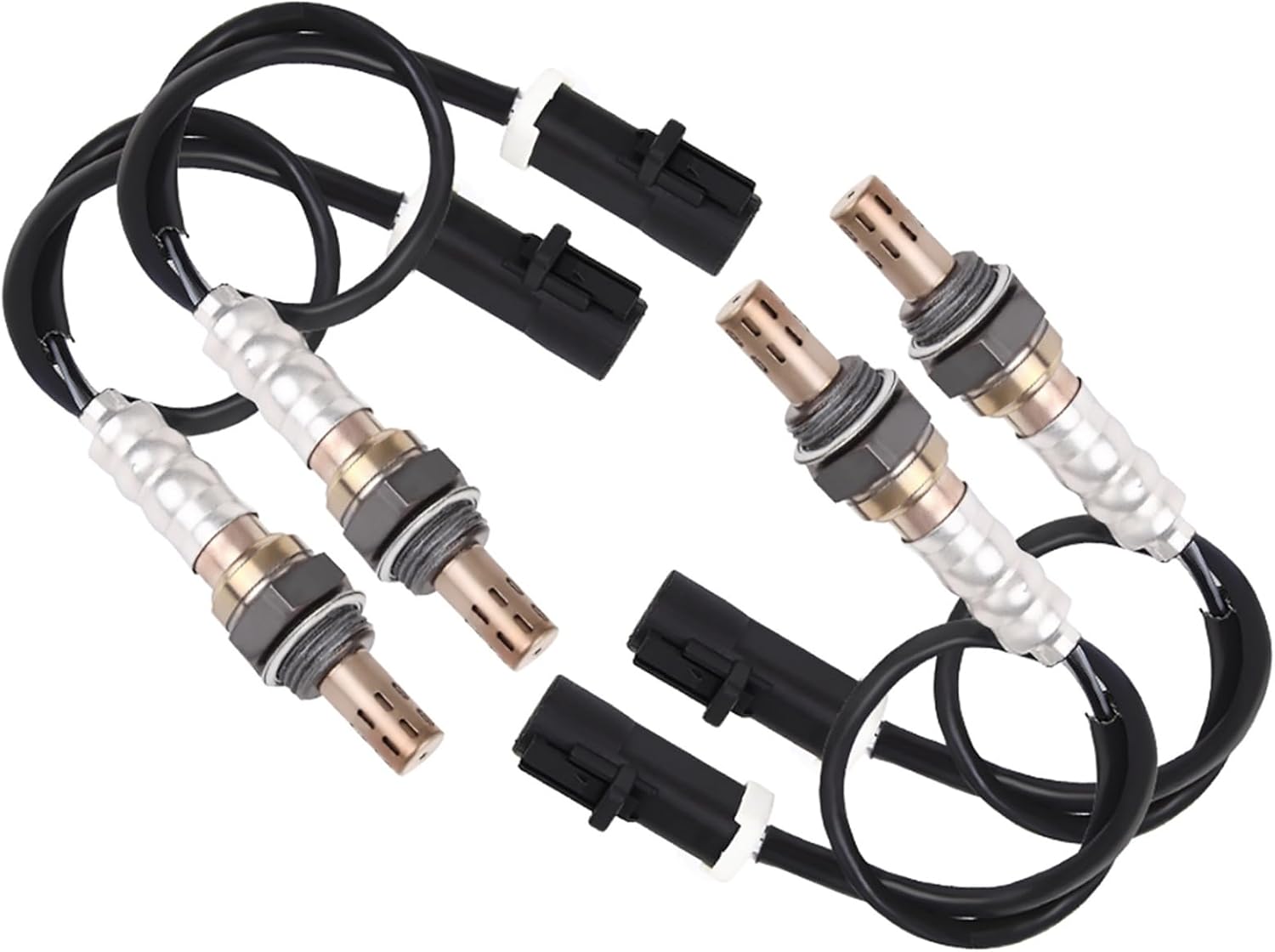
| Measurement Accuracy | ±3% |
|---|---|
| Measuring Range | 0-25% (Upstream), 20-100% (Downstream) |
| Mounting Type | Plug Mount |
| Upper Temperature Rating | 649 Degrees Celsius |
This ITOM four-pack supplies upstream and downstream oxygen sensors intended to replace factory sensors on compatible Ford vehicles such as the Ranger. Each sensor is plug-mount with a push-pull output and is built to the manufacturer’s stated design using laser welding for improved sealing and faster response. In use the sensors provide the engine control module with oxygen-level feedback to help correct fuel trim, support emissions control, and recover fuel economy when a failing sensor has caused drivability issues. Notable practical benefits include measurement accuracy of about ±3% and high temperature tolerance for under-hood environments. The kit covers both banks so you can service multiple positions without separate ordering. Limitations to keep in mind are compatibility: connector types and exact fit vary by model year and engine, so you must verify plug fit before installation, and aftermarket sensors may not match factory lifetime or calibration exactly. Installation requires basic mechanical access to exhaust ports and common hand tools or a sensor socket.
Best for: Performance-oriented buyers who want to restore or improve engine fueling and emissions control on a Ford Ranger and prefer replacing multiple sensors at once to optimize engine response.
Less Ideal for: Drivers seeking a guaranteed direct fit without checking connector types or those preferring dealer-sourced factory-quality sensors with known long-term provenance should consider other options.
- Includes both upstream and downstream sensors in a four-pack for complete bank coverage
- Designed with laser welding and high temperature rating for durability in exhaust conditions
- Measurement accuracy listed as ±3% supports reliable oxygen readings
- Plug-mount design simplifies replacement when connector matches factory harness
- Connector and plug types may not match every model year and engine variant
- Aftermarket sensors can differ from factory sensors in long-term calibration and durability
Verdict A performance-focused four-pack that can restore proper air-fuel control on a Ford Ranger if you confirm connector fit and accept aftermarket calibration differences.
4. Maxfavor Upstream Oxygen Sensor Replacement for Ford Ranger and Compatible Ford V6 Engines

| Style | O2 Sensor |
|---|---|
| Mounting Type | Flange Mount |
| Output Type | electrical signal |
| Manufacturer | Maxfavor |
This Maxfavor upstream oxygen sensor is a no-frills replacement designed to restore accurate O2 readings on 4.0L and 5.4L Ford V6 applications listed for fitment. It installs like a standard threaded flange sensor and provides the electrical signal the engine control module needs to adjust fuel trim and reduce emissions. The listing highlights durable construction and step-by-step installation guidance, so a competent DIYer with a sensor socket can swap it in and clear any related trouble codes. The practical benefits are straightforward: potential improvement in fuel economy and engine performance when a failing sensor is the cause, and a lower-cost alternative to a factory-quality unit. Limitations are that this is an economy aftermarket part with limited documented fitment history and minimal manufacturer detail beyond basic compatibility, so professional shops or restorations that require strict factory-spec components may prefer a branded OEM replacement. Expect typical aftermarket variability in longevity compared with higher-cost sensors.
Best for: Budget-conscious owners focused on a practical, cost-saving repair who are comfortable doing the swap themselves or having a local shop fit an inexpensive replacement.
Less Ideal for: Drivers seeking factory-quality longevity or certified emissions compliance for restorations or extended warranty coverage should consider higher-grade or OEM replacements.
- Low-cost replacement that addresses oxygen sensor-related drivability and emissions issues
- Threaded flange design for standard installation with common O2 sensor tools
- Listed compatibility with Ford Ranger V6 and several Ford models for straightforward fit checks
- Aftermarket part with limited brand pedigree and sparse technical documentation
- Fewer guarantees about long-term durability compared with higher-end or factory-quality sensors
Verdict A cost-effective upstream oxygen sensor that can fix O2-related symptoms on Ford Ranger V6 engines if you want an affordable DIY replacement rather than a factory-quality unit.
5. Gledewen Oxygen Sensor Kit (2-Pack)

| Brand | Gledewen |
|---|---|
| Material | Stainless Steel |
| Mounting Type | Flange Mount |
| Output Type | Analog |
| Measurement Accuracy | ±0.5% |
This Gledewen two-pack provides replacement oxygen sensors intended to restore proper air-fuel monitoring on compatible Ford engines. Designed as upstream/downstream replacements, the sensors are typically used to clear OBD-II codes, improve fuel economy, and recover engine performance when original sensors fail. The kit includes stainless steel sensor bodies, flange mounts, and analog output so the vehicle computer can read exhaust oxygen levels. Practical benefits include reportedly quick response times from high temperature resistant construction and double laser-welded housings for corrosion resistance. Buyers should confirm plug shape and wiring before installing because incorrect connector type or receiving two downstream units instead of an up-and-down pair has been reported, and one customer experienced heater circuit failures on arrival. The manufacturer offers a 12-month replacement or refund service. For a Ford Ranger this unit can be a cost-effective fix when the stock sensor ages, but expect variability in fitment and occasional quality inconsistencies compared with factory-quality replacements.
Best for: A risk-averse mainstream buyer who prefers a low-cost replacement to restore a Ford Ranger to reliable operation without experimenting with performance parts.
Less Ideal for: Not suited for buyers who need guaranteed factory-quality endurance or who prefer OEM parts backed by dealer support; also avoid if you cannot verify plug compatibility before installation.
- Two sensors included for replacing both positions without a second order
- Stainless steel, high-temperature construction aims to resist corrosion and heat
- Flange mount and standard analog output for straightforward vehicle connection
- Manufacturer-backed 12-month replacement or refund option
- Some buyers received two downstream sensors rather than an upstream/downstream pair
- Reported incidents of heater circuit failure on certain units
- Fitment depends on matching the sensor plug exactly to the Ranger wiring harness
Verdict A budget-friendly two-pack that can restore a Ranger's engine performance if the correct connector and sensor positions are confirmed, but expect occasional fitment or quality variability.
6. HHGKPVX Oxygen Sensor (Pair) Compatible with Ford Ranger and Select Ford Models

| Brand | HHGKPVX |
|---|---|
| Material | Stainless Steel |
| Maximum Supply Voltage | 12 Volts |
| Mounting Type | Flange Mount |
| Output Type | electrical signal |
These HHGKPVX oxygen sensors are offered as a direct-replacement pair for Ford Ranger and other Ford models that use 4-wire narrowband sensors. They monitor exhaust oxygen and send an electrical signal to the engine control module to help manage fuel trim and emissions. The sensors come pre-fitted with anti-seize on the threads and include a crush washer, which makes installation straightforward with common hand tools and an appropriate O2 socket. Construction uses stainless steel and the unit claims high temperature tolerance for durability in exhaust environments. Practical benefits include easy bolt-in fit where a 4-wire narrowband sensor is required and an affordable way to restore correct sensor function and clear related drivability or emission codes. Important limitations: these are 4-pin narrowband sensors and will not work where a wideband or 6-pin upstream sensor is specified, so confirm connector type before buying. Also, as an aftermarket option, long-term lifespan can vary compared with factory-quality sensors.
Best for: Practical optimizers who want an affordable, no-frills replacement to restore proper oxygen sensing and fuel control on a Ford Ranger without paying for dealer parts.
Less Ideal for: Drivers who need a factory-quality long-term replacement for extended service intervals or vehicles that require a wideband 6-pin upstream sensor should consider other options.
- Sold as a pair to replace both upstream or downstream narrowband sensors on compatible vehicles
- Pre-applied anti-seize threads and included crush washer simplify installation
- Stainless steel construction and high temperature rating designed for exhaust environments
- Direct electrical signal output compatible with standard 4-wire oxygen sensor circuits
- Not compatible with wideband or 6-pin upstream sensors used on some models
- Aftermarket unit so long-term durability may vary versus factory-quality sensors
Verdict A budget-friendly pair of 4-wire oxygen sensors that make a simple, inexpensive repair for Ford Ranger models that use narrowband sensors, but they are not suitable where a wideband sensor is required.
7. Gledewen 4-Pack Oxygen Sensors (Upstream/Downstream)

| Brand | Gledewen |
|---|---|
| Material | Stainless Steel |
| Mounting Type | Flange Mount |
| Output Type | Electronic |
| Upper Temperature Rating | 932 Degrees Fahrenheit |
This four-pack from Gledewen supplies upstream and downstream oxygen sensors intended as direct replacements for many Ford applications. Each sensor monitors exhaust oxygen to keep the engine control unit informed for optimal fuel trim and emissions control; typical use is swapping worn sensors that trigger check-engine codes or cause poor fuel economy. The sensors use a stainless steel, flange-mount design and claim high temperature resistance with laser-welded construction for corrosion protection. Packaging includes multiple connector styles so you must match the plug to your vehicle before installation. Practical benefits are straightforward: replacing faulty sensors can clear codes, restore fuel efficiency, and improve drivability without expensive dealer parts. Limitations include occasional reports of heater circuit failures and the need to verify exact plug type and upstream versus downstream placement, since the kit may include multiple identical sensors rather than a labeled up/down set. Buyers should also be prepared to test connectors and codes after fitment to confirm heater and signal operation.
Best for: Balanced all-round buyers who want a complete replacement set to restore emissions monitoring and fuel economy on a Ford Ranger without paying dealer prices.
Less Ideal for: Those who prefer labeled, vehicle-specific branded sensors or need guaranteed plug-for-plug labeled upstream and downstream parts should consider OEM or explicitly single-sensor options instead.
- Sold as a four-pack covering upstream and downstream positions for multi-sensor exhaust systems.
- Stainless steel, laser-welded body and high temperature rating for durability under exhaust conditions.
- Electronic output and factory-style flange mount for straightforward replacement and compatibility with factory harnesses.
- Helps restore correct air-fuel readings which can clear check-engine codes and improve fuel economy.
- Kit may contain duplicate downstream or upstream sensors so confirm plug and position before installing.
- Some users reported heater circuit failures on a portion of sensors, requiring replacement.
- No explicit list of which sensor is for which bank or position in the package, so identification can be unclear.
Verdict A cost-effective four-pack that can restore emissions control and fuel economy on compatible Ford Rangers if you confirm plug type and verify heater operation after installation.
Choosing the Right Ford Ranger Oxygen Sensor: Key Factors to Consider
Fitment and Connector Compatibility
Ensuring the sensor physically fits the Ford Ranger and uses the correct electrical connector is essential. A correct fit prevents exhaust leaks at the mounting flange and avoids splicing or adapter use, which can introduce faults. Connector compatibility reduces installation time and minimizes the risk of poor electrical contact that can cause intermittent signals.
Also verify thread size, mounting type, and harness routing so the sensor does not contact hot exhaust components or moving parts. Proper mechanical fit supports accurate sensor placement relative to the exhaust stream, which directly affects measurement reliability.
Signal Type and Response Time
The sensor’s electrical behavior—how quickly and accurately it responds to changes in exhaust oxygen—affects engine control and drivability. Faster, stable signal response helps the engine management system keep air-fuel ratio near target during transient conditions such as acceleration and deceleration.
Consider whether the sensor is designed as a heated unit to reach operating temperature quickly, since a cold sensor produces delayed or erratic readings. Good response characteristics reduce the likelihood of fuel trim extremes and related drivability symptoms.
Upstream Versus Downstream Placement
Oxygen sensors located before the catalytic converter (upstream) and after it (downstream) serve different roles in emissions control. Upstream sensors primarily influence immediate fuel control by measuring exhaust composition coming directly from the engine, while downstream sensors monitor catalyst efficiency and detect degradation.
Choosing a sensor that matches the required upstream or downstream specifications ensures the engine computer receives appropriate data for its control strategy. Function and durability expectations differ between these positions, so match the sensor to its intended bank and position.
Durability and Environmental Resistance
Exhaust sensors are exposed to high temperatures, vibration, and corrosive gases, so material quality matters. Sensors designed with robust protective sheaths, corrosion-resistant housings, and secure, heat-rated wiring last longer and maintain stable readings over time.
Check for features that mitigate common failure modes such as wiring abrasion, connector corrosion, and thermal cycling. Longer-lived sensors reduce the need for repeat replacements and help maintain consistent engine performance.
Compatibility With Diagnostic and Repair Procedures
A sensor that supports straightforward diagnostics and standard repair steps saves time during troubleshooting. Clear wiring color codes, documented pinouts, and predictable signal characteristics make it easier to confirm sensor operation when testing for O2 sensor codes or related check engine light events.
Consider whether the sensor supports common test methods for this vehicle so you can diagnose faults such as heater circuit failures or sluggish responses without ambiguity.
Heater Circuit and Electrical Integrity
Many oxygen sensors include an integrated heater to bring the sensing element to operating temperature quickly. The heater circuit affects warm-up time and overall emissions performance, so its reliability is important. A failed heater can mimic a sensor fault by causing slow or absent responses and triggering diagnostic trouble codes.
Evaluate the expected electrical durability, including connector sealing and wire insulation quality, because heater circuit failures often originate from environmental exposure or vibration-related damage.
FAQ
What are common O2 sensor symptoms in a Ford Ranger?
Common symptoms often include a persistent check engine light, rough or unstable idle, and reduced fuel economy. You may also notice hesitation during acceleration or black exhaust smoke in some cases. These signs usually indicate the sensor is not supplying accurate oxygen readings to the engine control unit.
How do I know whether to replace an upstream or downstream oxygen sensor?
The control computer uses upstream sensors primarily for fuel trim and downstream sensors to monitor the catalytic converter. If you see codes referring to bank or sensor position, match the code to the specific sensor location. In general, upstream sensor faults more directly affect drivability, while downstream faults usually relate to emissions system monitoring.
Can I test an oxygen sensor myself?
You can perform basic tests such as checking the heater circuit for continuity and observing signal voltage swings with a scan tool or multimeter. There are established procedures to check response time and voltage behavior during rich and lean conditions. However, more definitive diagnostics may require specialized tools or professional equipment.
Will replacing the oxygen sensor clear the check engine light?
Replacing a faulty oxygen sensor often resolves the underlying fault and allows the code to clear after a successful drive cycle or manual reset. If the light persists, other issues such as wiring faults, exhaust leaks, or unrelated engine problems may be present and should be investigated.
How long do oxygen sensors typically last in service?
Sensor life varies depending on driving conditions, exposure to contaminants, and thermal stress. Many sensors last several years under normal use, but frequent short trips, exposure to coolant or oil contamination, or harsh environments can shorten service life. Regular inspection can help detect early signs of failure.
Are heated oxygen sensors necessary for reliable operation?
Heated sensors reach operating temperature faster, reducing the period of inaccurate readings that can affect emissions and driveability. They are commonly used to improve warm-up performance, especially in climates with frequent cold starts. The presence of a heater is often important for consistent operation.
How We Chose the Best Ford Ranger Oxygen Sensor
We focused on parts that specifically fit the Ford Ranger application and deliver reliable air-fuel feedback for the engine control system. Primary evaluation criteria included mechanical fitment and connector match, electrical signal response and latency, build quality of the sensing element and wiring, and compatibility with upstream and downstream mounting locations. We also assessed durability factors such as heat and corrosion resistance, and whether the sensor design supports standard installation procedures.We excluded generic, non-vehicle-specific universal parts and any items lacking documented fitment for the Ford Ranger. We did not consider aftermarket parts without clear wiring or connector information. The resulting list favors sensors that balance correct fit, dependable signal behavior, and long-term durability in real-world driving conditions.
Our full evaluation process is outlined in our review methodology.
Conclusion
When choosing a Ford Ranger oxygen sensor, prioritize correct fitment and connector compatibility, reliable signal response, and the appropriate upstream or downstream specification. Durability features such as corrosion resistance and a robust heater circuit reduce the risk of repeat failures.Balance response time and long-term reliability against ease of installation and diagnostic clarity. Focusing on those core factors will help restore stable fuel control and reduce emissions-related issues.
Explore More:
- Check out all Ford Ranger parts & accessories
- Explore Oxygen Sensors Maintenance & Repair Guides
- Explore Engine
- Browse all Auto Parts
