

Note: This article contains affiliate links. If you click on these links and make a purchase, I may earn a small commission at no extra cost to you. This helps support my research and content. Read my full affiliate disclosure here.
If you tow regularly with a GMC Sierra 2500 HD, the right tow hitch receiver is essential for safe, confident hauling. A properly chosen hitch affects tongue weight handling, trailer stability, and long-term durability under heavy loads. This guide covers the top shortlisted tow hitch receivers suited to the Sierra 2500 HD and explains how each option aligns with common towing needs, whether you pull a heavy trailer, a flatbed, or a 5th wheel via an appropriate hitch adapter.We evaluate the picks based on structural strength, vehicle-specific fitment, and ease of installation so you can narrow options quickly. Read on for what matters most when matching a hitch receiver to your truck and towing plans, followed by practical FAQs and buying guidance.
Top Picks at a Glance
| Best Overall Tow Hitch Receiver The top all-around receiver balancing strength, fit, and value | CURT Commercial Duty Class 5 Trailer Hitch 2-1/2-Inch Receiver |  |
| Best Budget Tow Hitch Receiver A low-cost receiver that delivers basic towing capability reliably | Autekcomma Class 4 Trailer Hitch Receiver for 2001–2010 Chevy/GMC 2500 HD (6-ft Bed) |  |
| Best 2-Inch Tow Hitch Receiver Standard 2-inch receiver for widest accessory compatibility and common loads | CURT Class 3 Trailer Hitch 2-Inch Receiver (Model 13322) |  |
| Best Heavy-Duty Tow Hitch Receiver A beefy, higher-capacity receiver built for heavy towing and durability | CURT Commercial Duty Class 5 Trailer Hitch 2-1/2-Inch Receiver |  |
| Best Low-Profile Tow Hitch Receiver A compact, low-rise receiver that keeps rear clearance and appearance slim | CURT Class 4 Trailer Hitch 2-Inch Receiver (Model 14010) |  |
| Best Corrosion-Resistant Tow Hitch Receiver Receivers with superior coatings or stainless construction for long life | CURT Class 3 Trailer Hitch 13062, 2-Inch Receiver for Chevrolet Silverado/GMC Sierra 2500/3500 HD |  |
1. CURT Commercial Duty Class 5 Trailer Hitch 2-1/2-Inch Receiver
Best Overall Tow Hitch Receiver

| Pull Force | 18000 Pounds |
|---|---|
| Material | Carbon Steel |
| Finish Type | Powder Coated |
| Automotive Fit Type | Vehicle Specific Fit |
This CURT Commercial Duty Class 5 hitch is built for heavy hauling on compatible GMC Sierra 2500/3500 trucks, providing a 2-1/2-inch receiver that accepts ball mounts, pintles, winch mounts and other heavy-duty accessories. It is constructed from carbon steel and finished with a liquid A-coat plus carbide black powder coat for corrosion resistance in tough outdoor use. Rated for 18,000 lb gross trailer weight and 2,700 lb tongue weight, the hitch is aimed at large flatbeds, boat trailers, car haulers and other oversized loads. Installation uses vehicle-specific mounting points and includes grade-8 hardware, so most competent DIY mechanics can install it with basic tools although alignment and torque of fasteners are important. The robust receiver opening and commercial-class rating give confidence when pairing with heavy ball mounts or pintle hooks, but the size and weight mean it is a substantial component to handle during install and it must match the truck application exactly. If you need maximum capacity and a durable finish for frequent heavy towing, this hitch is a practical choice.
Best for: A Sierra owner who needs a high-capacity, work-ready hitch and prioritizes build strength, corrosion resistance, and compatibility with heavy-duty towing accessories.
Less Ideal for: Drivers who only tow light trailers occasionally or who need a lightweight, low-profile receiver should consider smaller class hitches or simpler aftermarket options.
- Commercial class 5 rating supports heavy towing up to 18,000 lb GTW and 2,700 lb tongue weight
- 2-1/2-inch receiver accepts the strongest ball mounts, pintles, winch mounts and other heavy-duty accessories
- Durable steel construction with liquid A-coat plus carbide black powder coat for enhanced rust resistance
- Includes grade-8 mounting hardware and is designed for vehicle-specific fitment to ensure secure installation
- Heavy and bulky component that can be awkward to handle during installation
Verdict: The best all-around tow hitch receiver that balances rated towing capacity, build quality, ease of install, and value for most DIY mechanics.
2. Autekcomma Class 4 Trailer Hitch Receiver for 2001–2010 Chevy/GMC 2500 HD (6-ft Bed)
Best Budget Tow Hitch Receiver

| Compatible vehicle | 2001–2010 Chevrolet Silverado/GMC Sierra 2500 HD (6' bed) |
|---|---|
| Receiver size | 2 x 2 inch |
| Maximum towing capacity | 10000 pounds |
| Material | Carbon Steel |
| Finish | Black matte powder coated |
This Autekcomma Class 4 trailer hitch converts the rear of compatible 2500 HD trucks into a standard 2-inch x 2-inch receiver for towing trailers, mounting cargo carriers, or attaching standard ball mounts. Designed as a direct fit for 2001–2010 Chevrolet Silverado and GMC Sierra 2500 HD models with 6-foot beds, the hitch bolts to existing frame points so no drilling is required and installation is straightforward for a home mechanic with basic tools. Made from carbon steel and finished with a dual rust-resistant coating, it resists chipping and corrosion in daily use. The hitch is rated for a 10,000 lb gross trailer weight and includes a dust cover to keep debris out of the receiver tube. Limitations to note are that it is vehicle-specific to 6-foot beds only and does not support vertical-hang bike racks that require hanging bikes inside the receiver. For buyers focused on a practical, budget-conscious replacement or upgrade for a Sierra 2500 HD, this unit delivers solid capacity and simple installation without extra features.
Best for: Buyers who want a dependable, no-frills hitch that restores or upgrades towing capability on a GMC Sierra/Chevy Silverado 2500 HD with a 6-foot bed while keeping cost and complexity low.
Less Ideal for: Buyers who need hitch fitment for bed lengths other than 6 feet or who require specialized mounting for vertical-hang bike racks or advanced towing accessories.
- Vehicle-specific fit for 2001–2010 Chevy/GMC 2500 HD 6-foot beds ensures proper alignment and mounting
- 10,000 lb rated gross trailer weight and 2,400 lb tongue weight suitable for common towing tasks
- Black matte powder-coated steel with dual rust-resistant coating improves durability against corrosion and chips
- No-drill installation using existing bolt points simplifies fitment and reduces install time
- Fits only 6-foot bed configuration so it will not work on long-bed or short-bed variants
Verdict: The best budget tow hitch receiver for buyers who want a reliable, no-frills option that meets common towing needs without a high price.
3. CURT Class 3 Trailer Hitch 2-Inch Receiver (Model 13322)
Best 2-Inch Tow Hitch Receiver

| Maximum Towing Capacity | 6000 Pounds |
|---|---|
| Tongue Weight | 600 Pounds |
| Receiver Size | 2-inch x 2-inch |
| Material | Carbon Steel |
This CURT Class 3 trailer hitch installs at the rear of select GMC Sierra 2500 models to add a standard 2-inch x 2-inch receiver for towing and accessory use. It is a vehicle-specific design meant to bolt to the factory mounting points without drilling on supported model years, giving a clean, secure fit. Built from high-strength carbon steel with precise welding and a co-cured liquid Bonderite plus powder-coat finish, the hitch resists rust and chipping in regular use. Rated for 6,000 lb GTW and 600 lb TW, it accepts common ball mounts, hitch-mounted bike racks, cargo carriers and can be used with a properly rated weight-distribution system to increase tongue capacity. Practical benefits include wide accessory compatibility afforded by the 2-inch receiver and proven testing to SAE towing standards. Limitations are that fitment is specific to certain Sierra 2500 model years so you must confirm vehicle compatibility and the hitch’s capacity is typical for Class 3 but not suitable for heavier commercial towing needs.
Best for: Buyers who want a factory-style 2-inch receiver on their GMC Sierra 2500 to tow common trailers and use popular hitch-mounted accessories with a vehicle-specific fit and corrosion protection.
Less Ideal for: Drivers who need higher-capacity towing for heavy commercial trailers or who own Sierra 2500 model years outside the listed fitment should look at heavier-class or different-fit options.
- Standard 2-inch receiver fits most ball mounts and hitch accessories
- Vehicle-specific design bolts to factory mounting points for a tidy, secure fit
- 6,000 lb gross towing capacity covers most campers, boats, and utility trailers
- Durable dual-layer finish and solid welding resist rust and everyday wear
- Compatibility limited to specific Sierra 2500 model years so verification is required
Verdict: The best 2-inch tow hitch receiver for shoppers who need the common receiver size that fits most ball mounts, bike racks, and towing accessories.
4. CURT Commercial Duty Class 5 Trailer Hitch 2-1/2-Inch Receiver
Best Heavy-Duty Tow Hitch Receiver

| Receiver opening | 2-1/2 inches |
|---|---|
| Gross trailer weight | 20,000 lbs |
| Tongue weight | 2,700 lbs |
| Material | Carbon Steel |
This CURT Commercial Duty Class 5 hitch is built for serious towing on select Silverado and Sierra 2500/3500 HD trucks. It installs as a custom-fit replacement (it will not work with a factory receiver) and provides a beefy 2-1/2-inch receiver that accepts ball mounts, pintles, tow hooks, winch mounts and other heavy-duty accessories. The hitch is rated for a 20,000 lb gross trailer weight and a 2,700 lb tongue weight and is tested to SAE J684 standards, which gives confidence when hauling oversized trailers like car haulers, large boat trailers, and commercial flatbeds. Construction uses carbon steel with a liquid A-coat plus carbide black powder coat for corrosion resistance, and the kit includes grade-8 mounting hardware. The hitch’s strength and broad accessory compatibility make it a solid choice for DIY mechanics who need a higher capacity receiver, though it adds substantial weight and requires vehicle-specific fitment checking before purchase and installation.
Best for: DIY mechanics and fleet operators who regularly tow very heavy trailers and prioritize a reinforced, high-capacity receiver and broad accessory compatibility.
Less Ideal for: Casual users who tow light loads or need a direct-fit bolt-on for a factory receiver should consider lighter-duty or factory-compatible hitches instead.
- High towing capacity rated for 20,000 lb gross trailer weight and 2,700 lb tongue weight.
- 2-1/2-inch receiver accepts heavy-duty mounts, pintles, winches and other commercial accessories.
- Durable carbon steel construction with liquid A-coat plus carbide black powder coat for corrosion resistance.
- Includes grade-8 hardware and is tested to SAE J684 for on-vehicle safety.
- Heavy unit weight makes handling and installation more difficult for one person.
Verdict: The best heavy-duty tow hitch receiver for DIY mechanics who regularly tow heavy trailers and need a higher gross trailer weight rating and reinforced construction.
5. CURT Class 4 Trailer Hitch 2-Inch Receiver (Model 14010)
Best Low-Profile Tow Hitch Receiver
| Receiver size | 2 inches |
|---|---|
| Gross trailer weight | 10,000 lbs |
| Tongue weight | 1,000 lbs |
| Material | Carbon Steel |
| Finish | Co-cured liquid undercoat and powder coat |
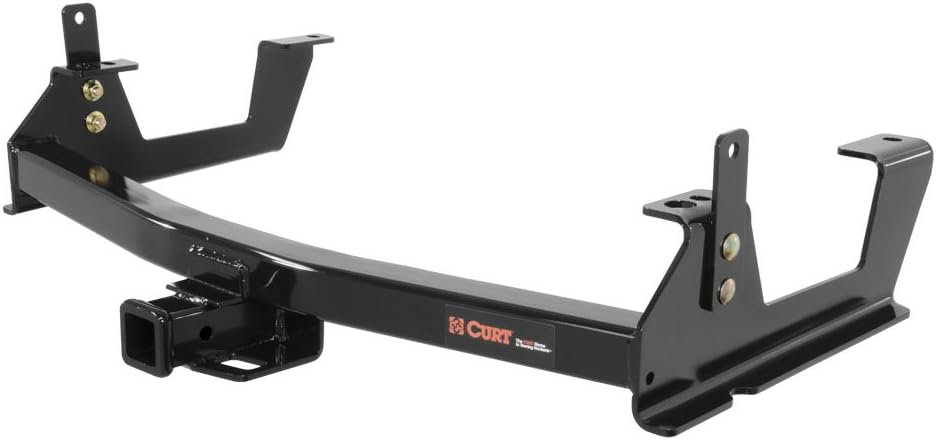
This CURT Class 4 trailer hitch gives select Chevrolet Silverado and GMC Sierra 2500/3500 HD trucks a factory-style 2-inch receiver for serious towing tasks. It is typically used to tow full-length campers, large boat trailers, and heavy utility trailers thanks to a 10,000 lb gross trailer weight rating and 1,000 lb tongue weight capacity, with higher capacity when using weight distribution. The hitch is made from high-strength carbon steel, precisely welded, and finished with a co-cured liquid undercoat plus a powder coat that resists rust, chips, and UV exposure. Installation is vehicle-specific and comes with the necessary hardware for a direct-fit mount that keeps the receiver tucked close to the bumper for a cleaner, lower-profile look. The main compromise is that the design focuses on fit and strength rather than being a minimalist or hidden hitch; it still projects the standard 2-inch opening and requires correct matching of hitch capacity to your trailer and other towing components. For buyers who want a durable, tested receiver that reduces visual bulk without sacrificing towing capability, this is a practical option.
Best for: Buyers who prioritize a strong, vehicle-specific receiver that minimizes rear visual bulk while keeping full Class 4 towing capability on a Sierra 2500/3500 HD.
Less Ideal for: Anyone seeking a completely concealed hitch or an ultra-low-profile aftermarket design that hides the receiver entirely should consider alternative hidden-receiver options.
- 10,000 lb gross trailer weight rating and 1,000 lb tongue weight for heavy towing
- Vehicle-specific design for a close, factory-quality fit on compatible 2500/3500 HD trucks
- Durable carbon steel construction with co-cured liquid undercoat and powder coat finish for corrosion resistance
- Includes all necessary mounting hardware for direct installation
- Tested to SAE J684 standards at the manufacturer facility
- Not a hidden or fully recessed hitch; still presents a visible 2-inch receiver opening
Verdict: The best low-profile tow hitch receiver for buyers who want reduced visual impact and better rear clearance while retaining practical towing capability.
6. CURT Class 3 Trailer Hitch 13062, 2-Inch Receiver for Chevrolet Silverado/GMC Sierra 2500/3500 HD
Best Corrosion-Resistant Tow Hitch Receiver

| Material Type | Carbon Steel |
|---|---|
| Finish Type | Gloss, Powder-Coated |
| Receiver Size | 2-inch |
| Weight Carrying Capacity | 8,000 lbs GTW |
| Weight Distribution Capacity | 12,000 lbs WD |
This CURT Class 3 trailer hitch is a custom-fit receiver engineered for Chevy Silverado and GMC Sierra 2500/3500 HD trucks and provides the common utility of a 2-inch receiver for towing trailers, campers, boats and hitch-mounted accessories. It is built from high-strength carbon steel and uses precise welding and vehicle-specific mounting points so installation yields a secure, factory-quality fit. CURT emphasizes corrosion resistance with a co-cured liquid A-coat undercoating plus a durable powder coat finish, which helps the hitch resist rust, chipping and UV damage in wet or salty environments. The hitch supports typical Class 3 loads including an 8,000 lb gross trailer weight rating and is compatible with weight distribution systems for higher load control. The practical benefit is confidence in long-term service life and reduced surface deterioration in harsh climates. Limitations are inherent to its class: it is sized for a 2-inch receiver and intended only for the specified Silverado/Sierra applications so buyers needing larger receiver sizes or broader vehicle fitment should look elsewhere.
Best for: Buyers who need a heavy-duty, factory-quality hitch for their Sierra 2500/3500 HD and prioritize long-term rust protection and durable finishes for wet or coastal use.
Less Ideal for: Shoppers who require a larger receiver size, broader multi-vehicle compatibility, or a hitch designed for different truck models should consider other options.
- Co-cured liquid A-coat plus durable powder coat finish for strong corrosion resistance
- Vehicle-specific design provides a precise, factory-quality fit on specified Silverado/Sierra models
- Constructed from high-strength carbon steel with precise welding for robust towing strength
- Supports 8,000 lb gross trailer weight and is compatible with weight distribution systems
- Only fits select Chevrolet Silverado 2500/3500 HD and GMC Sierra 2500/3500 HD model years and is not universal
Verdict: The best corrosion-resistant tow hitch receiver for shoppers who prioritize rust protection and long-term durability in wet or salty environments.
Choosing the Right GMC Sierra 2500 HD Tow Hitch Receiver: Key Factors to Consider
Towing Capacity and Rating
Towing capacity determines what trailers and loads you can safely tow. Look for hitches with Gross Trailer Weight and Tongue Weight ratings that match or exceed the loads you expect to haul. Ratings should be based on the hitch component limits and the truck's rated capacities. Choosing a hitch rated too low forces you to operate below safe margins, while an overbuilt hitch gives you headroom for heavier loads or towing upgrades.
Also consider tongue weight limits separately because much of the trailer's load is transferred to the rear axle through the hitch. If you plan to use accessories such as weight-distribution systems or a 5th wheel adapter, check how those change tongue weight and whether the hitch has the necessary attachment points or reinforced sections to support them.
Fitment and Attachment Method
How the hitch attaches to the Sierra 2500 HD frame affects both strength and installation time. Bolt-on hitches that use existing frame holes or supplied hardware typically require less modification and are reversible if you remove the hitch later. Weld-in or frame-modification hitches can offer very rigid mounts but require professional welding and may affect resale considerations.
Verify that the hitch is engineered for the Sierra 2500 HD's frame geometry and any factory features like factory tow prep packages or spare tire clearances. Some mounts route around exhaust, fuel tanks, or crossmembers, so check documented fit notes and whether additional trim or bumper removal is necessary for your model year and configuration.
Receiver Size and Accessory Compatibility
Receiver opening size determines what ball mounts and accessories you can use. Common options include 1-1/4-inch, 2-inch, and 2-1/2-inch receivers, with heavy-duty trucks often using larger sizes to accommodate higher loads. Match the receiver size to the class of hitch you need and the ball mount shank size for your trailers.
Also consider multi-receiver setups or drop-in adapters if you alternate between small cargo carriers and heavy trailer towing. Remember that adapters can reduce the effective capacity and change hitch geometry, so any adapter used needs to be rated appropriately for the applied loads.
Material, Corrosion Protection, and Durability
Hitches are exposed to road salt, moisture, and mechanical wear. Materials and coatings determine long-term durability and resistance to rust. Look for heavy-gauge steel construction and quality welds for strength. Finishes such as powder coat, e-coating, or specialized corrosion-resistant plating extend service life.
Consider how the hitch design manages water traps and whether fasteners are stainless or zinc-plated. For owners who frequently tow in coastal or winter-salt environments, additional protective measures or routine inspection schedules will help maintain hitch integrity.
Installation Complexity and Required Tools
Installation effort varies widely. Some receivers mount with a few bolts and basic hand tools, while others need torqueing to specified values, cutting of factory bumper trim, or temporary removal of exhaust components. Assess whether you can complete the installation in a driveway with common tools or if you need a lift and professional help.
Check whether the hitch requires torque specs, specific grade bolts, or thread-locking compound. Also factor in the time needed for wiring and safety chain anchor points. A simpler install reduces labor cost and downtime, but sometimes a slightly more involved installation yields a stronger, better-integrated result.
Accessory Integration and Wiring Access
A functional hitch system must accommodate trailer wiring, sway control, and safety chains. Look for hitches that provide clear mounting points for wiring harnesses, junction boxes, or conduit clips to keep wiring protected and routed away from heat sources. Integrated plates or knockouts can make installing 7-pin or multi-pin connectors easier.
Also evaluate whether the hitch geometry offers convenient attachment points for safety chains and sway-control devices without interfering with the receiver or the truck's rear components. Proper integration reduces installation time and improves reliability when towing under heavy loads.
Understanding Hitch Classes and What They Mean for the Sierra 2500 HD
Hitch classes describe the general strength and receiver size of a hitch. For a heavy-duty truck like the Sierra 2500 HD, you will commonly encounter Class 3, Class 4, and commercial-grade receivers. Class 3 is suitable for lighter trailers and accessories, while higher classes provide larger openings and higher weight capacities that align with the truck's capabilities.
When choosing a hitch class for your Sierra 2500 HD, prioritize the class that matches your planned towing loads rather than the truck's maximum capability alone. Selecting the appropriate class ensures correct accessory sizing and prevents overreliance on adapters that reduce capacity.
- Class 3: versatile but limited for heavy fifth-wheel or large equipment towing
- Class 4: common for medium to heavy towing with 2-inch to 2.5-inch receivers
- Commercial-grade: larger receivers and mounting for maximum payloads
Bolt-On Vs Weld-In Hitches: Pros and Cons for Owners
Bolt-on hitches generally require no permanent modifications to the truck and are easier to remove or upgrade. They are often the practical choice for owners who want straightforward installation and minimal impact on vehicle resale. Bolt-on designs rely on proper torqueing of bolts and correct use of supplied hardware to achieve rated capacity.
Weld-in hitches can offer a lower-profile and extremely rigid mount but require welding that should be performed by a qualified technician. Welding can change the truck's frame finish and is effectively permanent, so weigh installation permanence against the potential structural advantages for very heavy or continuous towing duties.
- Bolt-on: reversible, often simpler, suitable for most owners
- Weld-in: very rigid, needs professional installation, limits reversibility
Practical Steps to Prepare Your Sierra 2500 HD for Hitch Installation
Before starting installation, check ground clearance and confirm there is adequate space for the hitch and any future accessories. Remove any loose cargo from the bed and ensure the spare tire, if mounted under the bed, will not obstruct the hitch. Inspect the frame area for corrosion or damage that should be addressed prior to mounting a new receiver.
Gather the necessary tools and hardware, including a torque wrench, jack stands, and any special sockets required by supplied bolts. If your truck has a factory tow prep package or pre-drilled frame holes, verify that the hitch is compatible and that the mounting hardware aligns with factory points. Planning ahead reduces installation time and minimizes surprises.
- Inspect frame and underbody for corrosion
- Confirm spare tire and exhaust clearance
- Have torque wrench and safety stands available
How Receiver Height and Drop/ Rise Affect Trailer Geometry
The vertical position of the receiver relative to the trailer coupler determines proper tow angle. If the receiver is too high or too low, you may need a drop or rise ball mount to achieve level towing. For heavy trailers, maintaining level tow geometry helps distribute weight correctly across tow vehicle and trailer axles and improves braking and handling.
When planning your hitch setup for the Sierra 2500 HD, measure the truck's hitch height with the vehicle loaded as you typically would be while towing. This ensures you select a ball mount with the correct drop or rise and avoid excessive tongue weight shifts that can overload the rear axle or reduce steering weight on the front axle.
- Measure hitch height with typical payload
- Choose ball mounts that restore level trailer attitude
- Consider adjustable ball mounts for mixed towing needs
When to Consider 5Th Wheel or Gooseneck Integration
If you plan to tow heavy fifth-wheel trailers, a dedicated in-bed 5th wheel or gooseneck system is usually the safest and most stable option because it transfers much of the load to the truck bed and frame. Some receiver-based solutions offer adapter systems, but these often come with capacity and geometry tradeoffs compared to a purpose-built in-bed hitch.
Evaluate how often you will use a 5th wheel and whether the truck bed will need to be kept clear for other uses. In-bed hitches require correct pin box type matching and enough bed clearance around the mounting area for safe operation and trailer articulation.
- In-bed hitches provide the most stable heavy towing
- Receiver adapters add convenience but can reduce capacity
- Confirm bed clearance and pin box compatibility
Maintenance Tips to Keep Your Hitch Reliable
Regular inspection and maintenance extend the useful life of a hitch. Check fasteners for proper torque, look for cracks or deformation in welded joints, and inspect coatings for signs of corrosion. Clean the receiver opening and apply a thin coat of anti-seize or similar lubricant to prevent binding of accessories.
Also inspect wiring harness routing and connector seals to prevent corrosion-related electrical faults. Address any surface rust promptly with light sanding and protective coating to prevent deeper degradation that could compromise structural integrity.
- Torque-check bolts after initial miles
- Clean and lubricate receiver opening periodically
- Inspect wiring and chain anchor points regularly
How We Chose the Best GMC Sierra 2500 HD Tow Hitch Receiver
We focused on selecting tow hitch receivers that meet the real-world towing demands of GMC Sierra 2500 HD owners. Our editorial filters prioritized hitch designs and specifications that align with the truck's heavy-duty frame and typical payload and trailer loads. Key evaluation dimensions included structural rating and capacity, attachment method and fitment with factory frame mounts, corrosion protection and material thickness, and compatibility with common towing setups such as ball mounts, pintle hooks, and 5th wheel adapters.We also assessed installation complexity, looking at bolt-on versus weld-in options and whether on-vehicle trimming or factory bumper removal is required. Ease of maintenance and available mounting points for wiring and safety chains were considered because practical serviceability matters for frequent towing. We excluded any hitches that required extensive frame modification or were not designed specifically for heavy-duty dually and single-rear-wheel Sierra 2500 HD configurations. The final list highlights solutions that balance towing capacity, secure fitment, and realistic installation effort for truck owners.
Our full evaluation process is outlined in our review methodology.
FAQ
What receiver size should I choose for heavy towing with the Sierra 2500 HD?
For heavier towing, larger receiver openings such as 2-inch or 2.5-inch sizes are common because they accept higher-capacity ball mounts. Choose the receiver size that matches the shank of the ball mount and the class needed for your trailer's weight.
Can I install a tow hitch receiver myself on a Sierra 2500 HD?
Many owners can install a bolt-on receiver with basic mechanical skills and tools, but some installations require a lift, torque wrench, or temporary removal of exhaust components. If the hitch requires welding or frame modification, professional installation is recommended.
How do I know if a hitch will fit my Sierra 2500 HD without trimming the bumper?
Fit notes and manufacturer documentation typically state whether bumper trimming or removal is required. Measure the rear bumper and compare with the hitch fitment guide for your truck model and year to confirm clearance before purchase.
Does using an adapter change the receiver hitch towing capacity?
Yes, adapters can alter geometry and often reduce the effective capacity of the hitch system. Always use adapters and drop-in components rated for the loads you will apply and follow the combined rating guidance for the adapter and hitch.
How often should I inspect the hitch and its hardware?
Inspect the hitch and fasteners before long trips and at regular service intervals, such as every few months or after heavy towing. Check for loose bolts, corrosion, and any signs of structural damage.
Will a heavier-duty hitch affect my truck's fuel economy?
A hitch itself has minimal impact on fuel economy, but towing heavier loads increases drag and weight, which reduces fuel efficiency. The choice of hitch should be based on capacity and fitment rather than fuel economy concerns.
Final Verdict
Prioritize a hitch that matches your expected towing loads and installs cleanly on the GMC Sierra 2500 HD frame. Balance capacity, receiver size, and attachment method so the hitch supports the trailer type you tow most often while minimizing installation complexity.If you tow heavy or frequently use specialized setups like 5th wheel systems, give extra weight to mounting rigidity and accessory integration. For general heavy-duty towing, choose the most robust hitch that fits without extensive frame modification and ensure installation follows torque and safety procedures to keep towing safe and reliable.
