

Note: This article contains affiliate links. If you click on these links and make a purchase, I may earn a small commission at no extra cost to you. This helps support my research and content. Read my full affiliate disclosure here.
If you plan to tow a small trailer or carry a cargo carrier on a Honda Fit, choosing the right tow hitch receiver matters for safety and usability. The correct receiver ensures proper fit, preserves ground clearance, and supports the towing loads you expect.This guide highlights six shortlisted tow hitch receivers selected for Honda Fit owners. We evaluated installation complexity, structural fit, and rated towing capacity to help you pick a solution that matches how you intend to use the vehicle. Read on to see which options met our criteria and why they made the list.
Looking for other parts? See all Honda Fit parts & accessories.
Top Picks at a Glance
| Best Overall The best all-around choice for most situations | CURT Class 1 Trailer Hitch 110583 with Ball Mount for Select Honda Fit |  |
| Best Quality Built to a higher standard if you want something more solid | CURT Class 1 Trailer Hitch with Ball Mount for Select Honda Fit |  |
| Best Value The sweet spot between price and what you get | CURT 11058 Class 1 Trailer Hitch for Honda Fit |  |
| Best Budget The cheapest option that still gets the job done reliably | Draw-Tite 24920 Class I Trailer Hitch 1.25-Inch Receiver for 2015–2020 Honda Fit |  |
| Highest Rated A top-rated pick with lots of positive feedback | Draw-Tite 24826 Class 1 Trailer Hitch, 1-1/4" Receiver for 2009–2013 Honda Fit |  |
| Best Seller A high-volume bestseller chosen again and again | CURT Class 1 1-1/4" Receiver Hitch (11406) for Honda Fit |  |
1. CURT Class 1 Trailer Hitch 110583 with Ball Mount for Select Honda Fit

| Receiver size | 1-1/4-inch |
|---|---|
| Gross trailer weight | 1,500 lbs. |
| Tongue weight | 150 lbs. |
| Material type | Carbon Steel |
| Finish type | Bonderite plus powder-coat |
This CURT Class 1 trailer hitch is a custom-fit hitch kit made for select Honda Fit years and arrives with a ball mount and installation hardware. It installs by aligning the concealed main body under the rear of the car and bolting to factory attachment points, usually without the need to lift the vehicle. The hitch gives you a 1-1/4-inch open-back receiver for mounting a bike rack, cargo carrier, or towing a small trailer within its 1,500 lb gross trailer weight and 150 lb tongue weight ratings. CURT uses robotic and manual welding and a co-cured Bonderite plus powder-coat finish to resist rust and chips, which helps the hitch look factory-installed and endure seasonal exposure. Practical benefits include the included ball mount that flips for rise or drop and integrated safety chain loops. Potential downsides are the class 1 weight limits that restrict towing to light loads and reports that welded nuts in older frames can corrode or break on rusted vehicles, which may complicate installation on cars with existing rear rust.
Best for: Balanced owners who want a reliable, factory-style hitch for occasional light towing, bike racks, or cargo carriers and value a clean, durable installation.
Less Ideal for: If you need to tow heavy trailers or transport large loads frequently, choose a higher-class hitch with greater capacity and a different installation approach.
- Vehicle-specific design for a tailored fit on select Honda Fit models
- Comes as a kit with ball mount and all installation hardware for immediate use
- Co-cured Bonderite plus powder-coat finish offers strong corrosion and chip resistance
- Open-back receiver and concealed main body provide easy cleaning and a near-factory look
- Class 1 towing limits (1,500 lb GTW, 150 lb tongue) restrict use to light trailers and hitch accessories
- Installation can be complicated on cars with rusted frame fasteners where welded nuts may break
Verdict: A factory-style, corrosion-resistant Class 1 hitch kit that gives Honda Fit owners an easy way to add a bike rack, cargo carrier, or light trailer capability.
2. CURT Class 1 Trailer Hitch with Ball Mount for Select Honda Fit

| Receiver Size | 1-1/4-inch |
|---|---|
| Gross Trailer Weight | 2,000 lbs |
| Tongue Weight | 200 lbs |
| Material Type | Carbon Steel |
| Finish Type | Gloss, Powder-Coated |
This CURT Class 1 trailer hitch is a factory-quality, vehicle-specific receiver engineered for select Honda Fit models and supplied with a ball mount for immediate use. It installs using existing frame holes and hardware included in the kit, so most owners will complete the job in under an hour with basic hand tools. The hitch features a 1-1/4-inch open-back receiver, integrated safety chain loops, and a co-cured liquid A-coat plus powder coat finish that resists rust and chipping in regular use. It is rated for 2,000 pounds gross trailer weight and 200 pounds tongue weight, which is appropriate for small trailers, cargo carriers, and bike racks. The precise welding and concealed main body give a close fit and a near-factory appearance under the bumper. Limitations are its light-duty rating, which restricts it to small loads, and the need to lower the exhaust slightly during installation on some model years. For anyone who wants a durable, well-finished hitch that looks and fits like a factory accessory, this is a strong choice.
Best for: Performance-oriented buyers who prioritize a precision fit and durable construction for light towing and hitch-mounted accessories on a Honda Fit.
Less Ideal for: Drivers who need heavy towing capacity or plan to regularly haul large trailers should choose a higher-class hitch or a different vehicle solution.
- Vehicle-specific design for a precise, factory-like fit
- Durable co-cured liquid A-coat plus powder coat finish for rust and chip resistance
- Includes ball mount and all installation hardware for immediate use
- Open-back 1-1/4-inch receiver with integrated safety chain loops for versatile accessory use
- Class 1 rating limits towing to light loads (2,000 lb GTW and 200 lb tongue weight)
- Installation may require lowering the exhaust, which can add time or complexity
Verdict: A precisely engineered, well-finished Class 1 hitch that gives a factory-like fit and immediate towing readiness for light-duty use on the Honda Fit.
3. CURT 11058 Class 1 Trailer Hitch for Honda Fit

| Receiver Tube | 1-1/4-inch |
|---|---|
| Gross Trailer Weight | 1,500 lbs. |
| Tongue Weight | 150 lbs. |
| Material Type | Carbon Steel |
The CURT 11058 is a custom-designed Class 1 trailer hitch made to fit Honda Fit models and intended for light-duty towing and hitch-mounted accessories. It installs by bolting to existing factory points and replaces the rear skidplate on many Fits, giving a concealed, factory-style appearance once mounted. Notable features include a 1-1/4-inch receiver, integrated safety chain loops, and a co-cured liquid Bonderite plus powder coat finish for corrosion resistance. In practice this hitch is most useful for bike racks, cargo carriers and small utility trailers up to the listed capacity; CURT specifies a 1,500 lb gross trailer weight and 150 lb tongue weight for this model. Users report straightforward installation and solid build quality, though a few have found pre-drilled hole alignment tightness around the u-bolt area which may require slight adjustment during fitment. Expect a sturdy, low-profile mounting point that keeps the rear of the Fit looking clean while adding practical cargo and towing flexibility, but limit loads to light-duty applications consistent with the hitch class and vehicle limits.
Best for: Practical optimizers who want a durable, no-frills hitch that adds everyday cargo and bike-carrying capability to a Honda Fit without altering the vehicle's look or requiring complex installation.
Less Ideal for: Buyers planning to tow heavier trailers or regularly carry loads near higher weight limits should choose a higher class hitch or a larger vehicle built for heavier towing.
- Vehicle-specific design for a close, factory-style fit
- Co-cured Bonderite undercoating plus powder coat for rust and chip resistance
- 1-1/4-inch receiver suitable for common bike racks and small cargo mounts
- Includes integrated safety chain loops and required mounting hardware
- Tested to SAE J684 standards for light-duty towing
- Some units have tight or slightly misaligned pre-drilled holes requiring careful fitment or minor modification
- Intended only for light-duty towing so not suitable for heavier trailers
Verdict: A compact, vehicle-specific Class 1 hitch that reliably adds bike and light cargo carrying capability to the Honda Fit with a low-profile, factory-style fit.
4. Draw-Tite 24920 Class I Trailer Hitch 1.25-Inch Receiver for 2015–2020 Honda Fit

| Receiver opening | 1.25 inches |
|---|---|
| Maximum Towing Capacity | 2000 Pounds |
| Tongue Weight | 200 Pounds |
| Material Type | Aluminum |
| Finish Type | Powder Coated |
The Draw-Tite 24920 is a custom-fit Class I trailer hitch designed to bolt to the Honda Fit frame and provide a 1.25-inch receiver for bike racks, cargo carriers, and light towing. Installation is typical for custom hitches: it bolts to existing frame points and generally takes under an hour with basic hand tools, though several reviewers noted you may need to bend muffler hangers and clear the muffler contact area for proper fit and to avoid noise. The hitch is aluminum with a powder-coated finish and is rated up to 2,000 lb gross trailer weight and 200 lb tongue weight, which covers most bike racks and small utility trailers. Draw-Tite advertises a clean, low-profile appearance and a removable drawbar and pin are sold separately. Practical benefits include a vehicle-specific fit, corrosion-resistant finish, and enough capacity for weekend gear-hauling. Expect some finish imperfections out of the box and be prepared to source or reuse hardware and a rubber plug for the receiver if those items are not included with your purchase.
Best for: Budget-conscious Fit owners who want a factory-style, low-profile hitch for occasional hauling, bike racks, or cargo carriers without paying for a higher-capacity unit.
Less Ideal for: Not suitable for buyers who need heavy towing capacity or a larger 2-inch receiver and not ideal for those unwilling to do minor exhaust/muffler adjustments during installation.
- Custom-fit design for the 2015–2020 Honda Fit simplifies bolt-on installation.
- Aluminum construction with powder-coated finish resists corrosion for long-term use.
- 2,000 lb GTW and 200 lb tongue weight rating covers bike racks, cargo carriers, and light utility trailers.
- Some units show finish imperfections out of the box and may require touch-up paint.
- Installation can require bending muffler hangers or minor muffler peening for clearance.
- Drawbar, pin, and clip may not be included and could need to be purchased separately.
Verdict: A budget-friendly, vehicle-specific hitch that gives Honda Fit owners a durable, low-profile 1.25-inch receiver for bikes and light towing.
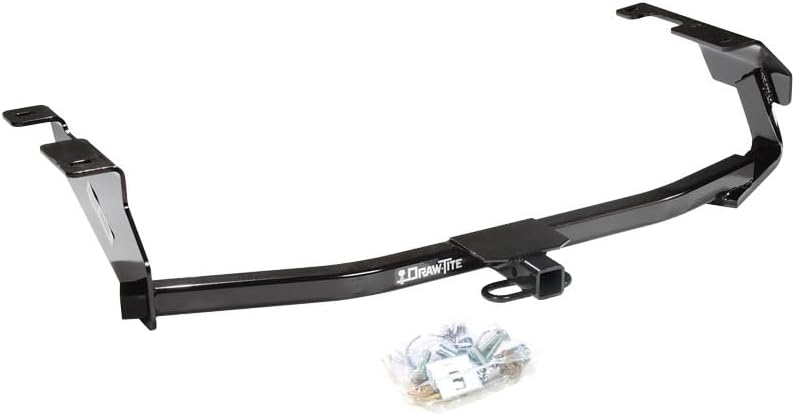
5. Draw-Tite 24826 Class 1 Trailer Hitch, 1-1/4" Receiver for 2009–2013 Honda Fit
| Automotive Fit Type | Vehicle Specific Fit |
|---|---|
| Maximum Towing Capacity | 2000 Pounds |
| Material Type | Alloy Steel |
| Finish Type | Powder Coated |
The Draw-Tite 24826 is a custom-fit Class 1 receiver hitch made to bolt directly to the 2009–2013 Honda Fit frame and provides a simple, durable way to add towing and accessory capacity. It installs using the vehicle's mounting points and includes the mounting hardware, with reviewers reporting straightforward installs when following the instructions and using basic tools or a helper to line it up. Built from all-welded alloy steel with a black powder coat, it resists corrosion and stands up to regular use for bike racks, cargo carriers, and small trailers within its limits. The 1-1/4 inch receiver accepts common hitch accessories and the hitch is tested to exceed relevant towing standards. The main limitations are its Class 1 rating: 2,000 lb GTW and 200 lb tongue weight mean it is only for light towing and it cannot be used with weight-distribution systems. Fitment must be confirmed for year and model variation before purchase since a few users reported mismatches. If you need a rugged, factory-style hitch for light utility and accessories on a Honda Fit, this is a reliable choice.
Best for: A reliability-focused buyer who wants a factory-style, long-lasting hitch to carry bikes, cargo carriers, or tow light trailers on a 2009–2013 Honda Fit with minimal fuss and predictable performance.
Less Ideal for: Buyers who plan frequent heavy towing, need higher tongue weight, or require a hitch that supports weight-distribution systems should consider a higher-class hitch or different solution.
- Vehicle-specific design for a close, secure fit to the 2009–2013 Honda Fit frame
- Solid all-welded alloy steel construction with powder coat for corrosion resistance
- Includes mounting hardware and aligns with factory mount points for straightforward installation
- 1-1/4 inch receiver accepts common bike racks and cargo carriers
- Tested to exceed V-5 and SAE J684 towing standards
- Limited to light towing use with a 2,000 lb GTW and 200 lb tongue weight capacity
- Not compatible with weight-distribution systems
Verdict: A rugged, factory-style Class 1 hitch built for the 2009–2013 Honda Fit that delivers dependable light towing and accessory support.
6. CURT Class 1 1-1/4" Receiver Hitch (11406) for Honda Fit

| Material Type | Carbon Steel |
|---|---|
| Finish Type | Gloss, Powder-Coated |
| Included Components | Class 1 Hitch |
| Compatible with Vehicle Type | Car |
| Manufacturer Warranty Description | Limited Lifetime Warranty / 1 Year On Finish |
This CURT Class 1 hitch provides a factory-style, vehicle-specific mount for the Honda Fit that makes adding a bike rack or small cargo carrier straightforward. It installs under the rear bumper using supplied hardware and a 1-1/4-inch receiver tube that accepts standard ball mounts and hitch accessories. The hitch is made from high-strength carbon steel with precise welds and a co-cured liquid Bonderite plus powder-coat finish to resist rust and chips. CURT rates the design to 2,000 lb gross trailer weight and 200 lb tongue weight, which is ample for racks, small utility trailers, and light cargo use. Installation typically requires basic hand tools and a helper for positioning; several reviewers note the muffler hangers can be stubborn and some trimming or lubricant helps. Because this is a light-duty, vehicle-specific hitch, it is not intended for heavy towing, but for convenience-focused owners it delivers a clean fit, durable finish, and predictable performance for everyday accessory use.
Best for: Convenience-driven buyers who want a reliable, easy-to-use hitch to add a bike rack or cargo carrier without extensive modification or heavy towing needs.
Less Ideal for: Drivers who plan to tow heavy trailers or need higher tongue weight capacity should choose a higher class hitch or a different towing solution.
- Vehicle-specific design for a precise fit on the Honda Fit
- Durable co-cured liquid Bonderite undercoating plus powder-coat finish for corrosion resistance
- Rated for 2,000 lb GTW and 200 lb tongue weight suitable for bike racks and small trailers
- Standard 1-1/4-inch receiver accepts common ball mounts and accessories
- Class 1 rating limits it to light-duty towing and accessory loads only
- Installation may require lifting assistance and some work removing or manipulating exhaust hangers
Verdict: A well-built, vehicle-specific Class 1 hitch that adds convenient bike rack and light towing capability to the Honda Fit.
Choosing the Right Honda Fit Tow Hitch Receiver: Key Factors to Consider
Fitment and Mounting Style
Correct fitment is the foundation of a safe tow setup. A receiver that mates to the Honda Fit's factory mounting points minimizes the need for drilling or frame modification and retains the structural integrity of the vehicle.
Mounting style also affects installation time and the availability of attachment hardware. Bolt-on designs tend to be simpler for DIY installation, while receivers that require additional brackets or reinforcement may demand more mechanical experience. Verify that the receiver aligns with existing holes and does not interfere with exhaust, fuel lines, or bumper components.
Towing Capacity and Tongue Weight
Rated towing capacity and tongue weight determine what you can safely haul and how the load distributes to the vehicle. Choosing a receiver with ratings that meet or exceed your intended use helps prevent overloading the vehicle and maintains handling predictability.
Consider the combined weight of the trailer and cargo, and ensure the tongue weight stays within the receiver and vehicle limits. Underestimating these figures can stress mounting points and compromise braking and steering performance.
Receiver Size and Accessory Compatibility
Receiver opening size controls which hitch accessories you can use. Common sizes accept different ball mounts, cargo carriers, and adapters, so matching the receiver size to your planned accessories reduces the need for adapters that add play or complexity.
Also check the internal depth and pin-hole alignment to ensure secure attachment of inserts. Accessories designed for a snug fit perform better and reduce rattle and wear during use.
Ground Clearance and Vehicle Dynamics
A hitch receiver alters the rear profile of the Honda Fit and can reduce ground clearance near the rear bumper. Lower clearance increases the risk of scraping on steep driveways or loading ramps and can affect departure angles when crossing uneven terrain.
Additionally, added towing loads change the vehicle's dynamics. Even modest trailers increase rear load and can alter pitch and braking distances. Choose a receiver that preserves as much clearance as possible and align towing practices with the Fit's handling characteristics.
Corrosion Resistance and Finish
Hitch receivers are exposed to road salt, water, and debris, so durable coatings and corrosion-resistant materials extend service life. Look for receivers with protective finishes and welds treated to resist rust.
A quality finish reduces the need for maintenance and prevents weakening of structural components over time. Consider the local climate and typical road conditions when evaluating coating types and expected longevity.
Installation Complexity and Required Tools
Installation difficulty ranges from straightforward bolt-on assemblies to setups requiring trimming or temporary removal of bumper covers. Assess the tools and mechanical skills needed before committing to a receiver.
If you plan to install the receiver yourself, factor in torque specifications, access to a lift or jack stands, and whether specialty tools or torque wrenches are required. Simpler installations reduce labor hours and lower the chance of installation errors.
How We Chose the Best Honda Fit Tow Hitch Receiver
Our selection focused on hitch receivers designed specifically to fit the Honda Fit chassis and mounting points. We prioritized products that offer reliable structural fitment, clear manufacturer-rated towing capacity, and compatibility with common accessory sizes. Key evaluation criteria included hitch receiver mounting style and required hardware, measured towing and tongue weight ratings, impact on ground clearance and approach angles, corrosion resistance and finish, and overall ease of installation for a DIYer or installer.We excluded universal or heavily modified systems that require frame cutting or welding, and any options without verifiable fitment information for the Honda Fit. We also screened out receivers lacking published towing ratings or those that significantly alter the vehicle's factory suspension or bodywork. The resulting list emphasizes practical, bolt-on receiver designs with documented capacities and straightforward installation paths.
Our full evaluation process is outlined in our review methodology.
FAQ
Can I install a tow hitch receiver on a Honda Fit myself?
Many Honda Fit receivers are designed for bolt-on installation and can be fitted with basic mechanical skills. Installation usually requires common hand tools, jack stands or a lift, and adherence to torque specifications. If the receiver requires trimming bumper components or if you are uncomfortable under the vehicle, a professional installer is a safer option.
How do I know what hitch receiver size I need?
Receiver size depends on the accessories you intend to use, such as ball mounts or cargo carriers. Check the shaft dimensions of the accessories and match them to the receiver opening. Popular consumer sizes are widely supported, but verifying compatibility ahead of time avoids the need for adapters that can introduce slop.
Will a hitch receiver affect my Honda Fit's fuel economy or handling?
A bare hitch receiver has a minimal direct effect on fuel economy, but towing additional weight increases aerodynamic drag and overall fuel consumption. Handling can feel different when towing due to added mass and shifted load distribution, so drive conservatively and allow greater braking distance when towing.
What should I check to ensure safe towing with a Honda Fit receiver?
Verify that the combined trailer and cargo weight and tongue weight do not exceed the receiver and vehicle ratings. Inspect mounting hardware regularly for tightness and corrosion, and confirm lighting and braking systems on the trailer are functioning. Proper weight distribution and secure attachment are essential for stable towing.
Does adding a hitch receiver require vehicle modifications?
Most receivers designed for the Honda Fit use existing mounting points and do not require structural modifications. However, some installations may need temporary removal of trim or limited trimming of bumper covers for access. Receivers that require welding or major frame changes were excluded from our shortlist.
Conclusion
Choosing the right Honda Fit tow hitch receiver means balancing fitment, capacity, and installation complexity. Prioritize receivers that match the vehicle's mounting points, provide adequate towing and tongue weight ratings, and preserve ground clearance.Consider your planned towing loads and accessory sizes, and be realistic about whether you will install the receiver yourself or use a professional. Careful attention to mounting integrity and maintenance will keep towing safe and predictable over time.
Explore More:
- Check out all Honda Fit parts & accessories
- Explore Exterior Accessories
- Browse all Accessories
