

Note: This article contains affiliate links. If you click on these links and make a purchase, I may earn a small commission at no extra cost to you. This helps support my research and content. Read my full affiliate disclosure here.
If you own a Ram 2500 with a Cummins engine, the coolant you use directly affects engine longevity, towing reliability, and winter starting. The right Ram 2500 Cummins antifreeze prevents corrosion, controls temperatures under heavy load, and extends service intervals for hard-working diesel systems. In this guide we shortlisted the top six antifreezes that meet the cooling and protection needs of the Cummins-equipped 2500.Below you will find the most important evaluation points we used to choose these options, plus practical advice on fitment, maintenance, and when to do a coolant flush. Use this guide to match coolant type and service interval to how you actually use your truck.
Looking for other parts? See all Ram 2500 parts & accessories.
Top Picks at a Glance
| Best Overall Antifreeze A balanced all-around formula that suits most cooling-system needs | Mopar 50/50 Prediluted Antifreeze/Coolant (10 Year) |  |
| Best Budget Antifreeze A low-cost option that still meets basic coolant protection standards | Zerex Pre-Charged 50/50 Heavy Duty Antifreeze/Coolant (1 gal) |  |
| Best Extended-Life Antifreeze Formulated for longer intervals between coolant changes and maintenance | Zerex Heavy Duty Nitrite Free Extended Life Concentrate Antifreeze/Coolant 1 gal |  |
| Best OAT Antifreeze Organic-acid technology coolant for modern corrosion protection and longevity | PEAK OET Extended Life Purple 50/50 Prediluted Antifreeze/Coolant, 1 Gal. |  |
| Best Pre-Mixed Antifreeze Ready-to-use coolant that requires no dilution or measuring | Zerex Fully Formulated 50/50 Prediluted Antifreeze Coolant (1 Gallon) |  |
| Best Concentrate Antifreeze Undiluted formula you mix to desired protection and coolant ratio | Mopar Genuine Antifreeze-Coolant Concentrate (1 Gallon) |  |
1. Mopar 50/50 Prediluted Antifreeze/Coolant (10 Year)
Best Overall Antifreeze

| Application scope | Compatible Ram 2500 Cummins models (see vehicle list) |
|---|---|
| Mixture | 50/50 prediluted |
| Service life | 10 year |
| Freeze/boil range | -34°F to 265°F |
| Standards | Meets ASTM D3306 – Type 3 |
This Mopar 50/50 prediluted coolant is a ready-to-use antifreeze formulated for long service life and corrosion protection in compatible heavy-duty Ram 2500 Cummins systems. It arrives premixed so you can top off or refill the cooling system without measuring concentrate, which makes routine maintenance quicker for DIY mechanics. The product is specified as a 10 year formulation with protection from about -34°F to 265°F, indicating robust freeze and boil resistance and a long drain interval when used as recommended. Because it is Mopar-branded and lists factory part numbers, it matches the chemistry expectations for Chrysler group cooling systems used in Ram 2500 Cummins models covered by the application listing. The practical benefits are easy installation, long service life, and confidence in factory compatibility for repair or scheduled coolant changes. Limitations include the need to ensure your truck explicitly appears in the vehicle application list before use and that prediluted coolants add fluid volume compared with concentrated mixes, which can affect inventory if you prefer mixing concentrate yourself.
Best for: DIY owners of Ram 2500 Cummins who want a single, factory-aligned coolant that simplifies routine maintenance and offers long drain intervals.
Less Ideal for: Those who maintain fleets with non-Mopar-specified coolants or who need a concentrate to custom-tune coolant strength for specialty climates should consider alternative products.
- Ready-to-use 50/50 mix eliminates need to dilute and speeds routine maintenance
- Long-life formula rated 10 years for extended service intervals
- Wide freeze and boil protection range suitable for heavy-duty operation
- Factory-brand chemistry and part numbers align with Mopar cooling system requirements
- Prediluted formula reduces flexibility for users who prefer to mix their own concentrate
Verdict: The best overall antifreeze balances corrosion protection, freeze/boil performance, compatibility, and service life for DIY mechanics who want one reliable product for routine maintenance.
2. Zerex Pre-Charged 50/50 Heavy Duty Antifreeze/Coolant (1 gal)
Best Budget Antifreeze
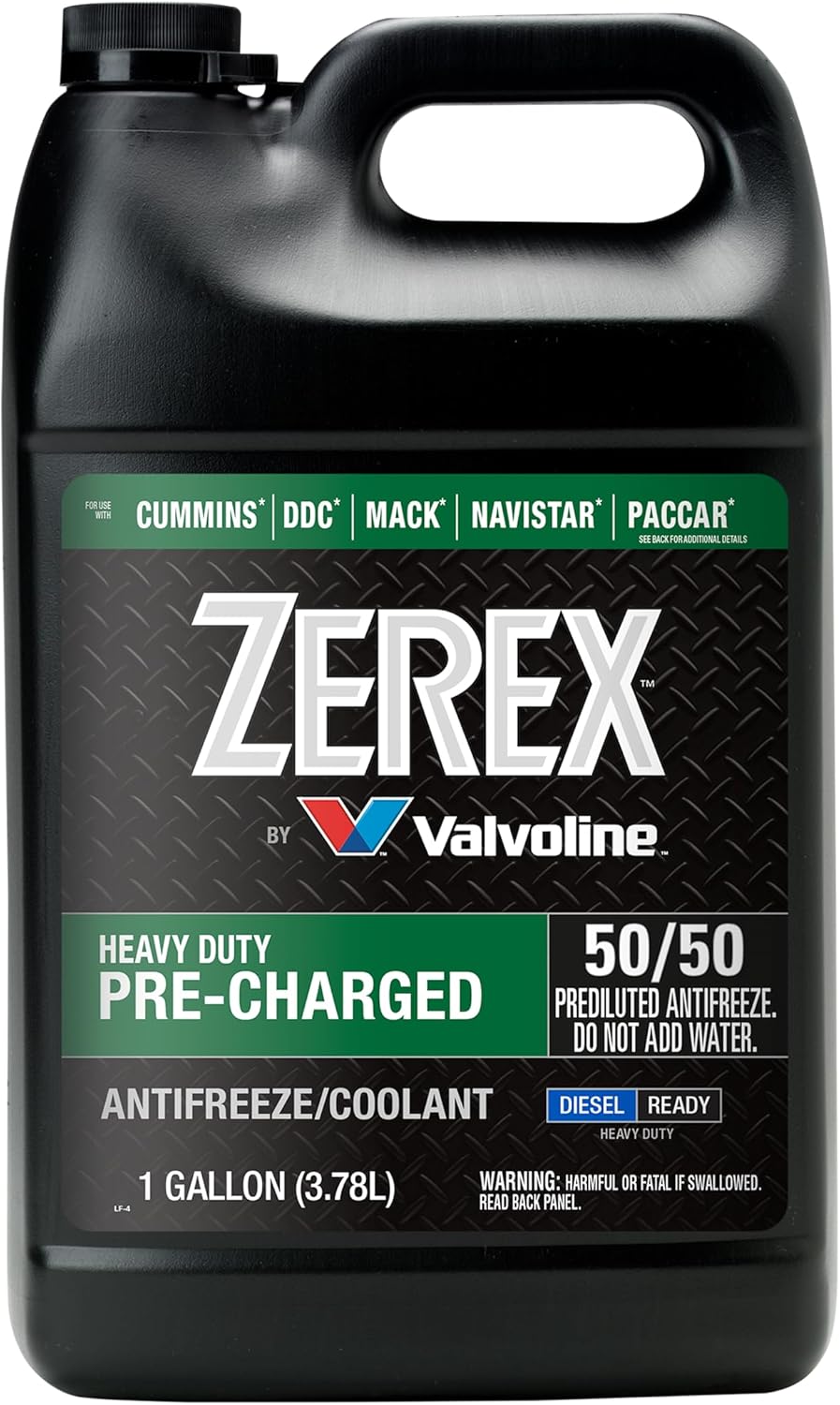
| Formulation | 50/50 prediluted ready-to-use |
|---|---|
| Engine type | Heavy-duty diesel compatible |
| Additives | Nitrite, corrosion/scale/rust inhibitors, defoamer |
| Guaranteed service | Up to 3 years or 150,000 miles |
Zerex Pre-Charged 50/50 is a ready-to-use antifreeze designed to protect heavy-duty diesel engines and is convenient for routine maintenance on a Ram 2500 Cummins. It arrives pre-mixed with deionized water so you can top off or refill without measuring, and its low-silicate, nitrite-containing formula targets corrosion, pitting and cavitation that can affect aluminum and other cooling-system metals. The product includes defoamer and inhibitors to help keep radiators, water pumps, hoses and seals clean and functioning, and the manufacturer states coverage for up to 3 years or 150,000 miles when used per instructions. As a cost-conscious choice, it balances protection and convenience, but it is a universal heavy-duty coolant rather than a vehicle-specific factory replacement, so always verify that its chemistry meets any Cummins or Ram service requirements before a full-system change. Its prediluted format also means less flexibility if you need a custom concentration for extreme climates.
Best for: Cost-conscious DIYers who perform routine top-offs or scheduled coolant changes on a Ram 2500 Cummins and want a convenient, ready-mixed heavy-duty coolant that provides basic corrosion and freeze/boil protection.
Less Ideal for: Technicians or owners who require a coolant specified exactly by a dealer or fleet spec for warranty-sensitive repairs or who need a custom concentrate for extreme cold or hot climates.
- Ready-to-use 50/50 premix eliminates mixing errors and speeds top-offs or flushes.
- Formulated for heavy-duty diesel engines with nitrite and low silicate to help prevent pitting and cavitation.
- Includes corrosion, scale and rust inhibitors plus a defoamer to protect pumps, radiators and hoses.
- Rated for up to 3 years or 150,000 miles when used according to the label.
- Universal heavy-duty formulation may not match every manufacturer specification exactly, so confirmation against Cummins/Ram requirements is recommended.
Verdict: The best budget antifreeze gives acceptable freeze/boil protection and corrosion inhibitors at a lower price, ideal for cost-conscious DIYers doing routine top-ups or flushes.
3. Zerex Heavy Duty Nitrite Free Extended Life Concentrate Antifreeze/Coolant 1 gal
Best Extended-Life Antifreeze
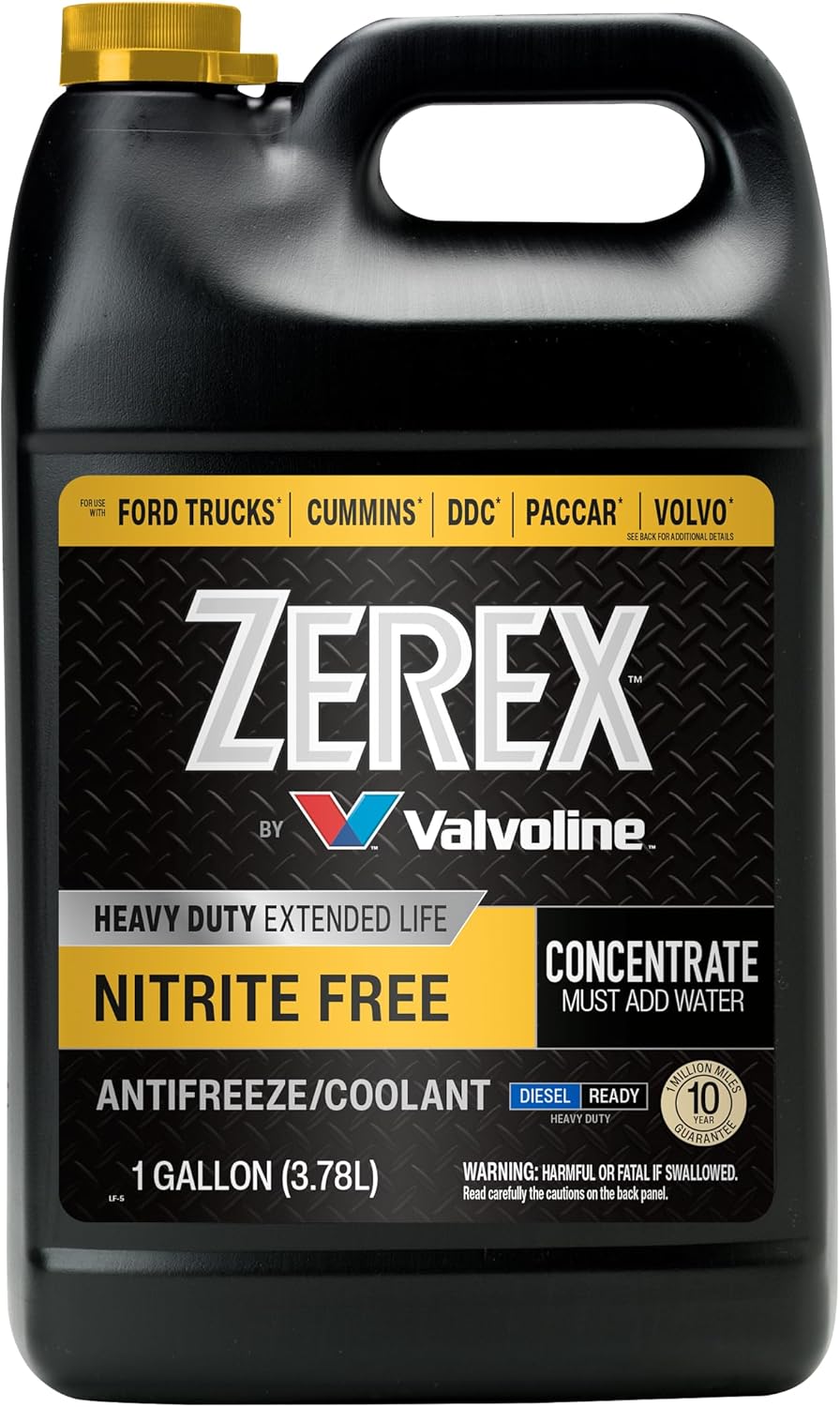
| Formulation | Nitrite-free OAT concentrate |
|---|---|
| Mix Ratio | 50/50 with water |
| Applications | Heavy-duty diesel and compatible gasoline engines |
| Service Life Claim | Up to 10 years or 1,000,000 miles |
Zerex Heavy Duty Nitrite Free is a concentrate antifreeze engineered for the long service intervals required by modern heavy-duty diesel engines. It uses Organic Acid Technology and a silicate, amine, and borate-free formulation to protect cylinder liners, water pumps, and other cooling-system metals from corrosion, cavitation, and hard-water deposits. The product is intended to be mixed 50/50 with clean or demineralized water and is suitable for engines that require a nitrite-free extended life coolant. For Ram 2500 Cummins owners this means a factory-quality chemical profile that meets the nitrite-free ELC expectations of many diesel OEMs and supports long drain intervals without supplemental additives. Practical benefits include strong long-term corrosion resistance and claims of up to 10 years or 1,000,000 miles when used per label instructions, reducing the frequency of flushes. Limitations are that it is a concentrate requiring correct dilution and water quality, and it must match the vehicle maker's coolant specification exactly to avoid compatibility issues with other coolant types.
Best for: Truck owners who prioritize long drain intervals and want an extended-life, nitrite-free coolant that supports multi-year protection with minimal maintenance.
Less Ideal for: Owners who prefer ready-to-use premixed coolant or who need a coolant compatible with nitrite- or silicate-containing factory systems should consider other options.
- Formulated with Organic Acid Technology for long-term corrosion protection
- Silicate, amine, and borate-free to reduce risk of cylinder liner and pump pitting
- Concentrate allows 50/50 mixing to achieve required freeze and boil protection
- Claimed extended service life suitable for multi-year/high-mileage schedules
- Requires proper 50/50 dilution and good-quality water to meet performance claims
- Must be matched to the truck maker's required nitrite-free specification to ensure compatibility
Verdict: The best extended-life antifreeze is designed to provide multi-year or high-mileage corrosion protection and thermal stability for owners who prefer less frequent coolant service.
4. PEAK OET Extended Life Purple 50/50 Prediluted Antifreeze/Coolant, 1 Gal.
Best OAT Antifreeze

| Formula type | Ethylene glycol OAT |
|---|---|
| Mix | 50/50 prediluted |
| Volume | 1 Gal. |
| Vehicle focus | North American vehicles |
This one-gallon bottle of PEAK OET Extended Life Purple delivers a prediluted, ethylene-glycol OAT coolant intended for modern North American engines. It is designed for topping off or refilling a cooling system without mixing, and the organic acid inhibitor package aims to protect radiators, water pumps, hoses, and aluminum components from rust and corrosion over extended service intervals. The label claims long life when installed after a complete flush and fill, and the 50/50 mix removes the need to measure concentrate. Practical benefits include easy DIY use, compatibility with vehicles that require a purple OAT formula, and corrosion protection comparable to factory-quality extended-life coolants. Limitations are that it is specific to vehicles that require this OAT formulation and color specification, so it is not a universal coolant for older or non-OAT systems; following the vehicle manufacturer fill and flush intervals is still necessary for guaranteed coverage.
Best for: DIY owners of modern North American trucks who want a ready-to-use, extended-life OAT coolant that simplifies topping off and provides long-term corrosion protection.
Less Ideal for: Drivers with older vehicles or cooling systems that require HOAT, inorganic acid, or manufacturer-specific coolants should choose a different formula.
- Prediluted 50/50 mix ready to use for easy topping off or refills
- Organic acid technology (OAT) corrosion inhibitors for extended protection
- Formulated for modern North American vehicles with aluminum and mixed-metal cooling systems
- Claims long service life when used after a complete flush and fill
- Intended for vehicles that require purple OAT coolant and not suitable for older or non-OAT systems
Verdict: The best OAT antifreeze uses organic-acid corrosion inhibitors to deliver long-lasting protection, making it a good fit for DIYers who want modern, extended-service chemistry.
5. Zerex Fully Formulated 50/50 Prediluted Antifreeze Coolant (1 Gallon)
Best Pre-Mixed Antifreeze

| Formulation | Ethylene glycol, low-silicate |
|---|---|
| Concentration | 50/50 prediluted |
| Service life claim | Up to 3 years or 150,000 miles/3,000 hours |
| Volume | 1 gallon |
Zerex Fully Formulated 50/50 prediluted antifreeze is a ready-to-use coolant designed for heavy-duty diesel applications, including high-compression Cummins engines in Ram 2500 trucks. It arrives at the correct 50/50 concentration so DIY mechanics can top off or refill the cooling system without mixing concentrate. The low-silicate, ethylene glycol formula includes corrosion, scale and rust inhibitors plus a defoamer to protect radiators, water pumps, aluminum components, gaskets and hoses. Valvoline claims up to 3 years, 150,000 miles or 3,000 hours of protection when used per instructions, which suits long-haul and heavy-duty duty cycles common to Cummins-powered trucks. Because it is OEM-style and fleet-tested, it avoids the guesswork of blending and reduces the risk of inconsistent freeze/boil protection. The main limitation is that this is a heavy-duty diesel formulation tailored to low-silicate requirements, so users should confirm compatibility with any specific coolant spec called out in their Ram 2500 service manual before switching products.
Best for: DIYers and fleet owners who want a convenient, pre-mixed coolant that meets heavy-duty diesel requirements and reduces the chance of incorrect dilution when servicing a Ram 2500 Cummins.
Less Ideal for: Drivers who must follow a different coolant specification listed in their vehicle documentation or who require a concentrate to custom-blend alternate freeze points.
- Ready-to-pour 50/50 concentration eliminates mixing and reduces mistakes during top-offs or refills
- Low-silicate formula meets heavy-duty diesel cooling system requirements common to Cummins engines
- Includes corrosion, scale and rust inhibitors plus a defoamer to protect aluminum and other metals
- Formulated for extended service intervals with a stated protection period up to 3 years or 150,000 miles
- Formulated specifically for heavy-duty diesel specs so it may not match every passenger-car coolant specification
Verdict: The best pre-mixed antifreeze is sold ready to pour, offering convenience and consistent concentration for DIY mechanics who want to avoid mixing concentrate.
6. Mopar Genuine Antifreeze-Coolant Concentrate (1 Gallon)
Best Concentrate Antifreeze

| Volume | 1 gallon |
|---|---|
| Part number | 68163848AB |
| Intended use | Concentrate for gas and diesel engines |
| Manufacturer | Mopar |
This Mopar concentrate is a factory-quality coolant sold as a one-gallon bottle intended for mixing to the exact coolant-to-water ratio you need. It contains corrosion inhibitors and a bittering agent and is described as safe for radiators and both gas and diesel engines. For a DIY mechanic working on late-model Chrysler, Dodge, Jeep or Ram vehicles, the concentrate lets you tune freeze and boil protection by using distilled water and the mix ratio recommended for your engine. Because it is a genuine Mopar part, the formula matches factory corrosion protection and inhibitor chemistry specified for compatible vehicles. The main limitation is that it is a concentrate, so you must measure and mix correctly and follow vehicle-specific specifications; it also requires checking compatibility with the Ram 2500 Cummins coolant specification before use. The product comes in a standard one-gallon container convenient for topping off or performing a full coolant service on a single vehicle.
Best for: DIY technicians and owners who prefer to mix their own coolant to exact ratios and want a factory-formula concentrate for Chrysler/Dodge/Jeep/Ram vehicles.
Less Ideal for: People who want a ready-to-use pre-diluted coolant or those unsure about mixing ratios and vehicle coolant specs should choose a pre-mixed alternative or seek professional service.
- Factory-formulated concentrate matching Mopar corrosion inhibitor chemistry
- Sold in a one-gallon size suitable for single-vehicle service or top-offs
- Can be mixed to controlled coolant-to-water ratios for seasonal tuning
- Safe for use in both gasoline and diesel engines per product description
- Requires accurate measuring and mixing by the user since it is undiluted concentrate
- Buyer must verify this Mopar formula meets the Cummins coolant specification for Ram 2500 applications
Verdict: The best concentrate antifreeze lets DIY mechanics mix exact coolant-to-water ratios for seasonal tuning or to replenish systems while controlling freeze/boil points and inhibitor strength.
Choosing the Right Ram 2500 Cummins Antifreeze: Key Factors to Consider
Coolant Chemistry and Compatibility
Coolant chemistry determines how inhibitors protect the metal surfaces inside the Cummins engine. Diesel engines often require specific formulations to protect iron, aluminum, and copper components. Choosing a coolant with the correct inhibitor package avoids accelerated corrosion, liner pitting, and oil contamination.
Compatibility matters because mixing incompatible chemistries can neutralize inhibitors and lead to rapid degradation of protection. Confirming the coolant type that matches the truck's existing conditioner or performing a full flush before switching reduces the risk of chemical incompatibility. For Cummins engines, follow service guidelines for approved coolant types and top up only with compatible formulas.
Corrosion Protection and Inhibitor Longevity
How long inhibitors remain effective impacts long-term engine health and the interval between fluid changes. Better inhibitor longevity reduces the chance of rust and scale forming on water pump bearings, heater cores, and cylinder liners under heavy-duty use.
Evaluate lab-verified corrosion protection claims and recommended drain intervals. A longer-lasting inhibitor package can be especially valuable if you tow frequently, operate in high-temperature conditions, or use your truck for commercial work where downtime is costly.
Freeze and Boilover Performance
Antifreeze must protect the cooling system in both extremes: preventing freeze damage in cold climates and raising boilover thresholds under heavy load. For owners who tow or drive in winter, freeze protection prevents cracked blocks and seized water pumps. For heavy loads, higher boiling points reduce vapor lock risk and maintain cooling efficiency.
Check the freeze point at the intended concentration and the advertised boiling point with proper coolant-to-water mix. Remember that additives and conditioner types can affect these properties, so use manufacturer-recommended dilution ratios.
Service Interval and Maintenance Requirements
Service interval affects long-term cost and maintenance scheduling. Some antifreezes advertise extended life that can double or triple drain intervals compared with conventional formulas. Extended-life coolants reduce the frequency of full flushes but may require precise testing to confirm inhibitor health over time.
Consider how often you can perform maintenance when choosing a coolant. If you tow regularly or operate under severe duty cycles, a formula with proven long-life performance can lower downtime. However, extended-life coolants still require periodic testing to ensure continued corrosion protection.
Heat-Transfer Efficiency
A coolant's ability to transfer heat affects engine operating temperature and efficiency under load. Good thermal conductivity helps the Cummins maintain stable temperatures while towing or climbing grades, protecting turbochargers and cylinder heads from hotspots.
While thermal conductivity differences between quality formulas are modest, selecting a coolant engineered for heavy-duty thermal stability ensures more consistent cooling performance during sustained high-load use. Consider coolant additives that resist foaming and improve flow through narrow passages.
Compatibility With Seals and Hoses
Chemical compatibility with rubber seals, gaskets, and hose materials determines leak risks and part longevity. Some coolant chemistries can harden or swell older hoses or degrade older seal compounds, leading to unexpected coolant loss.
Inspect age and condition of hoses and seals before switching to a different coolant type. If components are older, choose a formula known to be compatible with common elastomers or plan for a hose and clamp refresh during the coolant change to avoid failures after service.
Choosing Between Conventional and Extended-Life Formulas
Conventional and extended-life antifreezes differ mainly in inhibitor chemistry and recommended drain intervals. Conventional formulas typically require more frequent changes but can be simpler to top up and service. Extended-life formulas use more robust inhibitor packages designed to last longer under heavy-duty diesel conditions.
For a Ram 2500 Cummins you should weigh how you use the truck. If the truck sees frequent towing or commercial work, extended-life coolant can reduce downtime and service frequency. If the vehicle is older or has undocumented coolant history, a conservative approach with a controlled flush and a conventional formula may be safer unless compatibility is verified.
- Extended-life: fewer drain intervals, stronger inhibitor packets, may require specific testing.
- Conventional: simpler chemistry, easier swaps, may need more frequent maintenance.
When to Perform a Coolant Flush
A coolant flush is recommended when switching coolant chemistries or if maintenance history is unknown. Flushing removes degraded inhibitors, deposits, and contaminants that reduce protection. For Cummins engines, a proper flush helps protect wet sleeves and cylinder liners from pitting and corrosion.
Schedule a flush if you observe rust-colored coolant, poor heater performance, overheating, or when recommended service intervals are exceeded. Use recommended procedures for draining, flushing with clean water, and refilling to correct concentration to avoid air pockets in the cooling system.
- Perform a flush before changing coolant types to avoid inhibitor conflicts.
- Check for visible contamination or residue in the drained fluid as an indicator for a full system service.
Maintaining the Right Coolant Concentration
Antifreeze requires correct dilution with water to achieve advertised freeze and boilover protection. Using too little antifreeze reduces corrosion protection and freeze resistance; too much can reduce heat transfer efficiency. Carry a refractometer or a reliable tester and verify concentration after filling and during periodic service checks.
When topping up between services, match the existing coolant type and check concentration. For heavy-duty diesel use, the typical target is often around a 50/50 mix, but follow manufacturer guidance if the truck is used in extreme climates or heavy towing scenarios.
- Use distilled or deionized water when mixing to minimize mineral deposits.
- Test concentration seasonally and after heavy towing runs.
Signs Your Cooling System Needs Attention
Early warning signs include recurring overheating, coolant discoloration, visible oil-contaminated coolant, or unexplained low coolant levels. A persistent sweet or unusual odor, intermittent heater failure, or reduced flow through the heater core are also indicators.
Address these symptoms promptly to prevent expensive engine damage. Routine inspections of hoses, clamps, and the heater core during oil changes can catch problems early and ensure the antifreeze continues to protect internal components.
- Rust-colored or sludgy coolant indicates corrosion or degraded inhibitors.
- White residue or milky coolant may indicate oil contamination and needs immediate attention.
Winter Prep and Antifreeze for Cold Starts
If you operate your Ram 2500 Cummins in cold climates, confirm the freeze protection rating for your chosen coolant concentration. Proper freeze protection prevents cracked blocks and damaged water pumps on subzero starts. Also consider the effect of viscosity on cold flow to ensure the thermostat opens at the right time.
For winter service, test the coolant before the first freeze and top up or replace as needed. Keep in mind that diesel engine heaters and block heaters complement coolant protection, so use them together for the best cold-start reliability.
- Verify freeze point at the actual mix ratio you will run.
- Consider a slightly higher antifreeze concentration if you regularly see extreme cold.
Still looking for the perfect fit?
Select your Ram 2500 configuration to see the most relevant Antifreezes recommendations
How We Chose the Best Ram 2500 Cummins Antifreeze
We focused on the performance and durability characteristics that matter most for a Ram 2500 with a Cummins diesel. Evaluation began with coolant chemistry and OEM compatibility to ensure long-term protection for wet sleeve liners, head gaskets, and aluminum components common to Cummins engines. We prioritized corrosion inhibitors, thermal stability, and compatibility with mixed-metal cooling systems.Next, we assessed recommended service life and maintenance footprint, including whether a formula supports extended drain intervals or requires more frequent changes. Freeze and boilover protection metrics were considered to ensure safe operation from cold winter starts to heavy towing in summer. We also screened for manufacturer-specified approvals or industry-standard test results that indicate suitability for heavy-duty diesel use.Excluded from consideration were formulas intended only for light-duty gasoline engines or products lacking clear specifications for diesel hardware. We did not include generic or unverified blends without documented inhibitor packages. Final selections balanced protection, service interval flexibility, and practical maintenance needs for Ram 2500 Cummins owners.
Our full evaluation process is outlined in our review methodology.
FAQ
How often should I change antifreeze in a Ram 2500 Cummins?
It depends on the coolant type and service conditions. Conventional formulas often need changes every 2 years or according to mileage, while extended-life coolants can last 5 years or more. Heavy towing and severe duty shorten intervals, so inspect coolant condition more frequently under those uses.
Can I mix different types of antifreeze in my Cummins?
Mixing coolant chemistries is risky because incompatible inhibitors can neutralize each other and reduce protection. If you must change types, perform a full system flush first to remove the old chemistry before refilling with the new formula.
What concentration should I run for winter protection?
A 50/50 mix of antifreeze and water is a common recommendation, offering balanced freeze and boil protection. For extreme cold, a slightly higher concentration increases freeze protection but may slightly reduce heat transfer. Always follow the coolant manufacturer's recommendations and test with a refractometer.
Does using extended-life antifreeze affect warranty or service intervals?
Extended-life antifreeze may change recommended service intervals, but it should not void warranty if it meets the vehicle manufacturer's specifications. Keep service records and ensure the formula meets any required approvals for Cummins diesel engines.
Should I inspect hoses when changing antifreeze?
Yes. Old hoses and degraded seals can fail after a coolant change. Inspect and, if necessary, replace hoses, clamps, and thermostat components during a coolant service to avoid leaks and ensure the system remains sealed under higher pressure.
Is ethylene glycol the only acceptable antifreeze for Cummins engines?
Ethylene glycol is a common base for many heavy-duty coolants, but formulations differ in inhibitor packages. What matters most is the chemistry compatibility and approved specifications for diesel engines rather than the base compound alone.
Final Verdict
Choose a coolant that matches the Cummins engine's chemistry requirements and offers the right balance of corrosion protection, thermal stability, and service interval for how you use the truck. If you tow frequently or operate in extreme temperatures, favor formulas with proven inhibitor longevity and clear diesel approvals.Prioritize a proper flush when changing chemistries, maintain correct concentration, and inspect hoses and seals during service. With the right antifreeze and maintenance approach, you can protect the cooling system and reduce the risk of costly engine damage while keeping your Ram 2500 Cummins reliable under load.
Explore More:
- Check out all Ram 2500 parts & accessories
- Explore Fluids & Chemicals
- Browse all Accessories
