

Note: This article contains affiliate links. If you click on these links and make a purchase, I may earn a small commission at no extra cost to you. This helps support my research and content. Read my full affiliate disclosure here.
If your Honda CR-V is showing rough idle, poor mileage, or a check engine light, swapping the oxygen sensor can be a direct way to address drivability and emissions. Picking the right Honda CR-V oxygen sensor matters because fitment, sensor type, and installation accessibility all affect how reliably your vehicle runs after replacement. This guide presents seven shortlisted options that meet common needs for durability, compatibility, and installation simplicity. Each pick was evaluated for how well it restores fuel control and how straightforward it is to install, so you can choose the best fit for your situation.
Looking for other parts? See all Honda CR-V parts & accessories.
Top Picks at a Glance
| Best Reviewed A top-rated pick with lots of positive feedback | HTMXJA Upstream and Downstream Oxygen O2 Sensor Kit for 2005–2006 Honda CR-V 2.4L |  |
| Most Popular A crowd favorite that many people choose with confidence | BOSCH 13371 Premium Fit Oxygen Sensor |  |
| Best Quality Built to a higher standard if you want something more solid | DENSO Downstream Oxygen Sensor for Honda CR-V 2.4L (2002–2004) |  |
| Best Budget The cheapest option that still gets the job done reliably | PAPAPARTS Oxygen Sensor Kit (Set of 2) for Honda CR-V 2.4L 2007–2009 |  |
| Most Sold A high-volume bestseller chosen again and again | QIJIAUTO O2 Oxygen Sensor Kit for Honda CR-V (2007–2011) — Upstream and Downstream, 2-Pack |  |
| Best Value for Money The sweet spot between price and what you get | Dasbecan Oxygen Sensor Set (Upstream & Downstream) for Honda CR-V 2012–2019 |  |
| Best Overall The best all-around choice for most situations | SDYYDS 2-Pack Oxygen O2 Sensors (Upstream & Downstream) for 2012–2019 Honda CR-V 2.4L |  |
1. HTMXJA Upstream and Downstream Oxygen O2 Sensor Kit for 2005–2006 Honda CR-V 2.4L

| Fitment | 2005-2006 CRV CR-V L4-2.4 |
|---|---|
| Connector Gender | Male/Female |
| Wire Quantity | 4 |
| Material | Stainless Steel |
This HTMXJA kit supplies both upstream and downstream oxygen sensors intended for the 2005–2006 Honda CR-V with the 2.4L four-cylinder engine. The sensors have a four-wire connector set with male and female plug options and are described as high-precision, high-temperature resistant, and manufactured to match factory-style fitment so they install without modifications. In normal use they monitor exhaust oxygen to help the engine control module balance fuel mixture and reduce emissions, which often clears check-engine codes and improves drivability. Buyers report the sensors arriving ready to install with anti-seize applied to the threads and functioning immediately. Limitations to note are typical for aftermarket sensor pairs: long-term durability can vary between suppliers and one-off failures have been reported, and compatibility relies on confirming the referenced part numbers before purchase. Expect straightforward bolt-in replacement behavior but be prepared to test wiring and connectors if persistent codes remain after installation.
Best for: A reliability-focused buyer who wants a direct replacement to restore proper air-fuel sensing on a 2005–2006 Honda CR-V and prefers a straightforward, repair-oriented solution.
Less Ideal for: Drivers who prioritize brand-new OEM parts with extended proven service life or who need sensors for vehicles outside the specified CR-V model years should look elsewhere.
- Supplies both upstream and downstream sensors for a complete bank replacement
- Four-wire connector with male and female plugs matches common Honda wiring harnesses
- Marketed as factory-style fit for straightforward installation without modifications
- High-temperature resistant stainless steel construction for exhaust-side durability
- Long-term longevity is dependent on manufacturing consistency and may vary between units
- Compatibility requires confirming OEM reference numbers before purchase to avoid fitment issues
Verdict A complete upstream and downstream sensor pair aimed at restoring emissions and fuel control on 2005–2006 Honda CR-Vs, offering easy installation but with variable long-term durability.
2. BOSCH 13371 Premium Fit Oxygen Sensor

| Material | Stainless Steel |
|---|---|
| Mounting Type | Flange Mount |
| Output Type | Digital |
| Maximum Supply Voltage | 5 Volts (DC) |
| Upper Temperature Rating | 1000 Degrees Celsius |
This Bosch 13371 is a direct-fit heated oxygen sensor intended as a factory-style replacement for compatible Hondas and Acuras. It measures exhaust oxygen and feeds that signal to the engine control unit so the CR-V can maintain correct air-fuel ratio and emissions control. Bosch builds the sensor with a double laser-welded stainless steel body, an integrated fast-acting heater for quicker warm-up, and pre-applied anti-seize on the threads to simplify installation. For a convenience-minded buyer the true direct-fit connector and heater mean you can swap the sensor without major wiring work and restore drivability and fuel economy quickly. Limitations to note are that some vehicles are sensitive to exact sensor characteristics, so fitment and ECU behavior should be verified for your CR-V model year before buying, and in rare cases a factory-specific sensor may be required for certain engine variants. The part is well tested and commonly reported to perform like a factory replacement when it matches the vehicle application.
Best for: Buyers who value a quick, low-effort repair and want a factory-style replacement that minimizes wiring or fabrication work on a Honda CR-V.
Less Ideal for: Drivers restoring a vehicle to exact factory specification who prefer dealer-sourced sensors for guaranteed ECU compatibility or projects where only the OEM sensor is acceptable.
- Direct-fit connector and harness for simple plug-and-play installation on supported vehicles
- Fast-acting built-in heater reduces warm-up time and speeds sensor operation
- Stainless steel double laser-welded body for corrosion resistance and longer service life
- Threads come pre-coated with anti-seize to make removal and future service easier
- May not match sensor characteristics for every engine variant which can trigger diagnostic codes on some vehicles
Verdict A convenience-focused, factory-style heated oxygen sensor that simplifies replacement and restores air-fuel control when matched to the CR-V's correct engine variant.
3. DENSO Downstream Oxygen Sensor for Honda CR-V 2.4L (2002–2004)

| Brand | Sixity Auto |
|---|---|
| Material | Stainless Steel |
| Mounting Type | Flange Mount |
| Output Type | Digital |
| Upper Temperature Rating | 800 Degrees Celsius |
This DENSO downstream oxygen sensor is a direct replacement designed to restore accurate exhaust oxygen readings on Honda CR-V 2.4L models from 2002 to 2004. Installed in the downstream position, it measures post-catalyst oxygen levels and communicates digitally with the vehicle computer to help maintain correct fuel trim and emissions control. The unit is a factory-quality replacement that arrives with original-style packaging and mounting hardware for a plug-and-play swap. Stainless steel construction and a high upper temperature rating mean it is built to withstand the heat and corrosive conditions in the exhaust system. In practice this sensor is used when a failing sensor triggers emissions codes, poor fuel economy, or rough idle; replacing it with a compatible DENSO part typically returns drivability and clears related check-engine lights. The main limitation is fitment: this part is tailored to the specified CR-V years and engine, so verification of year and engine size is required before purchase.
Best for: Performance-oriented owners seeking a factory-quality replacement to restore correct emissions sensing and drivability on a 2002–2004 Honda CR-V 2.4L.
Less Ideal for: Drivers who need a universal sensor for multiple vehicles or aftermarket sensors tuned for performance gains should consider other options.
- Factory-quality direct replacement designed for the Honda CR-V 2.4L (2002–2004)
- Stainless steel construction and 800°C upper temperature rating for durability in exhaust environments
- Includes original-style packaging and mounting hardware for straightforward installation
- Digital output compatible with vehicle engine control systems for accurate post-catalyst readings
- Compatibility is limited to the listed CR-V years and 2.4L engine so it is not a universal fit
- No additional performance tuning or enhanced sensing range beyond factory specification
Verdict Choose this DENSO downstream sensor if you want a factory-quality, plug-and-play replacement to restore emissions accuracy and drivability on a 2002–2004 Honda CR-V 2.4L.
4. PAPAPARTS Oxygen Sensor Kit (Set of 2) for Honda CR-V 2.4L 2007–2009

| Sensor Type | Heated |
|---|---|
| Wire Quantity | 4 Pins |
| Wiring Harness Length (pair) | 11.81 inch and 22.44 inch |
| Package | 2 x Oxygen Sensor |
This PAPAPARTS kit provides two heated oxygen sensors intended to replace the upstream and downstream units on a 2007–2009 Honda CR-V 2.4L. Installation is direct-fit and uses factory-style connectors so a DIYer can swap the old sensors without modification; the kit includes both shorter and longer harness lengths for the two positions. The sensors are described as having a fast warm-up time and an integral heater for quicker response after cold starts, which helps restore stable idle and fuel trim when the originals fail. In practice this kit is a budget-friendly way to address rough idle, reduced fuel economy, or emissions-related fault codes. Expect straightforward fitment but keep in mind long-term durability versus higher-end OE-quality sensors can vary, and buyers should confirm connector type against their vehicle before installing. The package is practical for preventive replacement or fixing an active oxygen-sensor fault on the specified CR-V model years.
Best for: Budget-conscious DIY owners focused on restoring proper engine idle and fuel economy on a Honda CR-V 2007–2009 2.4L without paying dealer prices.
Less Ideal for: Those who prioritize maximum longevity or want a guaranteed factory-quality replacement should consider higher-end or OEM-grade sensors instead.
- Sold as a pair to replace both upstream and downstream sensors at once
- Heated sensor design for faster activity after cold starts
- Direct-fit connectors and thread fittings for straightforward DIY installation
- Includes different harness lengths to match the two sensor positions
- Long-term durability and sensor longevity may not match higher-cost factory-quality parts
- Limited to fitment for 2007–2009 Honda CR-V 2.4L and not suitable for other models
Verdict A cost-effective, direct-fit pair of heated oxygen sensors that makes a practical DIY repair for a 2007–2009 Honda CR-V 2.4L when you want a budget-friendly replacement.
5. QIJIAUTO O2 Oxygen Sensor Kit for Honda CR-V (2007–2011) — Upstream and Downstream, 2-Pack
| Brand | QIJIAUTO |
|---|---|
| Mounting Type | Threaded |
| Output Type | Push-Pull |
| Specific Uses For Product | automotive |
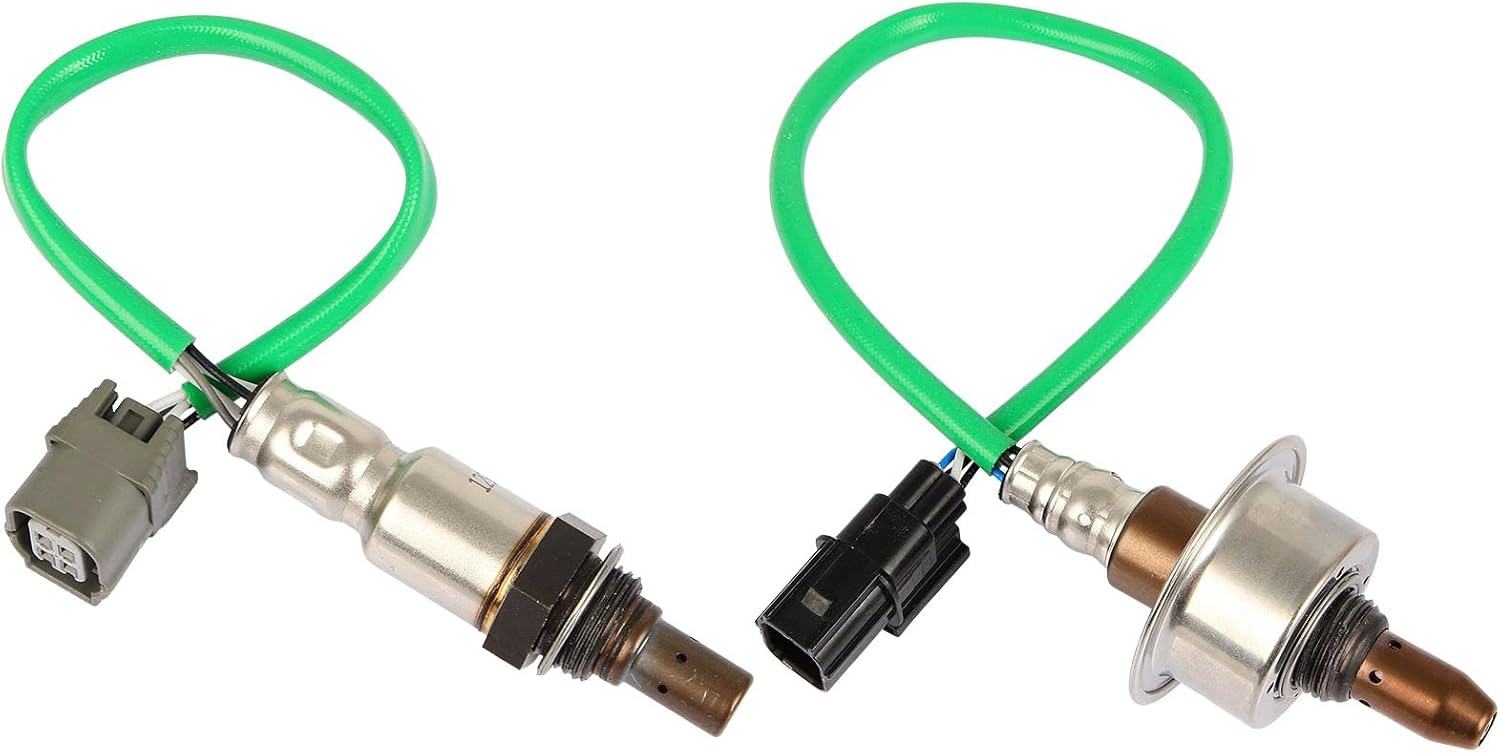
This QIJIAUTO kit supplies two replacement heated oxygen sensors intended to restore proper air/fuel monitoring on Honda CR-Vs from 2007 to 2011. The sensors are threaded, come with factory-style connectors and a four-wire harness, and are offered as upstream and downstream units so you can replace both positions at once. In use they address fault codes, help smooth acceleration, and can improve fuel economy when a failing sensor was causing rich or lean running. The product claims a protective coating to resist contamination and uses construction sized to match the original sensor locations. Real-world feedback is mixed: many buyers report clearing P0420/P0430-style codes and OEM-like operation, while a minority found connector or harness length mismatches or nonworking units. Installation is straightforward for anyone comfortable swapping sensors but check connector fit and harness routing before installation. This kit is a cost-effective way to try sensor replacement before expensive exhaust work, but expect variability in fit and occasional quality control issues.
Best for: Risk-averse mainstream buyers looking to fix check-engine codes and restore reliable running on a 2007–2011 Honda CR-V without committing to expensive exhaust repairs.
Less Ideal for: People who prioritize guaranteed perfect fit every time or need professional-level, lifetime-durable sensors should consider higher-end brand-new or dealer-sourced replacements.
- Sold as a matched two-pack for upstream and downstream replacement so both sensors can be changed at once
- Heated design with four-wire connector matches typical factory signal and heater wiring
- Protective coating intended to reduce sensor poisoning and extend service life
- Many users report it clears diagnostic codes and restores normal engine performance
- Some buyers report connector or harness length mismatches on certain vehicle subconfigs
- Quality control appears inconsistent with occasional nonworking units reported
Verdict A budget-friendly two-pack that often clears codes and restores CR-V drivability but requires careful fit verification due to occasional fitment and quality inconsistencies.
6. Dasbecan Oxygen Sensor Set (Upstream & Downstream) for Honda CR-V 2012–2019

| Compatible vehicles | Honda CR-V 2012–2019 2.4L L4 |
|---|---|
| Includes | Upstream (234-9131) and downstream (234-4980) sensors |
| Mounting type | Plug Mount |
| Materials | Metals, Ceramics, Polymers |
This Dasbecan kit supplies both upstream and downstream oxygen sensors engineered to replace the factory units on 2012–2019 Honda CR-V 2.4L engines. Installed in the exhaust stream, the upstream sensor monitors oxygen in the combustion gases for fuel-trim adjustments while the downstream sensor checks catalytic converter efficiency. The set claims direct-fit plug mounting and ships with matching connectors for a straightforward swap using common hand tools. In real-world use the sensors should help recover fuel economy and smooth idle behavior when original sensors age, and including both sensors avoids mismatch between new and old components. Notable features are the matched pair, vehicle-specific fitment, and a one-year unlimited-mileage quality service. Limitations are that long-term durability is uncertain compared with factory-brand sensors and the listing does not provide detailed performance specifications or OEM-equivalent testing data, so results will vary depending on installation and vehicle condition.
Best for: Practical optimizers who prioritize reliable, vehicle-specific repairs without overspending and want a complete sensor set to restore drivability and efficiency on a Honda CR-V.
Less Ideal for: Buyers seeking factory-brand parts with documented OEM testing or professional shops that require manufacturer-certified components should consider alternatives.
- Includes both upstream and downstream sensors for a matched replacement
- Designed for direct plug-in fit to 2012–2019 Honda CR-V 2.4L for easier installation
- Aims to restore fuel trim accuracy and emissions monitoring when original sensors fail
- Comes with a one-year unlimited-mileage quality service for added reassurance
- No detailed performance data or laboratory test results provided to verify OEM-level accuracy
- Long-term durability compared with factory-quality sensors is not documented
Verdict A cost-conscious, vehicle-specific two-sensor replacement that restores monitoring and fuel control but lacks published OEM-equivalence testing.
7. SDYYDS 2-Pack Oxygen O2 Sensors (Upstream & Downstream) for 2012–2019 Honda CR-V 2.4L
| Brand | SDYYDS |
|---|---|
| Material | Stainless Steel |
| Mounting Type | Plug Mount |
| Output Type | Push-Pull |
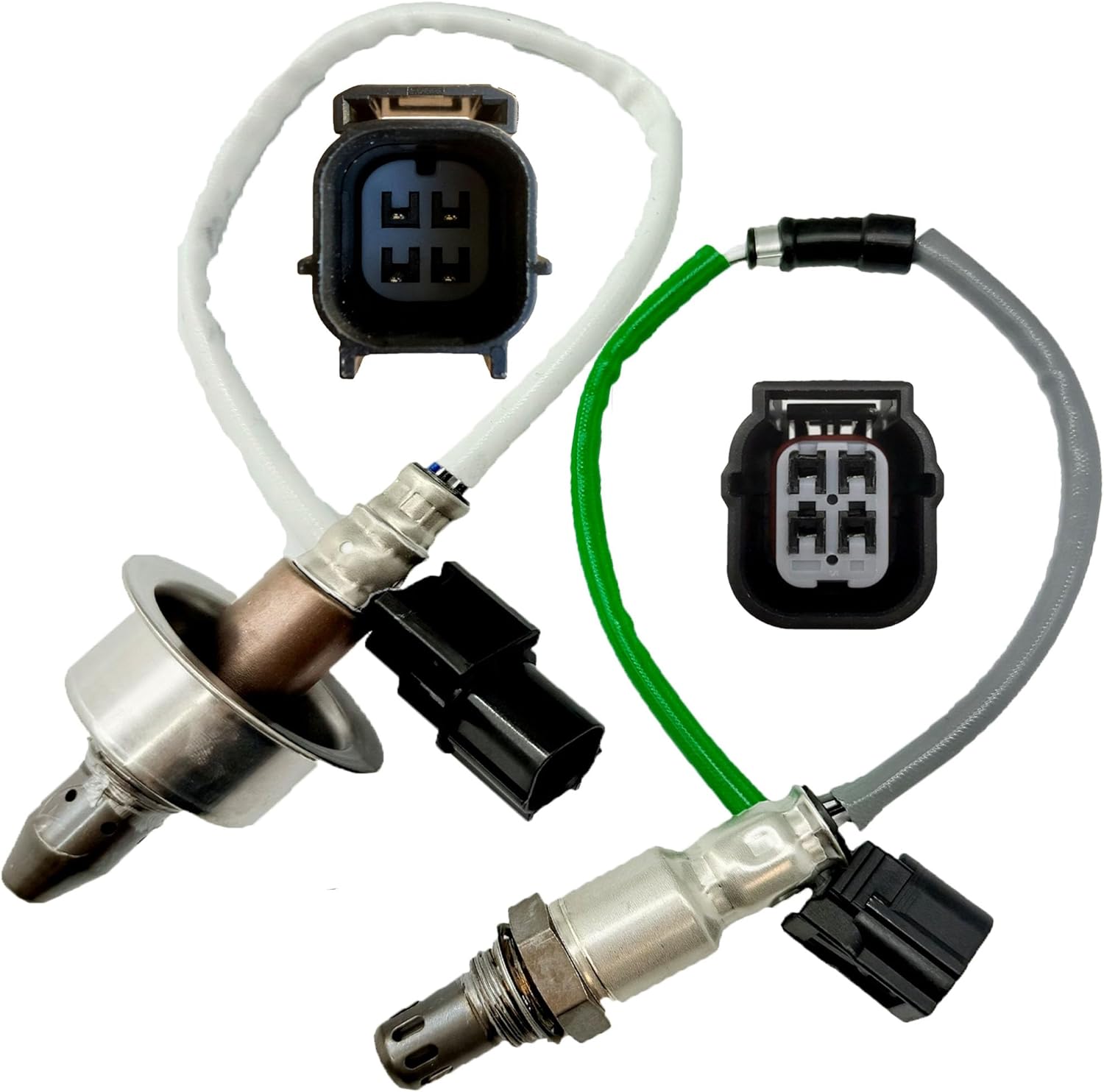
This SDYYDS kit supplies both upstream and downstream oxygen sensors for Honda CR-V 2.4L models and is intended as a direct replacement to clear OBD-II codes and restore proper air–fuel feedback. Installation is typical for O2 sensors: unplug the old sensor, unbolt it from the exhaust, and plug and torque the new unit in place; the kit ships with factory-style plug mounts for a straightforward swap. The downstream sensor performs reliably in customer reports and can stop a check engine light and help regain fuel economy; however some buyers report fitment issues with wire length and occasional upstream sensors that do not match OEM voltage characteristics. The sensors are stainless steel and marketed with a one-year warranty and 24-hour seller support. For a balanced buyer this set offers a convenient all-in-one replacement at a lower cost than dealer parts, but you may need to verify connector orientation and wire routing before installation and be prepared to replace a single sensor separately if the upstream unit does not meet OEM behavior.
Best for: Balanced buyers who want an affordable, ready-made replacement set to repair a check engine light and restore normal fuel trim on a Honda CR-V 2.4L without paying dealer rates.
Less Ideal for: Drivers who need guaranteed OEM-spec sensor response or exact-fit wiring for every model year should consider buying individually specified factory-quality sensors or sourcing from a dealer.
- Includes both upstream and downstream sensors in one kit for a complete replacement
- Stainless steel construction that resists exhaust conditions
- Factory-style plug mount connectors for straightforward swapping with stock harnesses
- Multiple customer reports of clearing check engine codes and improving fuel economy
- Some users report wire lengths or connector orientations that do not fit every model year without modification
- A portion of upstream sensors may not match OEM voltage characteristics exactly
Verdict A cost-effective two-piece replacement that usually clears codes and restores fuel economy on 2012–2019 Honda CR-V 2.4L, but check fitment and wire routing before install.
Choosing the Right Honda CR-V Oxygen Sensor: Key Factors to Consider
Fitment And Connector Compatibility
Correct fitment is essential because the sensor must match the CR-V's sensor bung location and wiring harness. A sensor that does not match the connector type can require splicing or adapters, which may introduce connection problems or complicate future diagnostics. Ensure the replacement lists compatible model years and engine variants to avoid fit issues.
Connector compatibility also affects installation time and reliability. Using a sensor with the factory-style connector reduces the chance of poor electrical contact and helps maintain proper heater circuit function where applicable.
Sensor Location And Type
Oxygen sensors are commonly labeled by location such as upstream or downstream, and this matters because each location serves a different role for engine management and emissions monitoring. Upstream sensors affect fuel trim directly, while downstream sensors typically monitor catalytic converter efficiency. Choosing the correct location-specific sensor for the CR-V ensures the vehicle’s engine control unit receives the expected signals.
Additionally, confirm whether the vehicle requires a heated sensor, which includes an internal heater for quicker activation, especially in colder climates or stop-and-go driving conditions.
Durability And Environmental Resistance
Sensors operate in a harsh environment with high temperatures and exposure to contaminants. Materials and protective features like robust housings, corrosion-resistant threads, and high-temperature wiring insulation extend service life. A more durable sensor reduces the likelihood of premature failure and repeated repairs.
Look for construction that minimizes wiring abrasion and includes strain relief where the harness joins the sensor. Long-term resistance to combustion byproducts and road contaminants will help maintain consistent sensor output over time.
Response Time And Electrical Performance
Faster sensor response enables the engine control unit to correct fuel mixture more quickly, improving idle stability, throttle response, and emissions. Sensors with stable voltage output and quick switching behavior provide more accurate feedback for closed-loop fuel control.
Check whether the sensor’s specifications highlight response characteristics or stable output ranges. Consistent electrical performance under varying exhaust temperatures and loads is important for predictable engine behavior.
Installation Practicality
Ease of installation affects time in the garage and potential for installation-related issues. Consider sensor thread size, included anti-seize or coatings, and whether the wiring pigtail is long enough to reach the factory harness without stressing connectors. Some sensors include features that simplify swap-out, such as pre-formed wiring or protective sleeves.
Also take into account accessibility of the sensor on the CR-V; tight clearances or heat shields may require specific socket types or extensions, so a sensor that minimizes additional work is preferable for DIYers and technicians alike.
Diagnostic And Emissions Considerations
Modern vehicles monitor oxygen sensors and will set codes if signals fall outside expected ranges. Choosing a sensor with predictable signal behavior helps avoid misinterpreted codes and unnecessary diagnostic work. For sensors that include a heater circuit, proper heater function enables quicker sensor readiness and fewer cold-start emission issues.
Understanding common OBD-II codes related to oxygen sensors and how the replacement sensor should behave under test conditions helps set expectations for post-installation checks and emissions testing.
FAQ
What symptoms point to a failing oxygen sensor on a Honda CR-V?
Common signs include a persistent check engine light, rough idle, reduced fuel economy, or an increase in emissions. You may also notice hesitation on acceleration or an unusual exhaust smell. These symptoms often occur gradually and can overlap with other issues, so a diagnostic scan and visual inspection help confirm the sensor as the cause.
Can I install an oxygen sensor on a Honda CR-V myself?
Many owners can replace an oxygen sensor with basic tools if the sensor is accessible and the correct replacement is on hand. Pay attention to connector compatibility, thread size, and any required anti-seize treatments. If access is limited or you are unsure about the electrical connections, professional installation reduces the risk of damage or improper fitment.
How do upstream and downstream sensors differ on the CR-V?
Upstream sensors are located before the catalytic converter and primarily inform the engine control unit to regulate the air-fuel mixture. Downstream sensors sit after the converter and mainly monitor the converter’s efficiency. Each serves a distinct diagnostic and control role, so replacing the correct location-specific sensor is important for proper operation.
How can I test whether the Honda CR-V oxygen sensor is working?
A diagnostic scan tool can read live sensor voltages and heater circuit status to indicate function. At idle and during steady driving, upstream sensors should show regular switching behavior and expected voltage ranges, while downstream sensors tend to show more stable signals once the converter is warmed. A mechanic can also perform voltage or resistance checks to assess heater circuits and signal response.
Will replacing the oxygen sensor turn off the check engine light immediately?
Sometimes the check engine light will clear after a successful replacement and a few drive cycles, but the vehicle’s computer may require a short learning period or a manual code reset. If the light remains, further diagnosis may be needed to ensure related systems and wiring are functioning correctly.
How long should a replacement oxygen sensor last in a Honda CR-V?
Longevity varies with driving conditions, fuel quality, and exposure to contaminants, but many sensors are expected to last several years under normal use. Heavy idling, short trips, or exposure to coolant or oil can shorten service life. Choosing a sensor with proven durability features and correct fitment helps maximize service life.
How We Chose the Best Honda CR-V Oxygen Sensor
Our selection process focused on practical, service-oriented criteria that matter for replacing an oxygen sensor on a Honda CR-V. We prioritized sensor fitment accuracy to the specified CR-V model year and engine layout, long-term durability against heat and contamination, and sensor response time which influences fuel trim and emissions performance. Installation factors such as connector compatibility, length of wiring pigtail, and whether a sensor requires special adapters or anti-seize were considered. We also weighed build quality features like robust housings and protective sheathing, plus manufacturer guidance on expected service life. We excluded generic or unspecified sensors that lacked clear fitment data or wiring details, and any options without sufficient build or durability information. The result is a curated list of seven oxygen sensors that meet the practical needs of CR-V owners seeking reliable replacements.
Our full evaluation process is outlined in our review methodology.
Conclusion
When replacing an oxygen sensor on a Honda CR-V, prioritize correct fitment and the proper sensor location to ensure the engine control unit receives accurate signals. Balance durability, response time, and installation practicality according to how you use the vehicle and your comfort with DIY repairs. Expect tradeoffs between ease of installation and long-term robustness. Focusing on connector compatibility, heater function where applicable, and proven environmental resistance will give you the most reliable outcome for fuel economy and emissions control.
Explore More:
- Check out all Honda CR-V parts & accessories
- Explore Engine
- Browse all Auto Parts
