

Note: This article contains affiliate links. If you click on these links and make a purchase, I may earn a small commission at no extra cost to you. This helps support my research and content. Read my full affiliate disclosure here.
If you drive a 2026 Ford Explorer you know that reliable low-level lighting matters when visibility drops in fog, heavy rain, or snow. Choosing the right fog lights affects how well you see lane edges, road markings, and roadside hazards without creating glare for other drivers. This guide covers the top seven fog light options shortlisted for the 2026 Ford Explorer (2020-present scope), explaining fitment, beam characteristics, durability, and installation considerations.We evaluated options that balance real-world illumination, weather resistance, and ease of installation so you can pick the best replacement or upgrade for typical driving conditions. Read on to compare the primary decision factors and learn practical installation and maintenance tips before making a choice.
Looking for other parts? See all Ford Explorer parts & accessories.
Top Picks at a Glance
| Best Budget Fog Lights Low‑cost bulbs or housings that restore function without breaking the bank. | SEALIGHT H10/9145 LED Fog Light Bulbs, 6000K White, Pack of 2 |  |
| Best Plug‑and‑Play LED Bulbs Compact LED bulb upgrades with non‑polarity design and simple plug‑in installation. | AUXITO 9145 H10 LED Fog Light Bulbs, 6500K Cool White, Pack of 2 |  |
| Best All‑Weather Fog Lights Sealed assemblies and pods rated IP67/IP68 for wet, snowy, and dusty conditions. | Nilight 4" 60W Yellow LED Pod Pair with Wiring Harness |  |
| Best Off‑Road Fog Pods Small, high‑output LED pods and light bars built for bumper or roof mounting. | Nilight ZH010 2-Pack 4" 18W Flood LED Pods with Wiring Harness |  |
| Best Halo‑Style / DRL Fog Lights Fog assemblies with integrated halo rings or DRL features for style and visibility. | ekurfos 3" Angel Eye LED Fog Light Pair with COB Halo Ring |  |
1. SEALIGHT H10/9145 LED Fog Light Bulbs, 6000K White, Pack of 2
Best Budget Fog Lights

| Light Source Type | LED |
|---|---|
| Color Temperature | 6000 Kelvin |
| Wattage | 8 watts |
| Voltage | 12 Volts |
| Operating Life | 30000 Hours |
These SEALIGHT H10/9145 bulbs are a budget-focused LED upgrade for vehicles that use H10/9145/9140/9045/9040/PY20D fog lamp sockets. Each bulb packs 27 SMD chips and a lens aimed at projecting a focused beam, which helps with forward penetration in fog and reduces glare to oncoming drivers. They run on 12 volts and are sold as a two-pack with a claimed 30,000-hour life thanks to an all-aluminum body that aids heat dissipation. Installation is plug-and-play without extra decoders or wiring on most compatible housings, so you can replace factory bulbs quickly and cheaply. Practical limitations include a cooler 6000K color that reads very white rather than warm yellow, which some drivers prefer for fog conditions, and universal-fit claims mean you should still confirm socket compatibility for your Ford Explorer model year. For a low-cost way to restore or brighten factory fog lights, these bulbs deliver strong value, but they are not a high-end optic-tuned replacement for performance fog housings.
Best for: Buyers who want a low-cost, easy replacement to get fog lamps working again quickly while avoiding extra wiring or decoders and keeping installation simple.
Less Ideal for: Drivers seeking factory-quality optics tuned for maximal fog penetration or a warm yellow fog beam should consider purpose-built fog bulbs instead.
- Plug-and-play design fits H10/9145-type sockets for quick installation
- 27 SMD chips and lens design provide 360-degree illumination with focused beam projection
- All-aluminum body for improved heat dissipation and a long rated lifespan
- Comes as a two-pack so both fog lamps can be replaced at once
- 6000K color is very white and may be less effective than warmer tones in dense fog
Verdict: Pick this when you need an inexpensive, effective replacement to get your fog lamps working again while keeping parts and installation costs to a minimum.
2. AUXITO 9145 H10 LED Fog Light Bulbs, 6500K Cool White, Pack of 2
Best Plug‑and‑Play LED Bulbs

| Light Source Type | LED |
|---|---|
| Color Temperature | 6500 Kelvin |
| Fit Type | Vehicle Specific Fit |
| Voltage | 12 Volts |
| Operating Life | 30000 Hours |
These AUXITO 9145 (H10) LED bulbs are designed as direct replacements for factory fog lights and DRL sockets, offering a quick swap for a brighter white beam. They use CSP LED chips and claim about 6,000 lumens per set with a 6500K color temperature, producing a crisp cool white that improves forward visibility compared with halogen fog bulbs. The bulbs mimic halogen filament placement for a 1:1 beam pattern, so you get wider, shadow-free illumination without major scatter when mounted correctly. Built-in can-bus ready circuitry and non-polarity wiring simplify installation and reduce the chance of dash errors on most vehicles. The fanless aluminum body with hollow heat sink and IP65 waterproofing aims for a long service life and weather resistance. Practical limits include potential compatibility issues with highly sensitive vehicle electrical systems that may still need decoders or resistors, and the very cool 6500K tint may appear bluer than some drivers prefer. For a Ford Explorer, these are a fast, mostly straightforward upgrade if your model uses H10/9145-type fog bulbs.
Best for: Drivers who want a fast, do-it-yourself upgrade to brighter, longer‑lasting LED fog lights that install without complex wiring or adapters on compatible vehicles.
Less Ideal for: Drivers who prioritize a warmer light tone or have a vehicle known for electrical sensitivity that often needs aftermarket decoders should consider other solutions or confirm fitment first.
- Plug-and-play H10/9145 form factor for quick DIY installation
- CSP LED chips with high claimed output for noticeably brighter fog illumination
- Can-bus ready and non-polarity wiring reduces error warnings and wiring hassle
- Fanless aluminum design and hollow heat sink for passive cooling and longer life
- IP65 waterproofing protects bulbs in wet driving conditions
- Some sensitive vehicle electrical systems may still require decoders or resistors to avoid errors
Verdict: This slot is for DIYers who prefer swapping bulbs for brighter, longer‑lasting LEDs that install quickly without adapters or extensive wiring.
3. Nilight 4" 60W Yellow LED Pod Pair with Wiring Harness
Best All‑Weather Fog Lights
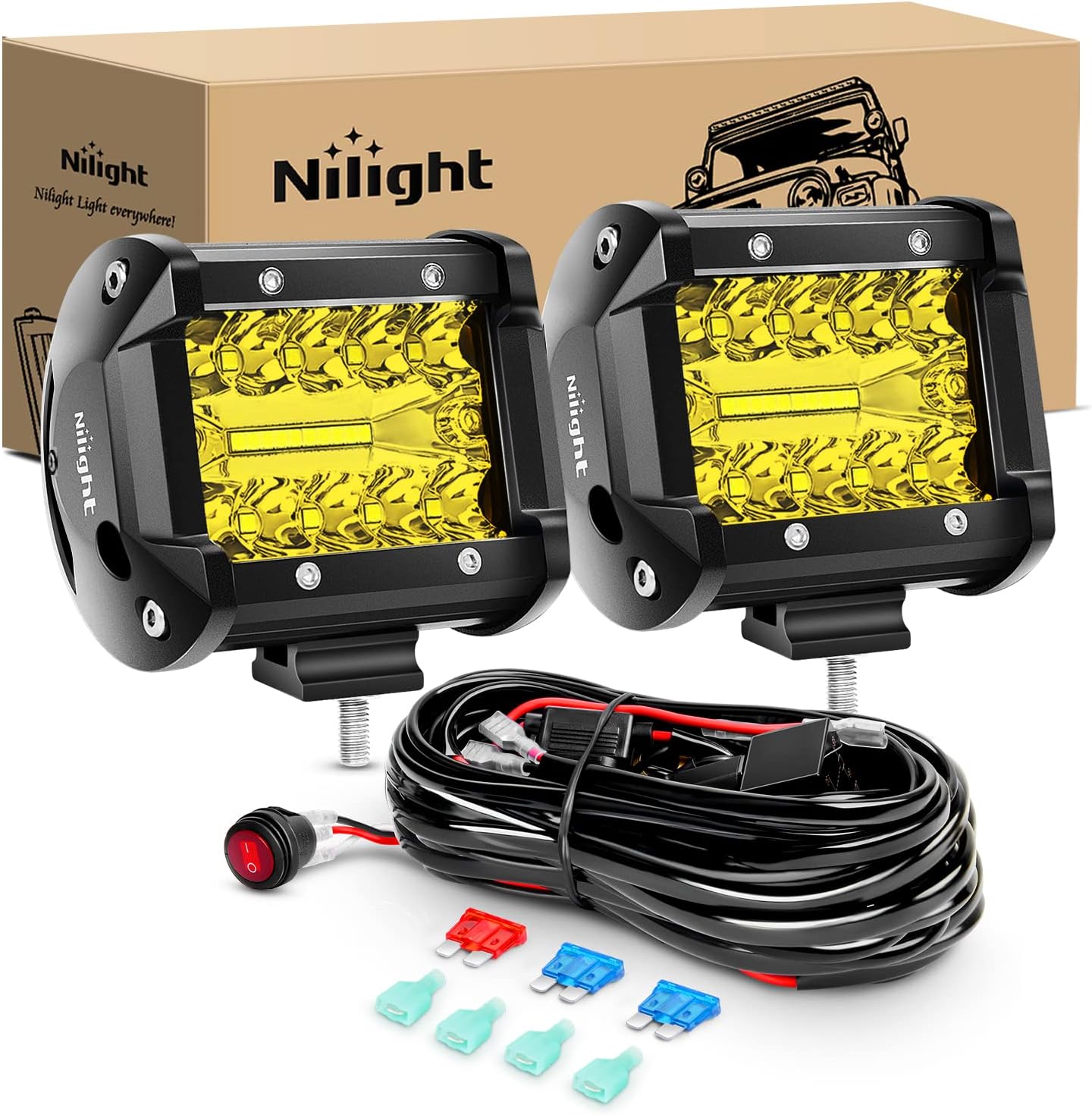
| LED Power | 60W per pod (20×3W) |
|---|---|
| Beam Pattern | Spot Flood Combo |
| LED Color Temp | Yellow 2500K–3000K |
| Input Voltage | 9–30V DC |
| Waterproof Rating | IP67 |
These Nilight 4-inch yellow LED pods provide focused spot-plus-flood illumination intended to improve visibility in fog, rain, and snow. Each pod uses high-intensity LED chips (60W per pod, arranged as 20x3W) and a PC lens in a die-cast aluminum housing with silicone sealing and an IP67 rating, so they resist water, dust, and road spray. The included 2-lead wiring harness, relay, rocker switch, and inline fuse make installation straightforward on 12V systems and let you control the lights from the cabin. Practical benefits include a warm yellow 2500K–3000K beam that cuts glare in fog and improved durability from multiple cooling elements and corrosion testing. Limitations to note are the compact 4-inch housing that concentrates output into a narrower beam than larger bars, and the yellow color trades some raw lumen intensity for reduced backscatter in fog. Expect a good weatherproof auxiliary fog option for local driving and poor conditions, but plan mounting and aiming carefully to avoid creating dark spots or glare for other drivers.
Best for: Buyers who need durable, weather-resistant auxiliary fog lights that reduce glare in wet or snowy driving and want an easy-to-install kit for routine use.
Less Ideal for: Drivers seeking very wide-area illumination or maximum raw lumen output for high-speed off-road use should consider larger light bars instead.
- IP67-rated housing with silicone sealing and waterproof rubber pad for reliable wet-weather use
- Yellow 2500K–3000K beam reduces glare and improves contrast in fog and snow
- Complete wiring harness with relay, rocker switch, and fuse simplifies installation on 12V vehicles
- Die-cast aluminum body and cooling design for heat dissipation and longer LED life
- Compact 4-inch pod produces a more focused beam than larger light bars, so coverage is limited
Verdict: Choose these if you need fog lighting that holds up to water, mud, and road salt—ideal for reliable performance in severe weather and frequent wet driving.
4. Nilight ZH010 2-Pack 4" 18W Flood LED Pods with Wiring Harness
Best Off‑Road Fog Pods

| Light Source Wattage | 18 Watts |
|---|---|
| Color Temperature | 6500 Kelvin |
| Input Voltage | 12 Volts |
| Waterproof Rate | IP67 |
These Nilight 4-inch flood LED pods are built as a compact auxiliary lighting solution for off-road or fog use on a 2026 Ford Explorer. Each pod uses six high-intensity LED chips for an 18W output and a flood beam pattern that favors wide, near-field illumination rather than long-range spotting. The kit includes a wiring harness with a rocker switch, relay and fuse for a safer, easier installation and adjustable mounting brackets so you can angle the beam to suit bumper or grille mounting. Construction uses a die-cast aluminum profile with PC lens, IP67 sealing, and cooling features meant to handle wet or dusty roadside conditions. Practical benefits for Explorer owners include noticeably improved lateral visibility in foggy or wooded trails and a ready-to-install harness that avoids complex rewiring. Limitations are the flood-focused beam and modest lumen rating, which prioritize area coverage over distance, so they are best as fog or work lights rather than primary long-range driving lamps.
Best for: Ford Explorer owners adding rugged auxiliary fog or off-road pods who prioritize wide, near-field illumination and a kit that installs with a supplied harness.
Less Ideal for: Drivers who need long-range spot beams for high-speed night driving or who prefer integrated factory-style lighting upgrades.
- Wide flood beam pattern improves lateral visibility in fog and close-range off-road conditions
- Includes wiring harness with rocker switch, relay and inline fuse for safer plug-and-play installation
- Durable build with die-cast aluminum housing, PC lens and IP67 waterproofing for wet and dusty use
- Adjustable mounting brackets let you aim the beam to match bumper or grille placement
- Modest lumen output and flood pattern limit long-distance illumination compared with larger spot lights
Verdict: Select this when you want rugged, high‑output auxiliary pods or slim bars designed for off‑road use, adjustable mounting, and wider illumination patterns.
5. ekurfos 3" Angel Eye LED Fog Light Pair with COB Halo Ring
Best Halo‑Style / DRL Fog Lights

| Specific Uses For Product | Fog Lights |
|---|---|
| Light Source | LED |
| Compatible with Vehicle Type | Car |
| Auto Part Position | Front |
These ekurfos angel eye fog lights combine a focused fisheye LED beam with a circular halo ring to serve as both fog lamps and a daytime running light accent. Intended to replace a factory fog lamp assembly, they use COB LED technology for even light distribution and improved heat dissipation, and come in a sealed, waterproof housing that resists dust and vibration. Installation is plug-in style so the lights can be tied into the vehicle fog switch or DRL circuit without extensive modification. In practice they deliver a bright, concentrated white beam for cutting through rain and fog while the halo ring adds a modern look to the front end. Limitations include the small 3-inch diameter, which reduces raw output compared with larger assemblies, and the product carries only a short manufacturer warranty period. These are best where styling plus functional fog/DRL capability is the priority rather than maximum long-range illumination.
Best for: Buyers looking to add a modern halo/DRL look to the front end while keeping functional fog light capability and simple installation.
Less Ideal for: Drivers who need maximum long-range fog illumination or those who prefer larger, high-power spot/fog assemblies for rural or off-road driving.
- Integrated halo ring provides DRL-style appearance while serving as a fog light
- COB LED design for uniform light output and improved heat dissipation
- Sealed, waterproof and shock-resistant housing for weather durability
- Plug-in integration with factory fog/DRL switch avoids complex wiring
- 3-inch diameter limits maximum throw and overall brightness compared with larger fog assemblies
- Manufacturer warranty period is short
Verdict: This pick fits buyers who want a combined fog light and daytime running/halo styling element that improves visibility and gives the front end a modern look.
Choosing the Right 2026 Ford Explorer Fog Lights: Key Factors to Consider
Beam Pattern and Spread
Beam pattern determines how fog lights illuminate the road in low-visibility conditions. For the 2026 Ford Explorer you want a wide, low-mounted spread that lights up lane edges and the immediate roadside rather than a high, focused beam that can reflect off fog and reduce visibility. A proper beam pattern reduces glare to oncoming traffic and improves your ability to detect hazards near the pavement.
When assessing patterns, look for optics designed to cut off light above a certain height so the output stays close to the road surface. Projector-style optics often provide a sharper cutoff and more controlled spread, while reflector-style units can be broader but less focused. Consider how the pattern will integrate with the Explorer's bumper mounting height and your typical driving speeds; tighter, longer-throw patterns help on higher-speed roads, while broad, near-field spreads are better for urban and slow-speed driving.
Light Source and Color Temperature
The type of light source affects brightness, longevity, and how light behaves in fog. LED sources offer higher lumen-per-watt efficiency and longer lifespan compared with traditional bulbs, and modern LEDs can be engineered for narrow-spectrum output that penetrates fog more effectively. For the Explorer, LEDs also reduce heat in the housing and typically integrate better with compact fog lamp assemblies.
Color temperature matters: lower kelvin values (3000K to 4000K) tend to perform better in dense fog and rain because warmer, yellowish light scatters less than cool white. Extremely cool temperatures above 6000K can create more backscatter in fog. Match color temperature to your driving conditions and local regulations, and consider bulb-type options if you need to retain factory-style appearance while improving performance.
Fitment and Electrical Compatibility
Fitment is critical for a straightforward swap on the 2026 Ford Explorer within the 2020-present platform. Kits that use the factory mounting points and existing wiring connectors reduce installation time and the risk of electrical issues. Mismatched housings or brackets can require drilling, trimming, or custom mounts that add cost and complexity.
Electrical compatibility includes connector type, voltage regulation, and whether resistors or CAN-bus adapters are needed to prevent dashboard warning lights or flicker. Confirm whether the kit requires auxiliary relays or additional hardware and how much wiring modification is needed. Prioritize options that explicitly list compatible Explorer model years and configurations to avoid surprises during installation.
Ingress Protection and Durability
Fog lights are exposed to water, road spray, mud, and winter salt, so build quality directly impacts lifespan. An IP rating indicates resistance to dust and water; higher ratings mean better protection against moisture intrusion that can dim output or cause electrical failure. Corrosion-resistant housings, sealed optics, and durable lens materials help maintain consistent performance in harsh conditions.
Thermal management is part of durability for LED-based options. Effective heat sinks and thermal paths prevent premature lumen depreciation and failure. Also consider impact resistance of the lens and mounting hardware quality since the Explorer's fog lights sit low and are more likely to encounter road debris.
Installation Complexity and Tools Required
Installation time and the tools required vary widely between plug-and-play replacements and kits that require wiring, bracket fabrication, or bumper removal. For many Explorer owners, a plug-in solution that uses the stock connectors and fits into the factory housing is the fastest and least risky route. Kits that require additional relays, fuses, or LED drivers increase installation steps and the chance of wiring errors.
Consider whether you have access to basic hand tools, a lift or jack, and the ability to remove the bumper or inner fender if needed. Also factor in whether you prefer professional installation; more complex kits may nullify any cost savings if the labor is significant.
Regulatory Compliance and Beam Alignment
Fog lights must meet local vehicle lighting regulations regarding color, beam aim, and brightness. Noncompliant units can create glare or fail inspection. For the 2026 Ford Explorer, ensure the chosen lights meet regional standards for automotive auxiliary lighting and that mounting height and aim can be adjusted to prevent shining into oncoming drivers' eyes.
Beam alignment controls or adjustable mounts allow you to fine-tune the light pattern after installation. A kit that offers clear adjustability helps ensure legal and safe operation and improves on-road effectiveness under different loads and ride heights.
How Fog Lights Improve Real-World Visibility
Fog lights are designed to provide low, wide illumination that reduces backscatter and highlights the road surface immediately in front of the vehicle. On the 2026 Ford Explorer, properly aimed fog lights help you see lane markings and obstacles lower to the ground that the high beams and headlights may not adequately illuminate.
Because fog, rain, and snow scatter light, fog lights use controlled beam patterns and often warmer color temperatures to cut through precipitation without causing excessive glare. Installing compatible fog lights tuned for the Explorer's mounting height improves confidence at night and in adverse weather without blinding other drivers.
- Low-mounted beam cuts glare and reduces forward reflection
- Wide spread illuminates road edges and roadside hazards
- Warmer color temperatures reduce backscatter in fog
LED Vs Halogen Fog Lights: What to Expect
LED fog lights deliver higher efficiency and longer service life compared with halogen bulbs, and they are common in modern upgrades for the Explorer. LEDs use less power and often produce a more consistent beam, but they require proper thermal design to avoid overheating within the sealed fog housing.
Halogen replacements are simple and familiar, often offering easier compatibility with existing connectors, but they run hotter and have shorter lifespans. If you prefer a plug-and-play swap with no electrical adjustments, halogen-type bulbs can be the less complex option, while LEDs are better when you want improved longevity and modern performance.
- LEDs: better efficiency, longer life, require heat management
- Halogen: simpler compatibility, lower upfront complexity
Installation Tips for 2026 Ford Explorer Owners
Before starting, verify the kit lists compatibility for the 2026 Ford Explorer within the 2020-present platform and inspect the included connectors and mounting hardware. Park on level ground and have jack stands or wheel chocks ready if you will lift the vehicle. Removing the inner splash shield or accessing the fog housing from below is common, so keep a set of metric sockets and trim tools at hand.
If the kit requires additional relays or resistors, take time to route wiring away from heat sources and moving parts, secure harnesses with zip ties, and fuse the circuit appropriately. After installation, adjust aim according to the owner manual or local regulations to ensure the beam pattern stays low and does not create glare for other drivers.
- Confirm compatibility and check connectors before disassembly
- Keep wiring away from exhaust and steering components
- Adjust aim and test at night to fine-tune pattern
Maintenance and Troubleshooting
Regular maintenance extends the life of fog lights. Periodically inspect lenses for clouding, cracks, and moisture ingress. Clean lenses with automotive-safe products and check mounting hardware for tightness after off-road use or heavy vibration. For LED options, inspect cooling fins or heat sinks for debris that may restrict airflow.
If a fog lamp flickers or fails, check fuses and connector corrosion first. Moisture inside the housing usually indicates a seal failure and may require resealing or replacement of the housing. For electrical issues that persist, trace wiring for chafing points or poor grounds and consider professional diagnosis if the vehicle's lighting modules show errors.
- Clean lenses and inspect seals regularly
- Check fuses and grounds for intermittent operation
- Reseal or replace housings if moisture is present
Choosing Color Temperature for Mixed Driving Conditions
For mixed driving that includes highway and local roads, choose a fog light color temperature that balances penetration in precipitation with usable contrast. A temperature between 3000K and 4300K commonly provides good penetration in fog while maintaining a natural appearance for nighttime driving on dark roads.
Very warm tones improve performance in dense fog but can look noticeably yellow compared with the vehicle's headlights. If you rely on fog lights mostly for poor-weather commuting, favor the warmer end of the range. If you use them occasionally for style or added visibility at night, a neutral white closer to 4300K may feel more consistent with the Explorer's other lighting.
- 3000K to 4300K is a practical range for mixed conditions
- Warmer light reduces scattering in heavy precipitation
- Neutral whites balance aesthetics and function
Still looking for the perfect fit?
Select your Ford Explorer configuration to see the most relevant Fog Lights recommendations
How We Chose the Best 2026 Ford Explorer Fog Lights
We prioritized criteria that matter for fog lights on the 2026 Ford Explorer and the 2020-present platform. Fitment accuracy was a primary filter: we only considered options that match factory mounting points and electrical interfaces for this vehicle scope to avoid adapter-heavy installs. Beam pattern and light output were assessed for low-glare, wide-angle spread that illuminates road edges and lane markers rather than causing forward reflection in fog. Durability factors included IP water and dust ratings, thermal management for longevity, and corrosion-resistant housings given exposure to road spray and salt.Electrical compatibility and wiring simplicity were evaluated to minimize modification needs and preserve vehicle electronics. Installation complexity was graded by whether the kit uses plug-and-play connectors or requires splicing and the availability of clear instructions. We excluded products that require body modifications, custom brackets, or significant rewiring. Finally, we screened for reliable manufacturing features such as sealed optics and tested heat sinks rather than claims alone. These filters ensured selections that balance real-world visibility gains, durability in wet conditions, and straightforward fitment for Explorer owners.
Our full evaluation process is outlined in our review methodology.
FAQ
Can I replace the 2026 Ford Explorer fog lights with LEDs myself?
Often you can, provided the replacement kit matches the Explorer's connectors and housing. Plug-and-play LED bulbs that use the factory socket are the easiest; kits requiring relays, resistors, or bumper removal increase complexity and may benefit from professional installation.
What color temperature works best for fog on the Explorer?
A warmer color temperature between 3000K and 4300K usually performs best in fog and heavy rain because it scatters less. The specific choice depends on how often you drive in dense fog versus normal night driving.
How do I know if my fog lights need resealing or replacement?
Signs of seal failure include moisture or condensation inside the lens, noticeable dimming, or corrosion on connectors. If cleaning and resealing do not resolve moisture intrusion, replacing the housing is often the more reliable fix.
Will aftermarket fog lights trigger dashboard warnings on my Explorer?
It depends on the electrical compatibility of the kit. Some LED replacements draw less current and can trigger warning circuits without resistors or CAN-bus adapters. Choose a kit that specifies compatibility with the Explorer's electrical system or includes required adapters.
How should I aim fog lights after installation?
Aim fog lights low and wide so the beam illuminates the road surface and edges rather than projecting upward. Use a level surface and follow the vehicle manual or local regulations for specific measurement points to achieve correct alignment.
Are waterproof ratings important for Explorer fog lights?
Yes. Because fog lights sit low and face road spray, an IP-rated, sealed assembly reduces the risk of moisture ingress and premature failure. Higher ingress protection extends reliable performance in wet and winter conditions.
Final Verdict
When selecting fog lights for the 2026 Ford Explorer (2020-present), prioritize fitment and beam pattern first, followed by durability and electrical compatibility. Choose optics that deliver a low, wide spread and a color temperature suited to your typical weather to reduce glare and improve near-field visibility. Balance the convenience of plug-and-play installation against the performance advantages of well-designed LED options, and verify ingress protection and thermal management for long-term reliability. With those tradeoffs in mind, you can confidently select a fog light solution that enhances safety and performance in poor-visibility driving.
Explore More:
- Check out all Ford Explorer parts & accessories
- Explore Lighting
- Browse all Accessories
