

Note: This article contains affiliate links. If you click on these links and make a purchase, I may earn a small commission at no extra cost to you. This helps support my research and content. Read my full affiliate disclosure here.
If you drive a 2008-2012 Honda Accord you rely on a cooling system that must resist corrosion, maintain proper boiling and freezing points, and protect aluminum components. Choosing the right antifreeze matters because the wrong formulation can reduce heater performance, accelerate corrosion in the head and radiator, or shorten hose and seal life. This guide shortlists the top antifreeze options compatible with the 2008-2012 Accord platform and explains the decision factors that matter for everyday use and seasonal extremes. Below you will find the shortlisted picks and the core criteria used to evaluate them, so you can pick a coolant that matches your driving patterns and maintenance schedule.
Looking for other parts? See all Honda Accord parts & accessories.
Top Picks at a Glance
| Best Overall Antifreeze The top all-around coolant that balances protection and compatibility | Honda Type 2 Extended Life Antifreeze/Coolant, 50/50 Pre-Diluted, 1 Gallon |  |
| Best Budget Antifreeze A low-cost coolant that covers basic protection and maintenance needs | Prestone MAX Asian Green 50/50 Antifreeze Coolant (Pack of 1) |  |
| Best Premium Antifreeze Higher-end coolant with advanced additives and extended service life | Mishimoto Liquid Chill OE Coolant, Blue, 1 Gallon |  |
| Best Long-Life Antifreeze A formulation designed for extended change intervals and durability | PEAK OET Extended Life Blue 50/50 Prediluted Antifreeze/Coolant (1 Gal) |  |
| Best Concentrated Antifreeze A concentrated formula you dilute to the exact coolant ratio desired | Zerex Asian Vehicle Green Antifreeze/Coolant Concentrate (1 Gallon) |  |
| Best Pre-Mixed Antifreeze Ready-to-use coolant that’s convenient and prevents mixing mistakes | Zerex Asian Vehicle Blue 50/50 Prediluted Antifreeze/Coolant 1 gal |  |
1. Honda Type 2 Extended Life Antifreeze/Coolant, 50/50 Pre-Diluted, 1 Gallon
Best Overall Antifreeze

| Product type | Pre-mixed 50/50 antifreeze/coolant |
|---|---|
| Volume | 1 gallon |
| Base | Ethylene glycol |
| Service interval | Up to 5 years or 60,000 miles |
This one-gallon bottle of Honda Type 2 coolant is the factory-quality, ready-to-use blue coolant Honda ships in many of its cars. It is pre-diluted 50/50 so you can pour it straight into the cooling system during a service or top-off without mixing. The formula uses ethylene glycol and corrosion inhibitors designed to protect metal and non-metal components and provide freeze and boil-over resistance across seasonal extremes. Honda specifies an extended service interval of up to 5 years or about 60,000 miles under normal conditions, which makes it convenient for DIY maintenance schedules. Practical benefits include exact match to factory fill chemistry for Honda vehicles and reduced risk of mixing incompatible coolant types. The main trade-off is that this is a vehicle-specific, OEM coolant so it is more expensive than generic universal products and is intended for systems that require Honda Type 2 chemistry rather than all makes or coolant types.
Best for: DIY mechanics who maintain Honda vehicles and prioritize using the same long-life coolant Honda specifies to simplify service and avoid compatibility issues.
Less Ideal for: Drivers who need a budget universal coolant for mixed-vehicle fleets or those who require a non-ethylene glycol or universal multivehicle formula.
- Ready-to-use 50/50 pre-mix eliminates need to dilute and simplifies DIY coolant changes
- Factory-formulated to match Honda cooling system chemistry and long-life service interval
- Contains corrosion inhibitors suitable for metal and non-metal components to help prevent scale and rust
- Higher cost compared with aftermarket universal coolants
Verdict: The best all-around antifreeze for most DIY mechanics, offering broad corrosion protection, easy mixing or prefill options, and reliable long-term cooling system performance.
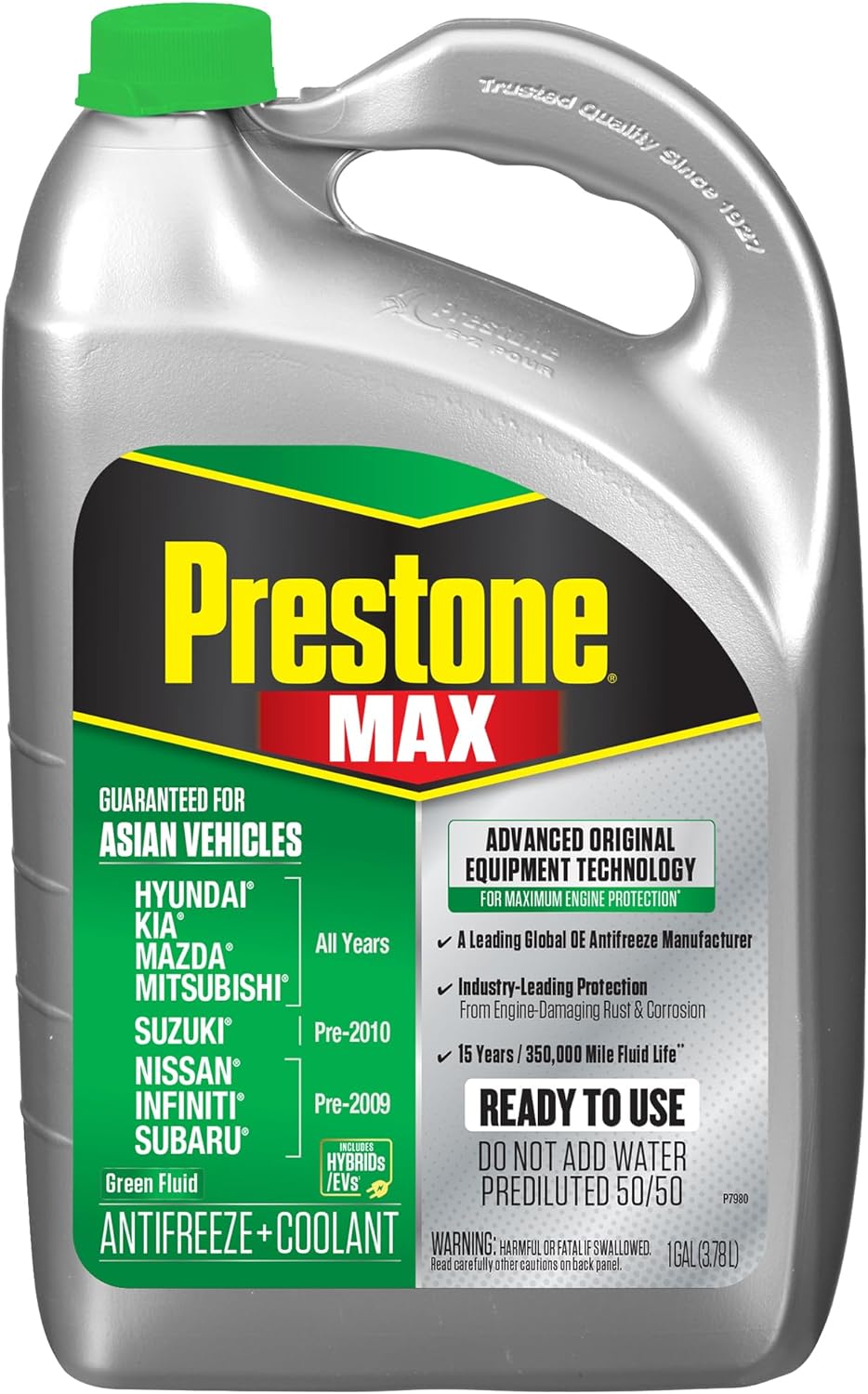
2. Prestone MAX Asian Green 50/50 Antifreeze Coolant (Pack of 1)
Best Budget Antifreeze
| Model | AF6610/F |
|---|---|
| Brand | Prestone |
| Premix | 50/50 |
Prestone MAX Asian Green 50/50 comes premixed so you can top off or refill the cooling system without adding water, which makes it an easy choice for DIY maintenance on a 2008–2012 Honda Accord that requires a green Asian-style coolant. It is marketed with Prestone CorGuard corrosion inhibitors and bitterant for safety, and users report stable levels and trouble-free performance on extended drives. The premix removes the guesswork for dilution and reduces the chance of incorrect mixing during home service. Compared with specialty long-life formulas, this coolant aims at broad protection rather than extended service intervals, so you may see recommended change intervals closer to typical conventional coolants. If your Accord specifically calls for a different color or a manufacturer-specified formula, follow the factory recommendation rather than swapping to a different chemistry. For budget-focused DIYers who need straightforward freeze and boil protection plus corrosion control, this product covers the basics reliably and with minimal fuss.
Best for: Budget-minded DIYers working on a 2008–2012 Honda Accord who want a ready-to-use, Asian-style green coolant that simplifies topping off and routine coolant changes.
Less Ideal for: Drivers who need a specific factory-specified long-life or different-chemistry coolant should choose the exact manufacturer-recommended formula instead of swapping chemistries.
- Premixed 50/50 formulation eliminates need for dilution and reduces mixing errors
- Includes corrosion inhibitors intended to protect cooling system components
- Designed for wide temperature protection against freezing and boiling
- Available in single convenient container suitable for DIY top-offs and refills
- Formulation targets conventional service intervals rather than extended long-life protection
Verdict: The best budget antifreeze for cost-conscious DIYers who need dependable freeze and boil protection and corrosion inhibitors at a minimal price.
3. Mishimoto Liquid Chill OE Coolant, Blue, 1 Gallon
Best Premium Antifreeze

| Unit count | 128.0 Fluid Ounces |
|---|---|
| Material | Ethylene Glycol |
| Item form | Liquid |
| Service interval | 5 year / 150,000-mile |
Mishimoto Liquid Chill is a ready-to-use, 50/50 ethylene glycol coolant designed for European and Asian vehicles and formulated for extended corrosion protection and long service intervals. For a 2008–2012 Honda Accord, this product is intended as a direct fill or top-off that matches Honda Type 2 chemistry, so it removes the need to mix concentrate and simplifies flush-and-fill maintenance. Notable features include freeze protection to about -34F, boiling protection up to 265F, anti-corrosion additives, and a claimed 5 year or 150,000-mile service life. In practice that means less frequent coolant changes and stronger protection for aluminum and mixed-metal cooling systems common to Accords. The pre-mixed jug pours cleanly and is convenient to store as an emergency refill. Limitations are that it is a specific blue long-life formula, so it must be used only where that chemistry is compatible with the vehicle specification; it is not a concentrate and should not be diluted. Mechanics who prioritize corrosion inhibitors and extended intervals will appreciate its factory-replacement approach, while technicians must confirm Honda Type 2 compatibility before switching fluids.
Best for: Mechanics and technicians seeking a premium, ready-to-use long-life coolant that emphasizes corrosion protection and extended drain intervals for 2008–2012 Honda Accord service and repairs.
Less Ideal for: Drivers or shops that need a universal concentrate to mix to different ratios or those whose vehicle requires a different coolant chemistry than Honda Type 2 should choose another product.
- Pre-diluted 50/50 formula ready to use with no mixing required
- Formulated to match Honda Type 2 and other manufacturer specifications
- Long service interval of up to 5 years or 150,000 miles
- Includes corrosion inhibitors and lubrication additives for mixed-metal systems
- Not a concentrate so it cannot be diluted for alternate mixture ratios
Verdict: The best premium antifreeze for mechanics who prioritize superior corrosion inhibitors, longer drain intervals, and top-tier materials protection regardless of higher upfront cost.
4. PEAK OET Extended Life Blue 50/50 Prediluted Antifreeze/Coolant (1 Gal)
Best Long-Life Antifreeze

| Formulation | Phosphate-enhanced Organic Acid Technology (POAT) |
|---|---|
| Dilution | 50/50 prediluted |
| Volume | 1 gallon |
| Recommended for | Asian vehicles (Honda, Nissan, Subaru, etc.) |
PEAK OET Extended Life Blue is a ready-to-use 1-gallon antifreeze aimed at extended service life applications for Asian-built engines. It arrives prediluted 50/50 so DIY mechanics can top off or refill cooling systems without mixing concentrate, and its phosphate-enhanced Organic Acid Technology (OET/POAT) inhibitor package is specified for many Japanese and Korean vehicles. In practice it protects against rust and corrosion across cooling-system metals and keeps operating temperature stable during everyday driving and longer trips. The formula is presented as suitable for models that call for a blue POAT coolant and the bottle is easy to pour into a radiator or overflow reservoir. Limitations to note are that color and marketing do not replace checking the Honda Accord owner manual for the exact coolant spec required, and prediluted fluid means no control over dilution if you need a different concentrate ratio. For DIYers who want a low-fuss, long-life factory-style replacement for compatible Asian vehicles, it is a convenient, effective choice.
Best for: DIY mechanics who prioritize longer service intervals and want a ready-to-use, factory-style extended-life coolant for compatible Asian-engine vehicles without the hassle of mixing concentrate.
Less Ideal for: People who need a concentrate to adjust dilution for specific applications or those whose vehicle requires a different coolant chemistry should choose a product matched exactly to their manual.
- Comes prediluted 50/50 for easy top-offs and immediate use
- Extended-life POAT inhibitor package aimed at long service intervals
- Formulated specifically for Asian vehicles that require blue phosphate-enhanced coolant
- Available in a 1-gallon size convenient for DIY flush and fill jobs
- Not universal—must verify vehicle manufacturer coolant specification before use
Verdict: The best long-life antifreeze for DIY mechanics wanting extended service intervals and durable inhibitor packages that reduce the frequency of coolant changes.
5. Zerex Asian Vehicle Green Antifreeze/Coolant Concentrate (1 Gallon)
Best Concentrated Antifreeze

| Brand | Zerex |
|---|---|
| Model | Asian Vehicle Green |
| Form | Concentrate |
| Manufacturer | Valvoline |
Zerex Asian Vehicle Green is a one‑gallon concentrated coolant intended for Asian OEMs that require a green, phosphate‑based HOAT formulation. You buy it as a concentrate and mix it with tap or demineralized water to set your desired freeze and boil protection, which is handy if you want precise control over winter or high‑heat exposure. The formula is silicate and borate free and includes phosphate additives aimed at reducing corrosion, scale and rust across cooling‑system metals including aluminum. In practice it works for topping off radiators or doing a full system flush and refill, and the concentrate format reduces waste and transport of extra water compared with premixed products. Limitations: it is tuned for Asian vehicle specifications, so if your vehicle calls for a different chemistry follow the maker's coolant recommendation; you must mix correctly to get the rated protection and the concentrate requires keeping a clean source of water for mixing.
Best for: Drivers who want to mix their own coolant concentrate to set specific freeze/boil protection and prefer a formulation matched to Asian vehicle coolant chemistry.
Less Ideal for: Drivers who want ready‑to‑use premixed coolant or who need a different coolant chemistry than the green HOAT formula.
- Concentrate format lets you control freeze and boil protection and reduces hauling premixed fluid
- Phosphate‑based HOAT formula protects aluminum and other metals from corrosion and scale
- Free of silicates, borates, amines and nitrites to match Asian vehicle coolant specs
- Requires correct mixing with clean water to achieve advertised protection levels
Verdict: The best concentrated antifreeze for users who prefer to control freeze/boil protection ratios and avoid hauling extra water or premixed fluid.
6. Zerex Asian Vehicle Blue 50/50 Prediluted Antifreeze/Coolant 1 gal
Best Pre-Mixed Antifreeze

| Formula type | HOAT (Hybrid Organic Acid Technology) |
|---|---|
| Mixture | 50/50 prediluted ready-to-use |
| Silicate/borate | Silicate and borate free |
| Volume | 1 gal |
| Manufacturer | Valvoline |
Zerex Asian Vehicle Blue arrives pre-mixed at 50/50 so DIYers can pour it straight into the cooling system without measuring or adding water. It is formulated with HOAT (Hybrid Organic Acid Technology) and a phosphate additive to protect aluminum and other cooling-system metals from corrosion, scale, and deposits, and the silicate- and borate-free formula matches the coolant chemistry many Asian manufacturers specify. Typical use is a radiator top-off or a full system flush and refill; the ready-to-pour gallon makes both tasks quick and tidy. Practical benefits include OEM-focused chemistry for better long-term compatibility, protection against freezing and boiling, and reduced risk of wrong-mix ratios that can occur with concentrate. Limits to consider are that this is a vehicle-specific formula intended for Asian-style blue HOAT systems, so it should be used only where that chemistry is recommended, and it does not replace the need to follow vehicle service intervals or system-flushing procedures when required.
Best for: DIY mechanics who want a ready-to-pour, manufacturer-compatible coolant for topping off or refilling Asian-style cooling systems without mixing concentrate.
Less Ideal for: People who need a concentrate for custom mixing, or owners of vehicles that require a different coolant chemistry should choose a product matched to their manufacturer specification instead.
- Pre-mixed 50/50 formulation ready to pour with no measuring required
- HOAT chemistry with phosphate additive for corrosion and scale protection
- Silicate- and borate-free formula compatible with many Asian vehicle cooling systems
- Designed for vehicles that require a blue HOAT-style coolant so not suitable where a different chemistry is specified
Verdict: The best pre-mixed antifreeze for DIY mechanics who want a ready-to-pour solution that eliminates measuring and ensures consistent protection out of the bottle.
Choosing the Right 2008-2012 Honda Accord Antifreeze: Key Factors to Consider
Coolant Chemistry and Inhibitor Type
The chemical formulation determines how well the antifreeze protects the engine and cooling system over time. For a 2008-2012 Honda Accord, the inhibitor package must be compatible with aluminum cylinder heads, radiators, and mixed-metal components. Organic acid technology and hybrid inhibitors behave differently; some provide longer service life while others require more frequent changes.
Understanding chemistry helps you match the coolant to recommended service intervals and avoid reactions that can cause deposits or accelerated corrosion. Ensure the product lists compatibility with aluminum and mixed-metal systems and specifies expected replacement intervals so you can plan maintenance accordingly.
Freeze and Boil Protection
Freeze point and boiling point directly affect winter start-up reliability and cooling performance under load. Antifreeze is mixed with water, and typical 50/50 mixes balance freeze and boil protection with heat transfer efficiency. For owners in colder climates, a lower freeze point is essential to prevent block or heater core damage during deep freezes.
Conversely, adequate boiling resistance reduces the risk of vapor lock and localized overheating when the engine is under heavy load or when ambient temperatures are high. Look for products that clearly state freeze/boil performance at common mix ratios and that maintain thermal stability over time.
Corrosion Control and pH Stability
Effective corrosion inhibitors keep aluminum, iron, and other metals from pitting and forming scale. pH drift over time can reduce inhibitor effectiveness and lead to accelerated wear. For the 2008-2012 Accord, which uses aluminum components, maintaining neutral to slightly alkaline pH with stable inhibitors helps extend radiator and head gasket life.
Choose coolants that advertise long-term pH stability and include testing data or manufacturer claims about corrosion protection. Regularly checking coolant condition during service intervals can catch pH decline before it causes damage.
Compatibility With Hoses, Seals, and Plastics
Coolant interacts with various nonmetal components, including hoses, gaskets, and plastic tanks. Some formulations can harden or swell rubber and degrade seal materials, which increases the chance of leaks. The 2008-2012 Accord uses rubber hoses and polymer plastics that need a compatible inhibitor package.
Look for products tested for compatibility with automotive elastomers and plastics. If you recently replaced hoses or seals, select a coolant with proven material compatibility to avoid premature deterioration and ensure a reliable seal.
Service Interval and Maintenance Impact
Different antifreeze formulations have varying recommended service intervals, from short-term 2-year products to long-life solutions that can last up to several years or longer. Longer-interval coolants reduce maintenance frequency but require compatible chemistry and careful application to achieve advertised longevity.
Consider how often you are willing to flush the system and whether you plan to keep the vehicle long term. Longer-life options can be beneficial if you prefer fewer maintenance visits, while conventional formulas may suit owners who perform frequent coolant flushes and prefer simpler additive packages.
Cold-Weather Performance and Additives
If you drive in harsh winters, freeze protection and additives that prevent localized freezing in heater cores and small passages are important. Some antifreezes include supplemental agents to improve cold-start protection and to reduce the chance of ice formation in tight passages.
Review the product's cold-weather claims and recommended mixing ratios. Match the formulation to the lowest temperatures you typically experience and consider seasonal topping-up procedures if you live in an area with extreme temperature swings.
Why Honda-Specific Compatibility Matters
Honda engines from 2008 to 2012 were designed with aluminum heads and cooling components that respond differently to inhibitor chemistries than older cast-iron designs. Using a coolant compatible with these materials helps prevent galvanic corrosion and minimizes the risk of scale buildup in tight cooling passages.
Ensuring compatibility also reduces the likelihood of interactions with factory seals and hoses. A compatible coolant preserves component life and maintains steady heater and cooling performance across seasons.
- Aluminum heads require stable, non-acidic inhibitors
- Mixed-metal systems need corrosion control for all materials
- Material compatibility reduces leak and seal failures
How Mixing Ratios Affect Protection and Heat Transfer
Most antifreeze products are mixed with distilled or demineralized water, and the typical 50/50 ratio balances freeze protection with efficient heat transfer. Increasing the percentage of antifreeze improves freeze resistance but can slightly reduce thermal conductivity, which may affect cooling under high load.
Use manufacturer-recommended ratios as a baseline and adjust for climate. For winter protection, a 60/40 mix can offer deeper freeze resistance, but always confirm the product's recommended mixing guidance and how it affects boiling point and corrosion protection.
- 50/50 is standard for general use
- Higher antifreeze concentration improves freeze point but may reduce heat transfer
- Follow product guidance for optimal performance
Signs Your Accord Needs A Coolant Change
Watch for early warning signs such as discolored coolant, persistent bubbles in the overflow tank, recurring overheating, or a sweet smell under the hood. These symptoms can indicate degraded inhibitors, trapped air, or contamination that should be addressed with servicing.
Routine inspection of coolant condition and scheduled maintenance based on the coolant's recommended interval helps avoid costly repairs tied to corrosion, head gasket failure, or radiator damage.
- Discolored or cloudy coolant
- Overheating during normal driving
- Visible deposits or rust in the overflow reservoir
Preparing For A System Flush
A full coolant flush and refill is often required when switching inhibitor types or bringing the system back to optimal condition. Proper flushing removes old inhibitors, scale, and sediment that can reduce the effectiveness of fresh antifreeze.
When preparing for a flush, use the correct tools to bleed trapped air and follow recommended procedures for the 2008-2012 Accord to avoid air pockets. Replace worn hoses and the thermostat if they show signs of age to ensure the new coolant functions as intended.
- Drain and flush to remove old inhibitors
- Use distilled water for final fills to avoid mineral deposits
- Bleed the cooling system thoroughly to eliminate air pockets
Seasonal Considerations and Top-Up Practices
Seasonal temperature swings affect how you manage coolant concentration and top-offs. Check coolant level and condition before winter and again before summer to ensure both freeze protection and boil resistance are adequate.
Use the same inhibitor chemistry when topping up between changes. Mixing different inhibitor types can reduce protection and create deposits. If you must top up with a different formulation in an emergency, plan for a complete flush and refill at the next service.
- Check levels at the start of each season
- Avoid mixing different inhibitor technologies
- Plan a full flush if chemistry mismatch occurs
Still looking for the perfect fit?
Select your Honda Accord configuration to see the most relevant Antifreezes recommendations
How We Chose the Best 2008-2012 Honda Accord Antifreeze
We evaluated candidates by focusing on technical compatibility and long-term cooling system health specific to the 2008-2012 Honda Accord. Key evaluation criteria included: corrosion protection for aluminum and mixed-metal systems, reserve alkaline pH stability over time, and inhibitor package type to match recommended service intervals. Thermal performance under both cold starts and high-load conditions was considered, with emphasis on freeze/boil points and heat-transfer characteristics. Material compatibility with rubber hoses, seals, and plastics used in the Accord cooling circuit was checked to reduce the risk of premature leaks. Finally, longevity and recommended service interval were weighed to balance maintenance frequency against protection.We excluded coolants formulated exclusively for diesel engines, racing applications, or those that require proprietary additives outside standard Honda service procedures. Candidates that lacked clear inhibitor chemistry data or manufacturer guidance for mixed-metal aluminum systems were also removed. The remaining selections meet the criteria above and reflect options suited to regular owners maintaining a 2008-2012 Accord.
Our full evaluation process is outlined in our review methodology.
FAQ
Can I use any ethylene glycol antifreeze in my 2008-2012 Accord?
It often depends on the inhibitor package and material compatibility. Ethylene glycol base is common, but you should choose a product with inhibitors designed for aluminum and mixed-metal systems to protect the Accord's cooling components.
How often should I flush the coolant on a 2008-2012 Accord?
Recommended intervals vary by coolant chemistry. Conventional formulations may need service every two years, while long-life coolants can last longer. Follow the coolant manufacturer's guidance and inspect coolant condition periodically.
Will a higher antifreeze concentration improve winter protection?
Increasing the percentage of antifreeze lowers the freeze point, but too high a concentration can reduce heat-transfer efficiency. Use recommended mix ratios and select a product that states performance at your chosen concentration.
What are signs of corrosion in the cooling system?
Look for discolored or rusty coolant, flaky deposits in the reservoir, recurring overheating, or coolant loss without visible leaks. These signs suggest inhibitor degradation or corrosion that should be addressed promptly.
Can I top up with a different brand of antifreeze if I run low?
Mixing different chemistries can reduce corrosion protection. If you must top up, try to match the existing inhibitor type and plan for a full flush and refill as soon as possible to restore proper chemistry.
Does coolant type affect heater performance in winter?
Yes. A coolant that maintains proper flow and resists freezing in small passages helps the heater core operate effectively. Poorly performing or degraded coolant can reduce warm-up speed and heater output.
Final Verdict
For a 2008-2012 Honda Accord, prioritize coolant chemistry that protects aluminum and mixed-metal components, maintains stable pH over time, and offers the freeze and boil protection suited to your climate. Balance the desire for longer service intervals with the need for proven inhibitor compatibility and material safety. By focusing on corrosion control, thermal performance, and proper maintenance practices, you can choose an antifreeze that keeps the Accord's cooling system reliable and minimizes the risk of costly repairs.
Explore More:
- Check out all Honda Accord parts & accessories
- Explore Fluids & Chemicals
- Browse all Accessories
