

Note: This article contains affiliate links. If you click on these links and make a purchase, I may earn a small commission at no extra cost to you. This helps support my research and content. Read my full affiliate disclosure here.
If you own a 1999-2006 GMC Sierra 1500 and want a cleaner, more functional stance, a dedicated leveling kit can be an effective, cost-conscious upgrade. The right kit raises the front end to match the rear, improving ground clearance for larger tires, restoring a level profile, and reducing front-end rake that can affect towing and appearance.This guide covers the top shortlisted leveling kits chosen for this truck platform and explains the practical tradeoffs for daily driving, towing, and off-pavement use. We evaluate fitment accuracy, ride quality impact, and installation complexity so you can pick an option that meets your goals. Read on to see the factors we used and practical advice for fitment and installation.
Looking for other parts? See all GMC Sierra 1500 parts & accessories.
Top Picks at a Glance
| Best Overall Leveling Kit The best all-around choice balancing performance, fit, and reliability | Rough Country 1.5–2.5" Leveling Lift Kit for 1999–2006 Chevy/GMC 1500 (Complete Set) |  |
| Best Budget Leveling Kit A low-cost option that lifts height affordably and safely | dynofit 3in Front Leveling Kit with Polyurethane Coil Spacers and Aluminum Shock Spacers for 1999–2006 Silverado/Sierra 1500 2WD |  |
| Best Premium Leveling Kit Higher-end materials and engineering for longer life and performance | Rough Country 1.5–2.5" Leveling Kit for 1999–2006 Chevy/GMC 1500 4WD |  |
| Best Complete Leveling Kit Includes all necessary brackets, hardware, and instructions for full install | TORCH 3" Front and Rear Lift Kit for 1999–2007 Silverado/Sierra 4×4 (Torsion Bar) |  |
| Best 2-Inch Leveling Kit A common lift height that balances stance and drivability | Rough Country 2" Front Leveling Kit (1999–2006 Silverado/Sierra 1500) |  |
| Best Quick-Install Leveling Kit Designed for fast, simple installs with minimal special tools | MotoFabLifts 2" Front Leveling Lift Kit (1999–2006 Chevrolet/GMC 2WD) |  |
| Best Heavy-Duty Leveling Kit Built with thicker components for towing, heavier loads, and longevity | AngyMeck 3" Cast Lift Spindles Front Pair (Vehicle-Specific) |  |
1. Rough Country 1.5–2.5" Leveling Lift Kit for 1999–2006 Chevy/GMC 1500 (Complete Set)
Best Overall Leveling Kit

| Fitment | 1999–2006 Chevy/GMC 1500 (select 4WD; 2007 Classic fit noted) |
|---|---|
| Lift range | 1.5–2.5 inches (adjustable 1" range) |
| Included components | N3 shocks, forged torsion keys, 3" rear blocks, U-bolts, hardware |
| Maximum tire fit | Up to 285/75R16 with factory backspacing |
| Installation | 100% bolt-on; drilling not required |
This Rough Country kit is a full, vehicle-specific leveling package for 1999–2006 Chevy/GMC 1500 trucks that aims to lift and level the front by roughly 1.5 to 2.5 inches while providing everything needed for installation. It includes premium N3 nitrogen-charged shocks, forged torsion bar adjuster keys with a 1-inch tuning range, 3-inch fabricated rear lift blocks with U-bolts, and all mounting hardware. In practice the kit gives a noticeably taller, more aggressive stance and room for up to 285/75R16 tires while remaining bolt-on with no drilling required. The included shocks improve on worn factory dampers for both on- and light off-road use, though some owners prefer upgraded shocks for firmer control on pavement. Installation is doable at home with common tools but can be slowed by rusty torsion keys on older trucks. Expect to do a professional alignment and recheck fasteners after initial miles. For its balance of parts, fitment, and price this kit delivers a straightforward way to level and refresh a GM 1500 suspension.
Best for: Buyers who want a reliable, all-in-one leveling solution that balances improved ride, durability, and straightforward installation for a GM 1500 without spending on premium specialist components.
Less Ideal for: Drivers seeking the best possible on-road handling or heavy-duty off-road performance who plan to run much larger tires should consider a kit with higher-end shocks and more suspension travel.
- Complete vehicle-specific kit including shocks, forged torsion keys, rear blocks, U-bolts and hardware
- N3 premium nitrogen-charged shocks designed for blended on-road and light off-road performance
- Forged torsion keys provide a 1" adjustable range for fine-tuning ride height
- Bolt-on design with no drilling required and fitment guidance for 1999–2006 GM 1500 trucks
- Allows clearance for larger tires up to 285/75R16 with factory backspacing
- Stock shocks are serviceable but some users report they feel stiff and may lack the control of higher-end aftermarket shocks
Verdict: The best overall leveling kit for buyers who want a reliable balance of ride quality, fitment accuracy, durability, and straightforward installation without excessive cost.
2. dynofit 3in Front Leveling Kit with Polyurethane Coil Spacers and Aluminum Shock Spacers for 1999–2006 Silverado/Sierra 1500 2WD
Best Budget Leveling Kit

| Automotive Fit Type | Vehicle Specific Fit |
|---|---|
| Included Components | 2 Piece polyurethane coil spacers and 2 aluminum shock spacers |
| Material Type | Polyurethane (PU) |
| Maximum Lifting Height | 3 Inches |
This dynofit kit uses polyurethane coil spacers plus aluminum shock spacers to provide a front lift for 1999–2006 Silverado/Sierra 1500 2WD trucks. It is installed by placing the two-piece polyurethane spacers into the coil springs and fitting the aluminum shock spacers to the shock bodies, so you can raise and level the front to accept larger tires without replacing factory shocks. The PU material resists corrosion and reduces the metal-on-metal clunk you might get from steel pucks, and the included shock spacers help preserve existing shocks and extend their service life. Installation requires a coil spring compressor and basic mechanical skill; instructions are minimal so a DIYer should follow online guides or a shop. Expect a real-world lift slightly under the advertised 3 inches. This is a budget-focused option that gives a noticeable, safe lift for occasional use, but it is not a full suspension upgrade and will not match the ride or durability of higher-end lift components under heavy off-road or towing use.
Best for: Buyers who want the lowest-cost way to level a 1999–2006 Sierra/Silverado 1500 2WD for occasional driving and larger tires and who are comfortable doing a DIY install or paying a simple shop labor charge.
Less Ideal for: Do not choose this if you need a heavy-duty solution for frequent off-roading, substantial towing, or long-term high-mileage use; a full suspension kit is more appropriate.
- Designed specifically for 1999–2006 Silverado/Sierra 1500 2WD front suspension fitment
- Polyurethane spacers resist corrosion and reduce clunking compared with metal pucks
- Includes aluminum shock spacers so you can keep the factory shocks and extend their life
- Simple hardware set with minimal parts for a quick, low-cost installation
- Actual lift tends to measure slightly under the advertised 3 inches
- Limited instructions included so installation can be tricky for inexperienced DIYers
Verdict: The best budget leveling kit for buyers prioritizing the lowest upfront cost while still delivering a safe, noticeable lift and acceptable component quality for occasional use.
3. Rough Country 1.5–2.5" Leveling Kit for 1999–2006 Chevy/GMC 1500 4WD
Best Premium Leveling Kit

| Automotive Fit Type | Vehicle Specific Fit |
|---|---|
| Item Type Name | 1.5-2.5" Leveling Lift Kit for 1999-2006 Chevy/GMC 1500 4WD (No Shocks) |
| Included Components | Forged torsion keys, 3" rear lift blocks, shock spacers, u-bolts & hardware |
| Material Type | Cast Iron |
| Maximum Lifting Height | 2.5 Inches |
This Rough Country leveling kit is a bolt-on solution to level the front of 1999–2006 GM 1500 4WD trucks and make room for larger tires up to roughly a 32" diameter. It replaces the factory torsion keys with forged adjustable keys to fine-tune front ride height across a 1" range, and adds fabricated 3" rear blocks plus shock spacers and u-bolts to balance the rear. Installation is designed to be DIY-friendly for someone with basic suspension experience, though removing rusty original keys can be time consuming and may require heat or impact tools. In use the kit preserves a near-factory ride while giving a noticeably more aggressive stance and clearance for wider tires; buyers commonly add front shock extensions or upgraded shocks for best handling. The components are cast iron and forged where noted, and Rough Country backs the kit with a limited lifetime replacement warranty. Expect a competent install and occasional alignment and bolt checks after the first miles to keep steering and driveline geometry in spec.
Best for: Buyers who want a durable, well-rounded leveling kit that improves stance and tire fitment while retaining near-factory ride quality and who value stronger forged components and a more complete hardware set.
Less Ideal for: Drivers seeking a maximum off-road lift, a full suspension overhaul, or a plug-and-play premium shock-and-lift package should consider other options that include purpose-built performance shocks.
- Vehicle-specific fit for 1999–2006 GM 1500 4WD for straightforward compatibility
- Forged torsion keys allow a 1" adjustable range for precise front leveling
- Includes rear lift blocks, shock spacers, u-bolts, and hardware for a more complete kit
- Bolt-on design intended for DIY installation without major fabrication
- Backed by a limited lifetime replacement warranty
- Does not include new front shocks so shock extensions or upgraded shocks may be needed for full travel and handling
Verdict: The best premium leveling kit for buyers willing to pay more for superior materials, tighter tolerances, longer durability, and better on-road manners.
4. TORCH 3" Front and Rear Lift Kit for 1999–2007 Silverado/Sierra 4×4 (Torsion Bar)
Best Complete Leveling Kit

| Fitment | 1999–2007 Chevrolet Silverado/GMC Sierra 1500 4×4 (torsion bar, 6-lug only) |
|---|---|
| Front lift | 1"–3" adjustable torsion keys |
| Rear lift | 3" tapered blocks |
| Includes | Shock extenders, extended U-bolts, hardware |
| Installation | Bolt-on with instructions |
This TORCH lift kit is a complete leveling package for 1999–2007 Silverado/Sierra 1500 4×4 trucks with torsion bar front suspension. The kit supplies forged adjustable torsion keys for a 1"–3" front lift, 3" tapered rear blocks, shock extenders so you can keep the factory shocks, extended zinc-plated U-bolts and all necessary hardware. It is intended for DIY installation and typically takes a few hours with common hand tools; instructions are included though some buyers report the rear block guidance could be clearer. The forged torsion keys are built stronger than factory pieces and the tapered steel rear blocks avoid the cracking risk of cast blocks. Using shock extenders preserves ride quality and saves the cost of new shocks, but you should plan for a professional alignment after installation. Note that this kit only fits torsion-bar 6-lug 4×4 models and will not fit the 2007 new body style or 8-lug heavy duty trucks.
Best for: Buyers who want a single kit that provides every part needed to lift and level a torsion-bar 1999–2006 Sierra 1500 and prefer a bolt-on, DIY-friendly solution with minimal parts sourcing.
Less Ideal for: Those looking for a heavy-duty commercial lift, compatibility with 8-lug or new-body 2007 models, or a full suspension overhaul that replaces shocks and control components.
- Complete package includes adjustable torsion keys, shock extenders, rear tapered blocks, extended U-bolts and hardware for a single purchase solution.
- Forged torsion keys designed stronger than factory keys to maintain durability and allow precise front lift adjustment.
- Shock extenders let you retain factory shocks and keep the original ride quality.
- Tapered fabricated steel rear blocks reduce risk of cracking compared with cast blocks.
- Fitment limited to torsion-bar 6-lug 4×4 Silverado/Sierra models and does not fit 8-lug or 2007 new body style vehicles.
Verdict: The best complete leveling kit for buyers who want an all-in-one package that includes every bracket, spacer, and fastener needed for a hassle-free installation.
5. Rough Country 2" Front Leveling Kit (1999–2006 Silverado/Sierra 1500)
Best 2-Inch Leveling Kit
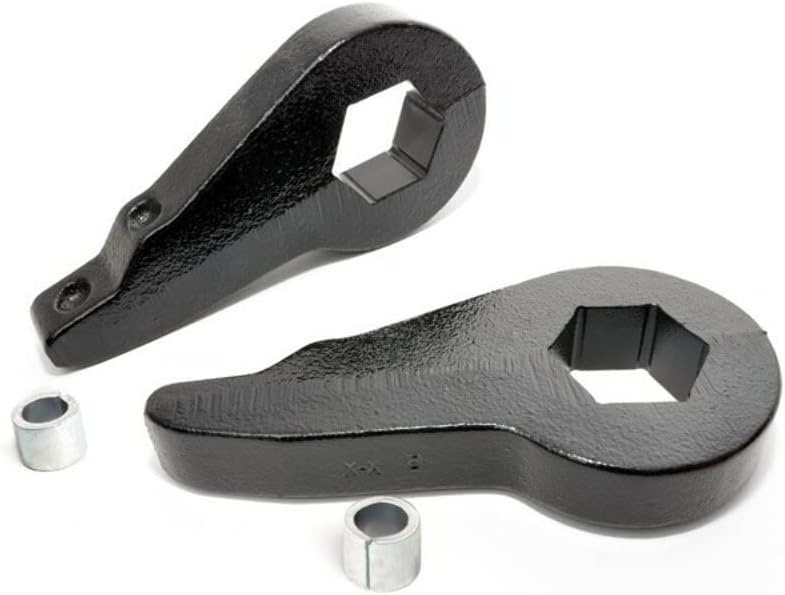
| Automotive Fit Type | Vehicle Specific Fit |
|---|---|
| Set Name | 2 Inch |
| Included Components | (2) Forged torsion bar adjuster keys, (2) Shock spacers |
| Material Type | Alloy Steel |
| Auto Part Position | Front |
This Rough Country kit raises the front of 1999–2006 Silverado/Sierra 1500 trucks to a 1.5–2 inch level using forged torsion bar adjuster keys and included shock spacers. It is installed by replacing the factory torsion keys to increase torsion bar preload and regain a flat, more aggressive stance while preserving stock suspension geometry. The forged steel keys offer greater durability than cast replacements and the bolt-on design avoids cutting or welding, so the install keeps the truck mechanically close to factory setup. In practice the kit improves clearance for larger tires and reduces nose dive without changing control arm or steering geometry, but installation can be labor intensive on older, rusted trucks and may require penetrating oil, heat, or an impact tool to remove original keys. Expect to check fasteners and perform an alignment after installation and consider shock extenders if you run very stiff shocks to maintain ride quality.
Best for: Buyers who want a moderate, factory-friendly front lift to level a 1999–2006 Silverado/Sierra 1500 while keeping steering and suspension geometry close to stock and maintaining daily drivability.
Less Ideal for: Not the best choice for owners seeking large lifts, full suspension overhauls, or a completely bolt-in lift that avoids any rusted fastener work on older vehicles.
- Vehicle-specific fit for 1999–2006 Silverado/Sierra 1500 ensures correct front lift and alignment preservation
- Forged torsion bar adjuster keys provide stronger, longer-lasting lift compared with cast alternatives
- Bolt-on installation without cutting or welding preserves factory suspension geometry
- Includes shock spacers so shocks clear the increased ride height
- Removal of old torsion keys on rusted trucks can be difficult and may require heat or impact tools
Verdict: The best 2-inch leveling kit for buyers specifically seeking a moderate, factory-friendly lift that improves front-to-rear stance while preserving steering and suspension geometry.
6. MotoFabLifts 2" Front Leveling Lift Kit (1999–2006 Chevrolet/GMC 2WD)
Best Quick-Install Leveling Kit

| Automotive Fit Type | Vehicle Specific Fit |
|---|---|
| Auto Part Position | Front |
| Material Type | Alloy Steel |
| Maximum Lifting Height | 2 Inches |
This MotoFabLifts 2" front leveling kit raises the front of 1999–2006 2WD Silverado/Sierra trucks by about two inches using CNC-cut alloy steel spacers that bolt in place. It is designed for a fast DIY install and typically takes 1 to 2 hours per side for someone with basic mechanical skills and common garage tools. Because the spacers do not require strut or coil disassembly, you avoid spring compressors and complicated steps; installers report using a jack to lower the steering knuckle and slipping the spacer into place. The kit ships with all mounting hardware and powdercoat protection for corrosion resistance. In use it levels the truck without noticeably changing ride quality, but you should plan a front-end alignment after installation and expect that suspension geometry means spacer thickness does not equal exact lift height in every case. The product is vehicle-specific for 2WD models only and is backed by a lifetime warranty from the manufacturer.
Best for: DIY owners who want a fast, straightforward front leveling solution they can install at home with basic tools and minimal suspension disassembly; ideal for those prioritizing a quick curbside improvement and time saved in the garage.
Less Ideal for: People seeking large lifts, off-road performance modifications, or compatibility with 4WD trucks should look at different kits designed for those purposes.
- True bolt-on spacers eliminate the need to disassemble struts or coils for most installs
- CNC-cut alloy steel construction with powdercoat for strength and corrosion resistance
- Includes hardware and instructions so no extra parts are normally required
- Short install time reported by users, typically 1–2 hours with basic tools
- Fits 2WD only and will not work on 4WD or other drivetrains
Verdict: The best quick-install leveling kit for DIYers who want a straightforward, time-saving installation using basic tools and minimal vehicle disassembly.
7. AngyMeck 3" Cast Lift Spindles Front Pair (Vehicle-Specific)
Best Heavy-Duty Leveling Kit

| Maximum Lifting Height | 3 Inches |
|---|---|
| Material | Cast Iron |
| Auto Part Position | Front |
| Automotive Fit Type | Vehicle Specific Fit |
These AngyMeck cast lift spindles replace the factory front knuckles to give a true 3-inch front lift on compatible 2WD trucks and SUVs. They are intended for vehicle-specific fitment on late 1990s and early 2000s Chevrolet and GMC full-size models and install in place of the factory spindles, keeping suspension geometry close to factory while raising ride height. Because they are cast iron knuckles, they provide a beefier mounting point than simple strut spacers and work well when matching heavier rear springs or towing loads that need the front to sit level. Install typically requires wheel clearance of 17-inch or larger wheels and some owners note longer brake lines may be needed. Trade-offs are added unsprung mass from cast components and the requirement to verify exact model year and 2WD configuration before buying since these will not fit 4WD/AWD or some body styles.
Best for: Buyers who need a heavy-duty front lift that holds up under towing, heavier payloads, or daily demanding use and who prioritize reinforced components over minimal weight gain.
Less Ideal for: Drivers who want the lightest possible front-end solution, those with 4WD/AWD vehicles, or people who prefer bolt-on spacers that avoid replacing knuckles.
- Provides a true 3-inch front lift by replacing factory spindles rather than using spacers
- Cast iron construction offers stronger, more durable mounting points for heavy use
- Vehicle-specific fit simplifies alignment of suspension geometry compared with generic lift methods
- Included pair covers both left and right front knuckles for a complete front lift
- Adds unsprung weight which can affect ride quality and steering feel compared with lighter solutions
- Fits 2WD models only and will not work on 4WD/AWD trucks or some body styles
Verdict: The best heavy-duty leveling kit for buyers who need beefier components and reinforced hardware to better handle towing, heavier payloads, or demanding daily use.
Choosing the Right 1999-2006 GMC Sierra 1500 Leveling Kit: Key Factors to Consider
Fitment and Year-Specific Compatibility
Accurate fitment to the 1999-2006 GMC Sierra 1500 is the first priority. Small changes in suspension components and steering geometry across model years mean a kit that fits one year might require adapters or extra hardware on another. Confirming that mounting points line up with the truck's control arms, strut tops, or coil springs reduces installation surprises.
Fitment also determines whether additional items such as extended sway bar links, brake line brackets, or alignment shims are needed. Ensuring the kit is designed for the Sierra 1500's stock suspension type prevents undue stress on ball joints or tie rods and helps keep handling predictable after installation.
Amount of Lift and Intended Use
Leveling kits commonly raise the front by 1 to 3 inches. Decide how much height you need based on whether you are fitting larger tires, seeking improved approach clearance, or just correcting factory rake. A small lift preserves most factory geometry while a larger front lift can change steering feel and require more suspension adjustments.
Consider how you use the truck. For towing and hauling, choose a kit that preserves load capacity and does not significantly change pinion angle. For light off-road use, prioritize clearance and durability. Match the lift height to the tire diameter you plan to run to avoid issues with fender contact or rubbing.
Ride Quality and Suspension Behavior
How a kit affects ride comfort matters for daily-driven Sierra 1500s. Spacer-style kits that place a block between the coil spring and mount usually keep spring rate unchanged and maintain a near-stock ride. Conversely, kits that alter spring preload or use thicker spacers can make the front feel stiffer.
Consider the tradeoff between additional height and the truck's damping characteristics. Some kits change the leverage on shocks or struts and can emphasize bump steer or harshness if not paired with appropriate damping. Think about whether you prefer a minimal change that keeps factory comfort or a firmer feel that supports heavier loads or off-road use.
Installation Complexity and Required Modifications
Installation difficulty varies widely. Strut-top spacers or coil spring spacers are often straightforward and within the skill set of a competent DIYer with a jack and spring compressors. Other kits that require control arm drops, longer bolts, or crossmember modifications increase labor time and may require a lift.
Assess whether the kit requires supplemental parts such as extended sway bar links, brake line extensions, or alignment camber bolts. Factor in the need for a professional alignment after installation, and whether the job will be done at home or by a shop when estimating total effort and cost.
Durability and Corrosion Resistance
The Sierra 1500 sees varied environmental exposures, so component durability matters. Look for materials and coatings that resist rust where parts contact the coil seats, strut towers, or hardware. Polyurethane or anodized aluminum spacer surfaces and powder-coated brackets last longer under winter salt and wet conditions.
Fasteners and press-fit components should resist loosening. Consider whether the kit includes proper torque specifications and if replacement bushings or washers are supplied to prevent metal-on-metal wear over time.
Alignment and Steering Geometry Impact
Raising the front changes suspension geometry and can alter toe, camber, and caster. Some leveling kits preserve geometry by using strut-specific spacers mounted at the top of the assembly, while others that raise the lower control arm or axle may require additional geometry correction.
Always plan for a post-install alignment. Understand how the chosen kit affects caster and toe so you can address any potential steering pull, uneven tire wear, or handling instability with the right alignment settings or supplemental parts.
Types of Leveling Kits and How They Work
Leveling solutions for the Sierra 1500 generally fall into a few categories: top-of-strut spacers, coil spring spacers, torsion key adjustments, and control arm lift brackets. Each approach changes the front height differently and has distinct implications for alignment and ride quality.
Top-of-strut spacers mount at the strut tower and raise the body relative to the suspension without altering the spring rate. Coil spring spacers sit between the spring and its seat to increase height while leaving the rest of the suspension intact. Torsion key adjustments are specific to torsion-bar front suspensions and change preload. Control arm brackets or drop mounts reposition suspension attachment points and can affect geometry more significantly.
- Strut-top spacers: minimal geometry change, often easiest to install.
- Coil spring spacers: preserve spring rate but may compress differently under load.
- Torsion keys: common on torsion-bar setups, adjust preload rather than spring length.
- Control arm brackets: provide larger lifts but usually need additional alignment work.
Preparing Your Sierra 1500 Before Installation
Before starting an install, inspect suspension components for wear. Worn shocks, ball joints, or bushings should be replaced first so the new ride height does not mask underlying issues. Check tire condition and wheel offset to ensure planned tire combinations will clear fenders at the new height.
Gather tools and safety gear: a quality jack and stands, torque wrench, spring compressor if needed, and thread locker for critical fasteners. Plan for a full alignment after the work is complete. If the job includes torsion-key adjustments or control arm modifications, set aside extra time for test drives and re-torquing fasteners after a brief break-in.
- Inspect shocks, ball joints, and bushings.
- Measure current ride height and desired gain.
- Confirm required supplemental parts are on hand.
Tire and Wheel Considerations After Leveling
One common reason owners install a leveling kit is to fit larger diameter tires. When choosing tires, account for overall diameter, section width, and wheel backspacing. The Sierra 1500 has limited inner clearance in some wheel wells, so a conservative tire and wheel choice reduces rubbing risks.
Wheels with different backspacing change scrub radius and can influence steering feel. If you plan a substantial size increase, factor in potential changes to gear ratios and speedometer calibration. Test-fitment with the truck loaded and with the steering at full lock will reveal whether trimming or slight fender rolling is necessary.
- Check tire diameter and width against available clearance.
- Consider wheel backspacing and offset impacts.
- Verify speedometer calibration if tire diameter changes significantly.
Maintenance and Long-Term Care
After installing a leveling kit, periodically inspect mounting hardware for looseness and check for unusual wear on tires. Re-torque critical fasteners after the first 100 miles and again after several hundred miles. Look for accelerated wear in ball joints, tie rod ends, and wheel bearings that can indicate geometry issues.
If the kit uses polymer components or bushings, watch for UV or chemical degradation over time. Clean and protect exposed mounting surfaces to reduce corrosion, and replace any rubber isolators that show cracking to maintain proper suspension behavior.
- Re-torque hardware after initial break-in miles.
- Inspect tires and steering components for uneven wear.
- Protect exposed metal with corrosion inhibitors.
Common Installation Pitfalls and How to Avoid Them
A frequent mistake is not verifying year-to-year fitment differences across the 1999-2006 range. Small variations in control arm length or strut design can require different hardware. Always read the kit's fitment notes carefully and confirm compatibility with your truck's specific year and suspension configuration.
Underestimating the need for extended sway bar links, brake line brackets, or alignment adjustments will lengthen the job. Prepare by checking common supplemental parts and by scheduling an alignment appointment in advance so the truck is measured with its new ride height immediately after installation.
- Double-check fitment notes for your exact year.
- Have extended links and hardware ready if called for.
- Schedule alignment right after installation.
When to Choose a Simple Spacer Versus More Extensive Modifications
If your goal is a modest stance correction to fit slightly larger tires or to remove the factory rake, a simple spacer or torsion key adjustment often suffices. These options preserve most factory suspension dynamics and are less invasive.
If you need significantly more clearance for aggressive off-road tires or plan heavier duty towing and hauling setups, consider more involved solutions that reposition suspension attachment points. Accept that these will likely require more alignment work and could change the truck's handling characteristics.
- Spacer or torsion key: best for subtle stance and minimal geometry change.
- Control arm or bracket modifications: better for larger lifts but more complex.
Still looking for the perfect fit?
Select your GMC Sierra 1500 configuration to see the most relevant Leveling Kits recommendations
How We Chose the Best 1999-2006 GMC Sierra 1500 Leveling Kit
We prioritized kits that deliver reliable fitment and predictable handling changes for the 1999-2006 GMC Sierra 1500. Key evaluation criteria included fitment accuracy to factory mounting points and model years within the 1999-2006 range, the effect on ride quality and suspension geometry, and whether the kit maintained safe load-carrying capacity and alignment ranges.We also looked at installation complexity and the tools or additional parts commonly required, since many owners install these kits at home. Durability and corrosion resistance of components were considered to ensure long-term service in varied climates. For kits that alter spring or strut position, we reviewed how much additional suspension or steering adjustment is typically needed after installation.Excluded from consideration were any options that required extensive frame modification, non-reversible cutting of structural elements, or that lacked clear fitment guidance for the 1999-2006 Sierra 1500. The final list focuses on solutions that balance ride, clearance, and ease of installation for typical owners of this truck.
Our full evaluation process is outlined in our review methodology.
FAQ
Will a leveling kit affect my Sierra 1500's towing capacity?
Leveling the front typically does not change the truck's manufacturer's rated towing capacity, but it can alter tow geometry and hitch angles. If you regularly tow heavy loads, choose a kit that maintains proper pinion angle and consult alignment specs to preserve safe towing dynamics.
Can I install a leveling kit myself on a 1999-2006 Sierra 1500?
Many spacer-style kits are within the capabilities of a competent DIYer with basic tools and a jack. Jobs requiring spring compression, control arm modifications, or torsion key adjustments can be more advanced and may be safer when performed on a lift or by an experienced mechanic.
How much lift should I run to fit slightly larger tires?
For modest tire increases, 1 to 2 inches of front lift is usually sufficient. Match the lift to the tire diameter and test for rubbing at full steering lock and when the suspension is compressed to ensure adequate clearance.
Do I need a full alignment after installing a leveling kit?
Yes. Any front ride-height change can affect toe, camber, and caster. A professional alignment corrects these angles and prevents uneven tire wear and handling issues after installation.
Will a leveling kit make my Sierra 1500 ride harsher?
It depends on the kit type. Spacer-style kits that do not change spring rate often preserve much of the factory ride. Kits that alter preload or change suspension leverage can produce a firmer feel. Consider the kind of driving you do when selecting a kit.
How do I check compatibility between a kit and my exact model year?
Compare the kit's published fitment notes against your truck's year, cab configuration, and front suspension type. Look for explicit mention of the 1999-2006 Sierra 1500 range and any year-specific exceptions before purchasing or installing.
Final Verdict
For owners of the 1999-2006 GMC Sierra 1500, a leveling kit is a practical way to correct front-end rake, gain modest clearance, and enhance the truck's stance without large investment. Prioritize fitment accuracy for your model year, the desired lift height relative to planned tire size, and how the kit will affect ride quality and steering geometry.Choose a solution that matches your primary use—simple spacers for mild stance changes and minimal handling impact, or more involved brackets for larger lifts at the cost of additional alignment and potential geometry adjustments. With those tradeoffs in mind, you can confidently pick the kit that best balances clearance, comfort, and long-term durability.
Explore More:
- Check out all GMC Sierra 1500 parts & accessories
- Explore Suspension & Steering
- Browse all Accessories
