

Note: This article contains affiliate links. If you click on these links and make a purchase, I may earn a small commission at no extra cost to you. This helps support my research and content. Read my full affiliate disclosure here.
If you own a 2009-2014 Ford F-150, your brake rotors are a critical safety item that affect pedal feel, stopping distance, and long-term service costs. Worn, warped, or undersized rotors can cause vibration, uneven pad wear, and reduced performance when the truck is loaded or towing. This guide lists seven shortlisted rotors chosen for reliable fitment and real-world durability across common F-150 use cases.Each recommended rotor was evaluated for correct fitment across the 2009–2014 F-150 range, heat dissipation characteristics, and how the rotor will interact with common replacement pads. The following sections explain why those factors matter and how to choose the right rotor for daily driving, towing, or occasional spirited use. Read on to compare the top options and decide which rotor type suits your truck and driving style.
Looking for other parts? See all Ford F-150 parts & accessories.
Top Picks at a Glance
| Best Overall The best all-around choice for most situations | Bendix Premium PRT5698 Front Brake Rotor |  |
| Best Quality Built to a higher standard if you want something more solid | PowerStop Z36 Truck & Tow Front Brake Kit (6-Lug) |  |
| Best Value The sweet spot between price and what you get | Bendix Premium PRT6000 Front Brake Rotor |  |
| Best Budget The cheapest option that still gets the job done reliably | Auto Shack Front Brake Rotors, front pair, 6-lug, 13.78 in (350 mm) |  |
| Highest Rated A top-rated pick with lots of positive feedback | Detroit Axle Front Brake Kit for 2010–2014 Ford F-150 (7-Lug) — 13.78" Rotors with Ceramic Pads |  |
| Most Popular A crowd favorite that many people choose with confidence | Detroit Axle Brake Kit with Front and Rear Ceramic Pads and Rotors for 2009 Ford F-150 (6-Lug) |  |
| Best Seller A high-volume bestseller chosen again and again | Detroit Axle Front Brake Kit with Ceramic Pads and Ventilated Rotors |  |
Bendix Premium PRT5698 Front Brake Rotor

| Manufacturer Part Number | PRT5698 |
|---|---|
| Material Type | Cast Iron |
| Exterior Finish | Machined |
| Automotive Fit Type | Vehicle Specific Fit |
| Included Components | (1) Bendix Rotor |
The Bendix Premium PRT5698 is a single front brake rotor built from high-grade cast iron and machined for a factory-style fit. It is used as a direct replacement on compatible Ford F-150 (2010–2020 w/6 studs listed), Expedition (2007–2021) and Lincoln Navigator (2007–2021) front applications and installs like a standard rotor on vehicles that match the confirmed fit. Notable features include balanced castings to reduce vibration, a machined exterior finish for consistent pad contact, and design attention for heat dissipation to limit brake fade under normal driving. In practice you get predictable stopping power and a quiet, smooth pedal feel when paired with appropriate pads. This listing is for one rotor so buyers replacing both sides should order accordingly. Also confirm fit with your vehicle details before purchase because fit listings and hub dimensions can vary between model years and configurations; some buyers report differences across similar part numbers. For routine street use and towing within the truck's rated limits this rotor delivers a durable, factory-quality replacement option.
Best for: Buyers who want a reliable, factory-quality front rotor that restores original braking feel for everyday driving, towing, and hauling on compatible Ford F-150 and similar trucks and SUVs.
Less Ideal for: If you need a performance rotor with slots or cross-drilling for track use or aggressive cooling, or if you prefer a pre-coated rust-resistant finish for salty climates, consider other specialized rotor options.
- Factory-style cast iron construction for durability and heat resistance
- Machined finish and dynamic balancing to reduce vibration and promote smooth braking
- Designed for efficient heat dissipation to reduce risk of brake fade under normal driving
- Vehicle-specific fit for listed Ford F-150, Expedition, and Lincoln Navigator model years
- Sold as a single rotor rather than a pair requiring separate orders for both sides
- Some users have reported occasional fit or dimensional differences between aftermarket listings and vehicle hubs
Verdict: A durable, factory-fit cast-iron front rotor that provides predictable, quiet braking for F-150 drivers seeking a balanced, OEM-style replacement.
PowerStop Z36 Truck & Tow Front Brake Kit (6-Lug)

| Fitment | Front 2010-14 Ford F-150 6-lug |
|---|---|
| Pad compound | Carbon-fiber ceramic |
| Rotor type | Drilled & slotted G3000 |
| Rotor finish | Zinc dichromate plated |
| Includes | Pads, rotors, stainless-steel hardware |
The PowerStop Z36 Truck & Tow front brake kit is a bolt-on replacement package built to improve stopping power on 2010–14 F-150 6-lug setups. It pairs low-dust carbon-fiber ceramic pads with drilled and slotted G3000 rotors and includes stainless-steel installation hardware for a straight swap using factory mounting points. In use the pads deliver stronger initial bite and firmer pedal feel compared with many stock units, while the rotor holes and slots help vent heat during long descents or heavy towing to reduce fade. Zinc plating on the rotors delays surface rust, and dual-layer rubberized shims on the pads reduce noise and vibration for quieter everyday driving. Expect a brief bedding procedure after installation to get ideal performance and dust characteristics. Limitations to note are that some customers report fit or minor design changes between production runs and occasional premature wear if caliper or brake-system issues exist, so inspect calipers and bedding procedure carefully before towing heavy loads.
Best for: Drivers who prioritize stronger, fade-resistant front braking on a 2010–14 F-150 used for towing, hauling, or severe-duty driving and want a direct-fit upgrade that balances performance with everyday drivability.
Less Ideal for: Drivers who never tow, rarely carry heavy loads, or who prefer long-established OEM replacement parts for strictly stock performance and longevity.
- Complete bolt-on kit including pads, drilled and slotted rotors, and stainless steel hardware for straightforward installation
- Carbon-fiber infused ceramic pads provide stronger stopping power with reduced dust compared with typical ceramic compounds
- Drilled and slotted G3000 rotors improve cooling and help resist fade during towing or mountain descents
- Zinc dichromate plating on rotors resists surface rust and improves long-term appearance
- Dual-layer high-temp rubberized shims reduce noise and vibration for quieter stops
- Some production-design changes have occurred without clear listing updates which can affect fit or pad backing shape
Verdict: If you tow or haul with a 2010–14 6-lug F-150 and need stronger, fade-resistant front braking in a direct-fit package, the PowerStop Z36 kit is a practical performance upgrade.
Bendix Premium PRT6000 Front Brake Rotor

| Brand | Bendix |
|---|---|
| Manufacturer Part Number | PRT6000 |
| Material Type | Cast Iron |
| Exterior Finish | Machined |
| Automotive Fit Type | Vehicle Specific Fit |
The Bendix Premium PRT6000 is a single, vehicle-specific front brake rotor designed to replace the factory part on compatible Ford F-150 models. Made from high-grade cast iron with a machined exterior finish, the rotor is dynamically balanced and built to handle the repeated heat cycles of everyday driving while helping reduce vibration and noise. Typical use is as a direct replacement during a brake job where you want factory-quality fit, straightforward installation, and predictable stopping performance. Notable features include factory-style fitment, machined surface for good pad bedding, and design attention to heat dissipation to limit brake fade under normal loads. Buyers will appreciate reliable stopping feel and generally quiet operation when paired with fresh pads. Important limitations are that this listing ships one rotor only so you must order pairs, and some buyers report surface corrosion over time and occasional fitment mismatches on nonexact applications, so verify vehicle fit and hub thickness before installation.
Best for: Buyers who prioritize a practical, factory-quality replacement for front rotors on a 2009 Ford F-150 and want reliable fit and predictable braking without performance customization.
Less Ideal for: Drivers seeking upgraded performance rotors for heavy towing, racing, or extreme duty should consider slotted or vented performance options instead.
- Vehicle-specific fit for direct replacement on compatible F-150 front hubs
- Machined finish and dynamic balancing reduce vibration and help pad bedding
- Cast iron construction designed for everyday heat dissipation and durability
- Quiet operation engineered to minimize noise and vibration during braking
- Sold as a single rotor rather than a pair
- Some customers report early surface rust or corrosion in certain environments
Verdict: A straightforward, factory-quality cast-iron front rotor for F-150 owners who want a dependable, practical replacement that matches factory fit and braking feel.
Auto Shack Front Brake Rotors, front pair, 6-lug, 13.78 in (350 mm)

| Rotor Construction | Vented |
|---|---|
| Outer Diameter | 13.78 in (350 mm) |
| Wheel Bolt Holes | 6 |
| Material Type | Alloy Steel |
These Auto Shack front rotors are a straightforward replacement for 6-lug F-150 front brakes and are sold as a pair. Constructed as vented alloy-steel rotors, they are intended to restore stopping performance and provide balanced everyday braking for trucks and SUVs. Installation is the same as any like-for-like rotor swap and users report easy fit and smooth operation out of the box. Notable features include vehicle-specific fitment for 6-bolt hubs and a standard 13.78 inch diameter that matches common stock rotors for 2010-2014 F-150 front applications. The practical benefit is a budget-friendly way to replace worn or warped rotors without changing your brake hardware or calipers. Limitations are typical of economy rotors: they lack drilled or slotted surfaces for improved cooling or bite, and long-term durability depends on driving style and pad choice. Also check fitment details carefully before buying to ensure correct stud count, rotor position, and size for your model year and configuration.
Best for: Buyers looking for an affordable, direct-fit front rotor set to restore factory-like braking on a budget and who prioritize straightforward replacement over performance upgrades.
Less Ideal for: Drivers who want upgraded cooling, track use durability, or aggressive braking characteristics should choose performance rotors with slots or drilling instead.
- Vehicle-specific 6-lug fitment for direct front replacement on compatible F-150 models
- Vented alloy-steel construction for standard heat dissipation during everyday driving
- Sold as a pair so both front rotors are replaced at once
- Consistent, balanced stopping performance reported by multiple users
- No performance features like cross-drilling or slotting for aggressive cooling or pad bite
Verdict: A cost-conscious, vehicle-specific pair of vented front rotors that restores reliable everyday braking for 6-lug F-150 fronts without added performance features.
Detroit Axle Front Brake Kit for 2010–2014 Ford F-150 (7-Lug) — 13.78" Rotors with Ceramic Pads

| Fitment | 2010–2014 Ford F-150 (7-lug) with 13.78" front rotors |
|---|---|
| Contents | 2 front rotors, 2 front ceramic pads, hardware, brake cleaner, brake fluid |
| Rotor Type | Vented, zinc plated |
| Pad Material | Ceramic |
| Orientation | Front |
This Detroit Axle front brake kit supplies everything needed to refresh the front braking system on 7-lug 2010–2014 Ford F-150 trucks that use 13.78-inch rotors. The kit includes two vented, zinc-plated rotors and a set of ceramic pads plus hardware, a bottle of brake fluid and a brake cleaner spray so you can complete the job without sourcing extras. Vented rotors and zinc plating help with heat dissipation and corrosion resistance, while machined locating holes and included hardware make fitment straightforward during installation. Ceramic pads are quieter and produce less dust than semi-metallic pads, which is useful for daily driving and towing. This is a practical, reliability-minded option for owners who want a complete front brake refresh in one purchase, though ceramic pads can wear slightly faster under heavy-duty towing compared with heavy-duty metallic compounds. If you need performance-oriented or heavy commercial braking for constant high-load use, consider a pad or rotor designed specifically for that duty cycle.
Best for: A buyer who prioritizes a dependable, straightforward brake replacement that restores factory-quality stopping for routine driving and occasional towing on a 2010–2014 7-lug F-150.
Less Ideal for: Drivers who regularly perform heavy commercial towing or aggressive driving and need high-temperature performance and extended pad life should look at heavy-duty or performance-specific braking components instead.
- Complete kit includes rotors, ceramic pads, mounting hardware, brake cleaner and brake fluid for a one-stop installation.
- Vented rotor design improves heat dissipation for more consistent braking under repeated stops.
- Zinc plating reduces surface corrosion and visible wheel dust compared with bare rotors.
- Machined locating holes and included hardware simplify fitment and reduce installation guesswork.
- Ceramic pads may not offer the same fade resistance or longevity as heavy-duty metallic pads under continuous high-load towing.
Verdict: Choose this kit when you want a complete, reliability-focused front brake replacement for 2010–2014 7-lug F-150s that simplifies installation and improves day-to-day braking.
Detroit Axle Brake Kit with Front and Rear Ceramic Pads and Rotors for 2009 Ford F-150 (6-Lug)
| Fitment | 2009 Ford F-150 (6 Lug Models ONLY) |
|---|---|
| Pads | Ceramic brake pads |
| Rotors | Vented, slotted with zinc plating |
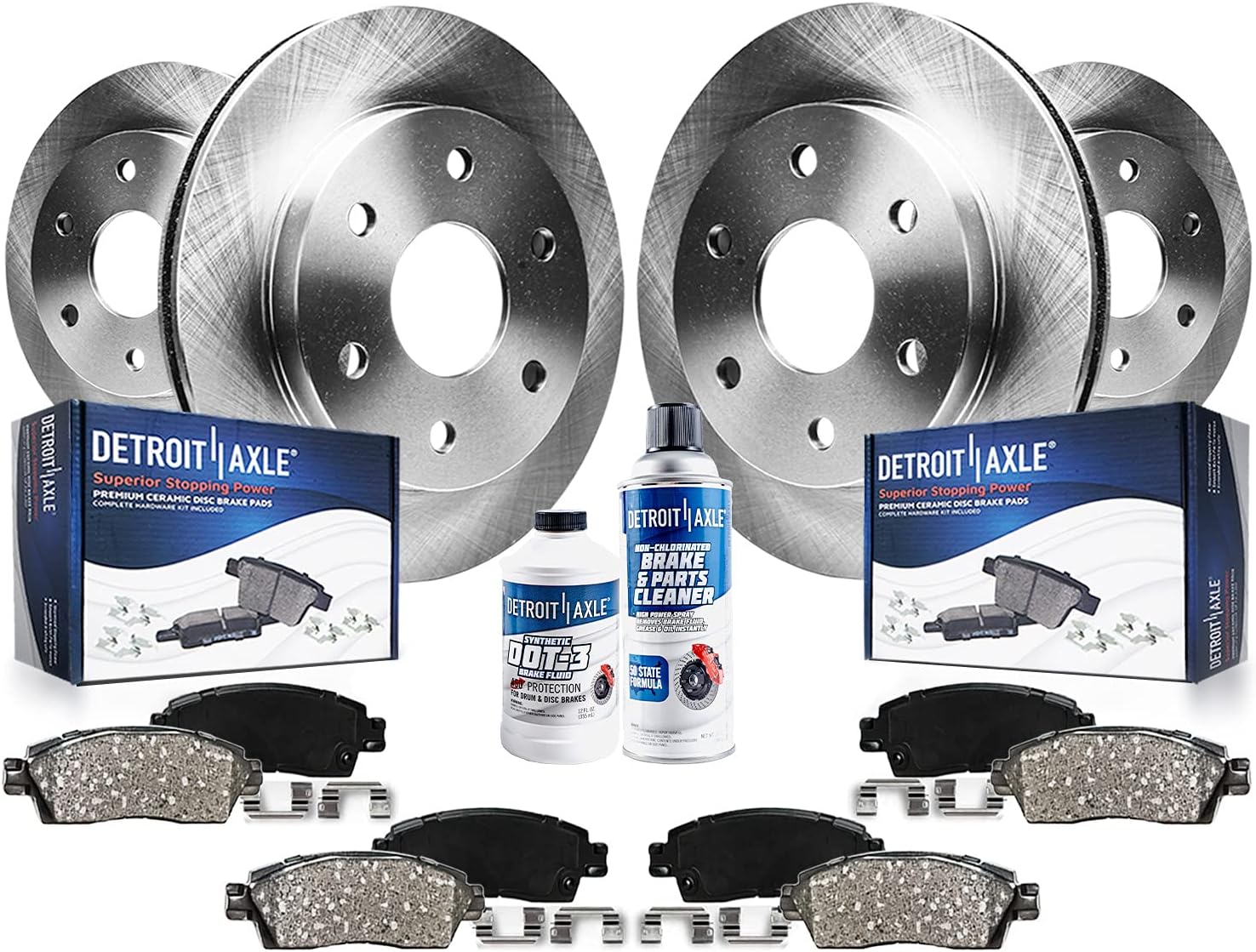
| Kit contents | Front+rear rotors, front+rear pads, hardware, brake cleaner, brake fluid |
| Brand | Detroit Axle |
This Detroit Axle kit supplies everything needed to replace both front and rear braking components on 6-lug 2009 Ford F-150 trucks. The package includes two front and two rear rotors, front and rear ceramic pads with hardware, a can of brake cleaner and a bottle of brake fluid. Rotors are zinc plated and vented with slots to help dissipate heat and resist surface corrosion; pads are ceramic for quieter initial operation and less brake dust than semi-metallic compounds. Fitment is reported as accurate and the parts are machined to locating holes that match factory mounting, so installation is straightforward for a competent DIYer or a shop. Practical benefits include getting all four corners at once and not needing to buy small consumables separately. Important limitations are that the kit is specific to 6-lug F-150 models from 2009 only and it does not include rotor mounting screws or full accessory gloves, so you may need small extras during the job. Some customers noted occasional hardware-fit inconsistencies, so inspect the kit before installation.
Best for: Buyers who want a single, ready-to-install package to replace all four brakes on a 6-lug 2009 F-150 and who prioritize getting proven parts with many positive user reports over aftermarket upgrades.
Less Ideal for: Drivers looking for performance-oriented drilled/slotted race rotors, or owners of other model years or lug configurations should choose a kit matched to their exact vehicle and driving needs.
- Complete front-and-rear kit includes rotors, ceramic pads, basic hardware, brake cleaner and brake fluid
- Vented, slotted rotors for improved heat dissipation and reduced fade under repeated stops
- Zinc plating on rotors helps resist visible surface corrosion and wheel-dust buildup
- Machined locating holes for a factory-style fit that simplifies installation
- Fitment limited to 2009 Ford F-150 6-lug models only
- Hardware kit may include clips that require inspection or replacement for perfect fit; rotor mounting screws are not provided
Verdict: If you need a complete, user-ready brake replacement for a 6-lug 2009 F-150 backed by many customer installs, this Detroit Axle kit delivers a convenient, factory-fit option.
Detroit Axle Front Brake Kit with Ceramic Pads and Ventilated Rotors
| Fitment note | Models with 13.78 inch (350mm) front rotor size; 6-lug F-150 models only |
|---|---|
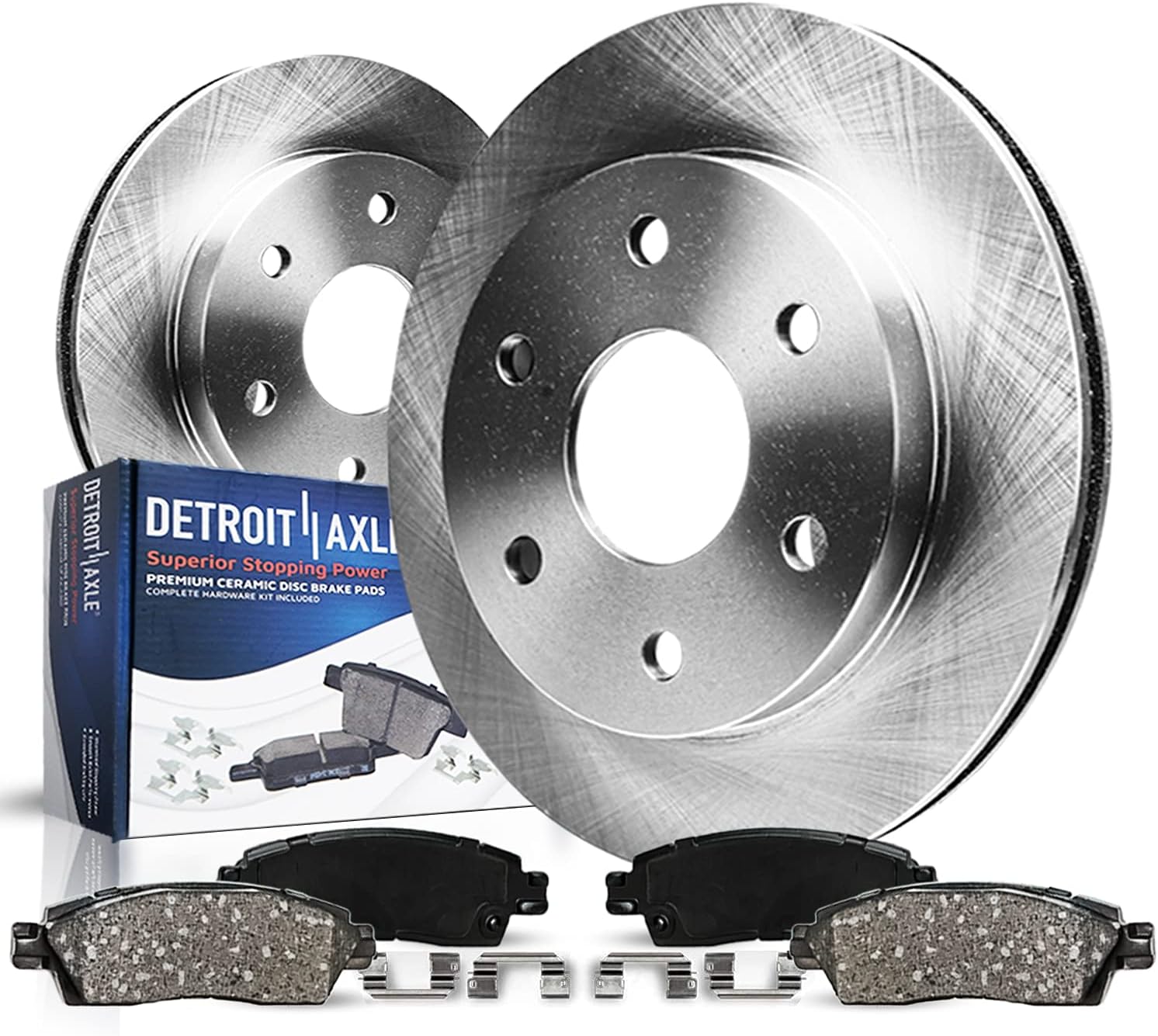
| Kit includes | 2 front rotors and 2 front ceramic brake pads with hardware |
| Orientation | Front |
| Automotive fit type | Vehicle Specific Fit |
| Part interchange | R-54153 P-1414 |
This Detroit Axle front brake kit supplies both front rotors and ceramic pads for direct replacement on compatible 6-lug Ford F-150 models and the listed Expedition and Navigator years. The rotors are ventilated and zinc plated to help with heat dissipation and corrosion resistance, while the 100% ceramic pads are low-noise and come with installation hardware. For a typical DIY brake job the components arrive ready to install and many users report straightforward fit and quiet operation after bedding in. The ventilated rotor design aids cooldown during repeated stops and the machined locating holes mean the rotors sit true without modification. The kit is aimed at everyday driving rather than track use, so drivers who tow heavily or need high-performance fade resistance may prefer an upgraded performance rotor or pad compound. Also the kit is specific to models with the listed rotor size and 6-lug hubs, so confirm fitment before ordering.
Best for: Buyers who prioritize reliable, low-noise factory-style replacement parts and want a straightforward DIY or shop installation for daily-driven F-150s in the specified years.
Less Ideal for: Drivers who routinely perform heavy towing, hauling, or high-speed track braking should consider performance-oriented rotors and pad compounds instead.
- Complete front-replacement kit including two rotors and two ceramic pads with hardware
- Ventilated rotors with zinc plating improve heat management and corrosion resistance
- Machined locating holes for accurate fit and minimal installation adjustments
- Ceramic pads offer quiet operation and low dust compared with semi-metallic pads
- Not formulated for heavy track use or extreme towing where high thermal capacity is required
Verdict: A practical, vehicle-specific front brake kit that delivers quiet, reliable factory-style braking for everyday use on compatible F-150s.
Choosing the Right 2009-2014 Ford F-150 Brake Rotors: Key Factors to Consider
Fitment and Hub Specifications
Correct fitment is the top priority because rotors must match the F-150 hub diameter, bolt pattern, and hat height to ensure proper wheel alignment and caliper clearance. Installing a rotor with incorrect hat height or offset can change parking brake engagement, wheel-to-caliper spacing, and wheel bearing preload, leading to premature wear or safety issues.
Check the rotor's center bore and pilot fit against the 2009–2014 F-150 hub and confirm bolt hole pattern and depth. Even small mismatches can cause runout that shows up as steering wheel vibration under braking. When replacing rotors, also verify that the rotor's thickness and minimum spec align with OEM service limits so future resurfacing remains an option.
Rotor Thickness and Minimum Spec
Rotor thickness directly affects heat capacity and the ability to be resurfaced during service. Thicker rotors generally absorb and dissipate more heat, which reduces the risk of warping during repeated heavy braking while towing or hauling. However, some aftermarket rotors list a thinner starting thickness, limiting how many times they can be machined.
Always compare the new rotor thickness to the vehicle's original specifications and note the minimum safe thickness stamped on the rotor. If a rotor is close to that minimum, resurfacing may not be possible after one or two services, meaning replacement will be required sooner. Knowing how to measure rotor thickness ensures you can monitor wear and plan maintenance appropriately.
Thermal Management and Venting
How a rotor dissipates heat affects braking consistency and resistance to fade. Vented rotors, with internal vanes, channel airflow through the rotor to cool faster than solid designs. For F-150 owners who tow, haul, or frequently descend long grades, vented designs reduce the chance of brake fade and maintain pedal firmness under repeated stops.
Consider the vane design and overall rotor mass when judging thermal performance. More mass and efficient venting trade off with slightly higher unsprung weight, but the improved heat capacity can be worthwhile for heavy-duty use. For strictly low-mileage, city-only trucks, thermal extremes are less of a concern, but for mixed driving profiles you should prioritize rotors with proven venting and thermal handling.
Surface Finish and Pad Compatibility
Rotor face finish influences how quickly new pads bed in and how much initial noise or vibration you might experience. A smooth, machined finish tends to bed pads more gently and reduces the chance of uneven pad transfer layers. Some rotors come with a pre-scored or directional finish intended to help gassing and debris escape during heavy braking.
Match rotor finish to the type of pads you plan to use. Aggressive drilled or heavily slotted faces pair better with high-friction compounds, while a fine-machined surface usually suits organic or low-noise semi-metallic pads. Using mismatched rotor and pad combinations can accelerate wear or cause pulsation that feels like warped rotors even when runout is minimal.
Corrosion Resistance and Protective Coatings
Rust can accelerate uneven wear, increase noise, and make future rotor removal more difficult. Many rotors offer plated hats or protective edge coatings to reduce corrosion on the exposed surfaces. For vehicles that see salted roads, coastal environments, or long storage periods, corrosion-resistant finishes help maintain appearance and function longer.
Assess the extent and durability of any protective coating. Some finishes cover only the hat, leaving the braking surface raw, while others offer more comprehensive protection. Keep in mind that heavy coatings on the braking surface are not acceptable, but protective plating on non-friction areas extends service life and reduces fuss at replacement time.
Serviceability and Maintenance Considerations
Think about how the rotor choice affects future maintenance. Rotors that can be safely resurfaced extend the service life and can save money if the hat and vanes remain in good condition. Conversely, thin or one-time-use rotors force full replacement at the first instance of significant wear or machining.
Also consider ease of installation: rotors that match OE fastener locations and include hardware provisions reduce installation time and the chance of assembly errors. If you frequently swap wheels or perform braking jobs yourself, designs that resist rusted-on mounting and provide clear specifications make routine service faster and less frustrating.
Understanding Rotor Types and When They Matter
Not all rotors are created for the same use. Solid, vented, slotted, and drilled faces each address different driving needs on the F-150 from daily commuting to repeated towing. Choosing the right type depends on how you use the truck and the balance you want between noise, dust, and thermal control.
Vented rotors are typical for front applications on the F-150 because they move air to cool the braking surface. Slotted faces help clear debris and gas from the pad contact patch, improving consistency under heavy stops. Drilled rotors can reduce weight and help bleeding of gas, but they can also concentrate stress and are generally less durable under high thermal cycling.
- Solid rotors: simple, often used on rear brakes or lighter-duty setups.
- Vented rotors: improve heat dissipation for heavier loads or frequent braking.
- Slotted faces: maintain pad contact by evacuating gas and debris.
- Drilled faces: aid initial cooling and gas escape but may crack under extreme use.
How to Measure Rotor Thickness and Check Wear
Measure rotor thickness with a micrometer at several points around the hat-to-edge area to get an accurate reading. Compare those measurements to the rotor's stamped minimum thickness. If your measures approach that minimum, plan to replace instead of resurface to maintain safety margins.
Also check for lateral runout with a dial indicator mounted to the hub while rotating the rotor. Runout beyond manufacturer tolerances can cause pulsing under braking and may indicate warped rotors or improper mounting. Finally, inspect the friction surface for depth of scoring and heat spots; deep grooves or bluing indicate thermal stress and likely replacement.
- Take at least three thickness readings around the rotor and use the lowest for decisions.
- Use a dial indicator to confirm lateral runout is within spec.
- Look for heat discoloration or deep grooves that signal replacement needs.
Single-Piece Versus Two-Piece Rotor Designs
Single-piece rotors are the conventional cast iron unit consisting of the hat and friction ring as one piece. They are cost-effective and simple to install. Two-piece rotors separate the hat and friction ring, often using an aluminum hat and replaceable iron ring to save weight and improve heat transfer away from the hub.
Two-piece designs can reduce unsprung mass and improve thermal isolation, which benefits repeated heavy braking. However, they add complexity and usually cost more. For most 2009–2014 F-150 owners who prioritize reliability and straightforward serviceability, a high-quality single-piece vented rotor will usually be sufficient.
- Single-piece: reliable, easier to resurface, lower cost.
- Two-piece: lighter, better thermal isolation, higher complexity.
Signs Your F-150 Needs Rotor Replacement
Common symptoms that indicate rotor issues include vibration or pulsation at the pedal or steering wheel during braking, visible scoring or grooves on the rotor face, and a reduction in braking performance or pedal firmness. Noise such as squeal or metallic scraping can also point to rotor surface damage or excessive corrosion.
If rotors are below the minimum thickness, show deep heat cracking, or have been repeatedly resurfaced, replacement is the recommended course. Addressing rotor problems early prevents uneven pad wear and can avoid more extensive braking system damage.
- Pedal pulsation under braking
- Deep grooves or heat spots on the rotor face
- Visible cracking, flaking, or extreme rust on the friction surface
Matching Rotors to Brake Pads and Driving Style
Your choice of rotor should align with the friction material you plan to use. Heavy-duty semi-metallic pads may require rotors with a more aggressive finish to avoid glazing, while organic pads tend to work better with smoother machined faces. When you change pad compounds, reassess rotor finish and bedding procedure to maintain consistent braking feel.
Also consider the truck's typical load. If you tow often, favor rotors with higher thermal mass and robust venting. For trucks used primarily for city driving and light hauling, corrosion resistance and low-noise finishes might be the higher priority.
- Match pad compound to rotor finish to avoid glazing and uneven wear.
- Prioritize thermal mass and venting for towing and heavy loads.
- Choose coated hats or protected edges for trucks in corrosive climates.
When to Resurface Rotors Versus Replace Them
Resurfacing can be a cost-effective option when rotors have light scoring and enough remaining thickness above the published minimum. However, repeated machining reduces thickness and reduces heat capacity. If the rotor is near the minimum thickness or displays heat cracking, replacement is safer.
Evaluate the rotor for lateral runout after resurfacing; if runout persists or if the hat is corroded or damaged, replacement is preferable. Keep records of thickness before and after machining so you can track cumulative material removed over multiple services.
- Resurface only if thickness remains above the minimum by a healthy margin.
- Replace if heat cracking, deep scoring, or persistent runout are present.
- Track cumulative material removed to know when resurfacing is no longer viable.
Still looking for the perfect fit?
Select your Ford F-150 configuration to see the most relevant Brake Rotors recommendations
How We Chose the Best 2009-2014 Ford F-150 Brake Rotors
We focused exclusively on parts that fit the 2009–2014 Ford F-150 range and evaluated candidates against vehicle-specific performance and durability needs. Our editorial filters prioritized correct hub and bolt pattern fitment, rotor thickness and minimum-machinable limits, and rotor face finish to ensure consistent pad bedding and braking feel. We also assessed construction and thermal management, weighing single-piece cast designs against multi-piece or vented configurations for heat dissipation under heavy loads.Corrosion resistance and coating quality were considered because many F-150s see wet or salted-road conditions that accelerate rust and noise. We examined compatibility with common OE-style and semi-metallic pads to avoid harsh noise or premature pad glazing. Serviceability was another criterion: ease of installation, hat height tolerances, and whether the rotor can be resurfaced within safe thickness limits. Exclusions included parts lacking documented fitment for the 2009–2014 F-150, rotors without published thickness specs, and designs aimed solely at racing applications rather than street or towing use.In short, the list favors rotors that balance fitment accuracy, heat control, corrosion resistance, and predictable interaction with replacement pads for the typical F-150 owner.
Our full evaluation process is outlined in our review methodology.
FAQ
How often should I inspect the rotors on a 2009-2014 F-150?
Inspect rotors at every brake service or every 12,000 miles, whichever comes first. Check thickness, surface condition, and runout more frequently if you tow or use the truck for heavy-duty work.
Can I resurface my F-150 rotors or should I replace them?
It depends on remaining thickness and surface condition. If the rotor is above the minimum thickness and only lightly scored, resurfacing can be acceptable. Replace rotors that show heat cracking, deep grooves, or that are at or below the minimum thickness.
Are slotted or drilled rotors better for towing with the F-150?
For towing, venting and mass are more important than surface holes. Slotted rotors typically offer better long-term durability and debris clearing. Drilled rotors help gas escape but can be more prone to cracking under repeated heavy thermal cycles.
What causes pedal pulsation after installing new rotors?
Pedal pulsation can result from excessive lateral runout, improper mounting, or uneven surface finish. It may also occur if rotors were not properly bedded to the pads. Verify rotor runout at the hub and ensure wheels and mounting surfaces are clean during installation.
How do I know if a rotor is compatible with my 2009-2014 F-150?
Confirm rotor fitment by matching the part's documented vehicle list to the 2009–2014 F-150, and verify center bore, bolt pattern, hat height, and thickness specifications. Parts that publish these dimensions make it easier to confirm compatibility.
Can a coated rotor hat prevent corrosion issues on older F-150s?
Yes, a plated or painted hat and protected edge slow corrosion on non-friction areas, which helps with removal and reduces the chance of noise from rust build-up. Protective coatings do not extend to the friction surface but help overall serviceability.
Final Verdict
When replacing rotors on a 2009–2014 Ford F-150, prioritize correct fitment, adequate thickness, and thermal performance that matches how you use the truck. For light-duty, city-driven F-150s, corrosion-resistant finishes and predictable pad bedding are sensible priorities. For towing or heavy use, choose rotors with greater mass and effective venting to reduce fade and retain pedal firmness.Weigh the tradeoffs between resurfacing and replacement by checking minimum thickness and surface condition. Focus on rotor types and finishes that match your pads and driving load to get the most consistent braking and longest service life for your F-150.
Explore More:
- Check out all Ford F-150 parts & accessories
- Explore Brake Rotors Maintenance & Repair Guides
- Explore Brake System
- Browse all Auto Parts
