

Note: This article contains affiliate links. If you click on these links and make a purchase, I may earn a small commission at no extra cost to you. This helps support my research and content. Read my full affiliate disclosure here.
If you own a 1997-2003 Ford F-150 the right brake rotors can make a noticeable difference in pedal feel, stopping distance, and long-term reliability. Older trucks often show rotor wear from heavy use, towing, or seasonal corrosion, and replacing worn rotors restores braking confidence and reduces noise and vibration.This guide shortlists seven top-rated brake rotors chosen for direct fitment to the 1997-2003 F-150. We evaluate candidates for material quality, runout and thickness tolerances, and how they handle heat and corrosion in real-world truck use. Read on to understand what matters for rotating hardware on this generation F-150 and which attributes to prioritize when you pick replacements.
Looking for other parts? See all Ford F-150 parts & accessories.
Top Picks at a Glance


Detroit Axle Front Brake Kit with Drilled & Slotted Rotors and Ceramic Pads for 1997–2003 Ford F-150 (4WD, 5-Lug)
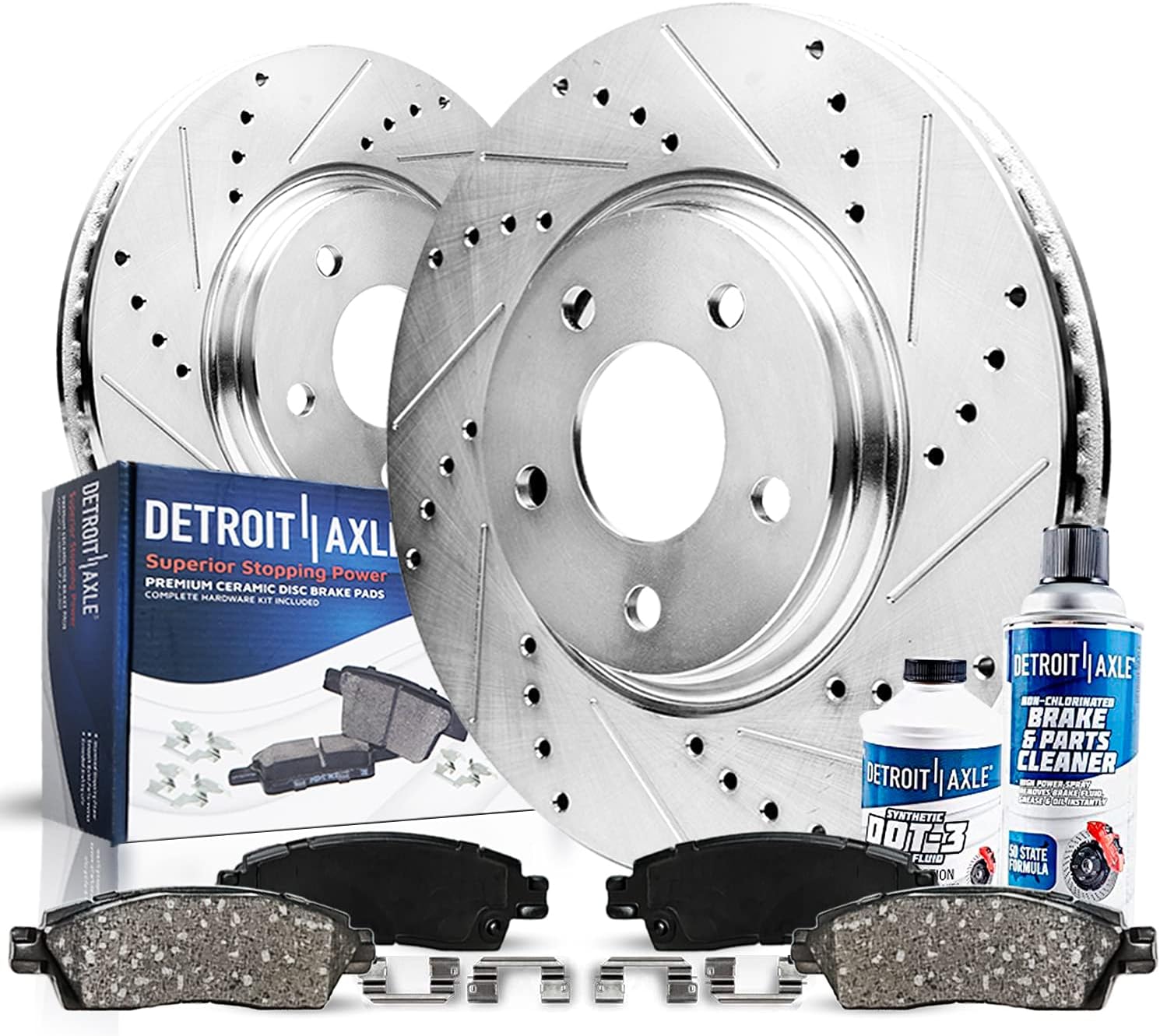
| Fitment | 1997–2003 Ford F-150 (4WD; 5-lug) — 12.13" front rotor |
|---|---|
| Rotor type | Drilled & slotted |
| Brake pads | Ceramic (front) |
| Includes | Hardware, brake cleaner, brake fluid |
| Orientation | Front |
This Detroit Axle kit supplies everything needed to replace the front brakes on 4WD, 5-lug Ford F-150s from 1997 to 2003 (12.13" rotor size). The package includes two drilled and slotted rotors, two ceramic pads with hardware, a small bottle of brake fluid and a brake cleaner spray. Drilled and slotted rotors help dissipate heat and shed moisture, while the zinc plating resists corrosion and keeps wheel faces cleaner. Ceramic pads deliver quieter, low-dust stops compared with many metallic pads and the included hardware makes installation straightforward for a DIYer. A few users report a brief break-in period with some initial noise, and the kit includes DOT 3 fluid which may not match every vehicle's spec. Fitment and locating holes are machined for direct replacement on the specified F-150s, so installation typically requires no modifications. This is a practical, value-focused option for owners who want an upgrade in rotor cooling and cleaner wheels without moving to a performance-only part.
Best for: Owners who want a complete, do-it-yourself front brake replacement that balances quieter ceramic pads, improved rotor cooling, and corrosion resistance without pursuing track-focused performance.
Less Ideal for: Drivers seeking high-performance or heavy-duty racing brake components or those who need a specific DOT 4 fluid supply should consider purpose-built alternatives.
- Complete kit includes rotors, ceramic pads, hardware, brake cleaner and brake fluid for a single front axle service
- Drilled and slotted rotor design improves heat dissipation and helps reduce fade under repeated stops
- Zinc plating resists corrosion and reduces visible wheel dust for cleaner-looking wheels
- Ceramic pads run quieter and produce less dust than many semi-metallic pads
- Machined locating holes and hardware make for straightforward, direct-fit installation
- Included brake fluid is DOT 3 which may not match some vehicles that require DOT 4
Verdict: A ready-to-install front brake kit that gives 1997–2003 F-150 4WD owners quieter ceramic pads and cooler-running drilled and slotted rotors with all necessary hardware included.
PowerStop Z36 Front Truck & Tow Brake Kit (Carbon-Fiber Ceramic Pads + Drilled/Slotted Rotors)

| Included components | 2 drilled & slotted rotors, 1 set carbon-fiber ceramic pads, hardware, brake lube |
|---|---|
| Fitment | Vehicle specific fit for front of select 1997–2004 Ford F-150 models |
| Pad type | Z36 carbon-fiber ceramic |
| Rotor features | Drilled and slotted with silver zinc plating |
| Orientation | Front |
This PowerStop Z36 front brake kit bundles carbon-fiber infused ceramic pads with drilled and slotted rotors and the installation hardware needed for a bolt-on replacement on compatible 1997–2004 F-150 fronts. The Z36 pads use a low-dust ceramic compound reinforced with carbon fiber for stronger friction and reduced brake dust compared with typical stock pads, while stainless-steel shims and chamfering help minimize noise and vibration. The rotors are drilled and slotted to improve cooling and gas/debris evacuation during heavy use, and the zinc plating helps resist surface corrosion. For drivers who tow, haul, or regularly drive hilly terrain the kit delivers firmer pedal feel and better resistance to fade on long descents. Expect a straightforward install using factory mounting points, but allow a proper bedding-in period to reach peak performance. The kit focuses on front braking only, so rear components are not included and drilled rotors can be marginally noisier than plain rotors under some conditions.
Best for: Drivers seeking a performance-focused, bolt-on front brake upgrade for older F-150s who prioritize stronger stopping power, reduced dust, and better fade resistance during towing or mountain driving.
Less Ideal for: Drivers who only need a basic, low-cost replacement for everyday commuting or those wanting a full front-and-rear kit in a single purchase should consider other options.
- Complete front kit with rotors, pads, hardware and brake lube for a single straightforward job
- Carbon-fiber ceramic pads offer stronger stopping and low brake dust compared with many stock pads
- Drilled and slotted rotors improve heat dissipation and help prevent fade on long descents
- Zinc plating on rotors reduces surface rust and keeps the appearance cleaner behind wheels
- Kit covers front brakes only so rear pads/rotors must be purchased separately if needed
- Drilled rotors may offer limited benefit for everyday driving and can be noisier than plain rotors in some situations
Verdict: Choose this kit if you want a direct-fit front braking upgrade for your 1997–2003 F-150 that improves stopping power, reduces dust, and resists fade during towing and hill driving.
Max Advanced Brakes Front Brake Rotor Set for 2000-2003 Ford F150

| Exterior Finish | Machined |
|---|---|
| Compatible with Vehicle Type | Car |
| Automotive Fit Type | Vehicle Specific Fit |
| Material Type | Cast Iron |
These Max Advanced Brakes front rotors are a direct-fit, machined cast-iron replacement intended for everyday driving on 2000 to 2003 Ford F-150 trucks. They are factory-balanced and precision-machined for consistent thickness and a flat braking surface, which helps reduce vibration and deliver predictable pedal feel after installation. Built from grey cast iron, the rotors emphasize durability for regular commuting and light towing rather than performance braking. Installation is straightforward because the parts are vehicle-specific and designed to match OEM mounting points. Users report good fit and quiet operation when paired with compatible pads, though a minority note surface discoloration or coating wear over time. The kit includes only the rotors so expect to reuse or replace hardware and pads as needed. If you want a value-oriented, OEM-style replacement to restore normal braking feel on an older F-150, these rotors will do the job; if you need high-performance stopping, heavy-duty fleet duty, or corrosion-resistant coatings, there are more specialized options to consider.
Best for: Buyers looking to restore reliable, factory-like braking on an aging F-150 without overspending and who prioritize straightforward fitment and consistent day-to-day performance.
Less Ideal for: Drivers who need upgraded heat resistance, heavy-duty fleet parts, or decorative/coated rotors for long-term corrosion protection should consider purpose-built alternatives.
- Vehicle-specific fit designed to match Ford F-150 front mounting points for 2000–2003
- Precision-machined, factory-balanced surfaces to reduce vibration and improve pedal feel
- Made from cast-iron (G3000-grade) for durability under normal driving conditions
- Direct replacement design allows straightforward bolt-on installation with no modifications
- Some users report surface discoloration or coating wear after short use
- Not intended for high-performance or heavy-duty towing applications
Verdict: A cost-conscious, factory-fit cast-iron rotor set that restores smooth, vibration-free front braking for 2000–2003 Ford F-150s.
Bendix Premium Front Brake Rotor PRT5146 for Ford F-150 (1997–2004, 4WD 5‑stud)

| Manufacturer Part Number | PRT5146 |
|---|---|
| Material Type | Cast Iron |
| Exterior Finish | Machined |
| Compatible with Vehicle Type | Trucks |
| Automotive Fit Type | Vehicle Specific Fit |
The Bendix Premium PRT5146 is a direct-fit cast-iron front rotor intended for 4WD Ford F-150 trucks with a 5-stud hub pattern from the late 1990s through early 2000s. It replaces the factory rotor with a machined finish and dynamic balancing to reduce vibration. In real use this part delivers predictable braking and is designed to shed heat through its vented design so pedal feel stays consistent during normal driving and towing. Installation is straightforward for anyone replacing rotors one side at a time, and most buyers pair it with new pads for best performance. Buyers should note this listing ships a single rotor so you must order two for a full axle, and a few reports mention surface rust or dimensional differences on some fits so confirm thickness and hub fit before install. For a budget-focused replacement that mirrors factory function, Bendix offers a solid balance of durability and quiet operation, but check fitment details to avoid unexpected machining or clearance issues.
Best for: Drivers looking for a cost-conscious, factory-style front rotor replacement that restores dependable stopping performance for a late 1990s to early 2000s Ford F-150 and want a straightforward swap-in part.
Less Ideal for: Shoppers seeking coated or rust-resistant specialty rotors, high-performance rotors, or those unwilling to verify exact thickness and hub dimensions before installation should consider alternatives.
- Vehicle-specific fit for Ford F-150 1997–2004 4WD (5-stud) applications
- Machined finish and dynamic balancing to reduce noise and vibration
- High-grade cast iron construction designed for heat dissipation and durability
- Straightforward, OEM-style replacement that restores factory braking feel
- Sold as a single rotor so you must buy two for a full axle replacement
- Some buyers reported surface rust or thickness differences on certain applications
Verdict: A budget-oriented, factory-fit cast-iron rotor that restores reliable braking to 1997–2004 Ford F-150 4WD models when you verify fitment and buy a pair.
Auto Shack Front Drilled & Slotted E-Coated Brake Rotors, 12.13" (Front, 5-Lug)

| Compatible with Vehicle Type | Trucks |
|---|---|
| Automotive Fit Type | Vehicle Specific Fit |
| Exterior Finish | Black Electrolysis Coated |
| Material Type | Alloy Steel |
These Auto Shack front rotors are a direct replacement designed for 1997-2004 Ford F-150 front applications and come as a two-piece set of drilled and slotted vented rotors with an e-coating finish. They are intended for routine street use where consistent stopping and resistance to rust matter. The drilled and slotted pattern helps vent heat and shed debris while the black electrolysis coating slows surface corrosion during storage and initial use. Construction from alloy steel and a vented design aim to reduce warp and fading under normal driving loads. They install like factory-style replacements and are commonly paired with stock or upgraded pads. Limitations to be aware of are that they are aftermarket rotors so very aggressive track use will stress them more than performance-focused racing rotors, and fitment must be verified for year, drivetrain, and hub configuration before purchase. Overall they deliver a practical, rust-resistant replacement for daily-driven F-150s needing refreshed front braking hardware.
Best for: Buyers wanting a reliable, rust-resistant front rotor replacement for daily-driven 1997–2004 Ford F-150s who prioritize consistent stopping and long-term corrosion protection.
Less Ideal for: Drivers seeking rotors for dedicated track, heavy towing, or extreme-duty commercial use should consider heavy-duty or performance-specific options instead.
- Drilled and slotted surface improves heat dissipation and helps clear pad debris for more consistent braking
- E-coating provides corrosion resistance to extend usable life in wet or salty conditions
- Vented, alloy steel construction reduces heat soak and the chance of rotor warp under normal driving
- Sold as a matched front pair for straightforward simultaneous replacement
- Aftermarket design may not match high-heat track performance of dedicated race rotors
Verdict: A practical, corrosion-resistant front rotor pair built to restore consistent braking on 1997–2004 Ford F-150 trucks.
Detroit Axle Front Brake Kit with Rotors and Ceramic Pads for 1997–2003 Ford F-150 (4WD, 5‑lug)
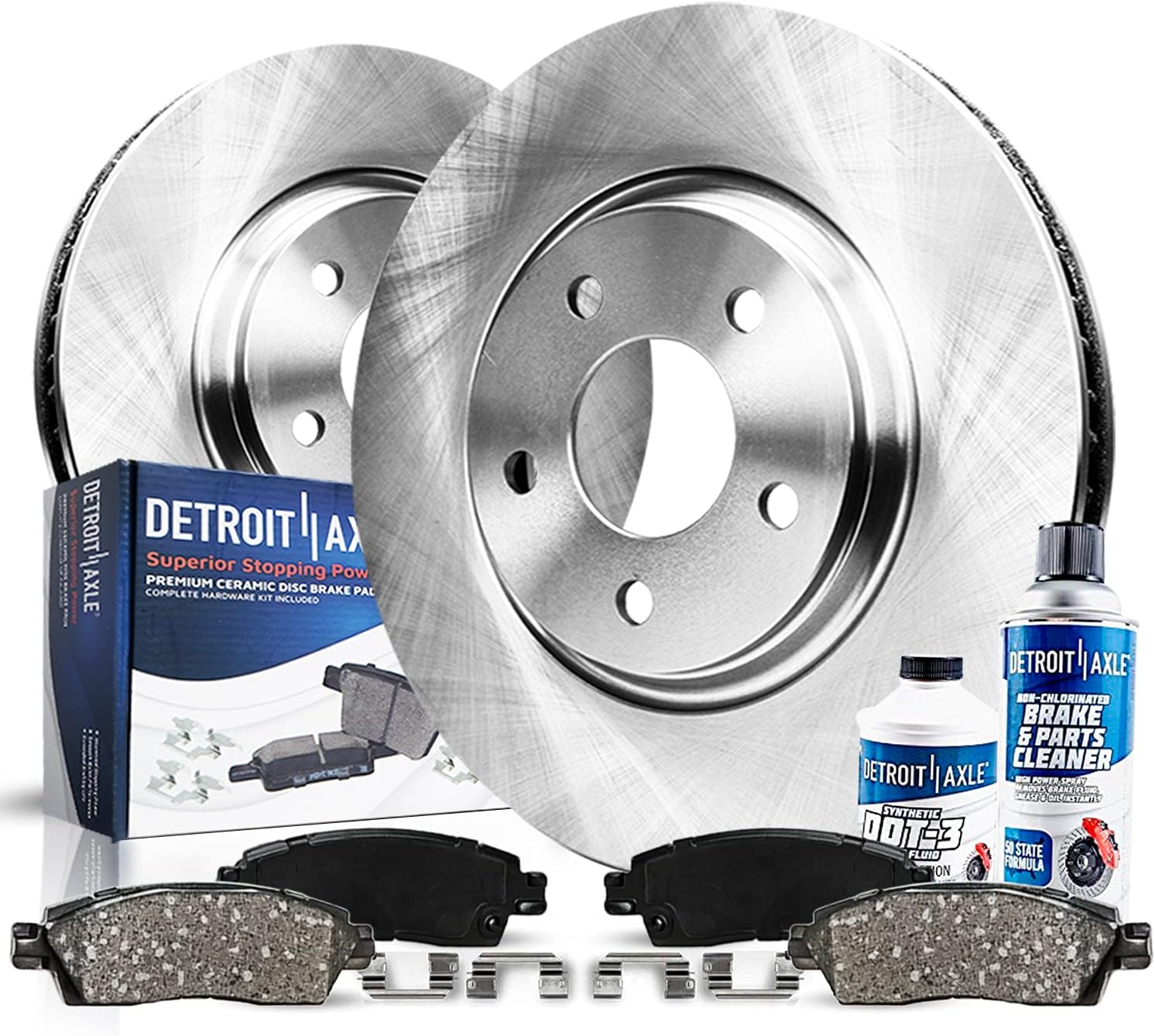
| Orientation | Front |
|---|---|
| Compatible with Vehicle Type | Truck |
| Manufacturer Warranty Description | 10 Year |
| Model Year | 1997 |
This Detroit Axle front brake kit is aimed at owners replacing the front braking hardware on 1997–2003 Ford F-150 4WD trucks with 5-lug hubs and 12.13-inch rotors. The kit includes two front disc rotors and ceramic brake pads plus small extras such as brake cleaner, brake fluid, pad shims, and grease which help simplify a single-visit job. The rotors are described as meeting or exceeding factory specifications and the ceramic pads offer quieter operation and reduced dust compared with basic semi-metallic pads. In practice this is a straightforward parts-and-pad replacement for routine maintenance or restoring faded stopping power. Fitment is specific to 4WD 5-lug trucks with the listed rotor diameter so confirm rotor size before ordering. Expect a lower cost than dealer parts and generally good fit and finish, though some buyers reported minor issues like bent slide clips in the package that may need a quick bend-back or replacement during installation.
Best for: Buyers who want a proven, budget-friendly front brake replacement with most necessary hardware included and confidence from many positive customer experiences.
Less Ideal for: Do not choose this kit if your F-150 is not a 4WD 5-lug with 12.13-inch front rotors or if you need high-performance or specialty brake compounds for towing and heavy duty use.
- Complete kit includes rotors, ceramic pads and small installation extras so you can do a front-brake job in one purchase
- Rotors are manufactured to meet or exceed factory specification for direct replacement fit
- Ceramic pads reduce brake dust and tend to run quieter than many entry-level pads
- Good value compared with dealership parts and often cheaper than buying rotors and pads separately
- Fitment limited to 4WD F-150s with 5-lug hubs and 12.13-inch front rotors so it will not fit other configurations
Verdict: If you need an affordable, all-in-one front brake replacement for a 1997–2003 F-150 4WD 5-lug with 12.13-inch rotors, this kit gives factory-quality fit and ceramic pads in one package.
Detroit Axle Front Brake Kit for 1997–2003 Ford F-150 (4WD, 5-Lug) — 12.13" Rotors with Ceramic Pads

| Fitment | 1997–2003 Ford F-150 (4WD; 5-lug) Front |
|---|---|
| Rotor diameter | 12.13 inch (308 mm) |
| Pads | Front ceramic brake pads |
| Orientation | Front |
This Detroit Axle kit is a straightforward replacement bundle for 4WD, 5‑lug Ford F-150s from 1997–2003 that pairs two vented 12.13" rotors with a set of ceramic front pads and installation hardware. The rotors are zinc plated to slow surface corrosion and feature vented construction to shed heat, which helps maintain consistent stopping performance under normal driving. Ceramic pads provide quieter, low-dust braking and a smooth initial bite, making them a good fit for daily driving and light towing. Fitment is machined to factory locating holes so the parts install without modification on the specified trucks. Potential downsides are that cast rotors will surface-rust if left exposed and some users report occasional noisy pads if pad hardware is not properly lubricated; a caliper-piston tool is often needed for reinstalling calipers. For a buyer focused on dependable, factory-style braking at a value price, this kit delivers the essential parts and sensible materials while keeping installation typical of a dealer or home mechanic job.
Best for: Careful owners who want a direct-fit, factory-style front brake replacement for a 1997–2003 Ford F-150 4WD with 5-lug hubs and who prioritize quiet, dependable day-to-day braking and long-term value.
Less Ideal for: Drivers seeking high-performance or track-oriented braking or those wanting fully rustproof ceramic-coated rotors should look at performance or specialty rotor options.
- Complete kit with matched rotors and ceramic pads for a full front brake service
- Vented rotors and zinc plating help with heat dissipation and surface corrosion resistance
- Machined locating holes for direct fit installation without modifications
- Ceramic pads offer quieter operation and lower dust than metallic pads
- Rotors are cast iron and can develop surface rust over time if exposed
- Some installations may require a piston compression tool and careful pad/hardware lubrication to avoid noise
Verdict: If you need a dependable, direct-fit front brake replacement for a 1997–2003 F-150 4WD, this all-in-one kit gives quiet ceramic pads and vented zinc-plated rotors at a sensible value.
Choosing the Right 1997-2003 Ford F-150 Brake Rotors: Key Factors to Consider
Rotor Material and Casting Quality
Rotor material and casting quality determine how well the rotor resists cracking, absorbs heat, and wears over time. Better-grade cast iron or improved metallurgical processes yield more uniform heat distribution and slower degradation. On a 1997-2003 F-150 that may be used for towing or hauling, avoiding premature crack formation and rapid wear preserves stopping power.
Casting quality also affects how true the rotor is straight out of the box. Poor casting can introduce internal stresses that increase the risk of lateral runout after a few heat cycles. Choosing rotors from manufacturers that document material grades and heat-treatment practices reduces the risk of uneven wear and vibration.
Thickness, Tolerance, and Minimum Usable Thickness
Nominal rotor thickness and machining tolerances matter because they determine how much metal you have to work with for resurfacing and how long the rotor will safely last. The difference between the new thickness and the vehicle's minimum usable thickness indicates remaining service life.
For the 1997-2003 F-150 you should compare published nominal thickness, acceptable machining tolerance, and the minimum thickness stamped or documented by the manufacturer. Rotors with tighter thickness control are less likely to develop local hot spots and warpage, which improves pedal feel and braking consistency.
Runout and Machining Precision
Lateral runout is a primary cause of pedal pulsation and uneven pad wear. Machining precision at the hat and friction surfaces reduces the chance of vibration after installation. Rotors produced to tighter runout specifications will typically result in smoother braking with fewer noise complaints.
Consider whether rotors are balanced and whether the hat bore and mounting surface match factory dimensions. Even small deviations can introduce eccentricity once mounted, especially on older hubs that already have some wear.
Coating and Corrosion Resistance
Coatings and surface finishes protect the rotor hat and outer edges from rust, which is especially important for trucks that spend time in wet or salted-road environments. Corrosion on the hat can affect mounting surfaces, leading to poor contact between rotor and hub and inducing runout.
Look for protective finishes on non-friction areas and consider rotors with zinc or ceramic coatings on hats and edges. Note that friction surfaces must remain clean and typically are left raw or with a light rust-inhibitor that burns off.
Design Features: Slotted, Drilled, or Plain
Design choices such as slotted, drilled, or plain rotors affect how heat, gas, and debris are managed at the pad contact surface. Slotted rotors tend to help clear pad deposits and maintain bite under repeated stops. Drilled rotors provide some cooling and gas escape but can be more prone to crack initiation under heavy thermal cycling.
For a 1997-2003 F-150 used for towing or repeated hard stops, prioritize designs that balance thermal management with structural durability. Plain rotors often offer the most material mass for heat absorption and can be resurfaced more times than heavily machined variants.
Compatibility and Fitment Specifics
Correct fitment to the 1997-2003 F-150 hub, including hat diameter, bolt pattern, and any venting clearance, is essential for safe installation. Even a rotor with excellent material and machining will perform poorly if it does not seat properly on the hub flange or interferes with caliper hardware.
When selecting rotors, verify the rotor-to-hub interface dimensions, hat height, and whether the rotor is intended for the truck's axle configuration. Confirm whether any additional shims or hardware are required and whether the rotor is a direct replacement or requires minor adjustments.
Understanding Rotor Types and When to Choose Each
Rotors come in plain, slotted, and drilled variants each with distinct tradeoffs. Plain rotors provide the most mass and longest resurfacing life. Slotted rotors help clear pad material and maintain initial bite during repeated braking. Drilled rotors can aid cooling and water shedding but may be more susceptible to cracking under heavy thermal stress.
- Plain rotors: Best for heavy-duty use and repeated resurfacing.
- Slotted rotors: Good for maintaining bite under heavy or repeated stops.
- Drilled rotors: Better for light-duty cooling and aesthetics but watch for thermal stress.
When to Resurface Vs Replace on a 1997-2003 F-150
Resurfacing is appropriate when the rotor is still above the vehicle's minimum usable thickness and the damage is limited to minor scoring or light runout. Resurfacing restores a flat braking surface and can be cost-effective when the rotor has ample thickness remaining.Replace rotors when they are below minimum thickness, have deep gouges, visible cracks, or significant heat cracking. For older F-150s that have been through many heat cycles or towing duty, replacement is often the safer long-term option than repeatedly resurfacing thin castings.
- Resurface if thickness is above minimum and damage is minor.
- Replace if below minimum thickness, cracked, or severely scored.
Measuring Rotor Thickness and Runout
To check rotor thickness use a micrometer or vernier caliper at several points around the friction surface and compare to the vehicle's minimum specification. Measure thickness at multiple radii because wear can be uneven, and record the lowest reading as the critical value.Runout is measured with a dial indicator mounted to the hub or an auxiliary fixture while rotating the rotor. Small runout values can often be corrected by cleaning the hub mounting surface or using shims; excessive runout usually indicates a compromised rotor or hub that needs attention.
- Measure thickness at multiple points and use the lowest measurement.
- Use a dial indicator to measure lateral runout on the installed rotor.
Installation Tips for Reliable Results
Clean the hub face and remove rust or debris before installing a new rotor to ensure full contact and reduce runout risk. Torque wheel studs and caliper hardware to factory specifications and follow a star pattern for wheel lug tightening to maintain even clamping force.If replacing rotors on both front hubs, consider replacing pads at the same time or check pad thickness and glazing. After installation, perform a bedding sequence as recommended by pad and rotor best practices to seat the interface and minimize early noise or uneven wear.
- Thoroughly clean hub mounting surface before installation.
- Torque lug nuts and caliper hardware to spec and follow proper bedding procedure.
Signs Your F-150 Needs New Rotors
Common symptoms that indicate rotor issues include a pulsing brake pedal during moderate braking, noticeable vibration through the steering wheel, loud squealing or scraping noises, and visible scoring or blue discoloration from excessive heat. These symptoms often worsen under load, such as when towing.If you observe reduced braking performance or uneven pad wear despite healthy pads, the rotors should be inspected for thickness loss, runout, and surface damage. Addressing rotor problems early can prevent further wear to calipers and pads and preserve safe stopping distances.
- Pedal pulsation or steering vibration during braking.
- Squealing, scraping, or visible scoring and heat discoloration.
Still looking for the perfect fit?
Select your Ford F-150 configuration to see the most relevant Brake Rotors recommendations
How We Chose the Best 1997-2003 Ford F-150 Brake Rotors
We focused on attributes that directly affect braking performance and long-term serviceability on 1997-2003 Ford F-150 trucks. Primary evaluation criteria included material and coating quality for corrosion resistance and heat management, factory-compatible dimensions and hat fitment to ensure correct wheel clearance, and thickness tolerance plus minimum usable thickness to match factory safety margins.We also weighed thermal performance and resistance to warping under heavy-duty conditions, including towing and repeated braking, and considered machining precision to reduce lateral runout and vibration. Ease of installation and whether rotors require additional machining or hardware were considered. Finally, we prioritized rotors with consistent manufacturing tolerances and clear specification documentation.Excluded items included universal or non-vehicle-specific rotors, and any options that required significant hub or caliper modification. We did not include low-quality imports with unclear specifications or products lacking documented thickness and runout tolerances.
Our full evaluation process is outlined in our review methodology.
FAQ
How often should I inspect the rotors on my 1997-2003 F-150?
Inspect rotors during every brake pad change and at least once a year if you drive under normal conditions. Trucks used for towing or heavy loads should have more frequent inspections, especially after any series of hard stops.
Can I resurface rotors that show minor rust or light scoring?
Yes light surface rust and minor scoring can often be removed by resurfacing if the rotor remains above minimum thickness. Deep grooves or heat cracks are signs that replacement is safer than resurfacing.
Will changing to slotted or drilled rotors affect brake feel?
You may notice a slightly different initial bite or increased noise with slotted or drilled designs. Slotted rotors can help maintain bite under repeated stops, while drilled rotors may feel similar but can introduce more perceived noise under some pad compounds.
How do I know if runout is causing pedal pulsation?
Measure lateral runout with a dial indicator on the mounted rotor. If the runout exceeds the vehicle specification or cleaning the hub surface does not reduce pulsation, the rotor or hub may be warped or improperly seated.
Should I replace rotors in pairs or only the damaged side?
It is best practice to replace rotors in axle-matched pairs to maintain consistent braking feel and balance. Installing a new rotor opposite an older, thinner rotor can cause uneven braking and premature wear.
Are coated rotors worth it for an older F-150?
Coated rotors protect mounting areas and exposed edges from corrosion which can be valuable on older trucks exposed to moisture and road salt. Coatings do not affect the friction surface and still require proper bedding.
Final Verdict
Prioritize rotor choices that match the 1997-2003 Ford F-150's factory dimensions and offer solid material quality, tight thickness tolerances, and good corrosion protection. Balance design features such as slots or drilling against the truck s intended duty, favoring plain or slotted designs for heavy towing and repeated braking.When in doubt, choose replacement rotors that provide documented thickness and runout specifications, replace in axle pairs, and follow proper installation and bedding procedures. That approach will deliver reliable stopping performance and reduce the likelihood of vibration and premature wear.
Explore More:
- Check out all Ford F-150 parts & accessories
- Explore Brake Rotors Maintenance & Repair Guides
- Explore Brake System
- Browse all Auto Parts
