

Note: This article contains affiliate links. If you click on these links and make a purchase, I may earn a small commission at no extra cost to you. This helps support my research and content. Read my full affiliate disclosure here.
If you own a 1995-2004 Toyota Tacoma and the steering feels loose, noisy, or drifty, replacing the rack and pinion can dramatically improve handling and safety. The right steering rack restores precise steering input, reduces play, and eliminates leaks that lead to fluid loss and uneven steering response. This guide collects the top shortlisted rack and pinion options specifically for the 1995–2004 Tacoma, covering original-equipment-style replacements and remanufactured power racks that fit the generation used in those years.We evaluate each option for fitment accuracy, seal and component durability, steering feel, and ease of installation. The following picks are the ones that met our editorial filters and are most likely to give you reliable, road-ready steering performance. Read on for practical guidance on symptoms, installation considerations, and maintenance tips before you buy.
Looking for other parts? See all Toyota Tacoma parts & accessories.
Top Picks at a Glance
| Best Overall The best all-around choice for most situations | PHILTOP Rack and Pinion Steering Assembly (front) |  |
| Best Quality Built to a higher standard if you want something more solid | Detroit Axle Complete Power Steering Rack & Pinion Kit with 2 Outer Tie Rod Ends |  |
| Best Value The sweet spot between price and what you get | MOSTPLUS Power Steering Rack and Pinion Assembly for 1995–2004 Toyota Tacoma / 1996–2002 4Runner |  |
| Best Budget The cheapest option that still gets the job done reliably | DRIVESTAR Power Steering Rack & Pinion Assembly (Hydraulic) for 1995–2004 Toyota Tacoma/4Runner |  |
| Highest Rated A top-rated pick with lots of positive feedback | KAX Hydraulic Power Steering Rack and Pinion Assembly with Inner Tie Rods |  |
| Most Popular A crowd favorite that many people choose with confidence | PHILTOP Steering Rack and Pinion Assembly with Inner Tie Rods |  |
| Best Seller A high-volume bestseller chosen again and again | A-Premium Hydraulic Power Steering Rack and Pinion for Toyota Tacoma & 4Runner (1996–2004) |  |
PHILTOP Rack and Pinion Steering Assembly (front)

| Position | Front |
|---|---|
| Manufacturer Part Number | 5214PSP161AUS |
| OEM Part Number | 97-1697, 4425035041, 4425035042, 4420035013, 4425035010, 971697, 4425035040, 2039, 6939, 3390 |
| Compatible Vehicles | Toyota Tacoma 1995–2004, Toyota 4Runner 1996–2002 |
| Exterior | Machined |
This PHILTOP rack and pinion is a complete power-steering assembly intended as a direct replacement for compatible 1995–2004 Toyota Tacoma and 1996–2002 4Runner front steering systems. It arrives as a plug-and-play unit that replaces listed part numbers so you can swap it in without modifying the chassis. The unit is built from chrome-alloy steel and aluminum components and is shock, abrasion, and fatigue tested to meet basic durability expectations; the listing claims a service life over 120,000 miles. In use it restores steering smoothness and reduces steering effort compared with a worn gear, and most buyers report straightforward fitment when matching the vehicle fitment. Important limitations are that installation still requires proper alignment afterward and some users may need to trim linkage or adjust tie-rod engagement to match exact steering geometry. If you want a budget-friendly, ready-to-install replacement for a Tacoma in the 1995–2004 window, this provides a practical route to restore steering feel without a factory dealer part.
Best for: Buyers who want an affordable, ready-to-install steering rack to restore steering performance on a 1995–2004 Toyota Tacoma or 1996–2002 4Runner and prefer a direct replacement over rebuilding the original unit.
Less Ideal for: Drivers seeking a factory dealer unit or an OEM-labeled part for warranty or certified-vehicle-history reasons should consider dealer-sourced replacements instead.
- Complete plug-and-play assembly that replaces multiple factory part numbers
- Constructed from chrome-alloy steel and aircraft-grade aluminum for durability
- Shock, abrasion, and fatigue tested with a claimed long service life
- Fits a wide range of 1995–2004 Tacoma and 1996–2002 4Runner fitments listed on the product page
- May require minor linkage adjustment or tie-rod rethreading during installation
- Buyer must perform or pay for wheel alignment after installation
Verdict: A budget-friendly, direct-replacement steering rack that restores steering feel for 1995–2004 Toyota Tacoma and 1996–2002 4Runner owners who need a practical, ready-to-install fix.
Detroit Axle Complete Power Steering Rack & Pinion Kit with 2 Outer Tie Rod Ends
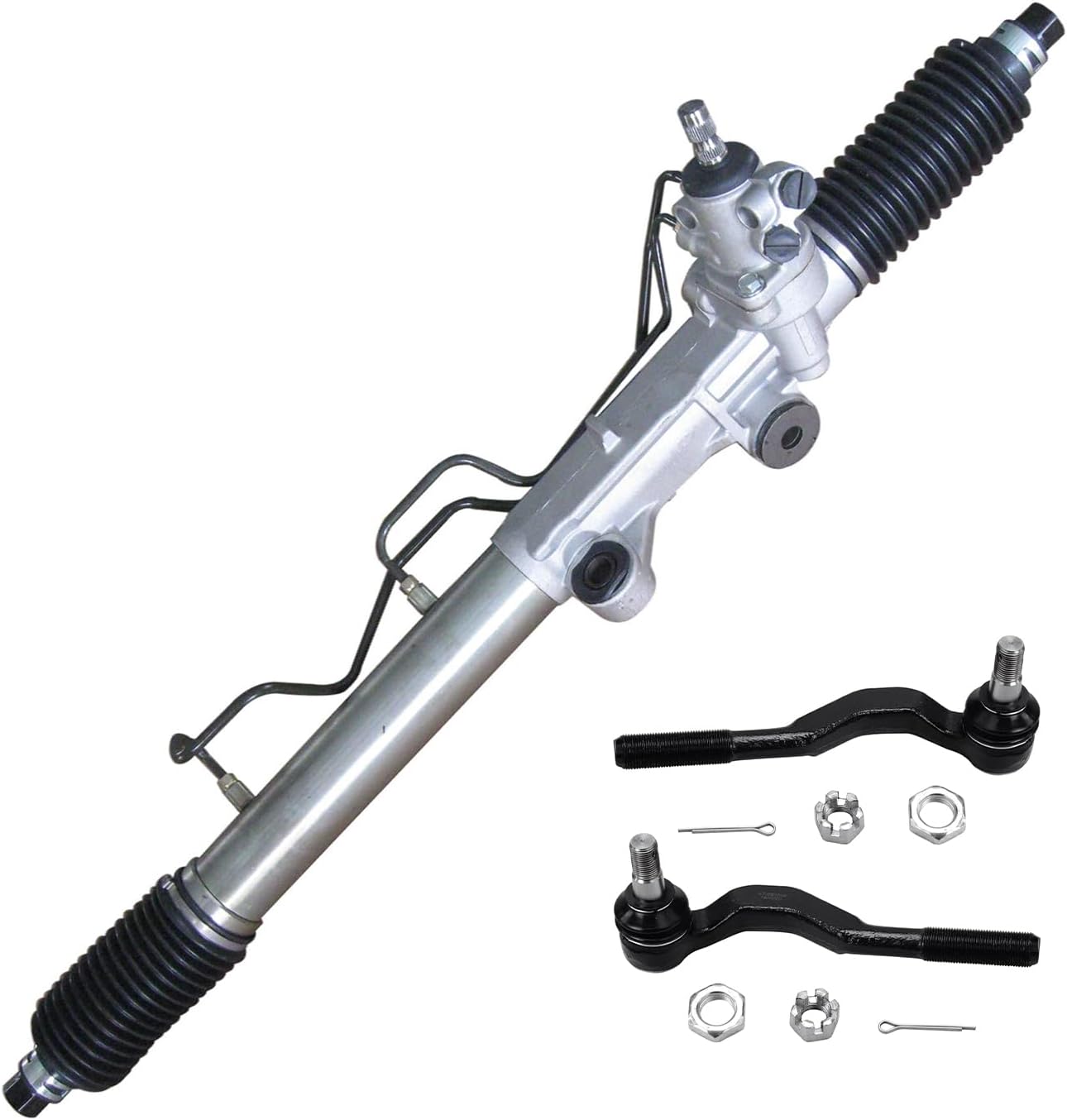
| Fitment | 1995-2004 Toyota Tacoma |
|---|---|
| Kit contents | Rack & Pinion plus 2 Front Outer Tie Rod Ends |
| Manufacturer | Detroit Axle |
| Made in | Detroit, USA |
This Detroit Axle kit replaces the factory steering rack with a fully assembled power steering rack and two outer tie rod ends so you can do a direct swap on 1995–2004 Toyota Tacoma models. It arrives ready to install with new oil and lip seals and has been pressure tested to check internal bypass behavior. In practical use the kit restores tight steering and removes leaks when the original unit is failing, and many DIY installers report the part fits like the factory piece and bolts into place without major modification. Expect a heavy assembly that may need a helper to position during installation and plan on a professional alignment afterward. Some buyers report occasional fitment mismatch on a hard fluid line or early seal leaks, so allow time for break-in and inspect connections closely during install. Detroit Axle backs the part with a core-return lifetime program and a 10-year warranty noted by the brand.
Best for: Buyers who want a ready-to-install steering rack that restores factory steering feel and fixes leaks themselves or with a single shop visit, prioritizing restoration of handling and durability.
Less Ideal for: If you want an upgraded performance steering ratio or race-oriented component, this direct-replacement kit is not a performance-tuned unit and you should consider purpose-built steering components instead.
- Complete drop-in assembly including two outer tie rod ends for a one-piece replacement
- New oil and lip seals with hydraulic pressure testing to reduce initial leak risk
- Made and assembled with factory-style fitment for straightforward installation on the specified Tacoma range
- Includes core-return lifetime warranty program and long-term warranty coverage
- Some users reported pinion seal leakage after a short period on a minority of units
- Occasional hard fluid line routing or clearances require minor adjustment during install
Verdict: A ready-made, factory-style replacement rack and pinion kit that gets a 1995–2004 Tacoma back to tight, leak-free steering with minimal modification.
MOSTPLUS Power Steering Rack and Pinion Assembly for 1995–2004 Toyota Tacoma / 1996–2002 4Runner
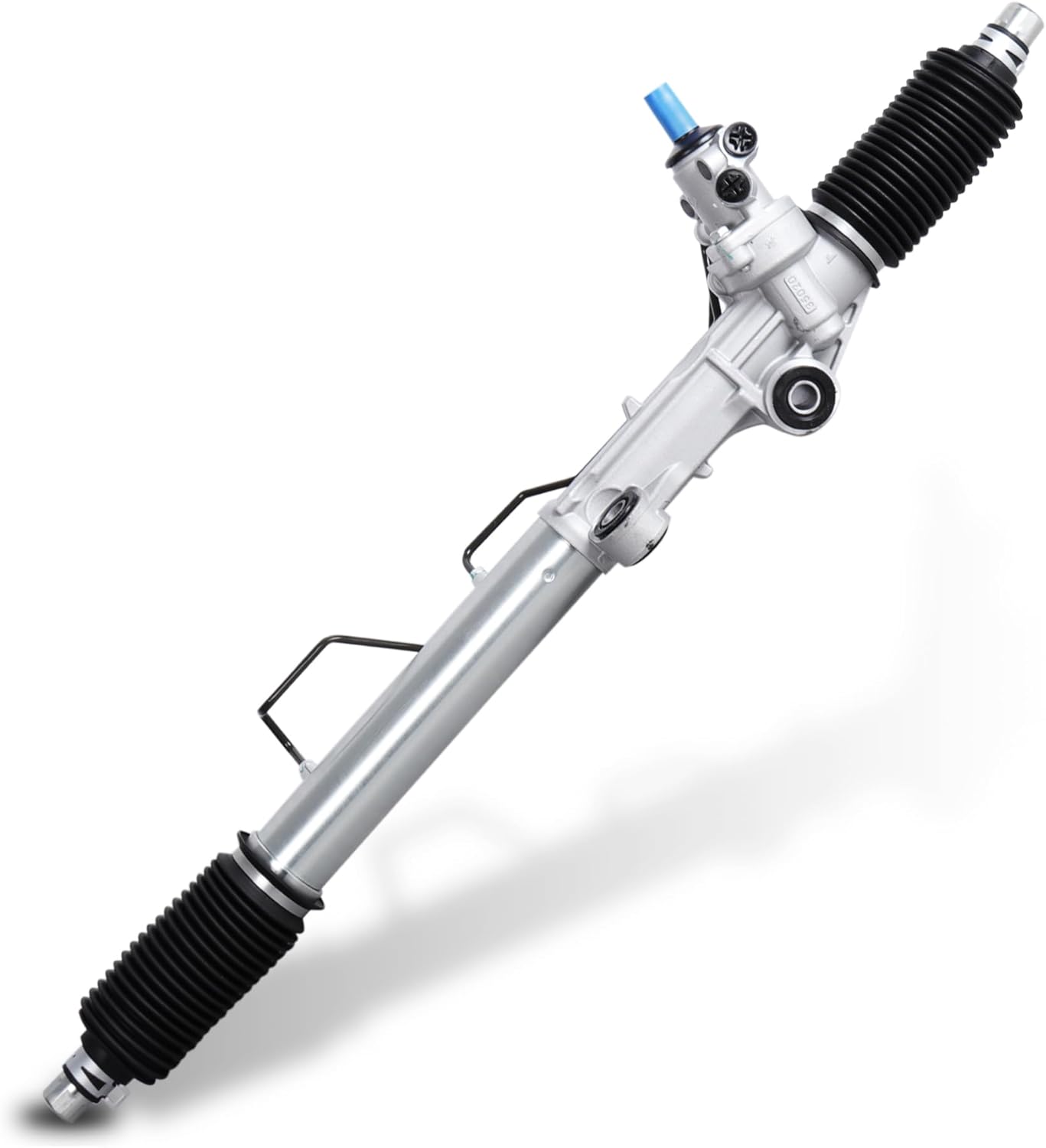
| Fitment | 1996-2002 Toyota 4Runner; 1995-2004 Toyota Tacoma (select engines/2WD/4WD) |
|---|---|
| Position | Front |
| Material | Iron and aluminum |
| Surface finish | Painted, rust protected |
| Manufacturer part number | M50002 |
This MOSTPLUS rack and pinion is a direct-replacement complete unit intended for power steering models of late 1990s and early 2000s Tacoma and 4Runner vehicles. It converts steering column rotation into linear tie-rod movement to restore steering feel and reduce effort, and arrives preassembled to simplify installation. The unit is made from iron and aluminum with a painted, rust-protected finish and is sold with mounting position and OEM part number cross-references for fit verification. In practical use it reduces steering resistance and helps smooth out steering jitter caused by a failing rack, and many installers report straightforward bolt-in replacement when the rack is centered before install. Downsides to note are variable quality control and packaging; some buyers received damaged clamps or mis-centered racks that required adjustment, and there are mixed reports about long-term durability. If you want a budget-friendly, ready-to-install steering rack for the specified Tacomas and 4Runners this option can get the job done, but inspect the part on arrival and be prepared to re-clamp bellows or re-center the rack during installation.
Best for: Buyers who prioritize a cost-effective, ready-to-install replacement to restore steering performance on the specified Tacoma and 4Runner models and who are comfortable checking and adjusting the part at install.
Less Ideal for: Drivers seeking a premium, guaranteed long-term remanufactured steering rack or those unwilling to make small on-arrival adjustments should consider higher-end options or dealer remanufactured units.
- Complete preassembled unit simplifies replacement and reduces installation time
- Constructed from iron and aluminum with painted rust protection for improved corrosion resistance
- Direct-fit compatibility list and OEM part number cross-references make it easier to confirm fit
- Designed to lower steering effort and mitigate steering jitter for safer, more stable driving
- Inconsistent packaging and occasional minor damage noted on arrival
- Some units arrive mis-centered or with loose clamps and require adjustment before use
- Mixed long-term reliability reports from different buyers
Verdict: A budget-friendly, preassembled power steering rack that restores steering feel on the covered Tacoma and 4Runner models if you inspect and fine-tune the unit at installation.
DRIVESTAR Power Steering Rack & Pinion Assembly (Hydraulic) for 1995–2004 Toyota Tacoma/4Runner
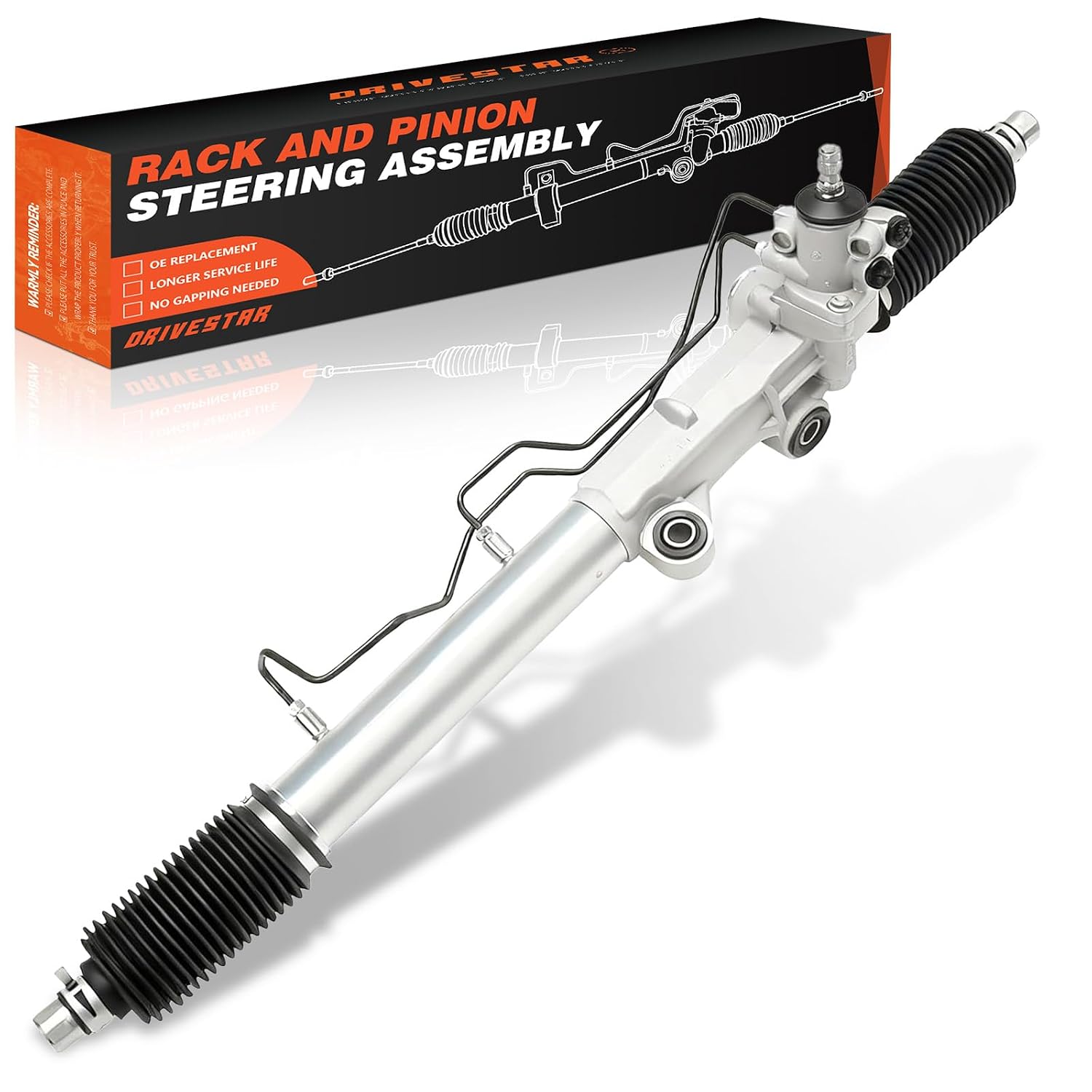
| Manufacturer | DRIVESTAR |
|---|---|
| Vehicle fitment years | 1995-2004 Tacoma, 1996-2002 4Runner |
| Type | Hydraulic rack & pinion |
| Package dimensions | 38.3 x 10.25 x 7.55 inches; 27.95 Pounds |
This DRIVESTAR rack and pinion is a complete hydraulic replacement intended to restore power steering function on compatible Tacomas and 4Runners. It arrives preassembled so installation is mainly bolt-on and reconnecting the power steering lines and tie rods, which reduces shop time compared with rebuilding a core unit. Buyers report it generally performs as expected and can correct worn steering feel, but feedback is mixed on long-term durability with some users noting leaks or premature bushing failure. The unit appears to offer good value for a budget repair because it replaces the entire steering gear rather than requiring separate components. Expect to allow a professional alignment after installation and to inspect seals and outer bushings for signs of leakage during the first few hundred miles. If you want a low-cost, ready-to-install replacement to get an older Tacoma or 4Runner back on the road quickly, this unit delivers that convenience while accepting some risk on longevity versus higher-end remanufactured or OEM options.
Best for: Buyers who need an inexpensive, ready-to-install replacement to restore power steering quickly on a 1995–2004 Tacoma or compatible 4Runner and prioritize upfront cost and fast turnaround over premium longevity.
Less Ideal for: Drivers seeking the highest long-term reliability or factory-quality remanufactured steering components should consider higher-end or OEM remanufactured replacements instead.
- Complete, preassembled hydraulic rack reduces installation time compared with rebuilding a core unit
- Direct-fit design for specified 1995–2004 Tacoma and 1996–2002 4Runner applications simplifies sourcing and installation
- Affordable option that replaces the entire steering gear for a lower-cost repair
- Some reviewers report fluid leaks and bushing failures after limited use indicating variable long-term reliability
Verdict: A cost-conscious, bolt-in hydraulic rack that gets older Tacomas and 4Runners steered again quickly without the expense of remanufactured or OEM units.
KAX Hydraulic Power Steering Rack and Pinion Assembly with Inner Tie Rods

| Position | Front |
|---|---|
| Manufacturer Part Number | 7807PSP161SUS |
| OEM Part Number | 4420035013,4425035041,4425035042,4425035040,4425035010,971697 |
| Item model number | 44200-35013 |
| Brand | KAX |
This KAX power steering rack and pinion is a complete, direct-fit replacement that restores hydraulic steering feel on compatible Toyota 4Runner and Tacoma models. It ships with pre-installed inner tie rods and dust boots so installation is quicker than rebuilding a core; the unit is CNC-machined, uses corrosion-resistant coating, and includes leak-resistant seals. The assembly is pressure and leak tested and is intended to reduce steering play, minimize fluid leaks, and cut down on noise and vibration compared with a worn original. For daily drivers and shop technicians this offers a factory-style swap that avoids the time and uncertainty of bench rebuilding. Expect straightforward installation but plan to reuse or replace outer tie rods, align the front end after fitting, and verify compatibility against the listed part numbers. The product includes a two-year unlimited-mile warranty, which adds confidence, but weight and package dimensions mean you will need a helper or hoist for handling during installation.
Best for: Buyers who prioritize restoring reliable, factory-quality steering on a Tacoma with a ready-to-install replacement that minimizes downtime and returns predictable steering behavior.
Less Ideal for: If you prefer to repair a worn rack by rebuilding components to save cost or need a lightweight unit for DIY one-person swaps, this full assembly may be more than you require.
- Complete direct-fit assembly with pre-installed inner tie rods for faster installation
- Precision CNC-machined gears and corrosion-resistant finish for improved durability
- 100% hydraulic pressure and leak testing plus road simulation for verified performance
- Includes protective dust boots and leak-resistant seals to reduce risk of fluid leaks
- Backed by a two-year unlimited-mileage warranty for added reliability
- Requires front-end alignment and possible outer tie rod replacement after install
- Unit is heavy and may need an assistant or lift to handle safely during installation
Verdict: A factory-style, fully tested direct-fit rack and pinion that restores dependable steering performance on compatible 1995–2004 Toyota Tacomas.
PHILTOP Steering Rack and Pinion Assembly with Inner Tie Rods

| Position | Front |
|---|---|
| Manufacturer | PHILTOP |
| Model | Steering Rack and Pinion Assembly w/Inner Tie Rods |
| OEM Part Number | 4425004010,971611,4425004011 |
| Item model number | 97-1611 |
This PHILTOP rack and pinion is a full, plug-and-play replacement for the front steering gear on compatible 1998–2004 Toyota Tacoma applications. It arrives as a complete assembly with inner tie rods installed, which simplifies removal of the old unit and installation of the new one without modifying the vehicle. The unit is CNC-processed from alloy steel for corrosion and wear resistance and is described as factory-quality with packaging designed to protect the part during shipping. In real-world use you can expect restored steering feel and elimination of steering leaks when the original unit fails. Some buyers report receiving a defective unit that required a replacement, so careful inspection at install and quick contact with the seller are important if anything appears damaged. The assembly does not include extra power-steering line seals, so plan to reuse or source those separately during hose reinstallation or alignment service.
Best for: Buyers who want a direct replacement that restores steering function quickly and prefer a ready-to-install assembly backed by visible customer feedback and responsive seller support.
Less Ideal for: Anyone seeking a remanufactured core or an exchange program through a shop should look elsewhere, and buyers who need included line seals or all installation hardware may prefer a different kit.
- Complete assembly with inner tie rods for faster, simpler installation
- Machined alloy-steel construction aimed at improved wear and corrosion resistance
- Packaged with protective materials to reduce transit damage
- Built to match factory specifications for fit and steering feel
- Some customers have received defective units and needed replacements
- Does not include additional seals or fittings for power steering lines
Verdict: A ready-to-install, factory-style replacement rack and pinion that restores steering quickly for 1998–2004 Tacoma owners who prioritize a complete assembly and proven seller support.
A-Premium Hydraulic Power Steering Rack and Pinion for Toyota Tacoma & 4Runner (1996–2004)

| Vehicle Fitment | Tacoma 1996-2004; 4Runner 1996-2002 (select engines/4WD/RWD as listed) |
|---|---|
| Part Type | Rack and Pinion Steering Assembly |
| Input Shaft Diameter | 0.75 in |
| Pressure Port Thread Size | M16 x 1.5 |
| Total Turns Lock To Lock | 3.56 |
This is a complete hydraulic rack-and-pinion replacement designed to install in compatible Toyota Tacoma and 4Runner trucks that originally used hydraulic power steering. The unit ships with inner tie rods and dust boots and includes pressure and return port threads sized to match factory hydraulic lines, so installation is straightforward for a competent DIYer or independent shop. Notable features include a machined exterior, factory-style mounting, and a centering witness mark so you can set steering equal left and right before final adjustment. Practical benefits are lower cost compared with a new factory rack, an all-in-one assembly that avoids sourcing separate tie rods, and generally good fit and sealing for most buyers. Limitations to note are occasional reports of shipping damage and some compatibility issues with certain OEM inner tie rod lock rings that may require aftermarket rings or thread locker. The manufacturer offers a one-year unlimited-mileage guarantee, but long-term durability may vary compared with a factory replacement.
Best for: Buyers who prioritize a reliable, lower-cost replacement that fits like a factory unit and prefer a ready-to-install assembly they can have a shop or competent DIY mechanic bolt in and align.
Less Ideal for: Owners seeking an exact long-term OEM durability guarantee or those who need perfect compatibility with original inner tie rod lock-ring channels should consider remanufactured factory replacements or OEM parts instead.
- Complete assembly arrives with inner tie rods and dust boots for easier installation
- Machined exterior and factory-style mounting for good fitment into original mounting points
- Includes centering witness marks to help set neutral steering during installation
- Matches hydraulic port thread sizes so existing power steering lines connect without modification
- Some customers reported initial shipping damage requiring a replacement
- Does not include certain mount bushings in specific RWD Pre-Runner configurations
Verdict: A complete, lower-cost hydraulic rack-and-pinion that fits factory mounting and simplifies replacement for Tacoma and 4Runner owners who want a ready-to-install alternative to buying an OEM unit.
Choosing the Right 1995-2004 Toyota Tacoma Rack and Pinion: Key Factors to Consider
Fitment and Mounting Alignment
Correct fitment is critical because the rack must align with factory subframe mounts and the stock steering column coupling. A rack that shifts mounting locations by even a small amount can change tie-rod sweep, alter steering ratio feel, and make achieving static toe settings difficult.
When assessing fitment for the 1995–2004 Tacoma, prioritize units that list exact compatibility with those model years and require no drilling or custom brackets. Proper alignment to the steering column input spline and mounting bolt centers reduces the chance of vibration, binding, or premature tie-rod wear. Confirming correct power steering hose ports and return locations also avoids routing problems that can stress hoses and fittings.
Seal Quality and Leak Resistance
Power steering fluid leaks are a common failure point that lead to loss of assist and contaminated components. Seal materials and assembly tolerances determine how well a rack resists leaks under temperature cycles and road vibration.
Look for racks with high-grade elastomer seals or updated seal designs that resist hardening and cracking. For remanufactured units, proper surface finish and correct preload on shaft seals reduce early seepage. Good seal quality also lowers the risk of fluid-induced rubber boot deterioration on tie-rod ends and extends the service interval for the steering system.
Internal Gear and Valve Precision
The internal rack and pinion gear surfaces and valve mechanism control steering feel, centering, and input deadband. Precision-machined teeth and a properly set valve result in smooth, predictable steering with minimal play.
Racks with inconsistent gear finishes or loose tolerances can create notchiness, wandering, or increased steering play as the unit wears. Evaluate whether the unit's remanufacture process includes gear realignment and valve calibration. Higher internal precision also tends to resist accelerated wear when the vehicle is used for heavier loads or off-highway driving typical of older Tacomas.
Corrosion Protection and Housing Durability
The Tacoma's steering rack sits low and is exposed to road debris, moisture, and salt. Corrosion on the housing or splines can lead to seized components and premature failure.
Choose racks finished with corrosion-resistant coatings and with protective boots that seal out grit. Robust housing materials and proper drainage paths reduce the chance of internal contamination. A durable exterior finish preserves mounting interfaces and makes future servicing or inspection simpler and more reliable.
Tie-Rod and End-Point Serviceability
Tie-rod ends and their ability to be serviced or replaced separately influence long-term ownership costs and maintenance ease. If an inner or outer tie-rod fails, being able to replace only that component is far more convenient than swapping the entire rack.
Prefer racks that accept standard replacement tie-rod ends and provide clear specifications for torque and replacement parts. Serviceable tie-rod designs shorten repair times and allow corrective adjustments if steering play or wear appears after installation. This is particularly important for older Tacomas where suspension components may be nearer the end of their service life.
Steering Feel and Assist Calibration
Steering feel depends on both internal geometry and how the rack interacts with the vehicle's power steering system. A rack that closely reproduces factory assist and centering behavior will deliver predictable handling and stable lane control.
Consider whether the rack is intended as an exact factory-style replacement or a remanufactured unit with slightly altered assist characteristics. While some drivers accept firmer or lighter feel, matching the Tacoma's original steering behavior reduces the need to alter other suspension tuning. Proper calibration also affects how the vehicle returns to center and resists bump steer.
Common Steering Rack Symptoms on 1995–2004 Tacomas
Recognizing symptoms early helps prevent secondary damage to tie rods and suspension components. Typical signs include excessive steering play where the wheel moves several degrees before the tires respond, a strong tendency to drift or require continuous steering correction, and a noisy rack during turns.
Noise can show up as groaning, knocking, or a hydraulic whining when the wheel is rotated. Leaks at the bellows or seal area often precede a loss of assist and are a clear indicator that the rack needs inspection or service.
- Loose steering with increased deadband
- Fluid stains under the vehicle near the front subframe
- Groaning or knocking during lock-to-lock turns
- Intermittent stiff steering at low speeds
Inspecting and Diagnosing Rack Issues
A basic inspection can identify many rack problems without removing the unit. With the engine off, check for lateral free play at the wheel and observe tie-rod boots for tearing or grease contamination. Apply steady force to the wheel back and forth to detect excessive lash that originates at the rack rather than at outer tie-rod ends.
Pressure testing the power steering system and visually inspecting hose connections and bellows will help isolate hydraulic leaks. During a short test drive, listen for consistent noise during steering input and note whether the steering returns to center reliably after small corrections.
- Check tie-rod boots for tears or grease leakage
- Measure wheel free play at the rim before blaming front-end geometry
- Inspect under the vehicle for fluid pooling or drips near the rack
- Use a pressure gauge to confirm system pressure if hydraulic whining is present
When to Consider Rebuild Versus Replacement
A rebuild can restore seals and internal components if the housing and gear surfaces are in good condition and the mounting points are undamaged. Power rack and pinion rebuilds are practical when the core unit shows little to no scoring on the gear and the housing retains correct alignment.
Full replacement is preferable when the housing is corroded, mounting flanges are distorted, or internal gears show heavy wear. Replacement also reduces downtime if you need a guaranteed fit without uncertainty about core condition.
- Rebuild when leaks are seal-related and internal gear surfaces are sound
- Replace when housing damage, heavy wear, or bent components are present
- Consider availability of rebuild kits and qualified rebuilding facilities
Preparing for Rack and Pinion Installation
Gather the correct torque specs, an alignment plan, and quality replacement tie-rod ends if needed before starting the job. For the 1995–2004 Tacoma, verify the steering column coupling spline engagement and make sure the pitman or intermediate shaft can be reattached without modification.
Bleeding the power steering system correctly after installation is essential to avoid air-related noise and inconsistent assist. Have a helper cycle the wheels while the system is purged according to factory procedures, and double-check hose routing to avoid chafe points.
- Confirm column coupling alignment and secure splines before torquing
- Replace any worn outer or inner tie-rod ends during installation
- Follow a stepwise bleeding procedure to eliminate air from the system
Maintenance Tips to Extend Rack Life
Regularly inspect boots and seals for tears and replace them promptly to keep contaminants out of the rack internals. Maintaining correct power steering fluid levels and replacing fluid at recommended intervals reduces corrosive wear and preserves seal elasticity.
Keep an eye on suspension geometry and wheel alignment because misalignment increases stress on the rack and tie-rod ends. Avoid steering to full lock repeatedly when stationary, as this can increase pressure and accelerate seal wear on older racks.
- Inspect boots every oil change and replace as needed
- Use the correct type of power steering fluid for long-term seal health
- Address wheel alignment issues quickly to prevent uneven rack wear
Tools and Skills Needed for a DIY Swap
A competent DIYer will need a basic toolset including a torque wrench, tie-rod puller or pickle fork, floor jack and jackstands, and a power steering pressure gauge for diagnostic checks. Familiarity with steering column coupling removal and safe support of the vehicle are important skills.
Because the job affects vehicle safety, plan for a professional alignment after installation. If you are not comfortable with steering column reattachment or bleeding hydraulic systems, consider having those steps done by a qualified technician.
- Torque wrench and manufacturer torque specs
- Tie-rod separator and large hand tools for subframe bolts
- Power steering pressure gauge for troubleshooting
Still looking for the perfect fit?
Select your Toyota Tacoma configuration to see the most relevant Rack and Pinion Steering Systems recommendations
How We Chose the Best 1995-2004 Toyota Tacoma Rack and Pinion
We focused on replacements that match the 1995–2004 Toyota Tacoma steering geometry and mounting points to avoid steering alignment problems or unusual handling. Primary evaluation criteria included fitment accuracy to original mounting and steering-input locations, seal and housing materials for leak resistance, and internal gear quality for consistent steering feel. We also examined rack internals and tie rod connection standards to assess steering play and long-term wear.Durability was judged by the use of hardened gear surfaces, quality seals, and corrosion-resistant finishes on external housings. Serviceability and parts availability were considered, favoring racks with replaceable tie-rod ends and rebuild kits where feasible. Ease of installation and whether the unit accepts factory steering column connections without modification were weighed heavily to limit labor and alignment complications.We excluded racks that required substantive chassis modification, nonstandard steering column adapters, or unclear fitment for the 1995–2004 Tacoma scope. Units with inconsistent manufacturing tolerances or lacking clear warranty information were also filtered out. The final list reflects a balance of correct fit, solid construction, and long-term reliability specific to this Tacoma generation.
Our full evaluation process is outlined in our review methodology.
FAQ
What common symptoms indicate the rack and pinion needs attention?
Common symptoms include increased steering play, fluid leaks near the bellows, groaning or knocking during turns, and inconsistent steering assist. Any of these signs, especially when combined, suggest the rack should be inspected.
Can I replace the rack myself on a 1995–2004 Tacoma?
You can replace the rack yourself with the right tools and mechanical experience. The job requires safely supporting the vehicle, disconnecting the steering column coupling, and bleeding the power steering system properly. Plan on a professional alignment after reinstallation.
How do I tell if the noise is from the rack or another steering component?
Isolate the noise by checking tie-rod boots and inner joints for play, observing whether the noise changes with engine speed versus steering input, and testing for leaks. A pressure test and visual inspection often distinguish hydraulic rack noise from worn suspension components.
Is a rebuild a reliable option for older Tacomas?
A rebuild can be reliable if the rack housing and gears are in good condition and seals are the primary issue. Ensure a reputable rebuild process that replaces seals, inspects gear surfaces, and restores proper valve settings before choosing that route.
How soon should I get an alignment after replacing the rack?
Get a wheel alignment immediately after installation and before driving extensively. Proper alignment corrects toe and camber that may shift during removal and installation and prevents rapid tire wear and steering pull.
Will replacing the rack stop all steering noise?
Replacing a failing rack often removes rack-originated noise, but other components like tie-rod ends, ball joints, and steering column bearings can also contribute. Inspect and, if necessary, service related parts when replacing the rack to fully resolve noise issues.
Final Verdict
For a 1995–2004 Toyota Tacoma, prioritize a rack and pinion that matches factory fitment, uses robust seals, and has precise internal gearwork. These factors minimize steering play, prevent leaks, and deliver predictable steering feel. Evaluate whether a rebuild is suitable based on core condition and choose replacement when housing or gear wear is significant.Ultimately, focus on correct mounting alignment, seal quality, and serviceability so you get durable, quiet steering performance. When in doubt, pair the replacement with fresh tie-rod ends and a professional alignment to ensure safe, long-lasting results.
Explore More:
- Check out all Toyota Tacoma parts & accessories
- Explore Rack and Pinion Steering Systems Maintenance & Repair Guides
- Explore Suspension & Steering
- Browse all Auto Parts
