

Note: This article contains affiliate links. If you click on these links and make a purchase, I may earn a small commission at no extra cost to you. This helps support my research and content. Read my full affiliate disclosure here.
Picking the right oil for your Toyota Tacoma 4-cylinder matters every time you start the engine. The wrong viscosity or spec can reduce fuel economy, increase wear, and shorten service intervals. This guide narrows the search to the top choices built for Toyota Tacoma 4-cylinder engines, focusing on oils that meet factory specifications and real-world needs.We shortlisted seven top-rated options that address common owner priorities such as cold-start performance, sustained film strength under load, and compatibility with emissions and oil monitoring systems. The next sections explain how we evaluated candidates and the key characteristics to consider before your next oil change.
Looking for other parts? See all Toyota Tacoma parts & accessories.
Top Picks at a Glance
| Best Overall Engine Oil The best all-around oil balancing protection, efficiency, and compatibility | Valvoline Advanced Protection Full Synthetic 0W-20 Motor Oil, 5 QT |  |
| Best Budget Engine Oil A low-cost oil that delivers acceptable protection for routine use | Castrol GTX Full Synthetic 0W-20 Motor Oil, 5-Quart |  |
| Best Premium Engine Oil A higher-end oil with advanced additives and extended performance claims | K&N 0W-20 Full Synthetic Motor Oil, 5 Quart |  |
| Best Full-Synthetic Engine Oil A fully synthetic formula for maximum protection and modern engines | Mobil 1 Advanced Fuel Economy Full Synthetic Motor Oil 0W-20, 5 Quart |  |
| Best 5W-20 Engine Oil The correct viscosity spec for many modern small four-cylinder engines | Castrol EDGE 5W-20 Advanced Full Synthetic Motor Oil, 5 Quart Jug |  |
| Best High-Mileage Engine Oil Formulated with seal conditioners and additives for older engines | Mobil 1 High Mileage Full Synthetic Motor Oil 0W-20, 5 Quart |  |
| Best Synthetic Blend Engine Oil A mid-tier option mixing synthetic benefits with lower cost | Valvoline MaxLife High Mileage 5W-30 Synthetic Blend Motor Oil, 5 qt |  |
Valvoline Advanced Protection Full Synthetic 0W-20 Motor Oil, 5 QT
Best Overall Engine Oil

| Viscosity | 0W-20 |
|---|---|
| Size | 5 QT |
| Flash Point | 200 Degrees Celsius |
| Manufacturer | Valvoline |
Valvoline Advanced Protection 0W-20 is a full synthetic motor oil designed to deliver robust wear protection and keep engines clean through an additive package aimed at reducing deposits and thermal breakdown. For a Toyota Tacoma with a 4-cylinder engine that specifies 0W-20, this oil flows easily at cold starts to reduce initial wear, helps maintain fuel efficiency, and claims stronger wear and heat protection compared with industry baselines. Typical use is regular oil changes for daily-driven Tacomas and light-duty towing or hauling where you want a balance of protection and economy. Notable features include compatibility with modern API and ILSAC specifications and manufacturer stretch specs like dexos1 Gen 3 and Ford WSS-M2C962-A1, which indicate broad acceptance across newer gasoline engines. Practical benefits are quieter cold starts, improved engine cleanliness over multiple changes, and confidence under higher operating temperatures. Limitations: its restoring/cleaning benefits are gradual and require several oil change cycles to appear, and it is positioned above basic synthetics so cost-conscious owners seeking only minimum protection may find simpler oils adequate.
Best for: Owners doing DIY maintenance on a Toyota Tacoma 4-cylinder who want a single oil that balances fuel economy, cold-start protection, and ongoing engine cleanliness.
Less Ideal for: Drivers who strictly follow extended-interval, budget-first maintenance plans or those with special high-performance tuning that requires a different viscosity or spec.
- Full synthetic 0W-20 formulation that improves low-temperature flow for reduced cold-start wear
- Engine cleanliness additives that help reduce deposits over multiple oil changes
- Claims stronger wear and heat protection versus industry standards to protect under higher loads
- Meets modern API and ILSAC specifications and dexos1 Gen 3 for broad compatibility
- Restorative cleaning effects are gradual and typically require several oil change cycles to notice
Verdict: The best all-around engine oil that balances wear protection, fuel efficiency, and broad compatibility for most DIY maintenance needs.
Castrol GTX Full Synthetic 0W-20 Motor Oil, 5-Quart
Best Budget Engine Oil

| SAE Viscosity Grade | 0W-20 |
|---|---|
| Container | 5 Quarts |
| Type | Full Synthetic |
| Specifications | API SP; ILSAC GF-6 |
Castrol GTX Full Synthetic 0W-20 is a modern full‑synthetic engine oil formulated to reduce wear, resist viscosity breakdown, and limit sludge formation. It is used like any passenger‑car 0W‑20 oil: poured from the 5‑quart jug during routine oil changes to meet manufacturers that call for 0W‑20. Key features include a low viscosity grade for improved cold starts, additive chemistry aimed at wear protection and cleanliness, and stated endurance that supports longer oil change intervals. For a Tacoma with a 4‑cylinder that specifies 0W‑20, this oil will help the engine run smoothly, cut friction, and maintain performance between services. Practical benefits are easy pouring from the jug, broad spec coverage including API SP and ILSAC GF‑6, and strong user reports of quiet, responsive operation. Limitations for the budget‑focused buyer are that this is a branded full synthetic rather than a stripped‑down economy formulation, so it may cost more than the absolute cheapest conventional options and includes performance additives beyond the minimal baseline some DIYers want to avoid.
Best for: DIYers working on a 4‑cylinder Tacoma who prioritize reliable factory‑grade protection and cleaner engine operation between changes over the absolute lowest purchase price.
Less Ideal for: Shoppers whose sole priority is the cheapest possible conventional oil for short‑interval changes should consider lower‑cost conventional or synthetic‑blend alternatives.
- Suitable 0W‑20 grade for engines that call for that viscosity, aiding cold starts and lubrication at operating temperature
- Formulated to reduce engine wear and resist sludge for cleaner internals over time
- Meets current industry specs including API SP and ILSAC GF‑6 for broad vehicle coverage
- 5‑quart jug provides enough oil for a full DIY change without extra containers
- Full synthetic formulation is not the lowest‑cost option compared with conventional budget oils
Verdict: The best budget engine oil for DIYers who want reliable basic protection and lubrication at the lowest reasonable price without premium additives.
K&N 0W-20 Full Synthetic Motor Oil, 5 Quart
Best Premium Engine Oil

| Viscosity | 0W-20 |
|---|---|
| Size | 5 Quart |
| Manufacturer | K&N Engineering, Inc. |
| SAE J300 Grade | 0W-20 |
K&N 0W-20 is a full synthetic motor oil designed to deliver strong wear protection and keep engines cleaner through its Synthamax additive package. For a Toyota Tacoma with the 4-cylinder engine, this oil supplies the low-temperature fluidity needed for cold starts while maintaining protection at highway temperatures. It is typically used at scheduled oil-change intervals and aims to reduce sludge and deposits, which helps preserve valve train and timing components over time. The product comes in a 5-quart pack, which matches a typical change with filter for many 4-cylinder Tacomas. Practical benefits include broad temperature performance, reduced engine wear under light towing or frequent highway driving, and a premium additive blend that supports longer-term cleanliness. Limitations to consider are that longer service intervals recommended by some premium oils should only be used if they match the Tacoma manufacturer service recommendations, and owners should confirm 0W-20 is the correct viscosity for their model year and operating conditions.
Best for: Tacoma owners who prioritize premium additives and engine cleanliness and are willing to pay for a synthetic oil that supports stronger protection during regular driving and light-duty towing.
Less Ideal for: Drivers who strictly follow extended dealer-specified service intervals without verifying compatibility or buyers who need a different viscosity for older or modified engines.
- Full synthetic 0W-20 formulation for strong cold-start protection
- Synthamax additive package aimed at minimizing sludge and deposits
- Designed for stable performance across hot and cold temperatures
- Available in a 5-quart size suitable for a full oil change with filter
- Longer drain intervals should be matched to Toyota's service recommendations rather than assumed
- Reported occasional shortfill issues from some buyers
Verdict: The best premium engine oil for owners willing to pay more for superior additives, longer-change-interval performance, and top-tier protection under heavier use.
Mobil 1 Advanced Fuel Economy Full Synthetic Motor Oil 0W-20, 5 Quart
Best Full-Synthetic Engine Oil

| Viscosity | 0W-20 |
|---|---|
| Size | 5 Quart |
| Model | Extended Performance |
| Meets | ILSAC GF-6 |
Mobil 1 Advanced Fuel Economy 0W-20 is a low-viscosity full-synthetic motor oil designed for modern engines and extended drain intervals. It is used like any conventional oil at routine changes but targets DIY mechanics who want strong thermal stability, low friction, and resistance to deposits so engines stay clean between services. Notable features include Mobil 1's Triple Action Formula, ILSAC GF-6 compliance to help reduce low-speed pre-ignition and timing-chain wear, and claimed protection up to 10,000 miles or one year. In practice this oil pours easily for quick cold starts, maintains consistent viscosity under heat, and helps control oxidation that leads to sludge. That stability supports longer intervals and smoother engine operation, especially in turbocharged or higher-stress 4-cylinder applications. The main compromise is cost compared with conventional or budget synthetic blends, so value-conscious DIYers may weigh the longer protection against higher per-quart price. For owners who prioritize thermal and wear protection and want confidence on extended intervals, this Mobil 1 formulation is a practical choice.
Best for: DIY mechanics who want a proven full-synthetic oil that prioritizes thermal stability, reduced wear, and reliable viscosity for longer service intervals in modern 4-cylinder engines.
Less Ideal for: Drivers who change oil very frequently or are strictly minimizing purchase cost should consider conventional or lower-cost synthetic blends instead.
- Low-viscosity 0W-20 formulation helps improve fuel economy compared with higher-viscosity oils
- Full-synthetic base and additives deliver strong thermal stability and oxidation resistance
- Meets ILSAC GF-6 for LSPI and timing-chain wear protection in modern gasoline engines
- Engineered protection claimed up to 10,000 miles or one year between oil changes
- Higher cost per quart than conventional or value-brand synthetic oils
Verdict: The best full-synthetic engine oil for DIY mechanics who want maximum thermal stability, wear reduction, and consistent viscosity over extended service intervals.
Castrol EDGE 5W-20 Advanced Full Synthetic Motor Oil, 5 Quart Jug
Best 5W-20 Engine Oil
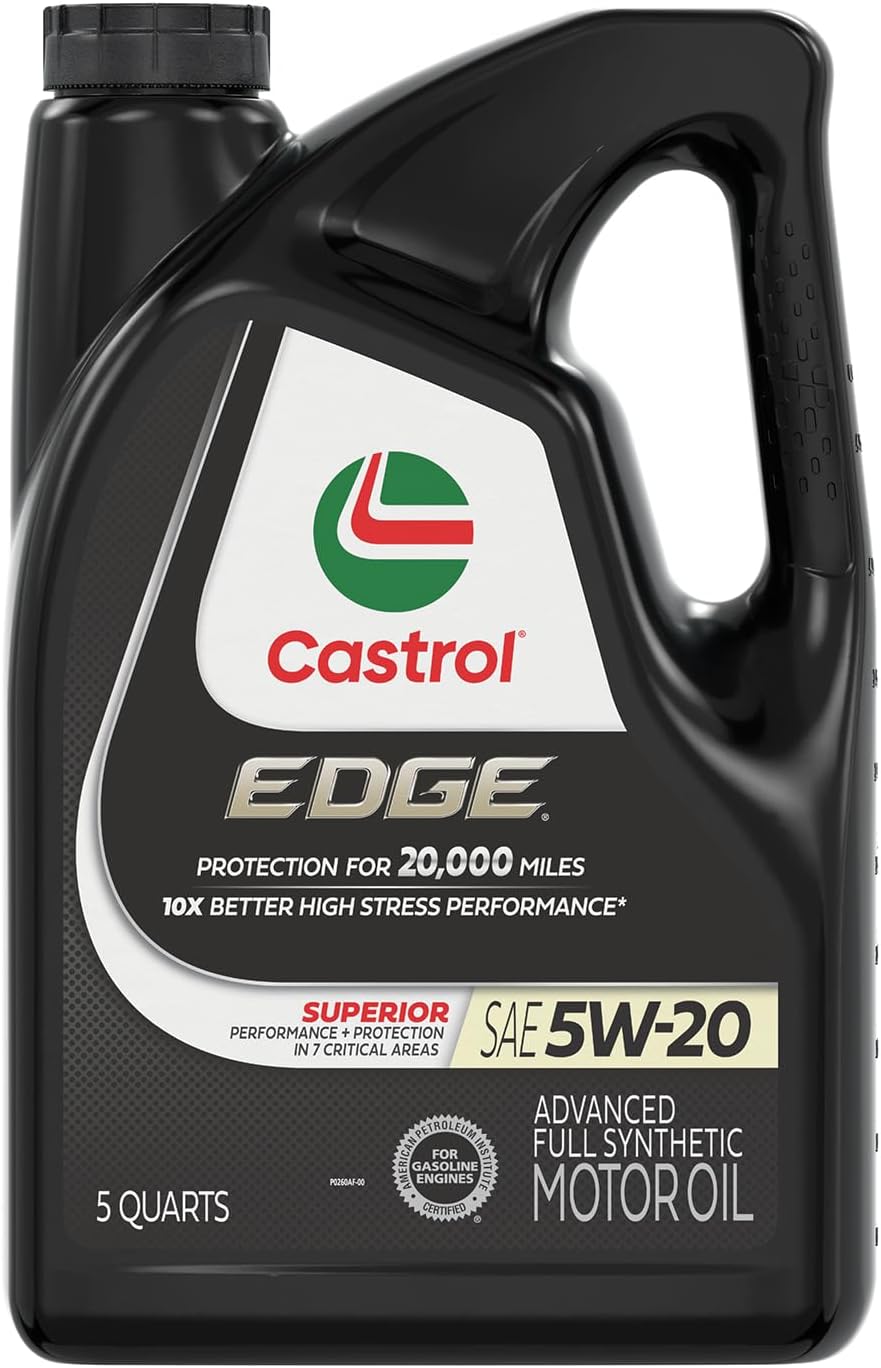
| SAE Viscosity Grade | 5W-20 |
|---|---|
| Liquid Volume | 5 Quarts |
| Compatible with Vehicle Type | Car, Truck |
| Viscosity Level | Low to Medium |
| Unit Count | 160.0 Fluid Ounces |
Castrol EDGE 5W-20 is a full synthetic motor oil formulated for drivers who need a lower-viscosity oil that flows well at cold start and resists breakdown under heat. In practice it is used as a direct replacement where a 5W-20 grade is specified; pour into the crankcase during routine maintenance or oil changes and follow the vehicle maker's interval. Notable features include Castrol’s proprietary additive package and claims about extended durability, high-temperature stability, sludge control, and reduced friction to help fuel economy. For a Tacoma 4-cylinder this grade supports easier cold starts and quicker oil circulation to vital parts, while the thermal stability helps during towing or hot-weather driving. The product comes in a recyclable EcoBox option and standard 5-quart jugs for DIY servicing. Limitations are that extended-change interval claims should be weighed against Toyota’s recommended service schedule and that using the wrong viscosity for an older or modified engine can reduce protection. Always confirm compatibility with the Tacoma owner’s manual before switching oils.
Best for: Buyers who prioritize matching Toyota’s lower-viscosity recommendation for cold-start performance and modest fuel-economy gains in a regularly maintained 4-cylinder Tacoma.
Less Ideal for: Owners running a high-mileage or heavily modified Tacoma engine that requires a different viscosity or specialty oil should consider alternative formulations or consult a technician.
- Designed for 5W-20 applications to aid cold-start flow and faster oil circulation
- Full synthetic formula for better high-temperature stability and sludge control
- Additive chemistry aimed at reducing friction to support fuel economy
- Available in 5-quart jug sizes convenient for DIY oil changes
- Manufacturer statements about very long mileage intervals should not replace the vehicle maker’s maintenance schedule
Verdict: The best 5W-20 engine oil when you need a product that exactly matches lower-viscosity manufacturer recommendations for cold-start flow and fuel economy.
Mobil 1 High Mileage Full Synthetic Motor Oil 0W-20, 5 Quart
Best High-Mileage Engine Oil

| Viscosity | 0W-20 |
|---|---|
| Size | 5 Quart |
| Model | Extended Performance |
| Vehicle Service Type | Car |
Mobil 1 High Mileage 0W-20 is designed for engines with more than 75,000 miles and targets common aging issues such as deposit buildup, higher operating temperatures, and degraded seals. It uses Mobil 1’s Triple Action Formula to reduce friction, help remove sludge, and control oxidation so the oil maintains performance for longer periods between changes. For a DIYer working on a 4-cylinder Tacoma this oil offers practical benefits: improved seal conditioning to reduce small leaks, cooler running compared with conventional oil, and compatibility with modern turbocharged and fuel-injected engines where 0W-20 is specified. The product is sold in 5‑quart containers, pours cleanly, and meets ILSAC GF-6 standards to address LSPI and timing chain wear concerns. The main trade-offs are that 0W-20 is a relatively low-viscosity grade, so it is only appropriate where the vehicle manufacturer calls for 0W-20, and the extended 10,000‑mile change interval depends on driving conditions and may be conservative for severe service. For DIY maintenance it is a reliable, factory-quality high-mileage option when used as directed.
Best for: DIY owners who prioritize protecting and conditioning a higher-mileage 4-cylinder engine and want a factory-quality synthetic oil that can help reduce leaks and extend time between services when the vehicle calls for 0W-20.
Less Ideal for: Drivers whose vehicles require a different viscosity grade or those who follow very frequent short-trip service schedules where extended-change formulations are unnecessary.
- Formulated to clean sludge and deposits in higher-mileage engines
- Seal-conditioning additives that can reduce small oil leaks
- Full-synthetic base that helps lower operating temperature and resist oxidation
- Meets ILSAC GF-6 for LSPI and timing chain protection
- Only suitable where a 0W-20 viscosity is recommended by the vehicle manufacturer
Verdict: The best high-mileage engine oil for DIYers looking to reduce leaks, condition seals, and provide extra wear protection in higher-mileage powertrains.
Valvoline MaxLife High Mileage 5W-30 Synthetic Blend Motor Oil, 5 qt
Best Synthetic Blend Engine Oil

| Viscosity | 5W-30 |
|---|---|
| Size | 5 qt (Pack of 1) |
| Vehicle Service Type | Car, Truck |
| Flash Point | 394 Degrees Fahrenheit |
| SAE J300 Viscosity Grade | 5W-30 |
Valvoline MaxLife High Mileage 5W-30 is a synthetic blend designed for engines with significant miles, supplying seal conditioners and detergents to help reduce leaks and control deposits. For a Toyota Tacoma 4-cylinder with higher mileage this oil helps restore seal flexibility, lower oil consumption, and provide stronger wear and sludge protection compared with conventional oils. The 5W-30 viscosity gives dependable cold-start flow while maintaining pressure in normal operating temperatures. In use it serves as a practical, cost-conscious step up from standard mineral oils when you want better engine longevity without the expense of a full synthetic. It meets modern API and ILSAC specs and includes additives aimed at fuel economy and friction reduction. Trade-offs are that it is not a full synthetic, so peak thermal stability and extended drain intervals will be less than premium full-synthetic options, and you should follow Toyota's recommended change intervals for your Tacoma rather than extending them based on blend claims.
Best for: Buyers of a Toyota Tacoma 4-cylinder who want an affordable upgrade from conventional oil to improve seal condition, reduce leaks, and get stronger wear protection without paying for full-synthetic performance.
Less Ideal for: Drivers seeking maximum high-temperature stability or the longest possible oil change intervals should consider a full synthetic instead.
- Formulated for high-mileage engines with seal conditioners to help reduce leaks
- Synthetic blend offers better wear protection and sludge defense than conventional oil
- 5W-30 viscosity suitable for typical Tacoma 4-cylinder operating ranges and cold starts
- Meets current API and ILSAC performance categories for modern gasoline engines
- Not a full synthetic so it does not provide the same high-temperature stability or longest drain intervals as full-synthetic oils
Verdict: The best synthetic blend engine oil for buyers who want improved protection and stability over conventional oil without the price of a full synthetic.
Choosing the Right Toyota Tacoma 4-Cylinder Engine Oil: Key Factors to Consider
Viscosity Grade and Climate
Viscosity determines how the oil flows at cold start and how it maintains film thickness at operating temperature. For Tacoma 4-cylinder engines, common factory-recommended grades include thinner weights for cold climates to improve start-up lubrication and slightly heavier grades for consistently hot operating environments.
Choosing the right viscosity affects fuel economy and wear. A grade that is too thin at operating temperature can reduce film strength and increase wear, while a grade that is too thick can raise friction losses and reduce efficiency. Match the oil grade to the climate you drive in and follow manufacturer guidance when in doubt.
Specifications and Certifications
Official specs such as API service categories and ILSAC ratings indicate the oil meets baseline performance and emissions compatibility. For the Toyota Tacoma 4-cylinder, ensure the oil lists applicable API and ILSAC marks and any manufacturer approvals that align with Toyota's recommendations.
Using a properly certified oil helps maintain oil monitoring accuracy and can protect critical components like variable valve timing systems. Oils without recognized certifications may leave you with unknown long-term risks to engine wear or emissions control systems.
Synthetic Vs Conventional Formulations
Synthetic oils generally offer better low-temperature flow, higher resistance to thermal breakdown, and more consistent viscosity over time compared with conventional oils. For owners who prioritize longer drain intervals, frequent highway driving, or high under-hood temperatures, synthetic or synthetic-blend options often provide better protection for the Tacoma 4-cylinder.
Conventional oils can still be suitable for drivers who follow short, frequent oil change intervals and standard driving conditions. Consider driving style and maintenance habits when choosing between synthetic and conventional formulations.
Shear Stability and Viscosity Retention
Shear stability measures how well an oil retains its viscosity under mechanical stress. An oil that thins out with shear will lose protective film strength, especially in engines with higher operating RPMs or under towing loads. For the Tacoma 4-cylinder, select oils with proven viscosity retention so film thickness is preserved between oil changes.
Good shear stability helps maintain clearances, oil pressure, and consistent valve timing operation. Look for oils and specifications that highlight shear resistance or high VI (viscosity index) base stocks.
Additives and Deposit Control
Modern engine oils include detergents, dispersants, antiwear agents, and antioxidants that prevent sludge and varnish build-up. For the Tacoma 4-cylinder, an effective additive package preserves clean piston tops, intake components, and oil passages, which supports engine efficiency and longevity.
Strong deposit control also maintains accurate oil life readings and reduces the likelihood of sticky valvetrain components. Prioritize oils with balanced additive chemistries rather than high concentrations of a single class of additives.
High-Mileage Considerations
Engines with higher miles benefit from formulations that address seal conditioning, oil consumption, and wear protection. High-mileage oils often contain conditioners that help reduce seal hardening and slow external leaks while also providing additional antiwear protection.
If your Tacoma 4-cylinder has significant mileage, consider a high-mileage formulation that targets these issues, but keep monitoring consumption and condition to decide if the approach remains effective over successive intervals.
Recommended Viscity Choices by Driving Scenario
Selecting the correct viscosity depends on how and where you drive the Tacoma 4-cylinder. For predominantly city driving with lots of short trips and cold starts, a lower cold-viscosity grade helps the oil circulate quickly at startup and reduces wear during the warm-up phase.
For mixed use that includes highway runs and occasional towing, a grade that balances pumpability and film strength at operating temperature is preferable. If you live in a consistently hot climate or often haul moderate loads, a slightly higher hot-viscosity grade will hold film thickness better under thermal stress.
- Cold climates: prioritize lower W-grade for faster circulation at startup
- Highway and towing: prioritize stable hot-viscosity for film strength
- High ambient heat: use grades rated to resist thinning at temperature
Timing Oil Change Intervals for Tacoma 4-Cylinder
Oil change timing should reflect the oil type and driving habits. Synthetic oils often allow longer intervals between changes due to superior oxidation resistance and deposit control, while conventional oils require more frequent changes to prevent degradation.
Follow manufacturer recommendations for interval baselines, but adjust based on severe-service driving such as frequent towing, dusty conditions, or many short trips. Monitor oil condition visually and by oil life systems and check consumption between changes.
- Base interval: follow Toyota recommendations as a starting point
- Severe conditions: shorten intervals for extra protection
- Synthetic use: extend intervals cautiously and with condition checks
High-Mileage Maintenance Tips
For Tacomas with higher mileage on the 4-cylinder, focus on reducing leaks and consumption while maintaining protection. High-mileage oils with seal conditioners can help mitigate minor external seepage and soften hardened seals without masking underlying mechanical issues.
Regular checks of oil consumption, valve cover gaskets, and PCV system condition will help you decide whether a high-mileage formula is appropriate. If consumption increases markedly, address the root cause rather than relying solely on additive packages.
- Inspect seals and gaskets during oil changes
- Use high-mileage formulations as a supplement, not a fix for major wear
- Monitor consumption and compression as indicators of internal wear
Oil Performance Under Load and Towing
Even light towing increases oil temperature and mechanical stress. Oils with strong oxidative stability and antiwear additive levels maintain protection under these higher thermal conditions, helping preserve bearing and camshaft surfaces in the Tacoma 4-cylinder.
If you tow regularly, prioritize oils with documented thermal stability and proven viscosity retention. Combining that with regular oil and filter changes will reduce the risk of accelerated wear during sustained load conditions.
- Check oil condition more frequently when towing
- Prioritize oils with thermal and shear-stability claims for load use
- Maintain correct oil level to avoid cavitation and pressure loss
Cold-Start Protection and Short-Trip Driving
Short trips and frequent cold starts are hard on any engine because most wear occurs before the oil reaches full operating temperature. Oils with excellent low-temperature pumpability reduce wear during these critical minutes after startup.
If your daily driving is dominated by short runs, pick an oil with a low W-grade and proven low-temperature performance. Regular full-length trips or occasional highway runs help evaporate contaminants and stabilize oil condition between changes.
- Favor lower cold-viscosity grades for frequent short-trip use
- Supplement with periodic longer drives to clear moisture and deposits
- Monitor oil for fuel dilution if many cold starts are unavoidable
Compatibility With Engine Monitoring Systems
Modern Tacomas use oil life monitoring systems and sensors that assume certain oil behavior. Using oils that conform to recommended specs keeps oil life calculations accurate and prevents false alerts or maintenance-light misreads.
Stick to oils that meet the documented performance categories and viscosity grades for the Tacoma 4-cylinder to ensure the monitoring systems continue to function as intended.
- Use certified oils to preserve oil monitoring accuracy
- Avoid nonstandard blends that can alter measured oil characteristics
- Reset oil life monitoring per Toyota procedures after oil changes
Still looking for the perfect fit?
Select your Toyota Tacoma configuration to see the most relevant Engine Oils recommendations
How We Chose the Best Toyota Tacoma 4-Cylinder Engine Oil
We evaluated candidate oils by checking specifications and real-world suitability for Toyota Tacoma 4-cylinder engines. Primary evaluation criteria included API and ILSAC certifications, manufacturer viscosity recommendations, and compatibility with emissions-control components and oil life monitoring systems. We also prioritized measured performance factors such as film strength under thermal stress, low-temperature pumpability, and shear stability to reflect highway driving, stop-and-go city use, and light towing scenarios.Additional criteria included additive package balance for wear control and deposit resistance, compatibility with common gasket and seal materials used in Toyota four-cylinder engines, and the availability of high-mileage formulations for engines with elevated mileage. We also considered viscosity grades commonly recommended for this vehicle and region, such as 0W-20 and 5W-30, to ensure cold-start protection and operating stability.Exclusions: we excluded oils lacking documented manufacturer-spec compliance, non-standard blended products without clear certifications, and experimental formulations without established field data. The final list focuses on oils that meet the specific demands of the Toyota Tacoma 4-cylinder powerplant while offering practical longevity, protection, and drivability.
Our full evaluation process is outlined in our review methodology.
FAQ
What viscosity should I use in a Tacoma 4-cylinder during winter?
In winter, choose a lower cold-viscosity grade to improve pumpability and reduce start-up wear. Many owners use a 0W-20 or similar lower W-grade where manufacturer guidance allows, but check Toyota recommendations for your climate and engine year.
Can I switch between conventional and synthetic oil in my Tacoma 4-cylinder?
You can switch between conventional and synthetic oils, but follow proper oil change procedures and replace the oil filter. Synthetic offers better thermal stability and lower consumption in many cases, while conventional may require more frequent changes.
How often should I change oil if I tow occasionally with the Tacoma 4-cylinder?
If you tow occasionally, consider shortening service intervals compared with mild driving schedules. Towing raises oil temperature and stress, so more frequent oil and filter changes help preserve additive levels and film strength.
Is a high-mileage oil necessary for every older Tacoma 4-cylinder engine?
Not always. High-mileage oils can help with seals and minor leaks and offer extra antiwear additives, but they are not a substitute for diagnosing mechanical wear. Use them when you see signs like increased consumption or minor seepage.
Will a different oil grade affect my fuel economy in the Tacoma 4-cylinder?
Yes. Lower-viscosity oils typically reduce internal friction and can improve fuel economy, especially in modern engines designed for thinner oils. However, the tradeoff is ensuring adequate film strength at operating temperature.
How can I tell if my Tacoma is burning oil or leaking it?
Monitor oil level between services and look for blue smoke, increased consumption, or external oil traces. Burning typically shows as blue smoke from the tailpipe and steady level drop, while leaks leave visible oil on engine surfaces or the ground.
Final Verdict
Choose an oil that matches Toyota recommendations for viscosity and certifications, then tailor the formulation to your driving conditions. For cold climates or frequent short trips, prioritize low-temperature pumpability. For towing, high-mileage engines, or hot environments, focus on thermal stability, shear resistance, and additive packages that protect seals and bearings.Balance fuel economy and protection based on your use case, and follow consistent oil and filter maintenance. Prioritizing the correct viscosity and certified formulations will keep your Toyota Tacoma 4-cylinder running reliably and reduce the risk of long-term wear.
Explore More:
- Check out all Toyota Tacoma parts & accessories
- Explore Fluids & Chemicals
- Browse all Accessories
