

Note: This article contains affiliate links. If you click on these links and make a purchase, I may earn a small commission at no extra cost to you. This helps support my research and content. Read my full affiliate disclosure here.
If you drive a Honda Pilot, worn or warped rotors can make stops feel soft, noisy, or vibratory. Replacing rotors at the right time restores brake pedal feel, reduces noise, and helps maintain ABS and traction control performance. This guide presents seven shortlisted Honda Pilot brake rotors chosen for fitment, material quality, and expected durability. You will see the evaluation criteria we used and clear pointers to help you pick the right rotor for your typical driving conditions. Read on to find the options that match your priorities and the maintenance steps to keep braking reliable.
Looking for other parts? See all Honda Pilot parts & accessories.
Top Picks at a Glance


1. Detroit Axle Front Brake Kit with Ceramic Pads for 2009–2014 Honda Pilot (12.99" Rotors)
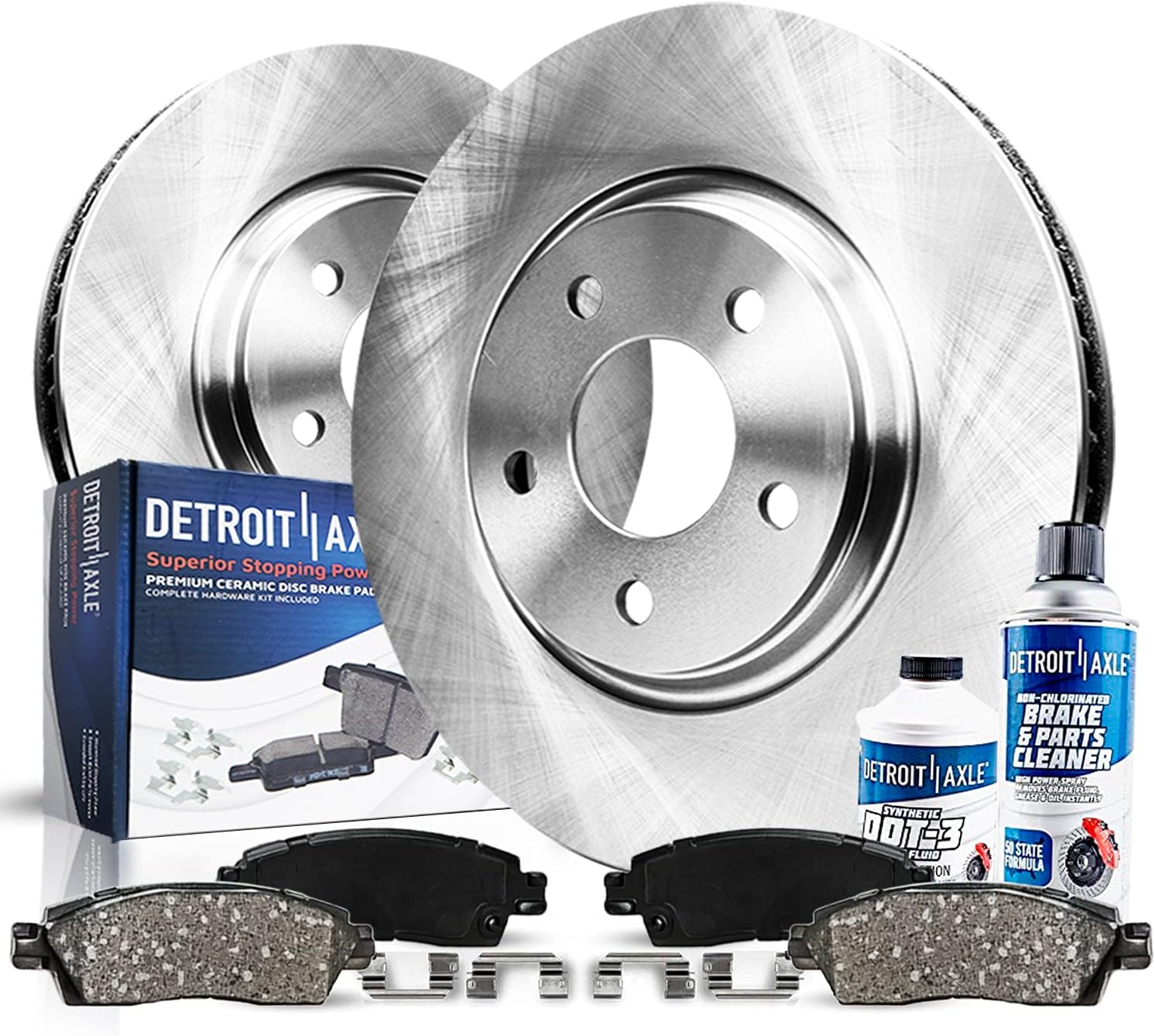
| Fitment | Models with 12.99 inch (330mm) front rotor |
|---|---|
| Kit contents | 2 front rotors, 2 front ceramic pads, hardware, brake cleaner, brake fluid |
| Rotor type | Vented with zinc plating |
| Pad type | Ceramic |
This Detroit Axle front brake kit replaces the front rotors and pads on Honda Pilot models that use 12.99 inch (330 mm) front rotors. The kit bundles two vented rotors, two ceramic pads with hardware, a can of brake cleaner, and a bottle of brake fluid so you can complete a basic brake service without sourcing extra consumables. Vented rotors and zinc plating aim to improve cooling and corrosion resistance, while machined locating holes help the parts fit to factory alignment without modification. Ceramic pads provide quieter, low-dust stopping for everyday driving compared with generic metallic pads. The included fluid and cleaner are convenient for a one-stop job, but some buyers report preferring store-bought brake fluid for long-term reliability. This is a value-oriented factory-replacement style option that suits routine maintenance and DIY installs, though it is not positioned as high-performance or track-capable hardware.
Best for: Reliability-focused buyers who prioritize a straightforward, factory-quality replacement for routine brake maintenance and want a single kit that covers basic consumables and fitment confidence.
Less Ideal for: Drivers seeking high-performance or track-grade braking upgrades or those who prefer purchasing premium brake fluid and shop-supplied consumables separately.
- Complete kit includes rotors, ceramic pads, hardware, brake cleaner, and brake fluid for a single-service install.
- Vented rotors with zinc plating resist corrosion and help dissipate heat during normal driving.
- Machined locating holes and factory-style fit reduce the chance of fitment issues during installation.
- Ceramic pads deliver quieter stops and lower dust compared with many metallic aftermarket pads.
- Brake fluid included may not match the quality or freshness some buyers prefer to source separately.
Verdict A complete, value-focused front brake replacement kit that gives factory-style fit and quieter ceramic braking for routine Honda Pilot maintenance.
2. TRQ Front Vented Brake Rotor Set — Vehicle-Specific Fit

| Brand | TRQ |
|---|---|
| Material | Cast Iron |
| Exterior Finish | Machined |
| Automotive Fit Type | Vehicle Specific Fit |
| Direct Replacement | No modifications necessary |
These TRQ front vented rotors are sold as a two-piece set intended to replace worn front rotors on compatible vehicles without modification. For Honda Pilot owners, the rotors provide a machined finish and a G3000 casting alloy that the manufacturer says reduces noise and improves durability, while the non-directional surface aims to cut vibration. They are used the same way OEM rotors are: swap the old rotors for these during a brake job and torque to factory specs. Practical benefits include direct-fit design that simplifies installation and an emphasis on quieter, smoother stopping compared with rough or warped rotors. Some buyers report rapid rusting in aggressive climates while others note good fit and long service life, so corrosion resistance may vary by environment. These rotors are cast iron and ventilated, so they balance cost and heat dissipation but will not offer the higher fade resistance of performance or slotted/drilled designs. If you want an affordable, ready-to-install rotor that restores braking feel on a Pilot, this set is a pragmatic choice with the usual limitations of basic cast rotors.
Best for: Convenience-driven Honda Pilot owners who prioritize an easy, direct replacement that restores factory braking feel without extra modification or complex installation.
Less Ideal for: Drivers who want track-capable braking or superior corrosion protection should consider performance-grade or coated rotor alternatives instead.
- Direct-fit vehicle-specific design simplifies installation and avoids modifications
- Vented cast iron construction helps with heat dissipation during normal driving
- Machined finish and non-directional surface reduce vibration and brake noise
- Manufacturer highlights resources like DIY installation videos to assist owners
- Cast iron surface can show surface rust faster than coated or premium rotors in some environments
- Not a performance rotor — lacks slotted or drilled features for aggressive driving
Verdict A budget-friendly, direct-fit front rotor set that brings a quieter, restored braking feel to a Honda Pilot while sacrificing premium corrosion protection and high-performance features.
3. PowerStop Z17 Front and Rear Brake Kit for Honda Pilot (2003–2008)

| Fits | Honda Pilot 2003-2008 |
|---|---|
| Brake Pad Type | Z17 Ceramic |
| Includes | Front and rear pads, rotors, hardware and shims |
| Rotor Finish | Mill-balanced non-coated rotors |
This PowerStop Z17 kit supplies everything needed to replace both front and rear braking surfaces on a 2003–2008 Honda Pilot. It includes ceramic Z17 pads (low-dust, chamfered and slotted) plus mill-balanced replacement rotors and stainless-steel hardware so installers can perform a direct bolt-on swap without modifications. The ceramic pads are optimized for quiet, daily-driving performance and reduced wheel dust, while the precision-milled rotors aim to restore smooth pedal feel and eliminate vibration caused by worn or warped discs. Practical benefits include a cleaner wheel appearance, included hardware that simplifies installation, and manufacturer guidance for proper bedding. Limits to consider are mixed long-term wear reports among users and the kit is aimed at stock replacement performance rather than track use, so drivers seeking high-temperature or heavy towing durability should look at more aggressive compounds or upgraded rotors.
Best for: Performance-oriented buyers who want a higher-quality, low-dust ceramic replacement that improves everyday braking feel and keeps wheels cleaner while maintaining a factory-like driving experience.
Less Ideal for: Drivers who regularly tow heavy loads, track their Pilot, or need extreme fade resistance should choose a dedicated heavy-duty or high-performance rotor and pad combination instead.
- Complete kit for front and rear including pads, rotors, stainless hardware and shims
- Low-dust Z17 ceramic pads for quieter braking and cleaner wheels
- Mill-balanced replacement rotors to restore smooth pedal feel and reduce vibration
- Bolt-on fit for 2003–2008 Honda Pilot simplifies DIY or shop installation
- Designed as a stock-style replacement rather than a high-temp performance upgrade
- Some user reports show inconsistent long-term pad wear and occasional noise on a minority of vehicles
Verdict A convenient, higher-quality stock-replacement kit for 2003–2008 Honda Pilots that improves everyday braking feel and reduces wheel dust but is not intended for demanding high-heat use.
4. Metrix Premium Chassis Parts 320mm Front Coated Vented Brake Rotor (2-pack)

| Item Diameter | 320 Millimeters |
|---|---|
| Material | Cast Iron |
| Position | Front |
| Exterior Finish | Machined |
These Metrix rotors are a straightforward replacement for front braking on compatible Honda Pilot models and come as a two-piece kit ready for installation. They are vented and mill-balanced to minimize pulsation and deliver smooth, predictable stops during everyday driving. The rotors have a machined surface and a corrosion-resistant coating that keeps the visible hub area cleaner between jobs and reduces surface rust where the caliper does not make contact. They carry industry certifications for manufacturing and rotor performance, which suggests consistent dimensions and durability under normal use. For a budget-focused buyer you get OEM-style fitment and decent initial braking feel without paying for performance-oriented features like slotted or cross-drilled faces. Expect typical bedding-in noise and surface wear where pads contact the rotor, and drivers seeking high-heat track performance or the quietest possible aftermarket option may notice limits compared with premium or performance rotors.
Best for: Budget-conscious Honda Pilot owners who want a reliable, factory-quality front rotor replacement that prioritizes dependable daily braking and fitment over performance upgrades.
Less Ideal for: Drivers who frequently tow, tow heavy loads, or do spirited/track driving on a Pilot should consider performance rotors with enhanced cooling and fade resistance instead.
- Coated finish reduces visible rust and improves appearance behind wheels
- Factory mill-balanced to reduce vibration and pedal pulsation
- ECE R90 and ISO certifications indicate factory-quality production standards
- Not slotted or cross-drilled so heat dissipation is limited under extreme use
- Coating wears where the pad contacts the rotor, which is normal but visible over time
Verdict A cost-conscious, factory-quality front rotor replacement for Honda Pilot drivers who want reliable daily braking and corrosion resistance without performance upgrades.
5. PowerStop K2303 Front and Rear Brake Kit — Z23 Carbon-Fiber Ceramic Pads with Drilled & Slotted Rotors

| Vehicle fit | 2003–2008 Honda Pilot |
|---|---|
| Pad type | Z23 carbon-fiber ceramic |
| Rotor style | Drilled & slotted, zinc plated |
| Includes | Front and rear pads, 4 rotors, hardware, shims |
| Assembly required | No |
This PowerStop K2303 kit replaces all four rotors and pads on a 2003–2008 Honda Pilot with carbon-fiber ceramic Z23 pads and drilled-and-slotted rotors designed to improve stopping power and heat control. It is sold as a bolt-on kit that includes stainless steel hardware, rubberized shims, and pads formulated for low dust and quiet operation. The drilled and slotted rotors help vent heat and clear debris to reduce fade during demanding stops, while the zinc plating adds corrosion resistance for longer-term appearance and function. Typical use is a full brake job for daily driving with occasional heavier loads or towing where cooler rotors and stronger initial bite are helpful. Installation is intended to be straightforward for a DIYer and the kit is vehicle-specific for the Pilot, though some buyers reported fitment attention required for clips on a few wheels. Expect better stopping feel and less pad dust than basic replacements, but be mindful that aggressive driving will still wear pads and rotors and some users replace the supplied retaining clips with factory ones for the best fit.
Best for: A risk-averse mainstream buyer who wants a straightforward, factory-quality upgrade that improves everyday braking and reduces dust without experimental mods or complex installation.
Less Ideal for: Not the best choice for owners seeking track-focused, race-level brakes or those who prefer plain rotors for maximum quietness under all conditions.
- Complete kit includes front and rear pads, drilled-and-slotted rotors, stainless hardware, and shims for a full brake job.
- Z23 carbon-fiber ceramic pads are formulated for low dust and quiet operation while increasing stopping performance over basic replacements.
- Drilled and slotted, zinc-plated rotors improve cooling and resist rust for longer-term reliability.
- Vehicle-specific fit for 2003–2008 Honda Pilot simplifies selection and installation for DIYers.
- Some customers reported pad-clip fitment issues requiring reuse of original clips or minor adjustments.
- Drilled rotors can be louder under certain conditions compared with plain rotors.
- Aggressive driving or towing will still accelerate pad and rotor wear compared with heavy-duty performance brakes.
Verdict A full, vehicle-specific bolt-on kit that gives Honda Pilot owners quieter, lower-dust braking with improved cooling and corrosion protection compared with basic replacements.
6. KAX Front Brake Kit for Honda Pilot (2003–2008) — Drilled & Slotted Rotors with Ceramic Pads

| Vehicle fitment | Honda Pilot 2003-2008 |
|---|---|
| Rotor type | Drilled and slotted |
| Pad material | Ceramic |
| Rotor diameter | 11.81 inch (300mm) |
This KAX front brake kit replaces the front rotors and pads on Honda Pilot model years 2003 through 2008. It includes two drilled-and-slotted rotors and four ceramic brake pads sized to the 11.81 inch (300 mm) rotors used on those Pilots. The drilled and slotted rotor design helps shed heat and resist warping under repeated braking, while the slotted faces clear gases and pad material to keep stopping power consistent. Ceramic pads deliver lower noise and reduced dust compared with semi-metallic pads, and the kit’s silver-zinc coating on the rotors adds corrosion resistance for better long-term appearance. In practice this kit suits owners who want an upgrade from worn factory parts without changing brake feel dramatically: expect solid, predictable braking and less wheel cleanup. Watch for fitment or listing errors on single-unit pages and verify vehicle-year fit before installation; buyers should also allow a proper bedding-in procedure and expect ceramic pads to have a different initial bite than factory compounds.
Best for: Practical optimizers seeking a cost-conscious, factory-style upgrade for a Honda Pilot 2003–2008 who prioritize predictable braking, lower noise, and reduced wheel dust while keeping installation straightforward.
Less Ideal for: Drivers who need ultimate high-temperature track performance or who prefer aggressive metallic pad bite should consider performance-specific rotors and pads instead.
- Kit matched to Honda Pilot 2003–2008 front fitment for direct replacement installation.
- Drilled and slotted rotors reduce heat buildup and help prevent rotor warping during heavy use.
- Ceramic pads offer quieter braking and significantly less brake dust than typical metallic pads.
- Silver-zinc coating on rotors improves corrosion resistance and keeps wheels cleaner over time.
- Some listings or units have reported incorrect sizing or fitment information, so double-check fitment before buying.
- Ceramic pads can feel smoother at first but may offer less initial bite compared with some performance metallic compounds.
Verdict A budget-friendly, direct-fit front rotor and pad kit for 2003–2008 Honda Pilots that improves cooling and reduces noise and dust while staying close to factory braking behavior.
7. Detroit Axle Front and Rear Drilled & Slotted Brake Kit with Ceramic Pads for Acura MDX / Honda Pilot

| Fits Vehicles | 2007–2013 Acura MDX; 2009–2014 Honda Pilot |
|---|---|
| Rotor Type | Drilled and slotted |
| Brake Pad Material | Ceramic |
| Includes | Front and rear rotors, front and rear pads, brake cleaner, brake fluid, hardware |
| Exterior Coating | Zinc |
This Detroit Axle brake kit supplies both front and rear drilled and slotted rotors plus matching ceramic pads, brake cleaner, brake fluid, and small hardware—designed as a one-stop replacement for the specified Acura MDX and Honda Pilot model years. Typical use is a full brake service where you replace both rotors and pads to restore stopping power and reduce vibration. The drilled and slotted rotors improve heat dissipation and help clear gas and debris, while the ceramic pads aim for quieter operation and reduced dust compared with semi-metallic pads. The kit is built to fit factory mounting points and includes the common consumables needed to finish a DIY or shop installation. Expect a practical performance bump over worn OEM parts and a noticeable improvement in pedal feel after bedding. Limitations: drilled and slotted rotors can be a bit noisier than plain rotors and may show more surface wear under extreme towing or track use, and the kit does not include installation instructions in every box so novice installers should consult a repair guide.
Best for: Balanced buyers who want a complete, factory-style replacement kit that improves everyday braking performance and handling without specializing for track or heavy towing use.
Less Ideal for: Drivers needing heavy-duty or track-focused braking upgrades should consider performance or heavy-load specific rotors and pads instead.
- Complete front and rear kit includes rotors, ceramic pads, brake cleaner, brake fluid and basic hardware for a full service.
- Drilled and slotted rotors improve cooling and help prevent pad glazing during repeated stops.
- Ceramic pads offer quieter operation and typically produce less brake dust than many metallic pads.
- Designed to match factory fitment for the listed Acura MDX and Honda Pilot years to simplify installation.
- Drilled and slotted design can be louder and wear faster under heavy-duty towing or aggressive driving.
- No consistent printed installation instructions included with the kit, which may challenge inexperienced installers.
Verdict A convenient, balanced full front-and-rear brake kit that upgrades heat management and pad quietness for everyday driving on the specified Honda Pilot and Acura MDX years.
Choosing the Right Honda Pilot Brake Rotors: Key Factors to Consider
Material and Coating
Rotor material affects heat capacity, wear rate, and susceptibility to corrosion. Cast iron is common because it balances thermal mass and cost, but variations in metallurgical quality produce different lifespans and cracking resistance. Surface coatings or plating reduce rust on the hat and edges, which helps with longevity and prevents uneven corrosion that can cause vibration.
Consider how often you drive in wet or salty conditions because protective coatings significantly slow surface rust. Better metallurgy and coatings usually translate to smoother braking over time and less frequent replacement.
Dimensional Accuracy and Fitment
Correct hub bore diameter, bolt pattern alignment, and thickness are essential to avoid runout that causes pulsation at the pedal. Even small deviations in machining or poor hub centering can create vibration and premature pad wear. Parts labeled as vehicle-specific with verified tolerances reduce the risk of installation issues.
Verify fitment details and whether the rotor needs the wheel hub to be machined or the bearing to be inspected during replacement. Proper fitment reduces the chance of repeat removal and refitting.
Rotor Thickness and Minimum Spec
Nominal thickness determines how much material is available for safe braking after wear and resurfacing. Thicker rotors generally maintain operating temperatures better and allow for more resurfacing passes before reaching the minimum thickness. The minimum thickness is a safety-critical spec; operating below it can reduce structural integrity and cooling performance.
If you plan to resurface rotors, confirm the original and minimum thickness and how to measure thickness accurately. Choosing rotors with a healthy service margin helps avoid early replacements.
Ventilation and Heat Management
Vented rotors, often with internal vanes, help move heat away from the pad contact area during repeated stops. Better ventilation reduces brake fade on long descents and can prolong pad life by keeping operating temperatures within a safe range. Rotor design impacts how quickly heat is shed to surrounding air, which in turn affects consistent pedal feel under heavy use.
Consider driving style: frequent towing, heavy loads, or aggressive driving raise heat demands and make ventilation performance more critical.
Surface Design: Slotted, Drilled, or Plain
Surface features change how pads bite, how heat is dispersed, and how gas or debris is cleared from the contact area. Slotted surfaces help deglaze pads and channel away gases, improving bite after repeated stops. Drilled holes can aid cooling but may increase the risk of cracking under extreme thermal cycling. Plain cross-drilled-free surfaces are often quieter and more durable for everyday use.
Match the surface design to your driving conditions. Occasional spirited driving may benefit from slots, while heavy-duty or towing needs favor robust, crack-resistant designs.
Compatibility with Brake Pads and ABS
Different pad compounds can change rotor wear characteristics and heat transfer. Semi-metallic pads may increase abrasive wear, while ceramic pads may be gentler on the rotor surface. Additionally, rotors must work reliably with the vehicle's ABS and traction systems; surface finish and runout tolerances influence sensor performance and stopping stability.
Confirm that the rotor surface and finish are suitable for the pad type you plan to use and that the part supports the Pilot's braking system electronics without causing false ABS events.
FAQ
How do I know when Honda Pilot brake rotors need replacement?
Common signs include a pulsing brake pedal, audible squeal or grinding, visible scoring or deep grooves on the rotor surface, and thickness below the vehicle-specified minimum. Mild surface rust alone is not always a reason to replace.If you notice vibration during braking, measure rotor thickness and check for runout; persistent symptoms usually indicate replacement is advisable.
Can I resurface rotors instead of replacing them?
Resurfacing can restore a smooth braking surface if the rotor has only light scoring and sufficient thickness above the minimum. However, each resurfacing pass removes material and can reduce heat capacity. Resurfacing is usually appropriate for rotors within tolerance that show no cracks or excessive thermal damage.When in doubt, compare the remaining thickness to the minimum specification and consider replacement if you expect heavy or repeated braking loads.
Should I choose slotted or drilled rotors for everyday driving?
For typical daily driving, plain or lightly slotted rotors often offer the best balance of noise control, durability, and consistent wear. Slotted rotors help keep pads clean and can improve initial bite, but drilled designs may risk cracking under high thermal stress.If you do mostly commuting and family driving, pick the design that favors longevity and quiet performance over track-style cooling.
How do I measure rotor thickness correctly?
Use a micrometer or a caliper at several points across the braking surface to get consistent readings. Measure where the pad contacts the rotor, and compare readings to the manufacturer minimum thickness specification. Take measurements after cleaning any rust or debris.If measurements vary significantly at different points, that indicates uneven wear or runout, and replacement is usually recommended.
Will changing rotors affect ABS or brake feel?
Properly fitted rotors that meet dimensional and runout specifications should restore normal brake feel and work without upsetting ABS function. Poorly machined or out-of-spec rotors can introduce vibration or sensor anomalies that affect ABS responsiveness.Always ensure rotors match the vehicle's fitment requirements and that wheel hub and sensor components are inspected during replacement.
How We Chose the Best Honda Pilot Brake Rotors
We evaluated candidates using criteria that matter for Honda Pilot brake rotors specifically: material construction and coating for corrosion resistance; dimensional accuracy and hub bore alignment to ensure correct fitment; rotor thickness and runout tolerances tied to safe braking performance; braking surface design such as venting, slots, or drills for heat dissipation; and compatibility with common pad compounds and ABS systems used on the vehicle. We prioritized parts manufactured to or exceeding OE specifications and those with clear machining and quality-control processes. Durability evidence and expected service life under mixed driving were also considered. Exclusions: we did not include rotors lacking verified fitment data for the Honda Pilot or parts with unclear material specifications. We also excluded specialty racing-only rotors that sacrifice longevity for short-term track gains.
Our full evaluation process is outlined in our review methodology.
Conclusion
When selecting Honda Pilot brake rotors, prioritize correct fitment, sufficient thickness margin, and material quality for your driving patterns. Balance surface design and ventilation needs against durability and the type of brake pads you use. Expect tradeoffs between aggressive cooling features and long-term toughness.Focus on rotors that meet OE tolerances, offer adequate corrosion protection, and leave room for safe resurfacing if needed. That approach will keep braking consistent and minimize the chance of repeat service.
Explore More:
- Check out all Honda Pilot parts & accessories
- Explore Brake Rotors Maintenance & Repair Guides
- Explore Brake System
- Browse all Auto Parts
