

Note: This article contains affiliate links. If you click on these links and make a purchase, I may earn a small commission at no extra cost to you. This helps support my research and content. Read my full affiliate disclosure here.
A worn or failing hub assembly can affect steering feel, braking stability, and overall safety when driving a Mercedes‑Benz C‑Class. Choosing the right wheel hub assembly matters because proper fitment and bearing performance directly influence vehicle control, vibration levels, and long-term reliability. This guide presents four shortlisted wheel hub assemblies that meet common needs for fit and durability. We evaluated each option across key criteria including bearing life and mounting accuracy to help you find a suitable replacement. Read on for the evaluation factors and what to look for when selecting the correct hub for your C‑Class.
Looking for other parts? See all Mercedes-Benz C-Class parts & accessories.
Top Picks at a Glance
| Best Reviewed A top-rated pick with lots of positive feedback | A-Premium Rear Wheel Bearing and Hub Assembly for Mercedes-Benz |  |
| Best Budget The cheapest option that still gets the job done reliably | QJZ 512433 Rear Wheel Hub Bearing Assembly (1-Pack) |  |
| Most Sold A high-volume bestseller chosen again and again | QJZ 513388 Front Wheel Hub and Bearing Assembly (2-Pack) |  |
| Best Overall The best all-around choice for most situations | TRQ Front Wheel Bearing and Hub Assembly (BHA31350) for Mercedes‑Benz C300/GLC300/E350/E450/CLS450 |  |
1. A-Premium Rear Wheel Bearing and Hub Assembly for Mercedes-Benz

| Bearing Type | Ball Bearing |
|---|---|
| Material Type | GCr15 Steel and 65Mn Steel |
| Pre-Greased | Yes |
| Flange Type | 4-Hole Flange |
This rear wheel bearing and hub assembly replaces the worn hub on compatible Mercedes-Benz models and restores quiet, vibration-free rear wheel rotation. It ships pre-greased and includes a new axle spline, bearing cage, and seals so installation eliminates pressing the bearing in separately and reduces labor for a DIY or shop job. The assembly is made from GCr15 and 65Mn steels and is sold as a single unit with a 4-hole flange and no speed sensor. In practice that means it mends common symptoms like noise, vibration, and grease leaks, but if your vehicle uses an ABS speed sensor or reluctor ring you must transfer or replace those components separately. The manufacturer backs the part with a one-year unlimited-mileage guarantee limited to the part cost. Expect a straightforward swap for rear hubs that fit the specified Mercedes-Benz fitments, with the usual caveat that correct installation and any sensor/refactor checks are necessary for proper ABS and wheel-speed operation.
Best for: Reliability-focused buyers seeking a durable, factory-replacement style rear hub to restore quiet operation and reduce repeat repairs on their Mercedes-Benz C-Class.
Less Ideal for: Buyers who want a hub with an integrated ABS speed sensor or those needing a complete sensor and reluctor ring replacement without additional parts.
- Pre-greased assembly reduces mess and speeds installation.
- Includes new axle spline, bearing cage, and seals to address common failure symptoms.
- Constructed from high-carbon steels for durability in load-bearing service.
- Factory-style 4-hole flange matches standard rear hub mounting for direct replacement.
- Does not include a speed sensor or reluctor ring, which may need separate purchase or transfer.
- Limited guarantee covers only the cost of the part and not installation or related expenses.
Verdict A practical, pre-greased rear hub assembly that restores rear wheel function on compatible Mercedes-Benz models but requires separate ABS sensor parts if needed.
2. QJZ 512433 Rear Wheel Hub Bearing Assembly (1-Pack)

| Brand Name | QJZ |
|---|---|
| Bearing Number | 512433 |
| Fitment Position | Rear driver or passenger side |
| Quantity in Package | 1 Piece of Wheel Bearing |
| Part Interchange Info | 512433, BM500031, BR930855, WA512433, WE60394 |
This QJZ 512433 is a one-piece rear wheel hub bearing assembly sold as a single unit for left or right installation on supported Mercedes-Benz models. It replaces the factory-style hub bearing to restore proper wheel mounting and wheel-speed sensor positioning and is typically used when a worn bearing produces noise, vibration, or ABS faults. The listing shows cross-references to common aftermarket numbers and OEM part matches, which helps confirm compatibility for many C-Class, E-Class, SL and SLK variants within the listed years. As a budget-oriented option it delivers the essentials: a direct-fit replacement designed to accept the factory axle and brake hardware without machining. Expect straightforward installation for mechanically experienced DIYers or professional shops. Limitations are that the package contains a single hub (not a pair) and the listing does not include an extended warranty or explicit material specifications, so longevity may vary compared with higher-end brand bearings. Verify exact year and engine/submodel fit before purchase to avoid mismatch.
Best for: Budget-conscious owners looking to fix a noisy or failing rear wheel bearing on supported Mercedes-Benz C-Class and closely related models who prioritize cost-effective, direct-fit parts.
Less Ideal for: Owners seeking premium long-life bearings, extended warranty coverage, or documented material specifications should consider higher-end branded replacements or dealer parts.
- Direct-fit replacement for rear driver or passenger side on listed Mercedes-Benz models.
- Cross-referenced to several common bearing numbers for easier part matching.
- Sold as a single hub bearing for targeted repairs without paying for unneeded extras.
- No material or bearing tolerance specs provided to assess long-term durability.
- Package contains only one hub so both sides require separate purchases if both bearings are worn.
- Listing lacks a stated warranty or service guarantee.
Verdict A cost-focused, direct-fit rear hub bearing for Mercedes-Benz C-Class models that gets the job done but lacks premium durability data and only comes as a single unit.
3. QJZ 513388 Front Wheel Hub and Bearing Assembly (2-Pack)

| Part Number | 513388 |
|---|---|
| Fitment Position | Front |
| Quantity | 2 Pieces |
| ABS Encoder | Magnetic |
This QJZ 513388 wheel hub and bearing assembly is a two-piece front replacement designed to restore wheel mounting, rotation, and ABS signal transmission on compatible Mercedes-Benz C-Class and related models. It installs in place of the factory hub and includes an ABS magnetic encoder so the vehicle's anti-lock braking and traction control systems retain proper input. The assembly is intended for routine front hub replacement when you have noise, play, or wheel-speed sensor issues, and QJZ emphasizes low friction and reduced noise during operation. Buyers get both left and right front units in the package, which simplifies axle-side repairs. Practical benefits include a ready-to-install hub with preinstalled studs and a focus on durability for road use. Important limitations are that this is an aftermarket part rather than a factory-branded unit and long-term life will depend on installation quality and driving conditions, so professional fitment and proper torqueing are recommended to avoid premature wear.
Best for: Risk-averse mainstream buyers who prioritize restoring reliable ABS function and normal wheel rotation on their Mercedes-Benz C-Class with a ready-to-install replacement set.
Less Ideal for: Shoppers seeking an exact factory-branded hub or those planning heavy-duty, track, or extreme-performance use should consider alternative factory-quality or performance-specific options.
- Sold as a two-piece set covering both front sides for a complete axle repair
- Includes ABS magnetic encoder to maintain wheel-speed sensor signals
- Preinstalled wheel studs and flange bolt holes for straightforward replacement
- Manufacturer states low friction and low noise design for smoother operation
- Aftermarket unit rather than factory-branded part which may differ slightly from factory fit
- Long-term durability depends on correct installation and vehicle use
Verdict A practical two-piece front hub assembly that restores wheel mounting and ABS signals for C-Class owners who want a complete, ready-to-install replacement without sourcing individual sides.
4. TRQ Front Wheel Bearing and Hub Assembly (BHA31350) for Mercedes‑Benz C300/GLC300/E350/E450/CLS450
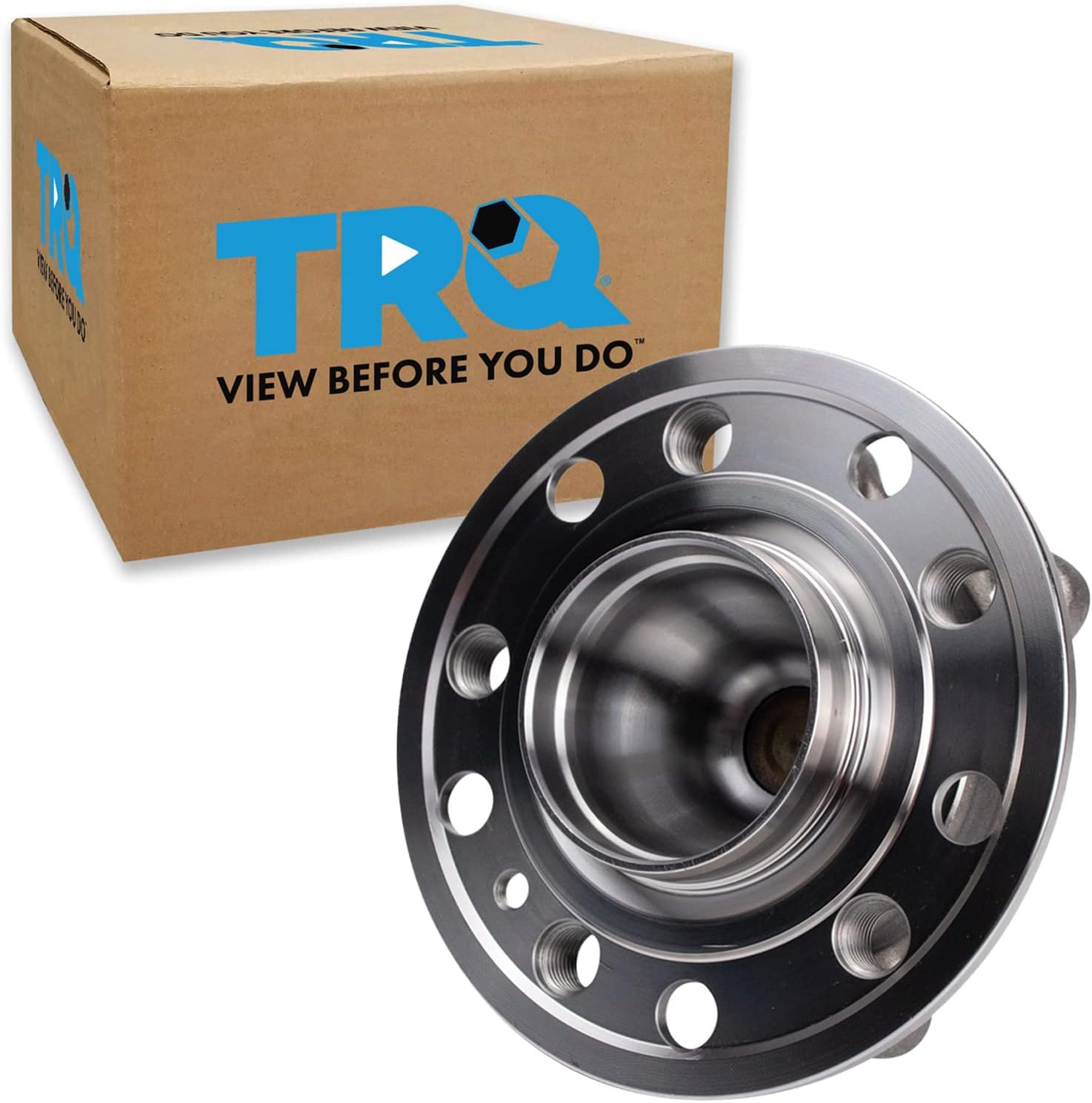
| Brand Name | TRQ |
|---|---|
| Bearing Type | Ball Bearing |
| Material Type | Alloy Steel |
| Included Components | Wheel Bearing & Hub Assembly |
This TRQ front wheel bearing and hub assembly is a vehicle-specific replacement that installs in place of the factory hub to restore smooth wheel rotation and accurate ABS and hub mounting. It is used as a direct-fit repair for front driver or passenger side hubs on a range of Mercedes‑Benz C300, GLC300, E‑class, and CLS models listed for fitment. Notable features include a factory-style ball bearing generation, alloy steel construction, and inclusion of the hub-mounted bearing as a single unit to simplify installation. For a DIYer or independent shop this reduces install time because the bearing and hub are preassembled and the part is marketed as an exact-fit replacement. Practical benefits include reduced noise and vibration, restored wheel alignment of the bearing surface, and a clearer route to fixing wheel-speed sensor or hub-related dash faults. Limitations are that flange bolts, wheel studs, and an ABS sensor are not included, so additional parts or transfer of factory hardware may be required during installation. As with most press-fit hub replacements, removing a corroded original can be labor intensive and occasional units in the field have experienced early failure.
Best for: Buyers seeking a balanced, all‑round replacement that closely matches factory fit and function for routine repairs on Mercedes‑Benz C‑Class and related models who value straightforward installation and compatibility.
Less Ideal for: Drivers who need a complete hardware kit or an integrated ABS sensor, or those who prioritize a premium OE-brand lifespan guarantee should consider alternatives or sourcing missing hardware separately.
- Direct-fit replacement designed for Mercedes‑Benz C300, GLC300, E‑class and CLS applications listed in fitment
- Preassembled hub and bearing simplifies installation compared with separate bearings
- Alloy steel construction with factory-style ball bearing generation for expected durability
- Included step-by-step installation videos and widespread user reports of good fitment
- Flange bolts, wheel studs, and ABS sensor are not included which can require transferring factory parts
- Some customers report early failures, so longevity may vary between units
- Removing a seized original hub can be difficult and may require extra tools or knuckle removal
Verdict A practical, direct-fit hub-and-bearing replacement for Mercedes‑Benz C‑Class drivers that simplifies repairs but may require transferring or buying hardware not included.
Choosing the Right Mercedes-Benz C-Class Wheel Hub Assembly: Key Factors to Consider
Fitment and Mounting Pattern
Correct fitment is essential because the hub must match the wheel bolt pattern, hub bore, and flange thickness for the Mercedes‑Benz C‑Class. A hub that does not align precisely can induce wheel runout, uneven tire wear, and steering vibration.
Check mounting hole spacing and hub bore tolerances to ensure the assembly seats flush against the knuckle. Consider whether the assembly includes necessary studs or requires transfer from the old hub. Proper fitment reduces installation time and helps preserve wheel bearings and brake components.
Bearing Type and Load Rating
Bearing design and load rating determine how the hub handles vehicle weight, cornering forces, and road impacts. Higher load ratings and robust bearing constructions typically yield longer service life under heavy-duty or high-mileage use.
Look for sealed bearings with appropriate tolerances for lateral and axial loads encountered on the C‑Class. The bearing type also affects noise characteristics and how the hub behaves as seals age or under contamination.
Sealing and Contamination Protection
Effective seals prevent water, dirt, and salt from entering the bearing, which is a primary cause of premature failure. Good contamination protection prolongs bearing life and maintains smooth rotation.
Evaluate the quality and design of lip seals, dust shields, and any protective coatings on mating surfaces. Hubs with enhanced sealing features reduce the likelihood of corrosion and bearing degradation in wet or winter conditions.
ABS Sensor Integration and Compatibility
Many C‑Class models use wheel speed sensors integrated with the hub assembly. Compatibility with the vehicle’s ABS and traction systems is critical to maintain safety features and accurate speed readings.
Ensure the replacement hub provides the correct sensor type or a compatible mounting provision. Incorrect sensor fitment can trigger warning lights, impair stability control functionality, and complicate diagnostics.
Durability and Corrosion Resistance
Hubs are exposed to moisture, road chemicals, and mechanical stress, so materials and coatings matter. Corrosion-resistant finishes and heat-treated components resist pitting and cracking, extending service intervals.
Consider hubs with plated or painted surfaces and treated fasteners. Durable construction reduces the chance of seizing during future removal and helps maintain torque spec integrity.
Serviceability and Installation Features
Features that simplify installation save time and reduce the risk of damage during service. Hubs that include preinstalled studs, integrated sensors, or clear mounting interfaces streamline replacement.
Also consider how the assembly interfaces with common tools and whether torque specs are clearly documented. Ease of serviceability affects whether the job can be done efficiently by an independent technician or in a home garage setting.
FAQ
What are common signs that a wheel hub assembly needs replacement?
Typical symptoms include persistent grinding or humming noises from the wheel area, noticeable vibration through the steering wheel, and uneven tire wear. You may also notice ABS warning lights if a speed sensor integrated into the hub is failing. These signs often progress gradually, so investigate promptly if you notice multiple indicators.
Can I replace just the bearing or should I replace the entire hub assembly?
It depends on the vehicle and the condition of surrounding components. Replacing the entire assembly is often simpler and ensures proper sealing and preloaded bearing fit. In some cases where the hub flange and studs are in good condition, bearing-only replacement can be cost effective, but it usually requires more specialized tools and skill.
How important are torque specifications when installing a wheel hub assembly?
Torque specs are critical because correct preload on the hub and wheel fasteners preserves bearing life and prevents premature loosening. Under-torquing can allow movement that damages seals, while over-torquing can deform components. Follow manufacturer torque values and use a calibrated torque wrench for reliable results.
Is it normal for a failing hub to cause wheel hub noise grinding?
Grinding noises often indicate bearing wear or damage and can become more pronounced with speed or when turning. While other issues can cause similar sounds, persistent grinding from a wheel area usually warrants inspection of the hub and bearing. Addressing noise early can prevent secondary damage to brakes and suspension parts.
How long does a typical wheel hub assembly last?
Lifespan varies with driving conditions, load, and maintenance, but many hub assemblies last well over 50,000 miles under normal use. Exposure to water, salt, or heavy loads can shorten service life. Regular inspections for play, noise, and seal condition help catch wear before failure.
Will replacing a wheel hub assembly fix ABS or traction control warnings?
If the warning is caused by a faulty wheel speed sensor or damaged wiring integrated with the hub, replacing the assembly can resolve the issue. However, warnings can also stem from unrelated sensor circuits or control modules, so confirm the hub is the root cause before assuming replacement will clear faults.
How We Chose the Best Mercedes-Benz C-Class Wheel Hub Assembly
Our selection focused on components that meet the specific demands of Mercedes‑Benz C‑Class vehicles. We prioritized hub assemblies with bearing designs rated for high-mileage use, robust seals to resist contamination, and precise flange dimensions to ensure correct wheel alignment. Mounting hardware quality, sensor integration where applicable, and corrosion-resistant finishes were included as practical filters. We also assessed torque spec consistency and ease of installation from a serviceability standpoint. We excluded universal or multi-vehicle generic hubs that do not match OEM mounting patterns or lack compatible ABS sensor provisions. The final list reflects parts that balance durability, fitment accuracy, and serviceability rather than price or brand recognition alone.
Our full evaluation process is outlined in our review methodology.
Conclusion
When choosing a Mercedes‑Benz C‑Class wheel hub assembly, prioritize correct fitment, bearing design, and sealing to ensure safe steering and long service life. Consider ABS sensor compatibility and the durability of materials and finishes to avoid repeat service. Balance ease of installation and documented torque specs against longevity. Addressing symptoms early and selecting a hub that matches the vehicle’s mounting and sensor requirements will reduce the chance of follow-up repairs.
Explore More:
- Check out all Mercedes-Benz C-Class parts & accessories
- Explore Wheels & Tires
- Browse all Auto Parts
